
Anja Silja
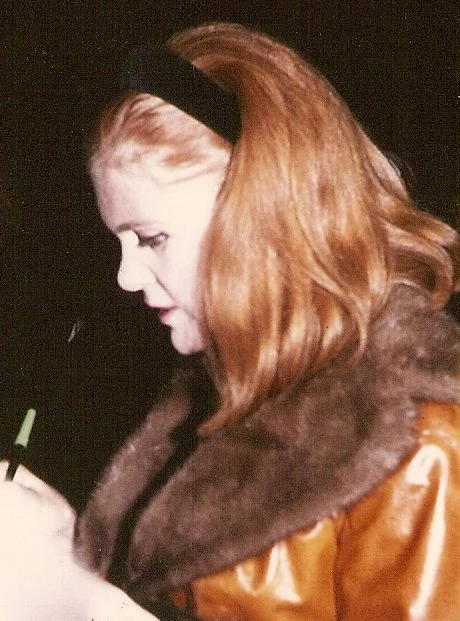
Image from Wikipedia
Image from Wikipedia
Anja Silja – the unmistakable soprano between Wagner, modernity, and dramatic stage art
A career that made opera history
Anja Silja, born on April 17, 1940, in Berlin, is one of the most distinguished German opera singers of the 20th and early 21st centuries. Her artistic career began exceptionally early and evolved into a musical journey marked by dramatic intensity, stylistic breadth, and impressive stage presence. Even as a child, she received vocal training, took to the stage as a teenager, and quickly transformed from a child prodigy into an artist of international acclaim. ([munzinger.de](https://www.munzinger.de/register/portrait/biographien/Anja%20Silja/00/9886))
When encountering Anja Silja, one does not meet a singer of mere vocal effects but rather an exceptional interpreter. Her career intertwines beginnings in coloratura, Wagner roles, the expressionistic repertoire of modernity, and the psychologically sharply drawn character roles of the 20th century. This very range has made her a reference figure for opera lovers, critics, and singing teachers even today. ([munzinger.de](https://www.munzinger.de/register/portrait/biographien/Anja%20Silja/00/9886))
Early years: the child prodigy from Berlin
The biographical roots of Anja Silja are closely linked to music and theater. According to Munzinger, she was born as the daughter of an acting couple, grew up with her grandparents in Berlin-Glienicke after her parents' divorce, and received her first singing lessons from her grandfather, who recognized her exceptional vocal talent early on. At just eleven, she won a singing contest against adult music academy graduates, and at twelve, she gave her first major concert at the Hamburg Music Hall. ([munzinger.de](https://www.munzinger.de/register/portrait/biographien/Anja%20Silja/00/9886))
This early training significantly shaped her entire artistic development. Silja did not emerge from a secure opera network but from a mixture of talent, discipline, and an early-developed musical consciousness. The fact that she later became regarded as a singer who mastered both vocal technique and dramatic presence is directly traceable to these beginnings. ([munzinger.de](https://www.munzinger.de/register/portrait/biographien/Anja%20Silja/00/9886))
The breakthrough: from Braunschweig to Vienna and Bayreuth
Anja Silja made her opera debut in 1956 in Braunschweig as Rosina in Rossini's Il barbiere di Siviglia. This was followed by roles such as Micaëla in Carmen and Zerbinetta in Ariadne auf Naxos, which already showcased her stylistic flexibility from her early years. The international breakthrough came in 1959 with the Queen of the Night in Mozart's Die Zauberflöte at the Vienna State Opera and at the festival in Aix-en-Provence under Karl Böhm; the French press at the time dubbed her a “second Callas.” ([en.wikipedia.org](https://en.wikipedia.org/wiki/Anja_Silja))
In 1960, she made her Bayreuth debut as Senta in Der fliegende Holländer. There, she sang major Wagner roles such as Elisabeth, Elsa, Eva, Freia, and other roles from the core repertoire until 1967. The Bayreuth years established Silja as a dramatic soprano with a rare blend of youthful energy and expressive intensity, while her interpretations simultaneously reflected the psychological modernity of Wagner's theater. ([staatsoper.de](https://www.staatsoper.de/en/biographies/silja-anja))
International stages and a repertoire of great range
After Bayreuth, the world stage opened up. Anja Silja performed at the Hamburg State Opera, the Royal Opera House Covent Garden, the Metropolitan Opera in New York, in Chicago, Paris, Zurich, Vienna, Berlin, Barcelona, Salzburg, and many other renowned venues. Her roles ranged from Salome, Lady Macbeth, and Violetta to Emilia Marty, the Körnerin in Jenůfa, Ortrud, and Herodias. This expansion illustrates a singer who did not remain confined to one category but consistently developed her artistry over decades. ([staatsoper.de](https://www.staatsoper.de/en/biographies/silja-anja))
Her work with the operas of Richard Strauss, Leoš Janáček, Alban Berg, Kurt Weill, and Arnold Schönberg was particularly formative. Colbert Artists Management describes her career as unique, as she has touched upon nearly every major soprano role in opera history. In this versatility lies her authority: Silja combined vocal substance with dramatic force, transforming each role into a musical drama. ([colbertartists.com](https://colbertartists.com/artists/anja-silja/))
The style of Anja Silja: voice, expression, and dramatic intelligence
Silja's style was never merely beautiful in the conventional sense, but always uncompromisingly theatrical. Early reviews emphasized her intense psychological expressiveness; at the same time, her voice was known for its breadth, projection, and adaptability. Munzinger describes her as a musical prodigy with a vocal range of three and a half octaves, illustrating the unusual starting point of her career. ([munzinger.de](https://www.munzinger.de/register/portrait/biographien/Anja%20Silja/00/9886))
At the heart of her art was the connection between singing and portrayal. In works such as Salome, Elektra, Lulu, Wozzeck, or Die Frau ohne Schatten, her special strength unfolds: not only to sing the roles but to imbue them with emotional depth. It is precisely in this that lies her significance for 20th-century opera history, as Silja belongs to that generation of singers who understood expressive music theater as a total art form. ([en.wikipedia.org](https://en.wikipedia.org/wiki/Anja_Silja))
Modernity as an artistic home
A central chapter in Anja Silja's discography and stage biography is her closeness to modernity. She interpreted works by Janáček, Berg, Schönberg, and Weill with a consistency that garnered special attention in the world of opera. Colbert Artists specifically mentions performances of Erwartung, Die sieben Todsünden, Lulu, and Wozzeck; the Bavarian State Opera also notes more recent roles such as Emily Marty, the Körnerin, Ortrud, Herodias, and the Nurse. ([colbertartists.com](https://colbertartists.com/artists/anja-silja/))
Thus, Silja shifted the focus of her career away from classical coloratura and youthful roles towards character roles with psychological depth. These roles specifically highlight her authority as an interpreter: she condensed text, sound, and expression into a personality on stage that appeared simultaneously vulnerable, menacing, and self-assured. For music lovers, this is a core part of her fascination. ([en.wikipedia.org](https://en.wikipedia.org/wiki/Anja_Silja))
Discography and recordings: a sonic archive of opera history
Anja Silja's discography is closely associated with renowned conductors and reference recordings. The Wikipedia listing includes recordings of Wagner, Beethoven, Puccini, Berg, Weill, and Janáček, including Der fliegende Holländer, Lohengrin, Tannhäuser, Das Rheingold, Götterdämmerung, Fidelio, Mahagonny, and Jenůfa. Warner Classics also includes her in the context of historical opera and sacred releases, underscoring her presence in the catalogs of major labels. ([en.wikipedia.org](https://en.wikipedia.org/wiki/Anja_Silja))
A highlight of her recording career is the 2001 Jenůfa recording from Covent Garden, for which she received a Grammy. The award not only confirms her vocal performance but also her standing as an interpreter, whose work in the international opera landscape is seen as benchmark-setting. Her recordings thus document not just a voice but an entire era of music theater. ([en.wikipedia.org](https://en.wikipedia.org/wiki/Anja_Silja))
Awards, collaborations, and cultural impact
Silja's artistic authority is also evident in her collaborations with the most significant conductors of her time. Colbert Artists mentions names such as Karl Böhm, Pierre Boulez, Christoph von Dohnányi, Otto Klemperer, James Levine, Georg Solti, Wolfgang Sawallisch, and Simon Rattle. These names signify not only prestigious collaborations but also underscore her position at the center of European opera culture. ([colbertartists.com](https://colbertartists.com/artists/anja-silja/))
Additionally, she received recognition from the professional community: in 2012, she was awarded the Opera News Award in New York City. However, her influence goes beyond awards. Silja represents a form of operatic singing that prioritizes expression, psychological depth, and dramatic authenticity over mere beauty, thereby impacting generations of singers. ([colbertartists.com](https://colbertartists.com/artists/anja-silja/))
Current projects and recent performances
The archived material also reflects later stages of her musical career. The Bavarian State Opera records recent performances in roles such as Emily Marty, the Körnerin, Ortrud, the Nurse, Herodias, and Schönberg's Erwartung. Wikipedia records a role in Frankfurt in 2013 and in 2017 Pierrot lunaire and the Speaker in Gurre-Lieder in Hamburg under Kent Nagano. No references to new albums or major releases in 2024/2025 were found in the verified sources. ([staatsoper.de](https://www.staatsoper.de/en/biographies/silja-anja))
This does not imply stagnation but rather a repertoire legacy that endures. For an artist like Anja Silja, the current relevance lies less in the pursuit of new releases than in the ongoing significance of her artistic standard. Her role as a living opera legend remains unbroken. ([staatsoper.de](https://www.staatsoper.de/en/biographies/silja-anja))
Conclusion: Why Anja Silja continues to fascinate
Anja Silja embodies a rare combination of vocal adaptability, dramatic intelligence, and artistic willingness to take risks. Her career spans from the child prodigy biographically through Bayreuth to the great opera houses of the world, showcasing a singer who did not just manage her specialty but continually redefined it. Those who listen to her recordings or study her stage roles encounter a personality who understands opera as an existential art form. ([munzinger.de](https://www.munzinger.de/register/portrait/biographien/Anja%20Silja/00/9886))
For this reason, exploring Anja Silja remains worthwhile even today: she represents an operatic art that knows no compromises and thereby remains timeless. Her name signifies musical history, interpretative power, and stage magic. Anyone who has the chance to experience her art live or rediscover historical recordings should seize the opportunity. ([staatsoper.de](https://www.staatsoper.de/en/biographies/silja-anja))
Official channels of Anja Silja:
- Instagram: No official profile found
- Facebook: No official profile found
- YouTube: No official profile found
- Spotify: No official profile found
- TikTok: No official profile found
Sources:
Upcoming Events
Anja Silja in the Rococo Hall with Richard van Schoor
Anja Silja in the Rococo Hall Bayreuth: fine melodramas, historical Liszt grand piano, and a discussion with artistic depth. 23.05.2026, 25 €. #Bayreuth #Theater
Dancing Makes You Happy
Bielefeld Gets the Perfect Dance Kick on Sunday: At Zweischlingen, Music Meets Relaxed Party Atmosphere. 06/21/2026, 8 €. #BielefeldDances