
Barbara Morgenstern (Musikerin)
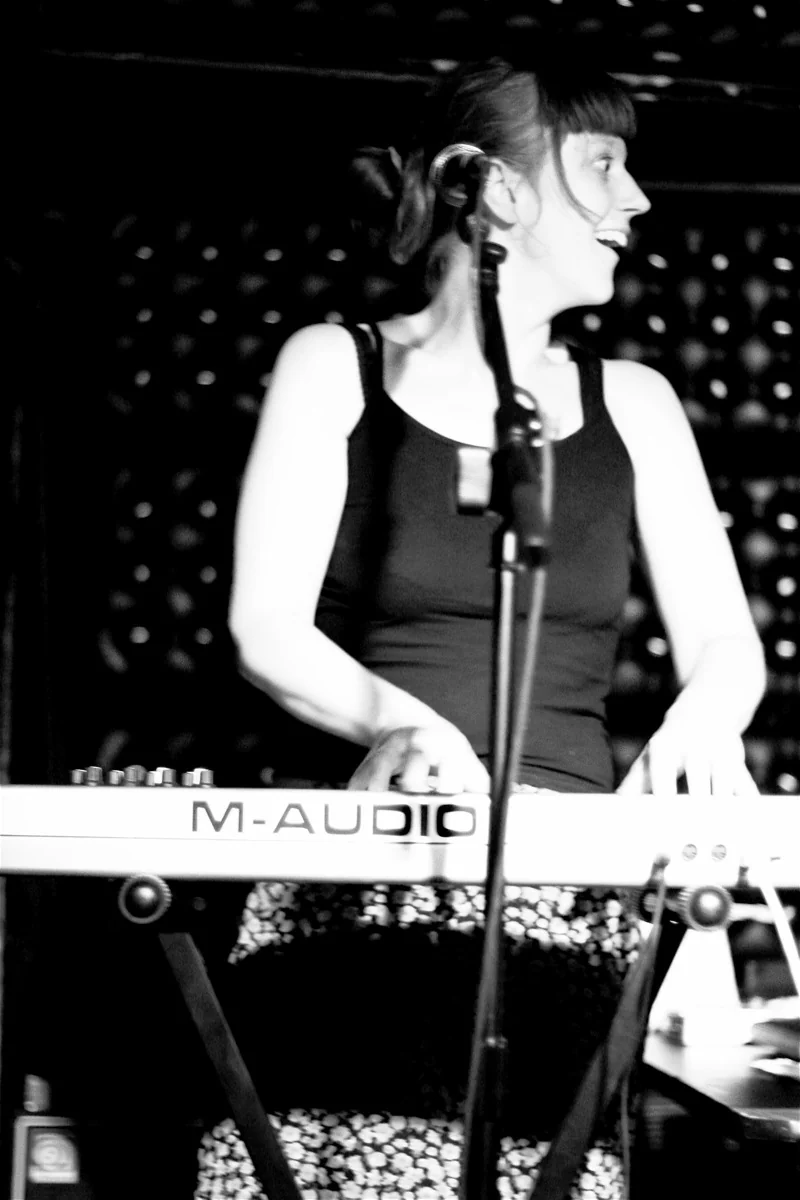
Image from Wikipedia
Image from Wikipedia
Barbara Morgenstern – Composer, Singer, and Pioneer of Electronic Pop from Berlin
Electronic Elegance with Attitude: Why Barbara Morgenstern Has Shaped Sound and Spirit Since the 1990s
Barbara Morgenstern, born in Hagen in 1971, is one of the defining voices in the German electronica and art-pop scene. As a composer, singer, choir director, keyboardist, and producer, she combines a sound-researching curiosity with melodic intuition and social awareness. Her music career spans from the Berlin living room and DIY scene of the late 1990s to internationally recognized albums, ambitious compositions, and interdisciplinary stage works. Her artistic evolution remains characteristic: clear themes, precise production, intelligent arrangements – and a stage presence that combines intimacy and strength.
Early Years and Musical Foundations
Growing up in the Ruhr area, Morgenstern discovered the piano as a means of expression early on and refined her playing with jazz lessons. After graduating from high school, she consciously chose a life in music in 1991. This step marked the starting point of a career that intertwines self-taught skills with professionalism. What makes her biography remarkable is the connection between songwriting and sound design: She thinks in composition, arrangement, and production – crafting songs that are conceptually convincing in the German-speaking pop landscape and emotionally touching.
Breakthrough in Berlin: From Monika Enterprise to International Recognition
In Berlin, Morgenstern found artistic allies and an aesthetic home for her distinctive sound. With her early releases at Monika Enterprise, she sharpened her profile between electronica, synth-pop, and chamber pop. Albums like "Fjorden" and "Nichts Muss" made her signature internationally visible: reduced beats, luminous harmonies, catchy hooks, and German lyrics that balance introspection, everyday observation, and poetic conciseness. This journey led to collaborations and remixes within the expanded electronic community – and to a growing authority as an independent producer.
Musical Development: From Lo-Fi Electronics to Orchestral Sound Directing
Morgenstern's discography documents a consistent artistic development. Starting from minimalist drum patterns, analog synth textures, and voice, she gradually emphasized acoustic instrumentation: harmonium, piano, woodwinds, or strings complementing the electronic core. The production remains transparent, with every sound source serving a dramatic function. This understanding of composition and arrangement – the conscious relation of timbre, dynamics, and space – adds depth to her albums. The shift between pop structure and contemporary chamber music is not a break but an organic extension of her language.
Key Albums and Artistic Milestones
Significant milestones include "Vermona ET 6–1" (1998), "Fjorden" (2000), and "Nichts Muss" (2003), followed by "The Grass Is Always Greener" (2006) and "BM" (2008). With "Sweet Silence" (2012), she intensified her lyrical-melodic approach, while "Doppelstern" (2015) focused on curated collaborations with prominent voices in the scene. A new sonic sovereignty was revealed in "Unschuld und Verwüstung" (2018), her first work on Staatsakt: harmonium, piano, saxophone, and electronics interweave into a chamber-music-inspired electronica concept – compelling, intimate, and determined. In 2024, she released "In anderem Licht," a work that expands the spaces between pop aesthetics and new music with ensemble settings, complex arrangements, and a clear thematic stance.
Collaborations, Choir Work, and Curatorial Practice
A core of her experience is working with voices: From 2007 to 2021, Morgenstern led the Choir of Cultures of the World in Berlin. As a choir director and composer, she developed vocal works, tested new sound architectures, and connected discourses from pop, avant-garde, and global music practices. Collaborations with artists such as Robert Lippok, Gudrun Gut, Justus Köhncke, Hauschka, Julia Kent, or Lucrecia Dalt demonstrate her openness to plural formats. These projects sharpen her expertise: voice management, texture, articulation – and the ability to intuitively and precisely direct collective sound bodies.
Stage, Theater, and Interdisciplinary Projects
Since the 2010s, Morgenstern has expanded her artistic work toward stage, performance, and music theater. In collaboration with Rimini Protokoll, she participated as a composer, musical director, and live performer in several invited productions. Her theater scores are characterized by dramatic precision, modular thematic work, and a production that acoustically integrates language, scene, and space. This interdisciplinary work strengthens her authority as a composer who designs sound worlds with narrative precision, transcending the traditional album format.
Current Projects 2024–2026: Album, Film, Stage
With "In anderem Licht" (released on January 26, 2024), Morgenstern presents a late but energetic work that has been described in the press and trade as an ensemble album with a strong thematic core. Pieces like "Creatures (One Health)" or "Nevertheless, the Music" combine earworm qualities with complex form. Concurrently, the documentary film "Barbara Morgenstern und die Liebe zur Sache" was created, premiering in Leipzig in 2024 and hitting theaters in 2025. Additionally, she remains present in theatrical contexts: Performances are scheduled for 2026 as part of a production with Rimini Protokoll ("Die Zeitmaschine") – further evidence of her ongoing presence between studio, stage, and cultural-political debate.
Style, Genre, and Historical Context in Music
Morgenstern's music oscillates between electronica, synth-pop, chamber pop, and contemporary composition. Her songwriting favors clear melodic lines, and her production emphasizes sonic reduction and textual clarity. German-language lyrics – long seen as "exotic" in international pop – are employed as a poetic tool that combines semantic sharpness with musical elegance. In the history of Berlin electronica, she positions herself as a bridge-builder: from the DIY ethos of the 1990s through the pop modernism of the 2000s to the post-digital, interdisciplinary present.
Critical Reception, Outreach, and Cultural Influence
The music press repeatedly emphasizes the unique blend of warmth, intellect, and craftsmanship in Morgenstern's discography. Early releases garnered international attention, while more recent albums are highlighted for their compositional breadth and thematic clarity. As a producer and choir director, she extends her influence beyond her own discography: She creates spaces for voices, collaborates across genre boundaries, and demonstrates how pop aesthetics, composition, and societal reflection come together in a cohesive artistic development. Thus, a sustainable impact is created, reflected in collaborations, teaching/leading work, and an increasing body of work.
Conclusion: Why Barbara Morgenstern Should Be Heard and Experienced
Barbara Morgenstern combines experience, expertise, and reliability in an unmistakable artistic signature. Her albums are precisely composed, her productions clearly defined, and her stage presence feels immediate – from intimate electronic sets to ensemble and theater works. Those who understand musical development as an attitude will find an artist here who has been creating relevant, stylistically finely balanced, and emotionally moving music for decades. Recommendation: Listen to "In anderem Licht," then discover older milestones – and seize the next opportunity to experience her live.
Official Channels of Barbara Morgenstern:
- Instagram: No official profile found
- Facebook: No official profile found
- YouTube: No official profile found
- Spotify: No official profile found
- TikTok: No official profile found
Sources:
- Barbara Morgenstern – Official Website
- Bandcamp – "In anderem Licht," Release Info
- jpc – Album Announcement "In anderem Licht" (Staatsakt), 26.01.2024
- Nord24 – Report on the Ensemble Album "In anderem Licht", January 2024
- Digital in Berlin – Concert Announcement and Video Hint
- Social Blade – Channel Handle Overview (Verification of official affiliation not evident)
- Apple Music – Artist Profile and Catalog Overview
- Forced Exposure – Catalog Notes and Career Highlights
- Wikipedia (DE) – Biography, Discography, Theater Works
- Wikipedia (DE) – Documentary "Barbara Morgenstern und die Liebe zur Sache," 2024
- Pitchfork – Announcement for "Sweet Silence," 2012
Upcoming Events
The Time Machine (Premiere)
Join us as the State Theatre Cottbus presents 'The Time Machine' by H.G. Wells on stage.
The Time Machine – Theater Performance at the State Theatre Cottbus
An extraordinary performance of H.G. Wells' classic with live music performed at the State Theatre Cottbus.
The Time Machine
Time travel live at Staatstheater Cottbus: poetic, precise, politically awake. Saturday, 04.04.2026, 19:30, barrier-free. Experience, converse, think further – secure seats now. #TheaterCottbus
The Time Machine in the Great House
A fascinating time travel on stage: Helgard Haug transforms Wells' classic into an intense Cottbus theater experience. 07.06.2026, from 12 euros. #Theatre