
BBC Symphony Orchestra
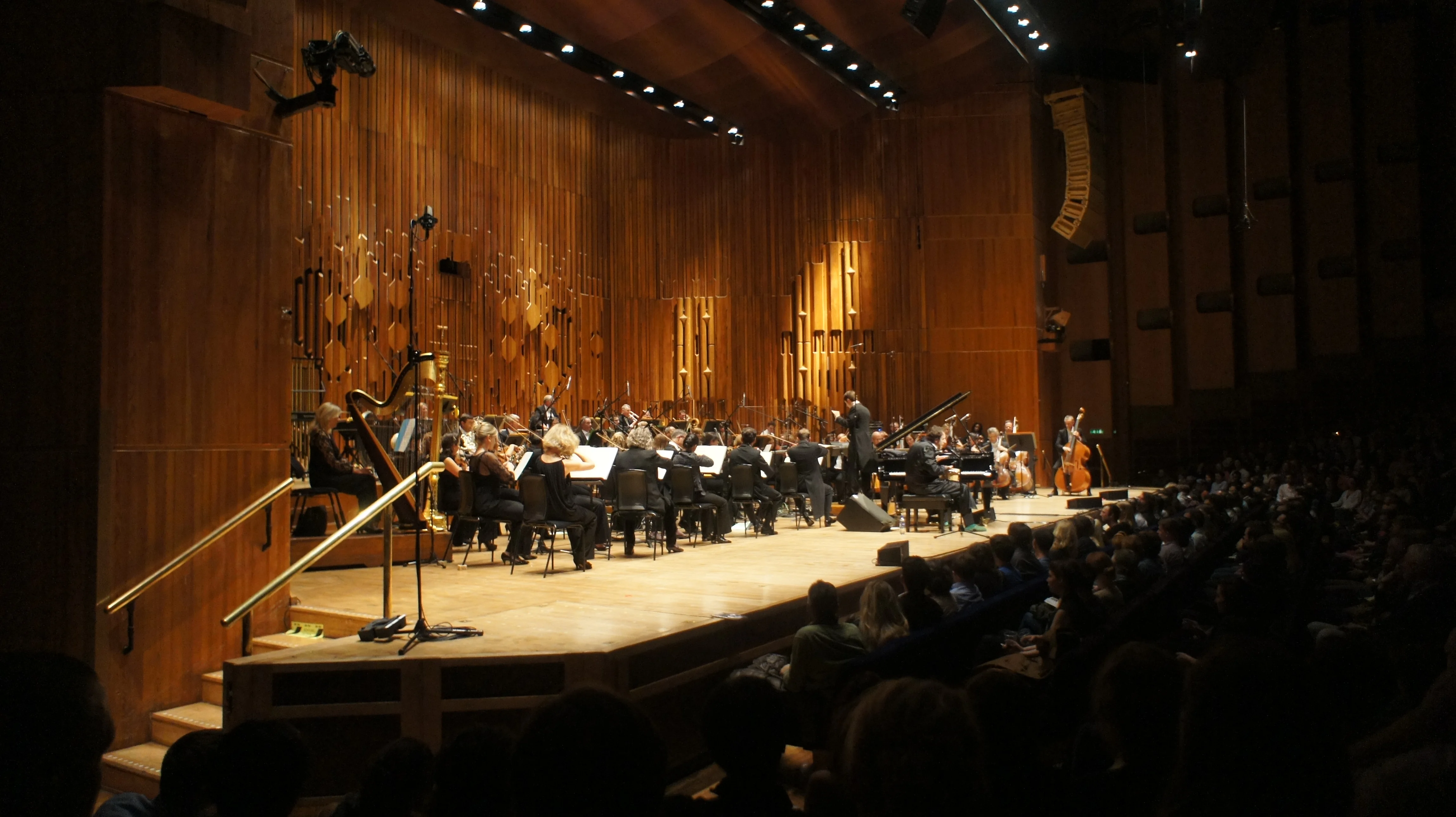
Image from Wikipedia
Image from Wikipedia
BBC Symphony Orchestra – The Heart of the British Orchestra Scene
From the Beginnings in the Radio Studio to a Globally Respected Ensemble
Since 1930, the BBC Symphony Orchestra (BBC SO) has shaped the British and international orchestral landscape with its distinctive programming, first-class performance culture, and bold repertoire curation. As the main orchestra of the British Broadcasting Corporation, it stands for a musical career dedicated to the public: concerts, radio, television, and streaming intermingle seamlessly. A prominent platform is the annual concert series The Proms at the Royal Albert Hall in London, where the BBC SO traditionally opens and closes the event, making the cultural DNA of Great Britain audible. The artistic development of the orchestra is closely linked with leading figures such as Adrian Boult, Malcolm Sargent, Colin Davis, Pierre Boulez, Jiří Bělohlávek, and the current chief conductor, Sakari Oramo – names that represent conducting art, sound culture, and a distinctive style in composition, arrangement, and interpretation.
Foundation, Mission, and Sound Ideal: An Orchestra for the Modern Age
As the first permanently established orchestra in London, the BBC SO emerged from the vision of filling the new broadcasting pathways with symphonic excellence. Under founding director Adrian Boult, the ensemble set high standards early on: it presented British premieres, invited composers like Arnold Schönberg and Anton Webern, and developed a stage presence that confidently oscillates between studio acoustics and concert hall effects. This dual mandate – concert platform and production for broadcast – sharpened a sound ideal of transparency, precision, and stylistic versatility. From an EEAT perspective, this reflects experience in the continuous promotion of new music and expertise in complex scores, where the finely balanced arrangement convinces both in the studio and live in the hall.
Chief Conductors and Artistic Profiles: Continuity and Renewal
The list of conductors of the BBC SO reads like a chapter of conducting history: Boult laid the foundation, Sargent gave a public voice to British music, Doráti, Davis, and Boulez modernized the understanding of the repertoire, while Pritchard and Andrew Davis connected tradition with the present, and Bělohlávek introduced new colors with a Bohemian core sound. Since 2013, Sakari Oramo as chief conductor has shaped the orchestra's stylistic identity and extended his contract until the end of the 2025/26 season – a sign of artistic authority and trust in the long-term development. Guest conductors like Dalia Stasevska, Principal Guest Conductor, sharpen the focus on contemporary sound languages and symphonic dramaturgy, while Creative Artist collaborations expand the boundaries between classical, crossover, and new media.
The Proms: Opening and Closing Chords as a Business Card
Few orchestras are as intertwined with The Proms as the BBC SO. In 2025, Sakari Oramo opened the season with a program that combined traditional works and a world premiere by the Master of the King's Music, Errollyn Wallen – a program architecture that makes the Proms format's ambition visible: classics in a new light, complemented by contemporary compositions. Moreover, the “Last Night” reflects the orchestra's distinctive stage presence: festive dramaturgy, singing scenes, and a deliberate play with musical symbols – a sound ritual where the BBC SO captivates its audience and positions itself both musically and culturally.
Current Highlights of the 2024–2025 Season: Premieres, Soundscapes, Classics
The recent seasons at Barbican and The Proms showcase the BBC SO as a platform for ambitious artistic projects. Under Dalia Stasevska, large-scale soundscapes and new music were in focus – from György Ligeti's Atmosphères to John Luther Adams' Become Ocean. At the same time, the orchestra maintains its core competence in large symphonic repertoire – Elgar, Vaughan Williams, Arnold, as well as Sibelius and Ravel, often in formations that open new programmatic horizons. Tour and guest performances, such as in Paris, complement the London base and strengthen the international visibility of the ensemble.
Biography in Stages: Studio Aesthetics, Concert Tradition, and the Art of the Radio Orchestra
The artistic development of the BBC SO follows a dual logic: on stage, it creates organic large arcs, while in the studio, it refines articulation, dynamics, and sonic balance for the microphone perspective. This dual qualification – live and produced – requires a specific musical organization: tight rehearsal management, precise sound work at the podium, confident register culture in string groups, woodwind colors with British profile, brass supporting the architectural overall plan, and a percussion center that optimally supports modern orchestral composition. Particularly in new music – from Anna Thorvaldsdottir to Errollyn Wallen – the production sensibility of the BBC SO is evident: complex textures are represented with clear voice leading, and the spatiality of the composition remains audible in the broadcast sound.
Discography: Reference Recordings and Contemporary Signals
The BBC SO has built a broad recording spectrum that represents both the British orchestral tradition and international masterpieces and new music. Outstanding are the Beethoven Piano Concertos with Paul Lewis under Jiří Bělohlávek – recordings that exemplify pianistic lines, orchestral transparency, and classical formal balance. Another highly publicized facet marks Anna Clyne's album “Mythologies”: five works, conducted by Marin Alsop, Sakari Oramo, Andrew Litton, and André de Ridder, which demonstrate the orchestral approach of the BBC SO to contemporary music. This range – from the classical canon to British modernism to international premieres – positions the discography as an acoustic archive of the orchestra's artistic fingerprint.
Repertoire and Style Profile: British School, International Modernism, Symphonic Storytelling
In its understanding of genres, the BBC SO asserts a British identity: Elgar, Vaughan Williams, Delius, Britten, and Malcolm Arnold form a stable foundation. However, the orchestra also sees itself as a catalyst for international currents. Ligeti's sonic palimpsests, Adams' nature sound architectures, Ravel and Bartók programs, or Sibelius' Nordic breath – all find that balance in the BBC SO of gestural clarity, structural discipline, and color nuance that modern orchestral literature demands. In production, these qualities reflect in finely tuned mixtures that equally consider voice leading and spatial depth.
Artistic Development and Audience Experience: Programming as a Curated Dialogue
The curatorial line of recent years shows how strongly the BBC SO understands program dramaturgy as a dialogue between epochs and aesthetics. A late Romantic main work gains new perspectives alongside a world premiere; an oratorical rarity unfolds its dramatic energy before a symphonic classic. This dramaturgical arrangement generates experiential knowledge in the hall and expertise in the interpretation of works, in which the authority of the orchestra as an interpreter of both old and new scores is fundamentally established. The audience experiences not only concerts but also musical arguments – precisely set, emotionally impactful, culturally relevant.
Voices of the Fans
The reactions from fans clearly show: The BBC Symphony Orchestra excites people worldwide. On Instagram, a listener enthusiastically comments: “These colors – every detail hits and moves.” Another comment summarizes the impact succinctly: “Whether live or streamed – the BBC SO sounds like a great, breathing instrument.” These voices reflect the perception of an orchestra that makes tradition audible and shapes the present.
Critical Reception: Precision, Dramaturgy, Presence
In the music press, the programmatic balance, interpretive clarity, and orchestral cohesion are particularly highlighted. At The Proms 2025, the BBC SO under Sakari Oramo impressed with an opening concert that gave space to both classics and new music; at Barbican, Dalia Stasevska led large-scale sound architectures between hovering textures and eruptive dynamics; further concerts throughout the season combined British rarities – such as Doreen Carwithen's Piano Concerto – with notable symphonies of the 20th century. The press reviews commend the orchestra's ability to articulate various sound languages authentically and coherently.
Cultural Influence: The Public Orchestra as a Societal Institution
As a broadcasting orchestra, the BBC SO represents cultural provision: low-threshold access via radio, TV, media library, and streaming anchors the symphonic repertoire in everyday life. Education formats, studio recordings with an audience, and family concerts open doors for new listeners. At the same time, the orchestra acts as a driving force for composition commissions and British premieres – a contribution to the vibrant music history of Great Britain. In terms of EEAT, this role strengthens the trustworthiness and authority of the ensemble.
Outlook: Program Ideas between Tradition and Innovation
The upcoming seasons promise a continuation of the established line: thematically clever curated cycles, stylistic ranging from Baroque references to avant-garde, prominent soloists, and a focus on British and international contemporary music. World premieres and rarely performed oratorios or symphonies stand beside cornerstone repertoire – each combined in a way that creates memorable listening experiences.
Conclusion: Why the BBC Symphony Orchestra Fascinates
The BBC Symphony Orchestra combines tradition, innovation, and media presence into a distinctive brand. Its musical career is a case study in public cultural service: artistic excellence, made accessible to many. Those who want to experience symphonic dramaturgy at its best should listen to the BBC SO live – at The Proms, at Barbican, on tour. There, it crystallizes what the studio and stream already hint at: an orchestra that tells stories – precisely, touchingly, and contemporarily.
Official Channels of BBC Symphony Orchestra:
- Instagram: https://www.instagram.com/bbcsymphonyorchestra/
- Facebook: No official profile found
- YouTube: No official profile found
- Spotify: No official profile found
- TikTok: No official profile found
Sources:
- BBC – BBC Symphony Orchestra (official website)
- Avie Records – BBC Symphony Orchestra (artist page, ensembles & profiles)
- The Guardian – First Night of the Proms 2025, Review
- The Guardian – BBCSO/Stasevska: Become Ocean, Review
- The Guardian – BBC Symphony Orchestra/Oramo, Review
- Barbican – BBC Symphony Orchestra: Stasevska conducts Ravel (Season 2025)
- Apple Music – Beethoven: Complete Piano Concertos (Paul Lewis, BBC SO, Bělohlávek)
- Avie Records – Anna Clyne: Mythologies (BBC SO)
- Encyclopaedia Britannica – BBC Symphony Orchestra (History & Leadership)
- Wikipedia: BBC Symphony Orchestra – Image and Text Source
Upcoming Events
Prélude Concert in the Rose Garden
The Prélude Concert in the Rose Garden offers a beautiful outdoor experience with the BBC Symphony Orchestra. Free admission.
Concert: BBC Symphony Orchestra, Oramo & Batiashvili
On June 20, 2026, the BBC Symphony Orchestra will present an unforgettable concert at the Kissinger Sommer.
Prelude Concert: Brass Quintet of the BBC Symphony Orchestra
Summer sound in the Rose Garden: BBC Symphony Brass ignites sparkling fanfares and velvety chorales. 20.06.2026, 18:00, admission free, accessible. Short, intense, inspiring – be there live! #KissingerSommer
Prélude Concert in the Rose Garden
Bad Kissingen sounds of summer: The Prélude concert in the Rose Garden combines BBC brass artistry and festival feeling. 06/20/2026, free admission. #BadKissingen #Concert
BBC Symphony Orchestra in Bad Kissingen
Great colors, strong soloist, noble concert atmosphere: The BBC Symphony Orchestra comes to Bad Kissingen. 20.06.2026, from €24. #Classical
BBC Symphony Orchestra at the Regentenbau Bad Kissingen
Great symphonies in the Regentenbau Bad Kissingen: BBC Symphony Orchestra under Sakari Oramo. Starts June 21, 2026, 7:30 PM, tickets from €25. Sound luxury, goosebumps, secure your seats now! #BadKissingen
BBC Symphony Orchestra at the Regentenbau Bad Kissingen
Festive symphony in the Max‑Littmann‑Saal: BBC Symphony Orchestra brings brilliance to Bad Kissingen. Saturday, 26.12.2026, time to follow. Great sound colors, strong emotions, unforgettable concert experience. Secure seats now! #BadKissingen
BBC Symphony Orchestra
A festive classical evening in Bad Kissingen: The BBC Symphony Orchestra plays in the famous Max-Littmann Hall. Great orchestra, great acoustics, great moment. #Classical #BadKissingen