
Bonnie und Clyde
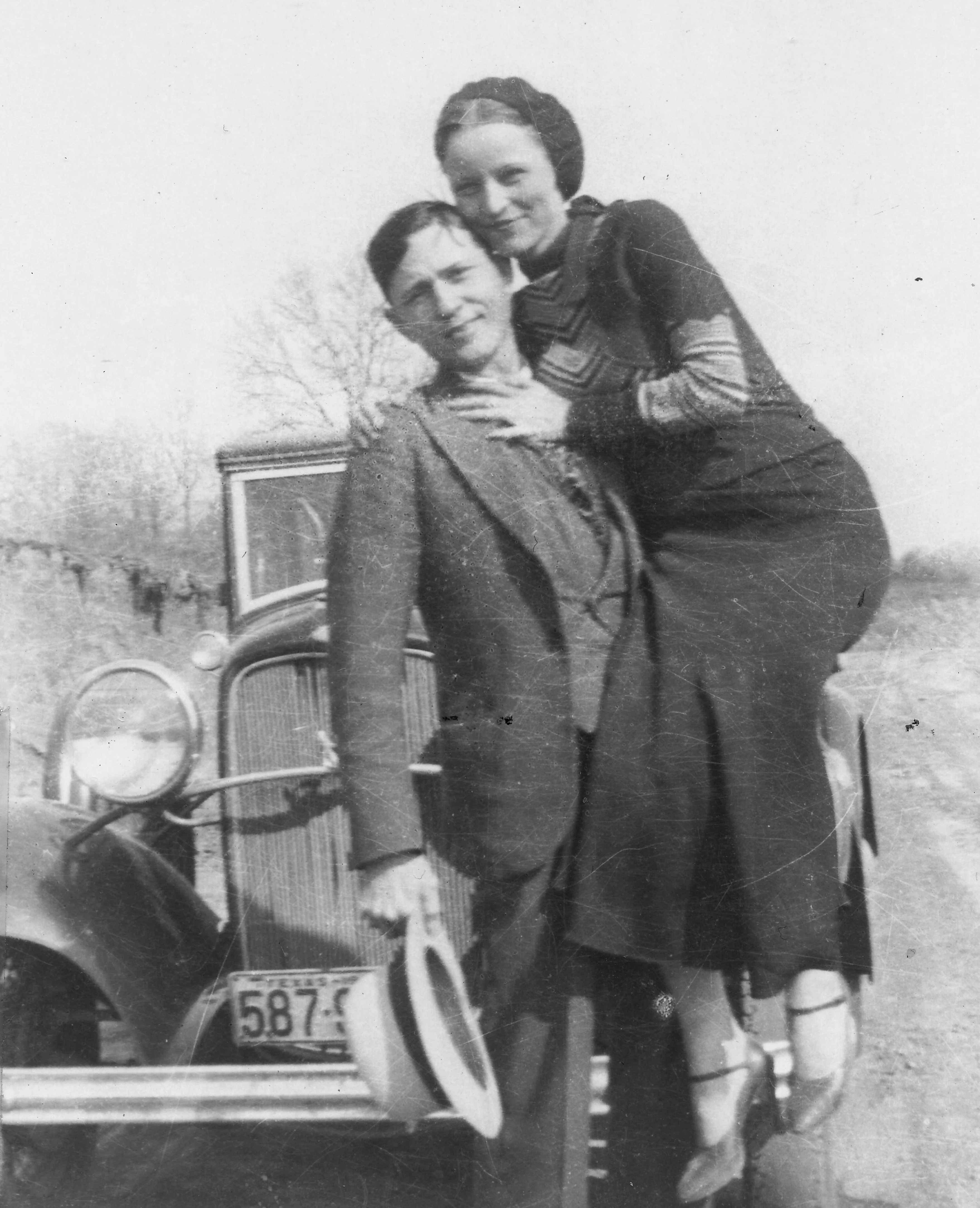
Image from Wikipedia
Image from Wikipedia
Bonnie and Clyde – Myth, Music, and the Enduring Fascination of a Notorious Duo
Between Crime and Pop Culture: Why Bonnie Parker and Clyde Barrow Continue to Inspire Music History
Bonnie Elizabeth Parker and Clyde Chestnut Barrow made headlines as an American criminal couple in the early 1930s – and decades later became one of the longest-lasting symbols of pop culture. Their music career, in the literal sense, never existed, yet the aura of this pair – escape, danger, loyalty, fatalistic romance – has inspired generations of composers, songwriters, producers, and bands. From chanson and R&B to punk rock and hip-hop, artists of all genres have condensed the story of Bonnie and Clyde into soundscapes of longing, danger, and rebellion. The interplay of media iconography, cinematic embellishment, and musical appropriation makes their legacy a fascinating chapter in cultural history.
Biography: From Texas Through the Midwest to the Deadly Ambush in Louisiana
Bonnie Parker was born on October 1, 1910, in Rowena, Texas; Clyde Barrow was born on March 24, 1909, in Ellis County, Texas. Amidst the Great Depression, the duo, supported by changing members of the so-called Barrow Gang, swept through the Midwest. Their armed robberies often targeted gas stations, grocery stores, and smaller banks; the spiral of violence resulted in numerous deaths, particularly among police officers. The media eagerly covered the events, linking them to the “Public Enemy” narrative of the early 1930s: criminals as dark stars of a time marked by deprivation and frustration. At the same time, Bonnie Parker worked on poetry – a detail that gave the later cultural reception a particular resonance by giving a voice to the myth.
The “Public Enemy” Era: Crime as a Mass Phenomenon and Media Echo
The years 1931 to 1935 are considered the height of the modern gangster myth in the USA. Newspapers illustrated robberies and shootouts, wanted photos became visual trademarks. Bonnie and Clyde stood alongside names like John Dillinger, symbolizing a time in which poverty, loopholes in the law, and the allure of the forbidden formed a toxic mix. During this phase, the media projection of the couple as romantic outlaws was established – an image that would later influence the composition, arrangement, and aesthetics of numerous songs. That Parker wrote and Barrow was photographed provided additional narratives for music and film: lyrics as raw material for poetry, images as storyboards for videos.
The End: Eastham Escape, Manhunt, and the Ambush
The highly publicized escape of prisoners from the Texas Eastham Prison Farm in early 1934 radicalized the hunt for the couple. The assignment to former Texas Ranger Frank Hamer marked a turning point: After targeted observation and local arrangements, Bonnie and Clyde were ambushed and shot on May 23, 1934, in Bienville Parish, Louisiana. This final scene – the dust of a country road, the roar of a Ford V-8, the gunfire – has since become part of the cultural imagery that music producers, directors, and pop lyricists have translated into ever new forms.
From Poem to Chanson: How Bonnie Parker's Words Became Song Lyrics
Parker's poem “The Trail’s End” (“The Story of Bonnie and Clyde”) holds particular significance. The verses reflect morality, myth, and the awareness of one's own end – a subtext that is ideally suited for musical narratives. Chanson, pop, and orchestral baroque pop picked up this ambivalence and transformed documentary lines into poetic motifs. Producers and arrangers found rhythmic anchors in the rhymes, while singers translated the couple's perspective into intimate, balladic gestures. Thus, Parker became an involuntary co-author of a pop history that extends long beyond her life.
Discography of References: Songs, Albums, and Chart Successes Surrounding “Bonnie & Clyde”
The discography that addresses the Bonnie and Clyde myth is diverse: In 1968, Serge Gainsbourg and Brigitte Bardot released the French-language “Bonnie and Clyde” – a minimalist, hypnotic composition with a spoken-word performance that adapts Parker's poem and employs elegant orchestration along with spacey echo effects. During the same period, Georgie Fame conquered the UK charts with “The Ballad of Bonnie and Clyde,” stylizing the subject with R&B swing, banjo colors, and siren sounds into a retro-action audio film. In the 1990s, the Düsseldorf band Die Toten Hosen transformed the motif into a German-language punk rock ballad, in which the pose of the outlaws became a canvas for youthful escalation. In 2002, Jay-Z, along with Beyoncé, translated the narrative into the hip-hop form with “’03 Bonnie & Clyde,” whose production, featuring programmed drums, bass, and flamenco-inspired guitars, creates an urban road-movie atmosphere; the single climbed the charts worldwide and established a modern, partnership-driven gangster romance in the mainstream.
Musical Development and Style Analysis: From Chanson to Hip-Hop
From a music journalism perspective, leitmotifs can be identified: First, the dialogical principle – two voices, two perspectives, an oscillating narrative between desire and danger. Gainsbourg/Bardot employ call-and-response, cinematic chamber music, and laconic declamation; producer Claude Dejacques focused on intimate spaces where every whisper and breath gains significance. Second, the sound effects and arrangements: Georgie Fame translates chases into percussive stabs, brass fanfares, and acoustic signatures that think dramaturgically like in cinema. Third, the pop-cultural semantics in hip-hop: “’03 Bonnie & Clyde” does not sample but designs cinematic surfaces with texture and timbre; the arrangement evokes visual associations while the rhythm relocates the drive of escape into the present. Finally, punk rock infuses the motif with adrenaline – electric guitars in power chords, continuous eighth notes on the bass, a tempo that chases the heart. This stylistic breadth shows how flexible the subject remains in terms of composition and production.
Critical Reception: Between Romanticization and Realistic Correction
The music press and critical landscape have always oscillated between fascination and skepticism. While chart successes – such as Georgie Fame's UK number-one hit or the top-five placement of Jay-Z and Beyoncé in the USA – demonstrate cultural impact, historians have repeatedly warned against the risks of idealization. Films like “Bonnie and Clyde” (1967) established a cinematic icon and are considered key works of the New Hollywood era with a more open depiction of violence and sexuality. More recent perspectives, such as “The Highwaymen,” strive to contrast the artistic development of the narrative with a demystification. For music, this means: Those who adopt the motif today find themselves in a tension between romantic projection and factual harshness – a productive contradiction that demands artistic authenticity, trust in source material, and responsible representation.
Cultural Influence: Fashion, Visual Aesthetics, Stage Presence
Berets, diagonal berets, coat dresses, and firearms as props: The visual aesthetics of Bonnie and Clyde continue to shape stage shows, music videos, and live photography today. Artists stylize the figure of “Bonnie” as an agent of her own desire, while performers stage “Clyde” as a coolly calculating outlaw. The stage presence draws from noir lighting, car backdrops, road movie tropes, and partner choreographies. This iconic reservoir allows for the profiling of pop personae without being biographically identical – a good example of how narrative motifs support artistic development and brand-building in pop music.
EEAT Perspective: Experience, Expertise, Authority, and Trustworthiness
Experience: Music culture utilizes the narrative of Bonnie and Clyde to emotionally charge stage presence, storytelling, and music careers; real pursuits become metaphors for risk, loyalty, and self-empowerment. Expertise: In music history, the theme represents intermedial work – source texts (Parker), cinematic impulses (1967 film), and stylistic translations (chanson, R&B, punk, hip-hop) intersect with sophisticated composition, arrangement, and production. Authority: The relevance is reflected in chart metrics and critiques from significant media, as well as in the ongoing presence of the motif in press opinions and pop history. Trustworthiness: The facts presented here – biographical details, chart successes, release dates, film contextualizations – are based on verified sources and primary references.
Conclusion: Why Bonnie and Clyde Continue to Inspire Artists Today
The story of Bonnie Parker and Clyde Barrow unites strong contrasts: intimacy and violence, loyalty and lawbreaking, poetry and machine-gun fire. It is precisely these tensions that make the motif so magnetic for songwriters, producers, and performers. Today, anyone writing a “Bonnie & Clyde” song connects to a lineage of chanson, R&B, punk, and hip-hop – while also adding new nuances: female perspectives beyond the muse role, critical distance instead of romanticization, or the deconstruction of the outlaw pose in times of digital surveillance. The appeal to music lovers: Listen to the many sound trails of this myth, compare styles and eras – and experience live how artists translate the old theme into new present realities.
Official Channels of Bonnie and Clyde:
- Instagram: No official profile found
- Facebook: No official profile found
- YouTube: No official profile found
- Spotify: No official profile found
- TikTok: No official profile found
Sources:
- Wikipedia – Bonnie and Clyde (German)
- Wikipedia – Bonnie and Clyde (English)
- Wikipedia – Bonnie and Clyde (Film, 1967)
- TIME – What “The Highwaymen” Gets Right and Wrong (2019)
- Wikipedia – The Ballad of Bonnie and Clyde (Georgie Fame)
- Wikipedia – ’03 Bonnie & Clyde (Jay‑Z feat. Beyoncé)
- Wikipedia – Bonnie & Clyde (Die Toten Hosen)
- Wikipedia – Bonnie and Clyde (Gainsbourg/Bardot)
- Apple Music – Bonnie and Clyde (Gainsbourg & Bardot)
- Wikisource – The Trail’s End (Bonnie Parker)
- HistoryNet – The Raid on Eastham
- Smithsonian Magazine – Parker/Barrow Notebook with Poems
Upcoming Events
Wine Press Hall Festival 2026 (Kelterhallen Weinfest)