
Bruno Jonas
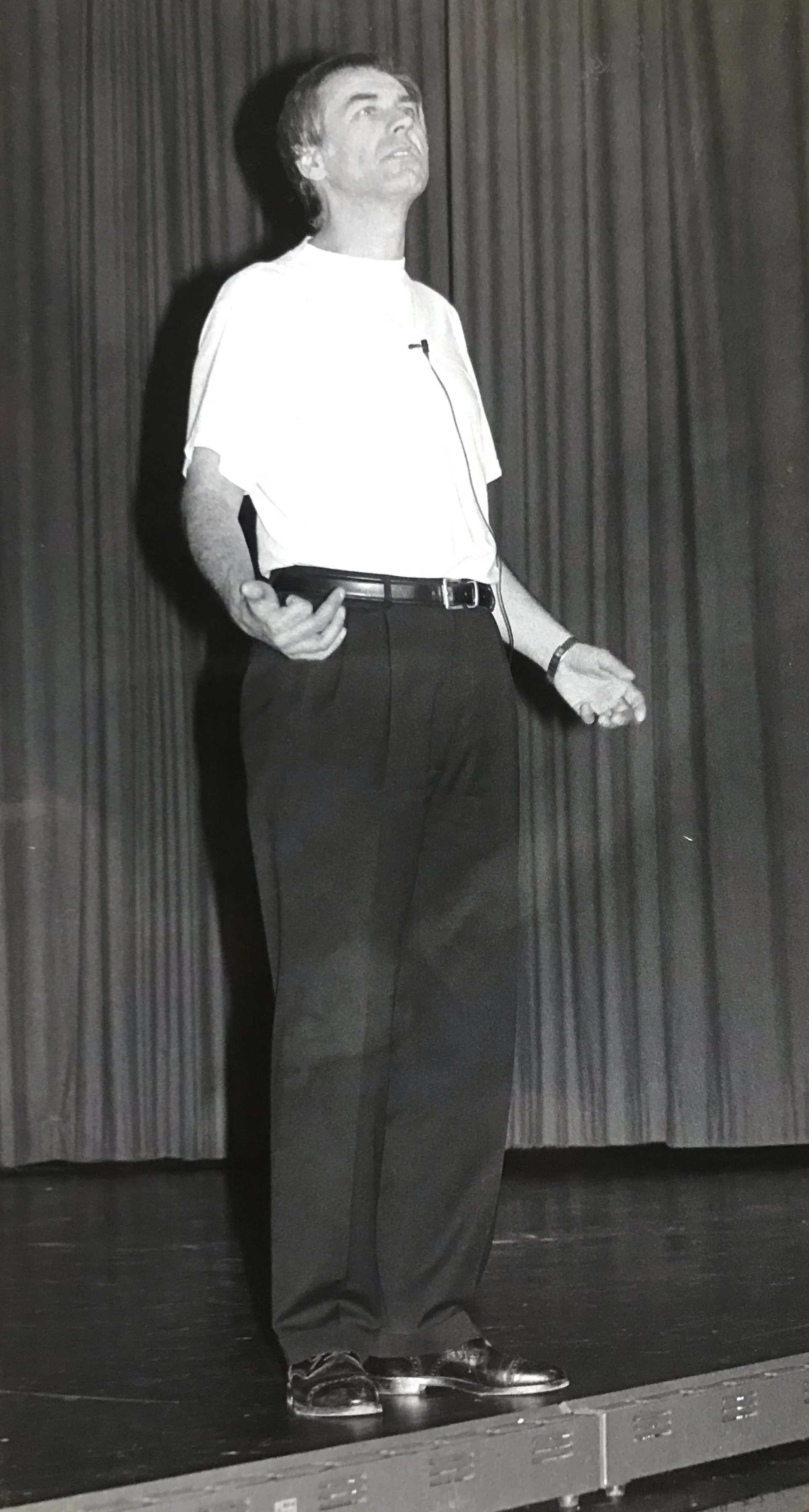
Image from Wikipedia
Image from Wikipedia
Bruno Jonas – Cabaret with Depth, Stance, and Bavarian Sharp Wit
A Chronicler of the Republic: How Bruno Jonas Has Shaped Political Cabaret for Decades
Bruno Jonas, born on December 3, 1952 in Passau, is a quintessential figure of pointed satire, linguistic precision, and a contemplative stage presence. Emerging from the Lower Bavarian province to the grand stages, he has consistently shaped his music career – from a singer and guitarist in Passau to the voice of political cabaret on television – into an artistic development that unites humor, the composition of words, and sharp thinking. Anyone experiencing Jonas live feels a blend of theatrical craftsmanship, philosophical curiosity, and delight in the arrangement of punchlines, which has made him a reference point in German-speaking cabaret since the late 1970s. ([de.wikipedia.org](https://de.wikipedia.org/wiki/Bruno_Jonas))
The audience appreciates Jonas' connection between timely diagnosis and formal awareness: he leverages the tradition of Bavarian wordplay without losing himself in folklore, and anchors societal debates in precisely crafted texts. His pieces resemble dramaturgically condensed speeches: with clear motives, recurring key terms, surprising harmonic "modulations" in the flow of thought, and timing that approaches musical phrasing. This dynamic has taken him from the Munich backyard stage to the ARD evening program. ([de.wikipedia.org](https://de.wikipedia.org/wiki/Bruno_Jonas))
Biographical Beginnings: From Passau to Munich – The Path to Cabaret
Early on, family, church, and local media shape his perception of language, power, and the public sphere. While still a student, Jonas performs as a singer and guitarist with the Bavarian City Preachers before founding the group "Die Verhohnepeopler" in 1975 with Sigi Zimmerschied – an early experiment on the edge of what was permissible, which garners attention with a charge of "blasphemy." After completing his civil service, he studies German Philology, Political Science, Philosophy, and Theatre Studies at Ludwig Maximilian University of Munich – a combination of subjects that significantly influences his satirical grammar in the long term. ([de.wikipedia.org](https://de.wikipedia.org/wiki/Bruno_Jonas))
His first solo program "Zur Klage der Nation" (1979) establishes him within the Munich scene, and with his engagement in the Munich Laugh and Shoot Society (1981–1984), he refines his text work, character changes, and scenic economy. Even here, one can see the hallmarks of Jonas’ style that persist to this day: pointed character speech, a keen eye on political rhetoric, and the ability to transform outrage into art. ([de.wikipedia.org](https://de.wikipedia.org/wiki/Bruno_Jonas))
Breakthrough on Television: Scheibenwischer, Solos, and Directing Work
From the mid-1980s, Jonas becomes known to millions through regular appearances on “Scheibenwischer”; from 2000 onward, he is a permanent partner of Dieter Hildebrandt there and shapes the aesthetics of the show – with a noticeable influence on the entire cabaret scene. After Hildebrandt's departure in 2003, Jonas continues the traditional brand alongside Mathias Richling and initially Georg Schramm, later Richard Rogler. The combination of sharp content and formal discipline makes Jonas a key figure of the generation that bestows renewed seriousness and wit to political satire in public broadcasting. ([de.wikipedia.org](https://de.wikipedia.org/wiki/Scheibenwischer_%28Kabarett%29?utm_source=openai))
Simultaneously, he expands his repertoire as an author and director. The television film "Ein Prachtexemplar" (1989) and the cinema comedy "Wir Enkelkinder" (1992) showcase his sensibility for satirical dramaturgy beyond the stage; in 2004, he directs the musical "Der Mann von La Mancha" at the Gärtnerplatz Theatre and plays Don Quixote himself – a character image that further enriches his cabaret persona as an idealist against the currents of the present. ([de.wikipedia.org](https://de.wikipedia.org/wiki/Bruno_Jonas))
The Barnabas of Nockherberg: Ritual, Risk, and the Republic
As Brother Barnabas at the strong beer tapping on Munich’s Nockherberg (2004–2006), Jonas takes charge of the traditional "Derblecken" – a position with cultural-political symbolic power. His speech addresses power, media, and morality without resorting to flashy effects. With his exit from the role in 2007, he emphasizes that cabaret for him is not an end in itself, but rather a temporary, consciously chosen form of public discourse. ([de.wikipedia.org](https://de.wikipedia.org/wiki/Bruno_Jonas))
The Smartasses and the Later Years: Reweighing Television
After announcing a television-free year in 2009, Jonas returns in 2011 with “Die Klugscheißer” (BR) alongside Monika Gruber and Rick Kavanian. The format intertwines punchlines with political advice as a scenic framework and emphasizes ensemble exchanges rather than solo speeches before concluding in 2014. The project demonstrates Jonas’ willingness for formal innovation without diluting his core competency – the precisely placed word. ([de.wikipedia.org](https://de.wikipedia.org/wiki/Die_Klugschei%C3%9Fer_%28Fernsehsendung%29?utm_source=openai))
In interviews, he reflects on the development of satire in public broadcasting and delineates the boundaries and possibilities of the genre – a self-critical assessment that reaffirms his authority as a veteran of cabaret. At the same time, he remains connected to the Laugh and Shoot Society; its fluctuating ownership and management situation, culminating in an insolvency application in 2023, illustrates how fragile the institutional frameworks of cabaret traditions have become. ([de.wikipedia.org](https://de.wikipedia.org/wiki/Bruno_Jonas))
Solo Programs, Books, a “Discography” of Words
While Jonas may have a slim discography in the strict musical sense – with the CD "Red net" (1996) – his true "audio track" emerges from the canon of his solo programs: from "Der Morgen davor" (1987) to "Wirklich wahr" (1990), "Hin und zurück" (1995), "Ich alter Ego" (1998), and "Nicht wirklich – nicht ganz da" (2002), to "Bis hierher und weiter" (2007), "Es geht weiter" (2011), "So samma mia" (2013), "Nur mal angenommen" (2016), and "Meine Rede" (2020). These works form an ongoing composition of themes, motifs, and stylistic techniques – an oeuvre that can be listened to like a discography of spoken words. ([de.wikipedia.org](https://de.wikipedia.org/wiki/Bruno_Jonas))
As an author, Jonas refines his tone between satire, essay, and cultural critique. Titles like "Gebrauchsanweisung für Bayern" (2002), "Kaum zu glauben und doch nicht wahr" (2005), "Bis zum Hals" (2012), "Vollhorst" (2015), and "Gebrauchsanweisung für das Jenseits" (2018) demonstrate how he transfers the composition and arrangement of thought to the page – with clear syntax, dramatic condensation, and the double-entry bookkeeping of seriousness and irony that underpins his cabaret. ([de.wikipedia.org](https://de.wikipedia.org/wiki/Bruno_Jonas))
Style & Working Method: Rhetoric as Music, Punchline as Form
Jonas’ stage aesthetics draw on the tradition of political cabaret and rhetorical teachings. His "scores" consist of lead motifs (language, power, morality), clear thematic modulations, and unexpected pauses. He works with character speech, parodic intonation, and precise timing techniques – elements that can be described in music as articulation and dynamics. The production style of his programs resembles a studio production of words: text sketches, fine cutting, live alignment, revision. Jonas’ experience in theater and directing is evident in every scene. ([de.wikipedia.org](https://de.wikipedia.org/wiki/Bruno_Jonas))
His artistic development remains open to shifts in perspective: Jonas allows positions to speak against each other, confronts majority opinions with minorities, but never levels the responsibility of the speaker. This fundamental attitude explains why his programs – despite changing political circumstances – generate a stable resonance and are received across generations. ([de.wikipedia.org](https://de.wikipedia.org/wiki/Bruno_Jonas))
Current Projects: “Meine Rede” and the New Program “Klappe halten”
With “Meine Rede” (2020), Jonas condenses the stage into a testing arrangement: a speech as a “power-free monologue” about the seductive power of language, thinking in times of crisis, and the rhetoric of majorities. Reviews describe the program as demanding, sharp-witted, and at the same time accessible to the audience – a journey from philosophical digression to topical sharpness. ([bruno-jonas.de](https://www.bruno-jonas.de/?utm_source=openai))
In 2025, Jonas presents “Klappe halten” – a new solo program that ties into the debate "What can satire do?" and focuses on self-censorship, role models, and media mechanics. This will be accompanied by tour dates for 2025/2026 (including Berlin, Neumarkt, Putzbrunn, Pöcking, Wolfratshausen); some dates had to be postponed due to illness, which hardly diminishes the ongoing demand. The project marks Jonas’ perspective on the present: daring, self-reflective, and formally conscious. ([bruno-jonas.de](https://www.bruno-jonas.de/tourdaten?utm_source=openai))
Critical Reception & Cultural Influence
As a co-creator of “Scheibenwischer” and later ensemble leader, Jonas has renewed the DNA of television cabaret: less slapstick, more argument – while maintaining his sharp wit. His influence ranges from historical tradition preservation (Laugh and Shoot) to updating the genre for an audience that re-evaluates news, commentary, and position. This author role – in the double sense as author and authority – is supported by numerous awards. ([de.wikipedia.org](https://de.wikipedia.org/wiki/Scheibenwischer_%28Kabarett%29?utm_source=openai))
The press regularly emphasizes his linguistic precision, intellectual sharpness, and a stage economy that operates without large props. This purism, combined with Bavarian coloring and worldview, makes Jonas a unique figure: a cabaret artist who combines artistic formal rigor with emotional directness – thus creating cultural value that extends well beyond the evening. ([merkur.de](https://www.merkur.de/lokales/bad-toelz/bad-toelz-ort28297/bruno-jonas-provoziert-begeistert-auftritt-kabarettist-badtoelz-ampel-witz-regierung-habeck-singspiel-nockherberg-baerbock-92863035.html?utm_source=openai))
Awards: Authority Proven
The list of awards reads like a map of the cabaret landscape: Ludwig-Thoma Medal (1988), Ernst-Hoferichter Prize (1990), Fred-Jay Prize (1996), Leipzig Löwenzahn (1997), Bavarian Cabaret Prize (2002), Münchhausen Prize (2003), Ybbser Spaßvogel (2003), Zeck Cabaret Prize (2005), Bavarian Poetentaler (2010), "München leuchtet" in Gold (2013), Special Prize at the Bavarian Culture Prize (2015), Bavarian Constitution Medal in Silver (2016), and Honorary Prize at the "Großen Kleinkunstfestival" (2017). These awards document his reach, craftsmanship, and the sustainable relevance of his work. ([de.wikipedia.org](https://de.wikipedia.org/wiki/Bruno_Jonas))
Conclusion: Why Bruno Jonas is More Important Today Than Ever
Bruno Jonas demonstrates that political cabaret achieves its greatest impact when it combines form with stance. His stage remains a space where thinking is audible, language is physical, and dissent is productive. Those who experience his programs undergo a school of perception – precisely set, humorously sharpened, aesthetically concentrated.
Particularly “Klappe halten” demonstrates how an experienced satirist grapples with the demands of the present: not as a moralist, but as a composer of meaningful tones in discourse. Recommendation: experience it live – for the art of the pause, the unexpected turns, the musical logic of his sentences. Jonas’ cabaret is not just entertainment; it is a contribution to democratic discourse culture.
Official Channels of Bruno Jonas:
- Instagram: No official profile found
- Facebook: No official profile found
- YouTube: No official profile found
- Spotify: No official profile found
- TikTok: No official profile found
Sources:
- Bruno Jonas – Official Website
- Wikipedia – Bruno Jonas
- Wikipedia – Scheibenwischer (Cabaret)
- Merkur – Concert Review “Meine Rede”, 01.03.2024
- Rosenheim24 – “Klappe halten” in Bruckmühl, 31.10.2025
- Münchner Wochenanzeiger – Date Postponement 2025
- Süddeutsche Zeitung – Podcast “München persönlich” (Profile)
- Bruno Jonas – Tour Dates 2025/2026
- Bruno Jonas – Current: “Klappe halten”
- Wikipedia: Image and text source
Upcoming Events
Bruno Jonas – Keep Quiet
Cabaret with a bite in Amberg: Bruno Jonas – Keep Quiet at the Stadttheater. Sharp punchlines, timing, guaranteed audience reaction. 13.03.2026, 19:30. Secure tickets now. #BrunoJonas
Bruno Jonas – Shut Up
Cabaret with Attitude at KUBIZ Unterhaching: Bruno Jonas – Shut Up. On 16.04.2026, 19:30, tickets from 34 €. Sharp satire, great laughing experience. Book now! #Cabaret
Bruno Jonas: Keep Quiet
Bruno Jonas makes Unterhaching laugh and think: Keep Quiet at KUBIZ with sharp satire, timing, and bite. 16.04.2026, from €34. #Cabaret #Comedy
Bruno Jonas – Shut Up!
Bruno Jonas makes Pullach laugh with clever satire and razor-sharp punchlines. 21.10.2026, 8 PM at the Bürgerhaus. #Cabaret #Comedy
Singing Improvisation - Creating Songs in Impro Theater (with Jonas)
A workshop full of spontaneity, voice, and stage courage at Rechenzentrum Potsdam. Jonas leads through improvised songs, choruses, and real theater energy. #Improtheater #Potsdam