
Carl Orff
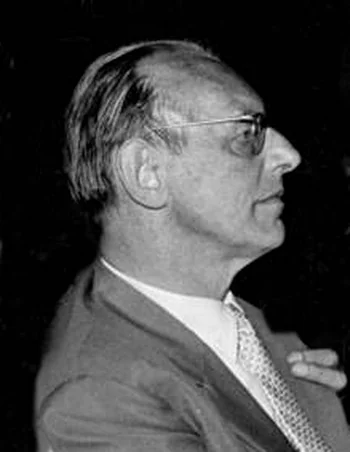
Image from Wikipedia
Image from Wikipedia
Carl Orff – Composer, Music Educator and Pioneer of a New Musical Theater
The Captivating Power of Rhythm, Language, and Choir: Why Carl Orff Continues to Influence Concert Stages, Classrooms, and Pop Culture
Carl Heinrich Maria Orff (July 10, 1895 – March 29, 1982) is one of the most significant figures in 20th-century music. With Carmina Burana, he created a scenic cantata in 1935/36 that revolutionized the global choral canon and remains a crowd puller to this day. Concurrently, Orff, along with Gunild Keetman, developed the Orff Schulwerk – an elemental, movement- and language-based concept of music education that has shaped generations of children and educators. Among opera, cantata, and theater music, Orff unfolded a distinctive aesthetic signature: archaic rhythms, sonorous percussion groups, declamatory vocal lines, and the close interlinking of music, scene, text, and dance.
Early Years in Munich: Instruments, Influences, and the Search for a Personal Language of Music
Born in Munich into a musical family, Orff received early instruction in piano, organ, and cello. His music career developed within the milieu of Munich Modernism, where early music, new dance, language experiments, and avant-garde met. This experience fueled his artistic development: Orff understood composition not merely as notational writing but as a living theatrical play of sound, body, and word. Already in the 1920s, he worked on stage music and experimented with a reduced, concise sound language that would later shape his "new musical theater."
The Günther School and the Origin of the Orff Schulwerk
In 1924, Orff co-founded the Günther School for Gymnastics, Rhythm, Music, and Dance in Munich with Dorothee Günther. Here he met Gunild Keetman, who became a pivotal partner in his educational thinking. From practical teaching, improvisation, and speech rhythm emerged the "Elementary Music Exercise," the seed of the Orff Schulwerk. The Schulwerk emphasizes singing, speaking, body movement, and easily playable instruments (xylophones, metallophones, drums) to foster musicality through experience. This artistic development combined pedagogical expertise with performative stage presence – a foundation that continues to thrive in international Orff institutes and societies today.
Carmina Burana: Premiere, Impact, and the Musical DNA of a Century-Defining Work
With Carmina Burana, Orff achieved his breakthrough in Frankfurt in 1937: a choral spectacle based on medieval texts from Benediktbeuern, driven by the notorious Fortuna fanfare, eruptive choral blocks, percussive motor skills, and sensuous melodies. Orff crafted a new dramaturgy of sound, where choir and percussion play the leading roles. The arrangement blends folk language directness with refined composition and an imagery that resonates from the opera stage to film music and stadiums. "O Fortuna," the frame choir, is considered an acoustic metaphor for fate and primal power and has become an icon of popular culture.
Beyond Carmina Burana: Trionfi, Fairy-Tale Operas, and Antiquity on Stage
Orff was not a man of a single work. With the trilogy Trionfi – Carmina Burana, Catulli Carmina, and Trionfo di Afrodite – he created a triptych exploring love, ritual, and myth. At the same time, he revitalized music theater with fairy-tale pieces like Der Mond and Die Kluge, where speech singing, choir, and percussion shape a "small world theater" aesthetic. After 1945, he turned to ancient tragedies: Antigonae, Oedipus the Tyrant, and Prometheus emphasize declamatory lines, archaic rhythms, and a text-centeredness that condenses musical time into dramatic presence. Orff's late vision of world theater culminates in De temporum fine comoedia – an apocalyptic choral scene about end times, catharsis, and new beginnings.
Style, Sound, and Composition: What Makes Orff's Music Distinctive
Orff’s sound language is immediately recognizable: large percussion ensembles, ostinato rhythmic models, block-like choral textures, and the sharpening of language through speech singing and metric formulas. Harmonically, he often works with modal structures, repetitive patterns, and a reduction that signifies not poverty but concentration. Compositional technique and scenic imagination merge – Orff's music envisions stage, movement, and light. This aesthetic gives his works an immediate theatricality and a physical presence that electrifies both ensembles and audiences alike.
Orff Schulwerk Worldwide: Pedagogy as Artistic Practice
The Orff Schulwerk is not a rigid curriculum but a practice that promotes creativity and participation. Its modules – speaking, singing, playing, dancing, improvisation – create a production chain from sound to small stage pieces. Gunild Keetman’s contribution as a composer, educator, and notator was crucial: she transformed spontaneous ideas into structured repertoire that provides guidance for teachers and play opportunities for children. Today, international Orff institutes and societies anchor this idea in training and education, from elementary school to music education at universities. This shapes Orff’s pedagogical vision to impact both artistic development and school-based music education.
Cultural Impact: From Concert Halls to Pop Culture
Carmina Burana is performed annually on major stages and festivals, recorded, re-staged, choreographed – and appears as a reference in films, games, advertisements, and sports events. At the same time, Orff’s approach lives on in rehearsal rooms and classrooms, where the Schulwerk provides children with a tactile, physical access to music. This dual path – high culture and music pedagogy – makes Orff a rare figure, whose work overwhelms on stage and empowers in teaching. The success arises from the balance of archaic impulse and modern form, collective sound energy and clear, elemental structure.
Continuities, Institutions, and Legacy
Orff's estate is scientifically managed, edited, and performed. Editions, yearbooks, and performance documents ensure textual fidelity; new productions keep the theater energy alive. Collaboration with publishers, orchestras, and research institutions guarantees that scores, performance practices, and educational materials remain internationally accessible. Memorial sites and museums also make his life and work tangible – from the study to the instruments of the Schulwerk. Orff was laid to rest in Andechs after his death in 1982; his music and pedagogical thinking continue to influence today as cultural heritage and a living, productive practice.
Current Reception, Projects, and Performances
The tradition of performing Carmina Burana remains unbroken: large choirs, renowned orchestras, and festivals continuously program the work anew. Concurrently, publishers and institutions document anniversaries, editions, and research – from work comments to educational publications. Museum initiatives and centers present exhibitions, concert series, and archival treasures and promote exchange between practice, science, and the public. Concerts, lectures, and presentations on Orff’s musical theater and Schulwerk will also take place in 2025/2026; they underline how vital the connection between stage, education, and research has remained.
"Voices of the Fans" – When Choir Energy Unites People
Fan reactions clearly show: Carl Orff captivates people around the world. On Instagram, a visitor exclaims: “The percussion power in Carmina Burana moves through body and soul.” On Facebook, a listener writes: “Singing live in the choir – an unforgettable goosebump moment.” A YouTube comment hits the nail on the head: “This music is like a ritual – it grabs you from the very first beat.” Such responses reflect why Orff’s music attracts across generations: it combines communal experience, rhythmic ecstasy, and poetic imagery into a compelling total artwork.
Conclusion: Why Carl Orff Endures
Orff’s work is a plea for immediacy: rhythm as heartbeat, language as form, choir as collective voice. His stage works merge music, scene, and text into gripping sound theater; his Schulwerk transforms lessons into creative performances. This synergy of artistic authority, pedagogical experience, historical anchoring, and modern relevance exemplifies the four pillars of EEAT: Orff's music career and stage presence manifest in his grand cycles; expertise and style analysis explain his composition, arrangement, and production; institutions, publishers, and research testify to his authority; the long-term care of his estate strengthens the reliability of sources. Anyone wanting to experience Orff should attend a performance of Carmina Burana – and discover how a single strike on a percussion instrument can electrify an entire evening.
Official Channels of Carl Orff:
- Instagram: https://www.instagram.com/orff_zentrum_muenchen/
- Facebook: https://www.facebook.com/orffcentermunich/
- YouTube: https://www.youtube.com/@orff-zentrummunchen2962
- Spotify: No official profile found
- TikTok: No official profile found
Sources:
- Orff-Zentrum Munich – State Institute for Research and Documentation
- Carl Orff Museum / Carl-Orff-Stiftung – Official Website
- Schott Music – Carl Orff (Works, Editions, Brief Biography)
- Encyclopaedia Britannica – Carl Orff: Carmina Burana, Schulwerk
- Wikipedia (DE) – Carmina Burana (Premiere, Work Data)
- Oper Frankfurt – History (Premiere of Carmina Burana 1937)
- Kloster Andechs – Carl Orff's Burial Site (Chapel of Pain)
- Orff-Schulwerk Society (DE/EN) – History and Concept
- German Music Information Center (miz) – Orff-Zentrum Munich (Social Media Profiles)
- Carl Orff Museum – Carmina Burana: The Premiere (Archive Images, Context)
- Wikipedia (EN) – Carl Orff (Biography, Overview of Works)
Upcoming Events
Carmina Burana – Odesa National Academic Opera and Ballet Theatre
Visit the unique performance of Carmina Burana at the Bonn Theatre. A feast for the senses with music, dance, and video.
Wednesdays at Orff
Inviting Wednesday afternoon at COMU: sing, drum, move. Starts April 15, 14:30. Series for seniors, largely barrier-free. Experience community – register now. #SeniorCommunity
The new COMU: Tour through the Carl Orff Museum – Path and Work
Evening tour at COMU Dießen: Orff's study, audio samples, interactive stations. 22.04.2026, 19:00, €13.50. Cultural enrichment guaranteed – secure your ticket now. #Ammersee
The new COMU: Tour of the Carl Orff Museum - Path and Work
Experience Carl Orff in the new COMU in Dießen: tour, music history, and authentic place of creation at Ammersee. Secure your discovery spot now. #Ammersee
Carmina Burana Open-Air Performance
Don't miss Carl Orff's Carmina Burana as an open-air event on May 24, 2026, at Schloss Branitz in Cottbus.
Carmina Burana - Open Air
Enjoy Orff's Carmina Burana live outdoors at the Brandenburg State Museum Cottbus.
Carmina Burana
An open-air evening full of choral power and sound magic awaits you in Branitz. Carmina Burana connects fate, spring, and passion. #Cottbus #Classics
Carmina Burana in Branitz: Orff's Sound Power in the Open Air
An evening full of fate, rhythm, and choral power awaits you in Branitz. Carmina Burana will resonate on 24.05.2026 at 5:00 PM starting at 20 euros. #Cottbus #CarminaBurana
Carmina Burana Open Air Concert
Enjoy Carl Orff's Carmina Burana in Cottbus on May 25, 2026, under the direction of Christian Möbius.
Visit to Carl Orff Museum with Senior Café Group
A calm cultural day for seniors at Ammersee: Discovering Carl Orff, listening together, and lingering in the museum café. 27.05.2026, from €7.50. #Seniors