
Christoph Schobesberger
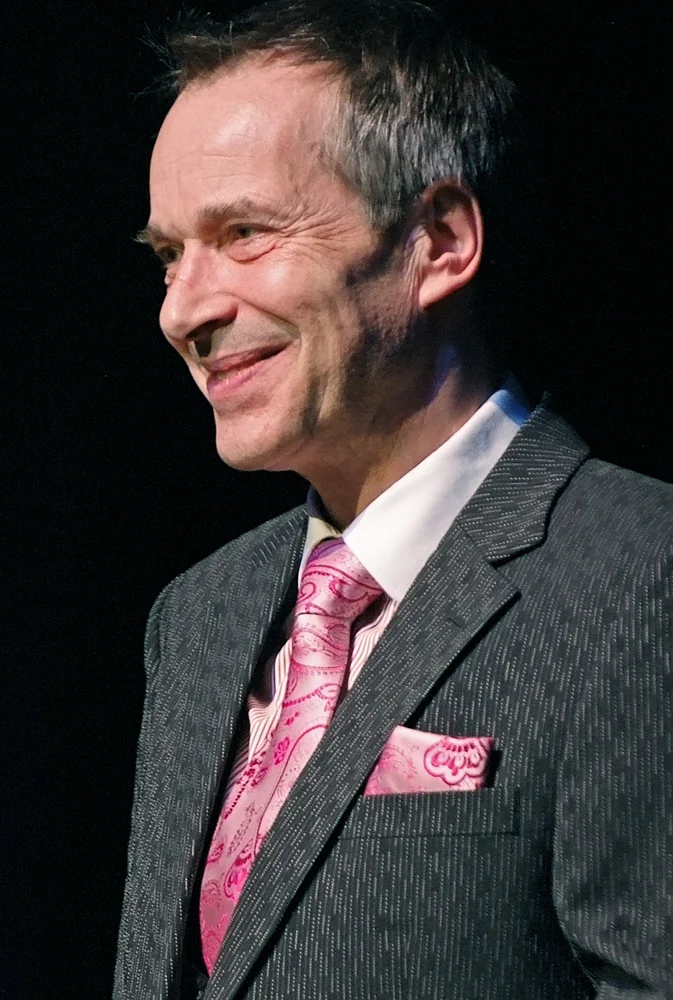
Image from Wikipedia
Image from Wikipedia
Christoph Schobesberger – Actor, Singer, Narrator: A Life Between Stage, Camera, and Music
From the Vienna Boys' Choir to the "Berlin Sinatra": The Versatile Artistic Life of the German-Austrian Entertainer
Christoph Schobesberger (February 17, 1954, Salzburg – July 5, 2025, Vienna) shaped theater, television, and concert stages as a German-Austrian actor, singer, and speaker for decades. Musically socialized early by the Vienna Boys' Choir, he combined stage presence, precise spoken singing, and confident vocal technique into a distinctive artistic signature. As a TV personality, he reached millions, as an interpreter of American standards, he filled concert halls, and as an audiobook narrator, he guided listeners through complex literary content with his trained timbre. His journey tells of artistic development and tireless musical career between classical heritage and popular culture.
Early Years and Training: Sound Discipline and Theatre Craft
The musical influence began in childhood: From 1963 to 1968, Schobesberger toured the world as a member of the Vienna Boys' Choir – a school in intonation, ensemble culture, and stage etiquette that significantly shaped his later artistic discipline. He further deepened his knowledge of composition, interpretation, and singing technique at the Mozarteum in Salzburg and the University of Music and Performing Arts Vienna. Simultaneously, he studied acting at the Max Reinhardt Seminar, where he learned the fundamentals of dramatic expression, text design, and role analysis. Even during this phase, he was on stage in song evenings and oratorios, taking on the title role in Busoni's "Arlecchino" at the Vienna Chamber Opera—early evidence of a dual talent between voice and acting.
First Engagements and the Breakthrough in Vienna
After an initial engagement at the Stadttheater Bern—with a variety of roles and genres from "West Side Story" to "The Man of La Mancha" and "Godspell" to Shakespeare—Schobesberger achieved his breakthrough in Vienna: As Pontius Pilate in Andrew Lloyd Webber's "Jesus Christ Superstar" at the Theater an der Wien, he established himself with the local audience as a powerful performer with a distinctive baritone and a keen sense for dramatic tension. Other formative stops included Franz Schubert in the operetta classic "Das Dreimäderlhaus" at the Raimund Theater, Curt Goetz's "Ingeborg" at the Volkstheater Wien, and Eugene in O'Neill's "Long Day's Journey Into Night." This repertoire documents the range of his performances—from musical theatre to comedy to psychological drama.
Television and Film: Visibility, Routine, and a Million-View Audience
Alongside stage work, Schobesberger built a continuous film and TV career from the late 1970s onwards. After early projects like "Der Schatten" and "Schönes Weekend, Mr. Bennett," he became known for his appearances in TV series and feature films starting in the mid-1980s. In "Ringstraßenpalais," he portrayed complex character traits between societal facade and inner conflict. With "38 – This Was Vienna," he was part of a notable cinematic project reflecting the historical rupture of 1938. Nationwide fame came with the hospital series "Für alle Fälle Stefanie," where, as Chief Physician Dr. Johannes Stein, he found a mix of professional authority, empathy, and gentle irony—a role image that fit his balanced stage persona and introduced him to a broad audience as a reliable character actor. These productions sharpened his on-camera economy, text economy, and the ability to set emotional accents precisely in the serial format.
Music as the Common Thread: Sinatra, Standards, and the Great Songbook
Beyond established genres, music remained the gravitational center of his artistry. Schobesberger developed sophisticated concert programs, including those dedicated to George Gershwin, Mozart, and Johann Strauss, and established himself with tribute evenings around Frank Sinatra. In gala formats, he revived the elegance, timing, and phrased legato lines of the "Great American Songbook" with Big Band, strings, and his own moderation. Critical comments referred to him as the "Berlin Sinatra"—a nickname that described less imitation than a stylistically aware appropriation: he worked with classical breath techniques, precise articulation, dynamic crescendos, and rubato phrasing, without leveling his own timbre. These programs combined entertainment with a sophisticated arranging culture and connected to the tradition of European crooners who intertwined American swing and pop standards with a Central European sound ideal.
Narrative Voice and Literature: Audiobooks, Crime, and Nordic Coolness
As a speaker, Schobesberger gained particular renown in literary and criminalistic works. With calm pulse, dark timbre, and clear consonants, he guided listeners through Henning Mankell's Wallander novels—from "Faceless Killers" to "The White Lioness" and "The Fire Wall." Here, stage experience merged with microphone control: subtext instead of declamation, a dramatic sense for tension arcs, and the ability to acoustically mark character changes without slipping into vocal masquerade. This work demonstrates his expertise in the production and post-production of spoken texts—from close-miking and level balancing to breathy pauses that evoke images while listening.
Director at the Small-Scale Art Cellar: The "Stella-Theater" in Café Prückel
In September 2024, Schobesberger took over the direction of the traditional cellar theatre in the Vienna Café Prückel. Under the new name "Stella-Theater," he explicitly connected to pioneer Stella Kadmon and developed a program spanning literature, chanson, chamber music, and staged readings. The curatorial signature embraced cultivated salon culture, well-balanced acoustics, and concentrated proximity between artists and audience. After one season, he stepped down from the management at the end of June 2025—a decision reflecting his desire for artistic focus on singing, reading, and selected stage projects. A few days later, he passed away in Vienna. The resonance of this short but intense directorship remains a statement of programmatic quality and historical responsibility.
Late Projects, Canceled Homage, and Final Stage Plans
Planned year-end events for 2025 revisited his Sinatra homage, partly with Big Band configurations and duet partners from the jazz and musical fields. After his death, a New Year's Eve gala was unexpectedly canceled—a publicly visible moment of farewell and appreciation from venues and audiences. In hindsight, these projects mark an artist who maintained stylistic consistency and singing presence until the end: song selection with dramatic coherence, arrangements that support breath and text, and a stage that functioned as a space for shared remembrance.
Discography, Recordings, and Media Presence
Schobesberger's artistic trace is less defined by chart singles and more by live programs, radio, and theatre work. Streaming platforms feature individual releases and contributions that reflect his repertoire between chanson, swing, and musical. His narrative art is significantly documented in audiobook editions—crime novels, classics, and literary essays—that established him as a reliable storytelling voice. Altogether, it creates a picture of discographic continuity that did not seek the charts but curated catalog care: the focus was on production quality, sound balance, clarity of speech, and the conveyance of textual meanings.
Style and Technique: Between Legato, Text Interpretation, and Acting Precision
As a singer, Schobesberger worked with a robust baritone and elastic legato. His phrasing emphasized meaning carriers in the text, while the rhythmic placement—especially in swing—targeted buoyant syncopations and subtle offbeats. In musical and operetta roles, he used register mixing to depict dramatic climaxes but always remained sonically within the idiomatic framework of each style. As an actor, he chose precise gestures and economical facial expressions that were effective for both the camera and the large stage. This artistic development—from choir boy to multifaceted storyteller—testifies to craftsmanship fidelity and reflective prosody that balances form and emotion.
Cultural Influence and Resonance: Maintaining Tradition without Nostalgia Trap
Schobesberger's achievement lies in bridge-building: he connected the Central European theatre and operetta heritage with elements of American entertainment music. His Sinatra programs placed the art of arrangement and interpretation at the forefront, sensitizing an audience beyond vintage romanticism to the craft of singing. In TV series, he brought an acting style based on precise text work, partnership connection, and rhythmic timing—qualities that adeptly absorbed the pressures of daily production. As an audiobook narrator, he contributed to the popularization of sophisticated crime literature in the German-speaking market and demonstrated how voice, pacing, and narrative perspective create an immersive listening experience.
Awards, Reception, and Critical Classification
Even without a focus on a trophy collection, the reception remained respectful: reviews of his Sinatra evenings highlighted the striking sonic closeness, but above all, the stylistic integrity. Theatre biographies and agency profiles refer to an extraordinary range between musical, theatrical classics, and literary recitation. Television and film document his contribution to the German-speaking series culture since the 1980s. This mix of versatility and quality consciousness granted him authority—supported by solid training, decades of stage experience, and reliable references in program brochures, venues, and audio publishing houses.
Legacy
Schobesberger's work reminds us that artistic authority arises from continuity, care, and dialogue with the audience. He understood style as responsibility: committed to the text, committed to the sound, committed to the moment. His roles, readings, and song evenings persist as repertoire experiences—in the memories of audiences, in audio archives, in program leaflets, in audiobook catalogs. For the next generation of performers, his biography demonstrates how education, curiosity, and cross-genre work shape a sustainable music career.
Conclusion
Christoph Schobesberger was an artist of quiet sovereignty: technically precise, stylistically aware, and audience-oriented. His artistic development led from choir boy through theatrical classics, musical roles, and TV series to elegant swing and songbook evenings. Today, those who hear his voice in audiobooks or remember his stage moments experience craftsmanship without showmanship—art that has a lasting effect. Those who have the opportunity to attend tribute and gala formats featuring his repertoire will discover why this music lives: because of interpreters who take it seriously. His work invites us to think of theatre again as a space of sound—and music as a narrative force that connects people.
Official Channels of Christoph Schobesberger:
- Instagram: No official profile found
- Facebook: No official profile found
- YouTube: No official profile found
- Spotify: No official profile found
- TikTok: No official profile found
Sources:
- Wikipedia – Christoph Schobesberger
- Schlosspark Theater – Biography Christoph Schobesberger
- Mitteldeutsches Theater – Biography Christoph Schobesberger
- Philharmonie Salzburg – Frank Sinatra Gala (program note)
- Stadttheater Fürth – Cancellation of the New Year's Gala "The Life of Frank Sinatra" (2025)
- Penguin Random House – Speaker profile and audiobooks
- IMDb – Christoph Schobesberger (Filmography Overview)
- Wikimedia Commons – Image and metadata
- Apple Music – Artist page Christoph Schobesberger
- Wikipedia: Image and text source
Upcoming Events
Christoph Schobesberger: The Life of Frank Sinatra (canceled)
Planned Sinatra gala evening in Fürth canceled – tickets can be exchanged. Alternative: Berlin, you cool pig. 30.12.2025, 19:30. Conclude the cultural year in style. #FürthKultur
Christoph Schobesberger: The Life of Frank Sinatra
The planned Sinatra homage at the City Theatre Fürth is canceled. Tickets will be refunded or exchanged for the substitute program. Access via U1 Rathaus, parking at Flair, barrier-free access. Check details now. #Fürth