
Da Huawa, da Meier und I
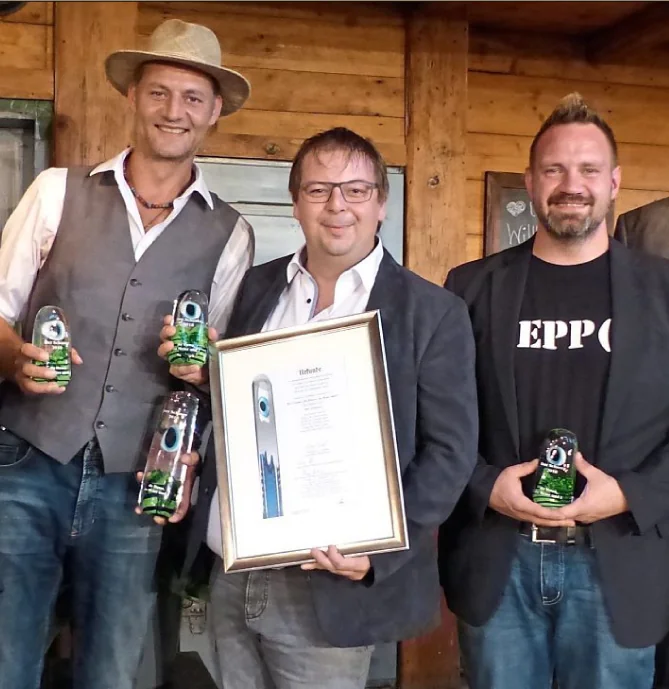
Image from Wikipedia
Image from Wikipedia
Da Huawa, da Meier und I – Bavarian musical cabaret between humor, punch, and dialect poetry
A group that created a distinctive sound from Bavarian zest for life
Da Huawa, da Meier und I was a three-member musical cabaret group from Lower Bavaria and the Upper Palatinate, which gained influence well beyond the borders of its home region since its founding in 1999. The ensemble combined Bavarian dialect, cabaret punchlines, and an astonishingly versatile musical language into a stage form that entertained as much as it commented. For years, the formation represented a music career where humor was never just decoration, but part of a precise artistic stance. ([de.wikipedia.org](https://de.wikipedia.org/wiki/Da_Huawa%2C_da_Meier_und_I))
The unique charm of this formation became evident early on: they did not simply play folk music in the classical sense but opened it up to blues, reggae, and rock 'n' roll. This stylistic flexibility made the name Da Huawa, da Meier und I a fixed reference point in the Bavarian cabaret and music scene. At the same time, the group remained regionally anchored and told its stories from a perspective that does not romanticize home but observes it in a clever, witty, and sometimes biting manner. ([de.wikipedia.org](https://de.wikipedia.org/wiki/Da_Huawa%2C_da_Meier_und_I))
From the early years on stage to a fixed place in the Bavarian live landscape
The trio made its first musical attempts at the Liederbühne Robinson in Runding/Vierau, one of Bavaria's oldest small art stages. As early as 2003, the formation performed regularly on stages in Bavaria and Austria, long before any widespread "Bavarian fashion wave." The fact that the cabaret artist Martina Schwarzmann became aware of the group in 2004 and recommended them to stages and organizers marked an important boost in public perception. ([de.wikipedia.org](https://de.wikipedia.org/wiki/Da_Huawa%2C_da_Meier_und_I))
From the perspective of the development of the stages, a typical success path of musical theater in Southern Germany unfolds here: small cabaret venues, growing word-of-mouth interest, followed by anchoring in a larger regional audience. Da Huawa, da Meier und I developed a stage presence based on directness, timing, and dialectal authenticity. The group was perceived not only as a music act but as a cabaret total event. ([de.wikipedia.org](https://de.wikipedia.org/wiki/Da_Huawa%2C_da_Meier_und_I))
Style: Traditional attire, dialect, and a musical cosmos without boxes
Characteristic of the group was the performance in traditional attire and singing in Bavarian dialect. The lyrics are witty, cheeky, and carry cabaret-inspired thoughts; they address social and political issues as well as questions of home, tradition, and everyday reality. It was precisely this strength that resonated with the audience: the songs struck a chord that made them laugh and think simultaneously. ([de.wikipedia.org](https://de.wikipedia.org/wiki/Da_Huawa%2C_da_Meier_und_I))
Musically, the formation moved quite broadly: folk music, blues, reggae, and rock 'n' roll merged into a distinctive soundscape with recognizability. Christian Maier, who wrote a large part of the songs as "da Huawa," shaped this openness over the years. The official artist's page describes this blend as the creative core of a style that consciously refused to be pigeonholed. ([de.wikipedia.org](https://de.wikipedia.org/wiki/Da_Huawa%2C_da_Meier_und_I))
Band history: Success through regional anchoring and a clear signature
With over 100 live concerts a year, Da Huawa, da Meier und I rank among the successful music-cabaret groups in Bavaria. This high frequency indicates a professional live structure built on continuity, audience contact, and reliable demand. Many of their songs, including Bayernland and Ohne Hos’n, ohne Schuah, became widely known in the South and developed into pieces that remain instantly associated with the group's name. ([de.wikipedia.org](https://de.wikipedia.org/wiki/Da_Huawa%2C_da_Meier_und_I))
The group's success was based not on short-term fads but on a stable connection of dialect, humor, and skillful composition. Their repertoire never seemed arbitrary but thrived on characteristic perspectives of Bavarian identity, family idylls, village life, and societal frictions. It was this mix that made the formation attractive to an audience seeking entertainment with a stance. ([de.wikipedia.org](https://de.wikipedia.org/wiki/Da_Huawa%2C_da_Meier_und_I))
Discography: From debut to best-of
The discography of Da Huawa, da Meier und I documents a remarkably continuous development. After the single Ohne Hos’n, ohne Schuah in 2005, their album Bayern und anderswo (2005), Fensterln, Schnupfa, Volksmusik (2007), the documentary DVD Da Huawa, da Meier und I (2009), Vogelfrei (2010), the best-of studio album tonbandl’t (2012), D’ Würfel san rund (2013), Irish Bayrisch (2015), Zeit is a Matz! (2016), and Agrat (2019) followed. ([de.wikipedia.org](https://de.wikipedia.org/wiki/Da_Huawa%2C_da_Meier_und_I))
These releases demonstrate a band that developed its profile not through radical breaks but through refinement. Particularly the best-of album tonbandl’t embodies the ambition to document a matured workshop of songs and make the repertoire accessible to new listeners. The discography reads like a chronicle of a regional success story, where stage material, song tradition, and cabaret interweave. ([de.wikipedia.org](https://de.wikipedia.org/wiki/Da_Huawa%2C_da_Meier_und_I))
Projects, collaborations, and the opening to the Irish-Bavarian stage
With the project Irish-Bairisch, the formation expanded its artistic field even further. Together with the Irish music group Na Ciotogi, they combined Bavarian and Irish folk music into an evening program that was performed in Bavaria and Ireland and developed into a musician exchange. Additionally, performances with the brass formation Die Bayerischen Löwen were part of the group's projects. ([de.wikipedia.org](https://de.wikipedia.org/wiki/Da_Huawa%2C_da_Meier_und_I))
Such collaborations showcase an important facet of artistic development: the music of Da Huawa, da Meier und I always remained regionally rooted while also opening up to transcultural influences. Particularly in its exchange with Irish folk music, the rhythmic and melodic flexibility of the project was clearly highlighted. This was not just an excursion, but an expansion of the musical horizon with genuine stage value. ([de.wikipedia.org](https://de.wikipedia.org/wiki/Da_Huawa%2C_da_Meier_und_I))
Media presence and cultural visibility
Since 2008, the trio has held a regular spot on the weekly broadcast freiraum on BR-alpha. There, the group guided viewers through Bavaria in a kind of small road movie, combining music with scenic and cultural storytelling. Furthermore, the ensemble was present in formats such as Ottis Schlachthof, Abendschau, Mattuschkes Lieblingen, and Wirtshausmusikanten beim Hirzinger. ([de.wikipedia.org](https://de.wikipedia.org/wiki/Da_Huawa%2C_da_Meier_und_I))
This media visibility strengthened the group's authoritative status far beyond the small art scene. Those who regularly appear on public television with such a distinctive tone gain cultural relevance because the audience recognizes not just a gag but a discernible stance. For Da Huawa, da Meier und I, this meant: musical cabaret with local soul and supra-regional impact. ([de.wikipedia.org](https://de.wikipedia.org/wiki/Da_Huawa%2C_da_Meier_und_I))
Awards and recognition
The artistic achievement of the group did not go without awards. In 2005, they received the Kleine Passauer Scharfrichterbeil, in 2006 the audience award and the second jury prize of the Thurn and Taxis cabaret festival in Regensburg. In July 2018, they were honored with the cultural prize “Der Schauer” from the district of Cham for an outstanding contribution to a culture that "makes you laugh" and "brings people together." ([de.wikipedia.org](https://de.wikipedia.org/wiki/Da_Huawa%2C_da_Meier_und_I))
Such awards are more than decorative footnotes in the music cabaret scene. They signify an artistic authority that emerges not solely from popularity but from quality, individuality, and sustainable impact on the audience and region. Da Huawa, da Meier und I exemplify a understanding of music that views entertainment as a cultural practice. ([de.wikipedia.org](https://de.wikipedia.org/wiki/Da_Huawa%2C_da_Meier_und_I))
Current status: From trio to a lasting brand
The official artist communication surrounding Christian Maier demonstrates that the name “Da Huawa” continues to resonate after the active trio phase. The current page emphasizes that Maier has been performing with his songs for nearly 30 years and reaches audiences as a live musician with new and familiar sounds. Additionally, the page references the solo album Beste Zeiten, which appears as a new chapter in his career. ([dahuawaundi.de](https://dahuawaundi.de/?utm_source=openai))
It is important for the perception of Da Huawa, da Meier und I: the group today represents not only a completed discography but also a continuing artistic signature that lives on in solo projects. This continuity keeps the musical development understandable and accessible for new listeners. The trio's repertoire has established itself in the memory of the Bavarian music landscape. ([dahuawaundi.de](https://dahuawaundi.de/?utm_source=openai))
Conclusion: Why Da Huawa, da Meier und I remains exciting to this day
Da Huawa, da Meier und I united musical cabaret, dialect, folk music, and subtle social observation into a form that remained unmistakable in Bavaria. The group impressed with stylistic openness, strong stage presence, and a discography that treated regional identity not as folklore but as living presence. Anyone who wants to experience the sound of Bavarian cabaret art in all its breadth should consciously listen to this work and not miss the energy of such live formats. ([de.wikipedia.org](https://de.wikipedia.org/wiki/Da_Huawa%2C_da_Meier_und_I))
Official channels of Da Huawa, da Meier und I:
- Instagram: No official profile found
- Facebook: No official profile found
- YouTube: No official profile found
- Spotify: No official profile found
- TikTok: No official profile found
Sources:
- Wikipedia – Da Huawa, da Meier und I ([de.wikipedia.org](https://de.wikipedia.org/wiki/Da_Huawa%2C_da_Meier_und_I))
- Da Huawa und I – Christian Maier ([dahuawaundi.de](https://dahuawaundi.de/?utm_source=openai))
- Da Huawa und I – Music ([dahuawaundi.de](https://dahuawaundi.de/musik/?utm_source=openai))
- Donaukurier – Best entertainment with the duo Da Huawa und I in Fuchsstadel Riedenburg ([donaukurier.de](https://www.donaukurier.de/lokales/landkreis-kelheim/beste-unterhaltung-mit-dem-duo-da-huawa-und-i-im-fuchsstadel-riedenburg-18014704?utm_source=openai))
- Wikipedia: Image and text source ([de.wikipedia.org](https://de.wikipedia.org/wiki/Da_Huawa%2C_da_Meier_und_I))