
Django Asül
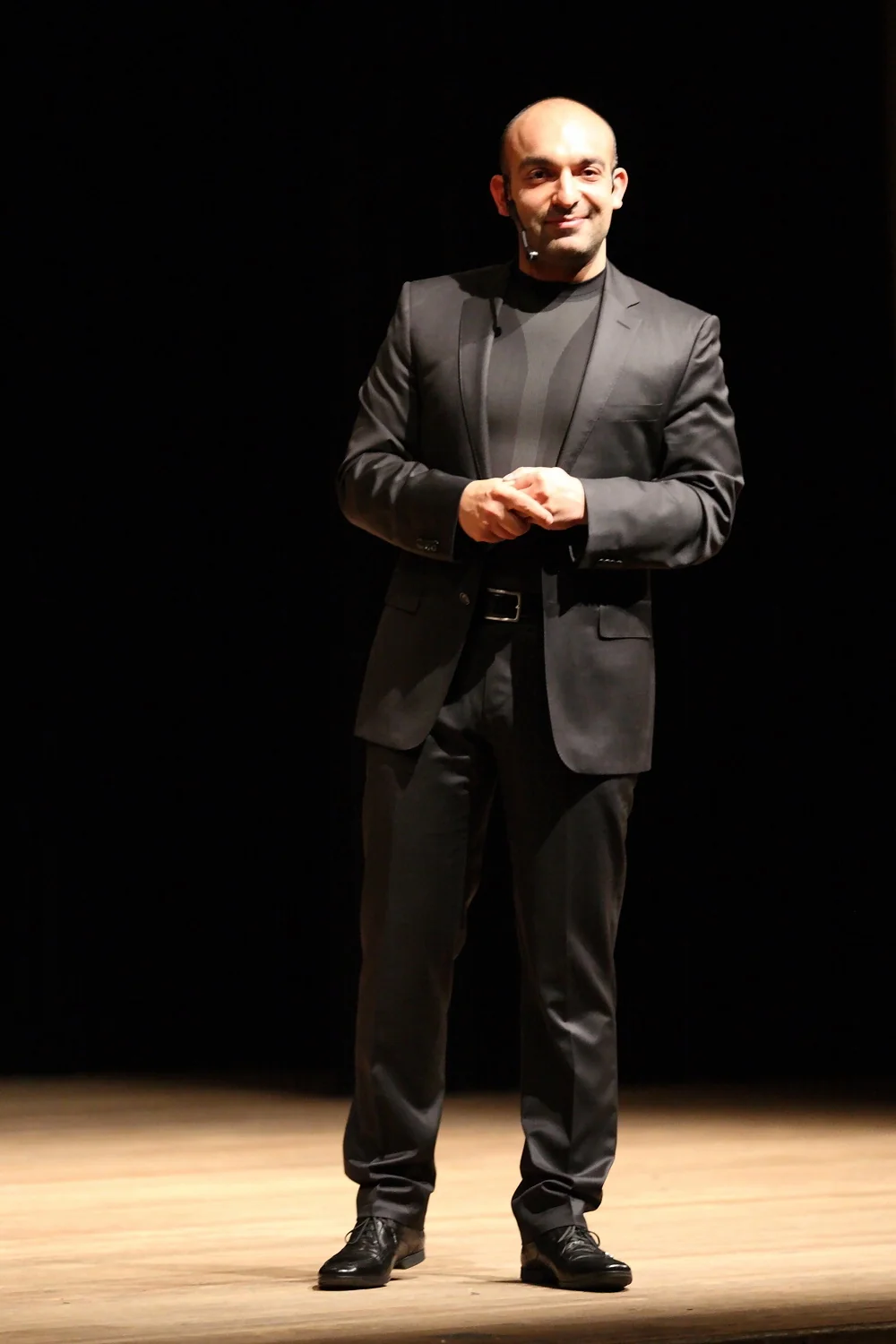
Image from Wikipedia
Image from Wikipedia
Django Asül – The Political Precision Mechanic of Bavarian Cabaret
Between Lower Bavaria and the Global Situation: Why Django Asül Has Set Standards for Decades
Django Asül, born Uğur Bağışlayıcı in Deggendorf in 1972, is one of the defining voices of German-speaking cabaret. While his music career in the traditional sense doesn't exist, his stage presence, timing, and keen sense of rhythm and dynamics are as musical as his name sounds. Using the Lower Bavarian dialect, precise articulation, and a dramaturgical structure reminiscent of clever compositions, he dissects political processes, social routines, and the Bavarian way of life. Asül combines the artistic development of a language virtuoso with the experiences of a cross-cultural border crosser, adding a distinctive tonal quality to political cabaret that has thrilled fans, critics, and event organizers since the late 1990s.
He gained fame with programs that not only deliver topical punchlines but also open up a long-term perspective on power, media, and mentalities. Whether on TV, large stages, or in satirical annual reviews, Asül focuses on substantive depth and formal elegance. His performances demonstrate how observation, arrangement, and linguistic production merge into a dense stage narrative – politically charged, pointed, and surprisingly poetic.
Biographical Roots: Lower Bavaria, Migration Experience, and the School of Humor
Growing up in Hengersberg, rooted in Lower Bavaria and shaped by Turkish heritage, Asül distills biographical experience into an artistic identity that doesn't smooth out ambiguities but makes them productive. After graduating from high school, he completed training as a banker and worked as a tennis instructor – two stages that influence his later stage work: the precision of a mathematician and the physicality of sports flow into the timing, posture, and precision of his performance. A formative stage experience in the 1990s set him on the path to a career in word-based music – his cabaret journey. He launched his debut program "Hämokratie" in 1997 and sharpened his signature style: thesis-driven, unafraid of contradiction, and formally conscious.
With each new production, he expanded his repertoire of perspectives – from the Lower Bavarian dialect to playing with accents. This technique acts like a multi-voiced arrangement: voices blend into one another, roles reflect roles, and societal conflicts become audible through dialogical miniatures. In this way, Asül creates a resonance space where Bavaria, Berlin, and global politics converse with each other.
Breakthrough and Public Presence: From "7 Tage, 7 Köpfe" to the May Bock Speech
Asül's nationwide breakthrough can be attributed early on, alongside his tours, to television appearances. Guest appearances on popular formats made him known to a large audience, but his heart has always remained on stage. Iconic is his annual appearance at the May Bock tapping in Munich's Hofbräuhaus, where he gives satirical counterpoints to politicians. This tradition roots him in the ritual calendar of Bavarian culture – a place where local identity, media public, and political commentary merge in a performative "live editorial."
At the same time, he developed TV formats that brought his signature style to the screen: the regular series "Asül für alle" and his special program "Rückspiegel," a satirical annual review. These works show how consistently Asül uses the stage as a laboratory to refine his themes dramaturgically – and then transfer them to other media.
A Repertoire Like a Discography: Programs, CDs, and Stage Cycles
Anyone who reads Asül's work like a discography can recognize clear lines of development. Following "Hämokratie," titles such as "Autark," "Hardliner," and "Fragil" emerged – titles that already reveal his concept: societal terms become stage titles that pull the audience into cognitive tension fields. Later came "Paradigma," "Letzte Patrone," and "Offenes Visier," each as the next stage of a dramaturgical exploration of freedom, pressure, risk, and attitude. Some of these programs were also released as recordings – a kind of live album tradition in cabaret, where tones, pauses, and reactions carry the "production."
Currently, Asül continues with "Am Ende vorn," premiering in April 2024: an evening that does not get bogged down in the small concerns of daily politics but seeks large-scale lines and conclusions. The program is designed like a concept album – thematically coherent, varied in material, and pointed in cadence. His annual review "Rückspiegel" and TV recordings also keep the stage present in the media memory.
Current Projects 2024–2025: "Am Ende vorn," TV Recordings, and the "Rückspiegel"
Since 2024, Django Asül has been touring with "Am Ende vorn." The production showcases his perspective beyond the day-to-day, with observations on sustainability, solidarity, and societal uncertainty – focused, humorous, and masterfully executed. In 2025, TV broadcasts featured stage highlights, making his live arrangement experienceable in condensed form. Traditionally, towards the end of the year, Asül also presents his "Rückspiegel" – the satirical annual review – on stage, summarizing the headlines, undercurrents, and surprises of the passing year, while not shying away from the small deviations from which his punchlines often draw their energy.
The tight interconnection of ongoing tours, TV recordings, and annual reviews forms his production logic: material originates on stage, condenses into chapters, solidifies into programs, and takes the step into television. Thus, a publishing framework emerges that resembles a release policy in pop music: tour, live recording, new material – a cycle enabling audience management and artistic development at the same time.
Style Analysis: Language as an Instrument – Dialect, Accent, and Perspective Shifts
Asül's style functions like a finely orchestrated ensemble. The Lower Bavarian dialect is his lead instrument; the shifts in accents and tones create counterpoints. Perspective shifts inject social issues with energy by making the polyphony of reality audible: politics as a choir of interests, media as a resonance body, everyday observations as solos. Composition and arrangement serve the punchline, but they never become art for art's sake: each punchline carries insight, and every twist opens a view of structures, not just headlines.
Technically, his control of tempo and pauses stands out. Asül consistently utilizes the tension between expectation and surprise – the "cadence" of the punchline. This results in a production of the evening that feels highly precise: setups tell stories, transitions modulate, and refrains return as recognizable motifs. Thus, a narrative architecture is created that forms a kind of dramaturgical album – with themes, variations, and a final coda.
Cultural Context: Political Cabaret as a Bavarian School – and Beyond
In the tradition of Bavarian political cabaret, Asül occupies a position that connects regional dialect with supra-regional relevance. Bavaria serves as a projection surface where national and global conflicts are illuminated with a sharp eye. It is precisely this local anchor that creates credibility – "trustworthiness" in the best sense – and opens the field for universal observations on power, migration, media logic, and shifts in mentality. In his speeches and stage evenings, Bavaria becomes a test setup where the global situation appears under a magnifying glass.
This approach has an impact: Asül represents a form of political satire that does not preach but educates. It uses humor as a motor for understanding. The artistic influence reaches beyond cabaret stages into debate spaces and media productions; its images and phrases circulate – educating the audience in navigating contradictions.
Awards and Recognitions: Authority through Artistic Consistency
The series of his honors documents the continuity of his artistic development: Early on, he received significant cabaret awards and was honored with the Bavarian Order of Merit in 2018 – a clear sign of the societal importance of his work. In 2019, he received the Culture Prize Bavaria, acknowledging his contribution to the cultural landscape of the Free State. In 2021, he won the main prize of the Bavarian Cabaret Award; in 2025, he was awarded the Bavarian Constitution Order by the Bavarian Parliament – an acknowledgment that combines artistic authority and civic relevance. These milestones are more than trophies: they demonstrate the sustainable cultural value of his work.
Television, Stage, Column: Multimedia Signature
In addition to his stage programs, Asül shapes the television landscape and journalistic columns. His show "Asül für alle" and "Rückspiegel" anchor him in the broadcast calendar, while columns carry his tone into the feuilleton. This multimedia work shifts his reach and demands his production technique: themes must be translated into formats, timing and density of punchlines adjusted, and the sound of the stage translated into the television medium. The constant presence of his programs in the public service context – as well as the radiance that flows back into live performances – shows that he succeeds in this.
Discography in a Broader Sense: Recordings and Programmatic Cycles
Asül early released parts of his repertoire on CD – "Hämokratie," "Autark," "Hardliner," and "Fragil" mark a phase where live recordings and media document and disseminate his stage work. These “recordings” function like studio albums in cabaret: they preserve arrangements, make the finely tuned production audible, and anchor quotes and phrases in a kind of collective setlist. Later programs are connected to this, with tour cycles that are thematically focused and formally polished.
EEAT in Practice: Experience, Expertise, Authority, Trustworthiness
Experience: Three decades on stage shape a career in word-based music – with countless performances, TV moments, and satirical highlights. Expertise: Asül masters the tools of political-satirical arrangement – from finely tuned dialect usage to perspective montages and the dramaturgical composition of entire evenings. Authority: Awards, honors, and television formats confirm his prominent role in the cultural field. Trustworthiness: The stations of his artistic development, premieres, programs, awards, and TV documents are transparently verifiable and publicly accessible.
Conclusion: Why You Should Experience Django Asül Live
Django Asül represents cabaret as an art of understanding: linguistically sophisticated, politically aware, and formally so precise that every evening feels like a newly arranged suite. Anyone interested in the present – in its stimulating themes, trigger words, and frictions – will find a stage artist here who provides orientation through humor and craftsmanship. "Am Ende vorn" continues this line with fresh material. Live, his entire artistry is revealed: the rhythm of speech, the dynamics of dramaturgy, the energy of the audience. In short: those who value political satire as a high ceremony of thought should not miss Asül on stage.
Official Channels of Django Asül:
- Instagram: No official profile found
- Facebook: No official profile found
- YouTube: No official profile found
- Spotify: No official profile found
- TikTok: No official profile found
Sources:
- Official Website – Programs, Dates, Management
- Official Website – Biography (Download/Organizer)
- Wikipedia – Django Asül (Overview, Early Recordings, Awards)
- Bavarian Parliament – Constitution Order 2025 (Laudation and Awardee List)
- Bavarian Parliament – Press Release on the Constitution Order 2025
- Bavarian State Ministry – Culture Prize Bavaria 2019 (Awardee including Django Asül)
- BR/ARD Media Library – Stage Program "Offenes Visier" (TV Recording, 2025)
- Fürth Aktuell – Tour Announcement "Am Ende vorn" (2025)
- Wikipedia: Image and text source
Upcoming Events
Django Asül: At the End in the Klosterkirche Traunstein
Cabaret with attitude in Traunstein: Django Asül meets an audience that loves punchlines, speed, and atmosphere in the Klosterkirche. #Cabaret #Traunstein
Django Asül – Rearview Mirror 2025
Fürth laughs: Django Asül serves Rearview Mirror 2025 in the Comödie Fürth. 06.01.2026, 19:30, Tickets from €24. Sharp political cabaret, strong audience reaction – secure your seats now! #Cabaret
Django Asül live in Munich: At the End in front at Fat Cat
Munich laughs with attitude: Django Asül brings sharp punchlines, timing, and strong stage presence to the Blackbox. 22.05.2026, 19:30. #Cabaret
Django Asül – At the End in Front
Join Django Asül with 'At the End in Front' at the kultBOX Kempten. An unforgettable evening of political satire awaits you!
Django Asül - At the End in Front
Enjoy a humorous evening with Django Asül in Kempten. Experience the cabaret program on June 5, 2026.
Django Asül: At the End in Front
Experience Django Asül with his program "At the End in Front" on June 5, 2026, in Kempten at the bigBOX Allgäu. Get your tickets now!
Django Asül – At the End Ahead
Django Asül presents his program "At the End Ahead" on June 5, 2026, in Kempten. Cabaret and political satire at its finest!
Django Asül – At the End Up in Munich
Munich-Pasing laughs on August 3, 2026: Django Asül brings sharp satire to the festival tent with At the End Up. Doors at 6 PM, start at 8 PM, tickets 34 €. #Cabaret #Munich
Volunteer Fire Brigade Erlstätt: Standpipe Party with DJ
Dance into the night at the fire station Erlstätt: DJ set, strong vibes, indoor & outdoor. Saturday, 24.10.2026, 8:00 PM, price to follow. Regional community, big party – be there! #StandpipeParty