
Friedensreich Hundertwasser
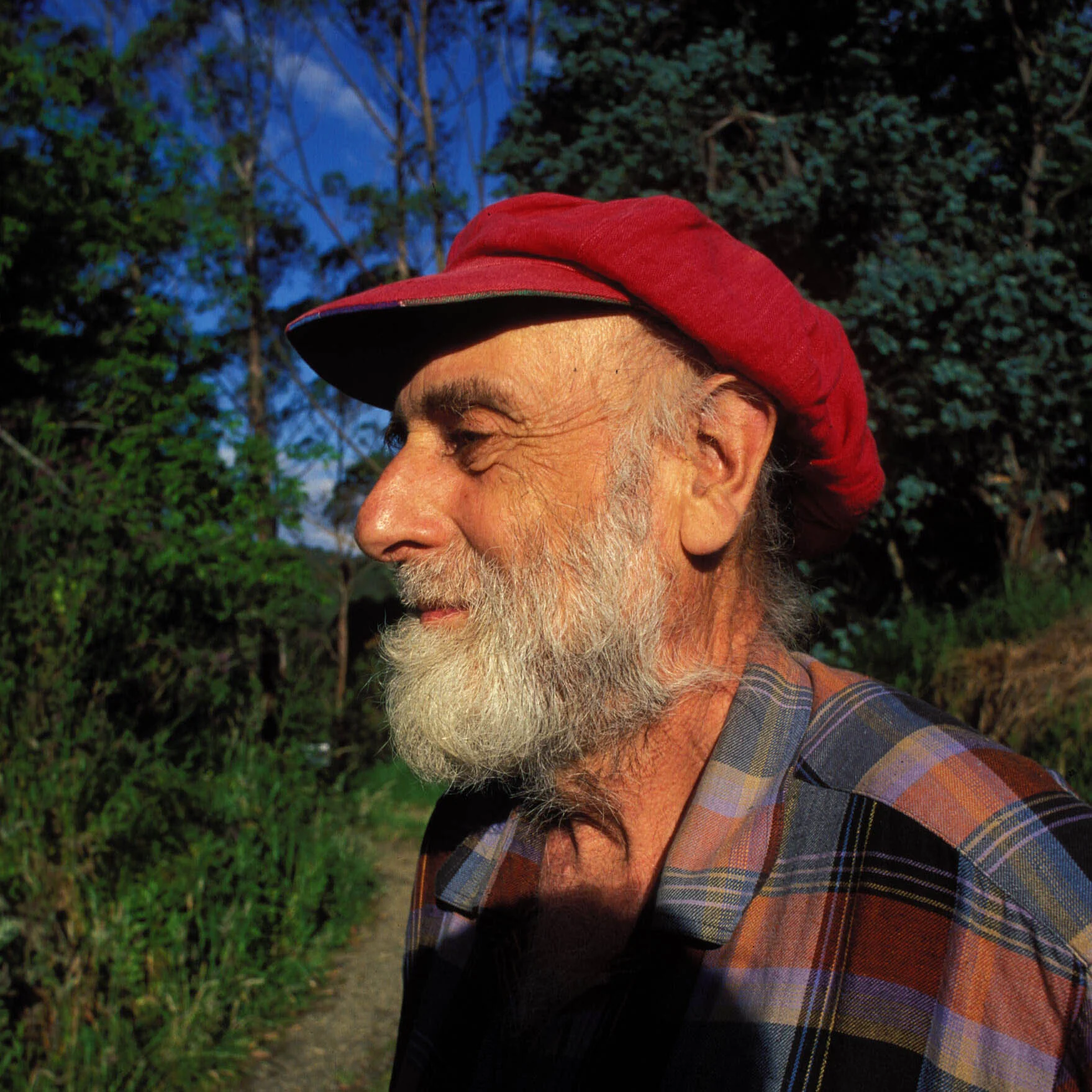
Image from Wikipedia
Image from Wikipedia
Friedensreich Hundertwasser – Painter, Architect, Ecological Visionary
The Poetry of the Irregular Line: How Friedensreich Hundertwasser Reconciled Nature, Art, and Architecture
Friedensreich Hundertwasser Regentag Dunkelbunt, born as Friedrich Stowasser on December 15, 1928, in Vienna and passed away on February 19, 2000, aboard the Queen Elizabeth 2, is considered one of the defining artist personalities of the post-war modern era. He created a multifaceted oeuvre consisting of painting, graphic art, applied art, and innovative architectural design – infused with ecological thinking, humanistic pathos, and radical individualism. He derived his artist name in 1949 from "sto" (Slavic for "hundred") and from his baptismal name "Friedrich"; the additions "Regentag" and "Dunkelbunt" condense his poetic self-description as a counterpoint connected to color and nature against the normalization of everyday life. Throughout his life, Hundertwasser opposed the "straight line" and standardization – a stance that consistently shaped his artistic development, his stage presence in public space, and his architectural philosophy. (hundertwasser.com)
Early Years and Identity: Art as a Lifeline in Dark Times
Hundertwasser's biography is inseparably linked to the history of Vienna and the upheavals of the 20th century. The Nazi era severely affected his mother's Jewish family; after the war, he briefly attended the Academy of Fine Arts in Vienna before travel and self-study shaped his artistry. Early on, he developed a distinctive visual language that breaks from academic conventions and favors organic, spiral structures. His later ethos stems from these biographical experiences: the defense of the individual, the right to deviate, and the commitment to not suppress natural processes, but rather weave them into art and architecture. (en.wikipedia.org)
Breakthrough and Artistic Existence: From Vienna to the Avant-Garde
His artistic career gained momentum in the early 1950s: Exhibitions at the Wiener Art Club (1952/53) marked his entrance into the public realm; Paris and Florence became early locations of creation and inspiration. Hundertwasser developed his concept of "Transautomatism," which places the experiential space of the viewers at the center. Characteristic features include bright colors, vegetable ornaments, spirals, and lively, handwritten lines – painterly compositions that assert visual freedom against functional sobriety. During these years, his authority as an independent voice within European modernism solidified. (munzinger.de)
Painting, Graphic Art, Applied Arts: The Expanded Atelier
Hundertwasser was not only a painter; he also worked in graphic art and applied arts, designing stamps, flags, and posters. Central to his work remains graphic art with its color-variable editions, where each copy becomes a unique piece – an expression of an artistic understanding that places individuality and craftsmanship over mechanical uniformity. This "varied" thinking connects his visual artwork with his later architectural production, where repetition is always enlivened by organic differences. (hundertwasser.com)
Architecture as Manifesto: Against the Norm – for Lively Diversity
Since the 1980s, Hundertwasser realized an architectural vision as a designer and idea author, intertwining nature, art, and everyday life. His principles – "tree tenants," roof forests, the "window right," uneven floors, and spontaneous vegetation – systematically contradict the sterile grid logic of modern purposive buildings. Icons of this architectural philosophy include the Hundertwasserhaus in Vienna and the KunstHausWien, which still presents the most comprehensive collection of his work today and makes his design and ecological principles spatially tangible. Projects like the Spittelau district heating plant, the "Waldspirale" in Darmstadt, the "Grüne Zitadelle" in Magdeburg, or the redesign of the Uelzen train station bear the signature of an artist who perceives the city as an ecosystem. (kunsthauswien.com)
Ecological Ethos: Art as Environmental Practice
Hundertwasser was a passionate environmental activist. In manifestos, lectures, and public actions, he advocated for tree plantings, water conservation, and a waste-free society. According to his vision, architecture should heal cycles rather than interrupt them and restore sensory, nature-close spaces to the residents. Consequently, the KunstHausWien understands itself as an "ecological museum" – a house that intertwines artistic exhibition practices and environmental awareness, thus extending Hundertwasser’s spiritual legacy into the present. This consistent connection of design, composition, and ecology makes his artistic development exemplary for a sustainable cultural practice. (kunsthauswien.com)
International Influence and Life Stages: Vienna, Europe, New Zealand
From the 1970s onwards, Hundertwasser moved significant life phases and work activities to the north of New Zealand. The local landscapes, the Maori culture, and the maritime environment reinforced his connection to nature and his building with "living materials" – evident, for example, in the Hundertwasser Art Centre in Whangārei, which testifies to his aftereffects in Oceania. The international reception recognized him as an idiosyncratic visionary, whose work mediates between Viennese modernism, secession, and biomorphic architecture, without ever fitting into a school. His death in 2000 at sea marked the conclusion of an artist's life that had dissolved the boundaries between studio, city, and landscape. (en.wikipedia.org)
Iconic Projects in Focus: Places Where Theory Becomes Practice
The Hundertwasserhaus in Vienna, designed as a residential building, demonstrates inhabited "unique architecture" – individual windows, colorful façades, and a green roof. The KunstHausWien combines exhibition space, museum, and urban garden; it remains the only building in Vienna that is accessible year-round designed by Hundertwasser. In Germany, the "Waldspirale" in Darmstadt and the "Grüne Zitadelle" in Magdeburg show how ornamental color surfaces, ceramic elements, and vegetative roof landscapes can poetize dense urban quarters. The Uelzen "Hundertwasser Station," in turn, brings together everyday mobility, information design, and experience layers – recently reinforced by an expanded exhibition celebrating the 25th anniversary. (kunsthauswien.com)
Stylistic Devices, Composition, Arrangement: The Grammar of the Spiral
Hundertwasser's visual language employs serial variations, color-intensive glazes, and a dense ornamentation. The spiral as a leitmotif represents organic unfolding, growth, and return – a symbol that recurs in images, space, and architecture. His material and color arrangements avoid right angles, favor irregular mosaics, and a "breathing" façade image. In production, he relies on artisanal processes that allow for variability and treat "composition as a living organism" – an artistic perception that underpins his authority as a thinker between painting, design, and architecture. (en.wikipedia.org)
Applied Art and Symbolic Politics: Stamps, Flags, Symbols
In addition to his buildings and paintings, Hundertwasser’s designed stamps, posters, and flags shape his image as an artist of everyday culture. These objects translate the principles of his painting – richness of variation, organic form, energetic colors – into the realm of visual communication. Overall, a coherent body of work emerges, whose recognizability is based on a specific, nature-oriented vocabulary of forms that intertwines European heritage and individual signature. (en.wikipedia.org)
Reception and Canonization: Hundertwasser in the Museum
The Hundertwasser Museum at KunstHausWien presents the world's largest collection of his oeuvre – from key works of painting to original graphics and architectural models. Rare film documents, such as those on the history of his ship "Regentag," complement the exhibition. With international temporary exhibitions on ecology and contemporary art discourse, the house functions as a platform that carries Hundertwasser’s impulses into contemporary art and urban society, embedding his artistic development in current questions. (kunsthauswien.com)
Cultural Influence 2025: Anniversaries, New Installations, Visibility
Hundertwasser's relevance remains alive: In 2025, the 25th anniversary of the Uelzen Hundertwasser Station was marked by an extended permanent exhibition presenting around 40 projects and establishing the station as a regional attraction. Concurrently, KunstHausWien strengthens the artist's public perception with programs, new installations, and its ecological museum strategy. Thus, Hundertwasser continues to influence through institutions, exhibition formats, and urban spaces – as an artistic voice that connects sustainability, imagination, and urban quality of life. (welt.de)
Conclusion: Why Hundertwasser Remains Essential Today
Hundertwasser fascinates because he understood art as a comprehensive practice of life: painting as experiential space, architecture as ecological infrastructure, design as a plea for diversity. His music career in a metaphorical sense – the rhythm of his spirals, the polyrhythm of his mosaics, the crescendo of colors – sets standards for sensual intensity and artistic freedom. Those who enter his buildings experience a stage of everyday life where nature and humanity come into harmony. Hundertwasser makes cities warmer, homes more personal, and art more tangible. Call to Action: This architecture must be experienced live – at the KunstHausWien, in the Hundertwasserhaus, and at all the places where the "straight line" has long been replaced by lively curves. (kunsthauswien.com)
Official Channels of Friedensreich Hundertwasser:
- Instagram: No official profile found
- Facebook: No official profile found
- YouTube: No official profile found
- Spotify: No official profile found
- TikTok: No official profile found
Sources:
- Hundertwasser – Official Website of the Hundertwasser Non-Profit Foundation
- Hundertwasser – Encyclopedia/Portal of the Hundertwasser Non-Profit Private Foundation
- Kunst Haus Wien – Museum Hundertwasser (Permanent Exhibition)
- Wikipedia (EN) – Friedensreich Hundertwasser
- WELT – 25 Years of Hundertwasser Station Uelzen (News, Nov. 2025)
Upcoming Events
Cultural Highlight 2025: Friedensreich Hundertwasser – The Right to Dreams
Experience Hundertwasser's color frenzy in Lindau: painting, graphics, ecological vision. 15.03.2025–11.01.2026, 10 € admission. Sensory work viewing, audio guide included. Plan now. #Hundertwasser
Cultural Highlight 2025 Friedensreich Hundertwasser – The Right to Dreams
Experience Hundertwasser's vibrant visual worlds at the Hundertwasser Art Forum Lindau: Painting, watercolors, original graphics. Daily 10 AM–6 PM, Admission 10 €. Deep aesthetic experience – visit now. #HundertwasserLindau
Cultural Highlight 2025 Friedensreich Hundertwasser
Immerse yourself in Hundertwasser's radiant image worlds at the Art Forum Lindau: painting, printmaking, nature vision. 23.12.2025, 10–18 hrs, €10, accessible. Intense art experience – visit now. #Hundertwasser
Public Tour – The Art of Diversity
Discover Hundertwasser's printmaking in Lindau: Colors, trial prints, and real traces of the work bring art to life. 29.11.2026, €4.00 plus admission. #Hundertwasser #Lindau