
Friedrich Dürrenmatt
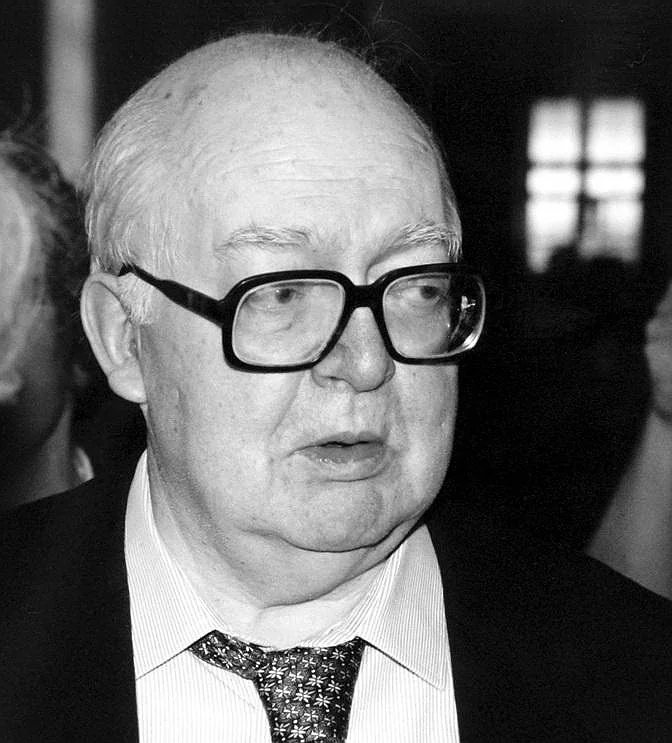
Image from Wikipedia
Image from Wikipedia
Friedrich Dürrenmatt – Dramatist, Narrator, Painter: a Swiss Century Artist
A voice that redefined theater, crime literature, and visual arts
Friedrich Reinhold Dürrenmatt (January 5, 1921 – December 14, 1990) is considered one of the most influential authorities of the 20th century in the German-speaking world. Growing up as the son of a pastor in the Emmental region, he developed a dual artistic identity early on: as an uncompromising dramatist and as a painter and draftsman with a strong visual approach. He did not have a music career – however, his stage presence as a public intellectual figure, his artistic evolution between stage, prose, and studio, as well as his sense of rhythm, timing, and scene arrangement have shaped generations of theater makers and readers. Works such as The Visit and The Physicists, crime novels like The Judge and His Hangman, The Suspicion, and The Pledge, along with later prose works and essays, showcase an author who combines tension, humor, and philosophical reflection into a distinctive composition.
Characteristic of his work is his precise dramaturgy: the composition and arrangement of his scenes create a musical pulsation that orchestrates punchlines, tragicomic intensifications, and moral dissonances. At the same time, Dürrenmatt connects his subjects in an interdisciplinary manner: the history of science in The Physicists, economics and morality in The Visit, and critiques of knowledge in crime fiction. This breadth, combined with international resonance and ongoing performance practices, establishes his cultural authority.
Biographical beginnings: From Emmental to the centers of post-war theater
Born in Konolfingen near Bern, Dürrenmatt initially studied philosophy, German studies, and natural sciences; in 1947, he made his debut as a dramatist with It Is Written. Even his early plays, such as The Blind Man and Romulus the Great, demonstrate a distinctive handwriting that arranges historical themes as parables. Early influences of epic theater and a penchant for grotesque disruptions shaped a poetics in which comedy and catastrophe are inseparably intertwined. The international theater scene of the 1950s reacted with curiosity to this, as the post-war era demanded new forms to negotiate guilt, power, and chance.
In 1956, the international breakthrough followed: The Visit premiered in Zurich and quickly became a worldwide success. The configuration of characters resembles a strictly composed chamber piece – with a “leitmotif” of the purchasable conscience that appears in endlessly new variations. Thus, Dürrenmatt established himself as an author whose stage works treat social systems like musical themes: they modulate motifs, drive conflicts to crescendos, and rarely end in harmonious resolutions.
Career highlights: Tragicomedy, crime novel, and the ethos of form
With The Physicists (1962), Dürrenmatt condensed his dramatic technique into an exemplary piece of modern theater history. The experimental arrangement – three physicists, a mental institution, a tyrannical doctor – functions like a precisely constructed score, constantly shifting knowledge, responsibility, and power against each other. The premiere in Zurich already became a seasonal event; soon after, international successes followed in London and New York. The Physicists continues to assert itself today as a repertoire hit and a discursive reference work on scientific responsibility in times of global risks.
Alongside this, Dürrenmatt perfected the philosophical crime novel. The Judge and His Hangman (1950) and The Suspicion (1951) introduce the character of Commissioner Bärlach, whose investigations reveal that rectified justice is only a fragile construct. In The Pledge (1958), Dürrenmatt programmatically breaks the rules of the genre: instead of a classic resolution, he relies on the contingency of chance and thus deconstructs the boundaries of rational investigative logic. The story connects with the film It Happened in Broad Daylight and later adaptations – a prime example of his transmedial thinking.
“Discography” in the metaphorical sense: Major works, versions, adaptations
In a bibliographic sense as a “discography” of his works, Dürrenmatt's catalog includes plays such as The Visit, The Physicists, The Meteor, and Romulus the Great; prose works and crime novels like The Judge and His Hangman, The Suspicion, The Pledge, Justice, and The Assignment; radio plays, essays, and theoretical writings (including Theater Problems). Numerous works were published in variant versions or adapted for other media – indicating his compositional approach that “remixes” themes, extends motifs, and reconceives text layers.
The reception history shows a particular intensity surrounding three signature works. The Visit remains the flagship piece of moral economy; The Physicists became the most performed play in German-language theater during the 1962/63 season; The Pledge has spawned a diverse adaptation tradition from the Zurich stage to international film versions, including The Pledge (2001). This history of performance and film legitimizes Dürrenmatt as an authority whose work remains permanently present in cultural memory.
Style analysis: Composition, arrangement, “grotesque” as timbre
Dürrenmatt's expertise is evident in the composition and arrangement of conflicts. He orchestrates characters not as psychology, but as motifs in a score of parable, irony, and farce. The result is tragicomedies whose rhythmic intensifications function like syncopated beats: laughter and horror collide. The grotesque operates as a timbre that distorts morality and power, thus triggering processes of insight. His dialogues possess musical precision: repetitions, refrains, counter-voices – a precise sense of form that makes his plays robust for performance.
At the same time, Dürrenmatt anchors his dramaturgy in historical and scientific discourses. In The Physicists, he addresses the relationship between knowledge and responsibility; in The Visit, the economics of killing under capitalist conditions. Crime literature serves him as a laboratory for critiques of cognition – a re-arrangement of the genre that does not confirm the Enlightenment stance but problematizes it. This creates an aesthetic that sharpens suspense literature with philosophical reflection.
Cultural influence and international reception
Dürrenmatt influenced the post-war scene by linking epic theater with a specifically Swiss grotesque. His works were performed on leading stages in Zurich, Munich, London, New York, and far beyond. Critics early on recognized The Physicists as a classic of modern theater; The Visit has been recognized as a global success since its premiere and is one of the most discussed texts on justice, guilt, and social complicity. The enduring presence on stage attests to the relevance of his questions – from the Cold War to the present-day knowledge-based societies.
The media reach of his works – theater, radio, film, television – amplified his influence. It Happened in Broad Daylight became a cinema event in 1958; The Pledge traversed countries and decades, inspiring film and TV adaptations. This circulation demonstrates the resilience of Dürrenmatt’s compositions across genre boundaries: clear motifs, strong conflict arcs, and high adaptability to different cultural contexts.
Visual Arts: The Centre Dürrenmatt Neuchâtel as a Resonance Space
Less known but central to his oeuvre is his visual art. Dürrenmatt drew and painted throughout his life; his paintings, drawings, and caricatures engage in a productive dialogue with his texts. The Centre Dürrenmatt Neuchâtel, designed by Mario Botta and integrated into his former residence, presents a permanent exhibition and curates thematic shows that connect his visual worlds with literary motifs. In 2025, the center will celebrate its 25th anniversary – a strong signal for the sustainable institutionalization of this artistic dual profile.
Recent exhibitions reflect the spectrum of motifs and thought: Atomic Visual Worlds (2024/25) addresses his engagement with nuclearity; Lotti & Friedrich Dürrenmatt – Music (February–June 2025) opens the family’s record collection and showcases musical references in his works. The museum thus reveals Dürrenmatt's visual language as an extension of his literature – a multi-voiced “score” of color, line, and idea.
Institutional Anchoring, Estate, and Publication Status
Dürrenmatt initiated the Swiss Literary Archive (SLA) with his will by linking the transfer of his estate to the establishment of a national literary archive. The SLA opened in 1991; today it organizes the extensive estate with biographical materials, work documents, performance records, and media. The collections document the genesis of works, variant materials, directorial works, and international reception – a foundation for research, performance practice, and edition studies.
The Diogenes Verlag oversees an extensive edition of his works; revised volumes were published around his 100th birthday in 2021. The editorial care, accompanied by biographies and research publications, enhances the authority of the works in the literary field. For theaters and schools, the materials provide practical access to text versions, context, and performance traditions.
Awards, Honors, Impact
The awards mark milestones of an extraordinary career. In 1960, Dürrenmatt received the Grand Schiller Prize from the Swiss Schiller Foundation; in 1958, the Schiller Prize of the City of Mannheim was awarded to him. In 1986, he was honored with the Georg Büchner Prize – the highest literary award in the German-speaking world. These prizes recognize a body of work that combines mythology, science, and philosophy with wit, formal precision, and intellectual depth.
Beyond awards, performance statistics, new productions, and international translations show the enduring relevance. The Physicists led the German-speaking play schedules during the 1962/63 season; The Visit regularly returns to major theaters. In crime literature, The Pledge influenced criticism of the classic whodunit and sparked debates about chance, probability, and morality in investigative narratives.
Current Projects and Contemporary Relevance
Around the 100th birthday in 2021, numerous events set new accents. In 2024/25, the Centre Dürrenmatt will focus on the author's atomic visual worlds; in 2025, an exhibition will illuminate the musical connections in his works while simultaneously celebrating the center's 25th anniversary. Additionally, programs that initiate dialogues with contemporary artists extend Dürrenmatt's thought processes into the present. These curatorial setups showcase his work as a living resonance space for ethics, science, and social responsibility.
For theater makers, his plays remain exemplary models of economic scene architecture and dialectical composition. For readers and students, the prose texts serve as learning places for literary critique of knowledge. And for curators working at the intersection of literature and visual arts, Dürrenmatt provides a rich arsenal of motifs, materials, and surprising cross-references.
Conclusion: Why read and see Friedrich Dürrenmatt today?
Dürrenmatt remains captivating because his art accomplishes two things simultaneously: it entertains with drive, rhythm, and deadpan humor – and it confronts us with the demands of responsibility, power, and chance. His tragicomedies resonate because they function like precisely arranged scores, with themes that continue to linger in the mind. His crime novels subvert expectations and call for intellectual alertness. His drawings provide additional perspectives that translate thinking into images.
For those wishing to understand the present, Dürrenmatt offers aesthetic tools to endure ambivalence: grotesque, prescient, skillfully composed. Recommendation: experience the next production live, visit the permanent exhibition at the Centre Dürrenmatt Neuchâtel, or listen to The Physicists anew – as a pulsating score about responsibility in the age of knowledge.
Official Channels of Friedrich Dürrenmatt:
- Instagram: No official profile found
- Facebook: No official profile found
- YouTube: No official profile found
- Spotify: No official profile found
- TikTok: No official profile found
Sources:
- Wikipedia – Friedrich Dürrenmatt (de)
- Encyclopaedia Britannica – Friedrich Dürrenmatt
- Centre Dürrenmatt Neuchâtel – Official Website
- CDN – Exhibitions 2025 (including "Music", "Atomic Visual Worlds")
- Swiss National Library – Friedrich Dürrenmatt at SLA
- SLA – Estate of Friedrich Dürrenmatt (Inventory Overview)
- Wikipedia – The Physicists (Reception, Performances)
- Wikipedia – The Visit (Premiere, Classification)
- Wikipedia – It Happened in Broad Daylight (Film History)
- Wikipedia – The Pledge (Novel, Adaptations)
- German Academy for Language and Poetry – Georg Büchner Prize 1986
- Swiss Schiller Foundation – Grand Schiller Prize (Entries on Dürrenmatt)
- Schauspielhaus Zürich – The Visit (Notes on the Premiere)
- SWI swissinfo – Premiere 1956: Dürrenmatt’s “Old Lady”
- Dieter Wunderlich – The Physicists (Background, TV Adaptation)
- Wikipedia: Image and Text Source
Upcoming Events
The Visit of the Old Lady – Landestheater Coburg
Intense acting at GLOBE Coburg: Dürrenmatt's The Visit of the Old Lady with captivating direction, strong ensemble, and compelling aesthetics. Approx. 2:30 hrs, barrier-free. Experience, reflect, discuss – secure tickets now. #LandestheaterCoburg
The Visit of the Old Lady
An evening full of guilt, wit, and abyss: The Visit of the Old Lady at the Munich Volkstheater unfolds Dürrenmatt's power anew. 11.04.2026, 19:30. #Theater
THE PHYSICISTS in Potsdam
Dürrenmatt's classic live at the Hans Otto Theater: sharp wit, moral abysses, and strong stage designs. 22.04.2026 from €17.60. #Theater #Potsdam
The Visit of the Old Lady
A classic full of abysses at the Munich Volkstheater: Dürrenmatt's Visit of the Old Lady confronts strong stage images and sharp contemporaneity. 03.05.2026, from 18 euros. Secure seats now. #Theater
The Visit of the Old Lady
Dürrenmatt's classic meets a gripping contemporary interpretation at Munich Volkstheater. Guilt, revenge, and morality condense into powerful theater. #Theater
Theater Club 2: The Physicists (Premiere)
Dürrenmatt's classic meets clever stage power and fine black humor in Aalen. Premiere on 27.06.2026, 19:00, 14 €. Discover now. #Theater
Play Club 3: The Visit of the Old Lady
Experience the premiere of Dürrenmatt's famous tragicomedy in the theater hall of the Cultural Station in Aalen.
Play Club 2: The Physicists
A classic with sharp wit and dark smile: The Physicists at the KulturBahnhof Aalen on 05.07.2026, 7 PM, tickets starting at €14. #Theater #Aalen
The Visit of the Old Lady - Final Performance
Experience Dürrenmatt's classic one last time at the Cultural Station Aalen on July 11. Get your tickets now!
Theater Club 3: The Visit of the Old Lady (for the last time!)
A last look at Dürrenmatt's bitter masterpiece at the Cultural Station Aalen: intense, close, and full of moral explosive power. 11.07.2026, from 14 €. #Theater