
Gaetano Donizetti
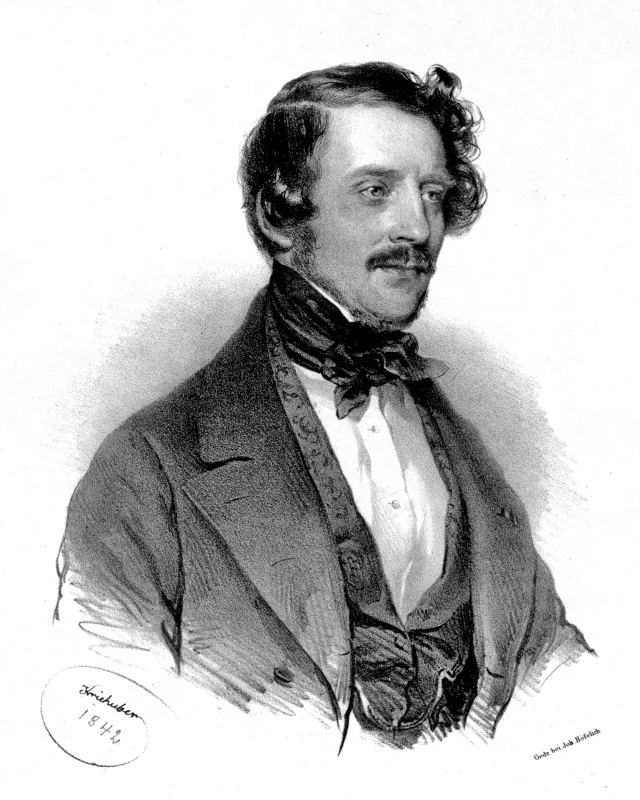
Image from Wikipedia
Image from Wikipedia
Gaetano Donizetti – Master of Belcanto and Architect of Romantic Music Theatre
From Poor Bergamasque to Opera Phenomenon: How Donizetti Conquered the Stage with Melody, Drama, and Virtuosity
Gaetano Donizetti, born on November 29, 1797, in Bergamo and died there on April 8, 1848, is one of the defining masters of the Belcanto era, alongside Gioachino Rossini and Vincenzo Bellini. Coming from modest means, he shaped a musical career in just under three decades that profoundly changed European opera. His compositions blend melodic inventiveness with dramatic precision and a distinctive stage presence that continues to shape the repertoire of international opera houses today. Some of his most frequently performed works include L’elisir d’amore (1832), Lucia di Lammermoor (1835), and Don Pasquale (1843) – operas that generations of singers regard as benchmarks for style, technique, and expression.
Origins, Education, and Artistic Influence
Donizetti grew up in simple circumstances but found crucial support early on from the composer and pedagogue Simon Mayr, who served as maestro di cappella in Bergamo. Mayr recognized the boy's talent and provided him with instruction in composition, counterpoint, and the history of style – foundations that shaped Donizetti's later artistic development. In 1818, an early stage work, Enrico di Borgogna, premiered in Venice, marking the beginning of an intensive period of study. During these years, the young composer refined his craft in libretto structure, instrumentation, and singer-friendly line crafting – core elements of his later Belcanto language. This solid foundation, coupled with a high work ethic, made him one of the most prolific stage composers of his era.
Naples as a Laboratory: Apprenticeships, Routines, and Breakthrough
From 1822, Naples became a crucial testing ground. In the city’s opera houses, Donizetti worked closely with singers and impresarios, learning about rehearsal dynamics, stage processes, and the practical demands of repertoire management. This production experience sharpened his sense of dramatic economy and vocal balance. At the same time, he developed a signature style that does not exalt virtuosity for its own sake but serves musical expression and character delineation. The cumulative effect of these years became evident in the 1830s when a series of successes established his name across Europe and solidified his artistic authority.
Europe-Wide Success: From Milan to Paris
With L’elisir d’amore (Milan, May 12, 1832), Donizetti demonstrated how finely calibrated comedy, orchestral transparency, and memorable melody elevate a melodramma giocoso to world-class status. Lucia di Lammermoor (1835) became the epitome of romantic dramma tragico, where coloratura acts as a psychological medium – a compositional masterstroke of vocal leading, harmony, and dramatic structure. His international fame peaked in the mid-1830s and continued in Paris, where Donizetti bridged stylistic gaps between Italian melodrama and French grand opéra with works like La fille du régiment (1840) and La favorite (1840). His art of composition and arrangement received enduring acclaim from the most discerning audiences in Europe.
The Tudor Queens: Historical Opera as Psychological Chamber Play
Anna Bolena (1830), Maria Stuarda (1835), and Roberto Devereux (1837) form the group of works often referred to as the "Tudor Trilogy," in which Donizetti intertwines historical subjects with subtle character psychology. These operas exhibit advanced dramaturgy, where vocal architecture, orchestral colors, and thematic condensation illuminate the power mechanisms, emotions, and inner conflicts of the protagonists. The musical rhetoric of these scores – from cantabile arcs to accented cabalettes – illustrates Donizetti's mastery over voice types, register shifts, and dramatic economy. The fact that these works were rediscovered in the second half of the 20th century is due not only to historical curiosity but also to their untapped dramatic energy.
The Eternal Favorites of the Repertoire: L’elisir, Lucia, Don Pasquale
L’elisir d’amore regularly graces the programs of major houses due to its blend of lyrical richness and buffonesque elegance. The aria “Una furtiva lagrima” showcases Donizetti's gift for encapsulating profound emotions with economical harmony and clear phrasing. Lucia di Lammermoor remains a prime example of vocal drama without excess; its famous "mad scene" is regarded as a benchmark for coloratura dramatic soprano voices and as a climax of romantic expressiveness. Finally, Don Pasquale completes Donizetti's comedic artistry: tight forms, precise ensembles, and a keen sense of timing, character portrayal, and orchestral brilliance come together in an opera that intertwines virtuosity with human insight and represents the comedic repertoire worldwide.
Compositional Profile: Belcanto, Form, and Theatrical Economy
Donizetti's style is bel canto at its core but modern in its dramaturgy. He employs cantabile melodies as vehicles for character development, uses coloratura strategically, and builds ensembles with clear dynamics. In orchestration, he favors transparent textures that do not overshadow the voice, yet through targeted coloring and rhythmic accents, he shapes the scene. His number form – from slow cantabile to accelerated cabaletta – remains variable and is modulated in the interest of psychological intensification. This creates a sound-dramatic continuum that binds singer breathing, prosody, and theatrical pulse congruently – a production school that continues to influence interpretations today.
Cultural Influence and Reception: Between Canon and Rediscovery
During his lifetime, Donizetti conquered the great stages of Europe; even critics noted an "invasion" of his operas in leading theaters – a reflection of his compositional pace and audience resonance. After a phase of relative neglect in the late 19th and early 20th centuries, especially the 1950s assured the canonical status of many scores once again. Since then, alongside enduring mainstays, a number of "forgotten" titles have re-entered the expanded repertoire, including Anna Bolena, Lucrezia Borgia, Maria Stuarda, Roberto Devereux, La fille du régiment, and La favorite. This renaissance shows how enduringly Donizetti's musical language resonates across generations.
Stage Practice, Singer Traditions, and Interpretation History
The discography of Donizetti is rich and diverse: from legendary complete recordings to live recordings, it documents the development trajectories of Belcanto singing – from the strict legato ideal to modern, text-conscious articulation. Major houses have consistently kept central works in their repertoire, providing singers with reliable references in technique, ornamentation, and style. Historically informed performances and critical editions have also made cuts, alternative numbers, and original keys accessible once more. This creates a lively dialogue between source criticism, vocal virtuosity, and contemporary directing styles – a discographic and scenic wealth that underscores Donizetti’s authority as an opera composer.
Tragedy of Late Life and Legacy
The final years of Donizetti's life were overshadowed by illness and mental decline. His health crisis draws a tragic parallel to the psychological extremes of his stage heroines and stands in stark contrast to the vitality of his music. His death on April 8, 1848, in Bergamo marked the end of a body of work that set standards in both quantity and quality. The legacy is twofold: a discography and performance tradition that continually advance the Belcanto ideal and a music-theatrical canon that exemplary embodies romantic opera in its balance of vocal artistry, drama, and scenic effectiveness.
Current Performances, Festivals, and Projects (2024–2026)
Donizetti's music remains present in the 21st century: international festivals and leading opera houses nurture both major titles and lesser-performed works. The Donizetti Opera Festival in Bergamo positions itself as a central platform for editions, reconstructions, and new productions, with long-term programming and visions already presented extending beyond the 2025 season. Meanwhile, prominent productions and co-productions in Europe highlight the continued relevance of the Tudor operas, while traditional houses re-examine classics like L’elisir d’amore, Lucia di Lammermoor, and Don Pasquale in modern interpretations. This ongoing stage practice ensures that Donizetti's operas remain engaged both aesthetically and dramaturgically and reach new audiences.
Discography and Repertoire Status: Works That Endure
Significant operas with lasting performance traditions include L’elisir d’amore (1832), Lucia di Lammermoor (1835), and Don Pasquale (1843). Additionally, the revived works Anna Bolena (1830), Lucrezia Borgia (1833), Maria Stuarda (1835), Roberto Devereux (1837), La fille du régiment (1840), and La favorite (1840) contribute to this discography. This not only traces Donizetti's development from opera buffa tones to psychologically deep drama but also illustrates how flexibly his music adapts to today's stage aesthetics. Critics repeatedly highlight the ergonomic singing of his scores, the economical scene management, and the dramatic effectiveness of his ensembles – cornerstones of a reception history that connects tradition with contemporaneity.
Style Analysis: Belcanto as Dramaturgy
Donizetti composes voices as carriers of the action. Cantabile sections establish affect and character, while cabalettes catalyze decision and action. In the grand finales, thematic seeds, harmonic condensations, and rhythmic catalysts converge into theatrical focal points. This formal intelligence prevents episodic scattering and fosters scenic unity. At the same time, the production remains singer-centered: choice of keys, tessitura, phrase length, and breath arcs are calculated to allow for both expression and virtuosity. Thus, bel canto becomes not ornamentation, but a dramatic motor – a principle that makes Donizetti's operas viable today just as it did back then.
Conclusion: Why Listen to Donizetti Today – and Experience It Live?
Gaetano Donizetti embodies the essence of romantic opera: melody as the soul of character, form as the dramaturgy of emotion, and virtuosity as the truth of theater. His works are accessible because they touch directly; they are demanding because they require precision both musically and scenically. Experiencing Donizetti live reveals bel canto as a contemporary art – between text, sound, and humanity. In a time that seeks stories and voices, Donizetti's music offers both: great opera in the best sense.
Official Channels of Gaetano Donizetti:
- Instagram: No official profile found
- Facebook: No official profile found
- YouTube: No official profile found
- Spotify: No official profile found
- TikTok: No official profile found
Sources:
- Deutsche Grammophon – Gaetano Donizetti: Biography
- Encyclopaedia Britannica – Gaetano Donizetti (Summary)
- Wikipedia (en) – Gaetano Donizetti
- Metropolitan Opera – Lucia di Lammermoor: Archive Notes
- Donizetti Opera Festival – Official Website
- Teatro Donizetti Bergamo – Official Website
- medici.tv – Donizetti: Maria Stuarda (Salzburg Festival 2025)
- El País – The Donizetti Festival in Bergamo Settles on the Banks of the Nervión (16.02.2025)
- El País – Eleonora Buratto and the Third Tudor Queen (12.06.2025)
- Wikipedia: Image and text source
Upcoming Events
Roberto Devereux – Theater Ulm
Experience Donizetti's Roberto Devereux at Theater Ulm: strong direction, brilliant ensemble, great emotions. Sat, 28.03.2026, 19:00, tickets from 30 €. Accessible, centrally located. Secure your seats now! #OperaUlm
Bavarian State Opera - L'elisir d'amore
Experience Donizetti's masterpiece L'elisir d'amore live at the Bavarian State Opera. Remaining tickets available!
Donizetti's Don Pasquale at the Staatstheater Darmstadt
Visit the performance of Donizetti's Don Pasquale at the Staatstheater Darmstadt, a comedic opera journey full of intrigue and music.
Lucia di Lammermoor
An opera evening full of love, pressure, and madness: Lucia di Lammermoor at the Immling Festival touches deeply. 06/20/2026, 18:00. #Opera #Immling