
Giacomo Puccini
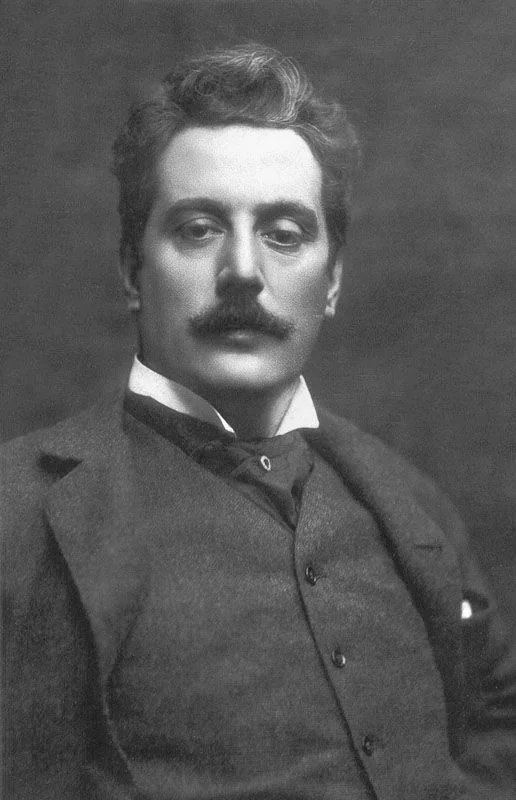
Image from Wikipedia
Image from Wikipedia
Giacomo Puccini
The Sound Dramaturgy of the Heart: Why Giacomo Puccini Continues to Move Opera Lovers Worldwide
Giacomo Antonio Domenico Michele Secondo Maria Puccini – known simply as Giacomo Puccini – was born on December 22, 1858, in Lucca and died on November 29, 1924, in Brussels. As the most significant opera composer of Verismo, he shaped the musical careers of countless singers and defined how opera can sound as modern, psychologically rich music drama. With works such as La Bohème, Tosca, Madama Butterfly, and the unfinished Turandot, he created a repertoire that remarkably combines stage presence, melodic invention, and dramatic precision. This artist biography narrates his artistic development between tradition and innovation – and how his scores continue to thrive in concert halls, theaters, and recordings today.
Origin, Education, and Early Steps into Opera
Puccini came from a musician family that had been active in Lucca for generations; the Puccini family shaped the musical life at the San Martino Cathedral for over two centuries. He began playing the organ at a young age, but a performance of Verdi's Aida in 1876 in Pisa sparked his decision to dedicate himself to opera. He studied at the Milan Conservatory from 1880 under Antonio Bazzini and Amilcare Ponchielli – a school that combined melodic sensitivity, contrapuntal rigor, and a sense of dramatic effect. His Capriccio sinfonico marked a first significant success in 1883; the one-act opera Le villi attracted attention in Milan in 1884 and brought him closer to the Ricordi publishing house, whose support became crucial for his career. These formative years shaped his compositional style: expressive vocal lines, refined orchestration, tangible motifs, and scenes that unfold organically from the situation. (britannica.com)
Breakthrough and Verismo Milestones
After the rather subdued reception of Edgar (1889), Puccini achieved his breakthrough with La Bohème from 1893 to 1896: the opera, premiered in 1896 in Turin under Arturo Toscanini, combines poetic realism with a score delicately tuned to the breath of the characters through its colors, harmonies, and tempos. He continued this aesthetic in Tosca (1900) as an “operatic thriller” with political sharpness and radicalized it into a poignant psychodrama about love, betrayal, and cultural divides in Madama Butterfly (1904). The rapid international success of these works lay in Puccini’s ability to embed concise “Ariosi” lines within a continuous musical and dramatic fabric – music that is both catchy and dramatically compelling. Contemporary and later critiques emphasize the immediate emotional impact of his melodies and the precise balance of action, moments of calm, and lyrical contemplation. (britannica.com)
The “American” Episode: Puccini and the Metropolitan Opera
Puccini's close relationship with the Metropolitan Opera in New York is one of the significant milestones in his career. In 1907, he traveled for the Met premiere of Madama Butterfly; in 1910, he conducted the premiere of La fanciulla del West – the first world copyright of a Met production. This work combined the Western myth with symphonic opulence and marked a peak of his international recognition. La Bohème became the most performed opera in the history of the Met; Tosca and Butterfly are among the top titles in the repertoire. This performance tradition illustrates how Puccini's stage presence set standards well into the 20th and 21st centuries, influencing stars from Nellie Melba to Maria Callas, from Renata Tebaldi to Sondra Radvanovsky. (metopera.org)
Later Works, Il trittico, and the Mystery of Turandot
Curious about contemporary trends, Puccini studied Debussy, Strauss, Schoenberg, and Stravinsky – a perspective that extended beyond Italian opera, leading to three stylistically contrasting one-acts in Il trittico (1918): Il tabarro as a dark Verismo miniature, Suor Angelica as a spiritual chamber play, and Gianni Schicchi as a brilliant comedy featuring the iconic aria “O mio babbino caro.” With Turandot, he sought a new, impressionistically colored sound language starting in 1920, culminating in distant Eastern colors, grand choral scenes, and a final love duet. Puccini died in 1924 from the effects of cancer treatment before he could complete the conclusion; Franco Alfano finished the finale based on sketches. Toscanini famously halted the premiere on April 25, 1926, at La Scala at the point where the master's handwriting ends – a historic moment in opera history. (britannica.com)
Composing as Psychological Theater: Style, Technique, and Production
Puccini's expertise is evident in a dramaturgy that intricately weaves vocal lines, harmony, and orchestration. His arrangements utilize fragments of motifs not as dogmatic systems but as dense semantic particles: a flute color for Mimi, a brass accent for Scarpia's violence, pentatonic shifts for Butterfly's world. In production, Puccini worked meticulously with librettists, conductors, and singers, shaping tempos, breath lines, rubato, and sonorous balance always in service of the scene. This results in arias that are both “numbers” and embedded in the drama – such as Rodolfo’s “Che gelida manina” or Cavaradossi's “E lucevan le stelle” – musical moments that have reached audiences directly for over a century. His choral scenes are also masterfully set: they define spaces, epochs, and social energies, such as the Christmas hustle of the Quartier Latin, popular piety in Rome, or the monumental rituality of Beijing. (britannica.com)
Discography, Performance Traditions, and Critical Reception
Puccini's operas are among the most recorded works in recording history. La Bohème, Tosca, and Madama Butterfly are documented with legendary casts whose interpretations have become stylistically influential. Gianni Schicchi has become the most popular part of Il trittico and inspired a dense series of benchmark recordings since the 1950s – a testament to how Puccini's comedic precision resonates on recordings. La rondine, long a lesser-known work, gained renewed attention through prominent productions and revivals. Besides the operas, the Messa di Gloria remains present in recent recordings as a major choral work, showcasing Puccini's sense of choral sound, orchestral color, and melodic tension. Reviews repeatedly highlight the “cinematic” narrative economy, the vocal brilliance of his melody, and the theatrical effectiveness of his scenes across stylistic fashions. (en.wikipedia.org)
Cultural Influence: From the Opera Stage to Popular Culture
Puccini's music permeates cinema, television, and popular media – his themes, from “Nessun dorma” to Butterfly's farewell, are collective aural memory. International anniversaries and festivals keep his work alive in discussion: in 2024, during the 100th anniversary of his death, major opera houses dedicated cycles, exhibitions, and gala performances to him; leading artists released tributes that re-examine Puccini's love duets, orchestral colors, and dramatic climaxes. In Italy, museums in Lucca and Viareggio celebrate his life stages, while the festival in Torre del Lago presents his operas outdoors every summer – a ritual that brings visitors back to the composer’s place of residence. These institutions anchor Puccini's work as a living cultural heritage woven between research, stage, and communication. (metopera.org)
Memorial Locations: Lucca, Torre del Lago, Viareggio
The Casa Natale in Lucca showcases original instruments – including the Turandot piano – manuscripts, documents, and stage objects; it is maintained by the Fondazione Giacomo Puccini and serves as a center for research, archives, and education. In Torre del Lago, where Puccini lived and worked for a long time, the Gran Teatro all’Aperto Giacomo Puccini rises by the lakeside – the venue for the Puccini Festival. Viareggio preserves the memory of his later years with the Villino Puccini. These places make Puccini's artistic development tactilely experienceable and connect biography, work, and the Tuscan landscape into a unique cultural cosmos. (cultura.gov.it)
Current Projects and Anniversary Years: Puccini in the 21st Century
The anniversary year 2024 has sparked a wave of projects worldwide: exhibitions, concert series, TV galas, and new albums from great voices have put Puccini's dramatic psychology and the power of his duets in the spotlight. In New York, institutions honored the century's composer with programs and specials; in Italy, museums, universities, and festivals connected original sites with contemporary research, communication, and youth work. Collaborations between Mozarteum, Teatro del Giglio Lucca, Conservatorio “Luigi Boccherini,” and the Puccini Museum symbolically brought together a Mozart violin and Puccini's original piano in 2025 – a resonant bridge in music history. Such formats demonstrate how Puccini's work continues to operate as an artistic resource and as cultural memory. (metopera.org)
Conclusion: Why Puccini Endures
Puccini's operas are not a museum of history but emotionally charged experiences. His compositions model voices in a way that characters breathe, feel, and act; his arrangements allow orchestral colors to function as psychological illumination; his production experience with singers and conductors shaped dramatic precision. Therefore, La Bohème, Tosca, Madama Butterfly, and Turandot immediately touch the audience – yesterday and today. Those who experience Puccini live feel the impact of a theater of empathy, where music does not illustrate the drama, but creates it. Seize the next opportunity to hear one of his works in the opera house or at the festival in Torre del Lago – and discover why this music has made history. (puccinifestival.it)
Official Channels for Giacomo Puccini:
- Instagram: No official profile found
- Facebook: No official profile found
- YouTube: No official profile found
- Spotify: No official profile found
- TikTok: No official profile found
Sources:
- Wikipedia – Giacomo Puccini
- Encyclopaedia Britannica – Giacomo Puccini: Biography, Operas & Facts
- Metropolitan Opera – Puccini at the Met: A Centenary Celebration
- Metropolitan Opera – Tosca: Archive & Reception
- Metropolitan Opera – Madama Butterfly: Archive & Reception
- Puccini Museum – Casa Natale & Villino Viareggio
- Centro Studi Giacomo Puccini – Research & Activities
- Fondazione Festival Pucciniano – Puccini Festival Torre del Lago
- AllMusic – Giacomo Puccini: Biography & Discography
- Gramophone – A Puccini Century: 10 defining moments (2024)
- Le Monde – Jonas Kaufmann: “Puccini: Love Affairs” (2024)
- Mozarteum University – “Mozart meets Puccini” Tour 2025
- Comune di Lucca – Museo Casa Natale di Giacomo Puccini
- Ministero della Cultura – Museo Casa natale Giacomo Puccini
- Wikipedia: Image and text source
Upcoming Events
La Bohème
Grand opera at GLOBE Coburg: La Bohème ignites poetry, light, and heartbeat. 17.12.2025, 19:30, tickets from 23 €. Touching musical theater – experience it live now. #CoburgOpera
Madama Butterfly – Puccini Opera in the Great House
Puccini's gripping opera Madama Butterfly comes to the stage of the State Theatre Cottbus. Secure your tickets now!
Madama Butterfly – Opera by Giacomo Puccini
Experience Puccini's Madama Butterfly in the Art Nouveau gem of the Cottbus State Theater: strong staging, surtitles, deep feelings. Thu, 02.04.2026, 19:30. Unforgettable musical theater – secure tickets now. #CottbusCulture
Turandot
An opera evening of ice, riddles, and passion: Turandot at the Duisburg Theater brings Puccini's sound power live to the stage. 2.4.2026, from 69 €. #Opera
Turandot
An evening full of riddles, power, and great voices: Turandot at the Theater Duisburg enchants with opera magic and Nessun dorma. 12.04.2026, from €17. #Opera
Francesca da Rimini - Gianni Schicchi
Two operas, two extremes, an evening full of heat and wit at MiR Gelsenkirchen. Experience Francesca da Rimini and Gianni Schicchi live now. #Opernabend
Madama Butterfly at Staatstheater Cottbus: Puccini's Opera Tragedy in Lusatia
Puccini's Madama Butterfly Touches in Cottbus with Great Opera, Delicate Hope and Bitter Tragedy. 02.05.2026, 7:30 PM, from 24 €. Discover now. #Opera
Tosca Premiere - Immling Festival
Experience the premiere of Puccini's Tosca as part of the Immling Festival in Halfing. A festive evening full of classical music awaits you.
Tosca Premiere
OPERA IN THREE ACTS BY GIACOMO PUCCINI Tosca's Price of Freedom – infamous betrayal and political abuse of power Rome around 1800. It’s a pity that love doesn’t always triumph over violence and intrigue. The opera singer Tosca is...
Tosca in Bonn
Visit the fascinating opera Tosca in Bonn. A production full of drama and musical brilliance.