
Gioachino Rossini
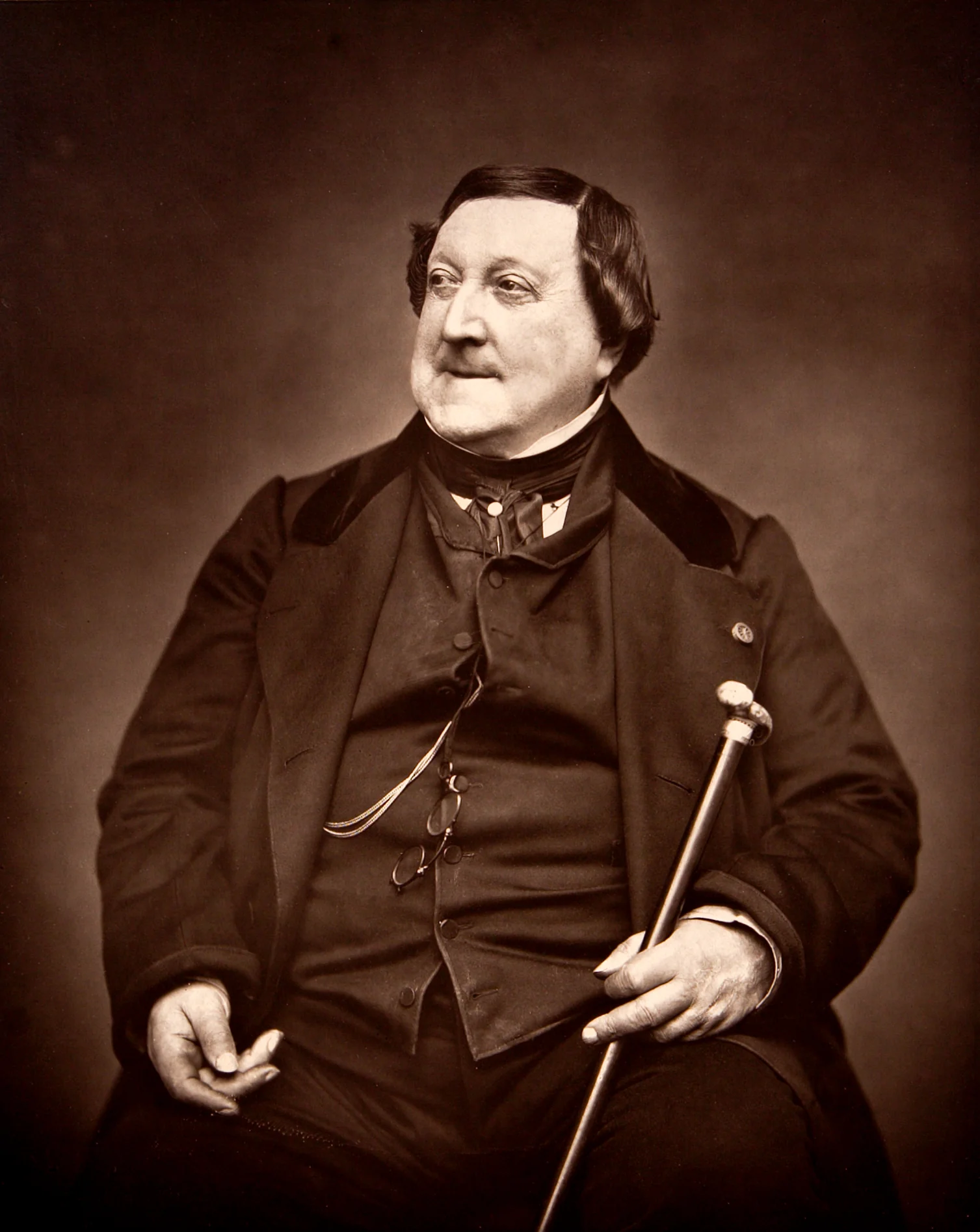
Image from Wikipedia
Image from Wikipedia
Gioachino Rossini – Belcanto Architect, Opera Visionary, Sound Magician
How a genius from Pesaro reinvented opera and continues to electrify stages to this day
Gioachino Antonio Rossini (1792–1868) shaped opera with breathtaking virtuosity, an infallible sense for dramatic effects, and a distinctive musical handwriting. His operas such as Il barbiere di Siviglia, L’italiana in Algeri, and La Cenerentola are considered part of the standard repertoire worldwide and mark the high points of Opera buffa, without losing sight of the development of Opera seria and sacred music. Rossini's presence on stage as a composer, his artistic development from early successes in Italy to his late French style, and his unbroken influence on singer tradition, orchestral sound, and performance practice make him a central figure in music history.
Background and Early Music Career: From Pesaro to the Italian Centers
Born in Pesaro, Rossini grew up in a musical environment that accelerated his education and early defined his compositional style. Even as a teenager, he displayed a fine sensitivity to vocal lines, scenic economy, and the balance between recitative, ensemble, and aria. His early network of singers, impresarios, and theater people in northern Italian cultural cities paved the way for a rapid career. The artistic development was targeted: Rossini used every stage as a laboratory for form, tempo, and timbres, increasingly making his style independent.
The Breakthrough: Opera buffa, Tempo, Precision
Between 1810 and 1815, Rossini achieved several key successes that accelerated his career and cemented his reputation as an innovator. Characteristic were the "crescendo rossiniano," precise rhythmic motor skills, and a sparkling ensemble sound that effortlessly blends comic and serious nuances. This compositional handwriting reinforced the dramatic balance, made ensemble scenes the dramatic centerpiece, and made the opera stage pulse. Rossini composed with the stage in mind: singability, text-close declamation, and vocal agility merged into a distinctive theatrical language.
The Italian Years: Naples, Rome, and Refining the Form
In Naples and Rome, Rossini shaped his typology of buffo and seria characters, experimented with transitions between recitative and numbers, and sharpened the dramatic contour of the finales. Collaboration with leading singing stars of his time shaped the line work and virtuosic coloratura. In doing so, Rossini combined the lightness of Opera buffa with serious, even tragic accents, allowing his works to grow beyond mere comedy. The genre of semiseria gained profile, and Rossini demonstrated that humorous energy and psychological precision are not mutually exclusive.
International Fame: Il barbiere di Siviglia and the Coronation of the Buffa Tradition
With Il barbiere di Siviglia, Rossini achieved a popular triumph that solidified his international reputation. Precise motifs, pointed rhythm, and an outstanding sense of timing lead to a model case of comic opera. At the same time, L’italiana in Algeri and La Cenerentola established themselves permanently on the playbills because they ideally intertwine wit, melodic inventiveness, and ensemble artistry. Rossini turned Opera buffa into a music theater of precision: clear formal progression, bright orchestration, and vocal brilliance remain trademarks.
Paris and the French Late Style: Guillaume Tell and Opera as Grand Tableau
The move to Paris opened new stage formats for Rossini. With Guillaume Tell, he expanded his repertoire to include a large-scale, dramatically nuanced Grand opéra. Here, orchestral colors, wide moods of tension, and choral power meet nuanced character drawing. The music occasionally breaks away from the numbered structure in favor of larger scenes, without losing melodic momentum. The work marks an aesthetic culmination point and simultaneously Rossini's retreat from the opera stage, although his authority in Europe remained unbroken.
“Sins of Old Age” and Salon Culture: Composing Beyond the Stage
After bidding farewell to opera, Rossini turned to sacred music, piano miniatures, and chamber music. The Petite messe solennelle and the Stabat Mater testify to a mature musical language that combines spiritual intensity with sonic elegance. In the late “Péchés de vieillesse,” Rossini's playful spirit is revealed: form-conscious miniatures, elegant harmony, fine irony. They document his experience, his sensitivity to sound balance, and a continuing creativity that further inspired contemporary musical life.
Style and Technique: Sound Dramaturgy, Coloratura, “crescendo rossiniano”
Rossini's music thrives on the tension between lyrical lines and rhythmic energy. Compositional techniques include clear periodicity, modular construction, and sound-conscious instrumentation. The famous Rossini crescendo—a gradual buildup through sequences, densifying, and dynamic increase—creates a theatrical pull. His arias and ensembles combine coloratura technique with precise text articulation; the buffo roles gain musical profile through patter passages and comedic accents. In orchestration, Rossini emphasizes bright woodwind colors, precise brass signals, and a tight string guidance that supports the vocal lines.
Discography and Overview of Works: Operas, Sacred Music, Editions
Rossini's oeuvre includes about 39 operas, including masterpieces such as Il barbiere di Siviglia, La Cenerentola, L’italiana in Algeri, Tancredi, Semiramide, Mosè in Egitto, Il viaggio a Reims, and Guillaume Tell. Additionally, there are significant sacred works, especially the Stabat Mater and the Petite messe solennelle, as well as piano and chamber music. The discography reflects the international performance tradition: benchmark recordings document belcanto aesthetics, historically informed practices, and modern interpretations. Critical editions and editorial projects ensure that versions, variations, and sources remain transparent, laying a reliable textual basis for contemporary productions.
Artistic Development and Vocal Practice: Virtuosity with Meaning
Rossini wrote for specific voice types and personalities, which explains the theatrical impact of his scores. The parts require breath economy, precise ornamentation planning, and stylistic confidence in legato. Ensemble scenes develop dramatic tension because character constellations are musically clearly organized: contrasted tempos, dense harmonics, dialogical motive work. This confluence of composition, arrangement, and vocal technique makes Rossini's music a school of belcanto—demanding, yet rewarding when the stylistic balance is achieved.
Cultural Influence: From Stendhal to Contemporary Festival and Opera Practice
The reception of Rossini spans from early Romantic enthusiasm to today's opera culture, where his works form the pillars of the repertoire. Culturally, Rossini stands at the threshold between classicist formal rigor and Romantic stage pathos. His Opera buffa refines comedy into character study, while the seria side gains dramatic perspective. Institutions, festivals, and orchestras keep Rossini's music alive, cultivating nuanced readings and ensuring his authority in international musical life. He remains a benchmark for ensemble artistry, vocal virtuosity, and compositional theatrical intelligence.
Current Relevance 2024–2026: Performances, Festival Focus, New Releases
Rossini's work is experiencing an unbroken renaissance in the seasons 2024/25 and 2025/26. Festivals are dedicating new productions and rarities to him, illuminating the stylistic richness from buffonesque wit to dramatic monumentality. Concert programs are focusing on sacred works like the Stabat Mater, while opera houses are combining classics and rediscoveries. Curated collections and new editions are being released in parallel, making Rossini's orchestral colors and vocal brilliance accessible to contemporary audiences and expanding the discography.
Why Rossini Fascinates Today: Precision, Joy of Playing, Dramaturgy
Rossini's music bundles energy, elegance, and theatrical intelligence. It challenges singers to the highest virtuosity, demands precise interplay from the orchestra, and requires the audience to have open ears for details. His operas convince through clear dramaturgy, melodic ideas, and the interplay of irony and emotion. This profile feels timeless: In Rossini's sound direction, craftsmanship, stage experience, and artistic development converge into a style that speaks directly and yet reveals new nuances constantly.
Conclusion: A Composer Who Captures Minds and Hearts
Gioachino Rossini remains a bright star in the history of opera. His belcanto ideal, formal clarity, and infallible sense of effect continue to shape performance practice today. Those who experience his operas live encounter music theater as a vibrant art of the present: pointed, elegant, and full of spirit. Rossini's work invites exploration of the richness of Italian opera in all its shades—from sparkling comedy to grand, dramatic gestures. The best way to grasp his class leads to the opera house: the stage is set for Rossini's sparkling dramaturgy.
Official Channels of Gioachino Rossini:
- Instagram: No official profile found
- Facebook: No official profile found
- YouTube: No official profile found
- Spotify: No official profile found
- TikTok: No official profile found
Sources:
- Encyclopaedia Britannica – Gioachino Rossini
- Deutsche Grammophon – Biography of Gioachino Rossini
- Deutsche Rossini Gesellschaft – Overview and Classification of Works
- concerti – Rossini Opera Festival 2025
- Apple Music Classical – Gioachino Rossini
- Wikipedia – Gioachino Rossini
- Wikipedia – List of Operas by Gioachino Rossini
- ORF RSO Vienna – Season 2024/25 (Program Notes including Rossini)
- Salzburg Festival – Program Preview 2026 (Rossini Repertoire)
Upcoming Events
The Barber of Seville at the Bonn Opera House
Rossini's operatic classic shines in Bonn as a lively comedy full of pace, charm, and musical theater power. #TheaterBonn #OperaBonn
Gioachino Rossini - Petite Messe solennelle
An evening full of sound depth in Potsdam: Rossini's Petite Messe solennelle combines devotion, drama, and beauty. 09.05.2026, 4 PM. #Classical
Rossini: Petite Messe solennelle
Rossini's Petite Messe solennelle in Aalen: sacred tension, fine choral sound, and great expression in the church space. 10.05.2026, 6 PM, from 23 USD. #Classical
The Barber of Seville
Rossini's "The Barber of Seville" at the Stadthalle Aalen on May 13. Reserve your seat and experience an unforgettable performance!
The Barber of Seville - Theater Pforzheim
Visit the opera comedy 'The Barber of Seville' by the Theater Pforzheim on May 13 in Aalen, in Italian with German subtitles.
The Barber of Seville
Visit the Stadthalle Aalen on May 13, 2026, and experience Rossini's The Barber of Seville live, presented by the Theater Pforzheim.
The Barber of Seville (Theater Pforzheim)
Experience Rossini's sparkling opera buffa at the Stadthalle Aalen: virtuosic coloraturas, humorous direction, Italian flair. May 13, 2026, 20:00, tickets 35 €. An evening full of esprit – book now! #AalenCulture
Gioachino Rossini: Petite Messe solennelle
An evening full of fine choral art in Munich: Rossini's Petite Messe solennelle meets the Tölzer Knabenchor and special spatial effects. 22.07.2026, 20:00. #Classical #Munich
Rossini: Petite Messe solennelle
Rossini's Petite Messe solennelle sounds in Bamberg with choir, soloists, and the church space full of tension. 26.07.2026, 18:00. Discover now! #Bamberg #Classical
The Barber of Seville
Rossini's opera comedy ignites a festival of wit, pace, and sound at Amerang Castle. 01.08.2026, from 14 €. #OperaFestival