
Heiko Börner
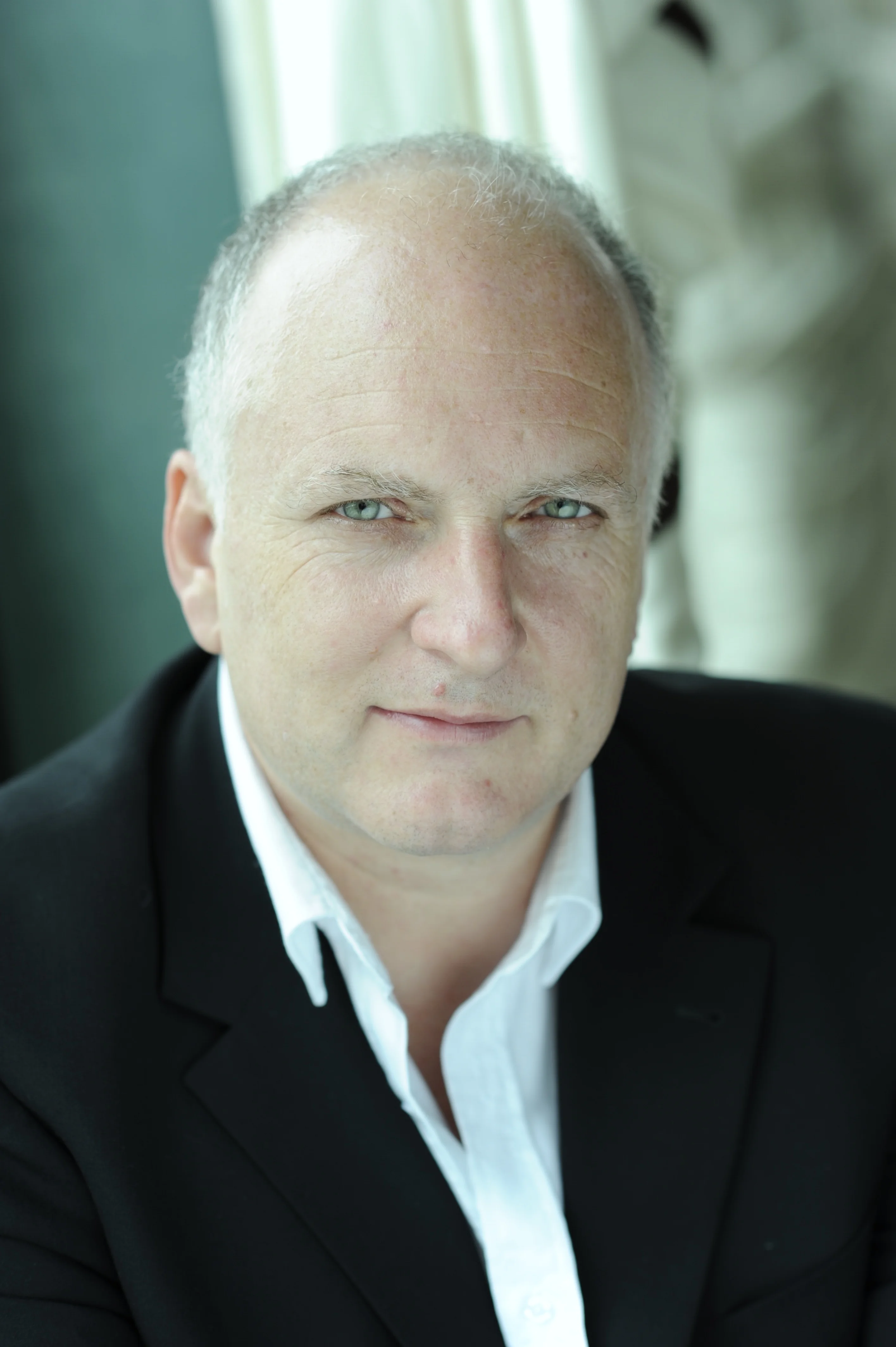
Image from Wikipedia
Image from Wikipedia
Heiko Börner – A German heroic tenor with dramatic brilliance
From opera choruses to the grand stages: The portrait of an exceptional voice bearer
Heiko Börner, born on September 24, 1965, is one of the prominent German heroic tenors of his generation. His musical career has taken him from early stages in the opera chorus to fixed ensemble years, leading to a freelance career characterized by demanding lead roles in the core German-Austrian repertoire. With a dark, baritone-tinged brightness in the high register and a striking stage presence, he interprets Wagner and Strauss as convincingly as roles from the Italian and Slavic repertoire. Critics praise his dramatic attack, clear text projection, and robust line control – qualities that have established him on international stages.
Biography: Unconventional path to opera
Growing up in Hesse, Börner initially trained in social insurance and studied business administration – an unusual start that never hindered his artistic development. Concurrently, he began private vocal training and gained initial stage experience in the opera chorus, first in Lübeck, later at the Frankfurt Opera. His debut as a soloist took place at the Nordharzer Städtebundtheater in Halberstadt. From 2004 to 2008, he was shaped by the Mainfrankentheater Würzburg, where he developed a wide repertoire in the Italian, French, and German genres and sharpened his foundation in vocal technique, stylistics, and role psychology. In 2008, he opted for a freelance career – a turning point that initiated his focus on the heroic tenor repertoire and further solidified his artistic authority. This biographical development illustrates experience, perseverance, and the conscious steering of his artistic identity.
Career highlights: From Walther to Tristan
Börner's artistic progression reads like an obstacle course through the heart of the German repertoire. Important milestones include debuts as Walther von Stolzing in the Meistersinger productions in Erfurt, Detmold, and at the Nationaltheater Weimar. His journey into the heavier repertoire continued with Florestan in Beethoven's Fidelio (Darmstadt, later Chemnitz) and culminated in major heroic tenor roles: Tristan (Hannover, Cologne, Bern, Halle, Saarbrücken), Tannhäuser (Schwerin, Bari), Parsifal, and Lohengrin (among others, National Opera of Estonia). The 2023/24 to 2025/26 seasons showcase him in concentrated repertoire maintenance: Tannhäuser series in Schwerin and Seoul, Lohengrin in Tallinn, Tristan among others in Darmstadt and Dessau. This not only documents Börner's repertoire breadth but especially his stamina and stylistic consistency in the dramatic repertoire.
International guest performances and recent projects
With a role and house profile shaped in the German-speaking world, Börner is continuously expanding his radius. In 2024, he made his debut as Bacchus (Ariadne auf Naxos) at the Teatro Verdi in Trieste – a role with an exposed tessitura that demands interpretative steadfastness and a steel upper register. The production under Paul Curran was accompanied by detailed coverage from local and specialized press, highlighting Börner's open, text-focused singing and convincing emission in the high register. The 2024/25 season will take him as Tannhäuser to the National Opera of South Korea and again as Lohengrin to the National Opera of Estonia. In Belgrade, he was also featured in a concert version of Tristan und Isolde with the Philharmonic Orchestra – further evidence of his versatility between stage and concert platform.
Vocal profile and technique: Dramatic radiance with a solid line
Heiko Börner's voice combines a robust, baritone-colored timbre in the middle range with a clearly focused high register. This blend creates the typical heroic tenor static: a viable core that withstands the large Wagner orchestra not only but carries the melodic line across the entire range. In the composition and arrangement of heavy roles – Tristan, Tannhäuser, Parsifal – he handles long phrase arcs with economical breath management, mezza-voce flexibility, and nuanced vibrato use. Critical receptions emphasize his attack in exposed calls, stamina in final tension arcs, and effortless diction. The sound aesthetic is not purely heroic: In lyrically contoured passages – such as Florestan's recitative or in Parsifal's meditative moments – Börner demonstrates controlled delicacy and a cultivated piano culture.
Repertoire focus: Wagner, Strauss, and beyond
The core of Börner's discography and role profile centers on Richard Wagner: Tristan, Tannhäuser, Parsifal, Lohengrin, and Walther von Stolzing form a stylistic gravitational field. This is complemented by Erik (Der fliegende Holländer) and – in concert – Siegmund in Die Walküre. With Richard Strauss, Börner expands the spectrum toward high romantic sound worlds: The Kaiser (Die Frau ohne Schatten) and Bacchus (Ariadne auf Naxos) demand not only a metallic assertiveness but also refined text treatment and precise phrasing calibration. The profile is further enhanced by Florestan (Beethoven), Cavaradossi (Puccini), Laca (Janáček), Albert Gregor (Janáček), Peter Grimes (Britten), and Otello (Verdi) – roles that require specific line control, dramatic density, and idiomatic stylistic knowledge. This dramatic diversity documents expertise in the composition and production of different eras and schools.
Stage presence and role development
Beyond vocal means, Börner impresses with physical presence and dramatic instinct. His interpretation of Tannhäuser, nurtured over several seasons in Schwerin, emphasizes the inner conflict between sensuality and transcendence. As Tristan, he combines heroic projection with psychological nuance, ensuring that the second half of the evening remains coherent both vocally and scenically. In Ariadne auf Naxos, he shapes Bacchus as a focused culmination figure, whose highlights lie not only in loud emission but in clever text setting and clear articulation. This role work showcases experience with complex character architecture and an awareness of stylistic detail work.
Critical reception: Resonance in the music press
The opera press repeatedly recognizes Börner's performances with references to his “powerful” heroic tenor voice, his “imposing height,” and his reliability in demanding scenes. Reviews of Schwerin's Tannhäuser performances emphasize his dramatic presence and the sovereign handling of the Rome narrative; Trieste critiques highlight his secure navigation through the intricate passages of the Bacchus role in Ariadne auf Naxos. Aside from timbre, his text clarity is the focus – a quality that is particularly essential in Wagner and Strauss to effectively convey the semantic density of the scores to the audience. This resonance supports his authority as a specialist in the dramatic tenor repertoire.
Collaboration with houses, orchestras, and management
Börner has performed guest engagements in Hannover, Cologne, Bern, Halle, Saarbrücken, Bari, Trieste, Tallinn, and Schwerin. His engagements demonstrate sustainable artistic development in both German and international contexts. Entries and portraits at orchestras and agencies document repertoire, seasons, and project planning – from Parsifal and Meistersinger in Linz to Tannhäuser productions in Northern and Southern Europe. This reliable documentation by theaters, orchestras, and management underpins Börner's trustworthiness in planning long-term, vocally demanding productions.
Concert repertoire: From Beethoven to Mahler
In addition to opera, Börner is a sought-after concert soloist. Beethoven's 9th Symphony and Christus am Ölberg, Verdi's Messa da Requiem, Mahler's Das Lied von der Erde and Das klagende Lied, as well as Mendelssohn's Elias and Die erste Walpurgisnacht exemplify his symphonic-oratorio profile. These roles demand textual clarity, sustained legato, and a flexible dynamic range – qualities that also shape his operatic performances. This circle connects the stage and concert hall, between dramatic emphasis and lyrical inner tension.
Discography and media presence
Opera singers in the heroic tenor category leave their artistic signature not only in studio productions but significantly in live productions and radio broadcasts. Börner's media presence is reflected through theater and orchestra profiles, reviews, and artist pages. Digital music services list him as a performing artist, which increases the discoverability of individual recordings; however, the stage remains central as the primary site of his artistic production. This constellation corresponds with the tradition of the genre, where vocal development, role continuity, and scenic experience are essential to document artistic maturity in all its depth.
Style analysis: Heroic repertoire with a sense of line
In the genre of great late romantic opera, Börner combines the necessary stentorian strength with a remarkable singing line. The production of heavy scores – Tristan, Tannhäuser, Parsifal – requires not only volume but especially structure: targeted breath disposition, economical passage work, intelligent vocal placement. In Strauss roles, he enriches his power deployment with a refined legato culture. In Italian roles like Cavaradossi or Otello, Cantabile phrases benefit from his precise articulation; impetus and vibrato remain controlled, balancing dramatic exaltation and musical clarity. This technical stability underpins his expertise in the tension between expressive drama and textual integrity.
Cultural influence and relevance
As a vital voice in Wagner and Strauss productions, Börner shapes the reception landscape of those works, whose performance practice relies on endurance, stylistic confidence, and meaning-oriented declamation. His role continuity – Tannhäuser, Tristan, Lohengrin, Parsifal – ensures interpretive depth and continuity across various houses. This consistency is culturally formative: it keeps work traditions alive, enables directing teams to establish long-term development lines, and provides audiences with orientation in the demanding repertoire of the late 19th and early 20th centuries. Thus, Börner connects musical excellence with cultural impact – an interplay that confirms his standing in European opera.
Conclusion: A voice for the grand arcs
Heiko Börner embodies a heroic tenor ideal that unites strength, endurance, and stylistic sensibility. His artistic journey – from ensemble tenor to internationally sought protagonist – serves as an exemplary blueprint for the demanding career architecture in the dramatic repertoire. Those who wish to experience Wagner and Strauss authentically, textually comprehensible, and with dramatic depth will find in Börner an interpreter who audible brings to life the long breath of these scores. Recommendation: Experience him live – especially in Tannhäuser, Tristan, or as Bacchus – as this is where timbre, stage presence, and artistic development fully express their impact.
Official channels of Heiko Börner:
- Instagram: No official profile found
- Facebook: No official profile found
- YouTube: No official profile found
- Spotify: No official profile found
- TikTok: No official profile found
Sources:
- Wikipedia – Heiko Börner
- Heiko Börner – Official Website (Homepage)
- Heiko Börner – Official Website (About Heiko)
- Heiko Börner – Official Website (Repertoire)
- TK-IAM – Artist Profile Heiko Börner
- Belgrade Philharmonic – Artist Page Heiko Börner
- IOCO – Review Tannhäuser Schwerin
- neue musikzeitung – Review Tannhäuser Schwerin
- Teatro Verdi Trieste – Ariadne auf Naxos (Cast Bacchus)
- operatraveller – Review Ariadne auf Naxos Trieste
- Wikipedia: Image and text source
Upcoming Events
Airline – Heiko Börner
Poetic wood sculptures and installations by Heiko Börner at the Air Museum Amberg. Opening 24.01.2026, admission from 5.50 €. Experience sensual spaces – plan now. #Airline
Vernissage: Airline – Heiko Börner
Experience the vernissage at the Air Museum Amberg: Airline by Heiko Börner showcases wood sculptures and spatial drawings. 24.01.2026, 19:30, free entrance. Intense art experience, clear forms, strong atmosphere. Secure your appointment now! #AirMuseumAmberg
Aerial Line – Heiko Börner at the Aerial Museum Amberg
A quiet art experience in Amberg: Heiko Börner transforms the Aerial Museum with lines, space, and tension. #Art #Amberg #Exhibition
Airline – Heiko Börner at the Air Museum Amberg
Immerse yourself in Airline at the Air Museum Amberg: filigree line bodies, tensioned wooden forms, clear curation. 01/25/2026 – 05/17/2026, admission from €5.50. Sharpen your senses, experience art. #AirMuseumAmberg
Heiko Börner: Air Line – Installation, Sculpture, Drawing
Poetic lines and tense forms: Air Line by Heiko Börner at the Air Museum Amberg. 25.01.–17.05.2026, admission from €5.5. Intense art experience, clear curation, strong spatial impact. Plan your visit now. #Sculpture #Installation
Airline – Heiko Börner
Experience Airline at the Air Museum Amberg: delicate spatial drawings, tense wooden sculptures, clear forms. 25.01.–17.05.2026, admission from 5.50 €. Artistic enjoyment to immerse in. #AirMuseumAmberg
Airline – Heiko Börner in Hohenburg
Experience art closely in Hohenburg: Airline by Heiko Börner at the Brotzeitstüberl Reiser. Free admission, central location, cozy tavern. Feel the regional connection, mark your calendar now. #Hohenburg
Airline – Heiko Börner at the Air Museum Amberg
Experience Airline at the Air Museum Amberg: transparent spatial bodies, tense wooden forms, sensual contemplation of works. 25.02.2026, 14–17 o'clock, from €5.50. Discover now! #Airline
Airline – Heiko Börner at the Air Museum Amberg
A sensual dialogue of line, light, and space at the Air Museum Amberg: Airline by Heiko Börner. Sat, 28.02.2026, 11 AM – 5 PM, admission €5.50. Precise sculpture, strong aesthetics – discover now. #ArtInAmberg
Aerial Line – Heiko Börner at the Air Museum Amberg
Experience Aerial Line at the Air Museum Amberg: clear lines, floating spatial bodies, energetic wooden sculptures. 25.01.–17.05.2026, free entrance. Sensual art appreciation, strong exhibition atmosphere. Mark your date now! #AirMuseumAmberg