
Helge Schneider
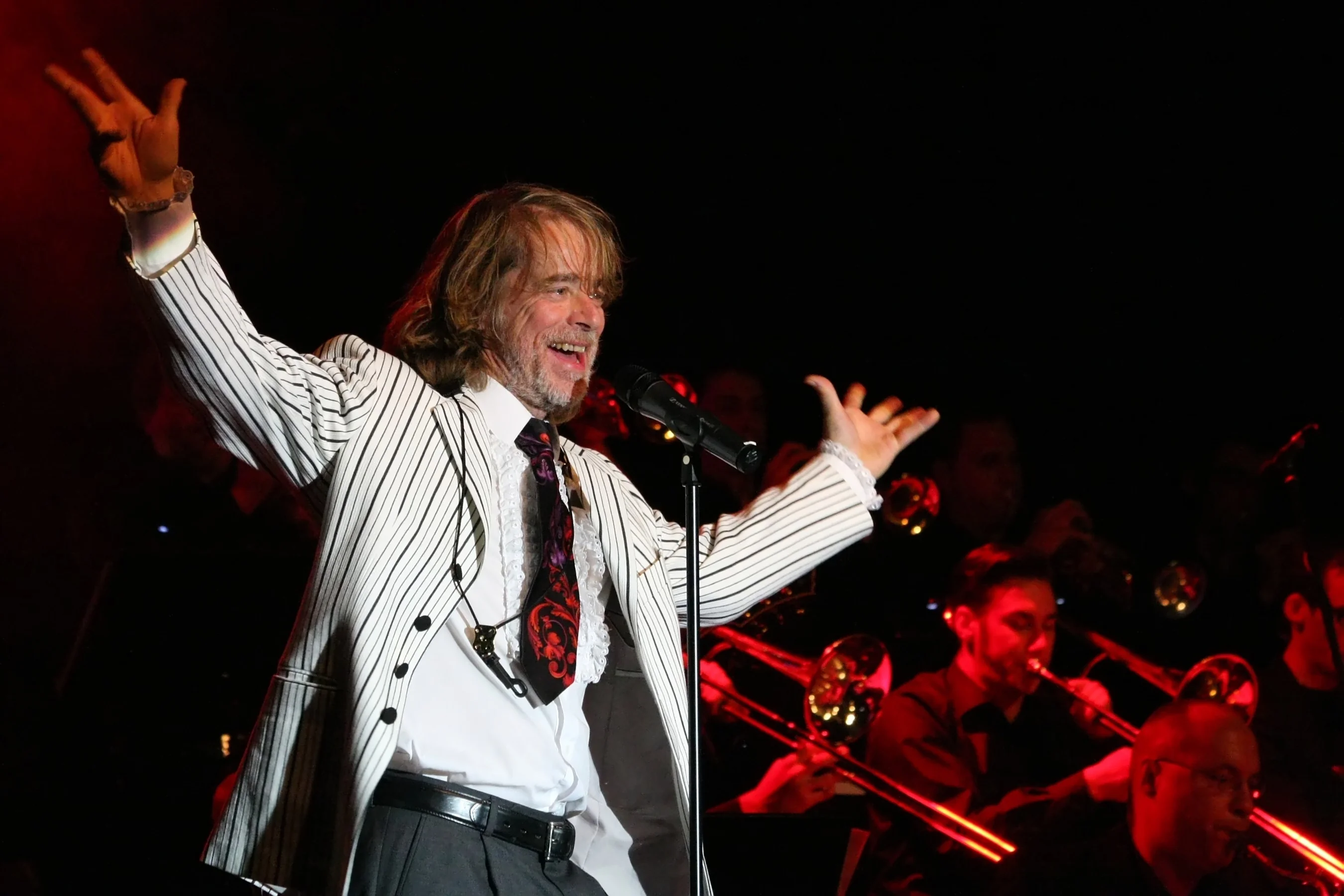
Image from Wikipedia
Image from Wikipedia
Helge Schneider – Jazz, Comedy, and Boundless Improvisation
An exceptional artist between jazz club and grand stage
Since the late 1970s, Helge Schneider has shaped the German-speaking pop and cultural landscape like few others. The Mülheim-born musician, comedian, author, and director combines a highly virtuosic music career with anarchic humor and a stage presence that evades any categorization. His trademark is improvisation: spontaneous ideas lead to composition, arrangement, and performance in real-time – from jazz standards on the organ to Dada songs at the piano. Through this artistic development, Schneider created a unique aesthetic that exists between club atmosphere and theater hall, between poetic silliness and serious jazz tradition.
Those who experience him live feel the energy of a multi-instrumentalist who masters piano, organ, saxophone, guitar, drums, and more with effortless virtuosity. The boundaries between concert, cabaret, and literary reading blur as Schneider samples musical motifs, rhythms language wit, and shifts into free improvisations with the band. This experience of the unexpected has made him intriguing for generations of music lovers, cultural critics, and festival organizers alike.
Biography: From the Ruhr Area to Stages Across the Country
Born in 1955 in Mülheim an der Ruhr, Schneider found his way to music early on, studying piano and discovering jazz as his artistic home. In the 1980s, his idiosyncratic blend of club jazz, slapstick, parody, and literary nonsense matured into an unmistakable stage figure. Television, cinema, radio plays, and books expanded his repertoire, but the nucleus remains the live situation: the stage as a laboratory for spontaneous forms, surprising harmonies, and the delightful breaking of expectations. The artist uses his instruments like an orchestra – keys, strings, and brass become dialogue partners that carry both gags and grooves.
His breakthrough as a pop phenomenon occurred in the 1990s, without abandoning his jazz roots. In parallel, Schneider developed film and theater projects reflecting his passion for characters, masquerades, and the absurd. To this day, he confidently oscillates between concert halls, festivals, and film sets – a career where musicality and comedy do not undermine each other but instead sharpen one another.
Career Highlights and Public Perception
Schneider’s career combines cult status and chart success. His early single "Katzeklo" became a cult hit in 1994, bridging the gap between subversive humor and a mass audience. Popular songs followed, each reinvented live. In the 2010s, the album "Sommer, Sonne, Kaktus!" reached the top of the German album charts – a statement that his sound remains relevant even in the streaming and social media age, despite his reluctance to engage in constant online presence. The press regularly emphasizes his virtuosity, his ability for free improvisation, and the consistency with which he merges entertainment and art.
As a performer, Schneider balances sketch and precision. He uses pauses, silence, and unexpected harmonic turns to musically place punchlines. This signature influences his music cabaret programs as well as jazz formats, including collaborations with renowned musicians. Concert recordings document a band culture where listening and spontaneity are equally important – music as an immediate event.
Discography and Chart Success: From Cult Song to No. 1 Album
Schneider’s discography includes studio and live albums, soundtracks, compilations, and singles. The range extends from early comedy-jazz releases to ambitious jazz productions with meticulous production. Notable singles include "Katzeklo" (1994), which charted for 17 weeks in Germany, peaking at number 13, as well as "Helges Mörchen-Lied!" (2003), "Käsebrot" (2006), and "Sommer, Sonne, Kaktus!" (2013), which remained in the charts for eight weeks and reached number 31. Schneider winning the top spot on the German album charts in 2013 with "Sommer, Sonne, Kaktus!" marks perhaps the clearest testament to his pop influence beyond genre boundaries.
In the 2020s, he has made a statement with albums like "Die Reaktion – The Last Jazz Vol. II," reinforcing his role as a serious jazz musician. Reviews highlight the exciting interplay of audio drama atmosphere, swinging grooves, and bluesy colors. Live releases also document the flexibility of his sound ensemble – sometimes organically reduced, sometimes featuring guests from the German blues and jazz scene.
Musical Development: Jazz as the Grammar of Fun
Schneider's musical DNA draws from bebop, soul-jazz, and swing – influences that he playfully intertwines with pop, chanson, and parody. Improvisation is not an end in itself but a dramaturgical tool: it shapes timing, text, and tone, allows for breaking free from rigid song structures, and facilitates immediate reactions to the audience and fellow musicians. His compositions utilize catchy riffs, vamping bass figures, and surprising modal shifts; his organ and piano playing adds percussive accents that ground the humor musically. Thus arises a style where a punchline originates from a harmonic side-step – and a laugh lands on the offbeat.
The production of his albums remains consciously raw and vibrant, often close to the ensemble sound. Arrangements are like "recorded" processes, where themes, call-and-response phrases, and vocal improvisations emerge in the same breath. This aesthetic respects jazz history but breaks it with the joy of humor – Schneider transforms the art of the moment into a school of freedom.
Cultural Influence: Between Cultural Critic Favorite and Folk Asset
Hardly any German-speaking artist has conveyed humor and jazz as popularly as Helge Schneider. His songs have become cultural codes, his characters are part of the collective memory, and his vocabulary has shaped pop slang. At the same time, he enjoys respect in the music scene as a serious improviser who uniquely interprets standards and maintains organ jazz with an unmistakable tone. This dual anchoring explains his enduring success: he does not cater to a target audience – he expands it.
His versatility extends beyond music. Schneider writes books, directs films, develops radio plays, and appears in talk formats where he decodes both the mechanics of humor and the poetry of the everyday. Documentaries and concert recordings show how closely his comedic timing is intertwined with musical timing. Culturally, he stands in the tradition of great entertainment artists who blend high and pop culture.
Current Projects: Documentary, New Tour, and Reduced Stage Settings
Recent focal points include the documentary “The Klimperclown” (2025), which highlights Schneider's life and work between mockumentary and artist portrait. The premiere at the Munich Film Festival and the subsequent availability in the ARD Mediathek made clear how enduring the interest in his oeuvre remains. Cinematically as well as musically, Schneider emphasizes closeness, improvisation, and breaking open biographical linearity – a work that productively engages with the impossibility of a final definition.
For 2026, he announced a new tour under the motto "Ellebogen vom Tich": more than 60 dates, acoustic instruments, a compact trio format, and Schneider switching back to the drums. This reduction sharpens his concept of freedom within the ensemble – less arrangement, more open dialogue. Concurrently, he is working on a new film project titled "Die Kröte," which continues his penchant for quirky humor and unconventional storytelling. The tour also continues a long live tradition that regularly takes him through major venues and festival stages.
Live Format and Band Culture: The Art of the Moment
Live, Schneider builds on the principle of “listening play.” The band constantly responds to micro-gestures – a changed voicing-fingering can shift the direction of a piece, a cheeky pun can open up the harmony. The repertoire includes original pieces alongside standards, which he breaks down in "Helge-Style." Concerts with companions from jazz and blues underline his rank as a musician who allows humor and seriousness to run parallel instead of hierarchizing them. His show is both entertainment and a lesson in jazz attitude: risk, quick response, devotion.
Recordings of renowned concert series document this stage energy – complete with organ fireworks, cleverly placed breaks, and the distinctive crooning that makes his songs so unmistakable. The fact that this setting always feels new is the result of years of practice, stylistic multilingualism, and unbridled joy in performance.
Reception and Awards: Beyond Category
Music critics have recognized Schneider's unique position for years. Positive reviews of his jazz albums emphasize form awareness and playful freedom – a combination that also convinces skeptics of the comedy genre. Chart data further demonstrate the wide-reaching impact of his humor-laden singles, while concert reviews see the most enduring value in live improvisation. Together, this paints the picture of an artist who perforates rather than simply serves categories – a "singular case" in German entertainment art.
In interviews and portraits, Schneider is often described as one who undermines the dividing line between high and low music. Not because he ignores it, but because he knows both, reflects on them, and playfully transcends them. In doing so, he provides a blueprint for a pop culture that does not hide virtuosity but makes it a factor of fun.
Conclusion: Why Helge Schneider Fascinates
Helge Schneider remains intriguing because he perceives music as a living language and humor as a musical principle. His discography shows range, his chart successes provide evidence of accessibility, and his stage work demonstrates a willingness to take risks. As a multi-instrumentalist, composer, and entertainer, he has created an art form that engages both mind and gut. Those who see him live sense the irreproducibility of the moment – precisely where jazz, comedy, and poetry flirt with one another.
The appeal is simple: Experience Helge Schneider live. No recording or video can replace the shared breath of the band and audience, the pause before a punchline, the unexpected note that brings laughter to the hall and music to life.
Official Channels of Helge Schneider:
- Instagram: No official profile found
- Facebook: No official profile found
- YouTube: No official profile found
- Spotify: No official profile found
- TikTok: No official profile found
Sources:
- Helge Schneider – Official Website
- Official German Charts – Chart Progressions and Rankings
- Official German Charts – Katzeklo (1994)
- Official German Charts – Sommer, Sonne, Kaktus! (2013)
- ZEIT/dpa – Announcement of Tour “Ellebogen vom Tich” (18.11.2025)
- Radio Bielefeld/dpa – Tour Plans and Trio Setting (18.11.2025)
- Wikipedia – The Klimperclown (Documentary, 2025)
- ZDF – JazzBaltica: Helge Schneider & Pete York (Concert Recording)
- ARD Mediathek – NDR Talk Show with Helge Schneider (07.02.2025)
- Wikipedia – Helge Schneider (Biographical Basic Data)
Upcoming Events
Helge Schneider – Elbow from the Table (Tour 2026)
Don't miss Helge Schneider's performance at the Max-Littmann-Saal. An evening full of Jazz, Nonsense, and Comedy awaits you.
Helge Schneider – Live in Regentenbau
Experience Helge Schneider live with absurdly hilarious humor and jazz on April 24, 2026, in Regentenbau Bad Kissingen.
Helge Schneider: Elbow from the Tich
Join Helge Schneider's new program at the Regentenbau. An evening full of jazz, improvisation, and humor awaits you!
Helge Schneider live at the Regentenbau
Join Helge Schneider for an evening full of music, jazz, and humor at Regentenbau Bad Kissingen.
Helge Schneider – Elbows from the Table
Laughter experience in the Max-Littmann-Saal: Helge Schneider live with Elbows from the Table. 24.04.2026, 20:00, tickets from €55.40. Virtuoso comedy, jazz drive, pure live feeling. Book now! #BadKissingen
Helge Schneider - Elbows from Tich
Helge Schneider live in the Regentenbau Bad Kissingen: quirky humor, fine music, and plenty of improvisation. Join on 24.04.2026 from 49.95 €! #Comedy
Helge Schneider – Elbow from the Table
Enjoy an evening full of humor and music with Helge Schneider on May 2 at the bigBOX Allgäu Kempten.
Helge Schneider – Elbow off the Table!
Don't miss Helge Schneider's mix of comedy and music on May 3 at the ratiopharm arena! An evening full of surprises.
Helge Schneider - Elbow from the Table
Experience Helge Schneider's unique humor on May 3, 2026, at the ratiopharm arena.
Helge Schneider - Elbow from the Table
Experience Helge Schneider's unmistakable blend of music and comedy at the ratiopharm arena. An evening full of excitement and surprises awaits you!