
Hiba Abouk
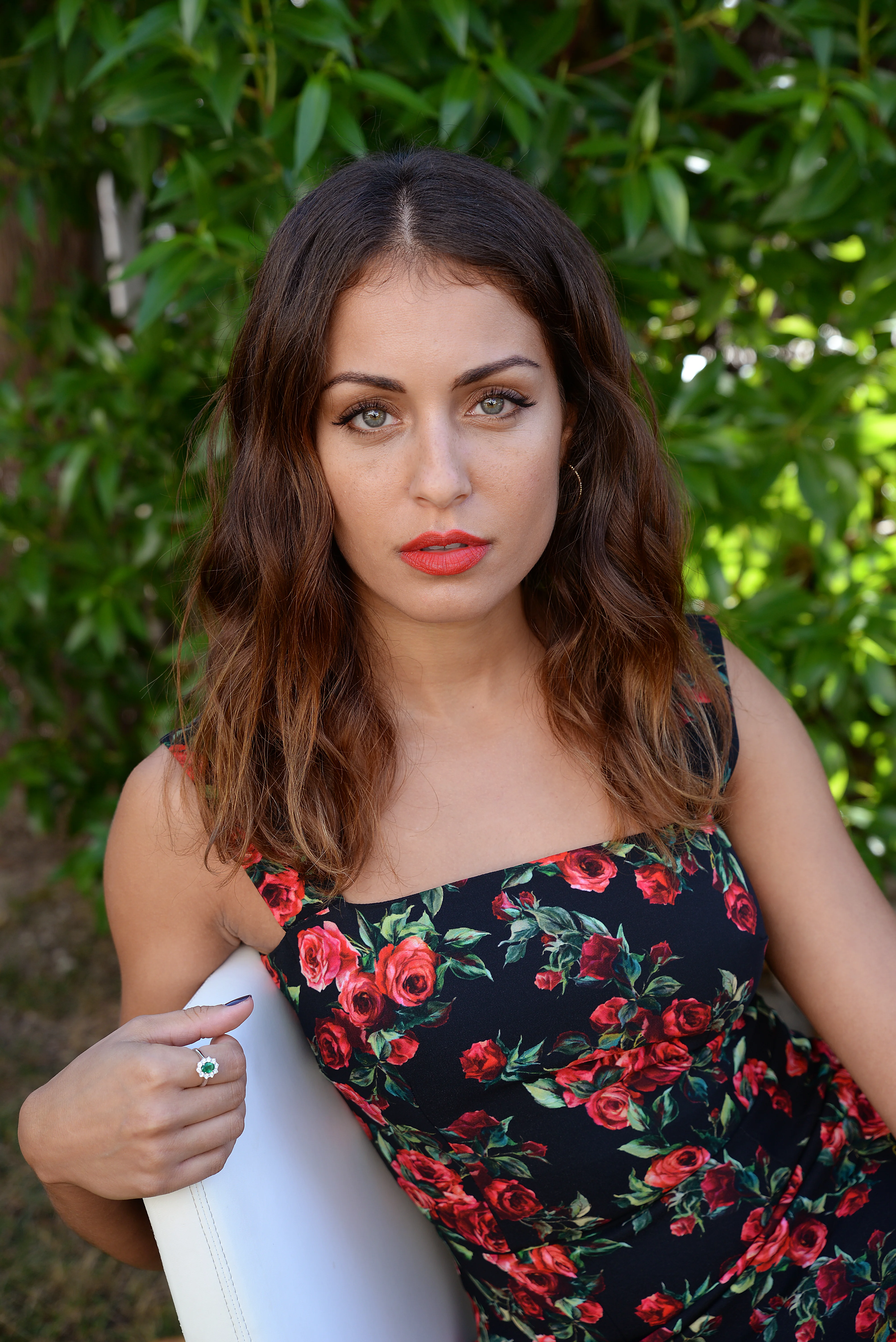
Image from Wikipedia
Image from Wikipedia
Hiba Abouk – Actress Between Cult Series, Cultural Bridges, and Strong Stage Presence
A Charismatic Voice of Spanish Television: How Hiba Abouk Captivates Audiences with Artistic Development and Impressive Presence
Hiba Abouk (born October 30, 1986, in Madrid) has firmly established herself in the Spanish-speaking series universe with her distinctive stage presence and confident versatility. The daughter of Tunisian parents with Libyan roots unites in her career of performance – her acting work – Mediterranean lightness, disciplined training, and a self-assured artistic development. She gained international recognition as Fátima in the hit series “El Príncipe,” but her repertoire extends far beyond that: from comedies to dramas to thriller formats. Linguistically and culturally adept, she navigates smoothly between Madrid, Paris, and international production environments, thus shaping a generation of European series actresses.
As the youngest of four siblings, Abouk grew up in an environment that fostered multilingualism, music, dance, and performance. Her years at the French Lycée in Madrid, her studies in Arabic studies, and her theater degree from the state drama school RESAD provided a solid foundation in technique, text work, character development, and scenic arrangement. This professional groundwork, combined with her passion for flamenco and movement, shapes her physical performance work and gives her characters a distinctive, energetic contour.
Biography: From Madrid to the Spotlight – Training, Beginnings, First Set Experiences
Hiba Aboukhris Benslimane, professionally known as Hiba Abouk, grew up in Madrid in a family with Tunisian-Libyan roots. The early influence of languages and culture – Spanish, Arabic, French, and later also English and Italian – enhanced her versatility on set and stage. Her theater training at RESAD sharpened her understanding of dramaturgy, character arcs, and the microscopic work on subtext. This expertise is reflected in her precise modulation of voice, timing, and non-verbal communication that supports her on-screen presence. Even at this stage, the qualities that casting decision-makers value emerged: script confidence, teamwork, sense of pace, and the ability to convey emotions with nuance.
Abouk made her television debut in 2008 in “El síndrome de Ulises.” The real career boost came in 2010 with “La isla de los nominados” – a breakthrough that made her increasingly visible on Spanish TV. During this period, she refined her craft in ensemble structures, learned to utilize multi-camera setups efficiently, and established her profile as an actress who effortlessly transitions between humor and seriousness. This transitional phase laid the groundwork for her first notable series roles in the following years.
Breakthrough and Popularity: “El Príncipe” as a Crystallization Point
With “El Príncipe” (2014–2016), Hiba Abouk achieved nationwide fame: As Fátima ben Barek, she portrayed a character that embodied religious, familial, and socio-political tensions. Her artistic development was particularly evident here in the balance of inner strength and vulnerability, a performance that carries close-ups and makes complex motivations believable. The series solidified her status as one of Spain’s most prominent TV personalities and proved her ability to lead serialized storytelling over multiple seasons. Reviews repeatedly highlighted her presence, the controlled pace of her performance, and the emotional transparency of her gazes.
After the success, Abouk strategically focused on role selection and typecasting. In interviews, she emphasized her refusal of offers that solely reproduce ethnic stereotypes, in order to protect her artistic range and promote cultural representation beyond one-dimensional attributions. This stance created trust in her brand as an actress who prioritizes quality and substance over short-term reach – an EEAT-compliant signal for artistic integrity.
Career Milestones: From Ensemble Comedies to Thriller Miniseries
Before and after “El Príncipe,” Abouk refined her versatility in productions like “Cheers” (guest role), “Con el culo al aire” (2012–2013), and “El corazón del océano” (2014). Later projects included “Madres. Amor y vida” (2021) and the French thriller miniseries “J’ai tué mon mari” (2021), where she skillfully navigated between trauma, pressure to act, and moral ambiguities as Laure. These works showcase her talent for psychological nuance, which unfolds especially in close-ups – a hallmark of her production outcomes in intense TV formats.
Apart from her series work, Abouk has also taken on film roles, including in “Historias de Lavapiés” (2014), “Proyecto tiempo” (2017), and “Caribe: todo incluido” (2020). These film projects sharpened her sense for long form, the rhythmic breathing of longer arcs, and the precise placement of dramatic climaxes. In this way, she developed a signature style that focuses on composition, lines of sight, and physical-spatial relationships in scene construction.
Current Projects 2024–2025: “Eva & Nicole” – Glamour, Power Games, and 80s Aesthetic
With “Eva & Nicole,” Abouk reaffirmed her status as a Leading Actress in 2024/2025. The series – conceived by Daniel Écija – intertwines glamour, intrigue, and nostalgia of the 1980s in Marbella. Abouk’s character Eva confronts Nicole, played by Belén Rueda, igniting a duel over power, loyalty, and old scores. Premiere and festival presence (including Málaga) along with media coverage underscore the relevance of the production on Spanish free-to-air TV and Atresplayer. For Abouk, this format represents not only a return to the primetime spotlight but also an opportunity to recalibrate her range between glamorous poses, inner vulnerability, and decisive action.
Remarkably, the production aesthetic framing: costume, makeup, and set design envelops Abouk’s performance with iconic 80s signatures – satin, strong silhouettes, contrasting light situations – while her acting grounds the essence of her characters. Press reviews highlighted this synthesis of style and substance. For her artistic development, “Eva & Nicole” signifies a next step toward internationally compatible series formats that remain locally anchored.
Filmography (Selection): Showcase of a Versatile Actress
Series: El síndrome de Ulises (2008), La isla de los nominados (2010), Cheers (2011, guest), Con el culo al aire (2012–2013), El corazón del océano (2014), El Príncipe (2014–2016, breakthrough), Madres. Amor y vida (2021), J’ai tué mon mari (2021), Eva & Nicole (2024). In these productions, Abouk develops serialized characters with clear motivational chains, rhythmically musicalizes dialogues – pauses, accents, crescendos – and uses close-ups for subcutaneous meaning-making.
Films and Short Formats: Pegada a tu almohada (2010, short film), Historias de Lavapiés (2014), Terre Brûlée (2014, short film), Proyecto tiempo (2017), Malek (2019), Bvlgari: Let It Bling (2019, video), Caribe: todo incluido (2020), Manos libres (2021, short film). These milestones demonstrate a spectrum from independent aesthetics to brand-focused visuals to dialogue-driven ensembles. Abouk excels through clear character portrayal, economy of gestures, and a production virtue that allows set dynamics, partner play, and camera axes to interlock precisely.
Acting Style, Approach, and Artistic Signature
Abouk's style can be described as a blend of emotional directness and structured understatement. In her role work, she employs subtle shifts in gaze, controlled breathing, and physical shifts in weight that make inner tensions visible. Her technique – shaped by theater training, language work, and physical musicality – lends even quiet moments gravitas. Moreover, the composition and arrangement of her scenes are never for their own sake: they focus on conflict and serve credibility.
At the same time, her repertoire reveals a preference for characters caught between worlds: modern and traditional, glamorous and fragile, autonomous and bound. These dramatic contrasts contribute to the allure of her performances and position her as an artist who engages with cultural intersections. Her professional radius – Spain, France, international co-productions – reflects a production practice that remains open to new directing voices and narrative formats.
Cultural Influence and Representation
As a Spanish-Tunisian actress with Libyan roots, Abouk represents an imagery that has made European series more diverse for years. She demonstrates how identity and depth of role can be conceived beyond stereotypes – an impulse that alters casting, script development, and audience perception. By selecting roles that break cliché attributions, she strengthens authenticity and opens up spaces for new narratives. Her multilingualism further extends the connectivity of her works into a Francophone and international context.
The ongoing resonance of her “El Príncipe” success and the media attention surrounding “Eva & Nicole” underscores her influence on popular and series culture in the Spanish-speaking realm. Press reports, festival appearances, and interviews show: Abouk actively shapes the discussion about representation – not only in front of the camera but also in public conversations about role models, self-determination, and professional priorities.
Awards, Resonance, and Media Perception
Even without a long list of major film awards, it is primarily Abouk's continuous lead and key roles that mark her authority in the industry. Media resonance surrounding “Eva & Nicole,” background reports, and festival features paint a consistent picture: Abouk carries series, can shape ensemble dynamics, and handle demanding tonal ranges – from melodrama to thriller. Critical reception repeatedly highlights her charismatic presence, command of language, and ability to convey emotional ambivalences with cinematic precision.
The sum of these factors – technical expertise, recurring leading roles, international connectivity – underpins her authority as a protagonist in today’s European series market. For casting and production teams, Abouk represents a reliable choice when it comes to characters with psychological depth, cultural complexity, and high audience interest.
Fans' Voices
Fans' reactions clearly demonstrate: Hiba Abouk captivates people worldwide. On Instagram, one fan raves, “Your role in ‘Eva & Nicole’ exudes pure elegance and strength – every scene hits perfectly.” Others praise the interplay with colleagues, the timing in dialogue duels, and the expressive body language that tells a story even in silent moments. Many also celebrate her bold approach to stereotypes and the nuanced portrayal of complex female characters.
Conclusion: Why Experience Hiba Abouk Live and on Screen Right Now?
Hiba Abouk combines acting expertise, cultural complexity, and a magnetic stage presence. Her artistic development showcases an actress who consciously chooses roles, carefully composes characters, and impresses in production with precision, team spirit, and curiosity. “Eva & Nicole” confirms her as a Leading Actress with international potential – elegant in style, clear in character portrayal, powerful in impact. For lovers of serialized storytelling, keeping Abouk on the radar is a must – on television, at festivals, in new co-productions. Now is the perfect time to experience her performance to the fullest.
Official Channels of Hiba Abouk:
- Instagram: https://www.instagram.com/hiba_abouk_/
- Facebook: No official profile found
- YouTube: No official profile found
- Spotify: No official profile found
- TikTok: No official profile found
Sources:
- Wikipedia (DE) – Hiba Abouk
- Wikipedia (EN) – Hiba Abouk
- SAFE Management Paris – Hiba Abouk (Talent page with reference to Instagram)
- IMDb – Hiba Abouk (Biography/Filmography)
- Wikipedia (ES) – Eva & Nicole (Series background, Festival Málaga 2024)
- El Confidencial – Interview/Feature on “Eva & Nicole”, 2025
- Los40 – Promotion and casting anecdote on “Eva & Nicole”, 2024
- FormulaTV – Video interview on “Eva & Nicole”, Málaga 2024
- AlloCiné – Filmography/Series credits of Hiba Abouk
- Wikipedia: Image and text source