
Inka und Markus Brand
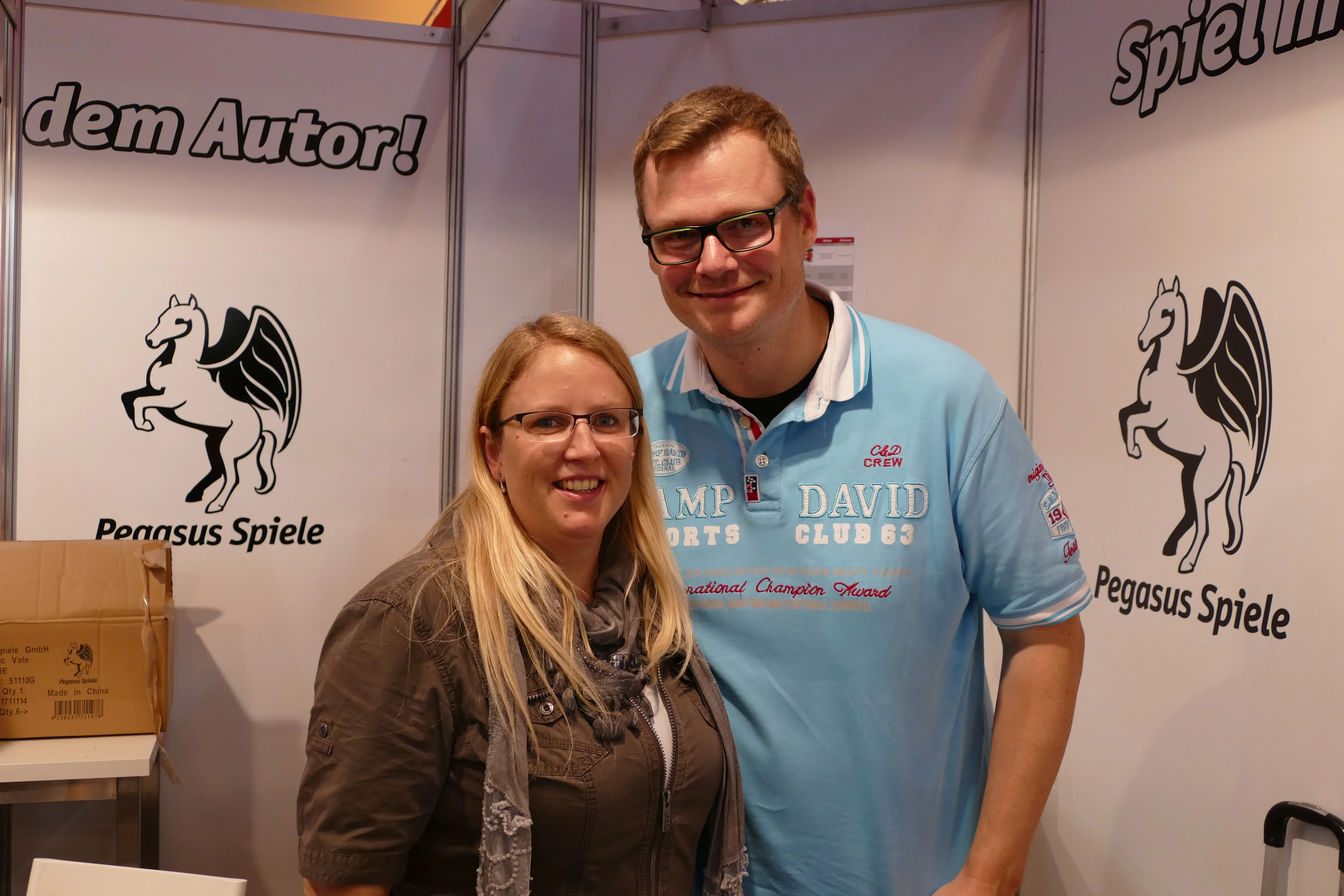
Image from Wikipedia
Image from Wikipedia
Inka and Markus Brand – The Creative Duo Behind Village, EXIT, and Major Family Game Moments
Between Kitchen Table, Game Workshop, and Big Stage: How Two Passionate Tinkerers Shaped Modern Board Game Culture
Inka Brand and Markus Brand are among the most influential game designers in the German-speaking world. Since the mid-2000s, they have been designing cooperative experience games, strategic expert games, and award-winning children’s games – always with a sense for atmosphere, well-thought-out rules, and intelligent puzzle dynamics. While they may not have a music career, their stage presence is demonstrated differently: in game rounds filled with laughter, contemplation, and cheers – and in an artistic trajectory that spans from their debut to an internationally successful brand. The couple lives in Gummersbach, tests games in their home environment, and combines everyday experiences with professional production.
Early Years and Artistic Development: From Workshop to Breakthrough
Their joint journey began in 1999 at a game workshop in the Sauerland. Initial prototypes, successes in the Hippodice authors' competition, and the publication of their debut laid the groundwork for a metaphorical music career – a sustained presence in the game scene, supported by continuous artistic development. Two guiding motifs emerged early on: family-friendly themes with emotional storytelling and a mechanical sensitivity for the composition and arrangement of game systems. Their creative process remains closely tied to practice: ideas are born at the kitchen table, refined in intensive testing sessions, and only then transferred to publishing production.
Awards, Milestones, and the Language of Recognition
The national and international breakthrough came with an impressive series of accolades. Village was awarded Expert Game of the Year in 2012 and won the German Games Award in the same year, which instantly anchored the duo in the scene. A year later, Der verzauberte Turm impressed the children’s game jury and won the most prestigious critics' award for children's games. In 2017, the jury for Expert Game of the Year recognized the first three EXIT Boxes – Die verlassene Hütte, Das geheime Labor, and Die Grabkammer des Pharao – as a collective puzzle opus. Subsequent awards like the MinD Game Award continued the series and underscored the duo's authority in various genres of their game discography.
Village, Rajas of the Ganges, and The Rise of Queensdale: Three Signatures, Three Tones
Village represents a precise intertwining of resource and time management. Mechanically, the game orchestrates the life paths of a village family; dramaturgically, it relies on long-term planning and precise end conditions. In Rajas of the Ganges, the Brands combine worker placement, dice management, and tile placement into a coherent economy and fame system – a compositional style that brings reputation and income trajectories as opposing melodies that culminate in a striking overlap in the finish. The Rise of Queensdale, their legacy design, transports episodic storytelling into family rounds: campaign structure, growing components, and advancing rule systems create long-term tension, while the target audience is consciously addressed in a more accessible manner. The critical reception highlighted the elegant interconnection in Rajas; Queensdale polarized regarding its ambition, replay value after campaign completion, and randomness influence – a productive debate that sharpened the role of legacy formats outside the expert scene.
EXIT – The Game: How a Genre Conquered Living Rooms
With the EXIT series, Inka and Markus Brand condensed cooperative game dramaturgy into a distinct, recognizable language. From a design perspective, EXIT is a school of reduction: paper, cardboard, decoding discs, targeted decoding mechanics, and an arrangement of clues, red herrings, and “aha” moments. Production takes place in Germany; the material is described, folded, or cut during gameplay to create tactile surprises – a statement for immersive, one-of-a-kind story design. The impact is measurable: KOSMOS reports over a decade of brand history and strong market leadership; recent releases like Die letzte Vorstellung (2025) keep the series fresh, varying puzzle architecture and expanding team challenges with new settings and props.
Children’s Game Composition: Der verzauberte Turm and Andor Junior
In the children’s game sector, the duo demonstrates a fine balance of accessibility and suspense. Der verzauberte Turm stages a semi-cooperative race and memory-based clue search with an iconic key-moments mechanic – a reason why the game was crowned Children’s Game of the Year. Andor Junior, on the other hand, translates Michael Menzel's fantasy legend into a cooperative adventure for younger players: role identity, threat management, and modular task structures teach teamwork and foresight without overwhelming rules. That Andor Junior won the German Children’s Game Award in 2020 confirmed the quality of child-friendly dramaturgy and production.
Game Discography: Selection of Influential Titles and Reception
Key works include Village (2011; Expert Game of the Year; German Games Award), Der verzauberte Turm (2012; Children’s Game of the Year 2013), the EXIT premieres (2017; Expert Game of the Year), Rajas of the Ganges (2017/2018; International Gamers Award; German Games Award 3rd place), as well as family and junior formats. The critiques of Rajas emphasize the harmony of dice economy and worker placement, the clear iconography, and the sharp tactical frequency of moves. Queensdale is noted for its solid craftsmanship but is read as a family-friendly legacy game beyond expert expectations. This critical discourse showcases the versatility of the Brands: they compose not just for one style but modulate genre, ambition, and target audience according to the project.
Production Aesthetics, Rule Design, and Artistic Signature
The duo's expertise is evident in clear rule text, pedagogically clean introductions, structured chapters or puzzle flows, and coherent material dramaturgy. In production, they collaborate with reliable partners such as KOSMOS, Eggertspiele/Pegasus, HUCH!, Drei Magier, or Ravensburger, ensuring high standards of graphics, printing, and quality control. Their arrangement favors easily readable symbolism, modular difficulty levels, and scalable playtime. In style analysis, three constants emerge: narrative framing as a motivational force, mechanical core idea with a clear twist, and a final peak of tension – often experienced as the “aha” effect of rule or puzzle composition.
Cultural Influence: From the Scene to the Mainstream
Games by Inka and Markus Brand connect generations at the table – a cultural value that resonates especially in times of digital fragmentation. The EXIT series accelerated the escape room trend in domestic contexts, awakened new audiences, and created a brand universe with books, puzzles, and advent calendars. Meanwhile, titles like Village and Rajas represent a genuinely European design school: accessible complexity, elegant interconnection, and thematically credible economy. Price listings, trade press, and international awards document their influence; industry reports and publishing details clarify market dynamics.
Current Projects 2024–2025: Fresh Puzzles, Brand Refinement
Recently, the Brands also presented new EXIT content with varying settings, team modes, and difficulty levels – including advanced and professional boxes, as well as a circus production that uses the ring as a stage for puzzle composition. These newer releases showcase how the author team is expanding its vocabulary: more meta-puzzles, surprising object interactions, and finely grained clue logic. This keeps the series relevant without abandoning its core identity – cooperative, intense one-off experiences.
Experience, Authority, and Trustworthiness: EEAT in Practice
Experience: A music career cultivated over decades in terms of the game scene – with hundreds of testing rounds, workshop work, and live presentations at fairs. Expertise: Confident handling of genre, composition, materials, and rule text, reflected in both expert and children's game awards. Authority: Awards from the Spiel des Jahres jury, German Games Award, International Gamers Award, and Mensa highlight recognition from critics, the community, and gifted individuals. Trustworthiness: Official publisher sites, their own website, and documented press reports ensure the verifiability of key facts, from award mentions to release dates.
Conclusion: Why You Should Play Inka and Markus Brand
Anyone who views the board game medium as art, culture, and a communal experience cannot overlook the Brands. Their works connect head and heart: strategic clarity, tactile surprises, narrative warmth. Whether it's an expert game night with Rajas of the Ganges, family time with Der verzauberte Turm, or cooperative peak moments with EXIT – their games create those electrifying moments that linger. Recommendation: Experience the artistic development live – best at your own table, with curious players ready to immerse themselves in rules, puzzle cadence, and finale together.
Official Channels of Inka and Markus Brand:
- Instagram: No official profile found
- Facebook: No official profile found
- YouTube: No official profile found
- Spotify: No official profile found
- TikTok: No official profile found
Sources:
- Inka and Markus Brand – Official Website
- Wikipedia – Inka and Markus Brand
- Wikipedia – Village (Game)
- Wikipedia – Der verzauberte Turm
- KOSMOS – EXIT Brand World
- KOSMOS – EXIT: Die letzte Vorstellung (Release date 14.08.2025)
- KOSMOS – EXIT: The Legacy of the World Traveler
- KOSMOS – Andor Junior
- International Gamers Award 2018 – Rajas of the Ganges
- das spielzeug – Expert Game of the Year 2017 (EXIT)
- German SPIELEmuseum – German Children's Game Award 2020 (Andor Junior)
- WIRED – Game of the Year 2012 (including Village)
- Inka and Markus Brand – About Us (Bio, Awards, Milestones)
- KOSMOS/Brandora – 10 Years of EXIT (Brand Development, Market Position)
- Wikipedia: Image and text source