
Jan Liebermann
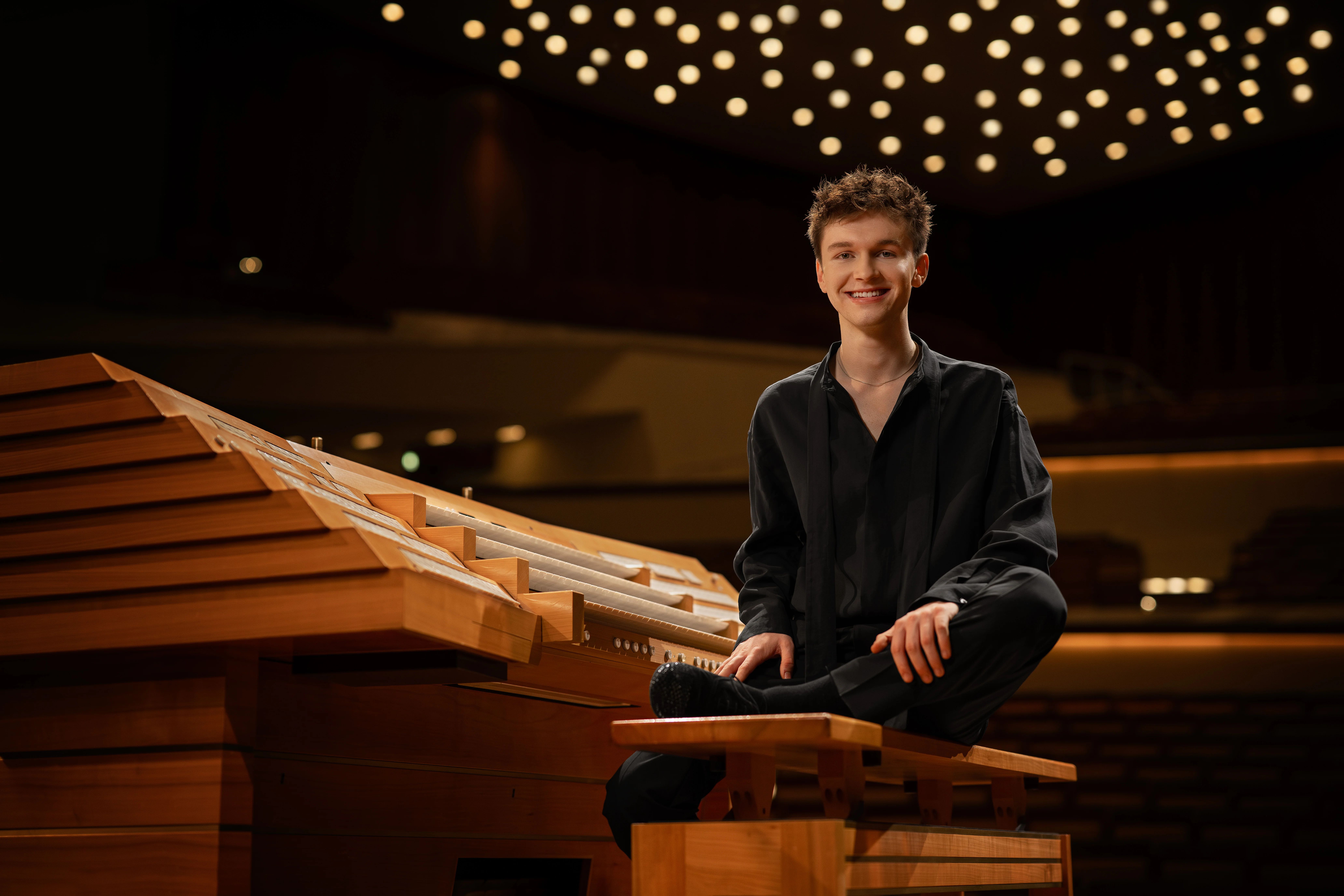
Image from Wikipedia
Image from Wikipedia
Jan Liebermann – the young organist who rethinks the organ
Between Bach, virtuosity, and digital stage presence: a portrait of an extraordinary talent
Jan Liebermann, born in 2005 in Kronach, belongs to a generation of young classical artists who do not merely manage tradition but revitalize it. The German organist has quickly established himself as a remarkable voice in the international organ scene, blending technical brilliance, musical maturity, and a notable presence on social media. His profile represents a rare blend of historically informed interpretation and contemporary communication with a young audience. ([janliebermann.com](https://janliebermann.com/about-en/))
Biographical roots and early musical development
Liebermann began playing piano at the age of seven and turned to the organ at twelve. This early specialization has shaped his artistic development, which has rapidly progressed from regional support to a prestigious academic education. He initially studied in Frankfurt am Main and Kronberg, was admitted as a young student to the Young Academy of the Frankfurt University of Music and Performing Arts in December 2019, and has continued his training since the winter semester of 2022/2023 in Mainz. Later, he furthered his studies at the University of Music and Theater Munich. ([janliebermann.com](https://janliebermann.com/about-en/))
These educational stages demonstrate an organist who is consistently building his music career on substance. Teachers like Gerhard Gnann, Carsten Wiebusch, Lev Natochenny, and Martin Sander mark a career that is based on precise technique, stylistic differentiation, and a pianistic foundation. The fact that Liebermann also received masterclass instruction in piano explains the clarity of his touch, his control over phrasing, and his confident interpretation of complex organ works. ([janliebermann.com](https://janliebermann.com/about-en/))
The breakthrough: Attention through Bach and Dupré
In spring 2024, Jan Liebermann attracted wide attention in the organ world when he memorized and performed all six Trio Sonatas by Johann Sebastian Bach in several public concerts. For organists, this repertoire is a benchmark of the highest level; the combination of memorization, structural understanding, and physical endurance makes such programs a truly exceptional feat. Liebermann continued this path with Marcel Dupré's highly virtuosic Trois Préludes et Fugues, which he also performed memorized multiple times. ([berliner-philharmoniker.de](https://www.berliner-philharmoniker.de/en/concert/calendar/56325/))
Here lies the core of his artistic authority: Liebermann does not work with effects for their own sake, but with programs that directly connect music history, technique, and expressiveness. His playing connects baroque architecture with romantic and French organ traditions without smoothing over or overloading the works. The public response to these projects led to accolades such as the Cultural Promotion Award 2024 from the Rotary Club Mainz and other honors. ([magdeburgerdommusik.de](https://magdeburgerdommusik.de/wp-content/uploads/2025/04/Orgelpunkt2025_Programmheft.pdf))
Awards, competitions, and international recognition
His successes in competitions highlight the rapid development of his career. These include the First Prize at the Northern Ireland International Organ Competition 2024, the First Prize at "Jugend musiziert" 2021 in the national ranking in the organ category, and the Second Prize at the International Organ Competition Wuppertal 2023. Additional accolades came from the International Young Organist Competition Moscow 2020, the International Organ Competition Deidesheim 2020, and the Concours International d’Orgue de Dudelange 2023. ([janliebermann.com](https://janliebermann.com/about-en/))
Notably, Liebermann received the Deutschlandfunk Promotion Award in autumn 2025, making him the first organist to be awarded since the prize's inception in 1998. This is more than a symbolic act: it shows that his music career has long surpassed the status of a newcomer and has arrived in the official centers of German music life. This profile is further complemented by support from the German Foundation for Music Life and a scholarship from the Jürgen Ponto Foundation Berlin. ([janliebermann.com](https://janliebermann.com/about-en/))
Concerts, stage presence, and international performances
Jan Liebermann performs on significant instruments and in renowned venues, including the Berliner Philharmonie, Philharmonie Essen, Pisa Cathedral, Freiberg Cathedral, Paderborn Cathedral, Limburg Cathedral, Essen Cathedral, Münster Cathedral, Freiburg Minster, and St. Michaelis Hamburg. Internationally, he has also performed in England at venues such as York Minster, Westminster Abbey, Salisbury Cathedral, King’s College Cambridge, Exeter Cathedral, Truro Cathedral, and Southwark Cathedral in London. This presence showcases an artist whose stage presence is not confined to a single milieu but resonates equally in concert halls, churches, and festival spaces. ([janliebermann.com](https://janliebermann.com/about-en/))
In 2025, Liebermann appeared multiple times at the Berliner Philharmonie, including as part of the 60th anniversary of the Schuke organ there. He made his celebrated solo debut, collaborated with Emmanuel Pahud, and performed on three evenings with the Berliner Philharmoniker under Andris Nelsons. These appearances mark the transition from a young talent to a seriously regarded concert organist at the highest level. ([janliebermann.com](https://janliebermann.com/about-en/))
Style, sound ideal, and musical handwriting
Liebermann's style is characterized by precision, stylistic discipline, and a remarkable confidence in handling large forms. His repertoire spans from baroque counterpoint to 20th-century French organ virtuosity, particularly highlighting the connection between structure and tension. The ability to present complex works from memory and with clarity enhances the impression of an already impressively matured musical development. ([janliebermann.com](https://janliebermann.com/about-en/))
Musically, Liebermann represents a generation that treats the organ not as a museum instrument, but as a vibrant medium with concert character and public impact. He himself expresses a desire to perform worldwide and play on as many instruments and in many cultures as possible. This attitude explains why his interpretations do not merely come across as academic, but develop a palpable communicative energy. ([berliner-philharmoniker.de](https://www.berliner-philharmoniker.de/en/concert/calendar/56325/))
Digital reach and cultural influence
Especially noteworthy is Liebermann's approach to social media. He regularly publishes videos and concert recordings on YouTube, Instagram, and Facebook, where his recordings have collectively reached several million views. In doing so, he significantly contributes to modernizing the image of the organ and connecting with an audience that might otherwise struggle to discover classical organ music. ([magdeburgerdommusik.de](https://magdeburgerdommusik.de/wp-content/uploads/2025/04/Orgelpunkt2025_Programmheft.pdf))
Coverage in the music press emphasizes this role. Berliner Zeitung and other media describe him as an extraordinarily young, yet already internationally acknowledged organist, whose social media activity can be understood as part of his artistic mission. Particularly in classical music, this connection between online presence and concert culture is still unusual – in Liebermann’s case, it has become a trademark. ([berliner-zeitung.de](https://www.berliner-zeitung.de/kultur-vergnuegen/musik/ins-berghain-wuerde-ich-nur-mit-ohrenschutz-gehen-jan-liebermann-der-junge-weltstar-an-der-orgel-li.2359465))
Voices of the fans
Jan Liebermann's official social media presence showcases how strongly his performances are perceived online: the reach of his videos and concert recordings speaks to a growing, attentive audience. In this way, a fan community is emerging that appreciates not only the technical virtuosity but also the fresh approach to organ culture. However, verifiable direct fan quotes were not available in the reviewed sources. ([magdeburgerdommusik.de](https://magdeburgerdommusik.de/wp-content/uploads/2025/04/Orgelpunkt2025_Programmheft.pdf))
Conclusion: An organist with a future and charisma
Jan Liebermann is an exceptional talent because he masterfully combines multiple levels: musical depth, technical security, programmatic intelligence, and a contemporary public presence. His career impressively demonstrates how classical music culture can be rejuvenated in the 21st century without compromising artistic standards. Those who wish to experience how the organ can once again be exciting, virtuosic, and immediate should hear Jan Liebermann live. ([janliebermann.com](https://janliebermann.com/about-en/))
Official channels of Jan Liebermann:
- Instagram: https://www.instagram.com/janliebermann.organist/
- Facebook: https://www.facebook.com/officialjanliebermann/
- YouTube: https://www.youtube.com/@liebermannjan
- Spotify: No official profile found
- TikTok: No official profile found
Sources:
- Jan Liebermann – Official Website
- Jan Liebermann – About
- Berliner Philharmoniker – Concert Calendar / Jan Liebermann
- MUSIK HEUTE – Jan Liebermann, August 4, 2025
- Magdeburger Dommusik – Orgelpunkt 2025 Program
- Berliner Zeitung – Jan Liebermann, October 8, 2025
- Wikipedia: Jan Liebermann – Image and Text Source