
Jewish Chamber Orchestra Munich
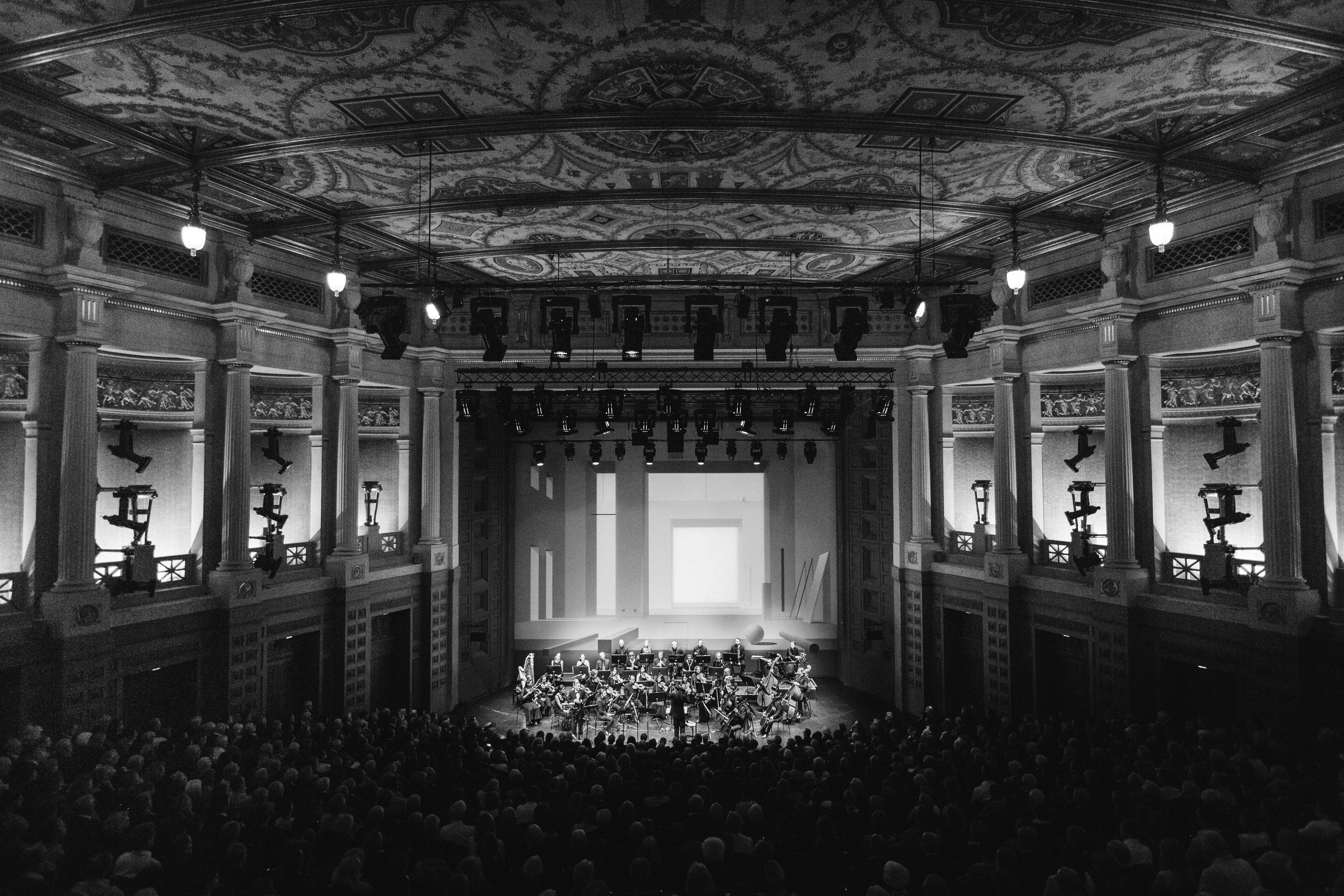
Image from Wikipedia
Image from Wikipedia
Jewish Chamber Orchestra Munich (JCOM)
Jewish Sound Worlds Today: The Jewish Chamber Orchestra Munich as a Living Voice of a Diverse Contemporary Culture
The Jewish Chamber Orchestra Munich (JCOM) is among the most prominent orchestras in Germany when it comes to Jewish musical traditions, reimagined programs, and interdisciplinary concert formats. Since its founding by conductor and artistic director Daniel Grossmann in 2005, the orchestra has pursued a clear mission: to make Jewish culture audible and experiential in its historical depth and current relevance. The name embodies both attitude and program – a chamber orchestra from Munich that curates Jewish music from the Baroque period to the present, sheds new light on composers, and perceives the stage as a place of social resonance. In 2018, the programmatic step from Orchester Jakobsplatz München to the internationally comprehensible brand Jewish Chamber Orchestra Munich was taken.
Founding Idea and Artistic Development
The musical journey of JCOM began with a specific cultural-political ambition: to make Jewish contemporary culture visible in the urban space of Munich and to bring forgotten voices back into the repertoire. Under the direction of Daniel Grossmann, a professional core of Jewish and non-Jewish musicians came together, forming an ensemble with flexible instrumentation that ranges stylistically from historical repertoire to world premieres. The renaming step in 2018 was more than just a rebranding – it opened doors to a global audience and emphasized the artistic development from a local reference point to a voice with regional influence. The orchestra continually expands its stage presence with discussion formats, educational projects, and collaborations with renowned cultural institutions.
International Profile and Collaborations
JCOM performs on national and international concert stages and sets important accents in cultural education through tours and guest performances. Long-term partnerships – with institutions such as the Bavarian State Opera, the Villa Stuck Museum, and the Munich Kammerspiele – sharpen the artistic profile and allow for unusual formats that blend concerts, music theater, and scenic reflections. The ensemble's work is designed to the highest artistic standards, combining curatorial perspective, dramaturgical sensitivity, and a clearly perceptible stage presence. This network facilitates cross-genre projects that place concerts in a narrative context and convey Jewish cultural history as a contemporary experience.
Repertoire Focus: From Rediscoveries to Composition Commissions
At the center lies a repertoire policy that uncovers historical depths while simultaneously commissioning new music. Works by persecuted and marginalized composers – from Alexander Zemlinsky to Mieczysław Weinberg – form a consistent thread in the program's work. JCOM intertwines composition, arrangement, and production: classical genres are condensed chamber musically, vocal cycles are instrumented, and newly arranged for the ensemble's sound language. This combination of music-historical contextualization, precise work analysis, and clever dramaturgy lends concerts and recordings a distinct voice – knowledgeable, reflective, and accessible to the audience.
Milestones: 20 Years of JCOM and Curated Festival Moments
The anniversary concert for the 20th anniversary on May 15, 2025, at the Cuvilliés Theater exemplified the orchestra's signature: a panorama of Jewish music ranging from Max Bruch and Felix Mendelssohn to Jacques Offenbach, Ilse Weber, and Kurt Weill, culminating in Weinberg and Paul Ben-Haim. The programmatic framework "Jewish – Today – For All" reflects the stance of an orchestra that consciously remembers the past but primarily shapes the present. In dialogical concert formats and thematic series, JCOM guides its audience through five millennia of sound history – always with an eye toward what this music means today. Recently, prominent projects emerged that connect concert, opera, and music dissemination, linking regional roots with an international perspective.
Discography: "Jewish Vienna," "Jewish East," and Weinberg
With the release of "Jewish Vienna" (April 2025), the orchestra, together with soprano Chen Reiss and under the direction of Daniel Grossmann, presents a poetic sound journey through Viennese modernism. The selection connects Zemlinsky and Korngold with rediscovered voices like Josefine Winter and explores the artistic interconnections surrounding Gustav Mahler. In 2025, "Jewish East" followed, a project referencing the repertoire of Eastern Europe, which highlights Koffler's chamber music language in concentrated movements and continues the narrative of a Jewish soundscape from the East. In 2023, JCOM had already made a significant statement with "Weinberg": The precision of the ensemble culture, the clear structural timing, and the transparent arrangement of voices demonstrate how convincingly the orchestra makes the aesthetics of modernity audible.
Critical Reception: Precision, Intensity, Context
The music press responded to "Jewish Vienna" with high ratings and special praise for its intensity and dramatic tension. Reviewers highlight the careful instrumentation, sensitive vocal lines, and the "quality sound at a premium level" celebrated in the orchestral performance. Cultural magazines and broadcasters repeatedly emphasize the orchestra's curatorial competence, which not only names historical contexts but also makes them audible through intelligent programming and coherent sequencing. This blend of expertise, contextualization, and emotional directness grants JCOM a clear authority in the field of Jewish-connoted classical music.
Style and Sound: Chamber Orchestra Culture with a Dramaturgical Compass
Stylistically, JCOM shapes a lean yet colorful sound characterized by precise articulation and chamber musical transparency. In the balance of string warmth and woodwind colors, between tension-filled transitions and clear concluding cadences, a sound dramaturgy emerges that opens spaces: song cycles become narrative tableaux, and symphonic movements gain contour without losing atmosphere. Crucially, it is the way the orchestra conceives composition and arrangement together: arranged songs – such as Zemlinsky's "Waltz Songs" – obtain orchestral brilliance without overemphasizing the vocal line. This craftsmanship renders the discography a listening manual for Jewish music history.
Program Experiments: From "Jewish Jazz" to "Jewish Pop"
The program development of JCOM is dynamic and dialog-oriented. Formats like "Jewish Jazz" opened up perspectives on transatlantic interconnections; with "Jewish Pop," the orchestra is dedicating itself in 2025 to Jewish figures in pop history – from Amy Winehouse and Regina Spektor to Bob Dylan and the Bangles. Arrangements for chamber orchestra translate pop hooks into orchestral textures and demonstrate how musical DNA continues across genres. Such initiatives in popular sound spaces are more than mere crossover – they are a continuation of a cultural history that has embedded Jewish creativity in the mainstream.
Education, Outreach, and Digital Formats
JCOM's profile includes an opera school for children and youths, school concerts, and digital educational offerings. E-learning platforms related to music in the context of Nazi persecution, making-of formats, and curated video content provide low-threshold access. These projects connect music educational experience with professional depth and illustrate how trustworthiness and responsibility are part of the DNA of a contemporary cultural actor. The orchestra ensures that concerts have a lasting impact not only in the moment but also within education, culture of remembrance, and repertoire expansion.
Cultural Influence and Social Relevance
JCOM views its artistic work as a contribution to a pluralistic culture of remembrance. The rediscovery of forgotten voices and the contextualization of well-known works create new listening positions – beyond museum nostalgia. In doing so, the orchestra shapes the discourse on Jewish music in the 21st century: it demonstrates the multifaceted ways Jewish identity translates into sound, how composition and production respond to historical trauma, and how artistic development today establishes a sense of self. Altogether, a sound archive of the present emerges that sees the concert as a living place of history, aesthetics, and dialogue.
Current Projects and Season Highlights
The recent seasons have focused the orchestra's signature in thematic cycles and music theater projects. In scenic and semi-scenic implementations, the orchestra brings music theater from Bartók to Klezmer-inspired musical plays to the stage, continuing the tradition of programmatically narrated concert evenings. Tours and guest performances expand the discourse: the programs are experienced and discussed in different cities, concert halls, and contexts. This spatial and institutional mobility contributes significantly to the ensemble's authority in the international concert scene.
Leadership and Team
The artistic leadership of Daniel Grossmann ensures continuity while demanding innovation. Curated project development, dramaturgical planning, and a clear production style make the orchestra appear as an ensemble with a distinctive profile. A professional team of cultural managers develops projects, oversees partnerships, and brings education programs into the community. From the sum of individual productions arises a coherent narrative about Jewish music that expands the canon and reaches a diverse audience.
Discography – Selection and Contextualization
The discography documents the journey of JCOM from rediscovery to reinterpretation. In addition to “Weinberg” (2023), “Jewish Vienna” (2025) and “Jewish East” (2025) mark key milestones that make epoch and spatial references audible. The profile is further complemented by productions featuring vocal and song repertoire, Mendelssohn and Zemlinsky programs, and project recordings that continue the relationship between text and sound, as well as arrangement and interpretation. Reviews highlight the sonic coherence, stylistic awareness, and dramaturgically cohesive composition – creating a real-time construction of the canon.
Conclusion: Why JCOM Must Be Heard Today
The Jewish Chamber Orchestra Munich combines musical expertise, curatorial sovereignty, and social awareness. It renews the discography of Jewish music, extends the canon, and shows how artistic development goes beyond mere repertoire maintenance. Those who wish to understand the present of classical music can hear here how the past remains alive, how arrangements open new horizons, and how interpretation becomes a narrative of cultural history. Recommendation: Experience JCOM live – for its precision, energy, strong dramaturgy, and the sense of being part of a relevant cultural history in the present.
Official Channels of Jewish Chamber Orchestra Munich:
- Instagram: No official profile found
- Facebook: No official profile found
- YouTube: No official profile found
- Spotify: No official profile found
- TikTok: No official profile found
Sources:
- Jewish Chamber Orchestra Munich – Official Website
- JCOM – Profile and Self-Understanding
- JCOM – Anniversary Concert 20 Years JCOM (May 15, 2025)
- JCOM Blog – 20 Years Jewish Chamber Orchestra Munich
- JCOM Blog – New CD "Jewish Vienna" (Release Info)
- Apple Music – "Jewish Vienna" (2025)
- Apple Music – Artist Profile & "Jewish East" (2025)
- Apple Music – "Weinberg" (2023)
- SWR Kultur – Article "Jewish Vienna" (June 3, 2025)
- concerti – Review "Jewish Vienna" (May 13, 2025)
- 3sat Kulturzeit – Music Recommendation "Jewish Vienna" (May 8, 2025)
- German Music Information Center – Renaming 2018
- Abendzeitung München – New Name for Orchester Jakobsplatz (May 4, 2018)
- Wikipedia: Image and Text Source
Upcoming Events
Jewish Chamber Orchestra Munich: The Jewish Italy in Sulzbach-Rosenberg
An evening full of Jewish music history and Italian sound colors awaits Sulzbach-Rosenberg. The Jewish Chamber Orchestra Munich performs on 05.19.2026 in a special atmosphere. #Concert #Amberg
Jewish Chamber Orchestra Munich: The Jewish Italy in Sulzbach-Rosenberg
Italian sound colors, Jewish music history, and an extraordinary space: The JCOM plays in Sulzbach-Rosenberg. #Concert #Music
Jewish Chamber Orchestra Munich: The Jewish Italy
An evening concert with depth and sound magic in Munich's Synagogue Reichenbachstraße: The Jewish Italy, live with the Jewish Chamber Orchestra Munich. May 20, 2026, 8 PM. #Munich #Concert
Jewish Chamber Orchestra Munich at the Erlöserkirche
Discover the fusion of Jewish music tradition and modern expression on June 14, 2026, in Bad Kissingen.
Jewish Chamber Orchestra Munich in Bad Kissingen
Sophisticated chamber sounds in the Erlöserkirche Bad Kissingen: Jewish Chamber Orchestra Munich connects tradition and the present. 14.06.2026, intimate acoustics, strong emotions. Experience live, secure tickets now. #BadKissingenLive
Jewish Chamber Orchestra Munich: Melodies from Eastern Europe in Augsburg
An extraordinary concert evening in the Great Synagogue Augsburg: Jewish sound tradition, great emotions, and fine chamber orchestra colors. 06/17/2026, 7:00 PM. #Augsburg
Jewish Chamber Orchestra Munich in Bad Kissingen
Enjoy classical music by the Jewish Chamber Orchestra Munich together with Grossmann and Lavi in the Erlöserkirche.
Jewish Chamber Orchestra Munich
An evening full of Jewish sound colors in the Church of the Redeemer Bad Kissingen: The Jewish Chamber Orchestra Munich combines tradition, precision, and emotion. 06.18.2026, tickets from 40 euros. #KissingerSommer #Concert
Jewish Chamber Orchestra Munich
A special concert evening in Bad Kissingen: The Jewish Chamber Orchestra Munich plays at the Erlöserkirche. Fine, intense, and moving. #Concert
Jewish Chamber Orchestra live in Bochum - Kammerspiele Concert 2026
An evening full of sound and history in Bochum: The Jewish Chamber Orchestra performs in the Kammerspiele. November 17, 2026, 7:30 PM, tickets from 21 euros. #Bochum #Concert