
Johann Sebastian Bach
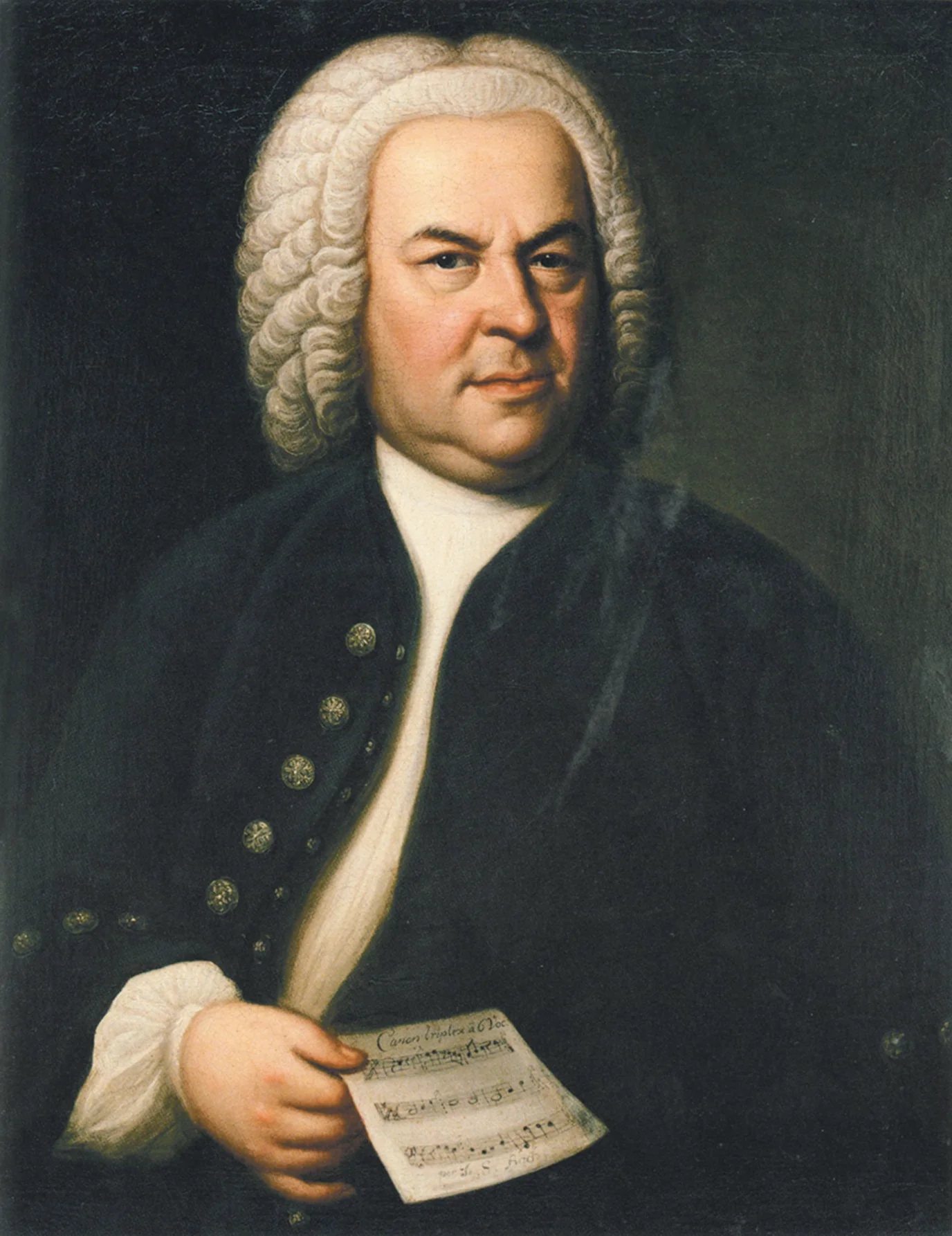
Image from Wikipedia
Image from Wikipedia
Johann Sebastian Bach – The Architect of Baroque Sound and a Timeless Benchmark in Music History
Genius, Craftsman, Innovator: How Johann Sebastian Bach Influences Music to This Day
Johann Sebastian Bach was born on March 31, 1685, in Eisenach and died on July 28, 1750, in Leipzig – a musical career lies between that defined Western art music. As an organist, harpsichordist, violinist, and composer, he merged stylistic worlds, refined counterpoint, and created a discography of enduring cultural radiance. His stage presence as a virtuoso was regarded as outstanding by his contemporaries; his artistic development led from Thuringian cantorial positions to his great years in Leipzig as Thomaskantor. Today, works such as The Well-Tempered Clavier, the Brandenburg Concertos, the St. Matthew Passion, the B minor Mass, the Christmas Oratorio, and The Art of Fugue serve as references for composition, arrangement, and production in the Baroque – as well as sources of inspiration for contemporary artists.
Biographical Roots: Eisenach, Ohrdruf, and Lüneburg
Born into a widely branching musical family, Bach received early instruction and guidance in the craft of music. After the death of his parents, he grew up with his older brother Johann Christoph in Ohrdruf, where he deepened his technique on keyboard instruments. As a choirboy in Lüneburg, he came into contact with North German and French styles – an influence that would shape his later compositional technique. Even at this stage, the foundation of his expertise is evident: intensive work on pieces that systematically connect melody, harmony, and counterpoint.
Weimar, Köthen, Leipzig: Career Development and Artistic Evolution
In Weimar, Bach matured into a leading organist and composer; his organ works demonstrate a confident mastery of form and affect. In Köthen, the focus shifted to instrumental music – here he created, among other works, the Brandenburg Concertos, the solo works for violin and cello, as well as suites and concertos that continue to shape the repertoire today. In 1723, Bach took over the Thomaskantorat in Leipzig – a position of enormous responsibility for church music, training, and musical leadership. His production of cantatas, passions, and masses illustrates an artistic development that links liturgical functionality with the highest compositional inventiveness.
Work Landscapes: From Cantata to Fugue
Bach's discography in terms of his complete works includes sacred vocal music, secular cantatas, concertos, suites, partitas, and piano works. The Well-Tempered Clavier establishes a sonic map for equal temperament and continues to serve as a textbook for composition and interpretation. The Toccata and Fugue in D minor symbolizes dramatic organ rhetoric, while the B minor Mass and the passions set benchmarks for vocal architecture, text interpretation, and motivic condensation. The Art of Fugue consolidates counterpoint, canon, and variation into a compendium of polyphonic technique – a sum of Baroque formal artistry and a laboratory for modern interpretative approaches.
Style, Technique, and Sound Language: Counterpoint as Dramaturgical Energy
Bach's style is characterized by the independent leadership of all voices: each line has melodic logic of its own, yet the arrangement fits into harmonic and rhythmic coherence. The ritornello principle in concertos, the da capo form in arias, and the chorale arrangement in cantatas – all result in a coherent dramaturgical arc. Composition and production interact: thematic transformation, sequencing, invertible counterpoint, and rhetorical figures form a sound fabric that unfolds its effect on both the harpsichord and modern keyboard instruments and ensembles.
Reception, Forgetting, and Rediscovery: From Mendelssohn to the Present
During his lifetime, Bach was highly regarded as a virtuoso and organ expert; however, as a composer, he was overshadowed in public esteem by Handel and Telemann. After his death, many works disappeared from concert life but were preserved in professional circles and played in home music. The revival of the St. Matthew Passion in 1829 under Felix Mendelssohn Bartholdy marked the Bach Renaissance and initiated a new era of reception. Since then, Bach has been part of the canon worldwide, his music a fixed component of concert programs, education, and research – a continuous discourse on performance practice, tempo, articulation, and historical instruments accompanies this development.
Research and Catalog: BWV, Bach Digital, and the Sources
The Bach Works Catalogue (BWV) forms the systematic basis for the oeuvre; the most recent expanded edition by the Bach Archive Leipzig updates classification, work versions, and sources. Concurrently, Bach Digital provides access to manuscripts, prints, and work data in high-resolution digitizations, tightly linking academic work and music practice. This infrastructure strengthens the authority of research and increases the reliability of attributions, editions, and performance materials.
Current Impulses: New Attributions, Editions, Festivals
Bach research remains dynamic: recent discoveries of two previously unknown organ works from Bach's youth expand the picture of his early compositional development and enrich the discography with new entries. At the same time, new editions and recordings are continuously released, while festivals worldwide – from Leipzig to Thuringia – present Bach's music in thematic contexts. These projects deepen the experience of Bach's music from a contemporary perspective and connect historical knowledge of works with contemporary interpretative aesthetics.
Discography in Concert Life: From the Brandenburg Concertos to The Art of Fugue
The Brandenburg Concertos represent a culmination of concert writing, where groups of soloists and tutti engage in virtuosic dialogues. The Well-Tempered Clavier remains a touchstone for pianists and harpsichordists, sharpening phrasing, articulation, and tonal balance. The passions impose the highest demands on choirs, soloists, and orchestras – they require sovereign dramaturgy, rhetorical sensitivity, and a tonal palette ranging from intimacy to monumentality. The Art of Fugue, in turn, inspires transcriptions from harpsichord to organ to chamber and guitar versions; it shows how Bach's composition functions as pure structural thinking beyond concrete instrumentation, making it feel modern.
Cultural Influence: Master of Modernity
Few composers shape education and composition as much as Bach does today. His polyphony teaches listening in layers, his harmonic vocabulary trains functional thinking, and his formal models feed genres from jazz to minimal music. In the production of historically informed performance practice, Bach acts as a catalyst: through arcs, nuances of articulation, tempering, and instrumentation choices, spaces for interpretation emerge that foster artistic development and keep the scene alive. Thus, Bach embodies a cultural benchmark by which generations of musicians orient themselves.
EEAT in Practice: Experience, Expertise, Authority, Trustworthiness
Experience is evident in Bach's continuous music career – from organ service and cantorship to leading complex performances. He demonstrates expertise in composition, arrangement, and counterpoint, which become visible in the discography through genre diversity and formal innovation. Authority arises from the supporting role of institutions such as the Bach Archive Leipzig, significant editions, and recognized reference works. Trustworthiness is secured by robust sources: historical documents, research catalogs, digital manuscripts, and reputable music press that make new findings transparent.
Conclusion: Why Listen to Bach Today – and Experience It Live?
Bach's music connects intellectual architecture with emotional directness. It offers spiritual depth, dance-like energy, and sonic clarity – a mix that makes concert visits intense listening experiences. Whether chorale arrangement, fugue, or aria: the dramaturgical coherence of his works unfolds live in space, where polyphony becomes tangible and sound colors merge together. Those who listen to Bach today experience not merely repertoire maintenance, but contemporary art: music that touches, challenges, and refreshes – with each performance, in every detail.
Official Channels of Johann Sebastian Bach:
- Instagram: No official profile found
- Facebook: No official profile found
- YouTube: No official profile found
- Spotify: No official profile found
- TikTok: No official profile found
Sources:
- Wikipedia – Johann Sebastian Bach
- Bach Archive Leipzig – About Us
- Bach Archive Leipzig – Bach Museum
- Bach Digital – Homepage
- Bach Digital – The Art of Fugue (Autograph Version), BWV 1080.1
- Bach Digital – The Art of Fugue (Original Print), BWV 1080.2
- Breitkopf & Härtel – Bach Works Catalogue (BWV), current edition
- Encyclopaedia Britannica – Johann Sebastian Bach (updated 2025)
- Die Welt – Sensational Find: Unknown Bach Pieces Discovered (2025)
- Omni/AFP – New Bach Organ Works Performed (2025)
- Wikipedia – Bachfest Leipzig (Festival Background)
- Wikipedia: Image and text source
Upcoming Events
Bach on New Year's Eve
Bach's Christmas Oratorio Cantatas IV–VI – Concert in the Cathedral
Cantata Service in Lent – Sunday Okuli
Thuringian Bach Weeks 2026
Johann Sebastian Bach's St. John Passion (BWV 245) at St. Paul’s Church Schwerin
Cantata Service in Lent – Palm Sunday
Johann Sebastian Bach: John Passion - Concert Film with Introduction
John Passion (Thuringian Bach Weeks)
Bach: St. John's Passion – Bavarian Philharmonic