
John Cage
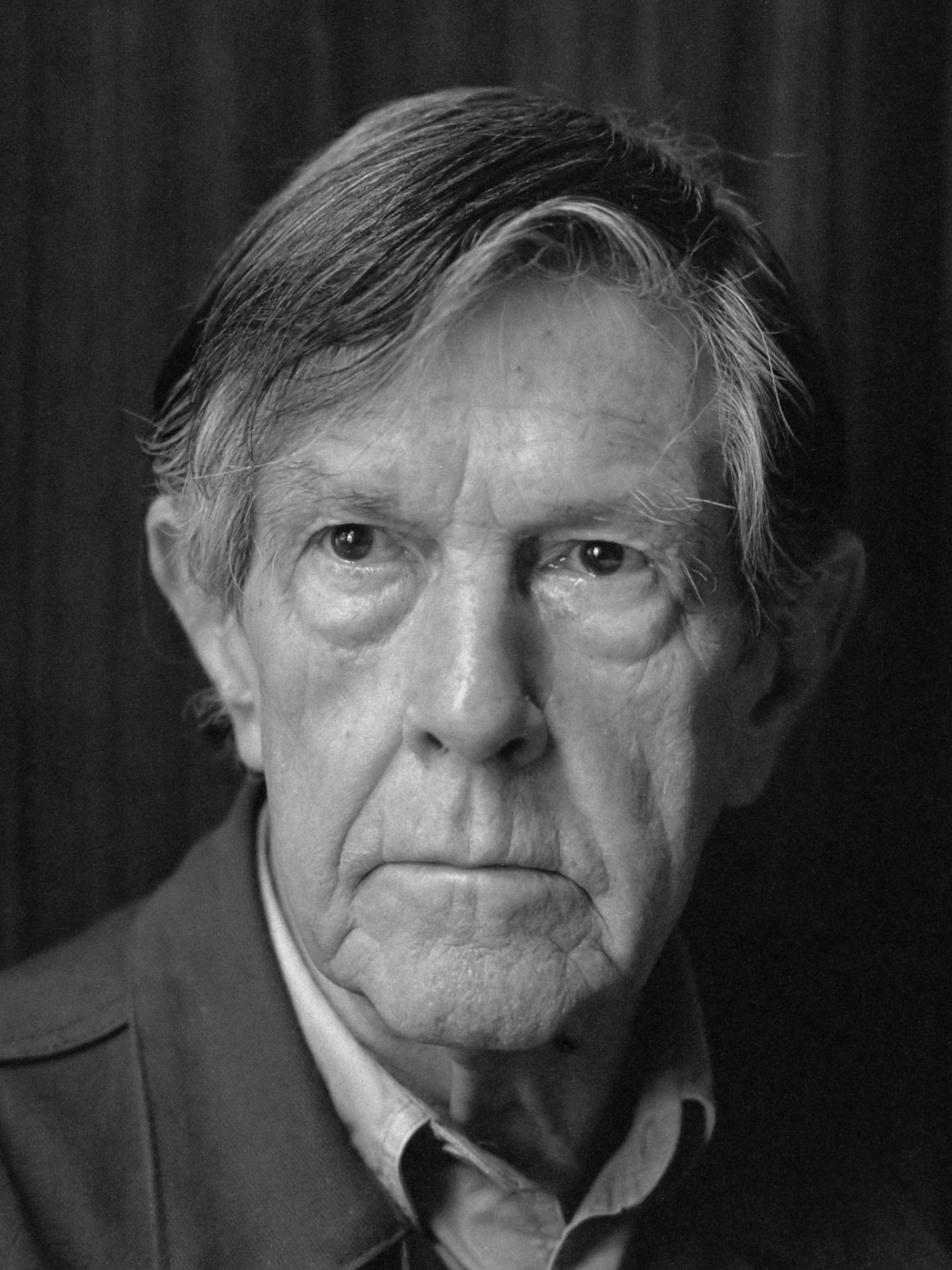
Image from Wikipedia
Image from Wikipedia
John Cage – Icon of New Music, Visionary of Chance, and Sound Pioneer of the 20th Century
How John Cage Redefined Music History with Silence, Chance, and Radical Thinking – a Deeply Researched Artist Biography for Music Lovers and Seekers
John Milton Cage Jr. (September 5, 1912, Los Angeles – August 12, 1992, New York City) shaped 20th-century music like few others. His musical career spanned from early piano and percussion experiments to the "prepared piano" and concepts of radical openness. With works like 4′33″, Music of Changes, and the Number Pieces, he blurred the boundaries between composition, performance, and listening. His artistic evolution intertwined sound exploration, Zen Buddhism, performance art, and improvisation – influencing generations of composers, sound artists, and performers worldwide.
Biography: From Los Angeles to the Avant-Garde – Early Steps and Influential Teachers
Growing up as the son of an inventor, Cage discovered an inclination for experimentation early on. Studies with Arnold Schönberg, Henry Cowell, and Adolph Weiss provided him with compositional tools, which he soon traded for his own aesthetic paths. By the late 1930s, he was leading percussion ensembles in Seattle, expanding his instrumental repertoire to include everyday objects and developing sound colors beyond traditional orchestral instruments. A concert at the Museum of Modern Art in 1943 marked an early milestone of his stage presence: The audience experienced a new, physically-material music that understood space, noise, and time as compositional parameters.
His encounter with Merce Cunningham became a lifelong collaboration that reconnected dance, music, and composition. From this partnership emerged score and time-open formats that emphasized the independence of music and choreography. Cage's artistic development occurred parallel to a spiritual one – inspired by Zen Buddhism and the idea of understanding composition as an exercise in perception.
Aesthetic Breakthrough: The Prepared Piano, Electronics, and the Poetics of Chance
With the prepared piano – screws, erasers, and other materials placed between the strings – Cage created his own percussion orchestra within the piano casing. Central works like Sonatas and Interludes (1946–48) showcase his mastery in arranging new timbres. At the same time, he experimented with the integration of radios, turntables, and tape recorders in Imaginary Landscape. These production techniques and composition with chance operations – often guided by the I Ching – shifted the role of authorship: composition as setting conditions, not as a dictate of taste.
From this mindset emerged Music of Changes (1951–52), a key work of aleatoric composition that blurs the boundaries between planning and indeterminacy in its notation and formal structure. Cage's expertise in form and process fundamentally shaped New Music in the U.S. and beyond.
4′33″ and the Opening of Listening: Silence as Music
With 4′33″ (1952), Cage articulated a musical concept that transcended concert practice: silence as a framework within which environmental sounds and unpredictable events become the actual sound material. The work became a cipher for Cage's composition, for the experience of listening in the here and now, and for an ethic of non-intervention. Reactions ranged from outrage to fascination, yet the historical impact is undeniable – 4′33″ is now one of the most discussed works in music history (Britannica, MoMA, American Masters/PBS; cf. sources).
The artistic development following 4′33″ deepened Cage's thinking in projects that cross media boundaries: text compositions (including Mesostics), interdisciplinary happenings, visual works, and late scores with flexible time frames.
Late Works and the "Number Pieces": Time, Breath, Openness
In the late 1980s and early 1990s, Cage created the Number Pieces, whose titles indicate the number of participants (e.g., Fourteen, One^11/103). Detailed time brackets provide a framework within which sound events can unfold freely. These works encapsulate Cage's compositional experience: precise structuring meets radical openness. Their performance practice challenges interpreters as co-designers – and the audience as attentive listeners.
At the same time, Cage continued his interdisciplinary work. Books like Silence (1961) and M: Writings ’67–’72 (1973) textualized his thinking and significantly shaped the international debate on composition, perception, and culture.
Cultural Impact: From New Music to Performance, Minimalism, and Noise
Cage's authority extends far beyond composition. His concepts informed performance art, minimal and conceptual music, sound art, and improvisation. His closeness to visual artists like Robert Rauschenberg and collaboration with Cunningham opened discourses across the arts. In music history, Cage is considered a catalyst for electroacoustic aesthetics, live electronics, open form, and the democratization of sound material. Reception in music press, museums, and encyclopedias confirms his position as the most influential composer of the post-war avant-garde (Britannica, MoMA, SFMOMA; cf. sources).
His work remains internationally present: festivals, orchestras, new music ensembles, and art institutions engage his compositions, procedures, and textures to creatively negotiate today's questions of environment, chance, silence, and attention.
Discography and Overview of Works: Key Pieces, Recording Trends, Repertoire
The discography of Cage documents his range: from the prepared piano (Sonatas and Interludes) to percussion and radio pieces (Imaginary Landscape, Credo in Us) to orchestral and ensemble works (Concert for Prepared Piano and Chamber Orchestra), ballet music (The Seasons), and the number cycles. Labels and editions systematically compile: Mode Records has released numerous reference recordings and text readings in cooperation with the John Cage Trust; other significant editions can be found at harmonia mundi, among others. International critics appreciate the interpretative diversity – from historically informed approaches to the latest realizations with electronics and live processing.
Today, performance practice focuses on sound precision, spatial acoustic dramaturgy, and curatorial contexts. Ensembles often pair Cage with Satie, Feldman, or Ligeti to make developments in harmony, time, and timbre audible. This programming enhances the visibility of Cage's compositions within a vibrant repertoire.
Current Projects, Reissues, and Long-Term Performances (Status: 2024–2026)
New contexts for Cage's music are emerging even posthumously. The John Cage Organ Project in Halberstadt is realizing ORGAN²/ASLSP as a 639-year-long artwork – a globally recognized listening experience that will change sounds at defined intervals. Following a change on February 5, 2024, further changes are announced for August 2026 and October 2027. The project combines music history, ritual, and patience into a unique cultural event of our time.
The John Cage Trust ensures sustainable accessibility to the oeuvre as the rights holder and archival institution: databases of works, curated event series, digital restorations, and educational formats (including Prepared Piano and 4′33″ apps) keep the repertoire in discourse. Reissues, new editions, and thematic programs in concert halls and universities ensure that Cage's scores are continuously read and heard anew.
Style, Technique, and Composition: Form as Process, Sound as Experience
In Cage's composition, form, perception, and material intertwine. Sound is not hierarchically ordered but treated as a field of possibilities: noise, silence, environmental sounds, and instrumental sound coexist on equal terms. The production aesthetics – from arranging prepared strings to score design with time brackets – create a practice between score and performance. Expertise in notation, electronics, rhythm, and texture meets an ethic of letting go.
This attitude transforms stage presence and listening experience: interpreters moderate situations instead of executing "faithfulness to the work"; the audience shifts from consumer to co-creator of attention. Cage's compositional theory – uncertainty, indeterminacy, chance operations – remains one of the most influential ideas in contemporary music.
Networks, Institutions, and Rights: The John Cage Trust and the Edition
Founded in 1993, the John Cage Trust manages archives, rights, and artistic care. As a resident at Bard College, it provides databases, contacts, and resources, organizes projects, and licenses performances, media uses, and image rights. Since 2023, central publishing rights have been coordinated in partnership with Wise Music Group (Edition Peters/C.F. Peters). This institutional anchoring strengthens the authority of the sources, ensures the quality of the editions, and facilitates professional interpreters' access to the material.
For curators, festivals, and educators, the Trust offers a robust interface between research, repertoire practice, and production – from synchronization rights for film/video to grand rights for stage works.
Voices of Fans
Fans' reactions clearly show: John Cage fascinates people worldwide. On Instagram, one listener exclaims: "Cage's music teaches me to really listen." Another comment sums it up: "Since 4′33″, I hear my city differently."
On YouTube, one review states: "This performance of the Number Pieces is breathtaking – silence becomes space, sound becomes breath." And one viewer writes: "Cage changes how I understand music – forever."
Conclusion: Why John Cage is More Important Today Than Ever
John Cage makes music an experiential space. His artistic development shows how composition, beyond genre boundaries, becomes a school of perception. For music culture, this means: an open repertoire, a new closeness between sound and world, an ethic of listening. Those who attend concerts featuring Cage experience how silence thinks, how chance shapes, and how sound fosters community. Call to action: Experience Cage live – in sound changes, in silent phrases, in vibrating spaces. His music begins precisely where we start to listen.
Official Channels of John Cage / John Cage Trust:
- Instagram: https://instagram.com/johncagetrust
- Facebook: No official profile found
- YouTube: https://www.youtube.com/@JohnCageTrust
- Spotify: https://open.spotify.com/artist/1Z3fF5lZdCM0ZHugkGoH8s
- TikTok: No official profile found
Sources:
- Encyclopaedia Britannica – John Cage (updated February 24, 2026)
- American Masters (PBS) – John Cage: Biography
- Museum of Modern Art (MoMA) – John Cage: Works and Exhibitions
- John Cage Trust – Official Website, Database, Apps, Rights
- John Cage Trust – About & Rights Management (including Wise Music Group/Edition Peters)
- John Cage Organ Art Project Halberstadt – ORGAN²/ASLSP
- WELT/dpa – New Pipe Sounds in the Cage Project (February 5, 2024)
- Museum Halberstadt – Sound Change February 5, 2024 & Schedule Overview
- harmonia mundi – John Cage: Discography Overview
- Wikipedia (de) – John Cage
- Wikipedia: Image and text source
Upcoming Events
Tradition of Traditionlessness – Visual Arts and Music of the New York School
An evening for open ears and awake eyes in the Melanchthon Church: New York School meets Bochum. 06.10.2026, 19:30, 8 € (reduced 5 €). Intense art experience – mark your calendar now! #NewMusic
Curtain! | Ruhrtriennale 2026
An evening of sound, silence, and industrial poetry: Curtain! at the Ruhrtriennale in Duisburg. 08/27/2026, 7 PM. Secure your tickets now. #Ruhrtriennale
Curtain! | Ruhrtriennale 2026
Satie and Cage in a monumental industrial setting: Curtain! brings music, performance, and minimalism to Duisburg. August 28, 2026, 7 PM. #Ruhrtriennale