
Jules Verne
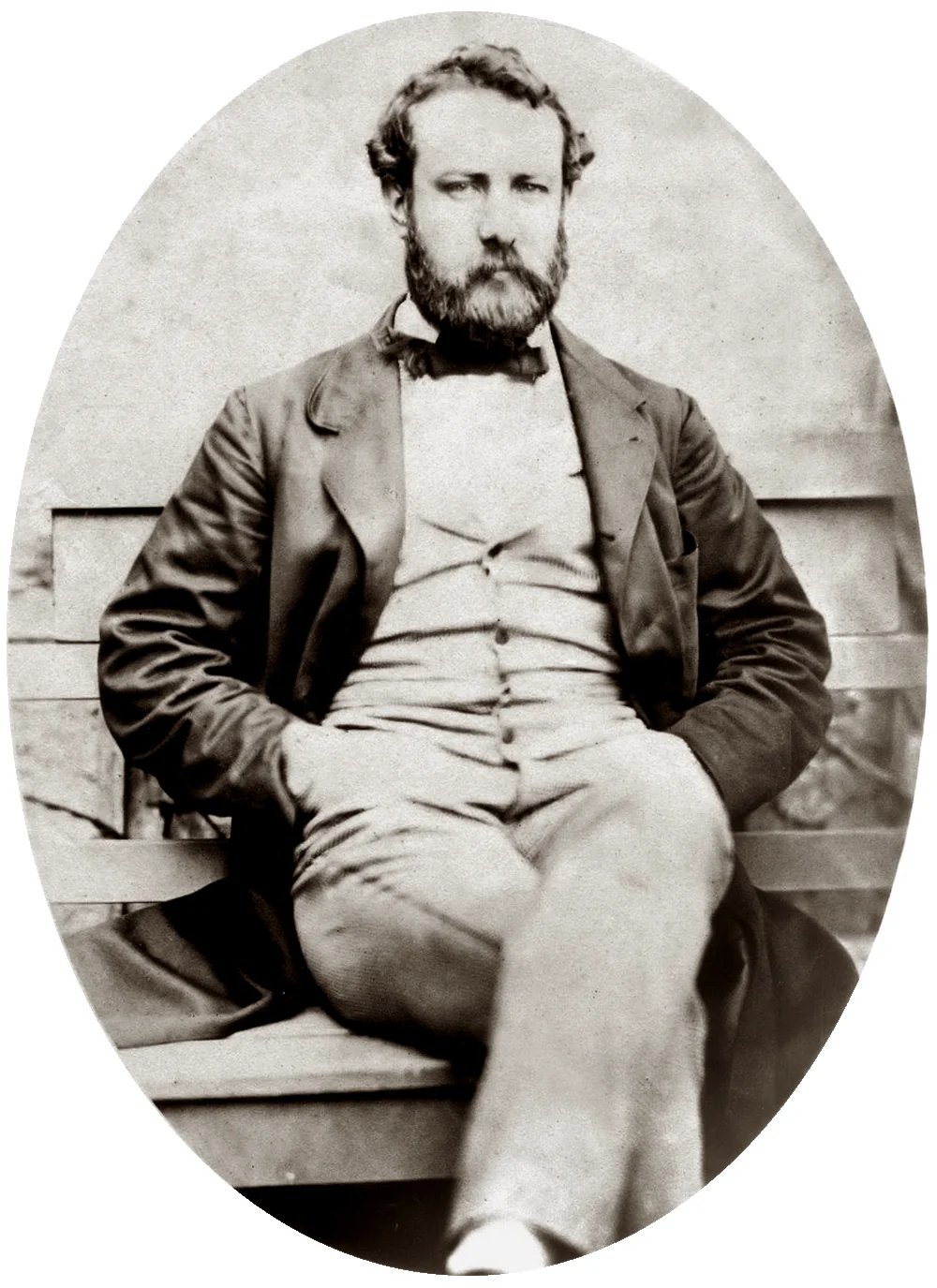
Image from Wikipedia
Image from Wikipedia
Jules Verne – The Visionary of Modernity and Architect of Great Adventures
An author who moves generations: Jules Verne between scientific fantasy and global success
Jules Gabriel Verne was born on February 8, 1828, in Nantes and died on March 24, 1905, in Amiens. As a pioneer of science fiction literature, he combined adventure and education into a compelling unity and shaped a narrative universe that continues to captivate readers today. With novels such as Journey to the Center of the Earth, 20,000 Leagues Under the Sea, and Around the World in Eighty Days, he achieved worldwide fame and had a lasting impact on the perception of technology, research, and the spirit of exploration. His work represents a musical career of the mind: an orchestral interplay of composition, arrangement, and production of narrative ideas that anticipated the sound of modernity.
Verne's artistic development is rooted in an intense observation of the scientific discourses of his time, meticulous research, and a stage presence as a storyteller that translated worldly knowledge into dramatically effective scenes. His novels are more than entertainment: they serve as a laboratory for utopias, a stage for engineering prowess, and an atlas of a century shaped by steam power, electricity, and globalization. The combination of precise language, a gripping plot, and didactic elegance explains why Verne became a reference point in both literary history and popular culture.
Biography: From Nantes to Amiens – A Life Dedicated to Storytelling
Growing up in a bourgeois family in Nantes, Verne developed an early fascination for nautical adventures, geography, and reports of great expeditions. After receiving legal training in Paris, he turned to literature and gained initial experience as a playwright. The decisive step in his career came in the 1860s with his literary collaboration with publisher Pierre-Jules Hetzel. Under Hetzel's publishing vision, the series of Voyages extraordinaires emerged – a major editorial project that combined narrative adventure journeys with popular scientific education into a new, mass-appealing format.
The breakthrough came in 1863 with Five Weeks in a Balloon, a novel that defined the program of the "Journeys": vivid technology, geographical precision, and a tight plot. In the following decades, Verne published with relentless productivity. In 1871, he moved to Amiens, his wife Honorine de Viane's hometown, and became involved in local politics there. Much of his later work was created in Amiens; he died there in 1905, marked by diabetes but unbroken in literary influence.
Career Path: Editorial Rigour, Serial Formats, and a Global Market
Verne's musical career of storytelling is based on clear production principles: careful research, serial publishing, and close coordination with Hetzel. Many works were initially published chapter by chapter in the Magasin d’Éducation et de Récréation before being released as lavishly illustrated volumes. This publishing practice sharpened Verne's sense of composition and arrangement: chapters end like sentences of a score at tension points, characters develop in motif arcs, and technical excursions rhythmize the text.
The artistic development is evident in the broadening of his themes: from polar expeditions and deep-sea adventures to balloon flights, desert journeys, and planetary visions, as well as urban and transportation dramas. Verne's production remained disciplined – a guiding star for later seriality in literature, film, and streaming culture. This strict form ensured that his works were distributed worldwide, translated many times, and adapted into various media.
Main Works and Narrative Signatures
Among his most well-known novels are Journey to the Center of the Earth (1864), 20,000 Leagues Under the Sea (1869–1870), and Around the World in Eighty Days (1872/73). Other notable titles include The Mysterious Island, From the Earth to the Moon, The Adventures of Captain Hatteras, The Children of Captain Grant, and numerous other volumes in the Voyages extraordinaires series. Their signatures include a sober, precise style that makes scientific and technical concepts understandable; a dramatic sophistication that marries tension with the thirst for knowledge; and iconic characters – foremost Captain Nemo – as symbols of the resistant spirit of exploration.
Verne's prose operates with musical vibrancy: leitmotifs recur, technical details serve as rhythmic figures, and geography structures the narrative form like key changes in a symphony. This arrangement gives his novels a pull that makes them ideal entry points into literatures of knowledge even today.
"Discography" in the literary sense: Bibliography, Editions, and Reception
Instead of a discography in the narrower musical sense, Verne has a monumental bibliography: The series of Voyages extraordinaires encompasses dozens of novels and stories published between 1863 and 1905. Characteristic is the editorial dramaturgy: advance publications in the magazine, followed by splendidly illustrated book editions. This history of editions is part of the cultural phenomenon of Verne – the visual design contributed to the aura of technical wonder and anchored the materials in the collective memory.
The critical reception continues to honor the didactic elegance with which Verne conveys complex themes. Modern editorial philology has also shown that some posthumously published versions were heavily edited. New, textually reliable editions and contemporary translations bolster Verne's position in the canon by revealing his stylistic precision and thematic breadth without distortion.
Style and Aesthetics: Technology as Dramaturgy
Verne's genre mixture – adventure novel, travel literature, scientific prose – creates a narrative polyphony. Composition and arrangement serve not for their own sake but focus on the question: How does technology change human experience? Whether submarine, hot air balloon, or space cannon – the machines are stages on which moral, political, and epistemic conflicts are negotiated. Verne intertwines fact with fiction without blurring the line between the two: His production remains committed to plausibility, his tone sober, his pathos controlled.
The character management carries this aesthetics: engineers, captains, scientists, and travelers embody attitudes toward modernity – skepticism, hubris, utopia. The laconic humor and precision of observation prevent technology from becoming a fetish. Instead, an anthropological depth emerges that makes Verne's novels readable beyond time.
Artistic Development: From the Stage to World Literature
Before becoming a global author, Verne honed his sense of scene and timing in the theater. This experience is visibly reflected in his novels: scene changes occur like precisely set cuts, dialogues carry action and knowledge simultaneously, and cliffhangers emphasize points like cadences. The consistent collaboration with illustrators and typesetters also professionalized the "production" of his books – an early, cross-media practice that seems natural today.
At the same time, the global book market underwent change. Translations spread Verne's works rapidly; his name became a brand. The fact that he has been among the most translated authors in the world for decades attests to the reach of this brand as well as the ongoing adaptations in film, television, radio plays, and comics.
Cultural Influence: An Author as a Compass of Modernity
Verne's cultural influence is multifaceted. First: He shaped the imagination of technology. Terms like deep sea, polar night, or space flight acquire a narrative topography in Verne that has inspired later generations of engineers, researchers, and writers. Second: He established a model of popular knowledge dissemination that transforms information into tension – a blueprint for science journalism and non-fiction literature. Third: He subtly politicized the adventure novel by reflecting colonial discourses, ecology, and ethics of discovery long before these terms became canonical.
In the music of language, in the rhythm of the chapters, in the arrangement of excursions and plots, Verne acts like a conductor over an orchestra of modernity. His work raises questions that appear more relevant than ever in 2026: How much risk can progress tolerate? What does technology owe society? And how do we tell stories about a world whose boundaries – both geographical and epistemic – are constantly shifting?
Successes, Awards, and Institutional Anchor
Verne's success can be measured by high print runs, wide translation routes, and early canonization. His close connection to Amiens, his engagement in local institutions, and the establishment of museum sites in Nantes demonstrate how firmly he is anchored in France's cultural memory. The existence of museums, editions, and research institutions dedicated to his life and work underscores his authority as a classic of world literature.
Also noteworthy: the state recognition of his lifetime achievements in France has solidified his status during and after his lifetime. Along with the ongoing presence in school and university teaching, this is a measure of his enduring relevance.
Later Years, Editions, and Legacy
In his later years, health constraints influenced his work pace, but not his intellectual energy. Works and versions published after his death in 1905 were partly overseen by his son Michel – a circumstance that has been critically examined by editorial philology. Modern, text-faithful editions and scholarly commentaries put the author's original tone back in the spotlight. At the same time, new translations and re-stagings keep Verne's themes in public discourse and open his work to younger audiences.
Conclusion: Why Read – and Experience – Jules Verne Today?
Jules Verne remains fascinating because he not only conceived visions but opened spaces for thought. His novels resonate like symphonic explorations: precisely composed, richly arranged, full of motif recurrence. They blend a love for adventure with insight, tell of technology as possibility and responsibility, and give figures a stage that became icons. Those who read Verne experience literature as an expedition – intellectually demanding, emotionally captivating, and culturally significant.
The best invitation is therefore: Back to the sources, to carefully edited texts, to museums and exhibitions – and to live experiences such as readings, audio play evenings, or stage adaptations. For Verne's work unfolds its full effect when it is not only read but shared and discussed in the cultural space.
Official Channels of Jules Verne:
- Instagram: No official profile found
- Facebook: No official profile found
- YouTube: No official profile found
- Spotify: No official profile found
- TikTok: No official profile found