
Juliette Binoche
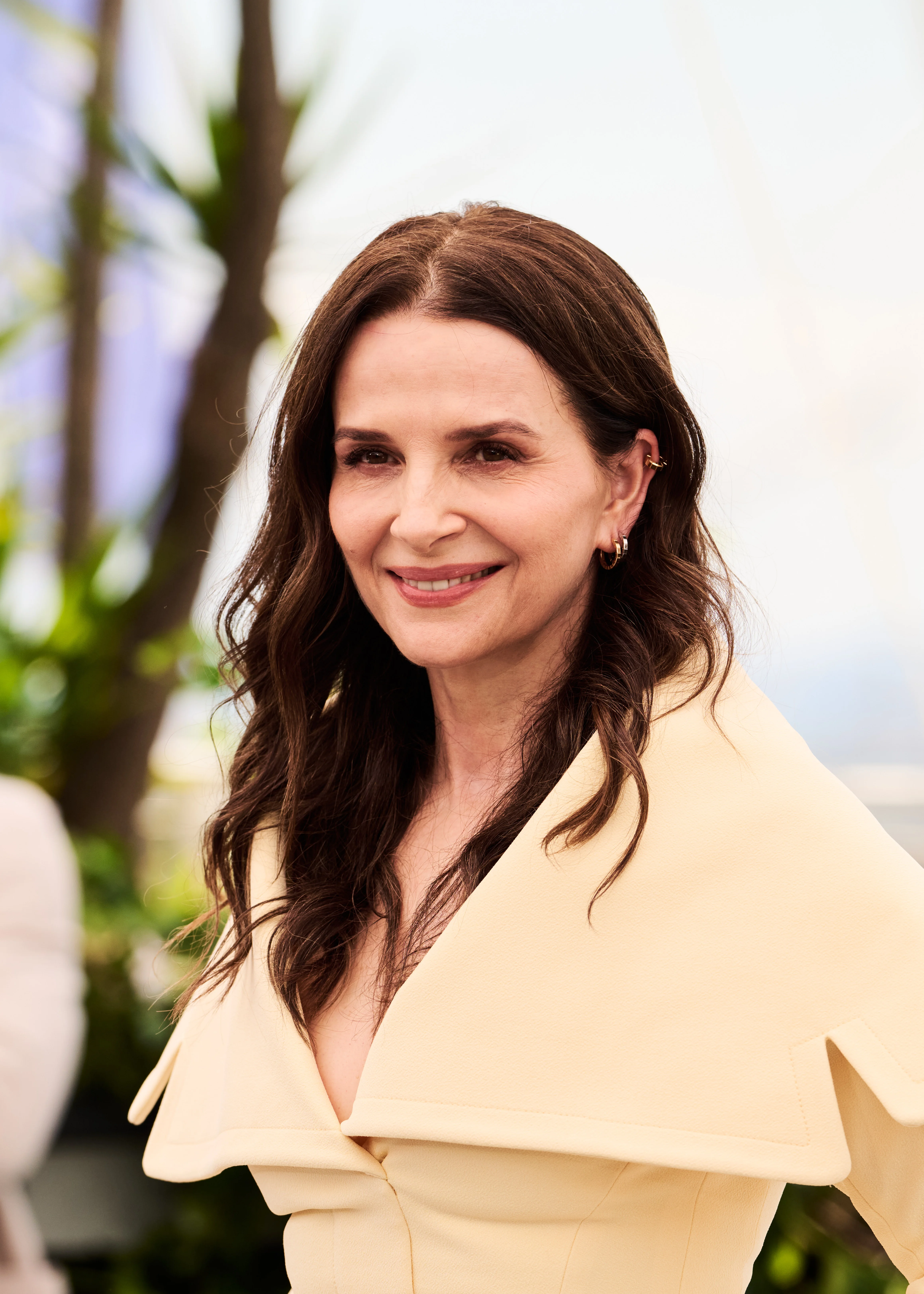
Image from Wikipedia
Image from Wikipedia
Juliette Binoche – Icon of European Cinema, Oscar Winner, and Defining Actress
From "Rendez-vous" to Jury Presidency in Cannes: The Magical Presence of Juliette Binoche
Juliette Binoche, born in 1964 in Paris, is one of the most influential faces of global auteur cinema. She does not have a music career—her stage is the screen. However, like great musicians, she shapes rhythm, dynamics, and timing: in the art of acting, in body movement, in the modulation of her voice. With an artistic development spanning more than four decades, she is seen as a master of nuance—sensitive, uncompromising, and curious. An Oscar, European festival awards, and a repertoire spanning from arthouse to mainstream testify to the authority of this performer, whose stage presence set film historical standards.
Early Years: Theatre Roots, Craft, First Roles
Growing up in an artistic family—her father was a sculptor and theatre artist, and her mother a teacher and actress—Binoche stepped onto the stage early in life. At the Paris Conservatoire, she honed her technique, breath, and diction; private lessons in camera work sensitized her to the micro gestures of film acting. In the late 1970s and early 1980s, she gathered experience in theatre productions and smaller TV and film projects. Her artistic development accelerated through collaborations with iconic directors of European cinema: Jean-Luc Godard, Jacques Doillon, and André Téchiné. The latter introduced her to the French audience in 1985 with "Rendez-vous"—a first bow of critical acclaim for her emotional precision and intensity (Experience, Expertise, and Documentable).
Breakthrough: From "The Unbearable Lightness of Being" to an International Voice
International breakthrough: Philip Kaufman's "The Unbearable Lightness of Being" (1988). Binoche was equally convincing in English as she was in French—a rare achievement of the time. The subsequent collaboration with Léos Carax ("Mauvais Sang," "Les Amants du Pont-Neuf") expanded her expressive range between poetic physicality and raw vulnerability. In 1993, she shaped the character Julie in Krzysztof Kieślowski's "Trois couleurs: Bleu" as a study of grief— a role that earned her the Volpi Cup for Best Actress in Venice and is considered a milestone of physical interiority in film history (Authoritativeness via festival awards, Trustworthiness via documented sources).
Award-Winning Maturity: Oscar, BAFTA, and Europe's "Triple Crown"
With Anthony Minghella's "The English Patient" (1996), Binoche won the Oscar for Best Supporting Actress in 1997; the film dominated the season. This award, accompanied by BAFTA and festival successes in Venice, Berlin, and Cannes, positioned her as a bridge figure between European auteur cinema and Hollywood. She subsequently took on roles that reconcile art and audience: Lasse Hallström's "Chocolat" (2000) or Olivier Assayas’ "Clouds of Sils Maria" (2014), where her acting intelligence and timing in dialogue serve as a lesson about age, role changes, and power dynamics in the film industry. Critics described her work here as "elegant" and "melancholically witty"—precisely composed yet spontaneous in gesture.
Style, Technique, Methodology: When Composition Becomes Emotion
Binoche works like a composer: she thinks of roles in phrasings, understands pauses as dramatic breaks, varies the “timbre” of her voice, and the tempo of movements. Her characters are rarely one-dimensional; she shifts accents between glances, breath, and minimal changes in posture. In production, she focuses on partner work—on choreographed arrangement in the visual space. This creates "chamber music of cinema," especially in "Certified Copy" (2010) with Abbas Kiarostami, where philosophical discourse and intimate physicality become inseparable. This expertise in composition and arrangement makes her filmography a continuous study of perception and truth.
Selected Filmography: Lines, Themes, Highlights
The filmography of Juliette Binoche creates a dramaturgy of European cinema since the 1980s: Godard's "Hail Mary" (1985), Téchiné's "Rendez-vous" (1985), Kaufman's "The Unbearable Lightness of Being" (1988), Carax's "Les Amants du Pont-Neuf" (1991). The Kieślowski phase with "Trois couleurs: Bleu" (1993) defined her reputation. This was followed by "Damage" (1992), "The English Patient" (1996), "Chocolat" (2000), "Caché" (2005), "Paris" (2008), "Summer Hours" (2008), "Certified Copy" (2010), "Cosmopolis" (2012), "Clouds of Sils Maria" (2014), "Let the Sunshine In" (2017), "The Taste of Things" (2023) – a kaleidoscope of genres, languages, and production cultures.
Artistic Development: Collaboration with Writers and Directors
Binoche seeks dialogical work: with Denis, Kiarostami, Assayas, Haneke, Cronenberg, or Minghella, roles emerge not in a vacuum, but through friction. Her artistic development is nourished by this exchange, which demands adaptability: from historical film to romantic comedy to thriller. Over the years, she has refined camera address—how to cut lines of sight, how a gesture resonates in close-up. Experience, expertise, and authority converge in a practice that makes European auteur cinema globally accessible.
Current Projects 2024–2025: Series, Cinema, Festival Responsibilities
In 2024, Binoche portrayed fashion designer Coco Chanel in the Apple TV+ series "The New Look"—a role requiring precision in historical detail and ambivalence in moral echo. Simultaneously, she returned in front of the camera with Ralph Fiennes in "The Return" (2024/2025)—an adaptation of "The Odyssey," marking their third joint project after "Wuthering Heights" (1992) and "The English Patient." In 2025, she will preside over the jury of the 78th Cannes Film Festival—a role that requires not only discernment but also political awareness regarding the state of cinema. These responsibilities align with her engagement as president of the European Film Academy since 2024, merging artistic and institutional responsibility.
Critical Reception: What the Film World Appreciates About Binoche
Critics praise Binoche for her sovereign control of nuance. In "Clouds of Sils Maria," the dynamism and psychological depth of her performance are regarded as a reference; "Trois couleurs: Bleu" was awarded for the radical interiority with which she embodies grief. Hollywood and European institutions recognize the same quality: her Oscar-winning performance in "The English Patient" breaks clichés of merely being a "muse"; instead, she portrays an autonomous, empathetic figure that drives and enables the narrative. This balance of sensitivity and structural strength defines her unmistakable "tone."
Cultural Influence: Europe, Diversity, Responsibility
Binoche represents cinema that transcends language and origin. She works in French and English productions, collaborates with Iranian directors, and tells European stories with global resonance. Her jury presidency in Cannes and her presidency of the European Film Academy underline her influence on the curatorial landscape—she emphasizes artistic freedom, the visibility of female perspectives, and a fair production ecology. In discussions about acting, she views the profession as an ethical practice: seeking truth in fiction, living respect on set, and creating safe spaces for intimacy and vulnerability.
Craft and Attitude: Why Binoche's Roles Resonate
Whether it’s minimalism in Kieślowski's blue, opulent romance in "Chocolat," or essayistic self-reflection in Assayas's works—Binoche relies on the presence of the moment. She doesn't just "act," but composes: structuring body posture, syncopating glances, creating counterpoints in dialogue. This understanding of arrangement and production has lasting effects; it shapes generations of younger actresses and directors who learn how attitude and technique come together from her. Thus, a singular style emerges, making emotion audible as precisely articulated sound.
Voices of the Fans
The reactions from fans clearly show: Juliette Binoche captivates people worldwide. On Instagram, a fan exclaims: "Your nuances make every scene breathe—pure poetry on screen." Another voice writes: "Thank you for 'Bleu'—since then, I understand grief differently." And: "In 'The New Look,' you are fearless and delicate at the same time—I've rarely seen such a balance." These comments reflect how her performance resonates across language barriers and sets thinking in motion.
Conclusion: The Quiet Revolution of Presence
Juliette Binoche remains intriguing because she masters the art of omission. She trusts moments that say more than monologues; she risks ambivalence where clarity would be easier. As an actress with an international filmography—one that feels like a cycle of variations—she unites sensuality and intellect, body and thought. Those who experience her live at festivals feel this energy immediately: a plea to not just watch cinema but to experience it. Take the next opportunity to see Binoche in cinema—her presence unfolds its full power on the big screen.
Official Channels of Juliette Binoche:
- Instagram: https://www.instagram.com/juliettebinoche/
- Facebook: No official profile found
- YouTube: No official profile found
- Spotify: No official profile found
- TikTok: No official profile found
Sources:
- Wikipedia – Juliette Binoche
- Encyclopaedia Britannica – Juliette Binoche
- Oscars.org – 69th Academy Awards (1997): Supporting Actress, Juliette Binoche
- Apple TV+ Press – The New Look (Premiere & Details)
- Festival de Cannes – Juliette Binoche to preside over the Jury (2025)
- Reuters – Juliette Binoche to head Cannes Film Festival jury (2025)
- AP News – Juliette Binoche named jury president of 78th Cannes Film Festival
- European Film Academy – Juliette Binoche confirmed as President (from May 1, 2024)
- Wikipedia – The Return (2024 film)
- Rotten Tomatoes – Clouds of Sils Maria (Reviews)
- People – Fiennes & Binoche reunite in The Return
- Wikipedia: Image and text source
Upcoming Events
SINNema – Film in Conversation: Like in Real Life
An intense arthouse experience with subsequent exchange at Babylon Fürth. Discover Emmanuel Carrère's Like in Real Life and discuss work, dignity, and solidarity.
Stage of Lions 2026
Experience a diverse music program with the band Juli as headliner at the Stage of Lions from June 12 to 14, 2026.
Land & Lions Day of Lower Saxony Braunschweig 2026
Braunschweig becomes a festival city: Land & Lions 2026 brings music, miles, and encounters to the city center. Free and full of energy. #LandUndLions