
Luise Erhard
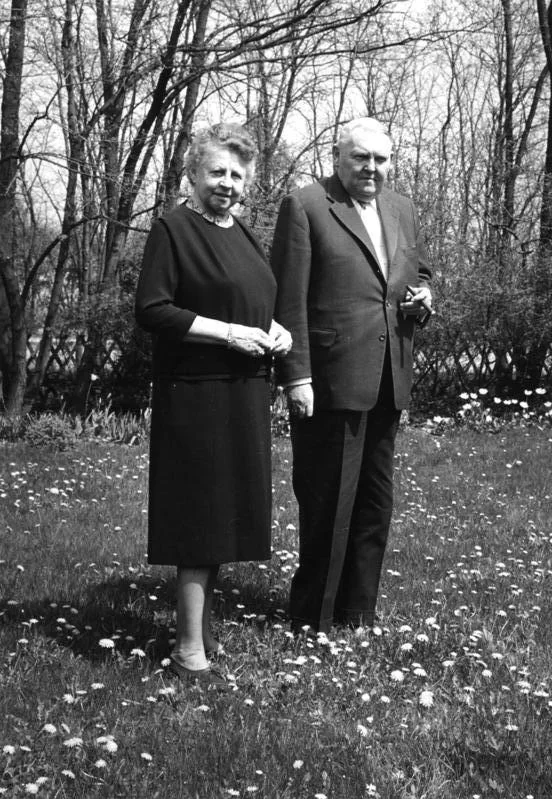
Image from Wikipedia
Image from Wikipedia
Luise Erhard – Economist, Witness of the Times, and Discreet Architect of Political Reason
With Insight, Stance, and Economic Expertise: The Multifaceted Life of the First Chancellor's Wife of the Federal Republic
Luise Erhard (née Lotter; April 18, 1893 – July 9, 1975) embodies a generation of German women who combined academic competence, courage in life, and social responsibility. As a trained economist and wife of Chancellor Ludwig Erhard, she operated in the background for decades – yet influenced, far from the headlines, the political culture of the young Federal Republic. Her biography speaks of early losses, academic discipline, family resilience, and a rare blend of sobriety and emotional cultivation. Her artistic development in the narrower sense was never in focus – her “stage presence” was rather expressed through representation, a culture of conversation, and a keen sense for social balance.
Early Years Between Langenzenn, Fürth, and Nuremberg
Growing up in Middle Franconia, Luise Lotter gained early access to commercial thinking and precise bookkeeping – the foundation of her later economic expertise. After graduating high school, she deepened her knowledge in business administration and accounting in Nuremberg. Her artistic development in a figurative sense: establishing a clear style of thinking, maintaining a sober outlook towards data, households, and economic processes. This education sharpened her judgment, which she productively applied in politically relevant discussions and in private exchanges with her future husband. The musical careers of her contemporaries may have stood in the spotlight; her own “composition” was made up of life stages that she arranged with poise.
War, Widowhood, New Beginnings: Resilience as a Biographical Motif
In 1914, she married the lawyer Friedrich Schuster, who fell in World War I in 1915. This early widowhood led to a biographical rupture – and to remarkable personal strength. In 1919, she met Ludwig Erhard in Nuremberg again, whom she had known from her youth in Fürth. The couple married in 1923. From her first marriage, she brought her daughter Leonore; their joint daughter Elisabeth was born in 1926. In this family constellation, Luise Erhard combined the roles of mother, economist, and partner – a “production” of everyday life in which planning, care, and professional competence were harmoniously integrated.
Economic Expertise in the Shadows – and Backbone by the Chancellor's Side
As Ludwig Erhard rose to prominence as a politician after 1945 through consumer research, currency policy, and the social market economy, Luise Erhard remained a steady anchor. To speak in musical terms: She took on the bass – the supporting foundation upon which her husband's themes and variations took shape. Contemporary press hinted that the Chancellor valued her economic assessments; she herself sought no public attention and kept her advice confidential. Her arrangement of privacy, competence, and service to the cause makes her an exceptional figure in political contemporary history.
Representative Duties, Honorary Offices, and Patronage
In the 1950s and 1960s, her repertoire of representative duties grew. In 1954, she took over the patronage of the initiative “Aktion Das Sichere Haus” – a socially conscious project that focused on accident prevention in the home environment. As the Chancellor's wife, she selected invitations and appointments thoughtfully, promoted exchange formats between diplomacy, culture, and citizenship, and always maintained an unpretentious tone. Her “stage presence” thrived on calmness, precision, and a sense of the right measure.
Bonn, the Chancellor Bungalow, and the New Culture of Encounter
With the move into the Chancellor Bungalow designed by Sep Ruf, the choreography of political hospitality changed. Receptions became more modern, informal, and permeable – a new art of arrangement for the young Republic that facilitated closeness and conversation. Historical documents portray Luise Erhard as a considerate hostess who set the tone: warm, but not loud; binding, but never stiff. This style contributed to the atmospheric opening of political operations and shaped the memory of Ludwig Erhard's brief, intense chancellorship (1963–1966).
Family, Network, Everyday Life: The Quiet Scores of Influence
The biographical records of Luise Erhard demonstrate the power of a well-managed, discreet network. Familial ties, professional contacts, and proximity to research and business created resonance spaces – from discussion groups with artists to social political concerns. Her “composition” of daily life: the ability to harmonize complex roles without losing her personal touch. In a time when women’s careers were often limited by societal expectations, she chose the path of impact without self-promotion.
Media Perception: Between Cliché and Recognition
Public portraits of those years fluctuated between the cliché of the “First Lady” and recognition of her expertise. Reports repeatedly emphasized her advice on economic matters and her poise in social situations. Notably, she consistently protected confidentiality and seriousness. This demeanor instilled trust: What she said was understood to be valid – and not meant to be quoted. An ethical “production” that still feels modern today.
Late Echo: Exhibitions, Memory Work, and Historical Context
On the 50th anniversary of her death in 2025, institutions in Fürth and the Ludwig Erhard Center recognized Luise Erhard's life path with a foyer exhibition and guided tours. These curatorial formats anchor her biography where it began: in Middle Franconia, at the intersections of trade, education, politics, and family history. The historical contextualization portrays her as an intermediary – between the experiences of two world wars, reconstruction, and the European opening of the 1960s. Her story broadens the view of the “economic miracle” by making visible its social and domestic coordinates.
Historical Documents and Media Testimonies: Voice, Image, and Memory
Archive contributions and television documents preserve the tone of those years: quite factual, often succinct, sometimes surprisingly warm-hearted. Film footage of the move into the Chancellor Bungalow and educational contributions that reference Luise Erhard as a witness of the times make the atmosphere palpable: the struggle for normality, the joy of a modern, open house, the intimacy of political everyday life. These sources are not merely illustrations – they are independent “tracks” of a national culture of memory.
Contextualization: What Remains of Luise Erhard?
First: the experience that economic expertise in private life enables political robustness in public life. Second: an ethos of discretion that views consultation as a service to the matter, not as a stage for self-staging. Third: the realization that representation can be more than protocol – an arrangement of humanity, style, and societal tact. In a time of constant visibility, Luise Erhard reminds us that impact can also arise from silence.
Publications, Research, Transmission
In academic and journalistic literature, Luise Erhard often appears in the context of biographical studies about Ludwig Erhard, consumer research, and the social market economy. Biographical reference works, municipal cultural institutions, as well as digital archives consolidate data on biographical details, familial relationships, and honorary positions. For research and education, she remains a key to understanding the political everyday culture of the 1950s/60s – a topic that, thanks to new exhibitions and digital sources, is gaining public attention once again.
Conclusion: Discreet Strength, Sustainable Impact
Luise Erhard makes clear how resilient a quiet tone can be. Her life's work connects economic competence, social responsibility, and a clear moral stance. She represents a generation that built the foundations of political progress without loud gestures. Those who wish to understand the history of the social market economy and the Bonn Republic should also think of her name – as a resonance space for reason, measure, and humanity. Her influence invites us to experience history not only in cabinets but also in conversation, at the dining table, and in the community.
Official Channels of Luise Erhard:
- Instagram: No official profile found
- Facebook: No official profile found
- YouTube: No official profile found
- Spotify: No official profile found
- TikTok: No official profile found
Sources:
- Wikipedia – Luise Erhard (de)
- Wikipedia – Luise Erhard (en)
- Ludwig Erhard Center – Foyer Exhibition “Luise Erhard”
- City of Fürth – Exhibition Opening “Luise Erhard – More than Just the Chancellor's Wife” (July 1, 2025)
- Parliamentary Protocols – Person Index: Luise Erhard
- German Biography – Ludwig Erhard (Family Details on Luise Erhard)
- WDR Retro – “Ludwig Erhard and the New Chancellor Bungalow” (1964)
- BR/ARD alpha – “The 1×1 of Economics: The Economic Miracle – Social Market Economy” (Programme Note)
- Der Spiegel – Historical Document on Ludwig Erhard's Chancellorship (1965)
- Wikipedia: Image and Text Source