
Manuela Linshalm
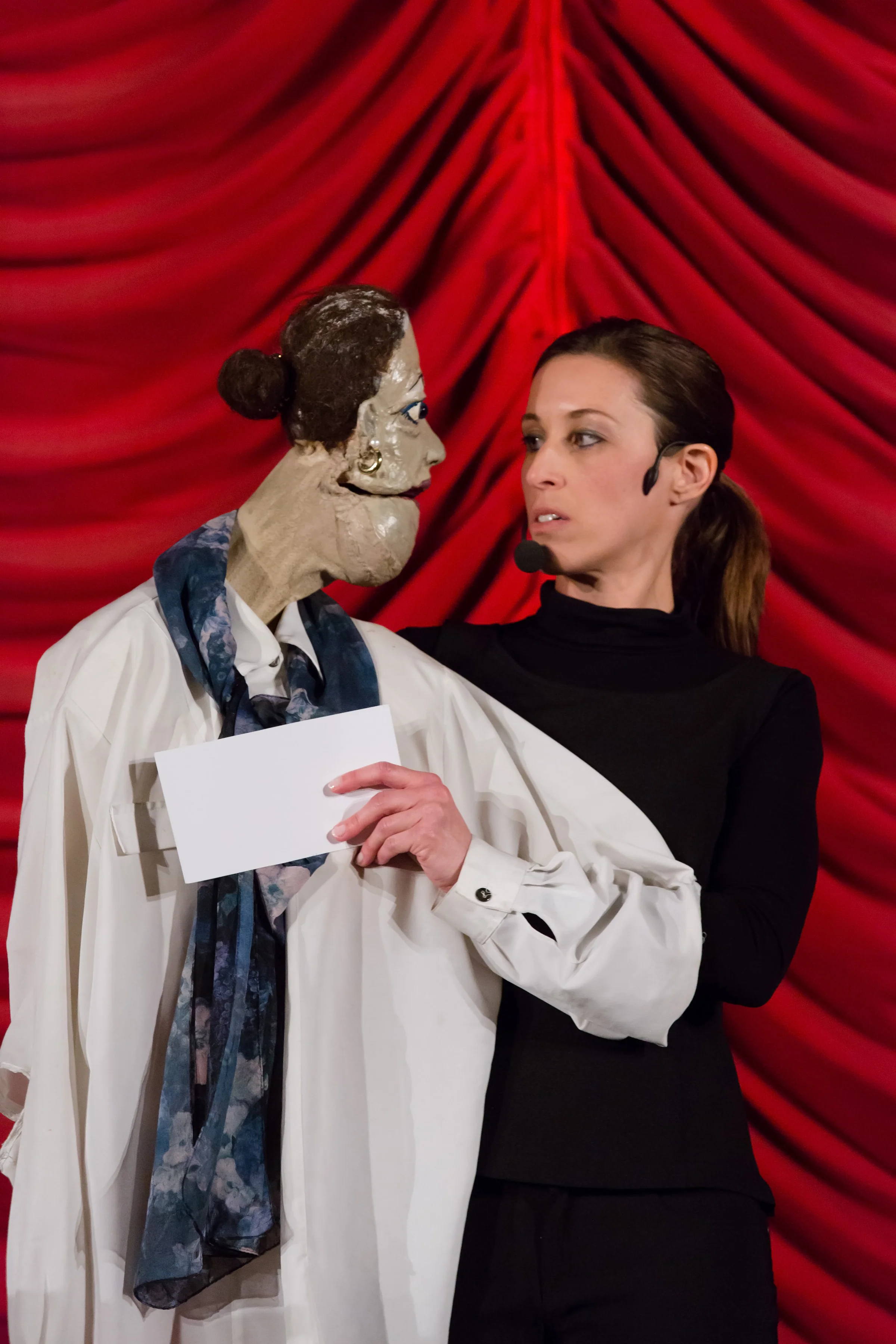
Image from Wikipedia
Image from Wikipedia
Manuela Linshalm – Actress and Puppeteer from Vienna
From the Stage to the Heart: How Manuela Linshalm Shapes Puppet Theater for Adults
Manuela Linshalm, born on February 5, 1976, in Vienna, is one of the most prominent voices in contemporary puppet theater in the German-speaking world. Her music career, in the broader sense of music theater, her precise stage presence, and her artistic development combine acting, puppetry, team composition, scenic arrangements, and a reflective production experience with leading directors from opera, theater, and contemporary performance. As an actress and puppeteer, she has been performing at major venues for years, making impactful statements with solo programs and opening up new resonant spaces for adult puppet theater. ([de.wikipedia.org](https://de.wikipedia.org/wiki/Manuela_Linshalm?utm_source=openai))
Trained at the Franz Schubert Conservatory (Diploma in Acting in February 2004) and academically rooted in a degree in Journalism & Communication Studies with English and Psychology from the University of Vienna (graduation June 2001), Linshalm combines practical theater work with analytical depth. Her formative collaboration with Nikolaus Habjan began in 2008, and she deepened her expertise with Neville Tranter in 2012 – two references that highlight her technical virtuosity in mouth-operated puppetry and her dramatic precision. Since 2009, she has been consistently active at the Schubert Theater Vienna; from 2009 to 2022, she taught voice training at the Film Academy Vienna. ([manuelalinshalm.at](https://www.manuelalinshalm.at/vita/))
Biography: Education, Influences, Profession
Manuela Linshalm's biography is marked by a dual foundation: a classical acting training and a highly specialized education in puppetry. The training at the Franz Schubert Conservatory sharpens her scenic means, while workshops and masterclasses with Habjan and Tranter elevate her technique in adult puppet theater to an international level. This artistic development is evident in her stage work, which merges language, body, and objects into a performative unity. ([manuelalinshalm.at](https://www.manuelalinshalm.at/vita/))
Her multilingualism and vocal flexibility (mezzo-soprano) enable nuanced role design, ranging from precise articulation to subtle vocal colorations – an advantage in music-related theater, where rhythm, timing, and phrasing play crucial dramatic roles. Linshalm weaves scenic composition, sonic atmosphere, and dramatic accents into coherent arrangements. The ability to imbue objects with a credible “breath” makes her puppet figures emotionally permeable and perceptibly precise. ([manuelalinshalm.at](https://www.manuelalinshalm.at/vita/))
Career Paths and Ensemble Work: Schubert Theater and International Guest Performances
Since 2009, Linshalm has been a consistent force at the Schubert Theater Vienna, where she significantly shapes programming for adult puppet theater – through solo productions, dramaturgical collaboration, and collective development. Guest performances have taken her to venues including Akademietheater Vienna, Theater an der Wien, Theater in der Josefstadt, Residenztheater Munich, Semperoper Dresden, Bavarian State Opera, Volkstheater Vienna, Rabenhof Theater, Lower Austria State Theater, The Cleveland Orchestra, and other stages in Austria, Germany, and Switzerland. These venues position her work within a theater landscape that organically connects music theater, opera, acting, and performance art. ([manuelalinshalm.at](https://www.manuelalinshalm.at/vita/))
Parallel to her stage work, Linshalm continuously engages as a coach and workshop leader. Her courses – such as “The Magic of the Puppet” and mouth-operated puppetry – convey technical standards and artistic attitude, spanning from the puppet's first breath to scenic realization. In doing so, she strengthens youth programs and professionalizes structures that sustainably embed the genre in opera and theater contexts. ([schuberttheater.at](https://schuberttheater.at/class/workshop-magie-der-puppe/?utm_source=openai))
Current Projects 2024–2026: Opera, Grotesque, Solo Pieces
Currently, Manuela Linshalm is at the center of a new production of Beethoven's Fidelio at the Vienna State Opera, where puppets play as independent characters. As the puppeteer of the Leonore puppet, she emphasizes in the Staatsoper magazine the truthfulness of the puppet and its unique emotional impact. The cast lists of the State Opera confirm Linshalm's involvement; the production (premiere and subsequent performances in December 2025) expands the interpretative framework of the work to include a puppet theater layer. ([wiener-staatsoper.at](https://www.wiener-staatsoper.at/magazin/detail/ueber-das-puppenspiel/?utm_source=openai))
In 2025, Schicklgruber celebrated its premiere at the Deutsches Theater Berlin – a co-production with the Theater in der Josefstadt. Under the direction of Nikolaus Habjan and Neville Tranter, Habjan and Linshalm continue the iconic grotesque about the last days in the Führerbunker in a new version. Reviews highlighted the virtuosity of puppet manipulation, while others discussed the satirical exaggeration as a conscious risk – an indication of lively, controversial reception beyond simple certainties. ([deutschestheater.de](https://www.deutschestheater.de/programm/produktionen/schicklgruber?utm_source=openai))
Additionally, Linshalm continues her collaboration with the Schubert Theater: Die Habsburger – A Liebeslied’l (updated for 2024), Die Habsburger – A Vampirg’schicht (ongoing since 2023), and Der schlafende Wal – a piece without Bruckner (since October 2024) mark recent productions that engage the Viennese audience with wit, historical breaks, and poetic character images. These works showcase her range between scenic miniature and evening-length narrative economy. ([manuelalinshalm.at](https://www.manuelalinshalm.at/buehne/aktuelles/))
Repertoire, "Discography" of the Stage and Work Profile
In terms of a stage discography, Linshalm's work encompasses solo evenings, duo formats, and ensemble productions: from What Happened to Baby Jane? and The World is a Sausage Stand to Puppets on a Swing, Habsburger Variations, Don Quixote adaptations, and opera collaborations. The pieces work with recurring parameters – precise figure construction, speaking materiality, musical structure, pointed texture – that merge in production, arrangement, and performance into a distinctive fingerprint. ([manuelalinshalm.at](https://www.manuelalinshalm.at/buehne/aktuelles/))
In opera contexts – whether Magic Flute, L’Orfeo, or Fidelio – Linshalm's expertise is particularly evident in the interplay with orchestral sound, vocal lines, and scenic rhythm. The puppet becomes a musically breathing partner on par with singers; transitions between arias, recitatives, ensembles, and silent moments gain new tension curves. This intersection of music theater and puppet theater is considered the core of her artistic identity. ([wiener-staatsoper.at](https://www.wiener-staatsoper.at/en/ensemble/detail/manuela-linshalm/?utm_source=openai))
Style and Technique: The Art of "Breath"
Linshalm's style is characterized by an exact economy of breath: Each figure receives a pulsating life of its own through breath, gaze directions, weight transfers, and rhythmic impulses. This creates the stage presence that captivates audiences with puppets – a mix of poetic distance and immediate empathy. Her playing style combines choreographic precision with emotional directness. ([wiener-staatsoper.at](https://www.wiener-staatsoper.at/magazin/detail/ueber-das-puppenspiel/?utm_source=openai))
Mouth-operated puppetry demands a composition of movements and a clear phrasing of language. Linshalm links syllable management and jaw movements with finely tuned hand and body gestures, making language audibly “visible.” The dramatic quality of her work arises from this balancing act between technical rigor and imaginative openness, which is perceived on stage as authenticity. ([schuberttheater.at](https://schuberttheater.at/workshops/?utm_source=openai))
Critical Reception: Between Virtuosity and Grotesque
The reception of her works paints a dynamic picture: While reviews of Schicklgruber highlight the “grandiose puppet manipulation,” other voices locate the satirical exaggeration as a deliberate risk that opens discursive spaces. This range underscores the artistic willingness to take risks, with Linshalm, alongside Habjan, questioning historical material through the lens of puppet theater – an approach that translates cultural-historical contexts into contemporary perceptions. ([kulturvolk.de](https://www.kulturvolk.de/blog/524-565?utm_source=openai))
At the same time, the opera press acknowledges the expansion of the classical repertoire through puppet work in Fidelio. The Staatsopern magazine emphasizes the “truthfulness” of the puppet, which conveys specific affects and tragic moments with extraordinary immediacy. The current production confirms how strongly Linshalm's technique redefines not only theatrical but also music-dramatic spaces. ([wiener-staatsoper.at](https://www.wiener-staatsoper.at/magazin/detail/ueber-das-puppenspiel/?utm_source=openai))
Teaching, Workshops, and Community Building
As a lecturer at the Film Academy Vienna (2009–2022) and as a workshop leader at the Schubert Theater, Linshalm established standards for voice training and professional puppet building/playing in the educational field. She conveys a methodology that spans from construction through animation to scenic integration, thus interlinking production, direction, and performance work. This pedagogical practice supports ensembles in opera and theater to organically embed puppet work into the overall sound. ([manuelalinshalm.at](https://www.manuelalinshalm.at/vita/))
As a result, an artistic community arises that thinks beyond the genre: Collaborations with direction, stage, costume, and lighting expand the expressive range; the puppet becomes an equal actor in the scenic-musical space. Linshalm serves as a catalyst, merging technical precision with an aesthetic sense for timing, rhythm, and musical dramaturgy. ([wiener-staatsoper.at](https://www.wiener-staatsoper.at/en/ensemble/detail/manuela-linshalm/?utm_source=openai))
Fan Voices
The reactions of fans clearly show: Manuela Linshalm captivates audiences equally in opera and theater houses. A listener writes on Facebook: “The precision with which the puppet breathes and lives deeply moved me.” Another comment emphasizes: “I have never experienced Fidelio so impressively – this additional layer makes the opera surprisingly intimate.” ([manuelalinshalm.at](https://www.manuelalinshalm.at/))
Conclusion: Why Experience Manuela Linshalm Now?
Manuela Linshalm represents an art that consolidates theater and music dramaturgy, reaching the audience with poetic precision. Her artistic development from drama school through specialization in puppetry to internationally acknowledged productions demonstrates an expertise that unites technique, emotion, and cultural-historical reflection. Those seeking the next encounter with opera or theater will discover in Linshalm a form of music and puppet theater that activates both the mind and heart. ([manuelalinshalm.at](https://www.manuelalinshalm.at/vita/))
The current productions – from Fidelio in Vienna to Schicklgruber in Berlin and Vienna – prove how dynamically puppet theater operates within the canon of our stages. Especially live, the full impact of this art unfolds: The “breath” of the puppet, the interplay with voice, music, and space – all this emerges in the moment. Recommendation: Experience it live. ([wiener-staatsoper.at](https://www.wiener-staatsoper.at/en/calendar/detail/fidelio/2025-12-19/?utm_source=openai))
Official Channels of Manuela Linshalm:
- Instagram: No official profile found
- Facebook: https://www.facebook.com/profile.php?id=100000994167631
- YouTube: No official profile found
- Spotify: No official profile found
- TikTok: No official profile found
Sources:
- Manuela Linshalm – Official Website (Start/Dates)
- Manuela Linshalm – Biography
- Manuela Linshalm – Stage: Current
- Vienna State Opera – Magazine: About Puppet Play (News, 03.12.2025)
- Vienna State Opera – Fidelio (Cast, December 2025)
- Vienna State Opera – Ensemble Profile: Manuela Linshalm
- Deutsches Theater Berlin – Schicklgruber (Production, Premiere 28.05.2025)
- Das Kulturblog – Review: Schicklgruber (28.05.2025)
- Schubert Theater Vienna – Workshop: Magic of the Puppet
- Schubert Theater Vienna – Ensemble
- Manuela Linshalm – Fidelio (Show Entry)
- Wikipedia – Manuela Linshalm (Image and Text Source)