
Nachtwächter
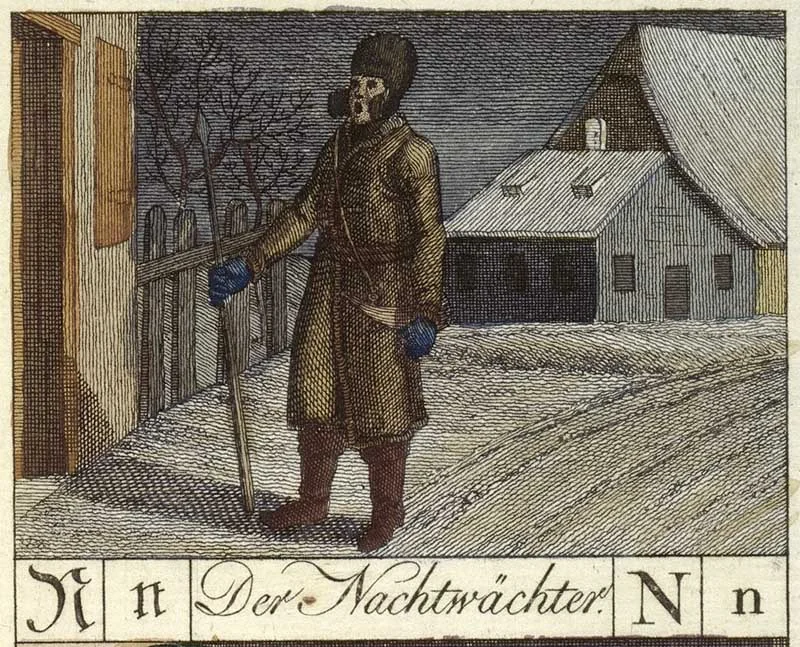
Image from Wikipedia
Image from Wikipedia
Nachtwächter – Between Myth, Music, and Modern Reception
One Name, One Figure, Many Sound Worlds
The name "Nachtwächter" initially represents a historical profession in the German-speaking cultural history: a nightly protective figure responsible for safety, order, and the calling of the hours in the Middle Ages and early modern period. In music culture, this image endures to this day – as a metaphor for vigilance, liminal times, and urban twilight, as a title for albums and songs, as well as a stage figure in narrative concerts. The term carries atmosphere: lantern light, cobblestones, the silence between midnight and dawn. This article places the artistic development of the motif "Nachtwächter," illuminates its presence in various genres, and traces how a historical function evolved into an aesthetic motif with lasting radiance.
From a music journalism perspective, the "Nachtwächter" can be read as a projection surface, where composers, bands, and producers negotiate themes like transience, urban romance, or dark contemplation. While the original profession is still performatively revived in city tours today, "Nachtwächter" appears in the discography of various actors as a title, theme, or character – spanning metal, folk, singer-songwriter, and crossover projects. This creates a polyphonic soundscape oscillating between history and the present.
Biographical Roots of the Motif: From Medieval Office to Artistic Figure
The historical biography of the Nachtwächter shapes its artistic development: night work, responsibility, the calling of the time – all these offer narrative friction points for music, lyrics, and performance. In many cities, the figure is now staged for tourism: as a storyteller with a halberd, as a costumed chronicler, as a charismatic guide who performs history and translates it into the present. This stage presence shapes the collective image and provides a template for musical compositions that oscillate between drama and intimacy. Thus, the Nachtwächter becomes a symbol for "time perception": He listens to the city when it is silent – a state that musicians have cherished for ages because it offers space for nuances, arrangement finesse, and dynamic shadows.
Moreover, in the artistic development of the motif, a special relationship to the voice is reflected: the historical Nachtwächter called and sang – functions that continue to live on in musical narratives. Whether spoken prologues, choral refrains, or solo recitations, the figure encourages the connection of text and sound. Producerially, the motif opens doors to ambient soundscapes, targeted dissonances, or acoustic noise textures that evoke urban spaces – footsteps, wind, distant bells. Thus, a tactile, almost cinematic sound aesthetic emerges.
Musical Development: Genre Bridges Between Folk, Metal, and Songwriting
The motif "Nachtwächter" has left significant traces in various genres in recent years. In the context of metal and metalcore, the term often stands for density, catharsis, and literary symbolism. The combination of heavy guitars, dense arrangements, and philosophically charged lyrics highlights the nocturnal sphere of the title. Concurrently, folk and medieval scenes take up the figure because they discover a narrative tradition in it: the singing chronicler who preserves the city and its legends. Singer-songwriters, in turn, use the metaphor to anchor intimate observations between heartbeat and streetlight – a dramaturgical space favoring reduced production and precise composition.
This diversity creates a discography in broader terms: not a monolithic oeuvre of a single artist, but a network of releases where the "Nachtwächter" recurs as a title, theme, or figure. For listeners, this results in an intertextual experience: whoever discovers the "Nachtwächter" in one genre meets him, differently dressed, in another. This interplay explains the sustained visibility of the term in playlists and press materials.
Career Stations of the Motif: From Title Track to Stage Figure
A "musical career" of the motif can be defined at three stations. First: the literarily influenced metal interpretation, where "Nachtwächter" as an album or song title stands for an aesthetically rich, text-centric world. Second: the folk interpretation that musically reanimates the historical storyteller – including narrative introductions reminiscent of calling the hour. Third: the performative city tour that transforms into a live performance and blurs the lines between storytelling, theater, and musical intervention. In all cases, a strong stage presence characterizes the outcome: the figure as a catalyst for perception-intensive evenings.
Particularly in live contexts, the "Nachtwächter" unfolds its charm. Between dialogue, song, and atmospheric soundscapes, an immersive experience arises. This bridge between history and the present makes the motif attractive for organizers, labels, and the music press: it provides imagery, narrative, and curatorial direction – three elements crucial for consistent artistic development.
Discography Traces and Critical Reception: Titles, Themes, Textures
In the discography landscape, "Nachtwächter" repeatedly appears: as an album title within the metal/metalcore scene with literary reference, as a song title in the folk environment, and as a thematic bracket in concept works. Reviews often emphasize the dramaturgical coherence of such releases: prologues, recited passages, dense guitar work, precise rhythm, and an arrangement that balances between intensity and void. These features fit the nocturnal motif: music that leaves space, holds the breath, then erupts into storytelling.
Another pattern of reception: the categorization of "Nachtwächter" works as bridging works between literature and sound. When texts of classical poetry are quoted or paraphrased, an aesthetic depth is created that transcends the genre and leads to timeless themes – finitude, preservation, reverberation in the memory of the city. Critics highlight the production: clearly separated layers, defined guitars, organic dynamics aimed at narrative clarity in mastering.
Style Analysis: Sound Architecture Between Lantern Light and Low End
The style analysis of the "Nachtwächter" works reveals recurring parameters. First: the composition: often tonally dark centers, modal hues, purposeful sequencings that depict the journey through the night. Second: the arrangement: shifts between acoustic simplicity and massive layers, choral passages as memory spaces, percussive elements reminiscent of footsteps or bell tolls. Third: the production: spatial elements that create depth; delay and reverb placements that simulate architectural dimensions; a low end that feels solid without blurring the spectrum.
This creates a sound architecture that draws its imagery from the urban night panorama. Whether metal riff, fiddle line, or plucked acoustic guitar – the musical decisions follow a narrative compass. This makes the "Nachtwächter" works compatible with playlists for late hours, stage lights in muted blue, and visuals depicting alleys, walls, and window lights.
Cultural Influence: The Singing Guardian of Time
Beyond individual releases, the "Nachtwächter" acts as a cultural marker. In cities with a vibrant tour guiding culture, night watchmen perform as storytellers who sing, call, and stage stories. This performative field influences musicians who absorb the repertoire of city sounds and artistically reshape it. Thus, the historical guardian of time finds his way into contemporary music – a transformation that equally interests museums, city marketing, and festivals because it connects mediation, entertainment, and artistic substance.
The influence is also evident in the community: listeners share night playlists where tracks related to the Nachtwächter stand alongside thematically close pieces. This curatorial gesture supports the visibility of the motif in the streaming age. From an SEO perspective, the distinct German term favors discoverability: "Nachtwächter" serves as a thematic keyword with a clear imagery and high recognizability – an advantage for artist pages, label microsites, and press dossiers aiming to make cultural-historical depth visible.
Placement in Music History: From Guild Song to Concept Album
Historically speaking, the "Nachtwächter" stands at the intersection of customs, urban everyday culture, and stage-effective storytelling tradition. Guild songs, urban criers, and mortuary ballads provided early forms that reappear today in concept albums or scenic concerts. The figure allows crossing genre boundaries: between ballad and hymn, between spoken word and choral, between folk instrumentation and distorted guitar. From a production standpoint, this affects sound design decisions: field recordings, bells, footsteps, open spaces, and narrow alleys that become audible in panorama.
This historical depth dimension explains why the "Nachtwächter" aesthetic does not remain bound to a genre. Instead, it acts as a bracket connecting different scenes – metalheads, folk fans, singer-songwriter audiences. This creates cultural connectivity: a motif that is both a niche and a bridge.
Current Projects and Releases: Resonances of the Present
In recent years, the term "Nachtwächter" has repeatedly appeared in titles and press texts of current productions. Notably, the literary charge stands out: texts draw on classical poetry, speak in prologues, and let interspaces breathe. Reviews emphasize the vocal guidance and rhythmic precision that such works carry. Simultaneously, folk and medieval-influenced acts enrich their repertoire with Nachtwächter pieces that transport the audience into a narrative night. This resonance in the present shows how productively the figure is employed in composition, arrangement, and performance.
Additionally, the growing importance of staged city experiences plays a role. Nachtwächter tours with musical elements create stages beyond the classical concert hall. This gives rise to new pathways for audiences: people who discover music through an evening city format – and then find those albums and songs that bear "Nachtwächter" in the title. From a marketing and SEO perspective, such crossovers link organic reach with cultural added value.
Conclusion: Why the "Nachtwächter" Fascinates Artistically
The "Nachtwächter" fascinates because it makes time audible. Between watchfulness and world poetry, between cobblestones and cadences, the figure invites musical journeys that comprehend the night as a resonance space. In the musical career of this motif, composition, production, and performance coalesce into a stage presence that carries stories – from literary reference to pulsating riff. Those who experience these nights live feel how sound and narrative intertwine: the city breathes, the tones shine. Recommendation: eyes wide open, ears alert – the "Nachtwächter" is on the move.
Official Channels of Nachtwächter:
- Instagram: No official profile found
- Facebook: No official profile found
- YouTube: No official profile found
- Spotify: No official profile found
- TikTok: No official profile found
Sources:
- Wikipedia – Nachtwächter (historical profession)
- Vampster – MIR ZUR FEIER: Album "Nachtwächter" (News, 2024)
- MyRevelations – Review of "Nachtwächter" (2024)
- Amazon Music – "Nachtwächter" (Song title, Askar the minstrel)
- Apple Music – Die Nachtwächter (Artist profile)
- SoundCloud – Nachtwächter (Artist profile, identity not verified)
- Spreewald Nachtwächter – Performative city tours
- Wikipedia: Image and text source
Upcoming Events
Guided Tour with the Night Watchman of Schwerin
Magical evening tour in Schwerin: Lantern, anecdotes, Old Town feeling. 27.03.2026, 18:00, from €11. Experience living city history – secure your ticket! #VisitSchwerin
Walk with the Night Watchman
Discover Erlangen in the glow of lanterns: The night watchman combines history, atmosphere, and storytelling art at Hugenottenplatz. 4.4.2026, 15 €. #Erlangen
Executioner, Murderer, Poor Sinners with the Erlangen Night Watchman
Erlangen shows its dark side: The Night Watchman tour combines horror, history, and performance for an unforgettable evening. 10.04.2026, 15 €. #Erlangen #NightWatchman
Executioners, Murderers, Poor Sinners with the Erlangen Night Watchman
Experience chilling stories of crimes and punishments with the Erlangen Night Watchman.
Night Watchman Tour through Bielefeld
Experience Bielefeld's old town in candlelight: night watchman tour with history, alleys, and city gates. 09.05.2026, starting at €11.90. Book now! #Bielefeld
Walk with the Night Watchman
Discover Erlangen at night: The Night Watchman leads with lantern, horn, and history through the old and new town. 09.05.2026, 15 €. #Erlangen
Walk with the Erlangen Night Watchman
Discover Erlangen in the glow of the lantern: The Night Watchman Walk connects history, humor, and baroque scenery. 05/23/2026, 15 €. #Erlangen #CityTour
Walk with the Night Watchman
Discover Erlangen at night: The night watchman leads with lantern, horn, and stories through the old and new town. 30.05.2026, 220 €. Book now. #Erlangen
Walk with the Night Watchman
Erlangen reveals its mysterious side: The Night Watchman walk combines history, atmosphere, and lively storytelling. 06.06.2026, 15 €. #Erlangen
Walk with the Night Watchman
Experience Erlangen anew at night: The night watchman leads with a lantern and stories through the Huguenot city. 13.06.2026 from Huguenot Square. #Erlangen #CityTour