
Ödön von Horváth
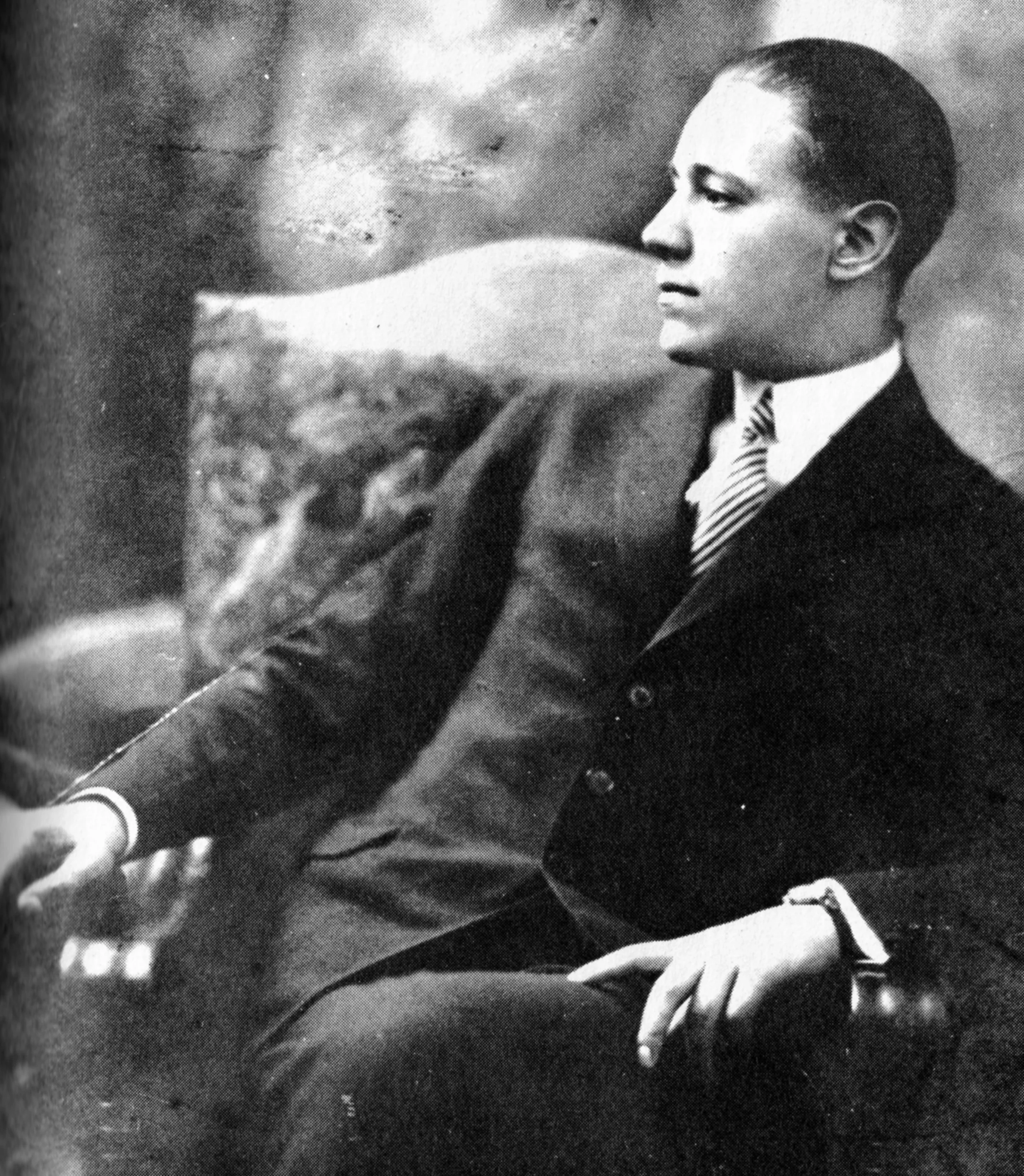
Image from Wikipedia
Image from Wikipedia
Ödön von Horváth
The Chronicler of the Interwar Period: How Ödön von Horváth Reinvented the Folk Play and Influenced Generations
Ödön von Horváth, born in 1901 in Sušak near Fiume (now Rijeka) and died in Paris in 1938, is one of the most influential German-speaking playwrights and novelists of the 20th century. His musical career in the literal sense did not exist – yet his work resonates to this day: through a distinctive stage presence of language, through the rhythmic arrangement of dialogues, and through his keen ear for the tonalities of the "common people." With works such as Geschichten aus dem Wiener Wald, Italienische Nacht, Kasimir und Karoline, as well as the novels Der ewige Spießer, Jugend ohne Gott, and Ein Kind unserer Zeit, he created classics that illuminate social coldness, opportunism, and the susceptibility of the masses with dramatic precision and literary modernity.
Horváth’s artistic development takes place between Vienna, Munich, and Berlin, between the tradition of the folk play and modern societal analysis, between poetic condensation and documentary sobriety. As an early recognized author – awarded the Kleist Prize in 1931 – he linked the composition and construction of his plays with contemporary observational insights that continue to engage stages and classrooms today. His early, tragic death from a falling branch during a storm in Paris imparted a mythical aura to his work – yet the relevance of his texts continues to resonate into the present.
Background, Education, Artistic Socialization
The son of a Hungarian diplomat grew up in Budapest, Vienna, Pressburg, and Munich – a biographical polyphony that sharpens his perspective on language, social environments, and power relations. After graduating high school in Vienna, he studied German studies and theater science in Munich while simultaneously observing the rising political tensions. In the 1920s, he began his actual musical career with words: the first plays, the search for the form, tempo, and rhythm of dialogue, the work on a language that is both vernacular and a poetic instrument.
His sensitivity to societal dispositions reveals itself early: unemployment, bitterness, the fragility of bourgeois facades. Horváth intertwines observation and composition. He arranges scenes like sentences in a score: pauses, repetitions, refrains of everyday speech – everything becomes dramaturgical material. This technique, which traverses the domains of composition and montage, becomes the hallmark of his genre: the modernized folk play.
Breakthrough and Kleist Prize: Geschichten aus dem Wiener Wald
The breakthrough is marked by the Berlin premiere of Geschichten aus dem Wiener Wald in 1931. This folk play, which strips away the romantic embellishment of heurigen clichés, illustrates through sharply drawn characters the social disparities of crisis, the opportunism, and the brutality beneath the idyll. Even before the premiere, the play was awarded the Kleist Prize – a recognition that catapulted Horváth to the forefront of German-language drama during the Weimar Republic.
The success is not only rooted in aesthetics. Horváth strikes a historical nerve: his text gives voice to the crisis, without slogans, but with an unflinching gaze. The way he mixes humor, sentiment, and coldness continues to produce an impact today. Critics commend the precision of the arrangement, theater-makers appreciate the spaces between tragedy and farce, and the audience recognizes itself in the painful reflections.
Political Condensation: Italienische Nacht, Kasimir und Karoline
In Italienische Nacht (1930) and Kasimir und Karoline (1932), Horváth places the political and economic dismantling of the interwar period at the center of his poetics. The compositions of his scenes are conceived musically: refrains of phrases, obstinate patterns of clichés, crescendos of violence. Characters do not stand out through grand gestures, but through the seemingly harmless things said, which condense into ideology. Thus, a speaking score emerges that exposes political kitsch as well as the longing for stability.
Kasimir und Karoline, a piece set during Oktoberfest about love, work, and humiliation, encapsulates Horváth’s artistic development: in rapidly cut images, fairground romance collides with economic precariousness. The dramaturgy connects intimate chamber music of feelings with the folk festival as a grand, noisy body of sound – an arrangement that theater continues to translate productively with musical means (from brass music to electronic sound design).
Exile, Novels, Late Plays
After 1933, Horváth shifted his work into the Austrian and later Western European exile context. With Jugend ohne Gott (1937) and Ein Kind unserer Zeit (1938), his prose finds a laconic, incisive tone. The novels become literary seismographs of ideological seduction, militarization, and the loss of moral coordinates. The artistic development culminates in a style that does not rely on pathos and is precisely therefore unsettling.
At the same time, late dramas are created, such as Figaro lässt sich scheiden (1937), which relocates the well-known characters into a present marked by emigration and political threat. Here, Horváth demonstrates his dramaturgical expertise: he not only composes dialogues but also reimagines entire lines of tradition, varies motifs, and politically reassembles them. The sudden death in 1938 interrupts a body of work that was on the brink of a possible next developmental step.
Catalog of Works and Key Texts
Horváth's discography in a metaphorical sense – his body of work – includes over twenty plays and several novels. Among the central plays are, alongside Geschichten aus dem Wiener Wald and Kasimir und Karoline, the political farces Italienische Nacht and Glaube Liebe Hoffnung, the parable Hin und Her, the bitter-sweet comedy Zur schönen Aussicht, as well as the late adaptations and rewritings of traditions like in Figaro lässt sich scheiden. The novels Der ewige Spießer, Jugend ohne Gott, and Ein Kind unserer Zeit form a prose triptych on seduction, disenchantment, and moral examination.
Their reception history reveals how closely aesthetic form and societal impact are intertwined: canonization in schools, countless new productions, translations, film adaptations. Publishers and theater institutions maintain the oeuvre through annotated editions, new translations, and editions of his estate. Thus, the work remains in motion – like a score that unfolds anew with each performance.
Style, Language, Composition: The Poetics of the Folk Play
Horváth's expertise lies in the precision of his linguistic scores. His characters speak in parataxes, idioms, and variations of everyday rhetoric – seemingly banal, yet actually highly artificial constructs. In these arrangements, he exposes thinking templates, aggression beneath polite surfaces, and the grammar of resentment. The dramaturgical composition employs pauses, repetitions, verbal refrains. His texts can be thought of musically: as sentences and motifs that vary, oppose, and turn into chorales of the time.
Simultaneously, he connects empathy with irony. This gives his plays a double bottom: the proximity to the characters prevents moral superiority, while the coldness of structure prevents sentimentality. This balance – an artistic progression from a satirical early work to a profound late phase – establishes Horváth's rank within theater history between the folk play, naturalistic observation, and modern parable.
Critical Reception, Awards, Cultural Influence
The Kleist Prize in 1931 seals his authority in the literary and theatrical landscape of the time. Contemporary reviews praise the "bitter precision" of his observations and the "new truth" of the folk play. Later literary and theater histories see him as an early analyst of fascist temptation. His texts remain repertoire pieces of major stages today because they make the mechanics of repression and the poetics of prejudice visible in exemplary situations.
Culturally, Horváth’s influence extends far beyond the German-speaking scene: translations, international new productions, and editions keep the debate alive. Jugend ohne Gott is a subject of study and a touchstone for discussions about civil courage, authority, and the language of power. In theatrical practice, his plays serve as a laboratory for musical dramaturgy: directors work with choirs, soundscapes, and live music to enhance the pulsating structure of his dialogues.
Editions, Archives, Current Stage Practice
The editorial care of his work – from annotated complete editions to individual editions of central plays – ensures a robust textual basis and detailed contextualization. Archives in Vienna and collections of literary institutions preserve manuscripts, correspondence, and versions, providing insight into composition and revision. This source material documents Horváth's working methods: precise, controlled, and open to updates of his own drafts.
On the stages, Horváth is regularly reinterpreted: as an author of social accuracy, as a poet of wounded human dignity, and as a composer of sayings. Productions utilize contemporary visual and sonic languages without overshadowing the clarity of the texts. Thus, his work remains not merely archival but performative – a living score for directors, ensembles, and audiences.
Present: Festivals, New Editions, Re-Readings (2024–2025)
Currently, festivals and societies secure the visibility of the Horváth cosmos. The Murnaus Horváth Days bring together research, performance practice, and engagement in condensed programs. New editions of the novels and plays, some with editorial apparatus, allow a new readership access to the work and its context. International publishers also offer translations – a sign of sustainable relevance.
In the performance practices of the years 2024/2025, stages in the German-speaking region will showcase new productions that connect Horváth's works with contemporary discourses on democracy, social division, and the language of the media. Especially Geschichten aus dem Wiener Wald and Kasimir und Karoline prove to be seismographs of a society in transition – presentable with live-composed sound layers that accentuate the speaking score.
Why Horváth Today? A Conclusion
Horváth’s texts teach us how ideology sounds. His scenes act as auditory pieces of society: seemingly harmless clichés tip into harshness, love speeches into claims of possession, proximity to the people into cynicism. With the precision of an arranger, he composes dialogues in which power relations become audible. This is why his literature remains immediate and urgent – a mirror that neither embellishes nor condemns, but clarifies.
Those who read or see Horváth experience a rare connection: empathy without kitsch, analysis without lecturing, comedy without trivialization. This makes him an author for the present and the future. Recommendation: Experience Geschichten aus dem Wiener Wald, Kasimir und Karoline, or Jugend ohne Gott live – the stage amplifies the pulse of this language, and the social accuracy of his composition unfolds its full impact in shared space.
Official Channels of Ödön von Horváth:
- Instagram: No official profile found
- Facebook: No official profile found
- YouTube: No official profile found
- Spotify: No official profile found
- TikTok: No official profile found
Sources:
- Encyclopaedia Britannica – Ödön von Horváth
- Ödön-von-Horváth-Gesellschaft – Official Society Page
- Ödön-von-Horváth-Gesellschaft – Biography
- German Historical Museum (LeMO) – Biography
- Suhrkamp Verlag – Author Page Ödön von Horváth
- Wikipedia – Geschichten aus dem Wiener Wald
- Wikipedia – Figaro lässt sich scheiden
- Wikipedia – Jugend ohne Gott
- Wikipedia – Ein Kind unserer Zeit
- Vienna Library at the Rathaus – Index of Persons Ödön von Horváth
- Austrian National Library – Literary Archive: Estate of Ödön von Horváth
- Wikipedia: Image and Text Source
Upcoming Events
Reading: Ödön von Horváth – Youth Without God
An intense literature evening in Amberg: Horváth's Youth Without God, dense reading atmosphere, language with conviction. 20.04.2026, 16:00, Admission information to follow. Experience, reflect, discuss. #LiteratureLive
Staged Reading: Ödön von Horváth's Youth Without God
Compelling reading at the City Theater Amberg: Youth Without God unfolds moral tension and linguistic artistry. 20.04.2026, 16:00, Entry/Info to follow. Stimulate thought with literature live. #LiteratureLive
Reading and Scenic Interpretation: Youth Without God by Ödön von Horváth
Timeless and urgent: Youth Without God at City Theater Amberg. Reading atmosphere, art of language, discussion afterward. Mon, April 20, 2026, 4:00 PM, admission free. Sharpen your thinking, examine language, experience it live. #LiteratureAmberg
Youth Without God
Discover Ödön von Horváth's 'Youth Without God' in an impressive new production at the Theater House Kassel. An exhilarating theater experience.
Kasimir und Karoline
Erleben Sie das eindrucksvolle Volksstück „Kasimir und Karoline“ am 23. Mai 2026 im Großen Haus in Ingolstadt.
Kasimir and Karoline
A captivating social drama by Ödön von Horváth in the Great House in Ingolstadt.
Italian Night – by Ödön von Horváth
Horváth's Italian Night at Munich Volkstheater: young ensemble, political tension, and strong stage designs. On 27.06.2026 at 20:00, €12. #Theater
Italian Night
Horváth's Italian Night meets today's conflicts at the Munich Volkstheater: politically, intensely, up close. On 28.06.2026 from 8 PM. #Theater
Faith Love Hope. A Small Dance of Death
The production of 'Faith Love Hope' promises an exciting evening at the Theater im Gärtnerviertel.