
Patrice Chéreau
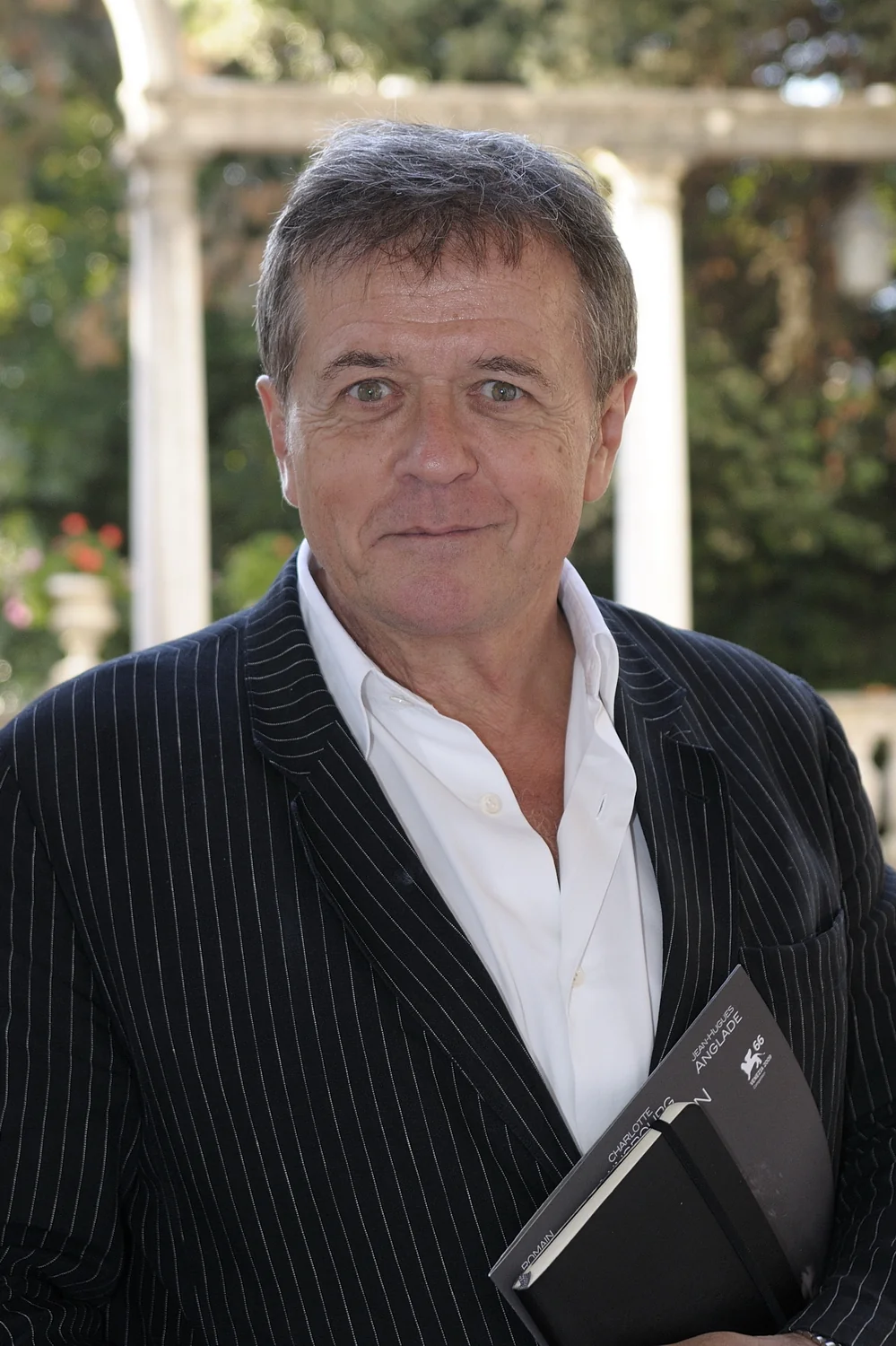
Image from Wikipedia
Image from Wikipedia
Patrice Chéreau – the great creator of stage, opera, and cinema
An artist who infused theater, opera, and film with new intensity
Patrice Chéreau was one of the defining European directors of the 20th and early 21st centuries. Born on November 2, 1944, in Lézigné and passing away in Paris in 2013, he developed an extraordinary artistic language that bridged theater, opera, and film at an early age. His work combined psychological precision, political sharpness, and a radical stage aesthetic that made classics feel contemporary and physically experienceable. ([operadeparis.fr](https://www.operadeparis.fr/artistes/patrice-chereau?utm_source=openai))
Early Years: Theater as a Way of Life
Chéreau's artistic career began astonishingly early. As a teenager, he drew attention in the sphere of the Lycée Louis-le-Grand, and in 1964, according to the Opéra national de Paris, he staged his first production, Victor Hugo's L’Intervention. In 1966, at the age of just 22, he took over as director of the Théâtre de Sartrouville, quickly establishing himself as an exceptional talent in the French theater scene. ([operadeparis.fr](https://www.operadeparis.fr/en/visits/exhibitions/patrice-chereau-staging-the-opera/i-the-early-years?utm_source=openai))
This early phase already displayed the key elements of his later work: a uncompromising engagement with texts, a strong visual approach, and a preference for psychological tension. French theater critics took him seriously early on because he worked analytically rather than decoratively. Chéreau viewed staging as a living space for thought, where body, power, and emotion intertwined inseparably. ([munzinger.de](https://munzinger.de/register/portrait/biographien/Patrice%20Ch%C3%A9reau/00/14881?utm_source=openai))
The Breakthrough: From Sartrouville to Bayreuth and International Renown
In the 1970s, Chéreau became a central figure in European directorial theater. From 1970 to 1972, he worked at the Piccolo Teatro in Milan, and then from 1972 to 1981, he co-directed the TNP de Villeurbanne with Roger Planchon. During these years, his career took on the international dimension that made him famous beyond France. ([operadeparis.fr](https://www.operadeparis.fr/artistes/patrice-chereau?utm_source=openai))
Especially opera made him visible worldwide. In 1969, he staged his first opera, L’Italienne à Alger in Spoleto, followed by the Contes d’Hoffmann at the Opéra de Paris and, above all, the legendary Bayreuth Tétralogie from 1976 to 1980. The Opéra national de Paris also points to his work on Lulu in 1979, a milestone in modern opera reception. Chéreau did not approach opera as a reverent ritual but as a dramatic present filled with social and erotic tensions. ([operadeparis.fr](https://www.operadeparis.fr/artistes/patrice-chereau?utm_source=openai))
Between Stage and Screen: Cinema as an Extension of His Art
Alongside his work in theater and opera, Chéreau developed a distinct film career. His directorial debut on screen, La Chair de l’orchidée from 1974, marked the transition to another medium without relinquishing his stylistic signature. With L’Homme blessé, he reached a broad audience in 1983; for the screenplay, he received the César the following year. The Festival de Cannes highlights that Chéreau was represented multiple times in the official competition with films like La Reine Margot, Ceux qui m’aiment prendront le train, and Intimacy. ([operadeparis.fr](https://www.operadeparis.fr/artistes/patrice-chereau?utm_source=openai))
His cinema was always marked by the same intensity as his theater: a tight focus on bodies, relationships, and power dynamics, precise direction of actors, and high emotional density. The official Cannes biography classifies him as an internationally renowned theater and opera director who also presented a notable filmography. Chéreau's work as an actor and screenwriter further underscores the complexity of his career in the broader sense of the term, that is, his work in the great performative arts. ([festival-cannes.com](https://www.festival-cannes.com/en/p/patrice-chereau/?utm_source=openai))
Artistic Development: Precision, Physicality, and Psychological Depth
Universalis describes Chéreau as an early-maturing artist who quickly established himself as one of the most significant directors of his time. Crucial was his way of not trivializing classical material but showing it in its political and emotional explosiveness. His productions worked with a strong physical presence of the actors, dense imagery, and an uncompromising focus on inner conflicts. ([universalis.fr](https://www.universalis.fr/encyclopedie/patrice-chereau/?utm_source=openai))
Even in later years, this signature remained unmistakable. In 1982, he took over the direction of the Théâtre des Amandiers in Nanterre with Catherine Tasca, where he created several works by Bernard-Marie Koltès and had a lasting impact on French theater. The opera production Don Giovanni and later works like Tristan und Isolde show how consistently Chéreau transformed musical dramaturgy into psychological theater. ([operadeparis.fr](https://www.operadeparis.fr/artistes/patrice-chereau?utm_source=openai))
Discography, Reception, and Cultural Influence
Patrice Chéreau does not possess a classic discography in the pop or rock sense. His "works" lie in opera direction, theater, and cinema, and it was precisely there that his influence unfolded most strongly. The Opéra national de Paris and the Festival de Cannes document a career marked by key stations such as Bayreuth, Paris, Nanterre, Aix-en-Provence, and Cannes. These locations not only signify successes but also a new conception of how to stage great repertoire works and modern material. ([operadeparis.fr](https://www.operadeparis.fr/artistes/patrice-chereau?utm_source=openai))
His most important accolades include the César for Best Screenplay for L’Homme blessé, the presence of several films in the official Cannes competition, and his international reputation as a renovator of opera and theater. The impact of his work extends far beyond France: Directors, singers, actors, and set designers have referenced his uncompromising way of emotionally charging scenes and making social tensions visible. Chéreau’s influence lies less in a school than in a benchmark for seriousness, precision, and artistic consistency. ([academie-cinema.org](https://www.academie-cinema.org/wp-content/uploads/1999/02/palmares-officiel-cesar-1999.pdf?utm_source=openai))
Later Years and Lasting Significance
Until shortly before his death, Chéreau remained productive. Official opera and festival sources cite Elektra in 2013 as his last production, which premiered in Aix-en-Provence. This late work exemplifies his career: a look at the dark sides of human relationships, a concentrated stage language, and an artistic stance without nostalgic idealization. ([opera-charm.com](https://www.opera-charm.com/articles/patrice-chereau-the-visionary-who-revolutionized-the-opera-stage/?utm_source=openai))
Patrice Chéreau died on October 7, 2013, in Paris. His work remains relevant because it does not preserve classical art but stirs it up. Those who see his opera and theater productions or his films experience an artist who recharged the European canon with new urgency. For this reason, every renewed glance at his works – on stage, on screen, and in the collective memory of cultural history – is worthwhile. ([bfmtv.com](https://www.bfmtv.com/culture/le-metteur-en-scene-patrice-chereau-est-mort_AN-201310080003.html?utm_source=openai))
Conclusion: Why Patrice Chéreau Continues to Fascinate Today
Patrice Chéreau remains compelling because he never understood art as a surface but as an existential engagement with power, desire, and vulnerability. His direction blended intellectual clarity with emotional force, and his work in opera and theater set standards for entire generations. Those who have the chance to experience recordings, revivals, or film works by Chéreau should seize it: His art shows how alive classics become when a great director fills them with uncompromising immediacy. ([operadeparis.fr](https://www.operadeparis.fr/artistes/patrice-chereau?utm_source=openai))
Official Channels of Patrice Chéreau:
- Instagram: no official profile found
- Facebook: no official profile found
- YouTube: no official profile found
- Spotify: no official profile found
- TikTok: no official profile found
Sources:
- Opéra national de Paris – Patrice Chéreau
- Opéra national de Paris – Patrice Chéreau (English)
- Opéra national de Paris – Patrice Chéreau, staging the Opera: The early years
- Festival de Cannes – Patrice Chéreau
- Munzinger Biography – Patrice Chéreau
- Encyclopédie Universalis – Patrice Chéreau
- Wikipedia – Patrice Chéreau