
Paul Zauner
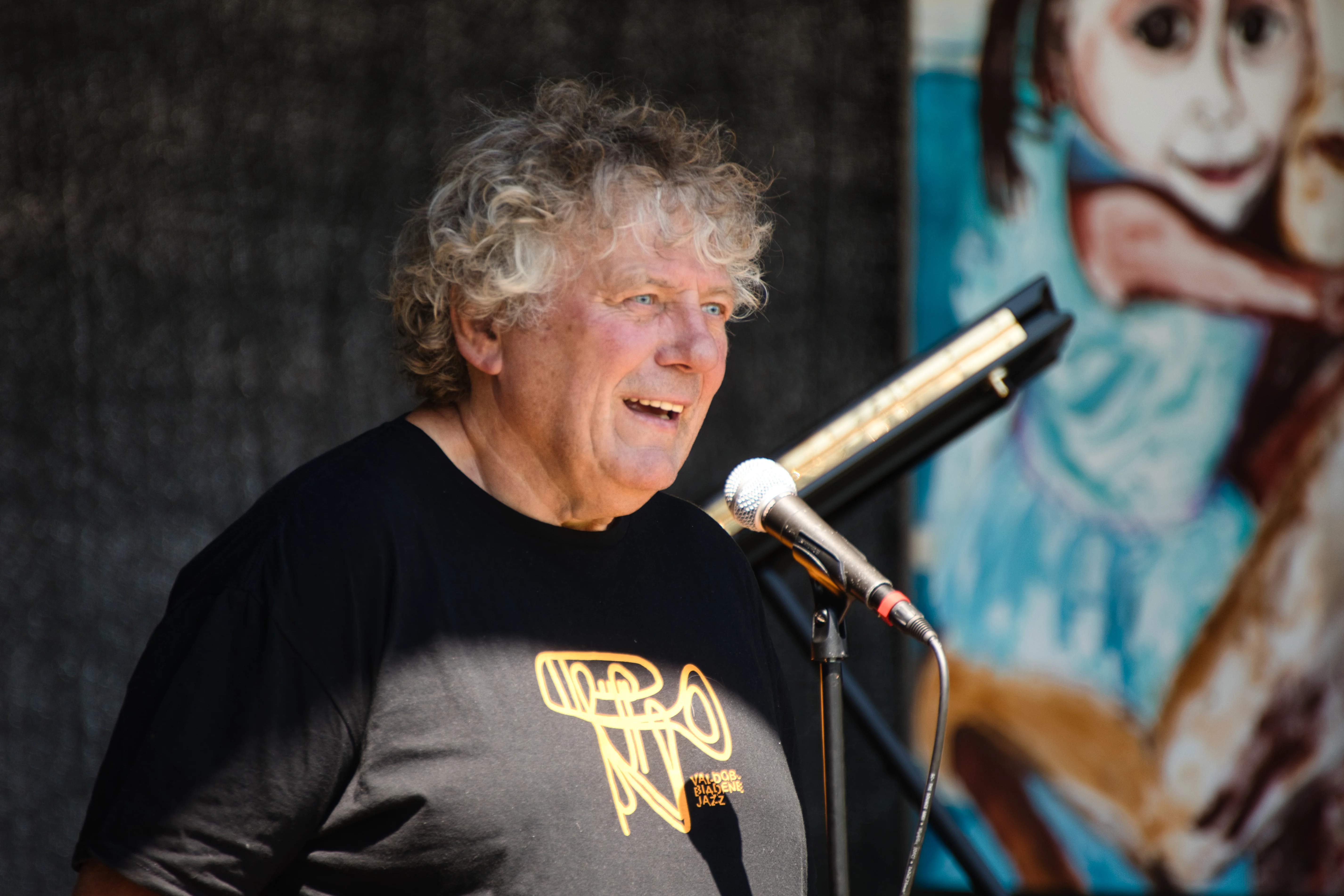
Image from Wikipedia
Image from Wikipedia
Paul Zauner – Jazz Trombonist, Producer, and Festival Organizer Bridging Sound Research and Farm Poetry
An artist portrait that merges jazz history, music culture, and pioneering spirit on an Upper Austrian farm
Paul Zauner, born on December 3, 1959, in Diersbach, represents a rare connection: masterful jazz trombone, visionary music production, and a unique festival on his organic farm. His music career spans from his early studies in Vienna through significant stays in New York to his artistic directorship of the INNtöne Jazz Festival. Zauner cultivates a distinctive aesthetic that straddles soul jazz, groove, big band colors, and improvisational freedom – fueled by a stage presence that combines earthy grounding with stylistic openness. His artistic profile draws from composition, arrangement, and production equally, having profoundly influenced the jazz landscape in the Innviertel region.
As a musician with experience in international touring and studio work, as well as a producer of his label PAO Records and a curator for prestigious venues, Zauner focuses on sustainable artistic development. He regards jazz as a communicative cultural technique that cleverly intertwines local community, international scene, and music historical positioning. Therefore, an agricultural engineer with studies in veterinary medicine and music has become an authority and reference point for artists who see jazz as a living, cross-genre language.
Biographical Roots: From Froschau to Vienna
Growing up in Froschau near Diersbach, Zauner discovered early on the fascination with sound spaces and instrumentation. During his studies in Vienna, he switched from piano to trombone and found his voice in collaboration with Austrian luminaries like Bumi Fian and Woody Schabata – warm, hearty, with a sensitivity for timbral nuances. The artistic development during these years laid the foundation for his later work as a bandleader and arranger: the ability to combine harmonic density, melodic clarity, and rhythmic elasticity aesthetically in production.
Alongside his instrumental training, he gained practical expertise in ensemble leadership, repertoire selection, and program dramaturgy. This combination of technical know-how and curatorial insight continues to shape his discography and work as a festival organizer. Even at this stage, the cornerstones of his musical language began to emerge: groove-oriented modern jazz, tradition-conscious standards, African and African American influences – always with a precise yet organic trombone sound.
New York, Collaborations, and the International Horizon
In the late 1980s, Zauner sought closeness to the New York scene – a formative time in which he played with musical personalities such as George Adams and David Murray. This chapter sharpened his aesthetic signature: expansive improvisation, narrative solos, and a rhythmic conception that oscillates between straight-ahead impulse and free articulation. His music career gained an international footprint; at the same time, he solidified his network for later projects with vocal icons, hard bop veterans, and progressive improvisers.
Back in Austria, he formed ensembles that convincingly bridge club intimacy and festival stages. The transition from sideman to bandleader manifested in a unique sound architecture: trombone in the foreground, yet always serving the ensemble – a balanced relationship between soloist and conductor that carries the dramatic arc of each performance.
ITSLYF, Blue Brass, and PAO Records: Bandleader Era and Production Aesthetics
In 1992, Zauner co-founded the band ITSLYF with trumpeter Franz Hackl – a dynamic group with international tours, featuring musicians like David Gilmore, Kenny Davis, and Rodney Holmes. The album "Hep Caolin" received extraordinary resonance and is considered particularly outstanding in specialized literature. His artistic development subsequently led him to "Blue Brass," a flexibly staffed ensemble that combines voices such as Mansur Scott, Dwight Trible, or Donald Smith with a powerful horn section and grooving rhythm group. In this setting, Zauner cultivates an orchestral band sound that elegantly amalgamates blues, hard bop, gospel, and soul colors.
With PAO Records, Zauner also established a production hub for contemporary jazz, groove, and crossover projects. As a producer, he focuses on transparent soundscapes, dynamic arrangements, and a recording practice that makes the personalities of the musicians audible. PAO has released the vocal project "Great Voices of Harlem" featuring Gregory Porter, Donald Smith, and Mansur Scott – a recording that garnered attention in the music press for its stylish arrangements and expressive vocal features. This dual role of label architect and bandleader strengthens his authority within the European jazz scene.
INNtöne Jazz Festival: "Jazz on the Farm" as a Cultural Model
Since the mid-1980s, Zauner has transformed a single concert into a festival of international renown: the INNtöne. Under the motto "Jazz on the Farm," he developed a curatorial model that links top names with discoveries. The venue – the meadow, the barn, the farm – creates an acoustically and atmospherically unique stage that enhances the closeness between musicians and the audience. The artistic direction employs dramatic arcs that breathe stylistic diversity: from European projects to US jazz legends, from vocal programs to experimental formats.
The 40th edition in July 2025 emphasizes the sustainability of this approach: a festival that fosters community and encourages artistic risk. In recent years, the main program has shifted from the barn to the meadow – an open-air format that makes the scenic stage an aesthetic part of the performance. This creates a sound space where improvisational energy, agricultural surroundings, and audience-centered dramaturgy form a unique ecosystem.
Discography and Reception: From "Soil" to "Great Voices of Harlem"
Zauner's discography unites ensemble artistry and production craftsmanship. As a bandleader, he made a statement with "Soil" (PAO): a repertoire of African jazz influences, the Great American Songbook, and original compositions, which critics describe as tastefully curated, sonically straightforward, and rhythmically elastic. The mix of Abdullah Ibrahim's "African Market Place," Osibisa's "Vo Ja Jo," and standards like "Georgia on My Mind" demonstrated Zauner's sense for repertoire dramaturgy – the art of musical montage, where groove, harmony, and horn arrangements stand in organic balance.
As a producer and bandleader, he was responsible for "Great Voices of Harlem" (PAO) in 2014 with Gregory Porter, Donald Smith, and Mansur Scott – an album that received positive reception from the international jazz press. Reviews highlight the "stylish, class-conscious" arrangements and the presence of the horns, as well as Porter's velvety ballad artistry, Donald Smith's funk impulse in "Expansions," and Mansur Scott's narrative force. This recording documents Zauner's ability to translate voices and ensembles into coherent sound dramaturgy.
Style, Sound, and Artistic Development
Zauner's trombone sound is grounded, articulate, and adaptable – with influences from the warm, vocal sound of the hard bop era, expanded with contemporary articulation: mute colors, speaking legatos, and precise accents. In composition and arrangement, he favors horn sections that intertwine call-and-response with vocal lines, Fender Rhodes colors, and deep grooves. His productions focus on spatial transparency and dramatic condensation; individual solos emerge from the ensemble rather than overshadowing it.
As a curator and festival organizer, Zauner thinks stylistically cosmopolitan: gospel, soul, afro grooves, vocal art, and improvisational avant-garde meet without hierarchy. This concept engages the history of jazz as a global communication culture and connects it with regional anchoring. The artistic development of his oeuvre is thus less a linear career curve than a network of projects, collaborations, and venues – a living archive of sonic encounters.
Cultural Influence: Community, Accessibility, and Sustainability
Zauner's cultural influence extends far beyond the role of bandleader. With the INNtöne, he has created a model for accessibility: jazz as a village and field event, as a meeting of international soloists with regional audiences. In doing so, he transforms the festival concept – away from a mere event, towards a community-building cultural practice. His work as an organic farmer is more than folklore: it shapes the understanding of sustainability, hospitality, and artistic integrity.
His role as a producer also impacts the scene. PAO Records provides visibility for voices that offer musical substance outside the mainstream. Thus, Zauner strengthens the stylistic diversity in European jazz and creates recording spaces where the individuality of the participants can unfold. This authority is founded on experience in composition, ensemble leadership, label work, and festival dramaturgy – a rarely dense EEAT basis that lends credibility to his artistic profile.
Current Projects, Releases, and Program Curation (2024–2026)
In 2024 and 2025, productions and tours focusing on vocal-oriented programs highlighted Zauner's work – including projects with the Sweet Emma Band and gospel programs that reveal the spiritual core of blues and jazz. Concurrently, Zauner continues his curatorial work for the INNtöne: 2025 will see the festival celebrate its 40th year; in 2026, the open-air stage at the farm will return with summer dates. Additionally, new releases in the vocal and ensemble realm will appear via PAO, continuing his signature as a producer – clear arrangements, grooving rhythm groups, and vibrant horn sections.
As an artistic networker, he also supervises jazz series in Passau and curates special concepts with veterans of the US scene. These projects connect repertoire preservation (Ellington, Horace Silver) with contemporary interpretations – an approach that confirms the longevity of jazz as a performative art: tradition-conscious without nostalgia, contemporary energy without fleeting trends.
Conclusion: Why Paul Zauner is Important Today
Paul Zauner is compelling because he does not just play jazz but thinks of it as a cultural ecology: as a bandleader, he merges soul-jazz warmth with improvisational risk; as a producer, he opens spaces for voices that possess substance and character; as a festival maker, he demonstrates that artistic excellence and rural community invigorate each other. His music career illustrates how artistic development and curatorial responsibility can combine into a compelling authority.
Those who experience Zauner live encounter jazz musical intensity as a community experience: horn sections that move you, vocal features that tell stories, rhythm groups making the meadow a resonant ground. Recommendation: Go, listen, be part of it – the best way to grasp the power of this music.
Official Channels of Paul Zauner:
- Instagram: No official profile found
- Facebook: No official profile found
- YouTube: No official profile found
- Spotify: No official profile found
- TikTok: No official profile found
Sources:
- INNtöne Jazz Festival – Official Website
- Paul Zauner – PAO Booking (Official Page)
- Wikipedia – Paul Zauner
- Jazz thing – Diersbach: INNtöne 2025 (News)
- DownBeat – Farm Vision: INNtöne Celebrates 25 Years
- The Arts Desk – The INNtöne Jazz Festival (Feature)
- All About Jazz – Review: Great Voices of Harlem (Bruce Lindsay)
- All About Jazz – Review: Great Voices of Harlem (Dan Bilawsky)
- London Jazz News – Review: Great Voices of Harlem
- Apple Music – Great Voices of Harlem (PAO Records)
- Amazon Music – Paul Zauner’s Blue Brass
- Tom Hull – Jazz Consumer Guide (Notes on "Soil")
- INNtöne – PAO Records (Label Info)
- Wikipedia: Image and text source