
Sophie Hunger
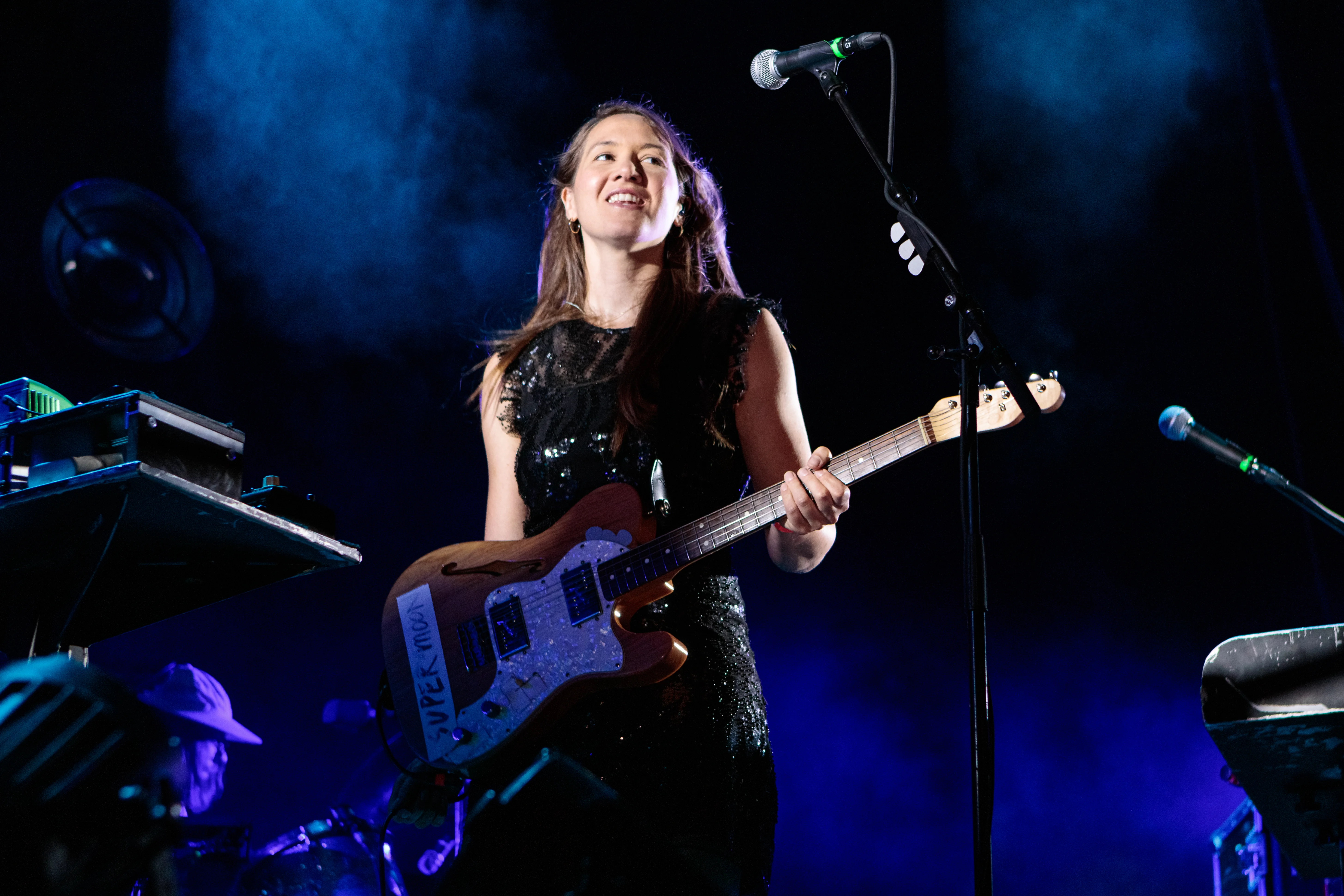
Image from Wikipedia
Image from Wikipedia
Sophie Hunger – Between Folk, Pop, Avantgarde, and Film: The Swiss Border Crosser
A voice that opens spaces: The portrait of an artist with a distinctive signature
Born on March 31, 1983, in Bern, Sophie Hunger – born Emilie Jeanne-Sophie Welti – has made a name for herself as a singer, songwriter, multi-instrumentalist, and film composer. Her music career began in the Swiss indie scene and has led her to international stages and renowned studios. Using guitar, piano, and blues harp, she intertwines folk, pop, chanson, jazz, and electronics into a signature that remains consistently original in sound, composition, and production. The artistic development of the Berlin-based musician includes studio albums, film scores, collaborations, and – since 2025 – literature as well.
Her breakthrough in the German-speaking world came with the album Monday’s Ghost (2008), followed by 1983 (2010) and The Danger of Light (2012). She earned international acclaim through a pronounced stage presence that combines intimacy with energetic dynamism. In 2010, she became the first Swiss artist to perform on the John Peel Stage at the Glastonbury Festival – a milestone that underscored her authority as a live act and songwriter. Awards such as the Swiss Grand Award for Music (2016) and long-standing recognition by music press and cultural institutions attest to her artistic impact.
Biography and early influences: From Bern to London to Berlin
As the daughter of a diplomat, Hunger grew up in Bern, London, Bonn, and Zurich, which early on shaped her openness to languages, sound textures, and genres. Jazz records from her father, teenage love for hip-hop and R’n’B, and later rock, country, and folk: This aesthetic polyglossia is still audible in her compositional and arrangement work today. After initial projects – including those under her birth name Emilie Welti – she released Sketches on Sea in 2006, which laid the groundwork for her musical voice: reduced arrangements, poetic lyrics, and a willingness to venture into unexpected harmonic and rhythmic paths. The subsequent establishment as Sophie Hunger marked the beginning of an international music career.
She solidified her reputation as an extraordinary live artist with tours through clubs, festivals, and concert halls. Naturally, she switched between English, German, French, and Swiss German. This linguistic diversity shapes the narrative stance of many songs and adds additional nuances to her lyrics. This willingness to experiment continued in later productions – right up to the electroacoustic reorientation of her Berlin period.
Career highlights: From Glastonbury to Abbey Road
Her performance at the Glastonbury Festival in 2010 was more than a booking: it signaled that Hunger possesses international relevance with her genre mosaic. In the following years, she worked repeatedly at the intersection of pop and art music, collaborating with jazz musicians and representing Switzerland as a modern, cosmopolitan songwriter. Molecules, produced with Dan Carey in 2018, opened the door to a decidedly more electronic sound – synthesizers, drum machines, and a sharper, more precise sound met with narrative songwriting.
In 2020, Halluzinationen followed: recorded live in just two days at Abbey Road Studios, the album captures intuition and risk. This "Full-Risk" recording strategy translates stage energy into the studio format and reflects the artist's stage presence in the production. At the same time, Hunger demonstrated her mastery of sound as a dramatic storytelling tool with film compositions – for example, for "Ma vie de Courgette" – beyond the classical song format.
Collective spirit and dialect: Brandão Faber Hunger
During the pandemic, the trio Brandão Faber Hunger was formed with Dino Brandão and Faber. The collaborative album Ich liebe Dich (2020) is a love project in Swiss German – full of vocal colors, three-part harmonies, and chamber-pop arrangements. The collaboration bridges the gap between folk closeness and advanced songwriting, between intimate living room settings and grand pop gestures. For Hunger, it also meant a return to dialect-based narrative traditions and the further development of her compositional signature in a collective production.
The project quickly gained cultural journalistic attention because it rebalances regional language, modern production, and romantic themes. In Sophie Hunger's discography, Ich liebe Dich stands as an exemplary proof of how collaboration expands artistic horizons without losing authenticity.
Reflektor Elbphilharmonie 2025: Curating, orchestrating, composing
In March 2025, Hunger curated a "Reflektor" weekend at the Elbphilharmonie Hamburg – her much-anticipated stage comeback after a break. The format ranged from symphonic versions of her songs (including with the Metropole Orkest, arrangements by Jochen Neuffer) to guest appearances by fellow artists and film screenings of her soundtrack work. The dramatic framing: a weekend that merges composition, arrangement, production, and stage practice in a curated festival format.
At the same time, Hunger presented her debut novel "Walzer für Niemand" (Spring 2025) – a coming-of-age text with autobiographical resonance exploring origins, friendship, and self-discovery. This literary addition complements her music career with another artistic expression and deepens the narrative that has always characterized her song lyrics. The Reflektor program confirmed how confidently Hunger transitions today between pop stage, orchestral arrangement, and curatorial work.
Discography, charts, and critical reception
Several studio albums stand out in her discography: Monday’s Ghost (2008, platinum in Switzerland), 1983 (2010, gold in Switzerland), The Danger of Light (2012), Supermoon (2015), Molecules (2018), and Halluzinationen (2020). Chart positions in Switzerland, Germany, France, and Austria reflect her consistency in the European market. Individual singles – for example, the Noir Désir interpretation Le vent nous portera – have acted as gateways into the Francophone press and film landscape.
Music critics regularly place Hunger between folk, jazz, and art-pop: sonically open, textually precise, with a sense for dramatic tension arcs. Early reviews highlighted the language and register shifts that let her songs float between intimacy and exposure. In year-end lists and retrospectives – such as for Halluzinationen – Hunger is recognized as an artist who does not chase trends but writes her own micro-narratives of pop history.
Style, sound, and the art of reduction
Hunger enjoys working with contrast in composition and arrangement: delicate melody against syncopated drum patterns, closely mic’d voice against broadly spaced synth pads, modal harmonies alongside unexpected chromatic turns. This production technique creates intimate proximity without sacrificing spatial depth. Electronic elements are never merely stylistic devices; they guide form, rhythm, and texture. In her acoustic work, a narrative pulse predominates, maintaining tension through clever dynamic shifts and breath pauses.
Her stage presence thrives on controlled intensity: pointed announcements, economical gestures, a precise play with silence. The live approach in Halluzinationen shows how much Hunger thinks in performance: song dramaturgy is understood as a temporal sculpture, not merely as an assembled track in a computer. This results in albums that feel like concert experiences – with tolerance for mistakes in favor of the moment.
Cultural influence: Switzerland, language, and international pop modernity
As the first Swiss artist at Glastonbury, Hunger has made a statement: Swiss pop can be global without losing its cultural texture. Her multilingualism opens international access; at the same time, dialect work positions a confident local moment. This balance makes her a reference figure for a European pop modernity that does not play off regional identities but embeds them in the global pop semantics.
Awards and nominations – from the SwissAward to the Swiss Grand Award for Music to film awards – strengthen her authority in the cultural public sphere. In interviews and cultural sections, she appears as an artist who reflects on production aesthetics, makes working processes transparent, and places her works in larger cultural contexts. This fosters trust and underlines the long-term relevance of her work.
Between screen and stage: Film composition as a second pillar
With the soundtrack for "Ma vie de Courgette" ("My Life as a Zucchini"), Hunger sharpened her profile as a film composer. Here, thematic clarity and instrumental simplicity meet emotional precision – a sound that does not overload scenes but creates spaces for empathy. This film work is audibly integrated into her song production: themes are thematically revisited, harmonic shifts are mirrored on character and plot levels. This leads to albums that transmit filmic modes of thought into pop form.
Cooperations and features: Dialogue as a method
Collaborations with pop, indie, and jazz musicians – as well as guest appearances with colleagues – shape Hunger's discography. Collaborations are not simply marketing vehicles for her; rather, they serve as a compositional laboratory. Whether in a trio with Brandão and Faber, in the studio with producer Dan Carey, or in an orchestral setting: the artistic development remains process-open but form-conscious. This explains the polyphony of her works without risking arbitrariness.
Voices of the fans
The reactions from fans clearly illustrate: Sophie Hunger captivates people worldwide. A YouTube comment sums it up: "One of the most moving live moments – her voice fills every space." Another writes: "These arrangements are pure cinema; every detail is on point." Such feedback reflects the emotional reach of her music and the care with which she intertwines composition, lyrics, and production.
Conclusion: Why experience Sophie Hunger now?
Sophie Hunger remains exciting because she understands boundaries not as fences but as resonance fields. Her albums are carefully curated spaces between folk, pop, and electronics; her stage performances connect intimacy and power; and her film scores demonstrate dramatic sensitivity. In a pop landscape often reliant on formulas, she embodies the risk of the moment – turning it into enduring art. Anyone wanting to trace the evolution of modern songwriting should experience Hunger live: where songs breathe, the sound crackles, and technique becomes feeling.
Official channels of Sophie Hunger:
- Instagram: No official profile found
- Facebook: No official profile found
- YouTube: https://www.youtube.com/user/SophieHungerOfficial
- Spotify: https://open.spotify.com/artist/3nOQJdlPEzFVhTEzxwcGax
- TikTok: No official profile found
Sources:
- Sophie Hunger – Official Website
- Two Gentlemen – Label Artist Page
- Elbphilharmonie Hamburg – Press Release "Reflektor Sophie Hunger" (10.10.2024)
- SWR Kultur – "Walzer für Niemand" (2025)
- DIE ZEIT – Review/Portrait (2012)
- Wikipedia – Sophie Hunger (English)
- Wikipedia – Sophie Hunger (German)
- Prize of the German Record Critics – Announcement (2025)
- ByteFM – Artist Page/Contributions
- Swiss Cultural Awards – Swiss Grand Award for Music (2016)
- Wikipedia: Image and text source