
Tabea Zimmermann
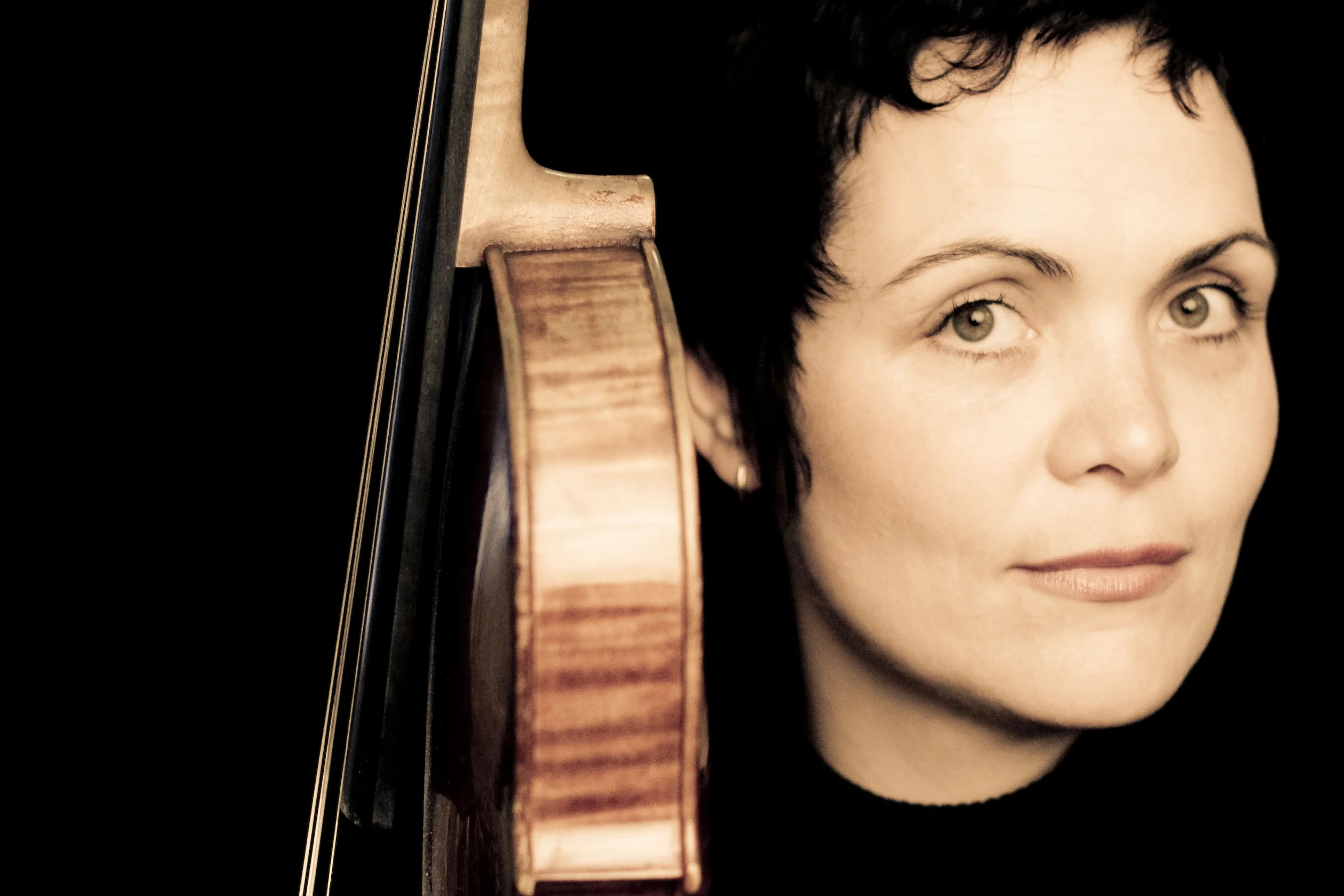
Image from Wikipedia
Image from Wikipedia
Tabea Zimmermann – the Viola as the Voice of an Entire Era
Master of Deep Tones: How Tabea Zimmermann Brought the Viola to the Spotlight
Tabea Zimmermann, born October 8, 1966, in Lahr, is considered one of the most influential violists of her generation. Her music career combines spectacular stage presence with pedagogical excellence and a commitment to cultural policy. As a soloist, chamber musician, university professor, and president of a foundation, she has shaped international music life for four decades—with a sonic ideal that blends warmth, tonal nuances, and structural clarity into an unmistakable signature.
She set the bar high from an early age: Competition successes in Geneva, Paris, and Budapest catapulted the young musician into the forefront of the classical music scene. To this day, she impresses with interpretative integrity, loyalty to the work, and an inquisitive openness to contemporary compositions. Her artistic development is closely linked to major orchestras, renowned festivals, and long-term partnerships with conductors and chamber music partners.
Biographical Roots and Artistic Development
Tabea Zimmermann’s artistic biography begins with an extraordinary early start: At the age of three, she took up the viola, and at five, she started playing the piano—two instruments that continue to influence her thinking in composition, sound architecture, and phrasing. From the age of 13, she studied with Ulrich Koch in Freiburg, followed by significant impulses from Sándor Végh at the Mozarteum in Salzburg. This education sharpened her sense of stylistic authenticity and endowed her sound with a blend of grounding and brilliance that listeners immediately recognize.
The breakthrough came early: In 1982, she won the Concours de Genève, in 1983 the Maurice-Vieux Competition in Paris, and in 1984 the Budapest Viola Competition. With the instrument built by Étienne Vatelot in 1980—a prize for her Paris victory—she shaped her sound profile for decades before switching in 2019 to a viola custom-made for her by French luthier Patrick Robin. This instrumental evolution heightened her focus on tone colors, articulation, and chamber music listening.
Career Highlights: Artist in Residence, Orchestral Debuts, and International Influence
The list of her artistic engagements reads like a tour through the topography of international concert life. Zimmermann was an Artist in Residence at the Concertgebouw Orchestra, the Berlin Philharmonic, and the Bavarian Radio Symphony Orchestra. As a soloist, she has performed with ensembles such as the Gewandhaus Orchestra Leipzig, the BBC Philharmonic, and the Orchestre de la Suisse Romande. A hallmark of her approach is her "play & lead" principle: projects where she shapes, balances, and defines from within the ensemble—a form of artistic responsibility that merges conducting, concertmaster tradition, and collective chamber music thinking.
Her presence at festivals further confirms her exceptional position: In 2025, she will act as "Artiste Étoile" at the Lucerne Festival, connecting Bartók's Viola Concerto to the Swiss premiere of Dieter Ammann's "No templates" for viola and orchestra. Simultaneously, she continues her partnership with the Saint Paul Chamber Orchestra—not only as a celebrated soloist but also in an artistic leadership role that intertwines program dramaturgy, ensemble culture, and support for young talent.
Pedagogy and Mentoring: A Generation of Violists
Experience becomes a resource for others with Tabea Zimmermann: At just 21, she took up a professorship in Saarbrücken—at that time the youngest in Germany. This was followed by formative years at the Hochschule für Musik und Darstellende Kunst Frankfurt and the Hochschule für Musik Hanns Eisler Berlin before she returned to Frankfurt in 2023. Her teaching at the Kronberg Academy and international masterclasses deepen this mentoring approach. A whole generation of violists—including prominent solo positions in leading orchestras—testifies to her long-term artistic impact.
In her teaching, she emphasizes tone culture, bow control, and awareness of form as well as independent repertoire thinking. She encourages interpretive self-responsibility, rhythmic precision, and understanding of musical rhetoric. This pedagogical expertise is combined with an empathy for the biographies of young musicians—a reason why her class is considered a training ground for emerging talent.
Cultural Engagement: Foundations, Awards, and Responsibility for Music Life
In addition to her performance and teaching roles, Zimmermann takes on cultural-political responsibilities. She heads the board of the Ernst von Siemens Music Foundation and is president of the Hindemith Foundation. Her own David-Shallon Foundation supports international, social, and educational music projects—continuing her understanding of artistic development as a societal task. In 2023, she became an honorary member of the German Music Council; in 2020, she received the Ernst von Siemens Music Prize, one of the most prestigious awards in the classical world. Her accolades also include the Frankfurt Music Prize, ICMA Awards, and the Federal Cross of Merit.
These roles sharpen her profile as a cultural shaper: She initiates composition commissions, promotes premieres, and curates programs that connect historical depths with contemporary relevance. Particularly in times of change in the concert business, her voice acts as an authority that unites quality, communication, and sustainable structures.
Discography: References Between Canon, Rarities, and New Music
Zimmermann’s discography documents the breadth of her repertoire—from major viola concertos to solo works, chamber music, and orchestral collaborations. She has been awarded the ECHO Klassik as "Instrumentalist of the Year" twice: in 2010 for solo works by Reger and Bach, and in 2014 for Hindemith (Vol. 1) for viola and orchestra. Her recordings are released by labels such as myrios classics, Wergo, Sony, and others—a diversity that unites production, sound aesthetics, and repertoire preservation at a high level.
Milestones include her engagement with György Ligeti's Sonata for Solo Viola, Berlioz’s “Harold en Italie,” Bartók's Viola Concerto (also in a version developed from sketches by her), Hindemith's “Der Schwanendreher,” and Enno Poppe’s “Filz” with Ensemble Resonanz. In 2025, a prominent project with Ensemble Resonanz will be released: Britten's “Lachrymae” in the version for viola and string orchestra, along with Enescu's String Octet in orchestral form—an album that merges the density of chamber music with orchestral color dramaturgy.
Style and Sound Aesthetics: Tone Culture, Phrasing, and Structure
Tabea Zimmermann’s artistic language unites lyrical tone production, resulting singing quality, and precise articulation. She phrases with the tranquility of a vocal line: legato arcs unfold harmonic tensions, dynamic terraces create breathing, and rubatos remain functional. Her playing avoids spectacle—it seeks evidence. In chamber music, she acts as a moderator of voices that understand polyphony as conversation. In orchestral work, she connects the inner logic of the score with an immediate address.
This sonic ideal sets standards in the genre profile of the viola: the boundaries between "accompaniment" and "solo instrument" become permeable. Especially in works from the 20th and 21st centuries—from Hindemith to Ligeti and Poppe—she demonstrates how the viola becomes a bearer of complex narratives. Her recordings and live interpretations serve as references for studies in sound balance, intonation, and structural transparency.
Collaborations: Chamber Music as a Laboratory of Ideas
Zimmermann’s chamber music partnerships—with Gidon Kremer, Javier Perianes, Thomas Hoppe, the Belcea Quartet, or Jean-Guihen Queyras—are long-term projects of mutual inspiration. The Arcanto Quartet, co-founded by her in 2004, has shaped the quartet landscape for over a decade with interpretative rigor and repertoire breadth. Tours, residencies, and thematically curated concert cycles refine her profile as a musician who thinks as precisely about the dramaturgy of an evening as the inner architecture of a movement.
In the upcoming seasons, new cards are being dealt: a North America recital tour with Javier Perianes, renewed chamber music journeys with the Belcea Quartet, orchestral collaborations with renowned conductors, and composition commissions to contemporary voices. Chamber music becomes the space where she continues to write the history of the repertoire.
Current Projects and Perspectives 2024–2026
Recent and upcoming highlights underline her agenda between heritage and the present: As "Artiste Étoile" at the Lucerne Festival in 2025, she will shape chamber music, present Bartók's Viola Concerto, and bring Dieter Ammann's "No templates" to its Swiss premiere. Simultaneously, she continues her artistic partnership with the Saint Paul Chamber Orchestra. The 2025/26 season also features a world premiere by Georges Aperghis at the Donaueschingen Music Days, Bartók's Viola Concerto with leading orchestras in Europe, and major recitals in North America.
On the release front, the 2025 coupling of Britten's “Lachrymae” and Enescu's String Octet (orchestral version) marks a programmatic highlight: historically informed articulation meets contemporary interpretation—a production that bridges the gap between chamber and orchestral culture in terms of repertoire, arrangement, and production.
Critical Reception and Cultural Influence
The music press describes Zimmermann's tone as "impeccably pure" and her personality as "charismatic"—attributes that have been repeatedly confirmed by the scene. It is not spectacular gestures, but rather sonic precision, structural readability, and the ability to reveal the "subtext" of a score that shapes the echo. Her role as the recipient of the Ernst von Siemens Music Prize in 2020 underscores her lasting influence on music life—artistically, pedagogically, and culturally.
Her cultural footprint goes beyond the stage: As chair and president of significant foundations, she influences discussions on fostering young talent, preserving repertoire, and social responsibility. She initiates impulses for commissioned works, promotes diverse programs, and opens spaces for new music. Thus, she combines authority with trustworthiness—a profile that is equally sought after in juries, advisory boards, and teaching contexts.
Conclusion: Why Tabea Zimmermann is Indispensable Today
Anyone wanting to understand how artistic experience translates into cultural relevance should hear Tabea Zimmermann live. Her interpretations make form audible, give significance to tone colors, and narrate stories from the present. As a soloist, chamber musician, educator, and curator, she creates connections: between generations, between tradition and innovation, between stage and society. Her unspoken appeal to the audience is: Listen with an active, thoughtful attitude—perhaps more important now than ever. Don't miss the opportunity to experience this exceptional artist in concert.
Official Channels of Tabea Zimmermann:
- Instagram: No official profile found
- Facebook: No official profile found
- YouTube: No official profile found
- Spotify: No official profile found
- TikTok: No official profile found
Sources:
Upcoming Events
Tabea Zimmermann & Javier Perianes – Chamber Music Evening in Amberg