
Wladimir Kaminer
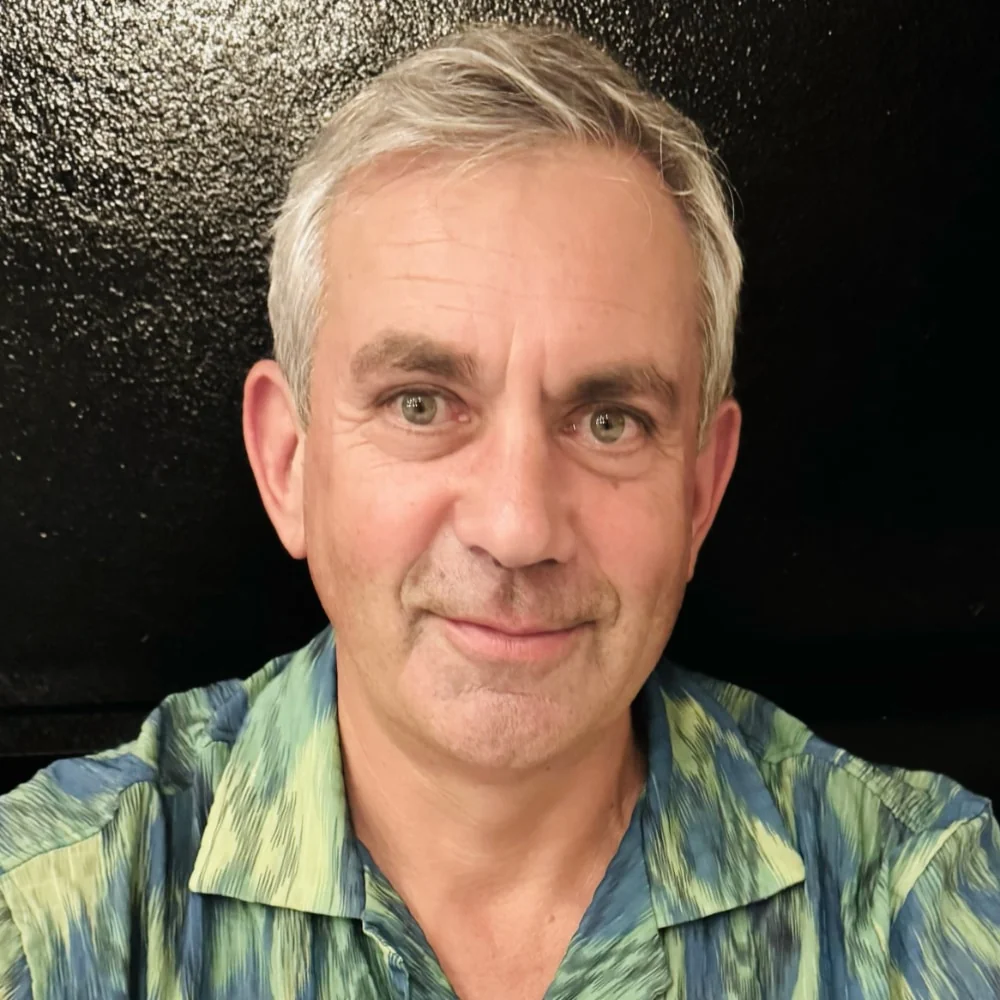
Image from Wikipedia
Image from Wikipedia
Wladimir Kaminer – Chronicler of the Present, Master of the Short Story, and Soundtrack Provider of "Russendisko"
A Life between Literature, Reading Stages, and Club Culture
Wladimir Kaminer, born on July 19, 1967, in Moscow, is one of the most influential narrators of united Europe: a Russian-German writer, columnist, and performance artist who has enriched the German-speaking literary and cultural landscape since the 1990s with humor, keen observation, and commanding stage presence. His literary breakthrough came in 2000 with the story collection "Russendisko", which shaped a generation of readers and established Kaminer as the voice of the immigration experience in Germany. His artistic development has taken him from Berlin's reading stages through radio and TV formats to reading tours across Europe – always with fresh prose, a sense for dramaturgy, and a fine ear for everyday comedy.
As an author, Kaminer has always written "against the grain": in German, a language that is not his mother tongue – yet it has become his precise instrument for tone, timing, and punchline. With "Militärmusik" and many other titles, he expanded his literary discography: a growing bibliography of novels, story collections, and audiobooks that weave together journalistic observation, autobiographical miniatures, and cultural-historical reflections. To date, his books and audiobooks have sold millions of copies, solidifying his authority in the German-language feuilleton as well as his popularity at live readings.
Background, Education, and Early Years in Berlin
Growing up in Moscow, Kaminer trained as a sound engineer for theater and radio and studied dramaturgy – a dual influence that later made his precise "sound" of prose, his sense for composition and arrangement, as well as his performative reading style, evident. In 1990, he came to East Berlin, just before the reunification. Early on, he found his laboratory at the Berlin Reform Stage "Heim & Welt": Here, he tested freshly written texts in front of an audience every week, developed a distinctive narrative voice, and honed his music career in a metaphorical sense – readings as performative "concerts" with pointed dramaturgy and rhythm.
Simultaneously, Kaminer began writing columns and appearing in radio and TV formats. His show "Wladimirs Welt" on Radio Multikulti and later regular contributions on television established him as a cultural voice with a documentary perspective and humorous distance. This artistic development – from the open microphone of the reading stage through radio to primetime culture – anchored him in the public eye.
Breakthrough with "Russendisko" – From Cult Book to Club Culture
The story collection "Russendisko" became a bestseller and cultural catalyst: From stories about arriving, Berlin, and the vibrant post-reunification life, an event series emerged, which Kaminer started together with musician Yuriy Gurzhy. In Berlin clubs, literature merged with the dance floor, text with beat – a piece of lived pop literature that narrated the big city in modern terms. This connection of book and stage, literary business and club, is one of Kaminer's trademarks: He doesn't just read; he “performs” his texts – with timing, delivery of punchlines, and a presence reminiscent of an experienced bandleader.
The Russendisko became a place of exchange, a celebration of migration biographies and urban diversity. Later, in response to the Russian war of aggression against Ukraine, the focus of the series shifted in solidarity – a testament to Kaminer's belief that culture must always be present, politically aware, and human-centered.
Bibliography, Reception, and Stage Work
After "Russendisko," "Militärmusik" followed – a collection that sheds autobiographical insights from the Soviet army with satirical precision. Since then, Kaminer has published new books and audiobooks almost annually: pointed short prose, travel observations, family stories, reflections on the present. His literary discography – the bibliography – unfolds like a long album with varying tones: sometimes urban and laconic, sometimes essayistic and anecdotal, always with a fine sense for melody in sentence structure.
Critics have praised his ability for years to reflect global developments through small details: whether at the supermarket checkout, at the dining table, or on the subway. This “microscopic“ prose – with striking motifs, recurring themes, and dynamic shifts – makes him a reliable narrator of current sentiments. The stage serves as his second medium: On reading tours, Kaminer improvises, infuses brand new miniatures, and stages his texts with a physical ease – a live experience that oscillates between literature and stand-up.
Media Presence: Radio, Television, and "Kaminer Inside"
Since the 1990s, Kaminer has maintained a continuous media presence. Early radio contributions and columns honed his sense for the “revolutions per minute” of a narrative, while TV appearances expanded his reach. Since 2018, the 3sat format "Kaminer Inside" has showcased the author as a curious cultural reporter on travels through Germany, Austria, and Switzerland. Dramaturgically, the show functions like Kaminer's prose: episodic, people-centered, with stories that bring the ordinary to life. This multiplatform work strengthens his authority as a cultural mediator who presents backgrounds not in a dry lecturing style, but in an engaging narrative form.
Current Projects 2024–2026: "Mahlzeit!", "Breakfast on the Edge of the Apocalypse," and the "Kaminer Show"
In his latest work, food as a cultural technique takes center stage. With "Mahlzeit! Geschichten von Europas Tischen" (2024), Kaminer embarks on a culinary journey that discusses intercultural understanding and reminiscence of laid tables – a theme that continues his poetics of small observation and makes Europe palpably experienced. Before that, with "Breakfast on the Edge of the Apocalypse," he presented pointed everyday miniatures in times of global crises. Both titles have shaped readings, festivals, and summer stages, as well as discussion formats, where Kaminer excels as an eloquent storyteller and arranger of his material.
In 2024 and 2025, audiences in Germany, Austria, and Switzerland experienced the "Kaminer Show" – evenings where he reads from current books, premieres unpublished texts, and engages in direct dialogue with the audience. This is complemented by thematic reading formats, such as on "The Crusaders," which present another facet of his work: travel storytelling as a societal panorama, featuring humorous understatement and nuanced observations of regional characteristics.
Style, Composition, and Artistic Development
Kaminer's style combines the brevity of a column with the depth of a narrative. He works with clear motifs, recurring guiding images, and a precisely timed sentence rhythm. Compositional, he structures his texts like miniatures: rise, surprising perspective change, punchline – often conceived musically. His artistic development from reading stage author to a touring storyteller across Europe has sharpened the live dimension of his literature: Every reading is a re-staging, using timing, pauses, and audience feedback as performative elements.
Musically, Kaminer intertwines literature and club: The Russendisko has influenced the Berlin club scene of the 2000s and brought immigration stories to the dance floor. This crossover between text and beat has become a central motif: stories that resonate, groove in sentences, literary "hooks" in everyday life.
Cultural Influence, Stance, and Authority
Kaminer's work represents an open-minded, humorous, and solidary Europe. His stories show how migration, neighborhood, and culinary arts open everyday spaces for understanding. As a co-founder of PEN Berlin, he advocates for free speech and literature that stands against censorship and propaganda. His continuous commitment to press, radio, and television, along with the demonstrably high overall circulation of his books and audiobooks, attests to his authority in cultural life – not as a lecturer, but as a storyteller who speaks from experience and transforms current events into engaging literature.
Public Success and Statistics
For years, his books and audiobooks have reached a wide audience; the total circulation is in the millions. "Russendisko" continues to be regarded as a cult title, while "Militärmusik" is seen as a comedic classic of post-Soviet memory literature. More recently, "Mahlzeit! Geschichten von Europas Tischen" and "Breakfast on the Edge of the Apocalypse" continue the series of pointed contemporary sketches that resonate with critics and readers alike. Kaminer reading his texts as audiobooks enhances the connection between voice and content – comparable to a singer-songwriter interpreting his songs live, thus opening an additional aesthetic level.
Stage Presence and Live Experience
Those who attend Kaminer's readings experience performative literature: precise timing, spontaneous interjections, new stories in tow. He "arranges" texts in the moment, reacts to the space, allows pauses to breathe, and places punchlines like refrains. This artistic practice transforms the reading into a concert format – a reason why he is firmly anchored in the event calendars of cultural institutions, theaters, and festivals. Thus, Kaminer remains present not only as an author but as a live artist who distills the present in real time.
Conclusion: Why Wladimir Kaminer Continues to Enthrall
Wladimir Kaminer combines literary precision with lived cultural mediation. His prose resonates – it has rhythm, pulse, and an ear for nuances. He narrates migration-shaped biographies, kitchen and club stories, family anecdotes, and travel observations in a way that they become mirrors of the times. With "Mahlzeit!" he connects Europe through taste and stories; with the "Kaminer Show," he maintains his live energy; with radio, TV, and blog formats, he remains in dialogue. Those who wish to experience the full spectrum of his musical career in a metaphorical sense – from the reading stage to the Russendisko – should see him live: where text becomes an event and storytelling transforms into the stage of everyday life.
Official Channels of Wladimir Kaminer:
- Instagram: No official profile found
- Facebook: No official profile found
- YouTube: No official profile found
- Spotify: No official profile found
- TikTok: No official profile found
Sources:
- Wladimir Kaminer – Official Website
- Wikipedia – Wladimir Kaminer
- Penguin Random House – "Mahlzeit! Geschichten von Europas Tischen"
- Deutsche Welle – Author Page Wladimir Kaminer
- FAZ – "Wladimir Kaminer: The Storyteller"
- Kultourladen – The Kaminer Show 2025
- City of Wesel – Reading "Die Kreuzfahrer"
- City of Wolfsburg – Reading "Mahlzeit! Geschichten von Europas Tischen"
- Hamburger Morgenpost – "Intercultural Understanding Goes Through the Stomach" (Interview/Portrait of "Mahlzeit!")
- Excerpt – "Breakfast on the Edge of the Apocalypse" (Penguin)
- Wikipedia: Image and text source
Upcoming Events
Concert by MINE at the Cultural Tent Kassel
MINE in Ulm: Intimate Pop Night at the Ulmer Tent
Reading with Wladimir Kaminer - SOLD OUT
Reading with Wladimir Kaminer
Wladimir Kaminer reads: Mothers' Days in Bonn
Wladimir Kaminer Reads - Müttertage in Schwerin
Reading Tour: Wladimir Kaminer – Mothers' Days
The Kaminer Show 2026
Mine – Killer Tour 2026