
Äußere Badstraße 7A, Bayreuth
Äußere Badstraße 7A, 95448 Bayreuth, Germany
THE CENTER Bayreuth | Tickets & Program
THE CENTER in Bayreuth is much more than just a venue for individual evenings: It is the International Youth Cultural Center Bayreuth e.V. at Äußere Badstraße 7a, a house with a long history, clear cultural orientation, and a program that ranges from concerts to readings to workshops. The roots of the house go back to the International Youth Festival Meeting, which was founded in 1950; in 1974, the founding meeting of the non-profit association followed, in 1978 the laying of the foundation stone, and in 1982 the inauguration. After a major renovation and expansion from 2012 to 2013, the center today presents itself as a lively meeting point for culture, exchange, and events of various sizes. The house houses, among other things, the event office, the German-French forum for young art, the festival of young artists, and various house groups. Therefore, anyone looking for photos, images, programs, or tickets does not randomly end up here, but at a place that bundles cultural diversity throughout the year and opens its spaces for audiences and projects alike. ([das-zentrum.de](https://www.das-zentrum.de/geschichte.html))
Program, Tickets, and Current Events
The search queries related to THE CENTER Bayreuth revolve heavily around the current program, individual dates, and ticket purchases. This is logical, as the website shows a continuous event overview and organizes the offerings into clear categories such as comedy, family, readings, music, others, theater, and workshops. This allows one to quickly see whether they are looking for an evening of cabaret, a concert, a reading, or a family format. The homepage also displays specific dates in the monthly calendar; for example, in April 2026, entries such as Bayreuth Intensive Symposium 8.0, Save Your Tears - Vol. 6, Nick Young & Band - The Great AC/DC Master Show, and Mamaladnamala - Pyjama Party reloaded were visible. This shows that the house is not just a static event page, but a real calendar operation with continuously updated evenings and formats. For many visitors, this is the most important entry point: first the overview, then the decision for the suitable date. ([das-zentrum.de](https://www.das-zentrum.de/))
Also, regarding tickets, the structure is very clear. The house's ticket shop sells selected events online, also for self-printing, and additionally refers to the Bayreuth theater box office and other advance sales points. For all other dates, the website directly leads to the respective event pages. This is particularly helpful for search queries like the center bayreuth tickets, program, or events, as interested parties do not have to click through unnecessary subpages. Those who want to know quickly what is happening find the answer in the calendar; those who want to buy can access the ticket shop or the indicated advance sales methods. Especially in a house with many genres, this combination of program overview and ticket offerings is crucial, as it caters to both spontaneous visitors and planning guests. THE CENTER positions itself not just as a pure landlord, but as a culturally accessible house with its own event logic and a clear, easily understandable path from announcement to ticket. ([das-zentrum.de](https://www.das-zentrum.de/Ticket-Shop.html))
Directions and Parking at THE CENTER Bayreuth
A large part of the search queries concerns directions and parking, and here too, THE CENTER provides very concrete information. The official directions page lists several bus connections and stops: for example, Oberfrankenhalle/Sportzentrum, Wieland-Wagner-Straße, and Friedrich-Ebert-Straße/Königsallee. This makes the house easily accessible for visitors from various directions without having to fight through complicated city routes first. This is important for practical planning, as many guests attend events in the evening and need quick orientation on whether to come by public transport or by car. The address itself is also clearly stated: Äußere Badstraße 7a in 95448 Bayreuth. This is a great advantage for navigation devices, route planning, and orientation on site, especially when several venues in the city are available. ([das-zentrum.de](https://www.das-zentrum.de/anfahrt.html))
Those arriving by car also learn openly on the website what is possible on site: Limited parking spaces are available at the house, and two disabled parking spaces are reserved directly in front of the building. This is honest and helpful, as it prevents false expectations of a large parking area right at the entrance. At the same time, THE CENTER mentions a very practical alternative: From the parking garage Oberfrankenhalle/Sportpark in Albrecht-Dürer-Straße, it is only about three minutes on foot to the house. The municipal and venue-specific information complement each other sensibly, as the page for the Europasaal additionally points out that parking spaces are available directly at the venue. For search queries like parking, directions, or parking space, this is exactly the kind of detail that counts: short distances, understandable indications, and clear orientation between house parking and nearby parking garage. ([das-zentrum.de](https://www.das-zentrum.de/anfahrt.html))
Europasaal: Room Plan, Seats, and Technology
The Europasaal is the heart of the house and for many the most important reason to search for THE CENTER Bayreuth. With nearly 300 square meters of usable space, a maximum seating capacity of 374 seats plus 84 seats in the gallery, and up to 650 standing places, the hall is flexible enough for very different formats. This range makes it attractive for concerts, theater, readings, panel discussions, and dance performances. So, anyone looking for room plans, best seats, or capacity finds a reliable answer here: The space is large enough for a real audience experience but remains manageable and well-planned. Therefore, the website describes the hall not only as a space but as the heart of the house, which can be used with individual seating and lighting as needed. This is particularly interesting for organizers who want to choose from a classic row seating, a casual standing concept, or a mixed form. ([das-zentrum.de](https://www.das-zentrum.de/europasaal.html))
Technically, the Europasaal is clearly designed for professional use. Mentioned are a stage of about 71 square meters with a continuously movable proscenium and orchestra pit, modern stage machinery, a darkening window front, an RGB-controllable light ceiling, an induction loop for hearing-impaired individuals, screen, projector, grand piano, as well as light and sound technology. This equipment explains why the house is used not only for music but also for word and stage formats. Especially for search terms like room plan, best seats, or event hall, it is important to know that here is not just a number, but a fully equipped room with flexible infrastructure. Additionally, the municipal event overview lists the Europasaal as physically barrier-free, and the venue page also lists the room as wheelchair accessible with available restrooms and parking spaces directly at the venue. For audiences, artists, and organizers, this creates a very solid overall picture of size, technology, and accessibility. ([das-zentrum.de](https://www.das-zentrum.de/europasaal.html))
Small Arts Stage and Workshop Rooms for Flexible Formats
Those looking for the small arts stage of THE CENTER Bayreuth usually have a different need than with the Europasaal: more closeness, less distance, and a flexible, often more intimate atmosphere. This is exactly what this space is designed for. The small arts stage is about 100 square meters in size, can be used with 99 seats or unseated, and has a separate entrance, bar, and restroom area. This makes it independently usable, i.e., independent of the main house, which is very practical for small concerts, readings, theater formats, seminars, or parties. The basic technical equipment includes a mobile stage of 20 square meters, screen, projector, as well as light and sound technology. Thus, the room is significantly smaller than the Europasaal, but it is precisely in this compactness that its strength lies. Those looking for photos, images, or impressions of the room will find exactly this compact, immediate stage atmosphere presented on the website. For many event formats, this is the right stage: close to the audience, quickly adaptable, and with its own character. ([das-zentrum.de](https://www.das-zentrum.de/kleinkunstbuehne.html))
Equally important for the profile of the house are the workshop rooms. The rental page lists four rooms of about 45 square meters each, another room of about 56 square meters, and a dance room of 60 square meters with dance floor and mirror wall. These rooms are versatile, equipped with acoustic ceilings, pianos, flipcharts, and projectors, and can be individually furnished or tabled. Additionally, according to the rental overview, there is a very open project logic: THE CENTER offers space for projects of all kinds and sizes and explicitly sees itself as a professional partner in planning and execution. For search queries like workshop rooms, rental, or small arts stage, this combination of flexibility and basic technical equipment is interesting. It shows that the house is not just a classic concert venue but a multifunctional cultural center where rehearsals, seminars, dance, small presentations, and creative formats can all find their place. ([das-zentrum.de](https://www.das-zentrum.de/vermietung.html))
History, Renovation, Accessibility, and Impressions
The history of the house explains much of its current aura. According to the official chronicle, the development dates back to 1950 when Herbert Barth founded the International Youth Festival Meeting, which is now known as the Festival of Young Artists Bayreuth. In the mid-1960s, the idea arose to establish a suitable cultural center alongside this festival. In 1974, the founding meeting of the non-profit association International Youth Cultural Center Bayreuth took place, in 1978 the foundation stone of the cultural center designed by architect Helmut Jahn was laid, in 1981 the first artist workshop took place, and in 1982 the house was finally inaugurated. In 1989, the German-French forum for young art was integrated, and between May 2012 and May 2013, a fundamental renovation and expansion followed. This chronology makes it clear that the building did not arise from nothing but emerged from a long cultural and artistic process. ([das-zentrum.de](https://www.das-zentrum.de/geschichte.html))
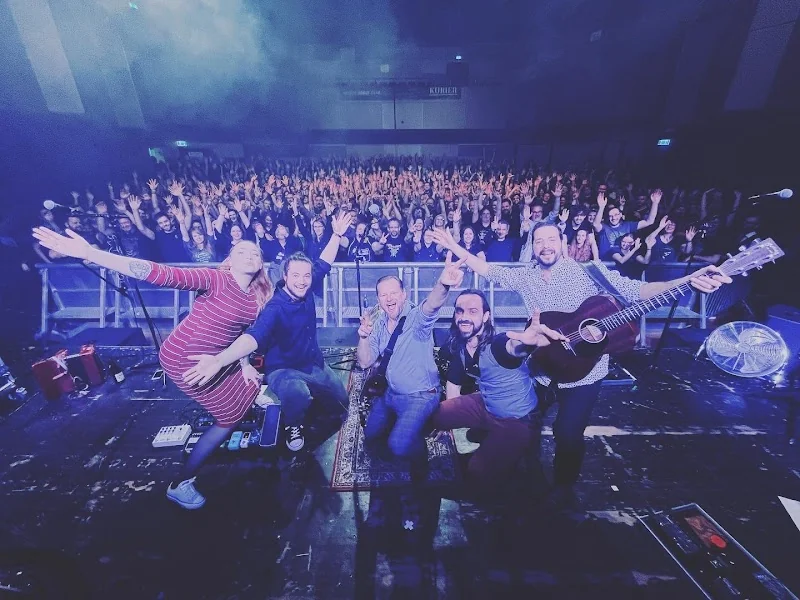
Today, the center is not only a venue but also an organizational home for several actors, including the event office of the house, the German-French forum for young art, the festival of young artists, and a number of house groups. This shapes the atmosphere on site: It is a house where events do not just take place but arise from active cultural work. The barrier-free indications and the imagery on the room pages also fit this. The Europasaal is described as wheelchair accessible, and the rooms have restrooms or good usability for different formats. The pages for the Europasaal and the small arts stage also feature their own impression galleries, i.e., photos and images that provide a realistic impression of atmosphere, stage, and spatial effect. For people searching for the center bayreuth photos, images, or accessibility, this is particularly helpful, as they receive not only facts but also a visual orientation before booking or attending an event. Thus, THE CENTER connects history, accessibility, and the present to a cultural place with a very clear identity. ([das-zentrum.de](https://www.das-zentrum.de/geschichte.html))
Sources:
Show moreShow less
THE CENTER Bayreuth | Tickets & Program
THE CENTER in Bayreuth is much more than just a venue for individual evenings: It is the International Youth Cultural Center Bayreuth e.V. at Äußere Badstraße 7a, a house with a long history, clear cultural orientation, and a program that ranges from concerts to readings to workshops. The roots of the house go back to the International Youth Festival Meeting, which was founded in 1950; in 1974, the founding meeting of the non-profit association followed, in 1978 the laying of the foundation stone, and in 1982 the inauguration. After a major renovation and expansion from 2012 to 2013, the center today presents itself as a lively meeting point for culture, exchange, and events of various sizes. The house houses, among other things, the event office, the German-French forum for young art, the festival of young artists, and various house groups. Therefore, anyone looking for photos, images, programs, or tickets does not randomly end up here, but at a place that bundles cultural diversity throughout the year and opens its spaces for audiences and projects alike. ([das-zentrum.de](https://www.das-zentrum.de/geschichte.html))
Program, Tickets, and Current Events
The search queries related to THE CENTER Bayreuth revolve heavily around the current program, individual dates, and ticket purchases. This is logical, as the website shows a continuous event overview and organizes the offerings into clear categories such as comedy, family, readings, music, others, theater, and workshops. This allows one to quickly see whether they are looking for an evening of cabaret, a concert, a reading, or a family format. The homepage also displays specific dates in the monthly calendar; for example, in April 2026, entries such as Bayreuth Intensive Symposium 8.0, Save Your Tears - Vol. 6, Nick Young & Band - The Great AC/DC Master Show, and Mamaladnamala - Pyjama Party reloaded were visible. This shows that the house is not just a static event page, but a real calendar operation with continuously updated evenings and formats. For many visitors, this is the most important entry point: first the overview, then the decision for the suitable date. ([das-zentrum.de](https://www.das-zentrum.de/))
Also, regarding tickets, the structure is very clear. The house's ticket shop sells selected events online, also for self-printing, and additionally refers to the Bayreuth theater box office and other advance sales points. For all other dates, the website directly leads to the respective event pages. This is particularly helpful for search queries like the center bayreuth tickets, program, or events, as interested parties do not have to click through unnecessary subpages. Those who want to know quickly what is happening find the answer in the calendar; those who want to buy can access the ticket shop or the indicated advance sales methods. Especially in a house with many genres, this combination of program overview and ticket offerings is crucial, as it caters to both spontaneous visitors and planning guests. THE CENTER positions itself not just as a pure landlord, but as a culturally accessible house with its own event logic and a clear, easily understandable path from announcement to ticket. ([das-zentrum.de](https://www.das-zentrum.de/Ticket-Shop.html))
Directions and Parking at THE CENTER Bayreuth
A large part of the search queries concerns directions and parking, and here too, THE CENTER provides very concrete information. The official directions page lists several bus connections and stops: for example, Oberfrankenhalle/Sportzentrum, Wieland-Wagner-Straße, and Friedrich-Ebert-Straße/Königsallee. This makes the house easily accessible for visitors from various directions without having to fight through complicated city routes first. This is important for practical planning, as many guests attend events in the evening and need quick orientation on whether to come by public transport or by car. The address itself is also clearly stated: Äußere Badstraße 7a in 95448 Bayreuth. This is a great advantage for navigation devices, route planning, and orientation on site, especially when several venues in the city are available. ([das-zentrum.de](https://www.das-zentrum.de/anfahrt.html))
Those arriving by car also learn openly on the website what is possible on site: Limited parking spaces are available at the house, and two disabled parking spaces are reserved directly in front of the building. This is honest and helpful, as it prevents false expectations of a large parking area right at the entrance. At the same time, THE CENTER mentions a very practical alternative: From the parking garage Oberfrankenhalle/Sportpark in Albrecht-Dürer-Straße, it is only about three minutes on foot to the house. The municipal and venue-specific information complement each other sensibly, as the page for the Europasaal additionally points out that parking spaces are available directly at the venue. For search queries like parking, directions, or parking space, this is exactly the kind of detail that counts: short distances, understandable indications, and clear orientation between house parking and nearby parking garage. ([das-zentrum.de](https://www.das-zentrum.de/anfahrt.html))
Europasaal: Room Plan, Seats, and Technology
The Europasaal is the heart of the house and for many the most important reason to search for THE CENTER Bayreuth. With nearly 300 square meters of usable space, a maximum seating capacity of 374 seats plus 84 seats in the gallery, and up to 650 standing places, the hall is flexible enough for very different formats. This range makes it attractive for concerts, theater, readings, panel discussions, and dance performances. So, anyone looking for room plans, best seats, or capacity finds a reliable answer here: The space is large enough for a real audience experience but remains manageable and well-planned. Therefore, the website describes the hall not only as a space but as the heart of the house, which can be used with individual seating and lighting as needed. This is particularly interesting for organizers who want to choose from a classic row seating, a casual standing concept, or a mixed form. ([das-zentrum.de](https://www.das-zentrum.de/europasaal.html))
Technically, the Europasaal is clearly designed for professional use. Mentioned are a stage of about 71 square meters with a continuously movable proscenium and orchestra pit, modern stage machinery, a darkening window front, an RGB-controllable light ceiling, an induction loop for hearing-impaired individuals, screen, projector, grand piano, as well as light and sound technology. This equipment explains why the house is used not only for music but also for word and stage formats. Especially for search terms like room plan, best seats, or event hall, it is important to know that here is not just a number, but a fully equipped room with flexible infrastructure. Additionally, the municipal event overview lists the Europasaal as physically barrier-free, and the venue page also lists the room as wheelchair accessible with available restrooms and parking spaces directly at the venue. For audiences, artists, and organizers, this creates a very solid overall picture of size, technology, and accessibility. ([das-zentrum.de](https://www.das-zentrum.de/europasaal.html))
Small Arts Stage and Workshop Rooms for Flexible Formats
Those looking for the small arts stage of THE CENTER Bayreuth usually have a different need than with the Europasaal: more closeness, less distance, and a flexible, often more intimate atmosphere. This is exactly what this space is designed for. The small arts stage is about 100 square meters in size, can be used with 99 seats or unseated, and has a separate entrance, bar, and restroom area. This makes it independently usable, i.e., independent of the main house, which is very practical for small concerts, readings, theater formats, seminars, or parties. The basic technical equipment includes a mobile stage of 20 square meters, screen, projector, as well as light and sound technology. Thus, the room is significantly smaller than the Europasaal, but it is precisely in this compactness that its strength lies. Those looking for photos, images, or impressions of the room will find exactly this compact, immediate stage atmosphere presented on the website. For many event formats, this is the right stage: close to the audience, quickly adaptable, and with its own character. ([das-zentrum.de](https://www.das-zentrum.de/kleinkunstbuehne.html))
Equally important for the profile of the house are the workshop rooms. The rental page lists four rooms of about 45 square meters each, another room of about 56 square meters, and a dance room of 60 square meters with dance floor and mirror wall. These rooms are versatile, equipped with acoustic ceilings, pianos, flipcharts, and projectors, and can be individually furnished or tabled. Additionally, according to the rental overview, there is a very open project logic: THE CENTER offers space for projects of all kinds and sizes and explicitly sees itself as a professional partner in planning and execution. For search queries like workshop rooms, rental, or small arts stage, this combination of flexibility and basic technical equipment is interesting. It shows that the house is not just a classic concert venue but a multifunctional cultural center where rehearsals, seminars, dance, small presentations, and creative formats can all find their place. ([das-zentrum.de](https://www.das-zentrum.de/vermietung.html))
History, Renovation, Accessibility, and Impressions
The history of the house explains much of its current aura. According to the official chronicle, the development dates back to 1950 when Herbert Barth founded the International Youth Festival Meeting, which is now known as the Festival of Young Artists Bayreuth. In the mid-1960s, the idea arose to establish a suitable cultural center alongside this festival. In 1974, the founding meeting of the non-profit association International Youth Cultural Center Bayreuth took place, in 1978 the foundation stone of the cultural center designed by architect Helmut Jahn was laid, in 1981 the first artist workshop took place, and in 1982 the house was finally inaugurated. In 1989, the German-French forum for young art was integrated, and between May 2012 and May 2013, a fundamental renovation and expansion followed. This chronology makes it clear that the building did not arise from nothing but emerged from a long cultural and artistic process. ([das-zentrum.de](https://www.das-zentrum.de/geschichte.html))
Today, the center is not only a venue but also an organizational home for several actors, including the event office of the house, the German-French forum for young art, the festival of young artists, and a number of house groups. This shapes the atmosphere on site: It is a house where events do not just take place but arise from active cultural work. The barrier-free indications and the imagery on the room pages also fit this. The Europasaal is described as wheelchair accessible, and the rooms have restrooms or good usability for different formats. The pages for the Europasaal and the small arts stage also feature their own impression galleries, i.e., photos and images that provide a realistic impression of atmosphere, stage, and spatial effect. For people searching for the center bayreuth photos, images, or accessibility, this is particularly helpful, as they receive not only facts but also a visual orientation before booking or attending an event. Thus, THE CENTER connects history, accessibility, and the present to a cultural place with a very clear identity. ([das-zentrum.de](https://www.das-zentrum.de/geschichte.html))
Sources:
THE CENTER Bayreuth | Tickets & Program
THE CENTER in Bayreuth is much more than just a venue for individual evenings: It is the International Youth Cultural Center Bayreuth e.V. at Äußere Badstraße 7a, a house with a long history, clear cultural orientation, and a program that ranges from concerts to readings to workshops. The roots of the house go back to the International Youth Festival Meeting, which was founded in 1950; in 1974, the founding meeting of the non-profit association followed, in 1978 the laying of the foundation stone, and in 1982 the inauguration. After a major renovation and expansion from 2012 to 2013, the center today presents itself as a lively meeting point for culture, exchange, and events of various sizes. The house houses, among other things, the event office, the German-French forum for young art, the festival of young artists, and various house groups. Therefore, anyone looking for photos, images, programs, or tickets does not randomly end up here, but at a place that bundles cultural diversity throughout the year and opens its spaces for audiences and projects alike. ([das-zentrum.de](https://www.das-zentrum.de/geschichte.html))
Program, Tickets, and Current Events
The search queries related to THE CENTER Bayreuth revolve heavily around the current program, individual dates, and ticket purchases. This is logical, as the website shows a continuous event overview and organizes the offerings into clear categories such as comedy, family, readings, music, others, theater, and workshops. This allows one to quickly see whether they are looking for an evening of cabaret, a concert, a reading, or a family format. The homepage also displays specific dates in the monthly calendar; for example, in April 2026, entries such as Bayreuth Intensive Symposium 8.0, Save Your Tears - Vol. 6, Nick Young & Band - The Great AC/DC Master Show, and Mamaladnamala - Pyjama Party reloaded were visible. This shows that the house is not just a static event page, but a real calendar operation with continuously updated evenings and formats. For many visitors, this is the most important entry point: first the overview, then the decision for the suitable date. ([das-zentrum.de](https://www.das-zentrum.de/))
Also, regarding tickets, the structure is very clear. The house's ticket shop sells selected events online, also for self-printing, and additionally refers to the Bayreuth theater box office and other advance sales points. For all other dates, the website directly leads to the respective event pages. This is particularly helpful for search queries like the center bayreuth tickets, program, or events, as interested parties do not have to click through unnecessary subpages. Those who want to know quickly what is happening find the answer in the calendar; those who want to buy can access the ticket shop or the indicated advance sales methods. Especially in a house with many genres, this combination of program overview and ticket offerings is crucial, as it caters to both spontaneous visitors and planning guests. THE CENTER positions itself not just as a pure landlord, but as a culturally accessible house with its own event logic and a clear, easily understandable path from announcement to ticket. ([das-zentrum.de](https://www.das-zentrum.de/Ticket-Shop.html))
Directions and Parking at THE CENTER Bayreuth
A large part of the search queries concerns directions and parking, and here too, THE CENTER provides very concrete information. The official directions page lists several bus connections and stops: for example, Oberfrankenhalle/Sportzentrum, Wieland-Wagner-Straße, and Friedrich-Ebert-Straße/Königsallee. This makes the house easily accessible for visitors from various directions without having to fight through complicated city routes first. This is important for practical planning, as many guests attend events in the evening and need quick orientation on whether to come by public transport or by car. The address itself is also clearly stated: Äußere Badstraße 7a in 95448 Bayreuth. This is a great advantage for navigation devices, route planning, and orientation on site, especially when several venues in the city are available. ([das-zentrum.de](https://www.das-zentrum.de/anfahrt.html))
Those arriving by car also learn openly on the website what is possible on site: Limited parking spaces are available at the house, and two disabled parking spaces are reserved directly in front of the building. This is honest and helpful, as it prevents false expectations of a large parking area right at the entrance. At the same time, THE CENTER mentions a very practical alternative: From the parking garage Oberfrankenhalle/Sportpark in Albrecht-Dürer-Straße, it is only about three minutes on foot to the house. The municipal and venue-specific information complement each other sensibly, as the page for the Europasaal additionally points out that parking spaces are available directly at the venue. For search queries like parking, directions, or parking space, this is exactly the kind of detail that counts: short distances, understandable indications, and clear orientation between house parking and nearby parking garage. ([das-zentrum.de](https://www.das-zentrum.de/anfahrt.html))
Europasaal: Room Plan, Seats, and Technology
The Europasaal is the heart of the house and for many the most important reason to search for THE CENTER Bayreuth. With nearly 300 square meters of usable space, a maximum seating capacity of 374 seats plus 84 seats in the gallery, and up to 650 standing places, the hall is flexible enough for very different formats. This range makes it attractive for concerts, theater, readings, panel discussions, and dance performances. So, anyone looking for room plans, best seats, or capacity finds a reliable answer here: The space is large enough for a real audience experience but remains manageable and well-planned. Therefore, the website describes the hall not only as a space but as the heart of the house, which can be used with individual seating and lighting as needed. This is particularly interesting for organizers who want to choose from a classic row seating, a casual standing concept, or a mixed form. ([das-zentrum.de](https://www.das-zentrum.de/europasaal.html))
Technically, the Europasaal is clearly designed for professional use. Mentioned are a stage of about 71 square meters with a continuously movable proscenium and orchestra pit, modern stage machinery, a darkening window front, an RGB-controllable light ceiling, an induction loop for hearing-impaired individuals, screen, projector, grand piano, as well as light and sound technology. This equipment explains why the house is used not only for music but also for word and stage formats. Especially for search terms like room plan, best seats, or event hall, it is important to know that here is not just a number, but a fully equipped room with flexible infrastructure. Additionally, the municipal event overview lists the Europasaal as physically barrier-free, and the venue page also lists the room as wheelchair accessible with available restrooms and parking spaces directly at the venue. For audiences, artists, and organizers, this creates a very solid overall picture of size, technology, and accessibility. ([das-zentrum.de](https://www.das-zentrum.de/europasaal.html))
Small Arts Stage and Workshop Rooms for Flexible Formats
Those looking for the small arts stage of THE CENTER Bayreuth usually have a different need than with the Europasaal: more closeness, less distance, and a flexible, often more intimate atmosphere. This is exactly what this space is designed for. The small arts stage is about 100 square meters in size, can be used with 99 seats or unseated, and has a separate entrance, bar, and restroom area. This makes it independently usable, i.e., independent of the main house, which is very practical for small concerts, readings, theater formats, seminars, or parties. The basic technical equipment includes a mobile stage of 20 square meters, screen, projector, as well as light and sound technology. Thus, the room is significantly smaller than the Europasaal, but it is precisely in this compactness that its strength lies. Those looking for photos, images, or impressions of the room will find exactly this compact, immediate stage atmosphere presented on the website. For many event formats, this is the right stage: close to the audience, quickly adaptable, and with its own character. ([das-zentrum.de](https://www.das-zentrum.de/kleinkunstbuehne.html))
Equally important for the profile of the house are the workshop rooms. The rental page lists four rooms of about 45 square meters each, another room of about 56 square meters, and a dance room of 60 square meters with dance floor and mirror wall. These rooms are versatile, equipped with acoustic ceilings, pianos, flipcharts, and projectors, and can be individually furnished or tabled. Additionally, according to the rental overview, there is a very open project logic: THE CENTER offers space for projects of all kinds and sizes and explicitly sees itself as a professional partner in planning and execution. For search queries like workshop rooms, rental, or small arts stage, this combination of flexibility and basic technical equipment is interesting. It shows that the house is not just a classic concert venue but a multifunctional cultural center where rehearsals, seminars, dance, small presentations, and creative formats can all find their place. ([das-zentrum.de](https://www.das-zentrum.de/vermietung.html))
History, Renovation, Accessibility, and Impressions
The history of the house explains much of its current aura. According to the official chronicle, the development dates back to 1950 when Herbert Barth founded the International Youth Festival Meeting, which is now known as the Festival of Young Artists Bayreuth. In the mid-1960s, the idea arose to establish a suitable cultural center alongside this festival. In 1974, the founding meeting of the non-profit association International Youth Cultural Center Bayreuth took place, in 1978 the foundation stone of the cultural center designed by architect Helmut Jahn was laid, in 1981 the first artist workshop took place, and in 1982 the house was finally inaugurated. In 1989, the German-French forum for young art was integrated, and between May 2012 and May 2013, a fundamental renovation and expansion followed. This chronology makes it clear that the building did not arise from nothing but emerged from a long cultural and artistic process. ([das-zentrum.de](https://www.das-zentrum.de/geschichte.html))
Today, the center is not only a venue but also an organizational home for several actors, including the event office of the house, the German-French forum for young art, the festival of young artists, and a number of house groups. This shapes the atmosphere on site: It is a house where events do not just take place but arise from active cultural work. The barrier-free indications and the imagery on the room pages also fit this. The Europasaal is described as wheelchair accessible, and the rooms have restrooms or good usability for different formats. The pages for the Europasaal and the small arts stage also feature their own impression galleries, i.e., photos and images that provide a realistic impression of atmosphere, stage, and spatial effect. For people searching for the center bayreuth photos, images, or accessibility, this is particularly helpful, as they receive not only facts but also a visual orientation before booking or attending an event. Thus, THE CENTER connects history, accessibility, and the present to a cultural place with a very clear identity. ([das-zentrum.de](https://www.das-zentrum.de/geschichte.html))
Sources:

Frequently Asked Questions
Reviews
Benjamin Pandjaitan
9. March 2024
Nice place, really, ngl.
David Seezen
14. March 2024
What cool venue!
Yara Mekawei
23. September 2017
I played in that one of my performances :)
Golandsky Event- und Lagerverkauf
19. June 2024
Top
Tanja Ahrens-Lenk
18. September 2022
Great location!