
Würzburg
Am Schwarzenberg 15, 97078 Würzburg-Lengfeld, Deutschland
German Center for Heart Failure | Outpatient Clinic & Research
The German Center for Heart Failure, abbreviated as DZHI, is a joint institution of the Julius Maximilian University of Würzburg and the University Hospital Würzburg. The location at Schwarzenberg 15, Building A15, combines medical research, clinical care, and scientific innovation in one place. For people with heart failure and for patients with specific cardiological issues, the center offers specialized outpatient structures and collaboration with numerous departments of the University Hospital.
The DZHI is not a classic event location but a medical research and treatment center on the campus of the University Hospital. The inquiries for photos, reviews, opening hours, directions, and contact show that many visitors seek practical orientation before an appointment. This overview consolidates the most important information regarding the location, the heart failure outpatient clinic, research focuses, specialized consultations, opening hours, and parking options. Medical decisions should always be made in consultation with the treating physicians.
German Center for Heart Failure Würzburg: Purpose and Significance
The German Center for Heart Failure in Würzburg was founded in November 2010 and is specialized in heart failure as an integrated research and treatment center. Heart failure is often referred to as heart weakness in everyday language. It can have various causes and develop in different forms. Therefore, individually tailored diagnostics are important. The DZHI pursues the approach of closely linking basic research, clinical research, and patient care.
The institution was established as a joint structure of the University of Würzburg and the University Hospital Würzburg. Its goal is to better understand the onset and progression of heart failure, investigate risk factors, and develop new strategies for prevention, diagnostics, and therapy. It is not only about the heart as a single organ. Heart weakness can be associated with changes in other organ systems. For this reason, various medical and scientific disciplines collaborate at the DZHI or in the surrounding area of the center.
The interdisciplinary orientation is a central advantage of the location. Involved are, among others, cardiology, nephrology, pulmonology, endocrinology, intensive care medicine, neurology, psychiatry, cardiac surgery, radiology, neuroradiology, and nuclear medicine. This collaboration allows for complex clinical pictures to be viewed from multiple perspectives. Especially for patients with multiple health issues, a coordinated assessment can be helpful.
The address at Schwarzenberg 15 belongs to the campus of the University Hospital Würzburg. The DZHI is located in Building A15 and is thus integrated into the clinical infrastructure of the UKW. The facility is aimed at people with heart failure, individuals with specific cardiological diseases, as well as scientifically interested parties and medical professionals. For patients, the heart failure outpatient clinic is the central point of contact.
Heart Failure Outpatient Clinic and Specialized Consultations at UKW
The heart failure outpatient clinic of the German Center for Heart Failure is open to people with heart weakness and also to patients with other cardiological problems. The outpatient care is designed to consider complaints, findings, pre-existing conditions, and previous therapies in a comprehensive picture. What examinations and treatment steps are necessary always depends on the individual situation.
According to the University Hospital Würzburg, the center, together with colleagues from cardiology, offers numerous specialized consultations. These include services for patients with hereditary heart diseases and so-called cardiomyopathies. Additionally, people with amyloidosis or Fabry disease are treated. These diseases can present special diagnostic and therapeutic requirements. The specialization helps to bring together appropriate expertise and examination options.
An outpatient presentation can be useful if a known heart failure needs to be regularly monitored, if new complaints have arisen, or if a complex cardiological issue requires further assessment. The specific appointment scheduling, necessary documents, and possible referral requirements should be clarified directly with the outpatient clinic. In cases of acute or life-threatening complaints, the regular outpatient clinic is not the right point of contact, but rather the medical emergency call or the responsible emergency department.
The spectrum of a specialized center also includes the support of clinical studies and structured care projects. Information materials from the DZHI show that studies can include regular examination appointments, training for self-observation, and telephone contacts with specially trained heart failure nurses. Whether participation is possible depends on the respective inclusion criteria and the individual medical history. Participation in a study is voluntary and will be explained in detail beforehand.
The outpatient clinic thus combines medical care with the knowledge of a university center of excellence. Patients do not receive a one-size-fits-all solution but an assessment tailored to findings and personal situations. This connection of specialized diagnostics, interdisciplinary coordination, and long-term care makes the DZHI relevant for many seeking heart failure treatment in Würzburg.
Heart Failure Research in Würzburg and Modern Facilities
The German Center for Heart Failure is not only an outpatient clinic but also a major research site. In the modern new building on the premises of the University Hospital Würzburg, approximately 5,500 square meters are available for high-level scientific work, according to UKW. The research of the four departments is bundled into seven so-called core facilities. This structure supports the shared use of modern methods, equipment, and scientific infrastructure.
The research at the DZHI deals with fundamental mechanisms of heart failure as well as questions of care and individual therapy. This includes investigations into heart function, metabolic processes, genetic influences, imaging techniques, and the development of new treatment concepts. Another focus is on how heart weakness can be detected early, its progression slowed, and complications avoided.
The location is divided into four scientific departments. The areas mentioned in connection with the center include translational research, clinical research and epidemiology, cardiovascular imaging, and cardiovascular genetics. Translational research describes the transfer of scientific findings into medical application. Clinical research examines diagnostic and therapeutic procedures under conditions of patient care. Epidemiological projects consider diseases in larger groups and over longer periods. Imaging and genetics complement these perspectives with modern methods for assessing the heart and vessels and investigating hereditary factors.
An example of practical research relevance is studies on telemedicine and remote care for people with heart failure. The DZHI participates in scientific projects that investigate how patients can be monitored and supported outside the clinic. Technical procedures, such as measuring pressure values in connection with certain study systems, have also been described in the center's information materials. Such procedures are not automatically used for all patients but only within the framework of appropriate medical decisions or studies.
The research site benefits from its proximity to the clinical areas of the University Hospital. Results can thus be linked to care more quickly, while experiences from practice can stimulate new research questions. For visitors, the building is therefore more than just an address: it represents the connection of treatment, teaching, data analysis, technology, and scientific collaboration.
Building A15, Site Plan and Directions to DZHI Würzburg
The official address is German Center for Heart Failure Würzburg, University Hospital Würzburg, Am Schwarzenberg 15, Building A15, 97078 Würzburg, Germany. The location is situated on the campus of the University Hospital in the northern area of Würzburg. When orienting oneself on the hospital grounds, the designation Building A15 is particularly important, as the campus consists of several areas and buildings.
Those arriving by public transport can orient themselves at the Robert-Koch-Straße stop. The University Hospital refers to this stop for areas B and C of the hospital. Depending on the route taken, a walk across the campus may be necessary. The signage on-site and the current site plan of the University Hospital help in finding Building A15. Since pathways, construction sites, or stop information can change, the current directions page of the UKW should be checked before a planned visit.
For drivers, the address leads to the campus area Am Schwarzenberg. The traffic situation can vary at different times of the day, especially in the morning and in heavily utilized hospital areas. Those with an examination appointment should allow sufficient time for travel, parking search, and walking to Building A15. Patients with limited mobility should inquire about current access options and support services when scheduling their appointments.
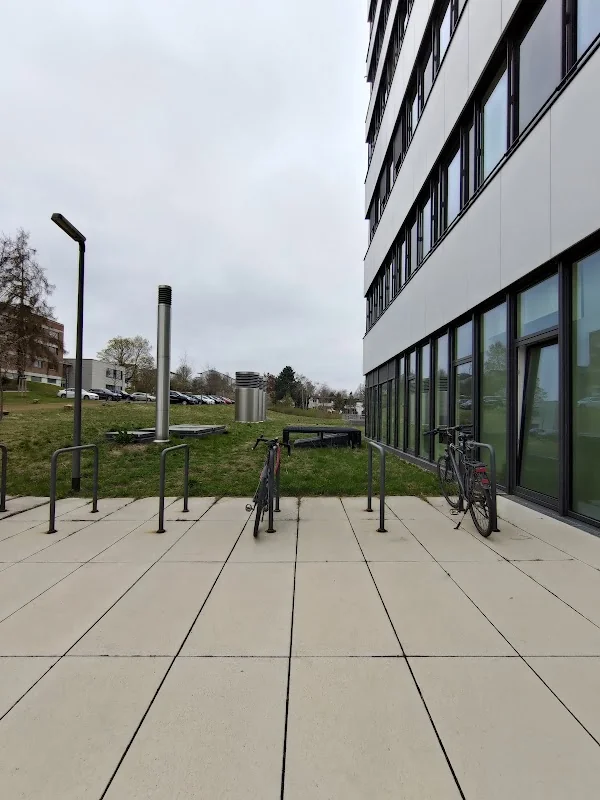
When searching for German Center for Heart Failure photos, it should be noted that images of the building can facilitate orientation but do not depict every current condition of the hospital campus. A photo may have been taken before a redesign or with different signage. For reliable orientation, the official address, building number A15, and the current site plan are more important than individual online photos.
Also, the spellings Am Schwarzenberg 15, Building A15, and University Hospital Würzburg may be represented differently in mapping services. Therefore, it is advisable to additionally use the designation German Center for Heart Failure or DZHI for navigation and to pay attention to the house number A15 upon arrival.
Parking at the German Center for Heart Failure
For patients, parking options are available in front of Building A15, according to information from the University Hospital Würzburg. Thus, parking at the German Center for Heart Failure is generally possible directly at or near the building. However, the actual availability may depend on the time of day, the occupancy of the hospital, construction work, or temporary closures.
Those arriving by car for an appointment should not arrive just before the scheduled appointment. A time buffer is particularly important if the person requires assistance getting out of the car or if an accompanying person needs to find a suitable stopping area first. The applicable information regarding access, parking authorization, and fees should be observed on-site. For binding information, it is advisable to inquire directly with the University Hospital or the treating outpatient clinic.
The hospital campus is not a freely accessible event parking lot but a medical site with ongoing patient operations. Parking spaces may be designated for specific user groups or subject to time restrictions. For this reason, visitors should only use designated parking spaces and not stop in emergency routes, access roads, or marked operational areas. In special cases, such as a disability parking permit or transport with medical assistance, the situation should be clarified with the hospital in advance.
For travel by public transport, the Robert-Koch-Straße stop can be an alternative to searching for parking. The appropriate connection depends on the starting point in Würzburg and the current timetable information. Those traveling from outside Würzburg can first head to the main train station and then use public transport to the University Hospital. The last meters on the extensive campus should be taken into account when planning time.
The most important parking information can thus be summarized briefly: The DZHI is located in Building A15, parking options for patients are available in front of Building A15, and the current traffic situation on the UKW campus should be considered before arrival. For a stress-free arrival, appointment confirmation, address, and site plan should be readily available.
Opening Hours, Contact, and Preparation for the Appointment
The heart failure outpatient clinic of the German Center for Heart Failure is open Monday to Thursday from 08:00 to 16:30 and Friday from 08:00 to 15:00. These times describe the regular opening hours of the outpatient clinic. A specific examination appointment can fall within these times but must be arranged in advance. Different organizational accessibility may apply to the administrative office.
The phone number for the heart failure outpatient clinic is +49 931 201-46301. The administrative office can be reached at +49 931 201-46333. The email address provided by the University Hospital is dzhi@ukw.de. When contacting, the concern should be described as accurately as possible. Helpful information includes the name of the patient, date of birth, any existing referral, the responsible general or specialist practice, and whether it concerns an appointment, a study, a report transmission, or general organizational information.
For an outpatient appointment, relevant medical letters, current medication plans, examination results, and information on pre-existing conditions may be important. What documents are actually required depends on the question at hand and should be inquired about when scheduling the appointment. Patients should not independently discontinue or change medications just because an appointment at the DZHI is upcoming. Changes should be managed by the treating physicians.
People with known heart failure often benefit from noting complaints and changes before the appointment. This can include endurance, shortness of breath, weight changes, water retention, and questions about medication intake. These notes do not replace a medical examination but can help structure the conversation. In cases of sudden severe shortness of breath, chest pain, fainting, or other acute warning signs, medical help should be organized immediately.
The DZHI specializes in the care of complex cardiological clinical pictures. However, not every inquiry is automatically a case for the heart failure outpatient clinic. A brief phone call can help find the right consultation or the appropriate area within the University Hospital. This can help avoid unnecessary trips and prepare important documents in a timely manner.
Reviews, Photos, and Personal Impressions on Site
The search query German Center for Heart Failure reviews often targets people who want to learn about the experiences of others before a first visit. Online reviews can provide hints about accessibility, orientation on campus, or the organizational process. However, they do not replace official information and should be interpreted cautiously. Individual reviews may refer to the entire University Hospital, other buildings, or a specific appointment and not exclusively to the DZHI.
The indicated rating of 4.6 from 36 reviews is a snapshot of the submitted location profile. Ratings can change, new entries can be added, and platforms may use different criteria. For medical quality, diagnoses, or treatment outcomes, general online reviews are only limitedly informative. More important are the professional classification, personal consultation, and comprehensible information from the treating team.
There is also frequent searching for German Center for Heart Failure photos. Images can show the modern new building, the entrance area, or the location at the University Hospital. However, the actual uniqueness of the location lies less in a representative exterior view than in its function. The DZHI combines clinical research, outpatient treatment, specialized consultations, and scientific infrastructure. Therefore, visitors should not expect a classic event location or publicly accessible exhibition.
During a first visit, medical discussions, examinations, and organizational processes are usually the focus. This can be unfamiliar for patients. An accompanying person can be helpful when many pieces of information are discussed or if the journey is exhausting. At the same time, data protection and the personal decision of the patient should be considered.
Those who want to get an impression in advance should prefer the official pages of the University Hospital, the site plan, and the current contact information. There, more reliable information about address, opening hours, outpatient clinic, directions, and parking can be found than in isolated photo or review posts. The DZHI in Würzburg is primarily a place of specialized heart medicine and research. Its value is therefore reflected in medical collaboration and not solely in the external appearance of the building.
Why the DZHI is Special for Heart Medicine in Würzburg
The German Center for Heart Failure connects several levels that are often organized separately at many locations. Patients encounter a specialized outpatient clinic while researchers work in parallel on the causes, progression, diagnostics, and therapy of heart weakness. The shared address facilitates collaboration between clinical and scientific teams. This creates an environment where questions from care can flow into research projects and new scientific findings can be re-evaluated for their significance in practice.
Also special is the breadth of the involved disciplines. Heart failure does not always only affect the heart. Comorbidities and subsequent problems can affect, among others, the kidneys, lungs, metabolism, nervous system, or mental health. An institution connected with various areas of the University Hospital can better consider such interconnections. This does not mean that every treatment automatically takes place simultaneously across all disciplines. Rather, it means that specialized expertise is available when needed.
The research of the DZHI includes basic research, clinical studies, health services research, imaging, and genetic questions. Additionally, projects on telemedicine and long-term care are included. These topics are significant for the future of heart medicine because heart failure often requires continuous monitoring and adjustment of treatment. Digital procedures can be a complement but do not fundamentally replace personal medical care.
For the city of Würzburg and the region, the center is an important part of the University Hospital. It attracts not only patients but also researchers, students, and medical professionals. Scientific events, study contacts, and collaborations make the location visible beyond the mere outpatient clinic. The information available online about research, studies, and events shows that the DZHI is both medically and scientifically networked.
Those searching for the University Hospital Würzburg German Center for Heart Failure will find an institution that consistently brings treatment and research together. The address Building A15, the heart failure outpatient clinic, the specialized consultations, and the research areas together form a clear profile. However, for specific care, individual appointment arrangements and personal medical advice are always crucial.
Sources:
- University Hospital Würzburg – German Center for Heart Failure
- University Hospital Würzburg – DZHI Directions, Opening Hours, and Contact
- University Hospital Würzburg – DZHI Outpatient Treatment
- Federal Ministry of Education and Research – Integrated Research and Treatment Center
- University of Würzburg – Research Report with Information on DZHI
- University of Würzburg – Location Information Building A15
Mehr anzeigenWeniger anzeigen
German Center for Heart Failure | Outpatient Clinic & Research
The German Center for Heart Failure, abbreviated as DZHI, is a joint institution of the Julius Maximilian University of Würzburg and the University Hospital Würzburg. The location at Schwarzenberg 15, Building A15, combines medical research, clinical care, and scientific innovation in one place. For people with heart failure and for patients with specific cardiological issues, the center offers specialized outpatient structures and collaboration with numerous departments of the University Hospital.
The DZHI is not a classic event location but a medical research and treatment center on the campus of the University Hospital. The inquiries for photos, reviews, opening hours, directions, and contact show that many visitors seek practical orientation before an appointment. This overview consolidates the most important information regarding the location, the heart failure outpatient clinic, research focuses, specialized consultations, opening hours, and parking options. Medical decisions should always be made in consultation with the treating physicians.
German Center for Heart Failure Würzburg: Purpose and Significance
The German Center for Heart Failure in Würzburg was founded in November 2010 and is specialized in heart failure as an integrated research and treatment center. Heart failure is often referred to as heart weakness in everyday language. It can have various causes and develop in different forms. Therefore, individually tailored diagnostics are important. The DZHI pursues the approach of closely linking basic research, clinical research, and patient care.
The institution was established as a joint structure of the University of Würzburg and the University Hospital Würzburg. Its goal is to better understand the onset and progression of heart failure, investigate risk factors, and develop new strategies for prevention, diagnostics, and therapy. It is not only about the heart as a single organ. Heart weakness can be associated with changes in other organ systems. For this reason, various medical and scientific disciplines collaborate at the DZHI or in the surrounding area of the center.
The interdisciplinary orientation is a central advantage of the location. Involved are, among others, cardiology, nephrology, pulmonology, endocrinology, intensive care medicine, neurology, psychiatry, cardiac surgery, radiology, neuroradiology, and nuclear medicine. This collaboration allows for complex clinical pictures to be viewed from multiple perspectives. Especially for patients with multiple health issues, a coordinated assessment can be helpful.
The address at Schwarzenberg 15 belongs to the campus of the University Hospital Würzburg. The DZHI is located in Building A15 and is thus integrated into the clinical infrastructure of the UKW. The facility is aimed at people with heart failure, individuals with specific cardiological diseases, as well as scientifically interested parties and medical professionals. For patients, the heart failure outpatient clinic is the central point of contact.
Heart Failure Outpatient Clinic and Specialized Consultations at UKW
The heart failure outpatient clinic of the German Center for Heart Failure is open to people with heart weakness and also to patients with other cardiological problems. The outpatient care is designed to consider complaints, findings, pre-existing conditions, and previous therapies in a comprehensive picture. What examinations and treatment steps are necessary always depends on the individual situation.
According to the University Hospital Würzburg, the center, together with colleagues from cardiology, offers numerous specialized consultations. These include services for patients with hereditary heart diseases and so-called cardiomyopathies. Additionally, people with amyloidosis or Fabry disease are treated. These diseases can present special diagnostic and therapeutic requirements. The specialization helps to bring together appropriate expertise and examination options.
An outpatient presentation can be useful if a known heart failure needs to be regularly monitored, if new complaints have arisen, or if a complex cardiological issue requires further assessment. The specific appointment scheduling, necessary documents, and possible referral requirements should be clarified directly with the outpatient clinic. In cases of acute or life-threatening complaints, the regular outpatient clinic is not the right point of contact, but rather the medical emergency call or the responsible emergency department.
The spectrum of a specialized center also includes the support of clinical studies and structured care projects. Information materials from the DZHI show that studies can include regular examination appointments, training for self-observation, and telephone contacts with specially trained heart failure nurses. Whether participation is possible depends on the respective inclusion criteria and the individual medical history. Participation in a study is voluntary and will be explained in detail beforehand.
The outpatient clinic thus combines medical care with the knowledge of a university center of excellence. Patients do not receive a one-size-fits-all solution but an assessment tailored to findings and personal situations. This connection of specialized diagnostics, interdisciplinary coordination, and long-term care makes the DZHI relevant for many seeking heart failure treatment in Würzburg.
Heart Failure Research in Würzburg and Modern Facilities
The German Center for Heart Failure is not only an outpatient clinic but also a major research site. In the modern new building on the premises of the University Hospital Würzburg, approximately 5,500 square meters are available for high-level scientific work, according to UKW. The research of the four departments is bundled into seven so-called core facilities. This structure supports the shared use of modern methods, equipment, and scientific infrastructure.
The research at the DZHI deals with fundamental mechanisms of heart failure as well as questions of care and individual therapy. This includes investigations into heart function, metabolic processes, genetic influences, imaging techniques, and the development of new treatment concepts. Another focus is on how heart weakness can be detected early, its progression slowed, and complications avoided.
The location is divided into four scientific departments. The areas mentioned in connection with the center include translational research, clinical research and epidemiology, cardiovascular imaging, and cardiovascular genetics. Translational research describes the transfer of scientific findings into medical application. Clinical research examines diagnostic and therapeutic procedures under conditions of patient care. Epidemiological projects consider diseases in larger groups and over longer periods. Imaging and genetics complement these perspectives with modern methods for assessing the heart and vessels and investigating hereditary factors.
An example of practical research relevance is studies on telemedicine and remote care for people with heart failure. The DZHI participates in scientific projects that investigate how patients can be monitored and supported outside the clinic. Technical procedures, such as measuring pressure values in connection with certain study systems, have also been described in the center's information materials. Such procedures are not automatically used for all patients but only within the framework of appropriate medical decisions or studies.
The research site benefits from its proximity to the clinical areas of the University Hospital. Results can thus be linked to care more quickly, while experiences from practice can stimulate new research questions. For visitors, the building is therefore more than just an address: it represents the connection of treatment, teaching, data analysis, technology, and scientific collaboration.
Building A15, Site Plan and Directions to DZHI Würzburg
The official address is German Center for Heart Failure Würzburg, University Hospital Würzburg, Am Schwarzenberg 15, Building A15, 97078 Würzburg, Germany. The location is situated on the campus of the University Hospital in the northern area of Würzburg. When orienting oneself on the hospital grounds, the designation Building A15 is particularly important, as the campus consists of several areas and buildings.
Those arriving by public transport can orient themselves at the Robert-Koch-Straße stop. The University Hospital refers to this stop for areas B and C of the hospital. Depending on the route taken, a walk across the campus may be necessary. The signage on-site and the current site plan of the University Hospital help in finding Building A15. Since pathways, construction sites, or stop information can change, the current directions page of the UKW should be checked before a planned visit.
For drivers, the address leads to the campus area Am Schwarzenberg. The traffic situation can vary at different times of the day, especially in the morning and in heavily utilized hospital areas. Those with an examination appointment should allow sufficient time for travel, parking search, and walking to Building A15. Patients with limited mobility should inquire about current access options and support services when scheduling their appointments.
When searching for German Center for Heart Failure photos, it should be noted that images of the building can facilitate orientation but do not depict every current condition of the hospital campus. A photo may have been taken before a redesign or with different signage. For reliable orientation, the official address, building number A15, and the current site plan are more important than individual online photos.
Also, the spellings Am Schwarzenberg 15, Building A15, and University Hospital Würzburg may be represented differently in mapping services. Therefore, it is advisable to additionally use the designation German Center for Heart Failure or DZHI for navigation and to pay attention to the house number A15 upon arrival.
Parking at the German Center for Heart Failure
For patients, parking options are available in front of Building A15, according to information from the University Hospital Würzburg. Thus, parking at the German Center for Heart Failure is generally possible directly at or near the building. However, the actual availability may depend on the time of day, the occupancy of the hospital, construction work, or temporary closures.
Those arriving by car for an appointment should not arrive just before the scheduled appointment. A time buffer is particularly important if the person requires assistance getting out of the car or if an accompanying person needs to find a suitable stopping area first. The applicable information regarding access, parking authorization, and fees should be observed on-site. For binding information, it is advisable to inquire directly with the University Hospital or the treating outpatient clinic.
The hospital campus is not a freely accessible event parking lot but a medical site with ongoing patient operations. Parking spaces may be designated for specific user groups or subject to time restrictions. For this reason, visitors should only use designated parking spaces and not stop in emergency routes, access roads, or marked operational areas. In special cases, such as a disability parking permit or transport with medical assistance, the situation should be clarified with the hospital in advance.
For travel by public transport, the Robert-Koch-Straße stop can be an alternative to searching for parking. The appropriate connection depends on the starting point in Würzburg and the current timetable information. Those traveling from outside Würzburg can first head to the main train station and then use public transport to the University Hospital. The last meters on the extensive campus should be taken into account when planning time.
The most important parking information can thus be summarized briefly: The DZHI is located in Building A15, parking options for patients are available in front of Building A15, and the current traffic situation on the UKW campus should be considered before arrival. For a stress-free arrival, appointment confirmation, address, and site plan should be readily available.
Opening Hours, Contact, and Preparation for the Appointment
The heart failure outpatient clinic of the German Center for Heart Failure is open Monday to Thursday from 08:00 to 16:30 and Friday from 08:00 to 15:00. These times describe the regular opening hours of the outpatient clinic. A specific examination appointment can fall within these times but must be arranged in advance. Different organizational accessibility may apply to the administrative office.
The phone number for the heart failure outpatient clinic is +49 931 201-46301. The administrative office can be reached at +49 931 201-46333. The email address provided by the University Hospital is dzhi@ukw.de. When contacting, the concern should be described as accurately as possible. Helpful information includes the name of the patient, date of birth, any existing referral, the responsible general or specialist practice, and whether it concerns an appointment, a study, a report transmission, or general organizational information.
For an outpatient appointment, relevant medical letters, current medication plans, examination results, and information on pre-existing conditions may be important. What documents are actually required depends on the question at hand and should be inquired about when scheduling the appointment. Patients should not independently discontinue or change medications just because an appointment at the DZHI is upcoming. Changes should be managed by the treating physicians.
People with known heart failure often benefit from noting complaints and changes before the appointment. This can include endurance, shortness of breath, weight changes, water retention, and questions about medication intake. These notes do not replace a medical examination but can help structure the conversation. In cases of sudden severe shortness of breath, chest pain, fainting, or other acute warning signs, medical help should be organized immediately.
The DZHI specializes in the care of complex cardiological clinical pictures. However, not every inquiry is automatically a case for the heart failure outpatient clinic. A brief phone call can help find the right consultation or the appropriate area within the University Hospital. This can help avoid unnecessary trips and prepare important documents in a timely manner.
Reviews, Photos, and Personal Impressions on Site
The search query German Center for Heart Failure reviews often targets people who want to learn about the experiences of others before a first visit. Online reviews can provide hints about accessibility, orientation on campus, or the organizational process. However, they do not replace official information and should be interpreted cautiously. Individual reviews may refer to the entire University Hospital, other buildings, or a specific appointment and not exclusively to the DZHI.
The indicated rating of 4.6 from 36 reviews is a snapshot of the submitted location profile. Ratings can change, new entries can be added, and platforms may use different criteria. For medical quality, diagnoses, or treatment outcomes, general online reviews are only limitedly informative. More important are the professional classification, personal consultation, and comprehensible information from the treating team.
There is also frequent searching for German Center for Heart Failure photos. Images can show the modern new building, the entrance area, or the location at the University Hospital. However, the actual uniqueness of the location lies less in a representative exterior view than in its function. The DZHI combines clinical research, outpatient treatment, specialized consultations, and scientific infrastructure. Therefore, visitors should not expect a classic event location or publicly accessible exhibition.
During a first visit, medical discussions, examinations, and organizational processes are usually the focus. This can be unfamiliar for patients. An accompanying person can be helpful when many pieces of information are discussed or if the journey is exhausting. At the same time, data protection and the personal decision of the patient should be considered.
Those who want to get an impression in advance should prefer the official pages of the University Hospital, the site plan, and the current contact information. There, more reliable information about address, opening hours, outpatient clinic, directions, and parking can be found than in isolated photo or review posts. The DZHI in Würzburg is primarily a place of specialized heart medicine and research. Its value is therefore reflected in medical collaboration and not solely in the external appearance of the building.
Why the DZHI is Special for Heart Medicine in Würzburg
The German Center for Heart Failure connects several levels that are often organized separately at many locations. Patients encounter a specialized outpatient clinic while researchers work in parallel on the causes, progression, diagnostics, and therapy of heart weakness. The shared address facilitates collaboration between clinical and scientific teams. This creates an environment where questions from care can flow into research projects and new scientific findings can be re-evaluated for their significance in practice.
Also special is the breadth of the involved disciplines. Heart failure does not always only affect the heart. Comorbidities and subsequent problems can affect, among others, the kidneys, lungs, metabolism, nervous system, or mental health. An institution connected with various areas of the University Hospital can better consider such interconnections. This does not mean that every treatment automatically takes place simultaneously across all disciplines. Rather, it means that specialized expertise is available when needed.
The research of the DZHI includes basic research, clinical studies, health services research, imaging, and genetic questions. Additionally, projects on telemedicine and long-term care are included. These topics are significant for the future of heart medicine because heart failure often requires continuous monitoring and adjustment of treatment. Digital procedures can be a complement but do not fundamentally replace personal medical care.
For the city of Würzburg and the region, the center is an important part of the University Hospital. It attracts not only patients but also researchers, students, and medical professionals. Scientific events, study contacts, and collaborations make the location visible beyond the mere outpatient clinic. The information available online about research, studies, and events shows that the DZHI is both medically and scientifically networked.
Those searching for the University Hospital Würzburg German Center for Heart Failure will find an institution that consistently brings treatment and research together. The address Building A15, the heart failure outpatient clinic, the specialized consultations, and the research areas together form a clear profile. However, for specific care, individual appointment arrangements and personal medical advice are always crucial.
Sources:
- University Hospital Würzburg – German Center for Heart Failure
- University Hospital Würzburg – DZHI Directions, Opening Hours, and Contact
- University Hospital Würzburg – DZHI Outpatient Treatment
- Federal Ministry of Education and Research – Integrated Research and Treatment Center
- University of Würzburg – Research Report with Information on DZHI
- University of Würzburg – Location Information Building A15
Frequently Asked Questions
Reviews
Michael Wilczek
1. August 2023
Very, very good !! They found a very rare condition in me that was overlooked by other specialists for almost 20 years and therefore treated incorrectly. It changed my life, and I am very grateful for that. The aftercare is also very good. A big thank you to the entire team who contributed to my recovery.
Andreas Rügamer
1. April 2025
Very competent doctors, nice staff. The care is exceptional. I've been a patient for a long time and I'm always very satisfied.
Katrin Brocks
21. May 2019
I have been very impressed with the services of the DZHI and the professional competence of the doctors. That's why I am even more shocked that my acute appointment (which I had to wait 3 months for) was canceled 3 weeks in advance due to a doctor's absence. Unfortunately, despite multiple inquiries, no new appointment is possible or I have to wait 6 months! It's a pity because competent and reliable medical care means nothing to me if there are issues with scheduling. Urgent action is needed... as the GERMAN CENTER for Heart Failure!
Alex
17. June 2024
Outpatient clinic with friendly and nice staff. Very good competent and friendly doctors. You feel comfortable despite/with illness!
Gabriele Pankerl
2. August 2021
Short waiting times, friendly and helpful staff. All doctors explained things to me in a friendly, patient, and professionally competent manner. I feel very well taken care of here.