
Universitätsstraße 30, Bayreuth-Frankengut
Universitätsstraße 30, 95447 Bayreuth, Germany
Ecological Botanical Garden Bayreuth | Opening Hours & Directions
The Ecological Botanical Garden of the University of Bayreuth is much more than a beautiful place to stroll: it is a scientific institution, a learning space, a refuge for biodiversity, and at the same time a quiet place for people who want to consciously experience nature in everyday life. Covering around 16 hectares of open space and about 6,000 m² of greenhouse area, the garden showcases natural vegetation types from around the world and combines research, teaching, species conservation, and recreation in a compact area. Since 1978, it has been part of the University of Bayreuth and is supported by the university as a central institution for ecological environmental research. Upon entering the garden, visitors experience not an artificial backdrop, but a carefully developed plant world with educational intent, surprising habitats, and a clear view of ecological connections. This unique combination makes the visit so special: the garden not only explains nature but makes it immediately tangible. ([obg.uni-bayreuth.de](https://www.obg.uni-bayreuth.de/en/ueber_uns/index.html))
Opening Hours, Admission, and Visit Planning
For planning a visit, the official opening hours are particularly important, as the garden distinguishes between open space and greenhouses. The open area is open from November to February, Monday to Friday from 8 AM to 4 PM, and on Sundays and holidays from 10 AM to 4 PM. From March to October, the hours are significantly extended: then the outdoor area is accessible Monday to Friday from 8 AM to 7 PM, and on Saturdays, Sundays, and holidays from 10 AM to 7 PM. The greenhouses are open year-round, Monday to Friday from 10 AM to 3 PM, and on Sundays and holidays from 10 AM to 4 PM; they are closed on Saturdays. Admission is free, and donations are welcome. This is a real plus for many visitors, as it allows spontaneous and barrier-free experiences in the garden. The Sunday and holiday openings are made possible by members of the Friends of the Garden Association, which underscores the non-profit character of the institution. ([obg.uni-bayreuth.de](https://www.obg.uni-bayreuth.de/de/gartenbesuch/))
For those who want to connect their visit with a thematic focus, the official program regularly offers free guided tours, lectures, exhibitions, and other events. The website explicitly states that public tours are offered in German, while English-speaking tours are available upon request. Particularly practical is the monthly rhythm: on the first Sunday of each month, there are special themed tours, from April to October additional general garden tours on the third Sunday of the month, and from April to September further dates on selected Wednesday evenings. For students and staff, there is also the Botanical Lunch Break from May to July. This makes the garden suitable not only for a quick stroll but also for recurring visits, where new aspects can be discovered throughout the year. ([obg.uni-bayreuth.de](https://www.obg.uni-bayreuth.de/en/))
Directions, Parking, and Public Transport
The approach to the Ecological Botanical Garden is intentionally kept simple, as the facility is located directly on the campus of the University of Bayreuth. Those arriving by public transport will find taxi stands and bus stops directly in front of Bayreuth train station. The line 316 is mentioned for the campus; from the central bus station, lines 306 and 304 also go to the university. The relevant stop for the garden is the University Administration stop. This is important for visitors who come without a car and still want to reliably reach the garden. Especially for a destination aimed at families, students, school classes, and individual visitors, the good connection is a real advantage. The place does not feel isolated but is pleasantly embedded in the daily life of the campus and the city. ([obg.uni-bayreuth.de](https://www.obg.uni-bayreuth.de/en/kontakt_anfahrt/index.php))
By car, the approach is via the A9, exit Bayreuth South, and then continue towards the university. According to the official description, one should keep to the right on campus; parking is available opposite the entrance to the garden on the right side. Additionally, visitor information points out two designated disabled parking spaces. This facilitates planning, especially for guests arriving with children, with limited mobility, or with greater time needs. Combined with the clear signage on the university grounds, this creates a visitor experience that does not begin with orientation but already with clear guidance. Even those who visit Bayreuth briefly can easily integrate the garden into a day plan without complicated parking searches. ([obg.uni-bayreuth.de](https://www.obg.uni-bayreuth.de/en/kontakt_anfahrt/index.php))
Garden Areas, Greenhouses, and Plant Diversity
The structure of the garden is designed so that visitors not only see plants but understand connections. The ÖBG is divided into four clearly defined areas: vegetation research stations focusing on Asia, America, and Europe, the crop garden, the greenhouses, and the ecological experimental station with additional research areas for biology and geosciences. This organization makes the garden readable like a walkable map of ecological and geographical themes. Instead of an arbitrary plant stroll, there is a didactically thought-out journey where different vegetation zones can be experienced side by side. The university uses these areas not only for public presentation but also for teaching and research. This is precisely what gives the place its special quality: it is simultaneously an exhibition, laboratory, outdoor classroom, and recreational space. ([obg.uni-bayreuth.de](https://www.obg.uni-bayreuth.de/en/gartenbesuch/index.html))
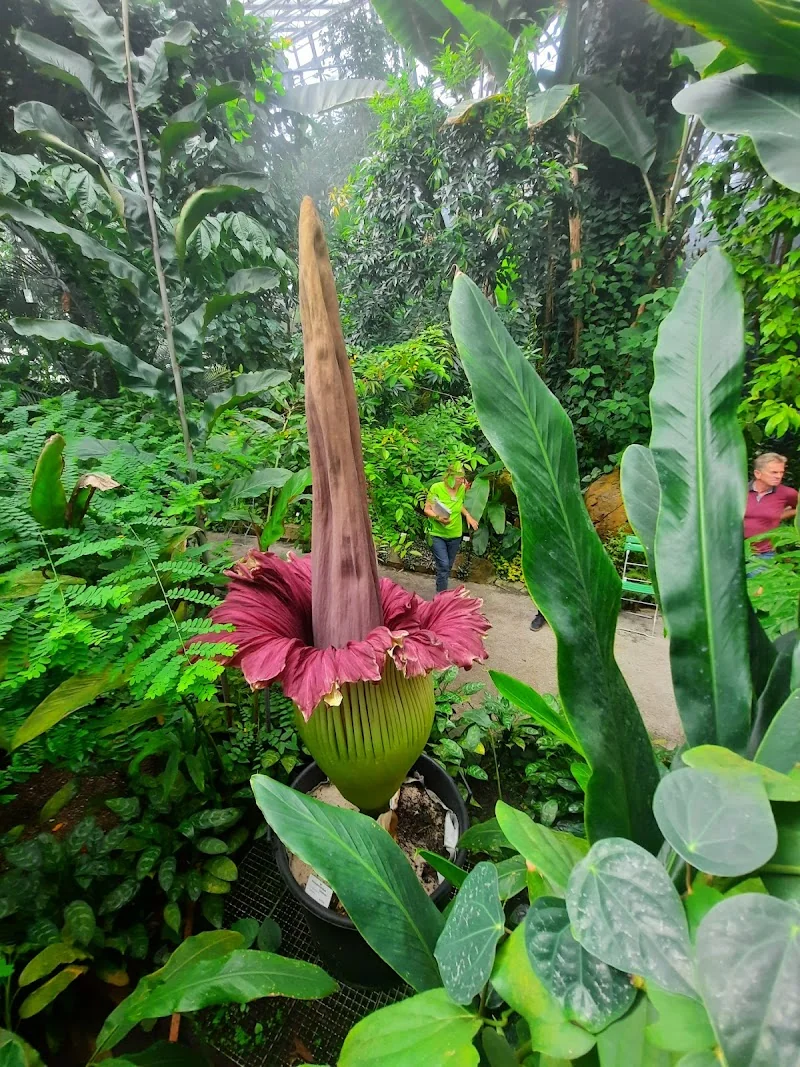
Particularly impressive are the greenhouses and the climate rooms staged there. The official brochure mentions six greenhouses with different climatic conditions that lead visitors through botanical tours from humid tropical forests and mangroves to the laurel forest of the Canary Islands and seasonal dry forests in South America and Africa. This is complemented by tropical alpine vegetation as well as Mediterranean and subtropical plants. Thus, a visit in winter is just as exciting as in summer, as one can experience very different ecological worlds in a confined space indoors. Particularly interesting is that important crops such as papaya, cotton, cocoa, as well as lesser-known species are presented. This makes the greenhouses a place where pure plant love and scientific curiosity come together naturally. ([obg.uni-bayreuth.de](https://www.obg.uni-bayreuth.de/pool/PDFs-u-Dokumente/Faltblaetter/OEBG_General-Leaflet.pdf))
Crops, Medicinal Plants, and Special Habitats
Another unique feature of the garden is the collection of crops. Every year, around 800 different species and varieties of traditional and modern crops are displayed in the area of cultivated plants, including vegetables, grains, fiber, and dye plants. Additionally, there is an orchard with more than 130 different fruit varieties, mainly traditional and regional varieties, as well as an area with over 60 medicinal plants organized by their applications. This diversity is not only aesthetically appealing for visitors but also culturally and historically valuable. It shows how closely agriculture, nutrition, medicine, and the environment are interconnected. Walking through this part of the garden, one sees not just plants but a living archive of human usage history and botanical development. ([obg.uni-bayreuth.de](https://www.obg.uni-bayreuth.de/pool/PDFs-u-Dokumente/Faltblaetter/OEBG_General-Leaflet.pdf))
The landscape design of the area is also remarkable. The brochure describes undisturbed areas where habitats can develop that have become rare in nature, such as ponds, wetlands, nutrient-poor grasslands, and deadwood areas. The ÖBG is thus not only a show garden but also a refuge for animal and plant species that have spontaneously found a habitat. Additionally, about 30 different rock types shape the design of the garden; a large part comes from northeastern Bavaria and makes the geological diversity of the region visible. This combination of ecology, crop science, and geology is unusually strong and ensures that the garden always holds new discoveries even with repeated visits. ([obg.uni-bayreuth.de](https://www.obg.uni-bayreuth.de/pool/PDFs-u-Dokumente/Faltblaetter/OEBG_General-Leaflet.pdf))
Guided Tours, Exhibitions, and Events Throughout the Year
The Ecological Botanical Garden is not a place that one merely passes through quietly. It is also a venue with a regular program. The official website mentions free public tours, lectures, and other events; in addition, there are group-specific offerings that can be booked for a fee. For many visitors, this is attractive because it allows for a targeted deepening of a tour. For example, those who want to better understand plant geography, cultivated plants, or ecological connections find a clearly professional access in the tours. Particularly appealing is that the garden remains open to foreign-language guests: tours in other languages are possible upon arrangement. This transforms a local excursion destination into a place with international aspirations. ([obg.uni-bayreuth.de](https://www.obg.uni-bayreuth.de/en/))
Exhibitions also play an important role. In the greenhouse complex, there is a large exhibition area where three to four thematic exhibitions take place each year, ranging from artistic to scientific questions. Visitor information also mentions concerts and other program points, showing that the garden is not only a botanical but also a cultural meeting point. This fits well with the self-understanding of the University of Bayreuth, as the ÖBG is intended to strengthen research and teaching while also serving the public. For visitors, this means added value: one can simply enjoy the garden, but also participate in an event and connect the visit with a specific theme or cultural experience. This creates a program that constantly changes throughout the year and provides new reasons for a return visit. ([obg.uni-bayreuth.de](https://www.obg.uni-bayreuth.de/en/gartenbesuch/index.html))
History, Research, and Teaching Since 1978
The history of the garden is closely linked to the development of the University of Bayreuth. In the university's official retrospectives, it is explained that the ÖBG was founded in 1978 to support the ecological orientation of the university and to recreate vegetation types from around the world in a way that enables relevant research. A later account of the university's history adds that the garden was partially integrated into the campus in 1984. Thus, the ÖBG is not just an appendage of the university but part of its identity and scientific profile. For decades, it has connected scientific work with a clear public educational mandate. This long-term anchoring makes it credible and resilient as a location for ecological topics that need sustained attention. ([uni-bayreuth.de](https://www.uni-bayreuth.de/en/history-university?utm_source=openai))
The university describes the garden as a central scientific institution with focuses on ecology and environment in research and teaching. It serves species and habitat research, the preservation of endangered plant and animal species, and environmental education for the public. The official site also points out that the garden is a regionally significant attraction and a center for education and recreation. This is more than a marketing phrase: it explains why the garden works for very different target groups. Researchers find structured areas and ecological questions here, students a learning place, families an excursion with real added value, and tourists an easily accessible sight. The unique combination of around 12,000 plant species, 16 hectares of area, and a consistent research orientation makes the ÖBG one of the most interesting places in the city. ([obg.uni-bayreuth.de](https://www.obg.uni-bayreuth.de/en/ueber_uns/index.html))
Accessibility, Family Visits, and Practical Garden Rules
In practical terms, the garden is also well prepared for visitors. The paths in the open area and in the greenhouses are generally suitable for wheelchair users according to the website. There is a disabled-accessible toilet in the entrance area and another in the crop garden, as well as two designated parking spaces. Additionally, a wheelchair is available for free loan. This is a real plus, as it makes the visit significantly easier for older guests, families with strollers, or people with mobility restrictions. Combined with free accessibility, the garden thus appears low-threshold and inviting. Those looking for a relaxed stroll with little organizational effort will find an unusually well-prepared environment here. ([obg.uni-bayreuth.de](https://www.obg.uni-bayreuth.de/de/gartenbesuch/))
The garden rules are clearly and sensibly formulated: dogs and bicycles are not allowed, plants and plant parts may not be removed, and visitors are asked to stay on the paths in the open area and greenhouses to avoid damage. This is helpful for families with children, as it allows for good planning of the visit while simultaneously protecting nature. Those visiting the garden with children also benefit from the open character of the facility and the diversity of themes: animals, plants, greenhouses, crops, and research ensure that the tour is never boring. In summary, a place is created that is not only beautiful but also respectful and functional. This is exactly what makes the ÖBG Bayreuth a location that one would easily want to visit again. ([obg.uni-bayreuth.de](https://www.obg.uni-bayreuth.de/de/gartenbesuch/))
Biodiversity, Tranquility, and the Unique Atmosphere in Bayreuth
The perhaps strongest impression of the Ecological Botanical Garden is its diversity. In the official materials, it is described as a botanical journey around the world that can be experienced in just a few hours. This formulation fits very well, as the garden unites different regions, habitats, and uses in a compact space. In addition to the well-maintained areas, there are intentionally less intensively managed areas where species-rich structures can develop. Ponds, moist sites, lean grasslands, and deadwood create habitats that benefit many organisms. Thus, the garden itself serves as an example of how biodiversity can not only be preserved but actively promoted. ([obg.uni-bayreuth.de](https://www.obg.uni-bayreuth.de/pool/PDFs-u-Dokumente/Faltblaetter/OEBG_General-Leaflet.pdf))
This mix of tranquility and insight is particularly valuable for Bayreuth. In a university city that is strongly shaped by research, the garden forms a place where science becomes immediately visible. At the same time, it remains open to all who simply want to stroll, photograph, discover plants, or experience nature with children. The official description rightly emphasizes the tasks of education, recreation, research, and species conservation. Those visiting the garden quickly realize that here one does not have to choose between utility and beauty: both go hand in hand. This makes the Ecological Botanical Garden Bayreuth a very coherent destination for all who want to not only observe nature but understand it. ([obg.uni-bayreuth.de](https://www.obg.uni-bayreuth.de/en/ueber_uns/index.html))
Sources:
- ÖBG University of Bayreuth - Homepage
- ÖBG University of Bayreuth - Information for Visitors
- ÖBG University of Bayreuth - Contact & Directions
- ÖBG University of Bayreuth - About us: Tasks & goals
- University of Bayreuth - History of the University of Bayreuth
- ÖBG University of Bayreuth - General Leaflet PDF
Show moreShow less
Ecological Botanical Garden Bayreuth | Opening Hours & Directions
The Ecological Botanical Garden of the University of Bayreuth is much more than a beautiful place to stroll: it is a scientific institution, a learning space, a refuge for biodiversity, and at the same time a quiet place for people who want to consciously experience nature in everyday life. Covering around 16 hectares of open space and about 6,000 m² of greenhouse area, the garden showcases natural vegetation types from around the world and combines research, teaching, species conservation, and recreation in a compact area. Since 1978, it has been part of the University of Bayreuth and is supported by the university as a central institution for ecological environmental research. Upon entering the garden, visitors experience not an artificial backdrop, but a carefully developed plant world with educational intent, surprising habitats, and a clear view of ecological connections. This unique combination makes the visit so special: the garden not only explains nature but makes it immediately tangible. ([obg.uni-bayreuth.de](https://www.obg.uni-bayreuth.de/en/ueber_uns/index.html))
Opening Hours, Admission, and Visit Planning
For planning a visit, the official opening hours are particularly important, as the garden distinguishes between open space and greenhouses. The open area is open from November to February, Monday to Friday from 8 AM to 4 PM, and on Sundays and holidays from 10 AM to 4 PM. From March to October, the hours are significantly extended: then the outdoor area is accessible Monday to Friday from 8 AM to 7 PM, and on Saturdays, Sundays, and holidays from 10 AM to 7 PM. The greenhouses are open year-round, Monday to Friday from 10 AM to 3 PM, and on Sundays and holidays from 10 AM to 4 PM; they are closed on Saturdays. Admission is free, and donations are welcome. This is a real plus for many visitors, as it allows spontaneous and barrier-free experiences in the garden. The Sunday and holiday openings are made possible by members of the Friends of the Garden Association, which underscores the non-profit character of the institution. ([obg.uni-bayreuth.de](https://www.obg.uni-bayreuth.de/de/gartenbesuch/))
For those who want to connect their visit with a thematic focus, the official program regularly offers free guided tours, lectures, exhibitions, and other events. The website explicitly states that public tours are offered in German, while English-speaking tours are available upon request. Particularly practical is the monthly rhythm: on the first Sunday of each month, there are special themed tours, from April to October additional general garden tours on the third Sunday of the month, and from April to September further dates on selected Wednesday evenings. For students and staff, there is also the Botanical Lunch Break from May to July. This makes the garden suitable not only for a quick stroll but also for recurring visits, where new aspects can be discovered throughout the year. ([obg.uni-bayreuth.de](https://www.obg.uni-bayreuth.de/en/))
Directions, Parking, and Public Transport
The approach to the Ecological Botanical Garden is intentionally kept simple, as the facility is located directly on the campus of the University of Bayreuth. Those arriving by public transport will find taxi stands and bus stops directly in front of Bayreuth train station. The line 316 is mentioned for the campus; from the central bus station, lines 306 and 304 also go to the university. The relevant stop for the garden is the University Administration stop. This is important for visitors who come without a car and still want to reliably reach the garden. Especially for a destination aimed at families, students, school classes, and individual visitors, the good connection is a real advantage. The place does not feel isolated but is pleasantly embedded in the daily life of the campus and the city. ([obg.uni-bayreuth.de](https://www.obg.uni-bayreuth.de/en/kontakt_anfahrt/index.php))
By car, the approach is via the A9, exit Bayreuth South, and then continue towards the university. According to the official description, one should keep to the right on campus; parking is available opposite the entrance to the garden on the right side. Additionally, visitor information points out two designated disabled parking spaces. This facilitates planning, especially for guests arriving with children, with limited mobility, or with greater time needs. Combined with the clear signage on the university grounds, this creates a visitor experience that does not begin with orientation but already with clear guidance. Even those who visit Bayreuth briefly can easily integrate the garden into a day plan without complicated parking searches. ([obg.uni-bayreuth.de](https://www.obg.uni-bayreuth.de/en/kontakt_anfahrt/index.php))
Garden Areas, Greenhouses, and Plant Diversity
The structure of the garden is designed so that visitors not only see plants but understand connections. The ÖBG is divided into four clearly defined areas: vegetation research stations focusing on Asia, America, and Europe, the crop garden, the greenhouses, and the ecological experimental station with additional research areas for biology and geosciences. This organization makes the garden readable like a walkable map of ecological and geographical themes. Instead of an arbitrary plant stroll, there is a didactically thought-out journey where different vegetation zones can be experienced side by side. The university uses these areas not only for public presentation but also for teaching and research. This is precisely what gives the place its special quality: it is simultaneously an exhibition, laboratory, outdoor classroom, and recreational space. ([obg.uni-bayreuth.de](https://www.obg.uni-bayreuth.de/en/gartenbesuch/index.html))
Particularly impressive are the greenhouses and the climate rooms staged there. The official brochure mentions six greenhouses with different climatic conditions that lead visitors through botanical tours from humid tropical forests and mangroves to the laurel forest of the Canary Islands and seasonal dry forests in South America and Africa. This is complemented by tropical alpine vegetation as well as Mediterranean and subtropical plants. Thus, a visit in winter is just as exciting as in summer, as one can experience very different ecological worlds in a confined space indoors. Particularly interesting is that important crops such as papaya, cotton, cocoa, as well as lesser-known species are presented. This makes the greenhouses a place where pure plant love and scientific curiosity come together naturally. ([obg.uni-bayreuth.de](https://www.obg.uni-bayreuth.de/pool/PDFs-u-Dokumente/Faltblaetter/OEBG_General-Leaflet.pdf))
Crops, Medicinal Plants, and Special Habitats
Another unique feature of the garden is the collection of crops. Every year, around 800 different species and varieties of traditional and modern crops are displayed in the area of cultivated plants, including vegetables, grains, fiber, and dye plants. Additionally, there is an orchard with more than 130 different fruit varieties, mainly traditional and regional varieties, as well as an area with over 60 medicinal plants organized by their applications. This diversity is not only aesthetically appealing for visitors but also culturally and historically valuable. It shows how closely agriculture, nutrition, medicine, and the environment are interconnected. Walking through this part of the garden, one sees not just plants but a living archive of human usage history and botanical development. ([obg.uni-bayreuth.de](https://www.obg.uni-bayreuth.de/pool/PDFs-u-Dokumente/Faltblaetter/OEBG_General-Leaflet.pdf))
The landscape design of the area is also remarkable. The brochure describes undisturbed areas where habitats can develop that have become rare in nature, such as ponds, wetlands, nutrient-poor grasslands, and deadwood areas. The ÖBG is thus not only a show garden but also a refuge for animal and plant species that have spontaneously found a habitat. Additionally, about 30 different rock types shape the design of the garden; a large part comes from northeastern Bavaria and makes the geological diversity of the region visible. This combination of ecology, crop science, and geology is unusually strong and ensures that the garden always holds new discoveries even with repeated visits. ([obg.uni-bayreuth.de](https://www.obg.uni-bayreuth.de/pool/PDFs-u-Dokumente/Faltblaetter/OEBG_General-Leaflet.pdf))
Guided Tours, Exhibitions, and Events Throughout the Year
The Ecological Botanical Garden is not a place that one merely passes through quietly. It is also a venue with a regular program. The official website mentions free public tours, lectures, and other events; in addition, there are group-specific offerings that can be booked for a fee. For many visitors, this is attractive because it allows for a targeted deepening of a tour. For example, those who want to better understand plant geography, cultivated plants, or ecological connections find a clearly professional access in the tours. Particularly appealing is that the garden remains open to foreign-language guests: tours in other languages are possible upon arrangement. This transforms a local excursion destination into a place with international aspirations. ([obg.uni-bayreuth.de](https://www.obg.uni-bayreuth.de/en/))
Exhibitions also play an important role. In the greenhouse complex, there is a large exhibition area where three to four thematic exhibitions take place each year, ranging from artistic to scientific questions. Visitor information also mentions concerts and other program points, showing that the garden is not only a botanical but also a cultural meeting point. This fits well with the self-understanding of the University of Bayreuth, as the ÖBG is intended to strengthen research and teaching while also serving the public. For visitors, this means added value: one can simply enjoy the garden, but also participate in an event and connect the visit with a specific theme or cultural experience. This creates a program that constantly changes throughout the year and provides new reasons for a return visit. ([obg.uni-bayreuth.de](https://www.obg.uni-bayreuth.de/en/gartenbesuch/index.html))
History, Research, and Teaching Since 1978
The history of the garden is closely linked to the development of the University of Bayreuth. In the university's official retrospectives, it is explained that the ÖBG was founded in 1978 to support the ecological orientation of the university and to recreate vegetation types from around the world in a way that enables relevant research. A later account of the university's history adds that the garden was partially integrated into the campus in 1984. Thus, the ÖBG is not just an appendage of the university but part of its identity and scientific profile. For decades, it has connected scientific work with a clear public educational mandate. This long-term anchoring makes it credible and resilient as a location for ecological topics that need sustained attention. ([uni-bayreuth.de](https://www.uni-bayreuth.de/en/history-university?utm_source=openai))
The university describes the garden as a central scientific institution with focuses on ecology and environment in research and teaching. It serves species and habitat research, the preservation of endangered plant and animal species, and environmental education for the public. The official site also points out that the garden is a regionally significant attraction and a center for education and recreation. This is more than a marketing phrase: it explains why the garden works for very different target groups. Researchers find structured areas and ecological questions here, students a learning place, families an excursion with real added value, and tourists an easily accessible sight. The unique combination of around 12,000 plant species, 16 hectares of area, and a consistent research orientation makes the ÖBG one of the most interesting places in the city. ([obg.uni-bayreuth.de](https://www.obg.uni-bayreuth.de/en/ueber_uns/index.html))
Accessibility, Family Visits, and Practical Garden Rules
In practical terms, the garden is also well prepared for visitors. The paths in the open area and in the greenhouses are generally suitable for wheelchair users according to the website. There is a disabled-accessible toilet in the entrance area and another in the crop garden, as well as two designated parking spaces. Additionally, a wheelchair is available for free loan. This is a real plus, as it makes the visit significantly easier for older guests, families with strollers, or people with mobility restrictions. Combined with free accessibility, the garden thus appears low-threshold and inviting. Those looking for a relaxed stroll with little organizational effort will find an unusually well-prepared environment here. ([obg.uni-bayreuth.de](https://www.obg.uni-bayreuth.de/de/gartenbesuch/))
The garden rules are clearly and sensibly formulated: dogs and bicycles are not allowed, plants and plant parts may not be removed, and visitors are asked to stay on the paths in the open area and greenhouses to avoid damage. This is helpful for families with children, as it allows for good planning of the visit while simultaneously protecting nature. Those visiting the garden with children also benefit from the open character of the facility and the diversity of themes: animals, plants, greenhouses, crops, and research ensure that the tour is never boring. In summary, a place is created that is not only beautiful but also respectful and functional. This is exactly what makes the ÖBG Bayreuth a location that one would easily want to visit again. ([obg.uni-bayreuth.de](https://www.obg.uni-bayreuth.de/de/gartenbesuch/))
Biodiversity, Tranquility, and the Unique Atmosphere in Bayreuth
The perhaps strongest impression of the Ecological Botanical Garden is its diversity. In the official materials, it is described as a botanical journey around the world that can be experienced in just a few hours. This formulation fits very well, as the garden unites different regions, habitats, and uses in a compact space. In addition to the well-maintained areas, there are intentionally less intensively managed areas where species-rich structures can develop. Ponds, moist sites, lean grasslands, and deadwood create habitats that benefit many organisms. Thus, the garden itself serves as an example of how biodiversity can not only be preserved but actively promoted. ([obg.uni-bayreuth.de](https://www.obg.uni-bayreuth.de/pool/PDFs-u-Dokumente/Faltblaetter/OEBG_General-Leaflet.pdf))
This mix of tranquility and insight is particularly valuable for Bayreuth. In a university city that is strongly shaped by research, the garden forms a place where science becomes immediately visible. At the same time, it remains open to all who simply want to stroll, photograph, discover plants, or experience nature with children. The official description rightly emphasizes the tasks of education, recreation, research, and species conservation. Those visiting the garden quickly realize that here one does not have to choose between utility and beauty: both go hand in hand. This makes the Ecological Botanical Garden Bayreuth a very coherent destination for all who want to not only observe nature but understand it. ([obg.uni-bayreuth.de](https://www.obg.uni-bayreuth.de/en/ueber_uns/index.html))
Sources:
- ÖBG University of Bayreuth - Homepage
- ÖBG University of Bayreuth - Information for Visitors
- ÖBG University of Bayreuth - Contact & Directions
- ÖBG University of Bayreuth - About us: Tasks & goals
- University of Bayreuth - History of the University of Bayreuth
- ÖBG University of Bayreuth - General Leaflet PDF
Ecological Botanical Garden Bayreuth | Opening Hours & Directions
The Ecological Botanical Garden of the University of Bayreuth is much more than a beautiful place to stroll: it is a scientific institution, a learning space, a refuge for biodiversity, and at the same time a quiet place for people who want to consciously experience nature in everyday life. Covering around 16 hectares of open space and about 6,000 m² of greenhouse area, the garden showcases natural vegetation types from around the world and combines research, teaching, species conservation, and recreation in a compact area. Since 1978, it has been part of the University of Bayreuth and is supported by the university as a central institution for ecological environmental research. Upon entering the garden, visitors experience not an artificial backdrop, but a carefully developed plant world with educational intent, surprising habitats, and a clear view of ecological connections. This unique combination makes the visit so special: the garden not only explains nature but makes it immediately tangible. ([obg.uni-bayreuth.de](https://www.obg.uni-bayreuth.de/en/ueber_uns/index.html))
Opening Hours, Admission, and Visit Planning
For planning a visit, the official opening hours are particularly important, as the garden distinguishes between open space and greenhouses. The open area is open from November to February, Monday to Friday from 8 AM to 4 PM, and on Sundays and holidays from 10 AM to 4 PM. From March to October, the hours are significantly extended: then the outdoor area is accessible Monday to Friday from 8 AM to 7 PM, and on Saturdays, Sundays, and holidays from 10 AM to 7 PM. The greenhouses are open year-round, Monday to Friday from 10 AM to 3 PM, and on Sundays and holidays from 10 AM to 4 PM; they are closed on Saturdays. Admission is free, and donations are welcome. This is a real plus for many visitors, as it allows spontaneous and barrier-free experiences in the garden. The Sunday and holiday openings are made possible by members of the Friends of the Garden Association, which underscores the non-profit character of the institution. ([obg.uni-bayreuth.de](https://www.obg.uni-bayreuth.de/de/gartenbesuch/))
For those who want to connect their visit with a thematic focus, the official program regularly offers free guided tours, lectures, exhibitions, and other events. The website explicitly states that public tours are offered in German, while English-speaking tours are available upon request. Particularly practical is the monthly rhythm: on the first Sunday of each month, there are special themed tours, from April to October additional general garden tours on the third Sunday of the month, and from April to September further dates on selected Wednesday evenings. For students and staff, there is also the Botanical Lunch Break from May to July. This makes the garden suitable not only for a quick stroll but also for recurring visits, where new aspects can be discovered throughout the year. ([obg.uni-bayreuth.de](https://www.obg.uni-bayreuth.de/en/))
Directions, Parking, and Public Transport
The approach to the Ecological Botanical Garden is intentionally kept simple, as the facility is located directly on the campus of the University of Bayreuth. Those arriving by public transport will find taxi stands and bus stops directly in front of Bayreuth train station. The line 316 is mentioned for the campus; from the central bus station, lines 306 and 304 also go to the university. The relevant stop for the garden is the University Administration stop. This is important for visitors who come without a car and still want to reliably reach the garden. Especially for a destination aimed at families, students, school classes, and individual visitors, the good connection is a real advantage. The place does not feel isolated but is pleasantly embedded in the daily life of the campus and the city. ([obg.uni-bayreuth.de](https://www.obg.uni-bayreuth.de/en/kontakt_anfahrt/index.php))
By car, the approach is via the A9, exit Bayreuth South, and then continue towards the university. According to the official description, one should keep to the right on campus; parking is available opposite the entrance to the garden on the right side. Additionally, visitor information points out two designated disabled parking spaces. This facilitates planning, especially for guests arriving with children, with limited mobility, or with greater time needs. Combined with the clear signage on the university grounds, this creates a visitor experience that does not begin with orientation but already with clear guidance. Even those who visit Bayreuth briefly can easily integrate the garden into a day plan without complicated parking searches. ([obg.uni-bayreuth.de](https://www.obg.uni-bayreuth.de/en/kontakt_anfahrt/index.php))
Garden Areas, Greenhouses, and Plant Diversity
The structure of the garden is designed so that visitors not only see plants but understand connections. The ÖBG is divided into four clearly defined areas: vegetation research stations focusing on Asia, America, and Europe, the crop garden, the greenhouses, and the ecological experimental station with additional research areas for biology and geosciences. This organization makes the garden readable like a walkable map of ecological and geographical themes. Instead of an arbitrary plant stroll, there is a didactically thought-out journey where different vegetation zones can be experienced side by side. The university uses these areas not only for public presentation but also for teaching and research. This is precisely what gives the place its special quality: it is simultaneously an exhibition, laboratory, outdoor classroom, and recreational space. ([obg.uni-bayreuth.de](https://www.obg.uni-bayreuth.de/en/gartenbesuch/index.html))
Particularly impressive are the greenhouses and the climate rooms staged there. The official brochure mentions six greenhouses with different climatic conditions that lead visitors through botanical tours from humid tropical forests and mangroves to the laurel forest of the Canary Islands and seasonal dry forests in South America and Africa. This is complemented by tropical alpine vegetation as well as Mediterranean and subtropical plants. Thus, a visit in winter is just as exciting as in summer, as one can experience very different ecological worlds in a confined space indoors. Particularly interesting is that important crops such as papaya, cotton, cocoa, as well as lesser-known species are presented. This makes the greenhouses a place where pure plant love and scientific curiosity come together naturally. ([obg.uni-bayreuth.de](https://www.obg.uni-bayreuth.de/pool/PDFs-u-Dokumente/Faltblaetter/OEBG_General-Leaflet.pdf))
Crops, Medicinal Plants, and Special Habitats
Another unique feature of the garden is the collection of crops. Every year, around 800 different species and varieties of traditional and modern crops are displayed in the area of cultivated plants, including vegetables, grains, fiber, and dye plants. Additionally, there is an orchard with more than 130 different fruit varieties, mainly traditional and regional varieties, as well as an area with over 60 medicinal plants organized by their applications. This diversity is not only aesthetically appealing for visitors but also culturally and historically valuable. It shows how closely agriculture, nutrition, medicine, and the environment are interconnected. Walking through this part of the garden, one sees not just plants but a living archive of human usage history and botanical development. ([obg.uni-bayreuth.de](https://www.obg.uni-bayreuth.de/pool/PDFs-u-Dokumente/Faltblaetter/OEBG_General-Leaflet.pdf))
The landscape design of the area is also remarkable. The brochure describes undisturbed areas where habitats can develop that have become rare in nature, such as ponds, wetlands, nutrient-poor grasslands, and deadwood areas. The ÖBG is thus not only a show garden but also a refuge for animal and plant species that have spontaneously found a habitat. Additionally, about 30 different rock types shape the design of the garden; a large part comes from northeastern Bavaria and makes the geological diversity of the region visible. This combination of ecology, crop science, and geology is unusually strong and ensures that the garden always holds new discoveries even with repeated visits. ([obg.uni-bayreuth.de](https://www.obg.uni-bayreuth.de/pool/PDFs-u-Dokumente/Faltblaetter/OEBG_General-Leaflet.pdf))
Guided Tours, Exhibitions, and Events Throughout the Year
The Ecological Botanical Garden is not a place that one merely passes through quietly. It is also a venue with a regular program. The official website mentions free public tours, lectures, and other events; in addition, there are group-specific offerings that can be booked for a fee. For many visitors, this is attractive because it allows for a targeted deepening of a tour. For example, those who want to better understand plant geography, cultivated plants, or ecological connections find a clearly professional access in the tours. Particularly appealing is that the garden remains open to foreign-language guests: tours in other languages are possible upon arrangement. This transforms a local excursion destination into a place with international aspirations. ([obg.uni-bayreuth.de](https://www.obg.uni-bayreuth.de/en/))
Exhibitions also play an important role. In the greenhouse complex, there is a large exhibition area where three to four thematic exhibitions take place each year, ranging from artistic to scientific questions. Visitor information also mentions concerts and other program points, showing that the garden is not only a botanical but also a cultural meeting point. This fits well with the self-understanding of the University of Bayreuth, as the ÖBG is intended to strengthen research and teaching while also serving the public. For visitors, this means added value: one can simply enjoy the garden, but also participate in an event and connect the visit with a specific theme or cultural experience. This creates a program that constantly changes throughout the year and provides new reasons for a return visit. ([obg.uni-bayreuth.de](https://www.obg.uni-bayreuth.de/en/gartenbesuch/index.html))
History, Research, and Teaching Since 1978
The history of the garden is closely linked to the development of the University of Bayreuth. In the university's official retrospectives, it is explained that the ÖBG was founded in 1978 to support the ecological orientation of the university and to recreate vegetation types from around the world in a way that enables relevant research. A later account of the university's history adds that the garden was partially integrated into the campus in 1984. Thus, the ÖBG is not just an appendage of the university but part of its identity and scientific profile. For decades, it has connected scientific work with a clear public educational mandate. This long-term anchoring makes it credible and resilient as a location for ecological topics that need sustained attention. ([uni-bayreuth.de](https://www.uni-bayreuth.de/en/history-university?utm_source=openai))
The university describes the garden as a central scientific institution with focuses on ecology and environment in research and teaching. It serves species and habitat research, the preservation of endangered plant and animal species, and environmental education for the public. The official site also points out that the garden is a regionally significant attraction and a center for education and recreation. This is more than a marketing phrase: it explains why the garden works for very different target groups. Researchers find structured areas and ecological questions here, students a learning place, families an excursion with real added value, and tourists an easily accessible sight. The unique combination of around 12,000 plant species, 16 hectares of area, and a consistent research orientation makes the ÖBG one of the most interesting places in the city. ([obg.uni-bayreuth.de](https://www.obg.uni-bayreuth.de/en/ueber_uns/index.html))
Accessibility, Family Visits, and Practical Garden Rules
In practical terms, the garden is also well prepared for visitors. The paths in the open area and in the greenhouses are generally suitable for wheelchair users according to the website. There is a disabled-accessible toilet in the entrance area and another in the crop garden, as well as two designated parking spaces. Additionally, a wheelchair is available for free loan. This is a real plus, as it makes the visit significantly easier for older guests, families with strollers, or people with mobility restrictions. Combined with free accessibility, the garden thus appears low-threshold and inviting. Those looking for a relaxed stroll with little organizational effort will find an unusually well-prepared environment here. ([obg.uni-bayreuth.de](https://www.obg.uni-bayreuth.de/de/gartenbesuch/))
The garden rules are clearly and sensibly formulated: dogs and bicycles are not allowed, plants and plant parts may not be removed, and visitors are asked to stay on the paths in the open area and greenhouses to avoid damage. This is helpful for families with children, as it allows for good planning of the visit while simultaneously protecting nature. Those visiting the garden with children also benefit from the open character of the facility and the diversity of themes: animals, plants, greenhouses, crops, and research ensure that the tour is never boring. In summary, a place is created that is not only beautiful but also respectful and functional. This is exactly what makes the ÖBG Bayreuth a location that one would easily want to visit again. ([obg.uni-bayreuth.de](https://www.obg.uni-bayreuth.de/de/gartenbesuch/))
Biodiversity, Tranquility, and the Unique Atmosphere in Bayreuth
The perhaps strongest impression of the Ecological Botanical Garden is its diversity. In the official materials, it is described as a botanical journey around the world that can be experienced in just a few hours. This formulation fits very well, as the garden unites different regions, habitats, and uses in a compact space. In addition to the well-maintained areas, there are intentionally less intensively managed areas where species-rich structures can develop. Ponds, moist sites, lean grasslands, and deadwood create habitats that benefit many organisms. Thus, the garden itself serves as an example of how biodiversity can not only be preserved but actively promoted. ([obg.uni-bayreuth.de](https://www.obg.uni-bayreuth.de/pool/PDFs-u-Dokumente/Faltblaetter/OEBG_General-Leaflet.pdf))
This mix of tranquility and insight is particularly valuable for Bayreuth. In a university city that is strongly shaped by research, the garden forms a place where science becomes immediately visible. At the same time, it remains open to all who simply want to stroll, photograph, discover plants, or experience nature with children. The official description rightly emphasizes the tasks of education, recreation, research, and species conservation. Those visiting the garden quickly realize that here one does not have to choose between utility and beauty: both go hand in hand. This makes the Ecological Botanical Garden Bayreuth a very coherent destination for all who want to not only observe nature but understand it. ([obg.uni-bayreuth.de](https://www.obg.uni-bayreuth.de/en/ueber_uns/index.html))
Sources:
- ÖBG University of Bayreuth - Homepage
- ÖBG University of Bayreuth - Information for Visitors
- ÖBG University of Bayreuth - Contact & Directions
- ÖBG University of Bayreuth - About us: Tasks & goals
- University of Bayreuth - History of the University of Bayreuth
- ÖBG University of Bayreuth - General Leaflet PDF

Frequently Asked Questions
Reviews
Thomas Mallek
13. May 2025
Very nice botanical garden of the university of Bayreuth. It's free and really interesting. Also a great place to bring your kids (especially if they love nature and all kinds of plants).
Аліна Осадча
12. January 2026
The Ecological Botanical Garden in Dresden is a true oasis of lush greenery in the middle of the city, which gives a sense of peace and relaxation for the soul. Visitors appreciate it for its wide variety of plants from all over the world, including huge collections of cacti and orchids in the greenhouses. It is a place that inspires pleasant walks and allows you to immerse yourself in the world of nature, forgetting about daily worries.
S Davis
13. August 2025
Really nice botanical garden. Unfortunately not much blooms in August when I was there. I recommend going in Spring.
Jonas
18. July 2021
Really nice experience. It is free, open air, with a wide variety of trees, flowers and cacti. Very relaxing and with enough resting benches along the many ways, you can easily get lost and forget your worries.
A Z
16. August 2022
I have not finished my walking through the whole garden meanwhile, but it is a very nice and calm place. I really love such places.