
Kirchpl. 4, Bayreuth
Kirchpl. 4, 95444 Bayreuth, Germany
Historical Museum Bayreuth | Opening Hours & Tickets
The Historical Museum Bayreuth is the right place if you want to understand the city not only as a festival and cultural site but also as a developed residence, citizen, and industrial city. The museum has existed as a municipal institution since 1894 and has been housed in the Old Latin School at Kirchplatz since 1996, right next to the city church. On three floors and around 1200 square meters, it presents the history of Bayreuth and its surroundings from the Middle Ages to the present. The focus is on the time when it was a margravial residence city in the 17th and 18th centuries, precisely during the phase when Bayreuth was particularly shaped culturally, politically, and architecturally. Additionally, there are collections and themes that broaden the perspective: faience, city models, photographs, everyday culture, industrial history, Jewish history, National Socialism, and the transformation of the cityscape. Those looking for a content-rich, easily accessible, and relatively inexpensive attraction in the city center will find a museum here that combines historical depth with clear orientation and makes it immediately understandable during a first visit how much history is embedded in Bayreuth. The exhibition is designed chronologically and thematically so that one can navigate well even without prior knowledge while discovering many details that could easily be overlooked during a fleeting tour. This mixture of illustrative objects, local anchoring, and regionally interesting collection pieces makes the museum exciting for many target groups. ([historisches-museum-bayreuth.de](https://www.historisches-museum-bayreuth.de/?utm_source=openai))
Opening Hours and Admission Prices for Your Visit
The Historical Museum Bayreuth is not a place for a mere passing visit but for a stay with some time. The current opening hours are clear and easy to plan: Tuesday to Sunday, the museum is open from 10 AM to 5 PM. Special regulations apply on holidays, which should definitely be kept in mind when planning your trip. The museum is closed on December 24 and 25. On December 31, it opens from 10 AM to 2 PM, and on January 1 from 1 PM to 5 PM. If you are planning your stay in Bayreuth tightly, you should not just read these times as a footnote but use them as real guidance, as a city museum like this gains the most when you do not arrive at the last minute. The mixture of architectural history, city history, and collection history makes the visit more intense than the initial glance at the admission duration might suggest. If you only spend half a day in the city center, the museum visit can be easily integrated into a morning or early afternoon tour. This way, you avoid time pressure and can read the exhibition at your leisure instead of just passing through. ([historisches-museum-bayreuth.de](https://www.historisches-museum-bayreuth.de/kontakt/anfahrt-und-oeffnungszeiten/?utm_source=openai))
The admission prices are intentionally kept low, making the museum attractive for families, school classes, and culture enthusiasts with a smaller budget. Adults pay 2 euros, students 1 euro. Children under 6 years, school classes, and members of the museum association have free admission. Reduced prices apply to students, severely disabled persons, and retirees at 1 euro. For groups of 10 or more, the price is also 1 euro per person, and guided tours add an additional 1 euro per person. This pricing structure clearly shows that the museum does not set high admission barriers but aims to invite as many people as possible to engage with Bayreuth's history. For spontaneous visitors, this is an advantage, as even a short detour remains possible without extensive planning. For groups, associations, and travel companies, it is also pleasant that the price remains manageable while the cultural yield is still high. Therefore, those who combine the visit with a city center tour get a compact, fair, and very manageable expenditure situation for a culturally dense program point. ([historisches-museum-bayreuth.de](https://www.historisches-museum-bayreuth.de/kontakt/anfahrt-und-oeffnungszeiten/?utm_source=openai))
Directions and Parking in Bayreuth's City Center
The Historical Museum Bayreuth is centrally located at Kirchplatz 4, 95444 Bayreuth, right in the historical center of the city and in close proximity to the city church. This central location is an advantage if you want to combine the museum with a walk through the city center. At the same time, it is important for drivers, as the museum itself does not offer parking spaces at or around the building. Visitors are therefore encouraged to use the surrounding parking spaces and parking garages in the city center. This is a typical city center situation: you gain proximity and atmosphere but need to allow some time for parking and the short walk. If you want to visit the museum specifically, you should not plan the arrival too tightly but understand the route through the city center as part of the visit experience. Especially in an area with historical building substance and tight urban space, a little buffer is worth its weight in gold, as it allows for a more relaxed arrival and a calm start to the tour. ([historisches-museum-bayreuth.de](https://www.historisches-museum-bayreuth.de/kontakt/anfahrt-und-oeffnungszeiten/?utm_source=openai))
Especially for a museum that is so closely connected to the old town and its own architectural history, the surroundings almost act as a thematic extension of the exhibition. Even before you open the door, you find yourself in a place where the city church, the historic school building, and museum use meet directly. Therefore, if you are arriving by car, it is best to head straight to a parking garage or an inner-city parking lot and walk the rest. This way, you avoid unnecessary stress and begin the visit with the right perspective on Bayreuth: not as a parking question but as a city experience. For groups, families, or guests with multiple stops on the same day, this planning is particularly sensible, as the museum's central location only pays off if you can walk the last meters in a relaxed manner. Anyone who wants to stroll through the old town before or after the museum visit also benefits from this location, as many other destinations are conveniently reachable on foot. ([historisches-museum-bayreuth.de](https://www.historisches-museum-bayreuth.de/kontakt/anfahrt-und-oeffnungszeiten/?utm_source=openai))
What Does the Historical Museum Bayreuth Show?
Content-wise, the Historical Museum Bayreuth is primarily a museum of urban development. It presents numerous exhibits on the eventful history of Bayreuth from the first documentary mention to the present on three levels. The museum tells city history not abstractly but through concrete objects, images, and spaces. The perspective ranges from the beginnings of settlement development through rule and representation to everyday life, economy, and cultural life. The most significant focus is on the 17th and 18th centuries, the time when Bayreuth became particularly historically shaped as a margravial residence city. This focus makes the museum interesting for visitors who want to understand why Bayreuth appears architecturally and culturally different from many other cities of its size. The exhibition is thus not only chronologically but also narratively structured: it connects cityscape, power history, and everyday world into a comprehensible line. Those who walk through the rooms attentively receive not just individual dates but a coherent picture of how Bayreuth has developed over centuries. ([historisches-museum-bayreuth.de](https://www.historisches-museum-bayreuth.de/sammlung/?utm_source=openai))
Among the most important collection areas is the faience collection of Dr. Otto Burkhardt. The museum describes it as possibly the world's most extensive collection of Bayreuth faience from the manufactory St. Georgen, founded in 1715. This gives the museum a focus that is significant not only for local memory but also for art and collection history. Additional thematic areas include the margravial residence city, photographic collections, Bayreuth during National Socialism, industrial history, bourgeois urban culture in the 19th and 20th centuries, and the city on its way to modernity. In 2025, a significant coin and medal collection from the time of the Margraviate of Brandenburg-Bayreuth will also be presented, which, with nearly 850 pieces, expands the view of administration, representation, and cultural identity of the region. The collection is thus not only broad but also deep: crafts, everyday culture, economic development, and political history stand side by side and are made readable together. Therefore, those looking for a museum that does not only show Bayreuth in a single chapter but makes the city readable across several epochs will find a lot of substance here. ([historisches-museum-bayreuth.de](https://www.historisches-museum-bayreuth.de/?utm_source=openai))
The Old Latin School as a Historical Site
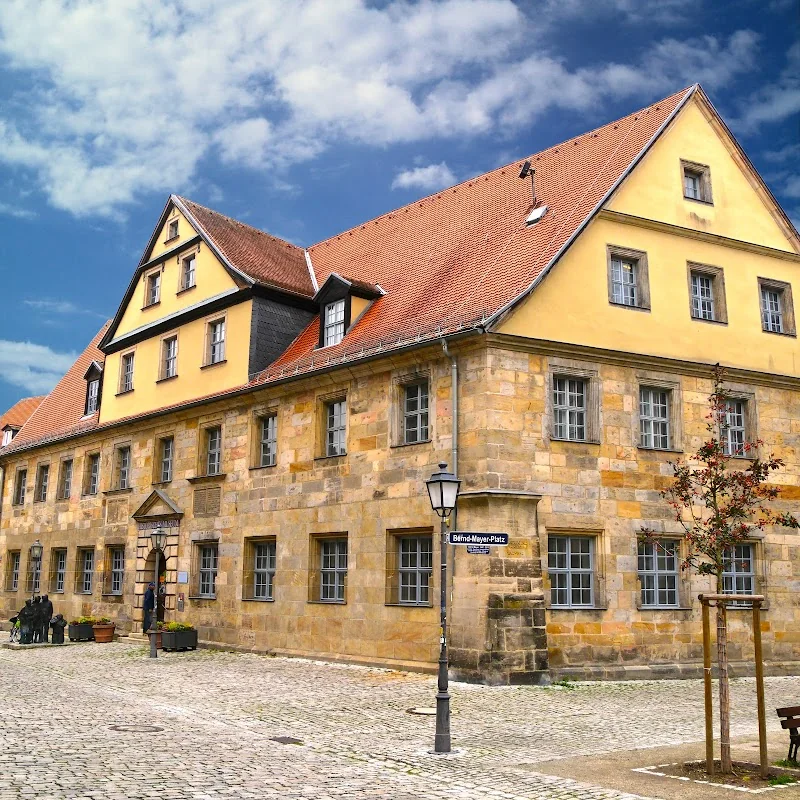
The special effect of the Historical Museum Bayreuth begins with the building itself. The museum is housed in the Old Latin School, the oldest school building in Bayreuth. The current core of the building dates back to the 17th century, but the predecessor building is already mentioned in the accounts of the neighboring city church in 1437. This is remarkable because the museum is not simply located in a suitable building but in a structure whose history is directly connected to the development of the city. The building served as a place of learning, an administrative site, and a functional building for centuries before it became a museum. These layers contribute to its character: when you step over the threshold today, you are simultaneously moving through a historical narrative about Bayreuth's educational system, its breaks, and its transformations. The Old Latin School is therefore not just a shell but an exhibit in itself. Those who appreciate historical architecture can recognize several construction and usage phases in a single building. This makes the visit particularly vivid because you are not only looking at objects but also reading the space as a source. ([historisches-museum-bayreuth.de](https://www.historisches-museum-bayreuth.de/museum/ueber-das-museum/))
The architectural history is rich in repurposings. After the devastating city fires of 1605 and 1621, the school properties were consolidated, and a representative new building for the Latin school was constructed. From 1664, the building served as the High-Princely Illustrious Gymnasium Christian Ernestinum, later it became a school building again, and finally, from 1876 to 1988, it was used as a central fire station. Only after the fire department moved out did the conversion to a museum begin; since 1996, the Historical Museum Bayreuth has been located here. This sequence explains why the building appears so authentic: it is not merely a backdrop for exhibitions but a historical bearer of its own memories. The fact that the building was a school for centuries and later a fire station adds a special layering to today's museum visit. It connects educational, administrative, and cultural history within a single structure and thus reflects Bayreuth's transformation in a very vivid way. This is a decisive added value for visitors who appreciate historical places because one can read the city's transformation not only in objects but also directly on the walls, in the rooms, and in the overall character of the house. ([historisches-museum-bayreuth.de](https://www.historisches-museum-bayreuth.de/museum/ueber-das-museum/))
Photos, First Impressions, and Why the Visit is Worthwhile
Those looking for photos of the Historical Museum Bayreuth will find a pretty good first impression on the official website. Among other things, you can see the Old Latin School, the main entrance, the night view of the building, the facade with the Latin tablets, and views of the museum courtyard. This selection of images is particularly helpful for the search intent for photos because it not only shows the building as an object but also its atmosphere. You can immediately recognize that this is a place with historical depth that works not with great splendor but with substance. For visitors who want to assess in advance whether the museum fits into their daily plan, such images are often the quickest way to make a decision. They convey how the house appears in the urban space and how closely architecture and exhibition are connected. Additionally, the images help to properly contextualize the scale of the house: not a huge museum complex but a historically charged place with a clear, manageable structure. This is particularly attractive for many guests because you do not have to navigate through a large area but can focus directly on the content. ([historisches-museum-bayreuth.de](https://www.historisches-museum-bayreuth.de/))
Content-wise, the visual impression supports the expectation of a concentrated, city-history-oriented museum. The external image with the historical facade and the photos from the interior and exterior show that there is no interchangeable exhibition space here but a place with a strong local character. This is exactly what makes the visit interesting for many travelers: Bayreuth can be read here not only as an event location but as a city with a long development. Therefore, those who use reviews or photos to prepare a decision quickly receive a clear answer at the Historical Museum Bayreuth. The place is compact, rich in tradition, and thematically dense. It is particularly suitable if you want to learn a lot about the city in a short time and value genuine historical atmosphere. This may not be a museum for superficial passing through, but it is certainly for all who appreciate the perspective of connections. The website images make this attitude visible even before the visit and create exactly the kind of expectation that leads to a successful museum visit: historical, calm, precise, and locally rooted. ([historisches-museum-bayreuth.de](https://www.historisches-museum-bayreuth.de/))
Guided Tours, Museum Education, and Special Exhibitions
The Historical Museum Bayreuth thrives not only on its permanent exhibition but also on changing special exhibitions, events, and museum educational offerings. The museum emphasizes that these formats thematically complement and deepen the exhibits. For special exhibitions, three rooms with a total of 120 square meters are available on the ground floor. While this is not a huge special exhibition building, that is precisely where the appeal lies: the house remains compact, retains its clear focus on city history, and can still accommodate new themes repeatedly. For visitors, this means that a second or third visit can be worthwhile because the perspective changes depending on the focus. Special exhibitions do not function here as a side show but as a targeted extension of the existing urban narrative. The museum can thus incorporate current research, new findings, or thematic emphases without losing its core. ([historisches-museum-bayreuth.de](https://www.historisches-museum-bayreuth.de/?utm_source=openai))
Particularly interesting is the museum educational approach. The museum's brochure describes it as an important part of public relations and a cooperation partner for Bayreuth schools since 1996. Interdisciplinary topics are presented there, such as urban development, industrial development in and around Bayreuth, the transformation of the cityscape, Jewish history, and traces of National Socialism and war. This shows that the museum is not just an object carrier but a place of learning where city history is actively conveyed. This is also a real advantage for groups, project seminars, and those interested in diving deeper. The topics are deliberately chosen to touch on both historical contexts and current questions of memory culture. Those who want to not only look but understand will find a very good mix of exhibition, context, and didactic preparation here. This makes the museum equally interesting for school classes, associations, and culturally curious individuals. ([historisches-museum-bayreuth.de](https://www.historisches-museum-bayreuth.de/wp-content/uploads/2021/08/historisches-museum-besuchplanen-museumspaedagogik.pdf))
For travel planning, this means that you do not have to commit to a single interpretation. Families find illustrative objects, culturally interested individuals discover depth in details, and groups can use the museum as a starting point for further stops in the city center. This connectivity is one of the museum's greatest advantages. It not only provides information but also orientation: about Bayreuth's residence period, the development of the city, its economic and social history, and how a community conveys its past today. Those who know the opening hours, tickets, directions, and themes in advance can plan their visit well and focus on the areas that are most important to them on-site. Especially because the museum tells the history of Bayreuth so concentratedly, it is worth staying a moment longer and considering the connections between the residence period, the bourgeoisie, industry, and the present. ([historisches-museum-bayreuth.de](https://www.historisches-museum-bayreuth.de/kontakt/anfahrt-und-oeffnungszeiten/?utm_source=openai))
Sources:
Show moreShow less
Historical Museum Bayreuth | Opening Hours & Tickets
The Historical Museum Bayreuth is the right place if you want to understand the city not only as a festival and cultural site but also as a developed residence, citizen, and industrial city. The museum has existed as a municipal institution since 1894 and has been housed in the Old Latin School at Kirchplatz since 1996, right next to the city church. On three floors and around 1200 square meters, it presents the history of Bayreuth and its surroundings from the Middle Ages to the present. The focus is on the time when it was a margravial residence city in the 17th and 18th centuries, precisely during the phase when Bayreuth was particularly shaped culturally, politically, and architecturally. Additionally, there are collections and themes that broaden the perspective: faience, city models, photographs, everyday culture, industrial history, Jewish history, National Socialism, and the transformation of the cityscape. Those looking for a content-rich, easily accessible, and relatively inexpensive attraction in the city center will find a museum here that combines historical depth with clear orientation and makes it immediately understandable during a first visit how much history is embedded in Bayreuth. The exhibition is designed chronologically and thematically so that one can navigate well even without prior knowledge while discovering many details that could easily be overlooked during a fleeting tour. This mixture of illustrative objects, local anchoring, and regionally interesting collection pieces makes the museum exciting for many target groups. ([historisches-museum-bayreuth.de](https://www.historisches-museum-bayreuth.de/?utm_source=openai))
Opening Hours and Admission Prices for Your Visit
The Historical Museum Bayreuth is not a place for a mere passing visit but for a stay with some time. The current opening hours are clear and easy to plan: Tuesday to Sunday, the museum is open from 10 AM to 5 PM. Special regulations apply on holidays, which should definitely be kept in mind when planning your trip. The museum is closed on December 24 and 25. On December 31, it opens from 10 AM to 2 PM, and on January 1 from 1 PM to 5 PM. If you are planning your stay in Bayreuth tightly, you should not just read these times as a footnote but use them as real guidance, as a city museum like this gains the most when you do not arrive at the last minute. The mixture of architectural history, city history, and collection history makes the visit more intense than the initial glance at the admission duration might suggest. If you only spend half a day in the city center, the museum visit can be easily integrated into a morning or early afternoon tour. This way, you avoid time pressure and can read the exhibition at your leisure instead of just passing through. ([historisches-museum-bayreuth.de](https://www.historisches-museum-bayreuth.de/kontakt/anfahrt-und-oeffnungszeiten/?utm_source=openai))
The admission prices are intentionally kept low, making the museum attractive for families, school classes, and culture enthusiasts with a smaller budget. Adults pay 2 euros, students 1 euro. Children under 6 years, school classes, and members of the museum association have free admission. Reduced prices apply to students, severely disabled persons, and retirees at 1 euro. For groups of 10 or more, the price is also 1 euro per person, and guided tours add an additional 1 euro per person. This pricing structure clearly shows that the museum does not set high admission barriers but aims to invite as many people as possible to engage with Bayreuth's history. For spontaneous visitors, this is an advantage, as even a short detour remains possible without extensive planning. For groups, associations, and travel companies, it is also pleasant that the price remains manageable while the cultural yield is still high. Therefore, those who combine the visit with a city center tour get a compact, fair, and very manageable expenditure situation for a culturally dense program point. ([historisches-museum-bayreuth.de](https://www.historisches-museum-bayreuth.de/kontakt/anfahrt-und-oeffnungszeiten/?utm_source=openai))
Directions and Parking in Bayreuth's City Center
The Historical Museum Bayreuth is centrally located at Kirchplatz 4, 95444 Bayreuth, right in the historical center of the city and in close proximity to the city church. This central location is an advantage if you want to combine the museum with a walk through the city center. At the same time, it is important for drivers, as the museum itself does not offer parking spaces at or around the building. Visitors are therefore encouraged to use the surrounding parking spaces and parking garages in the city center. This is a typical city center situation: you gain proximity and atmosphere but need to allow some time for parking and the short walk. If you want to visit the museum specifically, you should not plan the arrival too tightly but understand the route through the city center as part of the visit experience. Especially in an area with historical building substance and tight urban space, a little buffer is worth its weight in gold, as it allows for a more relaxed arrival and a calm start to the tour. ([historisches-museum-bayreuth.de](https://www.historisches-museum-bayreuth.de/kontakt/anfahrt-und-oeffnungszeiten/?utm_source=openai))
Especially for a museum that is so closely connected to the old town and its own architectural history, the surroundings almost act as a thematic extension of the exhibition. Even before you open the door, you find yourself in a place where the city church, the historic school building, and museum use meet directly. Therefore, if you are arriving by car, it is best to head straight to a parking garage or an inner-city parking lot and walk the rest. This way, you avoid unnecessary stress and begin the visit with the right perspective on Bayreuth: not as a parking question but as a city experience. For groups, families, or guests with multiple stops on the same day, this planning is particularly sensible, as the museum's central location only pays off if you can walk the last meters in a relaxed manner. Anyone who wants to stroll through the old town before or after the museum visit also benefits from this location, as many other destinations are conveniently reachable on foot. ([historisches-museum-bayreuth.de](https://www.historisches-museum-bayreuth.de/kontakt/anfahrt-und-oeffnungszeiten/?utm_source=openai))
What Does the Historical Museum Bayreuth Show?
Content-wise, the Historical Museum Bayreuth is primarily a museum of urban development. It presents numerous exhibits on the eventful history of Bayreuth from the first documentary mention to the present on three levels. The museum tells city history not abstractly but through concrete objects, images, and spaces. The perspective ranges from the beginnings of settlement development through rule and representation to everyday life, economy, and cultural life. The most significant focus is on the 17th and 18th centuries, the time when Bayreuth became particularly historically shaped as a margravial residence city. This focus makes the museum interesting for visitors who want to understand why Bayreuth appears architecturally and culturally different from many other cities of its size. The exhibition is thus not only chronologically but also narratively structured: it connects cityscape, power history, and everyday world into a comprehensible line. Those who walk through the rooms attentively receive not just individual dates but a coherent picture of how Bayreuth has developed over centuries. ([historisches-museum-bayreuth.de](https://www.historisches-museum-bayreuth.de/sammlung/?utm_source=openai))
Among the most important collection areas is the faience collection of Dr. Otto Burkhardt. The museum describes it as possibly the world's most extensive collection of Bayreuth faience from the manufactory St. Georgen, founded in 1715. This gives the museum a focus that is significant not only for local memory but also for art and collection history. Additional thematic areas include the margravial residence city, photographic collections, Bayreuth during National Socialism, industrial history, bourgeois urban culture in the 19th and 20th centuries, and the city on its way to modernity. In 2025, a significant coin and medal collection from the time of the Margraviate of Brandenburg-Bayreuth will also be presented, which, with nearly 850 pieces, expands the view of administration, representation, and cultural identity of the region. The collection is thus not only broad but also deep: crafts, everyday culture, economic development, and political history stand side by side and are made readable together. Therefore, those looking for a museum that does not only show Bayreuth in a single chapter but makes the city readable across several epochs will find a lot of substance here. ([historisches-museum-bayreuth.de](https://www.historisches-museum-bayreuth.de/?utm_source=openai))
The Old Latin School as a Historical Site
The special effect of the Historical Museum Bayreuth begins with the building itself. The museum is housed in the Old Latin School, the oldest school building in Bayreuth. The current core of the building dates back to the 17th century, but the predecessor building is already mentioned in the accounts of the neighboring city church in 1437. This is remarkable because the museum is not simply located in a suitable building but in a structure whose history is directly connected to the development of the city. The building served as a place of learning, an administrative site, and a functional building for centuries before it became a museum. These layers contribute to its character: when you step over the threshold today, you are simultaneously moving through a historical narrative about Bayreuth's educational system, its breaks, and its transformations. The Old Latin School is therefore not just a shell but an exhibit in itself. Those who appreciate historical architecture can recognize several construction and usage phases in a single building. This makes the visit particularly vivid because you are not only looking at objects but also reading the space as a source. ([historisches-museum-bayreuth.de](https://www.historisches-museum-bayreuth.de/museum/ueber-das-museum/))
The architectural history is rich in repurposings. After the devastating city fires of 1605 and 1621, the school properties were consolidated, and a representative new building for the Latin school was constructed. From 1664, the building served as the High-Princely Illustrious Gymnasium Christian Ernestinum, later it became a school building again, and finally, from 1876 to 1988, it was used as a central fire station. Only after the fire department moved out did the conversion to a museum begin; since 1996, the Historical Museum Bayreuth has been located here. This sequence explains why the building appears so authentic: it is not merely a backdrop for exhibitions but a historical bearer of its own memories. The fact that the building was a school for centuries and later a fire station adds a special layering to today's museum visit. It connects educational, administrative, and cultural history within a single structure and thus reflects Bayreuth's transformation in a very vivid way. This is a decisive added value for visitors who appreciate historical places because one can read the city's transformation not only in objects but also directly on the walls, in the rooms, and in the overall character of the house. ([historisches-museum-bayreuth.de](https://www.historisches-museum-bayreuth.de/museum/ueber-das-museum/))
Photos, First Impressions, and Why the Visit is Worthwhile
Those looking for photos of the Historical Museum Bayreuth will find a pretty good first impression on the official website. Among other things, you can see the Old Latin School, the main entrance, the night view of the building, the facade with the Latin tablets, and views of the museum courtyard. This selection of images is particularly helpful for the search intent for photos because it not only shows the building as an object but also its atmosphere. You can immediately recognize that this is a place with historical depth that works not with great splendor but with substance. For visitors who want to assess in advance whether the museum fits into their daily plan, such images are often the quickest way to make a decision. They convey how the house appears in the urban space and how closely architecture and exhibition are connected. Additionally, the images help to properly contextualize the scale of the house: not a huge museum complex but a historically charged place with a clear, manageable structure. This is particularly attractive for many guests because you do not have to navigate through a large area but can focus directly on the content. ([historisches-museum-bayreuth.de](https://www.historisches-museum-bayreuth.de/))
Content-wise, the visual impression supports the expectation of a concentrated, city-history-oriented museum. The external image with the historical facade and the photos from the interior and exterior show that there is no interchangeable exhibition space here but a place with a strong local character. This is exactly what makes the visit interesting for many travelers: Bayreuth can be read here not only as an event location but as a city with a long development. Therefore, those who use reviews or photos to prepare a decision quickly receive a clear answer at the Historical Museum Bayreuth. The place is compact, rich in tradition, and thematically dense. It is particularly suitable if you want to learn a lot about the city in a short time and value genuine historical atmosphere. This may not be a museum for superficial passing through, but it is certainly for all who appreciate the perspective of connections. The website images make this attitude visible even before the visit and create exactly the kind of expectation that leads to a successful museum visit: historical, calm, precise, and locally rooted. ([historisches-museum-bayreuth.de](https://www.historisches-museum-bayreuth.de/))
Guided Tours, Museum Education, and Special Exhibitions
The Historical Museum Bayreuth thrives not only on its permanent exhibition but also on changing special exhibitions, events, and museum educational offerings. The museum emphasizes that these formats thematically complement and deepen the exhibits. For special exhibitions, three rooms with a total of 120 square meters are available on the ground floor. While this is not a huge special exhibition building, that is precisely where the appeal lies: the house remains compact, retains its clear focus on city history, and can still accommodate new themes repeatedly. For visitors, this means that a second or third visit can be worthwhile because the perspective changes depending on the focus. Special exhibitions do not function here as a side show but as a targeted extension of the existing urban narrative. The museum can thus incorporate current research, new findings, or thematic emphases without losing its core. ([historisches-museum-bayreuth.de](https://www.historisches-museum-bayreuth.de/?utm_source=openai))
Particularly interesting is the museum educational approach. The museum's brochure describes it as an important part of public relations and a cooperation partner for Bayreuth schools since 1996. Interdisciplinary topics are presented there, such as urban development, industrial development in and around Bayreuth, the transformation of the cityscape, Jewish history, and traces of National Socialism and war. This shows that the museum is not just an object carrier but a place of learning where city history is actively conveyed. This is also a real advantage for groups, project seminars, and those interested in diving deeper. The topics are deliberately chosen to touch on both historical contexts and current questions of memory culture. Those who want to not only look but understand will find a very good mix of exhibition, context, and didactic preparation here. This makes the museum equally interesting for school classes, associations, and culturally curious individuals. ([historisches-museum-bayreuth.de](https://www.historisches-museum-bayreuth.de/wp-content/uploads/2021/08/historisches-museum-besuchplanen-museumspaedagogik.pdf))
For travel planning, this means that you do not have to commit to a single interpretation. Families find illustrative objects, culturally interested individuals discover depth in details, and groups can use the museum as a starting point for further stops in the city center. This connectivity is one of the museum's greatest advantages. It not only provides information but also orientation: about Bayreuth's residence period, the development of the city, its economic and social history, and how a community conveys its past today. Those who know the opening hours, tickets, directions, and themes in advance can plan their visit well and focus on the areas that are most important to them on-site. Especially because the museum tells the history of Bayreuth so concentratedly, it is worth staying a moment longer and considering the connections between the residence period, the bourgeoisie, industry, and the present. ([historisches-museum-bayreuth.de](https://www.historisches-museum-bayreuth.de/kontakt/anfahrt-und-oeffnungszeiten/?utm_source=openai))
Sources:
Historical Museum Bayreuth | Opening Hours & Tickets
The Historical Museum Bayreuth is the right place if you want to understand the city not only as a festival and cultural site but also as a developed residence, citizen, and industrial city. The museum has existed as a municipal institution since 1894 and has been housed in the Old Latin School at Kirchplatz since 1996, right next to the city church. On three floors and around 1200 square meters, it presents the history of Bayreuth and its surroundings from the Middle Ages to the present. The focus is on the time when it was a margravial residence city in the 17th and 18th centuries, precisely during the phase when Bayreuth was particularly shaped culturally, politically, and architecturally. Additionally, there are collections and themes that broaden the perspective: faience, city models, photographs, everyday culture, industrial history, Jewish history, National Socialism, and the transformation of the cityscape. Those looking for a content-rich, easily accessible, and relatively inexpensive attraction in the city center will find a museum here that combines historical depth with clear orientation and makes it immediately understandable during a first visit how much history is embedded in Bayreuth. The exhibition is designed chronologically and thematically so that one can navigate well even without prior knowledge while discovering many details that could easily be overlooked during a fleeting tour. This mixture of illustrative objects, local anchoring, and regionally interesting collection pieces makes the museum exciting for many target groups. ([historisches-museum-bayreuth.de](https://www.historisches-museum-bayreuth.de/?utm_source=openai))
Opening Hours and Admission Prices for Your Visit
The Historical Museum Bayreuth is not a place for a mere passing visit but for a stay with some time. The current opening hours are clear and easy to plan: Tuesday to Sunday, the museum is open from 10 AM to 5 PM. Special regulations apply on holidays, which should definitely be kept in mind when planning your trip. The museum is closed on December 24 and 25. On December 31, it opens from 10 AM to 2 PM, and on January 1 from 1 PM to 5 PM. If you are planning your stay in Bayreuth tightly, you should not just read these times as a footnote but use them as real guidance, as a city museum like this gains the most when you do not arrive at the last minute. The mixture of architectural history, city history, and collection history makes the visit more intense than the initial glance at the admission duration might suggest. If you only spend half a day in the city center, the museum visit can be easily integrated into a morning or early afternoon tour. This way, you avoid time pressure and can read the exhibition at your leisure instead of just passing through. ([historisches-museum-bayreuth.de](https://www.historisches-museum-bayreuth.de/kontakt/anfahrt-und-oeffnungszeiten/?utm_source=openai))
The admission prices are intentionally kept low, making the museum attractive for families, school classes, and culture enthusiasts with a smaller budget. Adults pay 2 euros, students 1 euro. Children under 6 years, school classes, and members of the museum association have free admission. Reduced prices apply to students, severely disabled persons, and retirees at 1 euro. For groups of 10 or more, the price is also 1 euro per person, and guided tours add an additional 1 euro per person. This pricing structure clearly shows that the museum does not set high admission barriers but aims to invite as many people as possible to engage with Bayreuth's history. For spontaneous visitors, this is an advantage, as even a short detour remains possible without extensive planning. For groups, associations, and travel companies, it is also pleasant that the price remains manageable while the cultural yield is still high. Therefore, those who combine the visit with a city center tour get a compact, fair, and very manageable expenditure situation for a culturally dense program point. ([historisches-museum-bayreuth.de](https://www.historisches-museum-bayreuth.de/kontakt/anfahrt-und-oeffnungszeiten/?utm_source=openai))
Directions and Parking in Bayreuth's City Center
The Historical Museum Bayreuth is centrally located at Kirchplatz 4, 95444 Bayreuth, right in the historical center of the city and in close proximity to the city church. This central location is an advantage if you want to combine the museum with a walk through the city center. At the same time, it is important for drivers, as the museum itself does not offer parking spaces at or around the building. Visitors are therefore encouraged to use the surrounding parking spaces and parking garages in the city center. This is a typical city center situation: you gain proximity and atmosphere but need to allow some time for parking and the short walk. If you want to visit the museum specifically, you should not plan the arrival too tightly but understand the route through the city center as part of the visit experience. Especially in an area with historical building substance and tight urban space, a little buffer is worth its weight in gold, as it allows for a more relaxed arrival and a calm start to the tour. ([historisches-museum-bayreuth.de](https://www.historisches-museum-bayreuth.de/kontakt/anfahrt-und-oeffnungszeiten/?utm_source=openai))
Especially for a museum that is so closely connected to the old town and its own architectural history, the surroundings almost act as a thematic extension of the exhibition. Even before you open the door, you find yourself in a place where the city church, the historic school building, and museum use meet directly. Therefore, if you are arriving by car, it is best to head straight to a parking garage or an inner-city parking lot and walk the rest. This way, you avoid unnecessary stress and begin the visit with the right perspective on Bayreuth: not as a parking question but as a city experience. For groups, families, or guests with multiple stops on the same day, this planning is particularly sensible, as the museum's central location only pays off if you can walk the last meters in a relaxed manner. Anyone who wants to stroll through the old town before or after the museum visit also benefits from this location, as many other destinations are conveniently reachable on foot. ([historisches-museum-bayreuth.de](https://www.historisches-museum-bayreuth.de/kontakt/anfahrt-und-oeffnungszeiten/?utm_source=openai))
What Does the Historical Museum Bayreuth Show?
Content-wise, the Historical Museum Bayreuth is primarily a museum of urban development. It presents numerous exhibits on the eventful history of Bayreuth from the first documentary mention to the present on three levels. The museum tells city history not abstractly but through concrete objects, images, and spaces. The perspective ranges from the beginnings of settlement development through rule and representation to everyday life, economy, and cultural life. The most significant focus is on the 17th and 18th centuries, the time when Bayreuth became particularly historically shaped as a margravial residence city. This focus makes the museum interesting for visitors who want to understand why Bayreuth appears architecturally and culturally different from many other cities of its size. The exhibition is thus not only chronologically but also narratively structured: it connects cityscape, power history, and everyday world into a comprehensible line. Those who walk through the rooms attentively receive not just individual dates but a coherent picture of how Bayreuth has developed over centuries. ([historisches-museum-bayreuth.de](https://www.historisches-museum-bayreuth.de/sammlung/?utm_source=openai))
Among the most important collection areas is the faience collection of Dr. Otto Burkhardt. The museum describes it as possibly the world's most extensive collection of Bayreuth faience from the manufactory St. Georgen, founded in 1715. This gives the museum a focus that is significant not only for local memory but also for art and collection history. Additional thematic areas include the margravial residence city, photographic collections, Bayreuth during National Socialism, industrial history, bourgeois urban culture in the 19th and 20th centuries, and the city on its way to modernity. In 2025, a significant coin and medal collection from the time of the Margraviate of Brandenburg-Bayreuth will also be presented, which, with nearly 850 pieces, expands the view of administration, representation, and cultural identity of the region. The collection is thus not only broad but also deep: crafts, everyday culture, economic development, and political history stand side by side and are made readable together. Therefore, those looking for a museum that does not only show Bayreuth in a single chapter but makes the city readable across several epochs will find a lot of substance here. ([historisches-museum-bayreuth.de](https://www.historisches-museum-bayreuth.de/?utm_source=openai))
The Old Latin School as a Historical Site
The special effect of the Historical Museum Bayreuth begins with the building itself. The museum is housed in the Old Latin School, the oldest school building in Bayreuth. The current core of the building dates back to the 17th century, but the predecessor building is already mentioned in the accounts of the neighboring city church in 1437. This is remarkable because the museum is not simply located in a suitable building but in a structure whose history is directly connected to the development of the city. The building served as a place of learning, an administrative site, and a functional building for centuries before it became a museum. These layers contribute to its character: when you step over the threshold today, you are simultaneously moving through a historical narrative about Bayreuth's educational system, its breaks, and its transformations. The Old Latin School is therefore not just a shell but an exhibit in itself. Those who appreciate historical architecture can recognize several construction and usage phases in a single building. This makes the visit particularly vivid because you are not only looking at objects but also reading the space as a source. ([historisches-museum-bayreuth.de](https://www.historisches-museum-bayreuth.de/museum/ueber-das-museum/))
The architectural history is rich in repurposings. After the devastating city fires of 1605 and 1621, the school properties were consolidated, and a representative new building for the Latin school was constructed. From 1664, the building served as the High-Princely Illustrious Gymnasium Christian Ernestinum, later it became a school building again, and finally, from 1876 to 1988, it was used as a central fire station. Only after the fire department moved out did the conversion to a museum begin; since 1996, the Historical Museum Bayreuth has been located here. This sequence explains why the building appears so authentic: it is not merely a backdrop for exhibitions but a historical bearer of its own memories. The fact that the building was a school for centuries and later a fire station adds a special layering to today's museum visit. It connects educational, administrative, and cultural history within a single structure and thus reflects Bayreuth's transformation in a very vivid way. This is a decisive added value for visitors who appreciate historical places because one can read the city's transformation not only in objects but also directly on the walls, in the rooms, and in the overall character of the house. ([historisches-museum-bayreuth.de](https://www.historisches-museum-bayreuth.de/museum/ueber-das-museum/))
Photos, First Impressions, and Why the Visit is Worthwhile
Those looking for photos of the Historical Museum Bayreuth will find a pretty good first impression on the official website. Among other things, you can see the Old Latin School, the main entrance, the night view of the building, the facade with the Latin tablets, and views of the museum courtyard. This selection of images is particularly helpful for the search intent for photos because it not only shows the building as an object but also its atmosphere. You can immediately recognize that this is a place with historical depth that works not with great splendor but with substance. For visitors who want to assess in advance whether the museum fits into their daily plan, such images are often the quickest way to make a decision. They convey how the house appears in the urban space and how closely architecture and exhibition are connected. Additionally, the images help to properly contextualize the scale of the house: not a huge museum complex but a historically charged place with a clear, manageable structure. This is particularly attractive for many guests because you do not have to navigate through a large area but can focus directly on the content. ([historisches-museum-bayreuth.de](https://www.historisches-museum-bayreuth.de/))
Content-wise, the visual impression supports the expectation of a concentrated, city-history-oriented museum. The external image with the historical facade and the photos from the interior and exterior show that there is no interchangeable exhibition space here but a place with a strong local character. This is exactly what makes the visit interesting for many travelers: Bayreuth can be read here not only as an event location but as a city with a long development. Therefore, those who use reviews or photos to prepare a decision quickly receive a clear answer at the Historical Museum Bayreuth. The place is compact, rich in tradition, and thematically dense. It is particularly suitable if you want to learn a lot about the city in a short time and value genuine historical atmosphere. This may not be a museum for superficial passing through, but it is certainly for all who appreciate the perspective of connections. The website images make this attitude visible even before the visit and create exactly the kind of expectation that leads to a successful museum visit: historical, calm, precise, and locally rooted. ([historisches-museum-bayreuth.de](https://www.historisches-museum-bayreuth.de/))
Guided Tours, Museum Education, and Special Exhibitions
The Historical Museum Bayreuth thrives not only on its permanent exhibition but also on changing special exhibitions, events, and museum educational offerings. The museum emphasizes that these formats thematically complement and deepen the exhibits. For special exhibitions, three rooms with a total of 120 square meters are available on the ground floor. While this is not a huge special exhibition building, that is precisely where the appeal lies: the house remains compact, retains its clear focus on city history, and can still accommodate new themes repeatedly. For visitors, this means that a second or third visit can be worthwhile because the perspective changes depending on the focus. Special exhibitions do not function here as a side show but as a targeted extension of the existing urban narrative. The museum can thus incorporate current research, new findings, or thematic emphases without losing its core. ([historisches-museum-bayreuth.de](https://www.historisches-museum-bayreuth.de/?utm_source=openai))
Particularly interesting is the museum educational approach. The museum's brochure describes it as an important part of public relations and a cooperation partner for Bayreuth schools since 1996. Interdisciplinary topics are presented there, such as urban development, industrial development in and around Bayreuth, the transformation of the cityscape, Jewish history, and traces of National Socialism and war. This shows that the museum is not just an object carrier but a place of learning where city history is actively conveyed. This is also a real advantage for groups, project seminars, and those interested in diving deeper. The topics are deliberately chosen to touch on both historical contexts and current questions of memory culture. Those who want to not only look but understand will find a very good mix of exhibition, context, and didactic preparation here. This makes the museum equally interesting for school classes, associations, and culturally curious individuals. ([historisches-museum-bayreuth.de](https://www.historisches-museum-bayreuth.de/wp-content/uploads/2021/08/historisches-museum-besuchplanen-museumspaedagogik.pdf))
For travel planning, this means that you do not have to commit to a single interpretation. Families find illustrative objects, culturally interested individuals discover depth in details, and groups can use the museum as a starting point for further stops in the city center. This connectivity is one of the museum's greatest advantages. It not only provides information but also orientation: about Bayreuth's residence period, the development of the city, its economic and social history, and how a community conveys its past today. Those who know the opening hours, tickets, directions, and themes in advance can plan their visit well and focus on the areas that are most important to them on-site. Especially because the museum tells the history of Bayreuth so concentratedly, it is worth staying a moment longer and considering the connections between the residence period, the bourgeoisie, industry, and the present. ([historisches-museum-bayreuth.de](https://www.historisches-museum-bayreuth.de/kontakt/anfahrt-und-oeffnungszeiten/?utm_source=openai))
Sources:

Frequently Asked Questions
Reviews
Dave Ding
21. September 2018
The museum itself is good. But do remember to come out at least 5 minutes before it closes (it closes quite early and there was no announcement about closing up). I was locked in the museum 2 minutes before the official closing time and I had to call the police to get me out. It’s a little bit disappointing after so many things happened.
Michael Harrison
16. April 2024
Small museum but with very powerful exhibits. I wish they had more explanation in English but still a very interesting visit.
Jan L
30. October 2019
If you want to know what is interesting about Bayreuth beyond Wagner, this is the place to go.
Angelo V.
31. December 2018
Absolutely a great place!
Oleksandr Plyska
31. December 2025
An interesting place that's definitely worth a visit. You'll need about two hours to see all the exhibits. Friendly staff, free entry to all floors! Highly recommended.