
Coburg
Berliner Pl. 1, 96450 Coburg, Deutschland
Kongresshaus Rosengarten | Events & Floor Plan Coburg
Located in the heart of Coburg, directly at the namesake Rosengarten, the Kongresshaus Rosengarten combines modern event technology, flexible room concepts, and a central location into a versatile event center. Here, concerts, shows, congresses, trade fairs, conferences, and cultural events take place – supported by an experienced team that coordinates planning, technology, logistics, security, and catering from a single source. The main hall with a balcony is the centerpiece for grand moments; additionally, light-flooded smaller halls and conference rooms are available. Thanks to the ICE connection at Coburg main station and the recommended large parking lot Anger in close proximity, the arrival for guests from the region and beyond is convenient. The official website provides a continuously updated event calendar and informs about the respective ticket outlets for each event. Those looking for a venue that is functional, central, and atmospheric will find the Kongresshaus Rosengarten the perfect setting – from workshops to glamorous ball evenings.
Events and Program at Kongresshaus Rosengarten Coburg
The event calendar of the Kongresshaus Rosengarten reflects the entire spectrum of what the location stands for: a mixed program of music, dance, shows, comedy, cabaret, readings, lectures, as well as fairs, exhibitions, and congresses. Because the stage and the balcony of the main hall are flexibly usable, very different formats – from purely acoustic concerts to elaborate show productions – can be efficiently realized. The calendar entries are continuously updated and provide relevant information for each date, including date, time, content, and notes on ticket sales and possible entry times. This is particularly helpful because ticket sales are not centralized but occur through various ticket outlets, ticket shops, or ticket platforms depending on the organizer. The website consolidates this information and directs interested parties to the correct provider. For regular visitors, signing up for the newsletter is also worthwhile to be informed early about new dates, ticket sales starts, or program changes. In terms of content, both organizers and audiences benefit from the central location: within walking distance is the Coburg city center with gastronomy and accommodation options, ideal for supporting programs or a relaxed conclusion after the event. Furthermore, the venue is designed with clear foyer areas and clear pathways to guide visitor flows and encourage encounters during breaks – a plus point for congresses and fairs that focus on networking and exhibitor contacts. For international participants, the connection via the ICE corridor Munich–Nuremberg–Erfurt–Berlin is attractive, as travel times are predictable and the schedule is reliable. Thus, a program is created that not only convinces in content but also provides a consistently coherent visitor experience thanks to infrastructure and service.
Parking and Access to Kongresshaus Rosengarten
Travelers by car should orient themselves to the recommended large parking lot Anger, which is located directly opposite or in close proximity to the Kongresshaus. This parking lot is explicitly named as the first choice on the official visitor page; additionally, there are more parking garages available in Coburg city center, which are indicated in the linked city and parking garage plans. For access, the website provides clear route recommendations: From the north, the B4 leads through the city center and the Frankenbrücke towards Anger; from the south, the A73 is exited at Untersiemau, and via the B289N, one goes to the city center and further to Anger; from the west, A70 and B303 are recommended towards Coburg, then B4 northwards; from the east, the B303 also connects to the B4, leading through the city center to Anger. Those traveling by train benefit from the ICE high-speed line between Munich, Nuremberg, Erfurt, and Berlin. Coburg main station is well connected, with taxi stands and bus stops located directly opposite. For the last stretch to the venue, guests use the nearby stop named Kongresshaus. This ensures a seamless, multimodal arrival: long-distance travel via ICE, regional public transport, and the final footpath or a short bus ride. Organizers can refer to these options in their invitations, thus promoting sustainable travel. In terms of delivery, the separate stage entrance allows for deliveries by truck – a practical advantage for show productions, tours, or fairs with larger equipment. For visitors, the combination of a nearby parking lot, public transport stop, and central location means one thing: short distances. Those who want to stay longer on-site will find green relaxation in the adjacent Rosengarten and a range of dining options in the city center, from casual to upscale.
Seating Plan, Hall Plan, and Seats in the Main Hall
The main hall is the heart of the venue and can be easily converted into different setups with a few adjustments. Officially, several capacity scenarios are designated: In row seating, up to 715 seats are available; if the balcony is included, the number of seats increases to up to 893. For events without seating – such as standing concerts, presentations with ample movement space, or fair formats – up to 1,100 visitors are possible. These key figures help organizers plan the dimensions of their event and assess early on which ticket contingents are realistic. However, a binding seating plan depends on the respective event. The reason for this is variable stage positions, different technical setups, and whether the balcony is opened. Therefore, organizers or the ticket providers they commission always publish the valid hall plan in the event announcement. Those already looking for specific seats should check the seating plan on the ticket page – there, blocks, rows, and possible sightlines are indicated. Additionally, it is advisable to pay attention to the notes in the event description, such as whether free seating applies or if numbered seats are offered. Important for productions with artists, choirs, or large show technology: The stage is flexible, and six artist dressing rooms of different sizes are available. This provides many options for event dramaturgy and seating comfort – from intimate proximity with reduced seating to a large backdrop with a balcony. Additionally, the official room pages also indicate seating variants beyond rows, such as banquet or parliamentary setups. Those planning a conference benefit from the possibility of using workshop rooms in parallel and staging plenary and keynote situations in the main hall. For exhibition spaces, the foyer and the balcony are suitable, opening up additional stand areas and communication zones.
Tickets and Advance Sales for Events at Kongresshaus Rosengarten
Since the Kongresshaus serves as an event center open to various external organizers, ticket sales are organized in a decentralized manner. The good news: The official event calendar consolidates all necessary information about the ticket outlets for each date. This means that interested parties can go directly from the calendar entry to the correct ticket platform or local ticket outlet. This structure has advantages for all parties involved: Organizers can use their established partners, while visitors receive a reliable source of information at a central location. Whether there is a box office for an event is also the responsibility of the respective organizer; corresponding notes can usually be found in the event description. For inquiries, the Kongresshaus provides not only a contact form but also a service hotline. Those who want to be on the safe side can keep an eye on ticket availability and subscribe to the newsletter; this way, ticket sales starts and additional dates can be recognized early. Relevant additional information that often appears in the calendar entries includes, for example, entry times, notes on bringing bags, possible age restrictions, break regulations, or information on accessibility on-site. Tip for groups: Especially with row seating with a balcony, it is worthwhile to secure tickets early to obtain contiguous seats. By the way, there are numerous dining options available in the vicinity – ideal for stopping by before the event or winding down the evening together after the concert.
Capacities, Rooms, and Equipment at a Glance
The capacities are transparently indicated and provide planning security. The main hall on the ground floor covers 660 square meters; with the balcony, it is 860 square meters. Seated events can accommodate up to about 900 guests, while standing events can host up to 1,100 guests. In addition, there are smaller halls and conference rooms that can be combined into various configurations using mobile partition walls. Examples from the official data: Small Hall 1 (77 m²) and Small Hall 2 (77 m²) each have up to 70 seats in row seating; Small Hall 3 (39 m²) offers up to 30 seats. Combinations such as Small Hall 1+2 (147 m²) can accommodate up to 140 seats, 2+3 (109 m²) up to 110 seats, and 1–3 (187 m²) up to 190 seats. Conference Room 1+2 with 69 m² is suitable for compact presentations or meetings and can accommodate up to 50 guests depending on the setup. Parliamentary seating and U-shaped layouts are also indicated, including guidelines for tables and blocks – helpful for conferences, seminars, and training formats. Technically, the house is designed for professional demands: modern communication and event technology, variable stage modules, separate artist areas, and a dedicated stage entrance that facilitates delivery by truck. For breaks and breakout sessions, the spacious rooftop terrace is ideal, which also opens up views into the Rosengarten, creating a strong atmosphere for informal conversations. The immediately adjacent foyer serves as a reception and exhibition area, allows for visitor guidance, and is suitable for information booths or sponsor presentations. In total, this results in a modular system from which organizers can choose the appropriate combination depending on their objectives – from an intimate workshop with 20 people to a large public evening event with a four-digit number of visitors.
History and Special Features of Kongresshaus Rosengarten
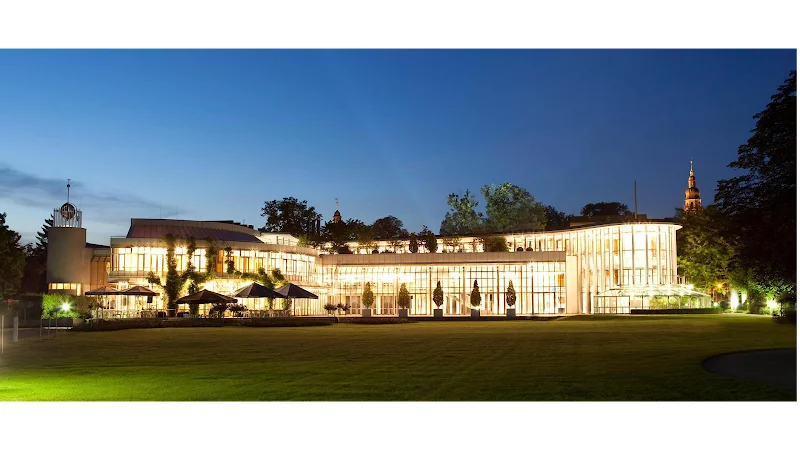
The Kongresshaus Rosengarten is closely linked to the urban development of Coburg. It was built by the Economic Development Corporation of the City of Coburg mbH between 1960 and 1962; between 1985 and 1987, a comprehensive renovation transformed it into a modern meeting place. On November 5, 1987, the house was reopened – since then, more than 10,000 events have taken place here. Architecturally, the transparent design with large window areas and delicate exterior braces stands out, drawing daylight deep into the interiors. Bright, high rooms, gently curved staircases, and the spatial interconnection with the Rosengarten shape the ambiance. The interior is consciously staged as an artistic environment: glass artworks and porcelain objects adorn the foyer and gallery. Those stepping out of the house towards the garden reach the Rosengarten with its paths, the Flood Fountain, and – just a few steps away – the Palm House. Functionally, it features a sophisticated ventilation system and modern climate technology that ensures good air even when the main hall is fully occupied. This combination of functional event architecture, artistic accents, and landscape embedding makes the venue's uniqueness. For organizers, this means short distances between urbanity and greenery, an increase in the quality of stay for guests, and a stage that can appear representative or intimate depending on the need. The utilization that has grown over decades – from conferences and meetings to balls and large shows – demonstrates the flexibility of the house. Additionally, the location at Berliner Platz 1: centrally accessible, well connected, and directly at the Rosengarten – a trademark that lives on in the name and fulfills the expectation of atmosphere.
Sources:
Show moreShow less
Kongresshaus Rosengarten | Events & Floor Plan Coburg
Located in the heart of Coburg, directly at the namesake Rosengarten, the Kongresshaus Rosengarten combines modern event technology, flexible room concepts, and a central location into a versatile event center. Here, concerts, shows, congresses, trade fairs, conferences, and cultural events take place – supported by an experienced team that coordinates planning, technology, logistics, security, and catering from a single source. The main hall with a balcony is the centerpiece for grand moments; additionally, light-flooded smaller halls and conference rooms are available. Thanks to the ICE connection at Coburg main station and the recommended large parking lot Anger in close proximity, the arrival for guests from the region and beyond is convenient. The official website provides a continuously updated event calendar and informs about the respective ticket outlets for each event. Those looking for a venue that is functional, central, and atmospheric will find the Kongresshaus Rosengarten the perfect setting – from workshops to glamorous ball evenings.
Events and Program at Kongresshaus Rosengarten Coburg
The event calendar of the Kongresshaus Rosengarten reflects the entire spectrum of what the location stands for: a mixed program of music, dance, shows, comedy, cabaret, readings, lectures, as well as fairs, exhibitions, and congresses. Because the stage and the balcony of the main hall are flexibly usable, very different formats – from purely acoustic concerts to elaborate show productions – can be efficiently realized. The calendar entries are continuously updated and provide relevant information for each date, including date, time, content, and notes on ticket sales and possible entry times. This is particularly helpful because ticket sales are not centralized but occur through various ticket outlets, ticket shops, or ticket platforms depending on the organizer. The website consolidates this information and directs interested parties to the correct provider. For regular visitors, signing up for the newsletter is also worthwhile to be informed early about new dates, ticket sales starts, or program changes. In terms of content, both organizers and audiences benefit from the central location: within walking distance is the Coburg city center with gastronomy and accommodation options, ideal for supporting programs or a relaxed conclusion after the event. Furthermore, the venue is designed with clear foyer areas and clear pathways to guide visitor flows and encourage encounters during breaks – a plus point for congresses and fairs that focus on networking and exhibitor contacts. For international participants, the connection via the ICE corridor Munich–Nuremberg–Erfurt–Berlin is attractive, as travel times are predictable and the schedule is reliable. Thus, a program is created that not only convinces in content but also provides a consistently coherent visitor experience thanks to infrastructure and service.
Parking and Access to Kongresshaus Rosengarten
Travelers by car should orient themselves to the recommended large parking lot Anger, which is located directly opposite or in close proximity to the Kongresshaus. This parking lot is explicitly named as the first choice on the official visitor page; additionally, there are more parking garages available in Coburg city center, which are indicated in the linked city and parking garage plans. For access, the website provides clear route recommendations: From the north, the B4 leads through the city center and the Frankenbrücke towards Anger; from the south, the A73 is exited at Untersiemau, and via the B289N, one goes to the city center and further to Anger; from the west, A70 and B303 are recommended towards Coburg, then B4 northwards; from the east, the B303 also connects to the B4, leading through the city center to Anger. Those traveling by train benefit from the ICE high-speed line between Munich, Nuremberg, Erfurt, and Berlin. Coburg main station is well connected, with taxi stands and bus stops located directly opposite. For the last stretch to the venue, guests use the nearby stop named Kongresshaus. This ensures a seamless, multimodal arrival: long-distance travel via ICE, regional public transport, and the final footpath or a short bus ride. Organizers can refer to these options in their invitations, thus promoting sustainable travel. In terms of delivery, the separate stage entrance allows for deliveries by truck – a practical advantage for show productions, tours, or fairs with larger equipment. For visitors, the combination of a nearby parking lot, public transport stop, and central location means one thing: short distances. Those who want to stay longer on-site will find green relaxation in the adjacent Rosengarten and a range of dining options in the city center, from casual to upscale.
Seating Plan, Hall Plan, and Seats in the Main Hall
The main hall is the heart of the venue and can be easily converted into different setups with a few adjustments. Officially, several capacity scenarios are designated: In row seating, up to 715 seats are available; if the balcony is included, the number of seats increases to up to 893. For events without seating – such as standing concerts, presentations with ample movement space, or fair formats – up to 1,100 visitors are possible. These key figures help organizers plan the dimensions of their event and assess early on which ticket contingents are realistic. However, a binding seating plan depends on the respective event. The reason for this is variable stage positions, different technical setups, and whether the balcony is opened. Therefore, organizers or the ticket providers they commission always publish the valid hall plan in the event announcement. Those already looking for specific seats should check the seating plan on the ticket page – there, blocks, rows, and possible sightlines are indicated. Additionally, it is advisable to pay attention to the notes in the event description, such as whether free seating applies or if numbered seats are offered. Important for productions with artists, choirs, or large show technology: The stage is flexible, and six artist dressing rooms of different sizes are available. This provides many options for event dramaturgy and seating comfort – from intimate proximity with reduced seating to a large backdrop with a balcony. Additionally, the official room pages also indicate seating variants beyond rows, such as banquet or parliamentary setups. Those planning a conference benefit from the possibility of using workshop rooms in parallel and staging plenary and keynote situations in the main hall. For exhibition spaces, the foyer and the balcony are suitable, opening up additional stand areas and communication zones.
Tickets and Advance Sales for Events at Kongresshaus Rosengarten
Since the Kongresshaus serves as an event center open to various external organizers, ticket sales are organized in a decentralized manner. The good news: The official event calendar consolidates all necessary information about the ticket outlets for each date. This means that interested parties can go directly from the calendar entry to the correct ticket platform or local ticket outlet. This structure has advantages for all parties involved: Organizers can use their established partners, while visitors receive a reliable source of information at a central location. Whether there is a box office for an event is also the responsibility of the respective organizer; corresponding notes can usually be found in the event description. For inquiries, the Kongresshaus provides not only a contact form but also a service hotline. Those who want to be on the safe side can keep an eye on ticket availability and subscribe to the newsletter; this way, ticket sales starts and additional dates can be recognized early. Relevant additional information that often appears in the calendar entries includes, for example, entry times, notes on bringing bags, possible age restrictions, break regulations, or information on accessibility on-site. Tip for groups: Especially with row seating with a balcony, it is worthwhile to secure tickets early to obtain contiguous seats. By the way, there are numerous dining options available in the vicinity – ideal for stopping by before the event or winding down the evening together after the concert.
Capacities, Rooms, and Equipment at a Glance
The capacities are transparently indicated and provide planning security. The main hall on the ground floor covers 660 square meters; with the balcony, it is 860 square meters. Seated events can accommodate up to about 900 guests, while standing events can host up to 1,100 guests. In addition, there are smaller halls and conference rooms that can be combined into various configurations using mobile partition walls. Examples from the official data: Small Hall 1 (77 m²) and Small Hall 2 (77 m²) each have up to 70 seats in row seating; Small Hall 3 (39 m²) offers up to 30 seats. Combinations such as Small Hall 1+2 (147 m²) can accommodate up to 140 seats, 2+3 (109 m²) up to 110 seats, and 1–3 (187 m²) up to 190 seats. Conference Room 1+2 with 69 m² is suitable for compact presentations or meetings and can accommodate up to 50 guests depending on the setup. Parliamentary seating and U-shaped layouts are also indicated, including guidelines for tables and blocks – helpful for conferences, seminars, and training formats. Technically, the house is designed for professional demands: modern communication and event technology, variable stage modules, separate artist areas, and a dedicated stage entrance that facilitates delivery by truck. For breaks and breakout sessions, the spacious rooftop terrace is ideal, which also opens up views into the Rosengarten, creating a strong atmosphere for informal conversations. The immediately adjacent foyer serves as a reception and exhibition area, allows for visitor guidance, and is suitable for information booths or sponsor presentations. In total, this results in a modular system from which organizers can choose the appropriate combination depending on their objectives – from an intimate workshop with 20 people to a large public evening event with a four-digit number of visitors.
History and Special Features of Kongresshaus Rosengarten
The Kongresshaus Rosengarten is closely linked to the urban development of Coburg. It was built by the Economic Development Corporation of the City of Coburg mbH between 1960 and 1962; between 1985 and 1987, a comprehensive renovation transformed it into a modern meeting place. On November 5, 1987, the house was reopened – since then, more than 10,000 events have taken place here. Architecturally, the transparent design with large window areas and delicate exterior braces stands out, drawing daylight deep into the interiors. Bright, high rooms, gently curved staircases, and the spatial interconnection with the Rosengarten shape the ambiance. The interior is consciously staged as an artistic environment: glass artworks and porcelain objects adorn the foyer and gallery. Those stepping out of the house towards the garden reach the Rosengarten with its paths, the Flood Fountain, and – just a few steps away – the Palm House. Functionally, it features a sophisticated ventilation system and modern climate technology that ensures good air even when the main hall is fully occupied. This combination of functional event architecture, artistic accents, and landscape embedding makes the venue's uniqueness. For organizers, this means short distances between urbanity and greenery, an increase in the quality of stay for guests, and a stage that can appear representative or intimate depending on the need. The utilization that has grown over decades – from conferences and meetings to balls and large shows – demonstrates the flexibility of the house. Additionally, the location at Berliner Platz 1: centrally accessible, well connected, and directly at the Rosengarten – a trademark that lives on in the name and fulfills the expectation of atmosphere.
Sources:
Kongresshaus Rosengarten | Events & Floor Plan Coburg
Located in the heart of Coburg, directly at the namesake Rosengarten, the Kongresshaus Rosengarten combines modern event technology, flexible room concepts, and a central location into a versatile event center. Here, concerts, shows, congresses, trade fairs, conferences, and cultural events take place – supported by an experienced team that coordinates planning, technology, logistics, security, and catering from a single source. The main hall with a balcony is the centerpiece for grand moments; additionally, light-flooded smaller halls and conference rooms are available. Thanks to the ICE connection at Coburg main station and the recommended large parking lot Anger in close proximity, the arrival for guests from the region and beyond is convenient. The official website provides a continuously updated event calendar and informs about the respective ticket outlets for each event. Those looking for a venue that is functional, central, and atmospheric will find the Kongresshaus Rosengarten the perfect setting – from workshops to glamorous ball evenings.
Events and Program at Kongresshaus Rosengarten Coburg
The event calendar of the Kongresshaus Rosengarten reflects the entire spectrum of what the location stands for: a mixed program of music, dance, shows, comedy, cabaret, readings, lectures, as well as fairs, exhibitions, and congresses. Because the stage and the balcony of the main hall are flexibly usable, very different formats – from purely acoustic concerts to elaborate show productions – can be efficiently realized. The calendar entries are continuously updated and provide relevant information for each date, including date, time, content, and notes on ticket sales and possible entry times. This is particularly helpful because ticket sales are not centralized but occur through various ticket outlets, ticket shops, or ticket platforms depending on the organizer. The website consolidates this information and directs interested parties to the correct provider. For regular visitors, signing up for the newsletter is also worthwhile to be informed early about new dates, ticket sales starts, or program changes. In terms of content, both organizers and audiences benefit from the central location: within walking distance is the Coburg city center with gastronomy and accommodation options, ideal for supporting programs or a relaxed conclusion after the event. Furthermore, the venue is designed with clear foyer areas and clear pathways to guide visitor flows and encourage encounters during breaks – a plus point for congresses and fairs that focus on networking and exhibitor contacts. For international participants, the connection via the ICE corridor Munich–Nuremberg–Erfurt–Berlin is attractive, as travel times are predictable and the schedule is reliable. Thus, a program is created that not only convinces in content but also provides a consistently coherent visitor experience thanks to infrastructure and service.
Parking and Access to Kongresshaus Rosengarten
Travelers by car should orient themselves to the recommended large parking lot Anger, which is located directly opposite or in close proximity to the Kongresshaus. This parking lot is explicitly named as the first choice on the official visitor page; additionally, there are more parking garages available in Coburg city center, which are indicated in the linked city and parking garage plans. For access, the website provides clear route recommendations: From the north, the B4 leads through the city center and the Frankenbrücke towards Anger; from the south, the A73 is exited at Untersiemau, and via the B289N, one goes to the city center and further to Anger; from the west, A70 and B303 are recommended towards Coburg, then B4 northwards; from the east, the B303 also connects to the B4, leading through the city center to Anger. Those traveling by train benefit from the ICE high-speed line between Munich, Nuremberg, Erfurt, and Berlin. Coburg main station is well connected, with taxi stands and bus stops located directly opposite. For the last stretch to the venue, guests use the nearby stop named Kongresshaus. This ensures a seamless, multimodal arrival: long-distance travel via ICE, regional public transport, and the final footpath or a short bus ride. Organizers can refer to these options in their invitations, thus promoting sustainable travel. In terms of delivery, the separate stage entrance allows for deliveries by truck – a practical advantage for show productions, tours, or fairs with larger equipment. For visitors, the combination of a nearby parking lot, public transport stop, and central location means one thing: short distances. Those who want to stay longer on-site will find green relaxation in the adjacent Rosengarten and a range of dining options in the city center, from casual to upscale.
Seating Plan, Hall Plan, and Seats in the Main Hall
The main hall is the heart of the venue and can be easily converted into different setups with a few adjustments. Officially, several capacity scenarios are designated: In row seating, up to 715 seats are available; if the balcony is included, the number of seats increases to up to 893. For events without seating – such as standing concerts, presentations with ample movement space, or fair formats – up to 1,100 visitors are possible. These key figures help organizers plan the dimensions of their event and assess early on which ticket contingents are realistic. However, a binding seating plan depends on the respective event. The reason for this is variable stage positions, different technical setups, and whether the balcony is opened. Therefore, organizers or the ticket providers they commission always publish the valid hall plan in the event announcement. Those already looking for specific seats should check the seating plan on the ticket page – there, blocks, rows, and possible sightlines are indicated. Additionally, it is advisable to pay attention to the notes in the event description, such as whether free seating applies or if numbered seats are offered. Important for productions with artists, choirs, or large show technology: The stage is flexible, and six artist dressing rooms of different sizes are available. This provides many options for event dramaturgy and seating comfort – from intimate proximity with reduced seating to a large backdrop with a balcony. Additionally, the official room pages also indicate seating variants beyond rows, such as banquet or parliamentary setups. Those planning a conference benefit from the possibility of using workshop rooms in parallel and staging plenary and keynote situations in the main hall. For exhibition spaces, the foyer and the balcony are suitable, opening up additional stand areas and communication zones.
Tickets and Advance Sales for Events at Kongresshaus Rosengarten
Since the Kongresshaus serves as an event center open to various external organizers, ticket sales are organized in a decentralized manner. The good news: The official event calendar consolidates all necessary information about the ticket outlets for each date. This means that interested parties can go directly from the calendar entry to the correct ticket platform or local ticket outlet. This structure has advantages for all parties involved: Organizers can use their established partners, while visitors receive a reliable source of information at a central location. Whether there is a box office for an event is also the responsibility of the respective organizer; corresponding notes can usually be found in the event description. For inquiries, the Kongresshaus provides not only a contact form but also a service hotline. Those who want to be on the safe side can keep an eye on ticket availability and subscribe to the newsletter; this way, ticket sales starts and additional dates can be recognized early. Relevant additional information that often appears in the calendar entries includes, for example, entry times, notes on bringing bags, possible age restrictions, break regulations, or information on accessibility on-site. Tip for groups: Especially with row seating with a balcony, it is worthwhile to secure tickets early to obtain contiguous seats. By the way, there are numerous dining options available in the vicinity – ideal for stopping by before the event or winding down the evening together after the concert.
Capacities, Rooms, and Equipment at a Glance
The capacities are transparently indicated and provide planning security. The main hall on the ground floor covers 660 square meters; with the balcony, it is 860 square meters. Seated events can accommodate up to about 900 guests, while standing events can host up to 1,100 guests. In addition, there are smaller halls and conference rooms that can be combined into various configurations using mobile partition walls. Examples from the official data: Small Hall 1 (77 m²) and Small Hall 2 (77 m²) each have up to 70 seats in row seating; Small Hall 3 (39 m²) offers up to 30 seats. Combinations such as Small Hall 1+2 (147 m²) can accommodate up to 140 seats, 2+3 (109 m²) up to 110 seats, and 1–3 (187 m²) up to 190 seats. Conference Room 1+2 with 69 m² is suitable for compact presentations or meetings and can accommodate up to 50 guests depending on the setup. Parliamentary seating and U-shaped layouts are also indicated, including guidelines for tables and blocks – helpful for conferences, seminars, and training formats. Technically, the house is designed for professional demands: modern communication and event technology, variable stage modules, separate artist areas, and a dedicated stage entrance that facilitates delivery by truck. For breaks and breakout sessions, the spacious rooftop terrace is ideal, which also opens up views into the Rosengarten, creating a strong atmosphere for informal conversations. The immediately adjacent foyer serves as a reception and exhibition area, allows for visitor guidance, and is suitable for information booths or sponsor presentations. In total, this results in a modular system from which organizers can choose the appropriate combination depending on their objectives – from an intimate workshop with 20 people to a large public evening event with a four-digit number of visitors.
History and Special Features of Kongresshaus Rosengarten
The Kongresshaus Rosengarten is closely linked to the urban development of Coburg. It was built by the Economic Development Corporation of the City of Coburg mbH between 1960 and 1962; between 1985 and 1987, a comprehensive renovation transformed it into a modern meeting place. On November 5, 1987, the house was reopened – since then, more than 10,000 events have taken place here. Architecturally, the transparent design with large window areas and delicate exterior braces stands out, drawing daylight deep into the interiors. Bright, high rooms, gently curved staircases, and the spatial interconnection with the Rosengarten shape the ambiance. The interior is consciously staged as an artistic environment: glass artworks and porcelain objects adorn the foyer and gallery. Those stepping out of the house towards the garden reach the Rosengarten with its paths, the Flood Fountain, and – just a few steps away – the Palm House. Functionally, it features a sophisticated ventilation system and modern climate technology that ensures good air even when the main hall is fully occupied. This combination of functional event architecture, artistic accents, and landscape embedding makes the venue's uniqueness. For organizers, this means short distances between urbanity and greenery, an increase in the quality of stay for guests, and a stage that can appear representative or intimate depending on the need. The utilization that has grown over decades – from conferences and meetings to balls and large shows – demonstrates the flexibility of the house. Additionally, the location at Berliner Platz 1: centrally accessible, well connected, and directly at the Rosengarten – a trademark that lives on in the name and fulfills the expectation of atmosphere.
Sources:
Upcoming Events
No events found
Frequently Asked Questions
Reviews
W I Heute
22. November 2025
Well designed, good atmosphere. Seating arrangement for the event was okay. If you have tall people sitting in front of you...limited view. Parking at the Anger. Very good.
Marko Ritter
30. November 2025
Overall a good location. Seating arrangement was okay. The view was good, great sound. Catering was adequate and parking is also nearby. Parking fee is acceptable.
He He
30. November 2025
Whenever I'm hungry and see, oh there's an event, I stroll in and help myself to the fine delicacies. You just have to look serious enough and suddenly you're part of the upper middle class like Friedrich Merz. So far, no one has noticed, and I've been able to eat very fine and fancy meals several times. I hope the food will be just as good at the next events. A small request to the event organizers: sausages with rolls, pizza rolls, or butter pretzels are a bit boring, don't you think? A salad bar or paninis would surely be well received by many guests. From the desserts, I recommend cinnamon rolls. Thanks.
Sascha Hagenbush
26. March 2024
Very nice location. We were here for a small fair. The house technicians were always on site and provided support where needed. The hall was clean at all times.
Anke Meinelt
31. March 2025
Always nice. The seating is arranged so that everyone can see the stage well.