
Höchberger Str., Würzburg
Höchberger Str., 97082 Würzburg, Germany
LGS Park of the State Garden Show of 1990 | Garden & Playground
The LGS Park of the State Garden Show of 1990 is one of the special green places in Würzburg because it combines garden art, city history, and local recreation in one location. The area below the Fortress Marienberg merges the Main meadows, old ramparts, and designed theme gardens into a park that does not feel like a mere memorial site, but rather like a lively urban space for walks, families, and events. Those who wander here experience the closeness to the fortress, wide sight lines, quiet corners, and surprisingly many different garden images. This mixture has made the area attractive for decades. The site serves not only for walking but also as a stage for partner cities, international encounters, and the popular water playground. It is thus a place where Würzburg showcases its openness and garden culture. ([wuerzburg.de](https://www.wuerzburg.de/themen/umwelt-klima/stadtnatur-und-biologische-vielfalt/urbanes-gruen/gelaende-der-landesgartenschau-1990/22440.Landesgartenschaugelaende-1990.html))
For search intentions around photos, images, reviews, directions, parking, opening hours, and events, this site is particularly exciting because it covers several themes at once: historical park facility, family-friendly recreational area, event backdrop, and starting point for paths to the Fortress Marienberg or the Käppele. The city of Würzburg describes the area as charming to this day, characterized by distinctive ramparts and diverse wildflower plantings. At the same time, it remains publicly accessible and is maintained, so it can be used in everyday life as well as for events. ([wuerzburg.de](https://www.wuerzburg.de/themen/umwelt-klima/stadtnatur-und-biologische-vielfalt/urbanes-gruen/gelaende-der-landesgartenschau-1990/22440.Landesgartenschaugelaende-1990.html))
Why the LGS Park Würzburg is still so popular today
The history of the area begins with the State Garden Show in 1990, which aimed to connect the Main meadows with the Marienberg on 14 hectares in the foreland of the fortress and to preserve the glacis facilities west of the Main as a continuation of the ring park. This planning idea is still palpable today, as the area does not form an isolated city park but rather a connecting band between river, slope, fortress, and city center. The path layout is deliberately designed to alternate between recreation, garden art, and enjoyment of nature. Each bend reveals new impressions, making the park particularly appealing for repeat visits. The city of Würzburg also emphasizes that the area, with its contributions from partner cities, the allotment garden, the theme gardens, and the water playground, continues to be an important leisure and recreation space in the city. ([wuerzburg.de](https://www.wuerzburg.de/themen/umwelt-klima/stadtnatur-und-biologische-vielfalt/urbanes-gruen/gelaende-der-landesgartenschau-1990/22440.Landesgartenschaugelaende-1990.html))
A crucial part of the attraction lies in the historical character of the site. More than a dozen highly diverse facilities were created between the wall sections in the north of the fortress. According to a city flyer, 2.5 million visitors enjoyed the State Garden Show in 1990, from which a multifaceted park developed, which has a historical focus at the foot of the Fortress Marienberg. This numerical picture explains why the place appeals to so many people today: it connects the memory of a major event with a lively use in everyday life. Thus, those who visit the park experience not only a piece of urban greenery but also the continued impact of a garden show that has sustainably shaped Würzburg. This is precisely why the LGS Park is so present in search queries for photos, reviews, and visits to Würzburg. ([wuerzburg.de](https://www.wuerzburg.de/themen/umwelt-verkehr/stadtnatur--biologische-vielfalt/oeffentlichesgrun/lgs-wuerzburg-1990-gmbh/m_438588))
The park is also unusually landscaped because it cannot be reduced to a single style. Characteristic ramparts, diverse wildflower plantings, and a deliberately guided path structure create a varied image. Instead of a large open meadow or a purely formal facility, the area offers small surprises, sight lines, and perspective changes. This design is one of the reasons why visitors often describe the place as calm, peaceful, and simultaneously varied. The interplay of urban nature, garden art, and local recreation makes the area interesting for families, walkers, photography enthusiasts, and people seeking a quiet place with history. ([wuerzburg.de](https://www.wuerzburg.de/themen/umwelt-klima/stadtnatur-und-biologische-vielfalt/urbanes-gruen/gelaende-der-landesgartenschau-1990/22440.Landesgartenschaugelaende-1990.html))
Japanese Garden, Partner Gardens, and International Garden Art
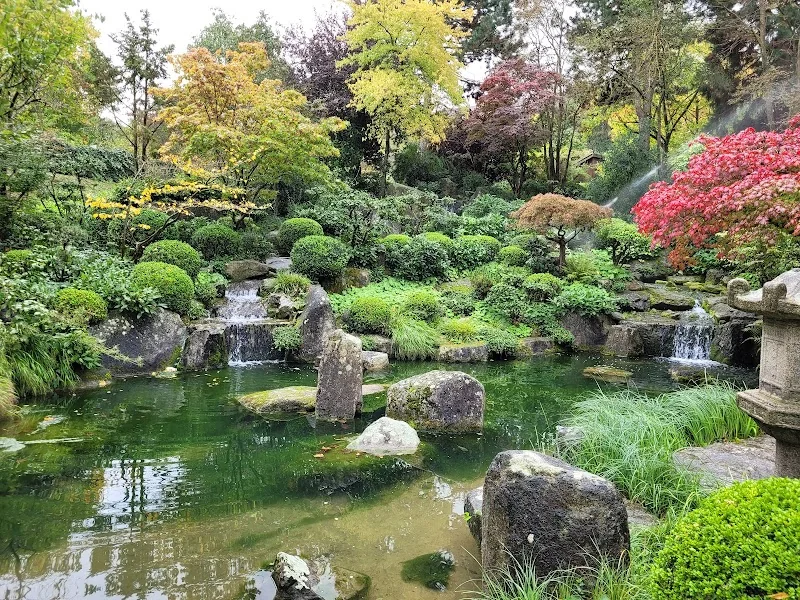
One of the most well-known parts of the LGS Park is the Japanese Garden, which was created on the occasion of the State Garden Show 1990 as a contribution from the Japanese partner city of Otsu. It was developed with the planning and support of the landscape architecture firm of Prof. Nakane and is meant to make the connection between both cities visible. The garden is named Ohmi-no-niwa and refers to the present-day prefecture of Shiga, whose former name was Ohmi. Otsu is located on Lake Biwa, the largest inland lake in Japan, and this landscape is miniaturized in the garden. Artificial hills, forests, a water source, and pathways follow a traditional Japanese gardening style that emphasizes changing perspectives and inner tranquility. ([wuerzburg.de](https://www.wuerzburg.de/themen/umwelt-klima/stadtnatur-und-biologische-vielfalt/urbanes-gruen/gelaende-der-landesgartenschau-1990))
Particularly impressive is the material and form language of the Japanese Garden. Granite boulders from the Fichtelgebirge form the basic structure, the pond represents Lake Biwa, and the gravel beach refers to Otsu's location by the lake. The island is symbolically chosen and is meant to resemble a turtle, which in Japanese and Chinese tradition is a symbol of immortality. A suggested mountain landscape and a waterfall complete the miniature landscape. The city describes the garden today as one of the most visited partnership gardens on the site. For visitors, this is more than just an exotic detail: the garden gives the park an international centerpiece and is a strong motif for photos, reports, and personal recommendations. ([wuerzburg.de](https://www.wuerzburg.de/themen/umwelt-klima/stadtnatur-und-biologische-vielfalt/urbanes-gruen/gelaende-der-landesgartenschau-1990))
In addition to the Japanese Garden, other partner gardens shape the area. The Norman House, the Scottish Garden, the American Lilac Garden, as well as the later added gardens from Wicklow, Mwanza, and Umeå represent Würzburg's city partnerships and the idea of making international relations visible in public space. The city emphasizes that these contributions were attractions then and still are today. This diversity explains why the area is perceived not only as a park but also as a place of cultural encounter. Those who walk through the facility are always moving through a lived memory of partnership, exchange, and European as well as global interconnectedness. ([wuerzburg.de](https://www.wuerzburg.de/themen/umwelt-klima/stadtnatur-und-biologische-vielfalt/urbanes-gruen/gelaende-der-landesgartenschau-1990/22440.Landesgartenschaugelaende-1990.html))
The Mwanza Garden sets its own accent with its mini version of the Bismarck Rock in Lake Victoria. According to the city, about 60 tons of rock were used for this and around 2000 hours of work were spent. The 50th anniversary of the partnership with Mwanza in 2016 was the occasion for this garden. The Umeå Garden, which has existed since 2018, also complements the ensemble: it reflects the Nordic landscape with stacked birch logs, forest grasses, ferns, a hay rider, and a preserved apple tree. Together, these facilities make it clear that the LGS Park is less a uniform green space and more a small panorama of international garden ideas. ([wuerzburg.de](https://www.wuerzburg.de/themen/umwelt-klima/stadtnatur-und-biologische-vielfalt/urbanes-gruen/gelaende-der-landesgartenschau-1990))
Water Playground, Rose Garden, and Kneipp Garden
For families, the water playground is one of the biggest attractions of the LGS Park. The city of Würzburg describes it as a highly visited area that particularly fosters children's creativity and provides them space to play, especially in summer. Since 2012, the area has been complemented by a sun sail installed by the gardening office during the warm season to protect children from excessive sun exposure. This combination of play value, shade, and connection to nature makes the place pleasant for families to use. The water playground is thus not just an additional offer but a central reason why the park frequently appears in search queries related to children's activities, leisure, and excursion destinations. ([wuerzburg.de](https://www.wuerzburg.de/themen/umwelt-klima/stadtnatur-und-biologische-vielfalt/urbanes-gruen/gelaende-der-landesgartenschau-1990/22440.Landesgartenschaugelaende-1990.html))
The quieter garden spaces also have their fixed place. The city highlights the Kneipp Garden, where visitors can learn about valuable medicinal herbs. The Rose Garden, on the other hand, is a place where many walkers find the sought-after relaxation. Both areas show that the site does not only rely on events and international garden contributions but also on classic relaxation in green spaces. Those who prefer a quieter visit will find sections here where scent, plant knowledge, and slow walking take center stage. This balance between activity and tranquility is typical for the LGS Park. ([wuerzburg.de](https://www.wuerzburg.de/themen/umwelt-klima/stadtnatur-und-biologische-vielfalt/urbanes-gruen/gelaende-der-landesgartenschau-1990/22440.Landesgartenschaugelaende-1990.html))
Additionally, there is a model allotment garden established in 1990, which is now used and appreciated by many citizens of Würzburg and is publicly accessible. This gives the area a down-to-earth character that complements the representative partner gardens very well. While the Japanese Garden and other special gardens set strong focal points, the allotment gardens convey everyday closeness and urban garden culture. The area thus shows different forms of greenery: representative, educational, playful, and practical. The combination of water playground, medicinal plants, rose garden, and allotment garden makes the park attractive for different target groups. Parents, walkers, garden enthusiasts, and people simply looking for a quiet break will find suitable areas here. ([wuerzburg.de](https://www.wuerzburg.de/themen/umwelt-klima/stadtnatur-und-biologische-vielfalt/urbanes-gruen/gelaende-der-landesgartenschau-1990/22440.Landesgartenschaugelaende-1990.html))
Moreover, the area is landscaped within the urban space. From the park, not only short stays can be planned, but also longer walks. The paths run between wall sections, plantings, and partner gardens, so the park continually creates new perspectives. The city explicitly describes the path layout as an invitation to recreation, garden art, and enjoyment of nature. For SEO search queries for images of LGS Park Würzburg, water playground Würzburg, or rose garden Würzburg, this is particularly relevant: those searching for photos here are usually looking for a mix of family, nature, and calm urban greenery. This search is very well served in the area. ([wuerzburg.de](https://www.wuerzburg.de/themen/umwelt-klima/stadtnatur-und-biologische-vielfalt/urbanes-gruen/gelaende-der-landesgartenschau-1990/22440.Landesgartenschaugelaende-1990.html))
Spring International in the State Garden Show Park
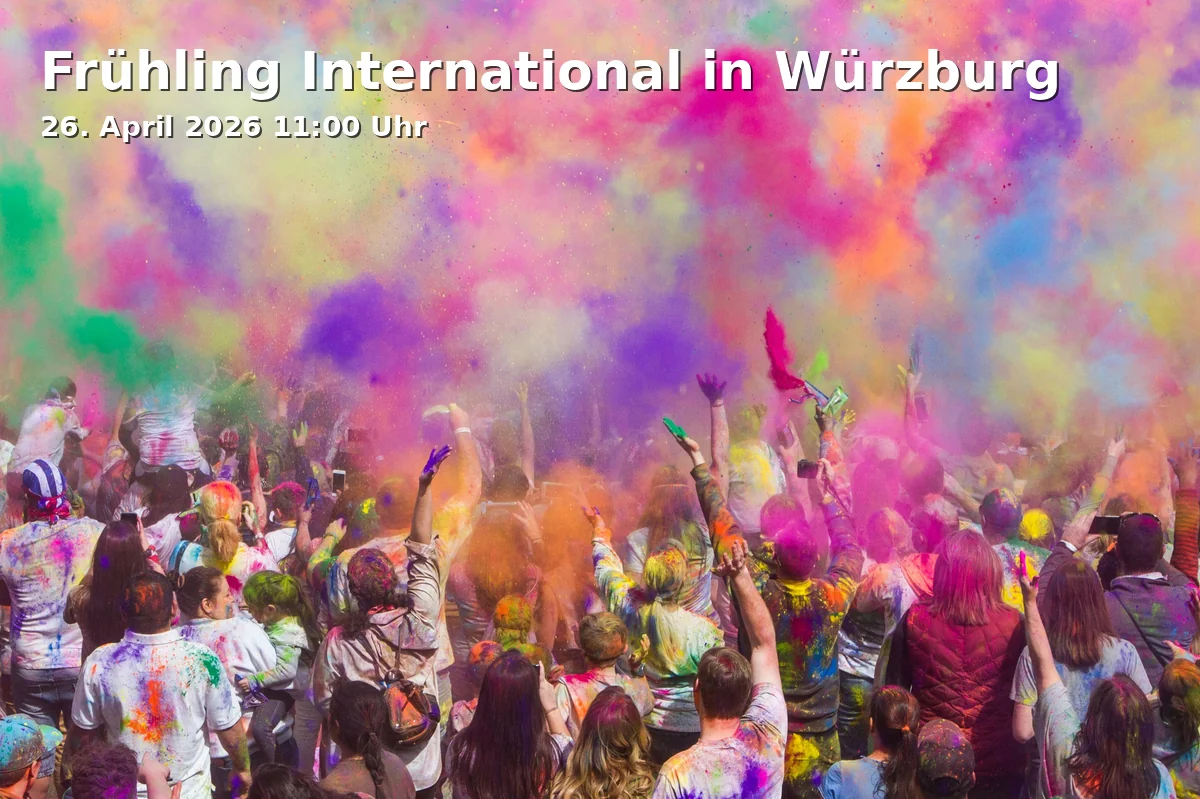
The park plays a special role as a venue for Spring International. The city of Würzburg has described the area for years as a wonderful backdrop for this event of the Würzburg International Societies, where partner countries and partner cities are presented. Thus, the area fulfills a function that goes far beyond a mere park visit. It becomes a place of exchange, information, and cultural encounter. This mixture of green space and internationality makes the LGS Park so relevant for event searches and inquiries. ([wuerzburg.de](https://www.wuerzburg.de/themen/umwelt-klima/stadtnatur-und-biologische-vielfalt/urbanes-gruen/gelaende-der-landesgartenschau-1990/22440.Landesgartenschaugelaende-1990.html))
The current leaflet for 2025 shows very concretely how lively this format is: Spring International and Europe Day took place on May 11, 2025, from 11:00 AM to 5:30 PM in the State Garden Show Park 1990 below the fortress, and admission was free. Various associations, initiatives, and cultural groups are mentioned, along with information, culinary samples, music, dance, and games. The map refers to different areas such as the Rose Garden, Wicklow Garden, Giant Mountains Garden, Mwanza Garden, Norman House, Rochester Garden, Salamantic Bull, Bastion, Crafts Pavilion, Chessboard, and Apothecary Garden. This illustrates how strongly the area is used as a stage for diversity and participation. ([wuerzburg.de](https://www.wuerzburg.de/media/www.wuerzburg.de/org/med_514383/592644_fruhling_inter_faltblatt-2025-rz-mit.pdf))
What is particularly interesting is that the event does not only take place statically in one place but utilizes the entire park as an experiential space. Europe Day was designated in the area in front of the environmental station, and the accesses were described via Peace Bridge, Zeller Gate, Zeller Street, and Höchberger Street. This transforms the park into a walkable cultural parcours during the event. For visitors, this means a different way of perception: not only plants and paths are in focus, but also booths, programs, and encounters. Those searching for Spring International Würzburg are usually looking for this lively connection of garden, culture, and international urban society. ([wuerzburg.de](https://www.wuerzburg.de/media/www.wuerzburg.de/org/med_514383/592644_fruhling_inter_faltblatt-2025-rz-mit.pdf))
Content-wise, the event fits very well with the character of the area. The partner gardens come from different countries and partner cities, and the event uses this diversity as a narrative foundation. The area was already designed for exchange in 1990, and today this idea is filled with social content. The backdrop of fortress hill, green spaces, and theme gardens gives the whole thing a distinctive atmosphere. Those looking for a location that is more than just a mere event venue will find a convincing mix of identity, openness, and urban landscape here. ([wuerzburg.de](https://www.wuerzburg.de/themen/umwelt-klima/stadtnatur-und-biologische-vielfalt/urbanes-gruen/gelaende-der-landesgartenschau-1990/22440.Landesgartenschaugelaende-1990.html))
Opening Hours, Directions, and Parking at the State Garden Show Grounds
Practically important are the current access times. The official information material states that for the State Garden Show Park, the opening hours from November to March are from 07:00 AM to 05:00 PM, on Saturdays, Sundays, and holidays from 08:00 AM to 05:00 PM. From April to October, the area is open daily from 07:00 AM to 09:00 PM, on Saturdays, Sundays, and holidays from 08:00 AM to 09:00 PM. Another city document adds that during opening hours, entering and leaving is possible, and outside of opening hours, staying in the park is not allowed. This is especially important for visitors planning walks, evening rounds, or photo tours. ([wuerzburg.de](https://www.wuerzburg.de/themen/umwelt-verkehr/stadtnatur--biologische-vielfalt/oeffentlichesgrun/lgs-wuerzburg-1990-gmbh/m_438588))
For directions, the official note from the environmental station, which is directly connected to the site, is helpful. By car, the route leads via Zeller Street into Nigglweg, either from the direction of Wörth, Frankfurt, or Höchberger Street or from the direction of Dreikronenstraße and Saalgasse. Public parking spaces can be found in front of the building. The environmental station can be reached by tram via lines 2 or 4 to Neunerplatz and then about a five-minute walk. For search queries like directions LGS Park Würzburg or parking Würzburg Zellerau, this is the most useful local information as it provides a real entry point into the visitor path. ([wuerzburg.de](https://www.wuerzburg.de/28930))
The park is also part of a larger urban path network. The tourism page describes that from the State Garden Show Park of 1990, the Fortress Marienberg can be hiked along paved paths. Thus, the area is not only a destination in itself but also a starting point for further tours towards the fortress and Käppele. Those wishing to combine their visit with a city walk will find a meaningful transition between local recreation and tourist route. This is particularly attractive for guests without a car or with limited time, as the park functions as a link between the city center, fortress, and riverside. ([wuerzburg.de](https://www.wuerzburg.de/tourismus/wuerzburg-entdecken/freizeitangebote/wandererlaeufer/405493.Tour-4-Rund-um-die-Festung-Marienberg-und-das-Kaeppele.html))
For parking searches in the wider city area, the city of Würzburg generally refers to a well-developed parking offer. However, the environmental station itself provides the most immediate parking orientation, as public spaces are directly mentioned there. This is particularly practical for families, event guests, and people with a short visiting window. Those primarily aiming for the park and the environmental station thus have a clear entry point. In combination with public accessibility by tram, the area is therefore well usable for both drivers and public transport users. ([wuerzburg.de](https://www.wuerzburg.de/28930))
Norman House and the Path to Fortress Marienberg
The Norman House is one of the most distinctive buildings in the park. According to the city of Würzburg, all materials for it were brought from Caen in September 1988: beams, limestone, roof tiles, windows, doors, and even the clay. In total, it was 35 tons of material, including 6.5-meter-long oak beams. Craftsmen and builders erected the house in just four weeks in traditional style. During the State Garden Show 1990, it primarily served as a meeting point for events and an exhibition space in the spirit of Franco-German friendship. Today, it can be rented for private celebrations. This makes the building a true anchor point between history, architecture, and use. ([wuerzburg.de](https://www.wuerzburg.de/themen/umwelt-klima/stadtnatur-und-biologische-vielfalt/urbanes-gruen/gelaende-der-landesgartenschau-1990))
For usage, the practical data is also interesting. The city mentions a seasonal rental from May to September, a rental agreement through the gardening office, a capacity of up to 40 people, and a room size of about 50 square meters. Additionally, a usage fee per day, a cleaning fee, and a deposit for the key are listed. The existing inventory includes beer table sets, standing beer tables, large beverage refrigerators, a hot water boiler, and a kitchenette with cooking facilities. This makes the house suitable for smaller celebrations, private meetings, and atmospheric occasions in an extraordinary environment. For search queries related to Norman House Würzburg or venue with garden reference, the park thus provides a very concrete offer. ([wuerzburg.de](https://www.wuerzburg.de/media/www.wuerzburg.de/org/med_17155/549139_informationen_normannisches_landhaus_1.pdf?utm_source=openai))
The area also offers a special quality for walks. The city describes that a footpath over the fortress and the subsequent vineyard leads to the Löwenbrücke and thus to the southern end of the glacis. The tourism route around the Fortress Marienberg and the Käppele starts at the State Garden Show Park of 1990 and continues along paved paths. The LGS Park is thus not only a quiet place to stay but part of a larger hiking and experience system. Those exploring the location on foot can connect garden art, city history, and views of Würzburg in a single round. ([wuerzburg.de](https://www.wuerzburg.de/themen/umwelt-verkehr/stadtnatur--biologische-vielfalt/oeffentlichesgrun/lgs-wuerzburg-1990-gmbh/m_438588))
This connection also makes the area interesting for visitors who are not only looking for a photo destination but a genuine excursion model. One can start in the park, view the partner gardens, pause at the water playground, and then continue to the fortress. For Würzburg, the area is therefore an ideal transitional space between city and landscape, between cultural narrative and physical movement. The combination of international garden ensemble, event backdrop, and footpath to Fortress Marienberg explains why the facility has remained so present in the consciousness of the city for decades. ([wuerzburg.de](https://www.wuerzburg.de/themen/umwelt-klima/stadtnatur-und-biologische-vielfalt/urbanes-gruen/gelaende-der-landesgartenschau-1990/22440.Landesgartenschaugelaende-1990.html))
Sources:
- City of Würzburg - State Garden Show Grounds 1990
- City of Würzburg - Japanese Garden and Partner Gardens
- City of Würzburg - Information on Renting the Norman House
- City of Würzburg - Spring International 2025
- City of Würzburg - Environmental Station: How to Reach Us
- City of Würzburg - Around the Fortress Marienberg and the Käppele
Show moreShow less
LGS Park of the State Garden Show of 1990 | Garden & Playground
The LGS Park of the State Garden Show of 1990 is one of the special green places in Würzburg because it combines garden art, city history, and local recreation in one location. The area below the Fortress Marienberg merges the Main meadows, old ramparts, and designed theme gardens into a park that does not feel like a mere memorial site, but rather like a lively urban space for walks, families, and events. Those who wander here experience the closeness to the fortress, wide sight lines, quiet corners, and surprisingly many different garden images. This mixture has made the area attractive for decades. The site serves not only for walking but also as a stage for partner cities, international encounters, and the popular water playground. It is thus a place where Würzburg showcases its openness and garden culture. ([wuerzburg.de](https://www.wuerzburg.de/themen/umwelt-klima/stadtnatur-und-biologische-vielfalt/urbanes-gruen/gelaende-der-landesgartenschau-1990/22440.Landesgartenschaugelaende-1990.html))
For search intentions around photos, images, reviews, directions, parking, opening hours, and events, this site is particularly exciting because it covers several themes at once: historical park facility, family-friendly recreational area, event backdrop, and starting point for paths to the Fortress Marienberg or the Käppele. The city of Würzburg describes the area as charming to this day, characterized by distinctive ramparts and diverse wildflower plantings. At the same time, it remains publicly accessible and is maintained, so it can be used in everyday life as well as for events. ([wuerzburg.de](https://www.wuerzburg.de/themen/umwelt-klima/stadtnatur-und-biologische-vielfalt/urbanes-gruen/gelaende-der-landesgartenschau-1990/22440.Landesgartenschaugelaende-1990.html))
Why the LGS Park Würzburg is still so popular today
The history of the area begins with the State Garden Show in 1990, which aimed to connect the Main meadows with the Marienberg on 14 hectares in the foreland of the fortress and to preserve the glacis facilities west of the Main as a continuation of the ring park. This planning idea is still palpable today, as the area does not form an isolated city park but rather a connecting band between river, slope, fortress, and city center. The path layout is deliberately designed to alternate between recreation, garden art, and enjoyment of nature. Each bend reveals new impressions, making the park particularly appealing for repeat visits. The city of Würzburg also emphasizes that the area, with its contributions from partner cities, the allotment garden, the theme gardens, and the water playground, continues to be an important leisure and recreation space in the city. ([wuerzburg.de](https://www.wuerzburg.de/themen/umwelt-klima/stadtnatur-und-biologische-vielfalt/urbanes-gruen/gelaende-der-landesgartenschau-1990/22440.Landesgartenschaugelaende-1990.html))
A crucial part of the attraction lies in the historical character of the site. More than a dozen highly diverse facilities were created between the wall sections in the north of the fortress. According to a city flyer, 2.5 million visitors enjoyed the State Garden Show in 1990, from which a multifaceted park developed, which has a historical focus at the foot of the Fortress Marienberg. This numerical picture explains why the place appeals to so many people today: it connects the memory of a major event with a lively use in everyday life. Thus, those who visit the park experience not only a piece of urban greenery but also the continued impact of a garden show that has sustainably shaped Würzburg. This is precisely why the LGS Park is so present in search queries for photos, reviews, and visits to Würzburg. ([wuerzburg.de](https://www.wuerzburg.de/themen/umwelt-verkehr/stadtnatur--biologische-vielfalt/oeffentlichesgrun/lgs-wuerzburg-1990-gmbh/m_438588))
The park is also unusually landscaped because it cannot be reduced to a single style. Characteristic ramparts, diverse wildflower plantings, and a deliberately guided path structure create a varied image. Instead of a large open meadow or a purely formal facility, the area offers small surprises, sight lines, and perspective changes. This design is one of the reasons why visitors often describe the place as calm, peaceful, and simultaneously varied. The interplay of urban nature, garden art, and local recreation makes the area interesting for families, walkers, photography enthusiasts, and people seeking a quiet place with history. ([wuerzburg.de](https://www.wuerzburg.de/themen/umwelt-klima/stadtnatur-und-biologische-vielfalt/urbanes-gruen/gelaende-der-landesgartenschau-1990/22440.Landesgartenschaugelaende-1990.html))
Japanese Garden, Partner Gardens, and International Garden Art
One of the most well-known parts of the LGS Park is the Japanese Garden, which was created on the occasion of the State Garden Show 1990 as a contribution from the Japanese partner city of Otsu. It was developed with the planning and support of the landscape architecture firm of Prof. Nakane and is meant to make the connection between both cities visible. The garden is named Ohmi-no-niwa and refers to the present-day prefecture of Shiga, whose former name was Ohmi. Otsu is located on Lake Biwa, the largest inland lake in Japan, and this landscape is miniaturized in the garden. Artificial hills, forests, a water source, and pathways follow a traditional Japanese gardening style that emphasizes changing perspectives and inner tranquility. ([wuerzburg.de](https://www.wuerzburg.de/themen/umwelt-klima/stadtnatur-und-biologische-vielfalt/urbanes-gruen/gelaende-der-landesgartenschau-1990))
Particularly impressive is the material and form language of the Japanese Garden. Granite boulders from the Fichtelgebirge form the basic structure, the pond represents Lake Biwa, and the gravel beach refers to Otsu's location by the lake. The island is symbolically chosen and is meant to resemble a turtle, which in Japanese and Chinese tradition is a symbol of immortality. A suggested mountain landscape and a waterfall complete the miniature landscape. The city describes the garden today as one of the most visited partnership gardens on the site. For visitors, this is more than just an exotic detail: the garden gives the park an international centerpiece and is a strong motif for photos, reports, and personal recommendations. ([wuerzburg.de](https://www.wuerzburg.de/themen/umwelt-klima/stadtnatur-und-biologische-vielfalt/urbanes-gruen/gelaende-der-landesgartenschau-1990))
In addition to the Japanese Garden, other partner gardens shape the area. The Norman House, the Scottish Garden, the American Lilac Garden, as well as the later added gardens from Wicklow, Mwanza, and Umeå represent Würzburg's city partnerships and the idea of making international relations visible in public space. The city emphasizes that these contributions were attractions then and still are today. This diversity explains why the area is perceived not only as a park but also as a place of cultural encounter. Those who walk through the facility are always moving through a lived memory of partnership, exchange, and European as well as global interconnectedness. ([wuerzburg.de](https://www.wuerzburg.de/themen/umwelt-klima/stadtnatur-und-biologische-vielfalt/urbanes-gruen/gelaende-der-landesgartenschau-1990/22440.Landesgartenschaugelaende-1990.html))
The Mwanza Garden sets its own accent with its mini version of the Bismarck Rock in Lake Victoria. According to the city, about 60 tons of rock were used for this and around 2000 hours of work were spent. The 50th anniversary of the partnership with Mwanza in 2016 was the occasion for this garden. The Umeå Garden, which has existed since 2018, also complements the ensemble: it reflects the Nordic landscape with stacked birch logs, forest grasses, ferns, a hay rider, and a preserved apple tree. Together, these facilities make it clear that the LGS Park is less a uniform green space and more a small panorama of international garden ideas. ([wuerzburg.de](https://www.wuerzburg.de/themen/umwelt-klima/stadtnatur-und-biologische-vielfalt/urbanes-gruen/gelaende-der-landesgartenschau-1990))
Water Playground, Rose Garden, and Kneipp Garden
For families, the water playground is one of the biggest attractions of the LGS Park. The city of Würzburg describes it as a highly visited area that particularly fosters children's creativity and provides them space to play, especially in summer. Since 2012, the area has been complemented by a sun sail installed by the gardening office during the warm season to protect children from excessive sun exposure. This combination of play value, shade, and connection to nature makes the place pleasant for families to use. The water playground is thus not just an additional offer but a central reason why the park frequently appears in search queries related to children's activities, leisure, and excursion destinations. ([wuerzburg.de](https://www.wuerzburg.de/themen/umwelt-klima/stadtnatur-und-biologische-vielfalt/urbanes-gruen/gelaende-der-landesgartenschau-1990/22440.Landesgartenschaugelaende-1990.html))
The quieter garden spaces also have their fixed place. The city highlights the Kneipp Garden, where visitors can learn about valuable medicinal herbs. The Rose Garden, on the other hand, is a place where many walkers find the sought-after relaxation. Both areas show that the site does not only rely on events and international garden contributions but also on classic relaxation in green spaces. Those who prefer a quieter visit will find sections here where scent, plant knowledge, and slow walking take center stage. This balance between activity and tranquility is typical for the LGS Park. ([wuerzburg.de](https://www.wuerzburg.de/themen/umwelt-klima/stadtnatur-und-biologische-vielfalt/urbanes-gruen/gelaende-der-landesgartenschau-1990/22440.Landesgartenschaugelaende-1990.html))
Additionally, there is a model allotment garden established in 1990, which is now used and appreciated by many citizens of Würzburg and is publicly accessible. This gives the area a down-to-earth character that complements the representative partner gardens very well. While the Japanese Garden and other special gardens set strong focal points, the allotment gardens convey everyday closeness and urban garden culture. The area thus shows different forms of greenery: representative, educational, playful, and practical. The combination of water playground, medicinal plants, rose garden, and allotment garden makes the park attractive for different target groups. Parents, walkers, garden enthusiasts, and people simply looking for a quiet break will find suitable areas here. ([wuerzburg.de](https://www.wuerzburg.de/themen/umwelt-klima/stadtnatur-und-biologische-vielfalt/urbanes-gruen/gelaende-der-landesgartenschau-1990/22440.Landesgartenschaugelaende-1990.html))
Moreover, the area is landscaped within the urban space. From the park, not only short stays can be planned, but also longer walks. The paths run between wall sections, plantings, and partner gardens, so the park continually creates new perspectives. The city explicitly describes the path layout as an invitation to recreation, garden art, and enjoyment of nature. For SEO search queries for images of LGS Park Würzburg, water playground Würzburg, or rose garden Würzburg, this is particularly relevant: those searching for photos here are usually looking for a mix of family, nature, and calm urban greenery. This search is very well served in the area. ([wuerzburg.de](https://www.wuerzburg.de/themen/umwelt-klima/stadtnatur-und-biologische-vielfalt/urbanes-gruen/gelaende-der-landesgartenschau-1990/22440.Landesgartenschaugelaende-1990.html))
Spring International in the State Garden Show Park
The park plays a special role as a venue for Spring International. The city of Würzburg has described the area for years as a wonderful backdrop for this event of the Würzburg International Societies, where partner countries and partner cities are presented. Thus, the area fulfills a function that goes far beyond a mere park visit. It becomes a place of exchange, information, and cultural encounter. This mixture of green space and internationality makes the LGS Park so relevant for event searches and inquiries. ([wuerzburg.de](https://www.wuerzburg.de/themen/umwelt-klima/stadtnatur-und-biologische-vielfalt/urbanes-gruen/gelaende-der-landesgartenschau-1990/22440.Landesgartenschaugelaende-1990.html))
The current leaflet for 2025 shows very concretely how lively this format is: Spring International and Europe Day took place on May 11, 2025, from 11:00 AM to 5:30 PM in the State Garden Show Park 1990 below the fortress, and admission was free. Various associations, initiatives, and cultural groups are mentioned, along with information, culinary samples, music, dance, and games. The map refers to different areas such as the Rose Garden, Wicklow Garden, Giant Mountains Garden, Mwanza Garden, Norman House, Rochester Garden, Salamantic Bull, Bastion, Crafts Pavilion, Chessboard, and Apothecary Garden. This illustrates how strongly the area is used as a stage for diversity and participation. ([wuerzburg.de](https://www.wuerzburg.de/media/www.wuerzburg.de/org/med_514383/592644_fruhling_inter_faltblatt-2025-rz-mit.pdf))
What is particularly interesting is that the event does not only take place statically in one place but utilizes the entire park as an experiential space. Europe Day was designated in the area in front of the environmental station, and the accesses were described via Peace Bridge, Zeller Gate, Zeller Street, and Höchberger Street. This transforms the park into a walkable cultural parcours during the event. For visitors, this means a different way of perception: not only plants and paths are in focus, but also booths, programs, and encounters. Those searching for Spring International Würzburg are usually looking for this lively connection of garden, culture, and international urban society. ([wuerzburg.de](https://www.wuerzburg.de/media/www.wuerzburg.de/org/med_514383/592644_fruhling_inter_faltblatt-2025-rz-mit.pdf))
Content-wise, the event fits very well with the character of the area. The partner gardens come from different countries and partner cities, and the event uses this diversity as a narrative foundation. The area was already designed for exchange in 1990, and today this idea is filled with social content. The backdrop of fortress hill, green spaces, and theme gardens gives the whole thing a distinctive atmosphere. Those looking for a location that is more than just a mere event venue will find a convincing mix of identity, openness, and urban landscape here. ([wuerzburg.de](https://www.wuerzburg.de/themen/umwelt-klima/stadtnatur-und-biologische-vielfalt/urbanes-gruen/gelaende-der-landesgartenschau-1990/22440.Landesgartenschaugelaende-1990.html))
Opening Hours, Directions, and Parking at the State Garden Show Grounds
Practically important are the current access times. The official information material states that for the State Garden Show Park, the opening hours from November to March are from 07:00 AM to 05:00 PM, on Saturdays, Sundays, and holidays from 08:00 AM to 05:00 PM. From April to October, the area is open daily from 07:00 AM to 09:00 PM, on Saturdays, Sundays, and holidays from 08:00 AM to 09:00 PM. Another city document adds that during opening hours, entering and leaving is possible, and outside of opening hours, staying in the park is not allowed. This is especially important for visitors planning walks, evening rounds, or photo tours. ([wuerzburg.de](https://www.wuerzburg.de/themen/umwelt-verkehr/stadtnatur--biologische-vielfalt/oeffentlichesgrun/lgs-wuerzburg-1990-gmbh/m_438588))
For directions, the official note from the environmental station, which is directly connected to the site, is helpful. By car, the route leads via Zeller Street into Nigglweg, either from the direction of Wörth, Frankfurt, or Höchberger Street or from the direction of Dreikronenstraße and Saalgasse. Public parking spaces can be found in front of the building. The environmental station can be reached by tram via lines 2 or 4 to Neunerplatz and then about a five-minute walk. For search queries like directions LGS Park Würzburg or parking Würzburg Zellerau, this is the most useful local information as it provides a real entry point into the visitor path. ([wuerzburg.de](https://www.wuerzburg.de/28930))
The park is also part of a larger urban path network. The tourism page describes that from the State Garden Show Park of 1990, the Fortress Marienberg can be hiked along paved paths. Thus, the area is not only a destination in itself but also a starting point for further tours towards the fortress and Käppele. Those wishing to combine their visit with a city walk will find a meaningful transition between local recreation and tourist route. This is particularly attractive for guests without a car or with limited time, as the park functions as a link between the city center, fortress, and riverside. ([wuerzburg.de](https://www.wuerzburg.de/tourismus/wuerzburg-entdecken/freizeitangebote/wandererlaeufer/405493.Tour-4-Rund-um-die-Festung-Marienberg-und-das-Kaeppele.html))
For parking searches in the wider city area, the city of Würzburg generally refers to a well-developed parking offer. However, the environmental station itself provides the most immediate parking orientation, as public spaces are directly mentioned there. This is particularly practical for families, event guests, and people with a short visiting window. Those primarily aiming for the park and the environmental station thus have a clear entry point. In combination with public accessibility by tram, the area is therefore well usable for both drivers and public transport users. ([wuerzburg.de](https://www.wuerzburg.de/28930))
Norman House and the Path to Fortress Marienberg
The Norman House is one of the most distinctive buildings in the park. According to the city of Würzburg, all materials for it were brought from Caen in September 1988: beams, limestone, roof tiles, windows, doors, and even the clay. In total, it was 35 tons of material, including 6.5-meter-long oak beams. Craftsmen and builders erected the house in just four weeks in traditional style. During the State Garden Show 1990, it primarily served as a meeting point for events and an exhibition space in the spirit of Franco-German friendship. Today, it can be rented for private celebrations. This makes the building a true anchor point between history, architecture, and use. ([wuerzburg.de](https://www.wuerzburg.de/themen/umwelt-klima/stadtnatur-und-biologische-vielfalt/urbanes-gruen/gelaende-der-landesgartenschau-1990))
For usage, the practical data is also interesting. The city mentions a seasonal rental from May to September, a rental agreement through the gardening office, a capacity of up to 40 people, and a room size of about 50 square meters. Additionally, a usage fee per day, a cleaning fee, and a deposit for the key are listed. The existing inventory includes beer table sets, standing beer tables, large beverage refrigerators, a hot water boiler, and a kitchenette with cooking facilities. This makes the house suitable for smaller celebrations, private meetings, and atmospheric occasions in an extraordinary environment. For search queries related to Norman House Würzburg or venue with garden reference, the park thus provides a very concrete offer. ([wuerzburg.de](https://www.wuerzburg.de/media/www.wuerzburg.de/org/med_17155/549139_informationen_normannisches_landhaus_1.pdf?utm_source=openai))
The area also offers a special quality for walks. The city describes that a footpath over the fortress and the subsequent vineyard leads to the Löwenbrücke and thus to the southern end of the glacis. The tourism route around the Fortress Marienberg and the Käppele starts at the State Garden Show Park of 1990 and continues along paved paths. The LGS Park is thus not only a quiet place to stay but part of a larger hiking and experience system. Those exploring the location on foot can connect garden art, city history, and views of Würzburg in a single round. ([wuerzburg.de](https://www.wuerzburg.de/themen/umwelt-verkehr/stadtnatur--biologische-vielfalt/oeffentlichesgrun/lgs-wuerzburg-1990-gmbh/m_438588))
This connection also makes the area interesting for visitors who are not only looking for a photo destination but a genuine excursion model. One can start in the park, view the partner gardens, pause at the water playground, and then continue to the fortress. For Würzburg, the area is therefore an ideal transitional space between city and landscape, between cultural narrative and physical movement. The combination of international garden ensemble, event backdrop, and footpath to Fortress Marienberg explains why the facility has remained so present in the consciousness of the city for decades. ([wuerzburg.de](https://www.wuerzburg.de/themen/umwelt-klima/stadtnatur-und-biologische-vielfalt/urbanes-gruen/gelaende-der-landesgartenschau-1990/22440.Landesgartenschaugelaende-1990.html))
Sources:
- City of Würzburg - State Garden Show Grounds 1990
- City of Würzburg - Japanese Garden and Partner Gardens
- City of Würzburg - Information on Renting the Norman House
- City of Würzburg - Spring International 2025
- City of Würzburg - Environmental Station: How to Reach Us
- City of Würzburg - Around the Fortress Marienberg and the Käppele
LGS Park of the State Garden Show of 1990 | Garden & Playground
The LGS Park of the State Garden Show of 1990 is one of the special green places in Würzburg because it combines garden art, city history, and local recreation in one location. The area below the Fortress Marienberg merges the Main meadows, old ramparts, and designed theme gardens into a park that does not feel like a mere memorial site, but rather like a lively urban space for walks, families, and events. Those who wander here experience the closeness to the fortress, wide sight lines, quiet corners, and surprisingly many different garden images. This mixture has made the area attractive for decades. The site serves not only for walking but also as a stage for partner cities, international encounters, and the popular water playground. It is thus a place where Würzburg showcases its openness and garden culture. ([wuerzburg.de](https://www.wuerzburg.de/themen/umwelt-klima/stadtnatur-und-biologische-vielfalt/urbanes-gruen/gelaende-der-landesgartenschau-1990/22440.Landesgartenschaugelaende-1990.html))
For search intentions around photos, images, reviews, directions, parking, opening hours, and events, this site is particularly exciting because it covers several themes at once: historical park facility, family-friendly recreational area, event backdrop, and starting point for paths to the Fortress Marienberg or the Käppele. The city of Würzburg describes the area as charming to this day, characterized by distinctive ramparts and diverse wildflower plantings. At the same time, it remains publicly accessible and is maintained, so it can be used in everyday life as well as for events. ([wuerzburg.de](https://www.wuerzburg.de/themen/umwelt-klima/stadtnatur-und-biologische-vielfalt/urbanes-gruen/gelaende-der-landesgartenschau-1990/22440.Landesgartenschaugelaende-1990.html))
Why the LGS Park Würzburg is still so popular today
The history of the area begins with the State Garden Show in 1990, which aimed to connect the Main meadows with the Marienberg on 14 hectares in the foreland of the fortress and to preserve the glacis facilities west of the Main as a continuation of the ring park. This planning idea is still palpable today, as the area does not form an isolated city park but rather a connecting band between river, slope, fortress, and city center. The path layout is deliberately designed to alternate between recreation, garden art, and enjoyment of nature. Each bend reveals new impressions, making the park particularly appealing for repeat visits. The city of Würzburg also emphasizes that the area, with its contributions from partner cities, the allotment garden, the theme gardens, and the water playground, continues to be an important leisure and recreation space in the city. ([wuerzburg.de](https://www.wuerzburg.de/themen/umwelt-klima/stadtnatur-und-biologische-vielfalt/urbanes-gruen/gelaende-der-landesgartenschau-1990/22440.Landesgartenschaugelaende-1990.html))
A crucial part of the attraction lies in the historical character of the site. More than a dozen highly diverse facilities were created between the wall sections in the north of the fortress. According to a city flyer, 2.5 million visitors enjoyed the State Garden Show in 1990, from which a multifaceted park developed, which has a historical focus at the foot of the Fortress Marienberg. This numerical picture explains why the place appeals to so many people today: it connects the memory of a major event with a lively use in everyday life. Thus, those who visit the park experience not only a piece of urban greenery but also the continued impact of a garden show that has sustainably shaped Würzburg. This is precisely why the LGS Park is so present in search queries for photos, reviews, and visits to Würzburg. ([wuerzburg.de](https://www.wuerzburg.de/themen/umwelt-verkehr/stadtnatur--biologische-vielfalt/oeffentlichesgrun/lgs-wuerzburg-1990-gmbh/m_438588))
The park is also unusually landscaped because it cannot be reduced to a single style. Characteristic ramparts, diverse wildflower plantings, and a deliberately guided path structure create a varied image. Instead of a large open meadow or a purely formal facility, the area offers small surprises, sight lines, and perspective changes. This design is one of the reasons why visitors often describe the place as calm, peaceful, and simultaneously varied. The interplay of urban nature, garden art, and local recreation makes the area interesting for families, walkers, photography enthusiasts, and people seeking a quiet place with history. ([wuerzburg.de](https://www.wuerzburg.de/themen/umwelt-klima/stadtnatur-und-biologische-vielfalt/urbanes-gruen/gelaende-der-landesgartenschau-1990/22440.Landesgartenschaugelaende-1990.html))
Japanese Garden, Partner Gardens, and International Garden Art
One of the most well-known parts of the LGS Park is the Japanese Garden, which was created on the occasion of the State Garden Show 1990 as a contribution from the Japanese partner city of Otsu. It was developed with the planning and support of the landscape architecture firm of Prof. Nakane and is meant to make the connection between both cities visible. The garden is named Ohmi-no-niwa and refers to the present-day prefecture of Shiga, whose former name was Ohmi. Otsu is located on Lake Biwa, the largest inland lake in Japan, and this landscape is miniaturized in the garden. Artificial hills, forests, a water source, and pathways follow a traditional Japanese gardening style that emphasizes changing perspectives and inner tranquility. ([wuerzburg.de](https://www.wuerzburg.de/themen/umwelt-klima/stadtnatur-und-biologische-vielfalt/urbanes-gruen/gelaende-der-landesgartenschau-1990))
Particularly impressive is the material and form language of the Japanese Garden. Granite boulders from the Fichtelgebirge form the basic structure, the pond represents Lake Biwa, and the gravel beach refers to Otsu's location by the lake. The island is symbolically chosen and is meant to resemble a turtle, which in Japanese and Chinese tradition is a symbol of immortality. A suggested mountain landscape and a waterfall complete the miniature landscape. The city describes the garden today as one of the most visited partnership gardens on the site. For visitors, this is more than just an exotic detail: the garden gives the park an international centerpiece and is a strong motif for photos, reports, and personal recommendations. ([wuerzburg.de](https://www.wuerzburg.de/themen/umwelt-klima/stadtnatur-und-biologische-vielfalt/urbanes-gruen/gelaende-der-landesgartenschau-1990))
In addition to the Japanese Garden, other partner gardens shape the area. The Norman House, the Scottish Garden, the American Lilac Garden, as well as the later added gardens from Wicklow, Mwanza, and Umeå represent Würzburg's city partnerships and the idea of making international relations visible in public space. The city emphasizes that these contributions were attractions then and still are today. This diversity explains why the area is perceived not only as a park but also as a place of cultural encounter. Those who walk through the facility are always moving through a lived memory of partnership, exchange, and European as well as global interconnectedness. ([wuerzburg.de](https://www.wuerzburg.de/themen/umwelt-klima/stadtnatur-und-biologische-vielfalt/urbanes-gruen/gelaende-der-landesgartenschau-1990/22440.Landesgartenschaugelaende-1990.html))
The Mwanza Garden sets its own accent with its mini version of the Bismarck Rock in Lake Victoria. According to the city, about 60 tons of rock were used for this and around 2000 hours of work were spent. The 50th anniversary of the partnership with Mwanza in 2016 was the occasion for this garden. The Umeå Garden, which has existed since 2018, also complements the ensemble: it reflects the Nordic landscape with stacked birch logs, forest grasses, ferns, a hay rider, and a preserved apple tree. Together, these facilities make it clear that the LGS Park is less a uniform green space and more a small panorama of international garden ideas. ([wuerzburg.de](https://www.wuerzburg.de/themen/umwelt-klima/stadtnatur-und-biologische-vielfalt/urbanes-gruen/gelaende-der-landesgartenschau-1990))
Water Playground, Rose Garden, and Kneipp Garden
For families, the water playground is one of the biggest attractions of the LGS Park. The city of Würzburg describes it as a highly visited area that particularly fosters children's creativity and provides them space to play, especially in summer. Since 2012, the area has been complemented by a sun sail installed by the gardening office during the warm season to protect children from excessive sun exposure. This combination of play value, shade, and connection to nature makes the place pleasant for families to use. The water playground is thus not just an additional offer but a central reason why the park frequently appears in search queries related to children's activities, leisure, and excursion destinations. ([wuerzburg.de](https://www.wuerzburg.de/themen/umwelt-klima/stadtnatur-und-biologische-vielfalt/urbanes-gruen/gelaende-der-landesgartenschau-1990/22440.Landesgartenschaugelaende-1990.html))
The quieter garden spaces also have their fixed place. The city highlights the Kneipp Garden, where visitors can learn about valuable medicinal herbs. The Rose Garden, on the other hand, is a place where many walkers find the sought-after relaxation. Both areas show that the site does not only rely on events and international garden contributions but also on classic relaxation in green spaces. Those who prefer a quieter visit will find sections here where scent, plant knowledge, and slow walking take center stage. This balance between activity and tranquility is typical for the LGS Park. ([wuerzburg.de](https://www.wuerzburg.de/themen/umwelt-klima/stadtnatur-und-biologische-vielfalt/urbanes-gruen/gelaende-der-landesgartenschau-1990/22440.Landesgartenschaugelaende-1990.html))
Additionally, there is a model allotment garden established in 1990, which is now used and appreciated by many citizens of Würzburg and is publicly accessible. This gives the area a down-to-earth character that complements the representative partner gardens very well. While the Japanese Garden and other special gardens set strong focal points, the allotment gardens convey everyday closeness and urban garden culture. The area thus shows different forms of greenery: representative, educational, playful, and practical. The combination of water playground, medicinal plants, rose garden, and allotment garden makes the park attractive for different target groups. Parents, walkers, garden enthusiasts, and people simply looking for a quiet break will find suitable areas here. ([wuerzburg.de](https://www.wuerzburg.de/themen/umwelt-klima/stadtnatur-und-biologische-vielfalt/urbanes-gruen/gelaende-der-landesgartenschau-1990/22440.Landesgartenschaugelaende-1990.html))
Moreover, the area is landscaped within the urban space. From the park, not only short stays can be planned, but also longer walks. The paths run between wall sections, plantings, and partner gardens, so the park continually creates new perspectives. The city explicitly describes the path layout as an invitation to recreation, garden art, and enjoyment of nature. For SEO search queries for images of LGS Park Würzburg, water playground Würzburg, or rose garden Würzburg, this is particularly relevant: those searching for photos here are usually looking for a mix of family, nature, and calm urban greenery. This search is very well served in the area. ([wuerzburg.de](https://www.wuerzburg.de/themen/umwelt-klima/stadtnatur-und-biologische-vielfalt/urbanes-gruen/gelaende-der-landesgartenschau-1990/22440.Landesgartenschaugelaende-1990.html))
Spring International in the State Garden Show Park
The park plays a special role as a venue for Spring International. The city of Würzburg has described the area for years as a wonderful backdrop for this event of the Würzburg International Societies, where partner countries and partner cities are presented. Thus, the area fulfills a function that goes far beyond a mere park visit. It becomes a place of exchange, information, and cultural encounter. This mixture of green space and internationality makes the LGS Park so relevant for event searches and inquiries. ([wuerzburg.de](https://www.wuerzburg.de/themen/umwelt-klima/stadtnatur-und-biologische-vielfalt/urbanes-gruen/gelaende-der-landesgartenschau-1990/22440.Landesgartenschaugelaende-1990.html))
The current leaflet for 2025 shows very concretely how lively this format is: Spring International and Europe Day took place on May 11, 2025, from 11:00 AM to 5:30 PM in the State Garden Show Park 1990 below the fortress, and admission was free. Various associations, initiatives, and cultural groups are mentioned, along with information, culinary samples, music, dance, and games. The map refers to different areas such as the Rose Garden, Wicklow Garden, Giant Mountains Garden, Mwanza Garden, Norman House, Rochester Garden, Salamantic Bull, Bastion, Crafts Pavilion, Chessboard, and Apothecary Garden. This illustrates how strongly the area is used as a stage for diversity and participation. ([wuerzburg.de](https://www.wuerzburg.de/media/www.wuerzburg.de/org/med_514383/592644_fruhling_inter_faltblatt-2025-rz-mit.pdf))
What is particularly interesting is that the event does not only take place statically in one place but utilizes the entire park as an experiential space. Europe Day was designated in the area in front of the environmental station, and the accesses were described via Peace Bridge, Zeller Gate, Zeller Street, and Höchberger Street. This transforms the park into a walkable cultural parcours during the event. For visitors, this means a different way of perception: not only plants and paths are in focus, but also booths, programs, and encounters. Those searching for Spring International Würzburg are usually looking for this lively connection of garden, culture, and international urban society. ([wuerzburg.de](https://www.wuerzburg.de/media/www.wuerzburg.de/org/med_514383/592644_fruhling_inter_faltblatt-2025-rz-mit.pdf))
Content-wise, the event fits very well with the character of the area. The partner gardens come from different countries and partner cities, and the event uses this diversity as a narrative foundation. The area was already designed for exchange in 1990, and today this idea is filled with social content. The backdrop of fortress hill, green spaces, and theme gardens gives the whole thing a distinctive atmosphere. Those looking for a location that is more than just a mere event venue will find a convincing mix of identity, openness, and urban landscape here. ([wuerzburg.de](https://www.wuerzburg.de/themen/umwelt-klima/stadtnatur-und-biologische-vielfalt/urbanes-gruen/gelaende-der-landesgartenschau-1990/22440.Landesgartenschaugelaende-1990.html))
Opening Hours, Directions, and Parking at the State Garden Show Grounds
Practically important are the current access times. The official information material states that for the State Garden Show Park, the opening hours from November to March are from 07:00 AM to 05:00 PM, on Saturdays, Sundays, and holidays from 08:00 AM to 05:00 PM. From April to October, the area is open daily from 07:00 AM to 09:00 PM, on Saturdays, Sundays, and holidays from 08:00 AM to 09:00 PM. Another city document adds that during opening hours, entering and leaving is possible, and outside of opening hours, staying in the park is not allowed. This is especially important for visitors planning walks, evening rounds, or photo tours. ([wuerzburg.de](https://www.wuerzburg.de/themen/umwelt-verkehr/stadtnatur--biologische-vielfalt/oeffentlichesgrun/lgs-wuerzburg-1990-gmbh/m_438588))
For directions, the official note from the environmental station, which is directly connected to the site, is helpful. By car, the route leads via Zeller Street into Nigglweg, either from the direction of Wörth, Frankfurt, or Höchberger Street or from the direction of Dreikronenstraße and Saalgasse. Public parking spaces can be found in front of the building. The environmental station can be reached by tram via lines 2 or 4 to Neunerplatz and then about a five-minute walk. For search queries like directions LGS Park Würzburg or parking Würzburg Zellerau, this is the most useful local information as it provides a real entry point into the visitor path. ([wuerzburg.de](https://www.wuerzburg.de/28930))
The park is also part of a larger urban path network. The tourism page describes that from the State Garden Show Park of 1990, the Fortress Marienberg can be hiked along paved paths. Thus, the area is not only a destination in itself but also a starting point for further tours towards the fortress and Käppele. Those wishing to combine their visit with a city walk will find a meaningful transition between local recreation and tourist route. This is particularly attractive for guests without a car or with limited time, as the park functions as a link between the city center, fortress, and riverside. ([wuerzburg.de](https://www.wuerzburg.de/tourismus/wuerzburg-entdecken/freizeitangebote/wandererlaeufer/405493.Tour-4-Rund-um-die-Festung-Marienberg-und-das-Kaeppele.html))
For parking searches in the wider city area, the city of Würzburg generally refers to a well-developed parking offer. However, the environmental station itself provides the most immediate parking orientation, as public spaces are directly mentioned there. This is particularly practical for families, event guests, and people with a short visiting window. Those primarily aiming for the park and the environmental station thus have a clear entry point. In combination with public accessibility by tram, the area is therefore well usable for both drivers and public transport users. ([wuerzburg.de](https://www.wuerzburg.de/28930))
Norman House and the Path to Fortress Marienberg
The Norman House is one of the most distinctive buildings in the park. According to the city of Würzburg, all materials for it were brought from Caen in September 1988: beams, limestone, roof tiles, windows, doors, and even the clay. In total, it was 35 tons of material, including 6.5-meter-long oak beams. Craftsmen and builders erected the house in just four weeks in traditional style. During the State Garden Show 1990, it primarily served as a meeting point for events and an exhibition space in the spirit of Franco-German friendship. Today, it can be rented for private celebrations. This makes the building a true anchor point between history, architecture, and use. ([wuerzburg.de](https://www.wuerzburg.de/themen/umwelt-klima/stadtnatur-und-biologische-vielfalt/urbanes-gruen/gelaende-der-landesgartenschau-1990))
For usage, the practical data is also interesting. The city mentions a seasonal rental from May to September, a rental agreement through the gardening office, a capacity of up to 40 people, and a room size of about 50 square meters. Additionally, a usage fee per day, a cleaning fee, and a deposit for the key are listed. The existing inventory includes beer table sets, standing beer tables, large beverage refrigerators, a hot water boiler, and a kitchenette with cooking facilities. This makes the house suitable for smaller celebrations, private meetings, and atmospheric occasions in an extraordinary environment. For search queries related to Norman House Würzburg or venue with garden reference, the park thus provides a very concrete offer. ([wuerzburg.de](https://www.wuerzburg.de/media/www.wuerzburg.de/org/med_17155/549139_informationen_normannisches_landhaus_1.pdf?utm_source=openai))
The area also offers a special quality for walks. The city describes that a footpath over the fortress and the subsequent vineyard leads to the Löwenbrücke and thus to the southern end of the glacis. The tourism route around the Fortress Marienberg and the Käppele starts at the State Garden Show Park of 1990 and continues along paved paths. The LGS Park is thus not only a quiet place to stay but part of a larger hiking and experience system. Those exploring the location on foot can connect garden art, city history, and views of Würzburg in a single round. ([wuerzburg.de](https://www.wuerzburg.de/themen/umwelt-verkehr/stadtnatur--biologische-vielfalt/oeffentlichesgrun/lgs-wuerzburg-1990-gmbh/m_438588))
This connection also makes the area interesting for visitors who are not only looking for a photo destination but a genuine excursion model. One can start in the park, view the partner gardens, pause at the water playground, and then continue to the fortress. For Würzburg, the area is therefore an ideal transitional space between city and landscape, between cultural narrative and physical movement. The combination of international garden ensemble, event backdrop, and footpath to Fortress Marienberg explains why the facility has remained so present in the consciousness of the city for decades. ([wuerzburg.de](https://www.wuerzburg.de/themen/umwelt-klima/stadtnatur-und-biologische-vielfalt/urbanes-gruen/gelaende-der-landesgartenschau-1990/22440.Landesgartenschaugelaende-1990.html))
Sources:
- City of Würzburg - State Garden Show Grounds 1990
- City of Würzburg - Japanese Garden and Partner Gardens
- City of Würzburg - Information on Renting the Norman House
- City of Würzburg - Spring International 2025
- City of Würzburg - Environmental Station: How to Reach Us
- City of Würzburg - Around the Fortress Marienberg and the Käppele
Frequently Asked Questions
Reviews
Ravinder Singh
29. May 2025
Super crowded and smelling this time during some fest. Avoid during fests.
Milica Djordjevic
22. October 2025
Relaxing
Facundo Diaz
28. May 2023
well maintained. quiet and peaceful
Andre Kolowrat
13. October 2022
Still a wonderful place to relax and enjoy yourself. Whether in the Japanese garden, the Scottish garden, or any of the other areas on the grounds, the autumn colors are fantastic. The pictures speak for themselves.
Frank Steinhagen
5. April 2025
Very beautiful! An older park. Currently in full bloom with cherry blossoms! Nice! Below the castle.