
Würzburg
Oskar-Laredo-Platz 1, 97080 Würzburg, Deutschland
Museum in the Cultural Storage Würzburg | Opening Hours & Program
The Museum in the Cultural Storage Würzburg combines the atmosphere of a historic storage building from 1904 with a versatile program of permanent presentations and temporary exhibitions. In the renovated brick building at the Old Harbor, the museum showcases art from the 19th to the 21st century across approximately 3,500 square meters, with a particular focus on Concrete Art. This includes the significant collection of Peter C. Ruppert, which is presented in Würzburg as a permanent loan. Visitors planning a trip benefit from clear opening hours, excellent connections via tram and bus, parking facilities right next door, as well as barrier-free access and services for individuals with mobility or hearing impairments. The first Sunday of each month is free of charge, making the museum an attractive destination for families, school classes, and culture enthusiasts. Its location in close proximity to the Congress Center and cinema also makes it ideal for combining a visit with a stroll along the harbor or a stay in the city center.
Opening Hours and Planning Your Visit
The Museum in the Cultural Storage offers reliable hours that make visiting straightforward. The museum is closed on Mondays, and is open on Tuesdays from 1 PM to 6 PM. From Wednesday to Sunday, the exhibition spaces are regularly accessible from 11 AM to 6 PM. A special service is the extended evening on the third Thursday of each month, when the museum remains open until 9 PM. This extended opening also applies when a public holiday falls on a third Thursday. Regardless of the day of the week, the museum is closed on Christmas Eve, the first Christmas Day, New Year's Eve, and Shrove Tuesday, but is open on all other public holidays. Therefore, those planning a weekend trip to the museum will almost always find open doors. It is advisable to arrive a few minutes before the desired time at the entrance, as the glass foyer leads into a wayfinding system with elevator cores that provide access to the three exhibition levels. During highly attended special exhibitions, there may be short waiting times, and the friendly staff at the visitor service will provide information on-site and assist with orientation. Groups of 20 or more should coordinate their visits in advance to make optimal use of guided tour times. Families with children benefit from free admission on the first Sunday of the month, facilitating spontaneous visits. Since the museum offers comfortable conditions in its air-conditioned rooms year-round, visits are pleasant in both summer and winter. A tip for cultural evenings in the city: The third Thursday with extended opening hours is ideal for combining art enjoyment with an evening walk along the harbor.
Current Program and Temporary Exhibitions
In addition to the permanent collection areas, the changing program is a central reason to visit the Cultural Storage regularly. Starting December 13, 2025, the new presentation of Part 1 of the Peter C. Ruppert collection will begin. A focus will be on the theme Meeting Point Paris, which recalls the international networking of art after 1945. Paris served as a catalyst for numerous artists for exchange, renewal, and the search for a universal visual language that transcends national borders. Additionally, the theme of light will be highlighted, including light-kinetic positions and the unique integration of Concrete Photography in this collection. The museum thus emphasizes art historical contexts while simultaneously opening new perspectives. Beyond the permanent collection, temporary exhibitions regularly focus on key positions of modernity, highlights from the municipal collection, and current issues of mediation. Accompanying programs include guided tours, workshop offerings, lectures, and family formats. For children and teenagers, there are educational programs that make the materials and methods of art tangible and demonstrate connections to the present. Events and openings are sometimes accompanied by interpretation in sign language. When selecting a date, visitors should check if a curator-led tour or a themed day is taking place, as such formats allow for a deeper engagement. The quiet location by the harbor, clearly structured spaces, and good signage ensure that both connoisseurs of Concrete Art and museum newcomers can navigate easily. Thus, the program offers a dual benefit: it deepens the understanding of the European history of abstraction while also strengthening the local art scene in Würzburg with current perspectives.
Directions and Parking at the Old Harbor
The location of the museum facilitates access in many ways. From Würzburg Central Station, the Museum in the Cultural Storage can be reached on foot in about 15 minutes. The tram ride is particularly convenient: Lines 2 and 4 stop at the Congress Centrum station, from which it is about a five-minute walk along the harbor basin to the museum entrance. Several bus lines, including 11, 13, 19, 22, and 27, operate directly at the Cultural Storage. From April to November, the cultural connection with Line 9 provides seasonal service, connecting important city landmarks and also stopping at the museum. Those arriving by car will find the CinemaxX Alter Hafen parking garage nearby. This parking garage is just a few steps from the building and is considered particularly affordable in the region. A designated disabled parking space is located directly across from the main entrance. A free alternative is available at Talavera on the opposite bank of the Main River; from there, a five-minute walk over the bridge and along the harbor basin leads to the museum. For group buses, it is advisable to coordinate arrival times and stopping points in advance with the city or the museum. Those wishing to combine their visit with a city stroll can plan their route along the Mainkai and walk along the water; the signage for Cultural Storage and Congress Center makes orientation easier. Bicycle parking spaces are available around the Old Harbor, and the flat topography makes cycling to the museum pleasant. Thanks to clear pathways, an automatic entrance door, and elevators, the transition from the outdoor area to the exhibitions is quick and barrier-free.
Collection of Peter C. Ruppert and Municipal Art Collection
A special treasure of the museum is the Peter C. Ruppert collection featuring Concrete Art in Europe after 1945. It is one of the most significant collections in its field, showcasing the diversity of art that develops autonomous visual worlds from geometric basic forms, color, structure, and rhythm. Characteristic is the cross-border perspective: Works from more than 20 European nations illustrate the similarities and differences that emerged in networks, exhibition contexts, and artist groups after 1945. The collection includes hundreds of works by several hundred artists and also reflects the expansion in recent years, including a stronger representation from Eastern European countries. A unique feature is the integration of Concrete Photography and light works that respond multidimensionally to perception, movement, and space. In addition to this private collection, which is shown as a permanent loan, the museum preserves the municipal collection with works from the 19th to the 21st century. This includes positions from German Impressionism as well as important groups of works by sculptors Emy Roeder and Gertraud Rostosky. The presentation combines historical depth with a contemporary perspective, clearly demonstrating how strongly Würzburg is integrated into regional and European developments as an art location. A current example of responsible collection practice is provenance research. Recently, a painting by Max Slevogt with a historically burdened provenance was identified and, after clarifying the ownership issue, was sold to the museum by the heirs, underscoring the importance of transparency and reappraisal. These topics are communicated understandably in guided tours and materials, making the collection not only aesthetically appealing but also culturally and historically significant.
Accessibility, Families, and On-Site Services
The Museum in the Cultural Storage sees itself as an open place for everyone. Access is barrier-free, with a ramp leading beside the entrance stairs into the foyer, and the door opens automatically. All levels are accessible via elevators, and the exhibition spaces, museum shop, and café are free of steps. A folding wheelchair can be borrowed at the ticket counter if needed. For individuals with hearing impairments, induction loops are available, and there are also offerings in sign language. Opening dates are accompanied by interpretation, and selected media content is available with sign language and subtitles. A helpful addition is the free BFW Smartinfo app, whose content visitors can optionally access to utilize texts or background information tailored to their needs. Families benefit from a well-structured tour, clear pictograms, and educational offerings that make the methods and materials of art tangible. For children's birthdays, school classes, and groups, there are formats that combine playful exploration with practical work. Those planning a guided tour can choose between overviews of Concrete Art, thematic focuses, or workshop formats. The cloakroom areas are adequately sized, and seating in the halls facilitates longer stays. The museum pays attention to the good readability of wall texts and uses lighting to ensure that works are optimally visible without glare. Thanks to the quiet location by the harbor, even during peak visiting times, a relaxed tour is possible. Information on safety, photography, and bag rules is clearly explained at the entrance, ensuring a smooth visit.
History and Architecture of the Cultural Storage
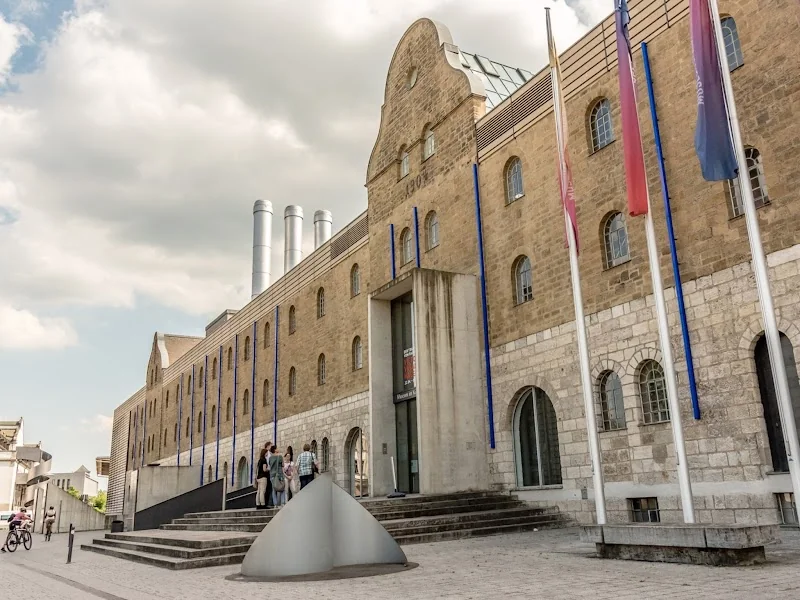
The building at the Old Harbor is one of the defining industrial buildings of Würzburg. Constructed in 1904 as a modern grain storage facility with three distinctive gable roofs, the building was part of a highly efficient state harbor. Between 1996 and 2001, Brückner and Brückner transformed the 128-meter-long storage facility for its new use. The character of the functional architecture was preserved, while the building received new elements that enable museum operations. In the glass-roofed foyer, approximately twelve meters high, the historical support grid is visible and tells of its previous use. Lateral extensions with natural stone slats and glass concrete cubes set towards the river mark today’s entrances, gastronomy, and administration without overshadowing the old building. The Museum in the Cultural Storage was opened in 2002 as a successor institution to the municipal gallery, which was founded in 1941. The architecture thus connects industrial historical memory with a clear, contemporary exhibition wing. Art is presented across three floors and in twelve rooms, with a linear and easily understandable layout. The location by the artificial water basin of the Winter Harbor makes the ensemble a special urban space where harbor atmosphere, brick facades, and modern additions correspond with each other. The outdoor facilities also reference Concrete Art in the urban space at several points. The repurposing of the storage facility is an example of how heritage preservation, new technology, and museum needs can come together in a harmonious unit. With the development into a cultural address, Würzburg has set a visible sign that enhances the harbor development while simultaneously creating an identity-forming place for art and the public.
Prices, Tickets, and Savings Tips
Admission is intentionally kept low-threshold. Adults pay 5 euros. Reduced admission is 3 euros, for example, for students, trainees, volunteers, individuals with disabilities, and groups of 20 or more. Children and teenagers up to and including 18 years visit the museum free of charge, as do members of the Friends of the Cultural Storage Würzburg. A special savings tip is the first Sunday of the month, when admission is free for everyone. For school classes, there are favorable regulations per child, and special conditions apply when a guided tour is booked. Tickets can be easily obtained at the museum ticket counter during opening hours. For highly demanded openings or themed weeks, an early visit is recommended, especially on the afternoon of the extended Thursday. Those planning their stay can register guided tours and group visits in advance to avoid waiting times. In combination with the central location at the Old Harbor, museum visits can be well combined with other city destinations, such as the Congress Center, a cinema visit, or a walk towards the city center. With its clear pricing structure and good accessibility, the museum is suitable for short afternoon visits as well as in-depth tours. For visitors from outside, it is worth checking holiday and vacation times, as the program is often particularly varied during these periods, and extended opening hours on the third Thursday offer additional flexibility. In any case, it applies: with free admission on the first Sunday and the possibility of using discounts, art can be experienced at a high level under fair conditions.
Sources:
- Museum in the Cultural Storage Würzburg – New Presentation Part 1 Collection Peter C. Ruppert
- Museum in the Cultural Storage Würzburg – Press Information Opening Hours, Accessibility, Transport Links
- Museum in the Cultural Storage Würzburg – Directions and Parking at the Old Harbor
- Museum in the Cultural Storage Würzburg – Easy Language Prices, Opening Hours, Directions
- Museum in the Cultural Storage Würzburg – Museum Architecture and Renovation 1996 to 2001
- Baunetz Wissen – Cultural Storage in Würzburg, Renovation and Data Sheet
- Museum in the Cultural Storage Würzburg – Collection Peter C. Ruppert Concrete Art in Europe after 1945
- WELT – Report on Max Slevogt Work and Provenance Research, December 2025
Show moreShow less
Museum in the Cultural Storage Würzburg | Opening Hours & Program
The Museum in the Cultural Storage Würzburg combines the atmosphere of a historic storage building from 1904 with a versatile program of permanent presentations and temporary exhibitions. In the renovated brick building at the Old Harbor, the museum showcases art from the 19th to the 21st century across approximately 3,500 square meters, with a particular focus on Concrete Art. This includes the significant collection of Peter C. Ruppert, which is presented in Würzburg as a permanent loan. Visitors planning a trip benefit from clear opening hours, excellent connections via tram and bus, parking facilities right next door, as well as barrier-free access and services for individuals with mobility or hearing impairments. The first Sunday of each month is free of charge, making the museum an attractive destination for families, school classes, and culture enthusiasts. Its location in close proximity to the Congress Center and cinema also makes it ideal for combining a visit with a stroll along the harbor or a stay in the city center.
Opening Hours and Planning Your Visit
The Museum in the Cultural Storage offers reliable hours that make visiting straightforward. The museum is closed on Mondays, and is open on Tuesdays from 1 PM to 6 PM. From Wednesday to Sunday, the exhibition spaces are regularly accessible from 11 AM to 6 PM. A special service is the extended evening on the third Thursday of each month, when the museum remains open until 9 PM. This extended opening also applies when a public holiday falls on a third Thursday. Regardless of the day of the week, the museum is closed on Christmas Eve, the first Christmas Day, New Year's Eve, and Shrove Tuesday, but is open on all other public holidays. Therefore, those planning a weekend trip to the museum will almost always find open doors. It is advisable to arrive a few minutes before the desired time at the entrance, as the glass foyer leads into a wayfinding system with elevator cores that provide access to the three exhibition levels. During highly attended special exhibitions, there may be short waiting times, and the friendly staff at the visitor service will provide information on-site and assist with orientation. Groups of 20 or more should coordinate their visits in advance to make optimal use of guided tour times. Families with children benefit from free admission on the first Sunday of the month, facilitating spontaneous visits. Since the museum offers comfortable conditions in its air-conditioned rooms year-round, visits are pleasant in both summer and winter. A tip for cultural evenings in the city: The third Thursday with extended opening hours is ideal for combining art enjoyment with an evening walk along the harbor.
Current Program and Temporary Exhibitions
In addition to the permanent collection areas, the changing program is a central reason to visit the Cultural Storage regularly. Starting December 13, 2025, the new presentation of Part 1 of the Peter C. Ruppert collection will begin. A focus will be on the theme Meeting Point Paris, which recalls the international networking of art after 1945. Paris served as a catalyst for numerous artists for exchange, renewal, and the search for a universal visual language that transcends national borders. Additionally, the theme of light will be highlighted, including light-kinetic positions and the unique integration of Concrete Photography in this collection. The museum thus emphasizes art historical contexts while simultaneously opening new perspectives. Beyond the permanent collection, temporary exhibitions regularly focus on key positions of modernity, highlights from the municipal collection, and current issues of mediation. Accompanying programs include guided tours, workshop offerings, lectures, and family formats. For children and teenagers, there are educational programs that make the materials and methods of art tangible and demonstrate connections to the present. Events and openings are sometimes accompanied by interpretation in sign language. When selecting a date, visitors should check if a curator-led tour or a themed day is taking place, as such formats allow for a deeper engagement. The quiet location by the harbor, clearly structured spaces, and good signage ensure that both connoisseurs of Concrete Art and museum newcomers can navigate easily. Thus, the program offers a dual benefit: it deepens the understanding of the European history of abstraction while also strengthening the local art scene in Würzburg with current perspectives.
Directions and Parking at the Old Harbor
The location of the museum facilitates access in many ways. From Würzburg Central Station, the Museum in the Cultural Storage can be reached on foot in about 15 minutes. The tram ride is particularly convenient: Lines 2 and 4 stop at the Congress Centrum station, from which it is about a five-minute walk along the harbor basin to the museum entrance. Several bus lines, including 11, 13, 19, 22, and 27, operate directly at the Cultural Storage. From April to November, the cultural connection with Line 9 provides seasonal service, connecting important city landmarks and also stopping at the museum. Those arriving by car will find the CinemaxX Alter Hafen parking garage nearby. This parking garage is just a few steps from the building and is considered particularly affordable in the region. A designated disabled parking space is located directly across from the main entrance. A free alternative is available at Talavera on the opposite bank of the Main River; from there, a five-minute walk over the bridge and along the harbor basin leads to the museum. For group buses, it is advisable to coordinate arrival times and stopping points in advance with the city or the museum. Those wishing to combine their visit with a city stroll can plan their route along the Mainkai and walk along the water; the signage for Cultural Storage and Congress Center makes orientation easier. Bicycle parking spaces are available around the Old Harbor, and the flat topography makes cycling to the museum pleasant. Thanks to clear pathways, an automatic entrance door, and elevators, the transition from the outdoor area to the exhibitions is quick and barrier-free.
Collection of Peter C. Ruppert and Municipal Art Collection
A special treasure of the museum is the Peter C. Ruppert collection featuring Concrete Art in Europe after 1945. It is one of the most significant collections in its field, showcasing the diversity of art that develops autonomous visual worlds from geometric basic forms, color, structure, and rhythm. Characteristic is the cross-border perspective: Works from more than 20 European nations illustrate the similarities and differences that emerged in networks, exhibition contexts, and artist groups after 1945. The collection includes hundreds of works by several hundred artists and also reflects the expansion in recent years, including a stronger representation from Eastern European countries. A unique feature is the integration of Concrete Photography and light works that respond multidimensionally to perception, movement, and space. In addition to this private collection, which is shown as a permanent loan, the museum preserves the municipal collection with works from the 19th to the 21st century. This includes positions from German Impressionism as well as important groups of works by sculptors Emy Roeder and Gertraud Rostosky. The presentation combines historical depth with a contemporary perspective, clearly demonstrating how strongly Würzburg is integrated into regional and European developments as an art location. A current example of responsible collection practice is provenance research. Recently, a painting by Max Slevogt with a historically burdened provenance was identified and, after clarifying the ownership issue, was sold to the museum by the heirs, underscoring the importance of transparency and reappraisal. These topics are communicated understandably in guided tours and materials, making the collection not only aesthetically appealing but also culturally and historically significant.
Accessibility, Families, and On-Site Services
The Museum in the Cultural Storage sees itself as an open place for everyone. Access is barrier-free, with a ramp leading beside the entrance stairs into the foyer, and the door opens automatically. All levels are accessible via elevators, and the exhibition spaces, museum shop, and café are free of steps. A folding wheelchair can be borrowed at the ticket counter if needed. For individuals with hearing impairments, induction loops are available, and there are also offerings in sign language. Opening dates are accompanied by interpretation, and selected media content is available with sign language and subtitles. A helpful addition is the free BFW Smartinfo app, whose content visitors can optionally access to utilize texts or background information tailored to their needs. Families benefit from a well-structured tour, clear pictograms, and educational offerings that make the methods and materials of art tangible. For children's birthdays, school classes, and groups, there are formats that combine playful exploration with practical work. Those planning a guided tour can choose between overviews of Concrete Art, thematic focuses, or workshop formats. The cloakroom areas are adequately sized, and seating in the halls facilitates longer stays. The museum pays attention to the good readability of wall texts and uses lighting to ensure that works are optimally visible without glare. Thanks to the quiet location by the harbor, even during peak visiting times, a relaxed tour is possible. Information on safety, photography, and bag rules is clearly explained at the entrance, ensuring a smooth visit.
History and Architecture of the Cultural Storage
The building at the Old Harbor is one of the defining industrial buildings of Würzburg. Constructed in 1904 as a modern grain storage facility with three distinctive gable roofs, the building was part of a highly efficient state harbor. Between 1996 and 2001, Brückner and Brückner transformed the 128-meter-long storage facility for its new use. The character of the functional architecture was preserved, while the building received new elements that enable museum operations. In the glass-roofed foyer, approximately twelve meters high, the historical support grid is visible and tells of its previous use. Lateral extensions with natural stone slats and glass concrete cubes set towards the river mark today’s entrances, gastronomy, and administration without overshadowing the old building. The Museum in the Cultural Storage was opened in 2002 as a successor institution to the municipal gallery, which was founded in 1941. The architecture thus connects industrial historical memory with a clear, contemporary exhibition wing. Art is presented across three floors and in twelve rooms, with a linear and easily understandable layout. The location by the artificial water basin of the Winter Harbor makes the ensemble a special urban space where harbor atmosphere, brick facades, and modern additions correspond with each other. The outdoor facilities also reference Concrete Art in the urban space at several points. The repurposing of the storage facility is an example of how heritage preservation, new technology, and museum needs can come together in a harmonious unit. With the development into a cultural address, Würzburg has set a visible sign that enhances the harbor development while simultaneously creating an identity-forming place for art and the public.
Prices, Tickets, and Savings Tips
Admission is intentionally kept low-threshold. Adults pay 5 euros. Reduced admission is 3 euros, for example, for students, trainees, volunteers, individuals with disabilities, and groups of 20 or more. Children and teenagers up to and including 18 years visit the museum free of charge, as do members of the Friends of the Cultural Storage Würzburg. A special savings tip is the first Sunday of the month, when admission is free for everyone. For school classes, there are favorable regulations per child, and special conditions apply when a guided tour is booked. Tickets can be easily obtained at the museum ticket counter during opening hours. For highly demanded openings or themed weeks, an early visit is recommended, especially on the afternoon of the extended Thursday. Those planning their stay can register guided tours and group visits in advance to avoid waiting times. In combination with the central location at the Old Harbor, museum visits can be well combined with other city destinations, such as the Congress Center, a cinema visit, or a walk towards the city center. With its clear pricing structure and good accessibility, the museum is suitable for short afternoon visits as well as in-depth tours. For visitors from outside, it is worth checking holiday and vacation times, as the program is often particularly varied during these periods, and extended opening hours on the third Thursday offer additional flexibility. In any case, it applies: with free admission on the first Sunday and the possibility of using discounts, art can be experienced at a high level under fair conditions.
Sources:
- Museum in the Cultural Storage Würzburg – New Presentation Part 1 Collection Peter C. Ruppert
- Museum in the Cultural Storage Würzburg – Press Information Opening Hours, Accessibility, Transport Links
- Museum in the Cultural Storage Würzburg – Directions and Parking at the Old Harbor
- Museum in the Cultural Storage Würzburg – Easy Language Prices, Opening Hours, Directions
- Museum in the Cultural Storage Würzburg – Museum Architecture and Renovation 1996 to 2001
- Baunetz Wissen – Cultural Storage in Würzburg, Renovation and Data Sheet
- Museum in the Cultural Storage Würzburg – Collection Peter C. Ruppert Concrete Art in Europe after 1945
- WELT – Report on Max Slevogt Work and Provenance Research, December 2025
Museum in the Cultural Storage Würzburg | Opening Hours & Program
The Museum in the Cultural Storage Würzburg combines the atmosphere of a historic storage building from 1904 with a versatile program of permanent presentations and temporary exhibitions. In the renovated brick building at the Old Harbor, the museum showcases art from the 19th to the 21st century across approximately 3,500 square meters, with a particular focus on Concrete Art. This includes the significant collection of Peter C. Ruppert, which is presented in Würzburg as a permanent loan. Visitors planning a trip benefit from clear opening hours, excellent connections via tram and bus, parking facilities right next door, as well as barrier-free access and services for individuals with mobility or hearing impairments. The first Sunday of each month is free of charge, making the museum an attractive destination for families, school classes, and culture enthusiasts. Its location in close proximity to the Congress Center and cinema also makes it ideal for combining a visit with a stroll along the harbor or a stay in the city center.
Opening Hours and Planning Your Visit
The Museum in the Cultural Storage offers reliable hours that make visiting straightforward. The museum is closed on Mondays, and is open on Tuesdays from 1 PM to 6 PM. From Wednesday to Sunday, the exhibition spaces are regularly accessible from 11 AM to 6 PM. A special service is the extended evening on the third Thursday of each month, when the museum remains open until 9 PM. This extended opening also applies when a public holiday falls on a third Thursday. Regardless of the day of the week, the museum is closed on Christmas Eve, the first Christmas Day, New Year's Eve, and Shrove Tuesday, but is open on all other public holidays. Therefore, those planning a weekend trip to the museum will almost always find open doors. It is advisable to arrive a few minutes before the desired time at the entrance, as the glass foyer leads into a wayfinding system with elevator cores that provide access to the three exhibition levels. During highly attended special exhibitions, there may be short waiting times, and the friendly staff at the visitor service will provide information on-site and assist with orientation. Groups of 20 or more should coordinate their visits in advance to make optimal use of guided tour times. Families with children benefit from free admission on the first Sunday of the month, facilitating spontaneous visits. Since the museum offers comfortable conditions in its air-conditioned rooms year-round, visits are pleasant in both summer and winter. A tip for cultural evenings in the city: The third Thursday with extended opening hours is ideal for combining art enjoyment with an evening walk along the harbor.
Current Program and Temporary Exhibitions
In addition to the permanent collection areas, the changing program is a central reason to visit the Cultural Storage regularly. Starting December 13, 2025, the new presentation of Part 1 of the Peter C. Ruppert collection will begin. A focus will be on the theme Meeting Point Paris, which recalls the international networking of art after 1945. Paris served as a catalyst for numerous artists for exchange, renewal, and the search for a universal visual language that transcends national borders. Additionally, the theme of light will be highlighted, including light-kinetic positions and the unique integration of Concrete Photography in this collection. The museum thus emphasizes art historical contexts while simultaneously opening new perspectives. Beyond the permanent collection, temporary exhibitions regularly focus on key positions of modernity, highlights from the municipal collection, and current issues of mediation. Accompanying programs include guided tours, workshop offerings, lectures, and family formats. For children and teenagers, there are educational programs that make the materials and methods of art tangible and demonstrate connections to the present. Events and openings are sometimes accompanied by interpretation in sign language. When selecting a date, visitors should check if a curator-led tour or a themed day is taking place, as such formats allow for a deeper engagement. The quiet location by the harbor, clearly structured spaces, and good signage ensure that both connoisseurs of Concrete Art and museum newcomers can navigate easily. Thus, the program offers a dual benefit: it deepens the understanding of the European history of abstraction while also strengthening the local art scene in Würzburg with current perspectives.
Directions and Parking at the Old Harbor
The location of the museum facilitates access in many ways. From Würzburg Central Station, the Museum in the Cultural Storage can be reached on foot in about 15 minutes. The tram ride is particularly convenient: Lines 2 and 4 stop at the Congress Centrum station, from which it is about a five-minute walk along the harbor basin to the museum entrance. Several bus lines, including 11, 13, 19, 22, and 27, operate directly at the Cultural Storage. From April to November, the cultural connection with Line 9 provides seasonal service, connecting important city landmarks and also stopping at the museum. Those arriving by car will find the CinemaxX Alter Hafen parking garage nearby. This parking garage is just a few steps from the building and is considered particularly affordable in the region. A designated disabled parking space is located directly across from the main entrance. A free alternative is available at Talavera on the opposite bank of the Main River; from there, a five-minute walk over the bridge and along the harbor basin leads to the museum. For group buses, it is advisable to coordinate arrival times and stopping points in advance with the city or the museum. Those wishing to combine their visit with a city stroll can plan their route along the Mainkai and walk along the water; the signage for Cultural Storage and Congress Center makes orientation easier. Bicycle parking spaces are available around the Old Harbor, and the flat topography makes cycling to the museum pleasant. Thanks to clear pathways, an automatic entrance door, and elevators, the transition from the outdoor area to the exhibitions is quick and barrier-free.
Collection of Peter C. Ruppert and Municipal Art Collection
A special treasure of the museum is the Peter C. Ruppert collection featuring Concrete Art in Europe after 1945. It is one of the most significant collections in its field, showcasing the diversity of art that develops autonomous visual worlds from geometric basic forms, color, structure, and rhythm. Characteristic is the cross-border perspective: Works from more than 20 European nations illustrate the similarities and differences that emerged in networks, exhibition contexts, and artist groups after 1945. The collection includes hundreds of works by several hundred artists and also reflects the expansion in recent years, including a stronger representation from Eastern European countries. A unique feature is the integration of Concrete Photography and light works that respond multidimensionally to perception, movement, and space. In addition to this private collection, which is shown as a permanent loan, the museum preserves the municipal collection with works from the 19th to the 21st century. This includes positions from German Impressionism as well as important groups of works by sculptors Emy Roeder and Gertraud Rostosky. The presentation combines historical depth with a contemporary perspective, clearly demonstrating how strongly Würzburg is integrated into regional and European developments as an art location. A current example of responsible collection practice is provenance research. Recently, a painting by Max Slevogt with a historically burdened provenance was identified and, after clarifying the ownership issue, was sold to the museum by the heirs, underscoring the importance of transparency and reappraisal. These topics are communicated understandably in guided tours and materials, making the collection not only aesthetically appealing but also culturally and historically significant.
Accessibility, Families, and On-Site Services
The Museum in the Cultural Storage sees itself as an open place for everyone. Access is barrier-free, with a ramp leading beside the entrance stairs into the foyer, and the door opens automatically. All levels are accessible via elevators, and the exhibition spaces, museum shop, and café are free of steps. A folding wheelchair can be borrowed at the ticket counter if needed. For individuals with hearing impairments, induction loops are available, and there are also offerings in sign language. Opening dates are accompanied by interpretation, and selected media content is available with sign language and subtitles. A helpful addition is the free BFW Smartinfo app, whose content visitors can optionally access to utilize texts or background information tailored to their needs. Families benefit from a well-structured tour, clear pictograms, and educational offerings that make the methods and materials of art tangible. For children's birthdays, school classes, and groups, there are formats that combine playful exploration with practical work. Those planning a guided tour can choose between overviews of Concrete Art, thematic focuses, or workshop formats. The cloakroom areas are adequately sized, and seating in the halls facilitates longer stays. The museum pays attention to the good readability of wall texts and uses lighting to ensure that works are optimally visible without glare. Thanks to the quiet location by the harbor, even during peak visiting times, a relaxed tour is possible. Information on safety, photography, and bag rules is clearly explained at the entrance, ensuring a smooth visit.
History and Architecture of the Cultural Storage
The building at the Old Harbor is one of the defining industrial buildings of Würzburg. Constructed in 1904 as a modern grain storage facility with three distinctive gable roofs, the building was part of a highly efficient state harbor. Between 1996 and 2001, Brückner and Brückner transformed the 128-meter-long storage facility for its new use. The character of the functional architecture was preserved, while the building received new elements that enable museum operations. In the glass-roofed foyer, approximately twelve meters high, the historical support grid is visible and tells of its previous use. Lateral extensions with natural stone slats and glass concrete cubes set towards the river mark today’s entrances, gastronomy, and administration without overshadowing the old building. The Museum in the Cultural Storage was opened in 2002 as a successor institution to the municipal gallery, which was founded in 1941. The architecture thus connects industrial historical memory with a clear, contemporary exhibition wing. Art is presented across three floors and in twelve rooms, with a linear and easily understandable layout. The location by the artificial water basin of the Winter Harbor makes the ensemble a special urban space where harbor atmosphere, brick facades, and modern additions correspond with each other. The outdoor facilities also reference Concrete Art in the urban space at several points. The repurposing of the storage facility is an example of how heritage preservation, new technology, and museum needs can come together in a harmonious unit. With the development into a cultural address, Würzburg has set a visible sign that enhances the harbor development while simultaneously creating an identity-forming place for art and the public.
Prices, Tickets, and Savings Tips
Admission is intentionally kept low-threshold. Adults pay 5 euros. Reduced admission is 3 euros, for example, for students, trainees, volunteers, individuals with disabilities, and groups of 20 or more. Children and teenagers up to and including 18 years visit the museum free of charge, as do members of the Friends of the Cultural Storage Würzburg. A special savings tip is the first Sunday of the month, when admission is free for everyone. For school classes, there are favorable regulations per child, and special conditions apply when a guided tour is booked. Tickets can be easily obtained at the museum ticket counter during opening hours. For highly demanded openings or themed weeks, an early visit is recommended, especially on the afternoon of the extended Thursday. Those planning their stay can register guided tours and group visits in advance to avoid waiting times. In combination with the central location at the Old Harbor, museum visits can be well combined with other city destinations, such as the Congress Center, a cinema visit, or a walk towards the city center. With its clear pricing structure and good accessibility, the museum is suitable for short afternoon visits as well as in-depth tours. For visitors from outside, it is worth checking holiday and vacation times, as the program is often particularly varied during these periods, and extended opening hours on the third Thursday offer additional flexibility. In any case, it applies: with free admission on the first Sunday and the possibility of using discounts, art can be experienced at a high level under fair conditions.
Sources:
- Museum in the Cultural Storage Würzburg – New Presentation Part 1 Collection Peter C. Ruppert
- Museum in the Cultural Storage Würzburg – Press Information Opening Hours, Accessibility, Transport Links
- Museum in the Cultural Storage Würzburg – Directions and Parking at the Old Harbor
- Museum in the Cultural Storage Würzburg – Easy Language Prices, Opening Hours, Directions
- Museum in the Cultural Storage Würzburg – Museum Architecture and Renovation 1996 to 2001
- Baunetz Wissen – Cultural Storage in Würzburg, Renovation and Data Sheet
- Museum in the Cultural Storage Würzburg – Collection Peter C. Ruppert Concrete Art in Europe after 1945
- WELT – Report on Max Slevogt Work and Provenance Research, December 2025
Upcoming Events
No events found
Frequently Asked Questions
Reviews
Anne Blume
21. August 2025
Wow! What a great building. The spaces are already super nice, then the variety of different art, plus the terraces + a stylish cafe with a great outdoor area! 🪩 🤍🤍🤍 You can definitely stay here longer.
Alexander V.
7. September 2025
Beautiful collection of concrete art sorted by countries. Definitely worth a visit. Very nice staff.
wunschbildberlin
10. September 2025
A beautiful collection of various art objects and pictures - very worth seeing and highly recommended...
M.G.
25. October 2025
I can only recommend celebrating a children's birthday at the Kulturspeicher Museum. A great event, with a short tour on the topic. The kids get introduced to some art and afterwards they can be creative according to the chosen theme. Thanks for the lovely afternoon.
M. B.
16. February 2025
We were there yesterday. The staff was extremely friendly. The art exhibition is huge and even though I don't usually like modern art, I really enjoyed it. By the way, you should plan some time.