
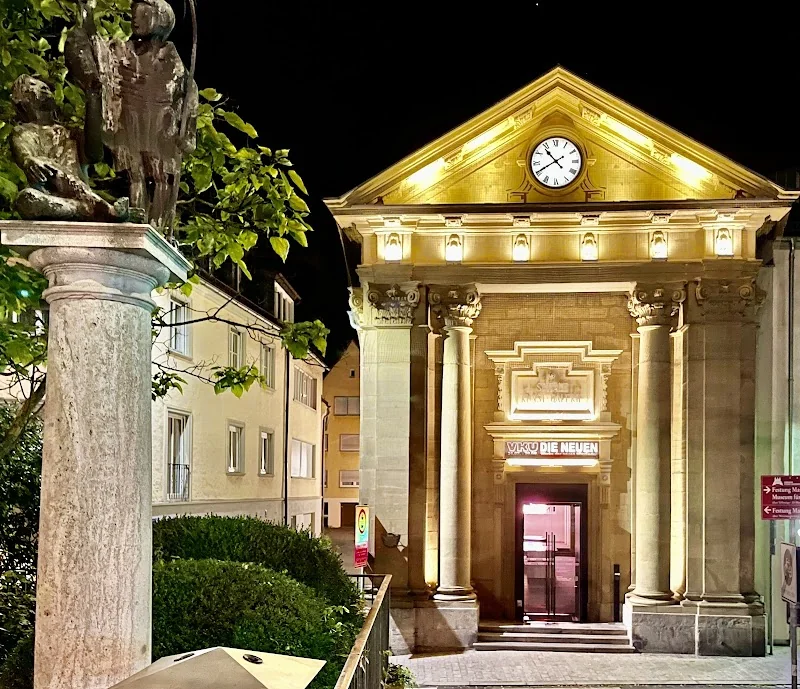
Zeller Str. 1, Würzburg-Altstadt
Zeller Str. 1, 97082 Würzburg, Germany
Spitäle Würzburg | Exhibition & Opening Hours
The Spitäle in Würzburg is much more than a beautiful cultural venue in the best old town location. As a gallery of the Association of Artists of Lower Franconia, it connects historical substance, contemporary art, and a clear local reference to the Old Main Bridge. Those searching for Spitäle Würzburg, Spitäle exhibition, Spitäle significance, or Spitäle photos will find a place that precisely meets their search interest: a house with history, a changing exhibition program, free admission to the exhibitions, and an environment suitable for a short art visit as well as for a longer cultural stroll through Würzburg. The official VKU website describes the Spitäle as a central exhibition and event venue, while the municipal cultural overview classifies it as a gallery with twelve exhibitions per year. This blend of historical aura and ongoing art operation creates the special charm of the location. ([vku-kunst.de](https://www.vku-kunst.de/geschichte/))
Opening Hours, Admission, and Advance Sales at Spitäle Würzburg
For many visitors, planning begins with the most important practical question: When is Spitäle Würzburg open? The official VKU website states clear times for the exhibitions: Tuesday to Sunday and on public holidays from 11:00 AM to 6:00 PM, while the house is closed on Mondays, unless Monday is a public holiday. Admission to the exhibitions is free, making the Spitäle a particularly accessible art venue in Würzburg. So, if you are spontaneously wandering through the old town, you can visit the gallery without a ticket barrier and directly engage with new works, openings, or changing presentations. For events with admission, such as concerts, film nights, or discussions, the VKU points out an advance sale during exhibition opening hours. Ticket reservations are also possible by phone and email, which makes planning easier for visitors, groups, and art enthusiasts. This is also an important detail for anyone searching for Spitäle Würzburg opening hours or Spitäle free admission: The visiting logic is deliberately uncomplicated, the threshold for entry is low, and the path to reservation remains classic and personal. Additionally, the VKU specifies separate opening hours for the office, which is staffed from Tuesday to Friday between 10:00 AM and 1:00 PM and can be used by appointment. For people with limited mobility, there is a practical note: wheelchair users should ring the bell at the entrance in the courtyard. This shows that the Spitäle is not only an exhibition space but also a carefully organized cultural venue with binding, well-communicated processes. ([vku-kunst.de](https://www.vku-kunst.de/))
Exhibitions, Art Genres, and the Current Program
The central keyword theme around the Spitäle is the exhibition. This is where the strength of the house lies: the municipal cultural overview describes the Spitäle as an art gallery of the VKU, where contemporary artists show their works in a former late Gothic church that was remodeled in a classicist style in 1794. Twelve exhibitions per year are a clear statement and show that the Spitäle is not a static museum but a lively, constantly reactivated place. The content spectrum ranges from painting and sculpture to photography, installation, and applied arts. This allows the gallery to cater to several search intentions that often lie behind terms like Spitäle exhibition, Spitäle art, or Spitäle gallery. So, those interested in changing formats will find a program that is consciously diverse and does not only cater to a narrow definition of art. The exhibition work is complemented by a cultural program with concerts, film nights, readings, and artist talks. The VKU calendar page also shows that new dates, openings, and accompanying events are continuously announced, meaning that not only the major exhibitions themselves but also their accompanying programs regularly deserve attention. Additionally, the connection to the nearby Tivoli Pavilion, which the VKU uses together with the Fishermen's Guild of Würzburg and which is only a few minutes' walk away, is particularly exciting. So, if you are looking for Spitäle Würzburg program, Spitäle events, or even specific impressions of past events, you will find a versatile cultural cosmos here instead of a single, narrowly defined exhibition situation. The Spitäle thus acts like an open showcase for contemporary art in Würzburg and Lower Franconia. ([wuerzburg.de](https://www.wuerzburg.de/media/www.wuerzburg.de/org/med_18766/595343_kunstkultur_de_2026.pdf))
History and Significance of the Spitäle at the Old Main Bridge
The significance of the Spitäle is particularly well understood through its history. The VKU describes the place as located in the middle of the Würzburg cultural axis and as a central exhibition and event venue of the association. Historically, the building dates back to the hospital church of the Fourteen Holy Helpers, which was built in the Middle Ages. In 1945, it was largely destroyed, but after the war, it was initially rebuilt provisionally by the members of the VKU. The city's heritage information additionally mentions that the former church was consecrated in 1794, burned down on March 16, 1945, along with the hospital buildings, and was rebuilt after the war. After an intensive renovation and redesign in 2000, the house now presents itself as a modern and at the same time tradition-conscious gallery building; the VKU page also mentions a multifunctional balcony. This historical development explains why search terms like Spitäle significance or hospitals Würzburg even appear: The word does not refer to a hospital in today's sense, but to a place with a church-social past that has been culturally reinterpreted. This transformation from a sacred building to an art and event venue makes the Spitäle so interesting. It is an example of how Würzburg does not conserve historical building substance but keeps it alive. The fact that the VKU sees itself as an association of visual artists, architects, and artisans further emphasizes this claim. The Spitäle thus stands not only for exhibitions but for cultural work in a comprehensive sense: as a place of encounter, remembrance, and contemporary production. ([vku-kunst.de](https://www.vku-kunst.de/geschichte/))
Directions to Spitäle Würzburg by Tram and Footpath
Those wishing to visit the Spitäle in Würzburg benefit from the very clear location description provided by the VKU. The address is Zeller Straße 1, 97082 Würzburg, right in the old town or in the area of the old Main Bridge. For arrival by public transport, the VKU recommends tram lines 1, 3, 4, and 5 to the Rathaus stop. From there, a short walk across the Old Main Bridge leads directly to the entrance of the Spitäle. This connection makes the location particularly easy to find, even if you are not familiar with the area: The Old Main Bridge serves as a clear spatial orientation, and the path is located in one of the most distinctive parts of Würzburg's city center. For visitors, this means that a gallery or concert visit can easily be combined with a stroll through the old town. Although the official website does not provide a detailed parking description in the mentioned core information, the path for pedestrians and public transport users is very clear. Additionally, the VKU points out a barrier-related note: wheelchair users should ring the bell at the entrance in the courtyard. This sentence is small but practically important because it shows that the location takes real visitor situations into account and does not just provide beautiful pictures. So, those searching for Spitäle Würzburg directions or Spitäle Würzburg opening hours will find a combination of central location, easily understandable public transport connections, and a short, clear footpath through a historic district. Especially for guests who want to explore the old town anyway, the Spitäle is thus a particularly obvious cultural stop. ([vku-kunst.de](https://www.vku-kunst.de/))
Architecture, Photos, and the Unique Atmosphere at Spitäle
A large part of the fascination surrounding Spitäle Würzburg lies in its architecture. The municipal cultural brochure describes the building as a former late Gothic church that was remodeled in a classicist style in 1794 and has a magnificent façade facing the Old Main Bridge. The VKU history page adds that after the intensive renovation and redesign in 2000, the house was equipped with a multifunctional balcony and now presents itself as a modern, tradition-conscious gallery. This contrast is particularly appealing for photos and visual impressions: historical walls, classicist façade, bridge reference, along with contemporary art inside. This is exactly why the search query Spitäle photos is understandable. On the VKU website, there is a dedicated section with impressions, where photo series from exhibition openings, concerts, and other events are collected. Thus, visual documentation is not just an addition but part of the public presence of the place. Those looking for images will not find random snapshots there but curated impressions of art, audience, and space. The atmosphere of the Spitäle is therefore difficult to reduce to a single category: it is neither pure sacred architecture nor a neutral white cube, but a place where history, renovation, cultural work, and exhibition practice visibly come together. This mixture creates the character that is often described in reviews as particularly beautiful, harmonious, or surprising. For visitors, this means: even a short walk is worthwhile because the house shows much more than just the current exhibition. Those wanting to photograph art in an urban context or looking for a location with authentic Würzburg flair will find a particularly strong motif at the Spitäle. ([wuerzburg.de](https://www.wuerzburg.de/media/www.wuerzburg.de/org/med_18766/595343_kunstkultur_de_2026.pdf))
Contact, Booking, and Use as an Event Venue
The Spitäle is not only an exhibition space but also a place for events and cultural use. The VKU explicitly points out that interested parties can get in touch if they wish to use the Spitäle as a space for a cultural event; information about technology, areas, floor plans, and seating is provided. This is important information for organizers, curators, musicians, and initiatives because it shows that the location is structurally designed for different formats. The contact details are clear: Zeller Straße 1, 97082 Würzburg, phone 0931-44119, and reservations by email at reservierung@spitaele.de. For musicians, there is also a dedicated inquiry address via event@vku-kunst.de. The VKU office operates from Tuesday to Friday from 10:00 AM to 1:00 PM and by appointment. This availability is valuable in practice because it simplifies planning, ticket questions, and event agreements. The association description on the website is also relevant: the Association of Artists of Lower Franconia sees itself as a union of visual artists, architects, and artisans and as a representative of all fields of visual art. This makes it clear that the Spitäle is not an art venue by chance but is operated by an active cultural organization. For search queries like Spitäle contact, Spitäle gallery, or Spitäle events, this structure is central because it explains why the place is interesting for both visits and its own programs. So, if you want not only to view art but possibly to exhibit, perform music, or hold a reading, you will find a professionally organized, locally deeply rooted framework at the Spitäle. ([vku-kunst.de](https://www.vku-kunst.de/geschichte/))
Sources:
Mehr anzeigenWeniger anzeigen
Spitäle Würzburg | Exhibition & Opening Hours
The Spitäle in Würzburg is much more than a beautiful cultural venue in the best old town location. As a gallery of the Association of Artists of Lower Franconia, it connects historical substance, contemporary art, and a clear local reference to the Old Main Bridge. Those searching for Spitäle Würzburg, Spitäle exhibition, Spitäle significance, or Spitäle photos will find a place that precisely meets their search interest: a house with history, a changing exhibition program, free admission to the exhibitions, and an environment suitable for a short art visit as well as for a longer cultural stroll through Würzburg. The official VKU website describes the Spitäle as a central exhibition and event venue, while the municipal cultural overview classifies it as a gallery with twelve exhibitions per year. This blend of historical aura and ongoing art operation creates the special charm of the location. ([vku-kunst.de](https://www.vku-kunst.de/geschichte/))
Opening Hours, Admission, and Advance Sales at Spitäle Würzburg
For many visitors, planning begins with the most important practical question: When is Spitäle Würzburg open? The official VKU website states clear times for the exhibitions: Tuesday to Sunday and on public holidays from 11:00 AM to 6:00 PM, while the house is closed on Mondays, unless Monday is a public holiday. Admission to the exhibitions is free, making the Spitäle a particularly accessible art venue in Würzburg. So, if you are spontaneously wandering through the old town, you can visit the gallery without a ticket barrier and directly engage with new works, openings, or changing presentations. For events with admission, such as concerts, film nights, or discussions, the VKU points out an advance sale during exhibition opening hours. Ticket reservations are also possible by phone and email, which makes planning easier for visitors, groups, and art enthusiasts. This is also an important detail for anyone searching for Spitäle Würzburg opening hours or Spitäle free admission: The visiting logic is deliberately uncomplicated, the threshold for entry is low, and the path to reservation remains classic and personal. Additionally, the VKU specifies separate opening hours for the office, which is staffed from Tuesday to Friday between 10:00 AM and 1:00 PM and can be used by appointment. For people with limited mobility, there is a practical note: wheelchair users should ring the bell at the entrance in the courtyard. This shows that the Spitäle is not only an exhibition space but also a carefully organized cultural venue with binding, well-communicated processes. ([vku-kunst.de](https://www.vku-kunst.de/))
Exhibitions, Art Genres, and the Current Program
The central keyword theme around the Spitäle is the exhibition. This is where the strength of the house lies: the municipal cultural overview describes the Spitäle as an art gallery of the VKU, where contemporary artists show their works in a former late Gothic church that was remodeled in a classicist style in 1794. Twelve exhibitions per year are a clear statement and show that the Spitäle is not a static museum but a lively, constantly reactivated place. The content spectrum ranges from painting and sculpture to photography, installation, and applied arts. This allows the gallery to cater to several search intentions that often lie behind terms like Spitäle exhibition, Spitäle art, or Spitäle gallery. So, those interested in changing formats will find a program that is consciously diverse and does not only cater to a narrow definition of art. The exhibition work is complemented by a cultural program with concerts, film nights, readings, and artist talks. The VKU calendar page also shows that new dates, openings, and accompanying events are continuously announced, meaning that not only the major exhibitions themselves but also their accompanying programs regularly deserve attention. Additionally, the connection to the nearby Tivoli Pavilion, which the VKU uses together with the Fishermen's Guild of Würzburg and which is only a few minutes' walk away, is particularly exciting. So, if you are looking for Spitäle Würzburg program, Spitäle events, or even specific impressions of past events, you will find a versatile cultural cosmos here instead of a single, narrowly defined exhibition situation. The Spitäle thus acts like an open showcase for contemporary art in Würzburg and Lower Franconia. ([wuerzburg.de](https://www.wuerzburg.de/media/www.wuerzburg.de/org/med_18766/595343_kunstkultur_de_2026.pdf))
History and Significance of the Spitäle at the Old Main Bridge
The significance of the Spitäle is particularly well understood through its history. The VKU describes the place as located in the middle of the Würzburg cultural axis and as a central exhibition and event venue of the association. Historically, the building dates back to the hospital church of the Fourteen Holy Helpers, which was built in the Middle Ages. In 1945, it was largely destroyed, but after the war, it was initially rebuilt provisionally by the members of the VKU. The city's heritage information additionally mentions that the former church was consecrated in 1794, burned down on March 16, 1945, along with the hospital buildings, and was rebuilt after the war. After an intensive renovation and redesign in 2000, the house now presents itself as a modern and at the same time tradition-conscious gallery building; the VKU page also mentions a multifunctional balcony. This historical development explains why search terms like Spitäle significance or hospitals Würzburg even appear: The word does not refer to a hospital in today's sense, but to a place with a church-social past that has been culturally reinterpreted. This transformation from a sacred building to an art and event venue makes the Spitäle so interesting. It is an example of how Würzburg does not conserve historical building substance but keeps it alive. The fact that the VKU sees itself as an association of visual artists, architects, and artisans further emphasizes this claim. The Spitäle thus stands not only for exhibitions but for cultural work in a comprehensive sense: as a place of encounter, remembrance, and contemporary production. ([vku-kunst.de](https://www.vku-kunst.de/geschichte/))
Directions to Spitäle Würzburg by Tram and Footpath
Those wishing to visit the Spitäle in Würzburg benefit from the very clear location description provided by the VKU. The address is Zeller Straße 1, 97082 Würzburg, right in the old town or in the area of the old Main Bridge. For arrival by public transport, the VKU recommends tram lines 1, 3, 4, and 5 to the Rathaus stop. From there, a short walk across the Old Main Bridge leads directly to the entrance of the Spitäle. This connection makes the location particularly easy to find, even if you are not familiar with the area: The Old Main Bridge serves as a clear spatial orientation, and the path is located in one of the most distinctive parts of Würzburg's city center. For visitors, this means that a gallery or concert visit can easily be combined with a stroll through the old town. Although the official website does not provide a detailed parking description in the mentioned core information, the path for pedestrians and public transport users is very clear. Additionally, the VKU points out a barrier-related note: wheelchair users should ring the bell at the entrance in the courtyard. This sentence is small but practically important because it shows that the location takes real visitor situations into account and does not just provide beautiful pictures. So, those searching for Spitäle Würzburg directions or Spitäle Würzburg opening hours will find a combination of central location, easily understandable public transport connections, and a short, clear footpath through a historic district. Especially for guests who want to explore the old town anyway, the Spitäle is thus a particularly obvious cultural stop. ([vku-kunst.de](https://www.vku-kunst.de/))
Architecture, Photos, and the Unique Atmosphere at Spitäle
A large part of the fascination surrounding Spitäle Würzburg lies in its architecture. The municipal cultural brochure describes the building as a former late Gothic church that was remodeled in a classicist style in 1794 and has a magnificent façade facing the Old Main Bridge. The VKU history page adds that after the intensive renovation and redesign in 2000, the house was equipped with a multifunctional balcony and now presents itself as a modern, tradition-conscious gallery. This contrast is particularly appealing for photos and visual impressions: historical walls, classicist façade, bridge reference, along with contemporary art inside. This is exactly why the search query Spitäle photos is understandable. On the VKU website, there is a dedicated section with impressions, where photo series from exhibition openings, concerts, and other events are collected. Thus, visual documentation is not just an addition but part of the public presence of the place. Those looking for images will not find random snapshots there but curated impressions of art, audience, and space. The atmosphere of the Spitäle is therefore difficult to reduce to a single category: it is neither pure sacred architecture nor a neutral white cube, but a place where history, renovation, cultural work, and exhibition practice visibly come together. This mixture creates the character that is often described in reviews as particularly beautiful, harmonious, or surprising. For visitors, this means: even a short walk is worthwhile because the house shows much more than just the current exhibition. Those wanting to photograph art in an urban context or looking for a location with authentic Würzburg flair will find a particularly strong motif at the Spitäle. ([wuerzburg.de](https://www.wuerzburg.de/media/www.wuerzburg.de/org/med_18766/595343_kunstkultur_de_2026.pdf))
Contact, Booking, and Use as an Event Venue
The Spitäle is not only an exhibition space but also a place for events and cultural use. The VKU explicitly points out that interested parties can get in touch if they wish to use the Spitäle as a space for a cultural event; information about technology, areas, floor plans, and seating is provided. This is important information for organizers, curators, musicians, and initiatives because it shows that the location is structurally designed for different formats. The contact details are clear: Zeller Straße 1, 97082 Würzburg, phone 0931-44119, and reservations by email at reservierung@spitaele.de. For musicians, there is also a dedicated inquiry address via event@vku-kunst.de. The VKU office operates from Tuesday to Friday from 10:00 AM to 1:00 PM and by appointment. This availability is valuable in practice because it simplifies planning, ticket questions, and event agreements. The association description on the website is also relevant: the Association of Artists of Lower Franconia sees itself as a union of visual artists, architects, and artisans and as a representative of all fields of visual art. This makes it clear that the Spitäle is not an art venue by chance but is operated by an active cultural organization. For search queries like Spitäle contact, Spitäle gallery, or Spitäle events, this structure is central because it explains why the place is interesting for both visits and its own programs. So, if you want not only to view art but possibly to exhibit, perform music, or hold a reading, you will find a professionally organized, locally deeply rooted framework at the Spitäle. ([vku-kunst.de](https://www.vku-kunst.de/geschichte/))
Sources:
Spitäle Würzburg | Exhibition & Opening Hours
The Spitäle in Würzburg is much more than a beautiful cultural venue in the best old town location. As a gallery of the Association of Artists of Lower Franconia, it connects historical substance, contemporary art, and a clear local reference to the Old Main Bridge. Those searching for Spitäle Würzburg, Spitäle exhibition, Spitäle significance, or Spitäle photos will find a place that precisely meets their search interest: a house with history, a changing exhibition program, free admission to the exhibitions, and an environment suitable for a short art visit as well as for a longer cultural stroll through Würzburg. The official VKU website describes the Spitäle as a central exhibition and event venue, while the municipal cultural overview classifies it as a gallery with twelve exhibitions per year. This blend of historical aura and ongoing art operation creates the special charm of the location. ([vku-kunst.de](https://www.vku-kunst.de/geschichte/))
Opening Hours, Admission, and Advance Sales at Spitäle Würzburg
For many visitors, planning begins with the most important practical question: When is Spitäle Würzburg open? The official VKU website states clear times for the exhibitions: Tuesday to Sunday and on public holidays from 11:00 AM to 6:00 PM, while the house is closed on Mondays, unless Monday is a public holiday. Admission to the exhibitions is free, making the Spitäle a particularly accessible art venue in Würzburg. So, if you are spontaneously wandering through the old town, you can visit the gallery without a ticket barrier and directly engage with new works, openings, or changing presentations. For events with admission, such as concerts, film nights, or discussions, the VKU points out an advance sale during exhibition opening hours. Ticket reservations are also possible by phone and email, which makes planning easier for visitors, groups, and art enthusiasts. This is also an important detail for anyone searching for Spitäle Würzburg opening hours or Spitäle free admission: The visiting logic is deliberately uncomplicated, the threshold for entry is low, and the path to reservation remains classic and personal. Additionally, the VKU specifies separate opening hours for the office, which is staffed from Tuesday to Friday between 10:00 AM and 1:00 PM and can be used by appointment. For people with limited mobility, there is a practical note: wheelchair users should ring the bell at the entrance in the courtyard. This shows that the Spitäle is not only an exhibition space but also a carefully organized cultural venue with binding, well-communicated processes. ([vku-kunst.de](https://www.vku-kunst.de/))
Exhibitions, Art Genres, and the Current Program
The central keyword theme around the Spitäle is the exhibition. This is where the strength of the house lies: the municipal cultural overview describes the Spitäle as an art gallery of the VKU, where contemporary artists show their works in a former late Gothic church that was remodeled in a classicist style in 1794. Twelve exhibitions per year are a clear statement and show that the Spitäle is not a static museum but a lively, constantly reactivated place. The content spectrum ranges from painting and sculpture to photography, installation, and applied arts. This allows the gallery to cater to several search intentions that often lie behind terms like Spitäle exhibition, Spitäle art, or Spitäle gallery. So, those interested in changing formats will find a program that is consciously diverse and does not only cater to a narrow definition of art. The exhibition work is complemented by a cultural program with concerts, film nights, readings, and artist talks. The VKU calendar page also shows that new dates, openings, and accompanying events are continuously announced, meaning that not only the major exhibitions themselves but also their accompanying programs regularly deserve attention. Additionally, the connection to the nearby Tivoli Pavilion, which the VKU uses together with the Fishermen's Guild of Würzburg and which is only a few minutes' walk away, is particularly exciting. So, if you are looking for Spitäle Würzburg program, Spitäle events, or even specific impressions of past events, you will find a versatile cultural cosmos here instead of a single, narrowly defined exhibition situation. The Spitäle thus acts like an open showcase for contemporary art in Würzburg and Lower Franconia. ([wuerzburg.de](https://www.wuerzburg.de/media/www.wuerzburg.de/org/med_18766/595343_kunstkultur_de_2026.pdf))
History and Significance of the Spitäle at the Old Main Bridge
The significance of the Spitäle is particularly well understood through its history. The VKU describes the place as located in the middle of the Würzburg cultural axis and as a central exhibition and event venue of the association. Historically, the building dates back to the hospital church of the Fourteen Holy Helpers, which was built in the Middle Ages. In 1945, it was largely destroyed, but after the war, it was initially rebuilt provisionally by the members of the VKU. The city's heritage information additionally mentions that the former church was consecrated in 1794, burned down on March 16, 1945, along with the hospital buildings, and was rebuilt after the war. After an intensive renovation and redesign in 2000, the house now presents itself as a modern and at the same time tradition-conscious gallery building; the VKU page also mentions a multifunctional balcony. This historical development explains why search terms like Spitäle significance or hospitals Würzburg even appear: The word does not refer to a hospital in today's sense, but to a place with a church-social past that has been culturally reinterpreted. This transformation from a sacred building to an art and event venue makes the Spitäle so interesting. It is an example of how Würzburg does not conserve historical building substance but keeps it alive. The fact that the VKU sees itself as an association of visual artists, architects, and artisans further emphasizes this claim. The Spitäle thus stands not only for exhibitions but for cultural work in a comprehensive sense: as a place of encounter, remembrance, and contemporary production. ([vku-kunst.de](https://www.vku-kunst.de/geschichte/))
Directions to Spitäle Würzburg by Tram and Footpath
Those wishing to visit the Spitäle in Würzburg benefit from the very clear location description provided by the VKU. The address is Zeller Straße 1, 97082 Würzburg, right in the old town or in the area of the old Main Bridge. For arrival by public transport, the VKU recommends tram lines 1, 3, 4, and 5 to the Rathaus stop. From there, a short walk across the Old Main Bridge leads directly to the entrance of the Spitäle. This connection makes the location particularly easy to find, even if you are not familiar with the area: The Old Main Bridge serves as a clear spatial orientation, and the path is located in one of the most distinctive parts of Würzburg's city center. For visitors, this means that a gallery or concert visit can easily be combined with a stroll through the old town. Although the official website does not provide a detailed parking description in the mentioned core information, the path for pedestrians and public transport users is very clear. Additionally, the VKU points out a barrier-related note: wheelchair users should ring the bell at the entrance in the courtyard. This sentence is small but practically important because it shows that the location takes real visitor situations into account and does not just provide beautiful pictures. So, those searching for Spitäle Würzburg directions or Spitäle Würzburg opening hours will find a combination of central location, easily understandable public transport connections, and a short, clear footpath through a historic district. Especially for guests who want to explore the old town anyway, the Spitäle is thus a particularly obvious cultural stop. ([vku-kunst.de](https://www.vku-kunst.de/))
Architecture, Photos, and the Unique Atmosphere at Spitäle
A large part of the fascination surrounding Spitäle Würzburg lies in its architecture. The municipal cultural brochure describes the building as a former late Gothic church that was remodeled in a classicist style in 1794 and has a magnificent façade facing the Old Main Bridge. The VKU history page adds that after the intensive renovation and redesign in 2000, the house was equipped with a multifunctional balcony and now presents itself as a modern, tradition-conscious gallery. This contrast is particularly appealing for photos and visual impressions: historical walls, classicist façade, bridge reference, along with contemporary art inside. This is exactly why the search query Spitäle photos is understandable. On the VKU website, there is a dedicated section with impressions, where photo series from exhibition openings, concerts, and other events are collected. Thus, visual documentation is not just an addition but part of the public presence of the place. Those looking for images will not find random snapshots there but curated impressions of art, audience, and space. The atmosphere of the Spitäle is therefore difficult to reduce to a single category: it is neither pure sacred architecture nor a neutral white cube, but a place where history, renovation, cultural work, and exhibition practice visibly come together. This mixture creates the character that is often described in reviews as particularly beautiful, harmonious, or surprising. For visitors, this means: even a short walk is worthwhile because the house shows much more than just the current exhibition. Those wanting to photograph art in an urban context or looking for a location with authentic Würzburg flair will find a particularly strong motif at the Spitäle. ([wuerzburg.de](https://www.wuerzburg.de/media/www.wuerzburg.de/org/med_18766/595343_kunstkultur_de_2026.pdf))
Contact, Booking, and Use as an Event Venue
The Spitäle is not only an exhibition space but also a place for events and cultural use. The VKU explicitly points out that interested parties can get in touch if they wish to use the Spitäle as a space for a cultural event; information about technology, areas, floor plans, and seating is provided. This is important information for organizers, curators, musicians, and initiatives because it shows that the location is structurally designed for different formats. The contact details are clear: Zeller Straße 1, 97082 Würzburg, phone 0931-44119, and reservations by email at reservierung@spitaele.de. For musicians, there is also a dedicated inquiry address via event@vku-kunst.de. The VKU office operates from Tuesday to Friday from 10:00 AM to 1:00 PM and by appointment. This availability is valuable in practice because it simplifies planning, ticket questions, and event agreements. The association description on the website is also relevant: the Association of Artists of Lower Franconia sees itself as a union of visual artists, architects, and artisans and as a representative of all fields of visual art. This makes it clear that the Spitäle is not an art venue by chance but is operated by an active cultural organization. For search queries like Spitäle contact, Spitäle gallery, or Spitäle events, this structure is central because it explains why the place is interesting for both visits and its own programs. So, if you want not only to view art but possibly to exhibit, perform music, or hold a reading, you will find a professionally organized, locally deeply rooted framework at the Spitäle. ([vku-kunst.de](https://www.vku-kunst.de/geschichte/))
Sources:
Upcoming Events
No events found
Frequently Asked Questions
Reviews
Sebastian Gruetz
16. August 2024
Most beautiful private art gallery merging classical and modern elements. Ruhl & Albert Architects did a fab job on this one! Worth a visit.
alex chan
25. December 2023
very nice art
Buddy Flankwood
24. October 2024
Wonderful
Rainer Becker
10. January 2026
A fantastic presentation of the new VKU members
Not Myrealname
20. December 2025
You can find good works of art here. I can recommend it.