
Kirchpl. 1, Bayreuth
Kirchpl. 1, 95444 Bayreuth, Germany
City Church Holy Trinity | History & Tours
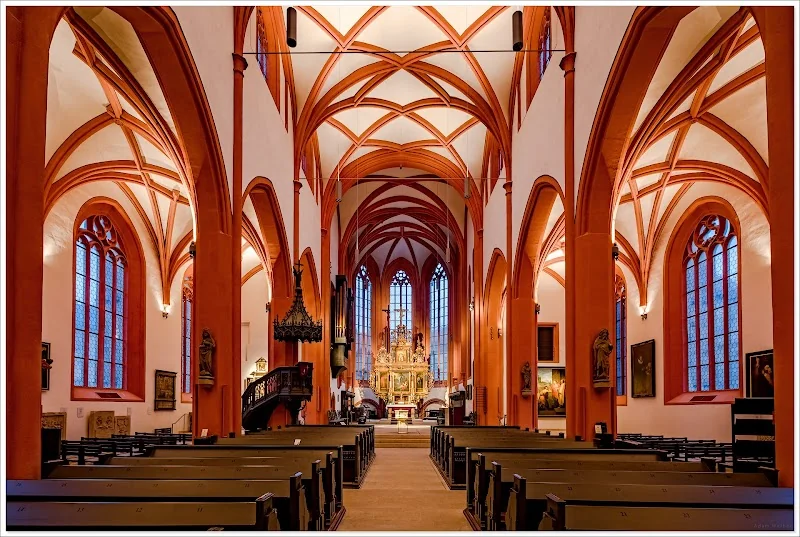
The City Church Holy Trinity at Kirchplatz 1 is one of the most significant places in historic Bayreuth. It is not only a prominent building in the cityscape but also a vibrant center for worship, music, sightseeing, and quiet moments in the heart of the old town. Those exploring Bayreuth on foot will encounter a place where the development of the city, the memory of the Margrave era, and today's community life overlap in a special way. The church is described by the community as the oldest building in the city and has been a place of prayer in the city center for over 800 years. At the same time, it serves as the preaching church of the regional bishop, the deanery's main church, a venue for church music, and a space where art and spirituality work together. Thus, the City Church is not merely a monument but a place to experience, walk through, and continually rediscover. ([stadtkirche-bayreuth.de](https://www.stadtkirche-bayreuth.de/informationen/kirchen/))
The strong impact of the City Church is also due to the fact that it is much more than a classic parish church. The official pages also designate it as a cycling church along the Burgenstrasse cycling route, the Haidenaab cycling route, and the Main cycling route, as well as a pilgrimage church on the Camino de Santiago from Hof to Bayreuth to Nuremberg. This makes it not only a destination for people exploring Bayreuth's history but also for travelers, cyclists, and pilgrims seeking an open place of tranquility. Those who linger briefly will experience a church that is accessible during the day and remains directly connected to the historic city center due to its location at Kirchplatz. Those who stay longer will discover the tower, crypt, organs, and the many layers of a building that has been repeatedly altered, secured, and reinterpreted. It is precisely this mix of historical depth, lived present, and cultural openness that makes the City Church Holy Trinity one of the most important places in Bayreuth. ([stadtkirche-bayreuth.de](https://www.stadtkirche-bayreuth.de/informationen/kirchen/))
History of the City Church Holy Trinity
The history of the City Church dates back deep into the Middle Ages. On the community's website, it is described as the oldest building in Bayreuth, and it is also stated that the Christian community of the city center has gathered here for worship for over 800 years. The construction history is particularly important: beneath the current church lay older structures, and during renovations, an arch was even discovered at the foundations of the north tower, which is attributed to a Romanesque predecessor building from before 1430. This shows that the site was used for ecclesiastical purposes long before the visible building today and that multiple layers of construction and use overlap at this location. The late medieval development is also marked by disasters and rebuilding, as the Hussite invasion of 1430 completely destroyed the building at that time. From this history emerges the character of a church that was never static but had to assert itself anew time and again. ([stadtkirche-bayreuth.de](https://www.stadtkirche-bayreuth.de/informationen/kirchen/))
A particularly significant event was the city fire of 1605. The official renovation document describes it as the starting point for a comprehensive rebuilding after the fire broke out on Sophienstraße and affected the church. Subsequently, the City Church was renewed in a short time with significant involvement from Master Michael Mebart and was solemnly reconsecrated on the first Advent of 1614. In this context, it was also given the name Holy Trinity, which was dedicated to the church by court preacher Christoph Schleupner. For today's perception, this name is more than just a designation: it refers to a theological realignment and at the same time to the claim to create something lasting from destruction and loss. The old towers remained unfinished for a while; according to the renovation document, they were only fully completed again in 1668. The church thus still bears the marks of a reconstruction that was architecturally, spiritually, and historically significant. ([stadtkirche-bayreuth.de](https://www.stadtkirche-bayreuth.de/fileadmin/neuigkeiten/Die-Generalsanierung-der-Stadtkirche-Heilig-Dreifaltigkeit-Bayreuth.pdf))
The more recent history also shows that the City Church has repeatedly undergone intensive interventions. On the community website, the last major renovation is dated from 1976 to 1978; at that time, it was primarily about regaining the bright Gothic hall church. The extensive renovation PDF also documents that between 2006 and 2014, another comprehensive renovation was necessary due to structural problems, damage to masonry and tower, and the general building substance requiring profound renewal. In this context, vaults, floors, towers, crypt areas, and parts of the interior architecture were revised. It is particularly evident that the work not only addressed technical issues but also aimed to restore the historical spatial feeling. Thus, the City Church is not only a building with a long past but also a house that is cared for and interpreted anew in every generation. It is precisely this ongoing responsibility that gives it its special charm. ([stadtkirche-bayreuth.de](https://www.stadtkirche-bayreuth.de/fileadmin/neuigkeiten/Die-Generalsanierung-der-Stadtkirche-Heilig-Dreifaltigkeit-Bayreuth.pdf))
Margrave Crypt, Art Treasures, and Interior
One of the strongest motifs of the City Church is the Margrave Crypt. The community explicitly describes the church as the burial place of the Bayreuth margraves and their families. For visitors, this is a central reason why the space possesses so much historical aura: one enters not only a city church but also a place of dynastic memory. The website also emphasizes that since the Reformation, the City Church has been the Protestant main church of the Margraviate of Bayreuth. This gives the crypt a special significance, as it is directly connected to the political and religious history of old Bayreuth. The crypt is not an isolated side room but part of the historical self-understanding of the church. In the context of the comprehensive renovation, it was also taken into account, as the preservation and accessibility of the entire building had to be considered together. This creates a space where devotion, memory, and regional history stand closely side by side. ([stadtkirche-bayreuth.de](https://www.stadtkirche-bayreuth.de/))
The interior is additionally shaped by significant art treasures. The Franconian Tourism Association explicitly mentions the magnificent Renaissance high altar and the Küffner epitaph as outstanding works. Together with the Gothic overall space, an impression is created that goes far beyond a simple village or city church. The church presents itself as a place where different art and epochal layers interact: late Gothic architecture, later added structures, renovations from the 20th century, and the conscious exposure of historical elements. The renovation document describes, for example, that during work in the 1970s, the brighter Gothic effect of the hall church should be emphasized more strongly. As a result, the interior today appears clearer and at the same time more historical. Those who walk attentively through the nave will recognize that this church not only impresses at first glance but also tells in its details how Bayreuth preserves and continually reorders its history. ([frankentourismus.de](https://www.frankentourismus.de/poi/stadtkirche-22293/))
It is particularly striking that the architecture of the church is symbolically charged. The renovation PDF refers to the triple Trinity symbolism with three steps at the west portal, three large rose windows, and further tripartite references in the space. Such details are not random products but expressions of a consciously designed sacred architecture that takes the name Holy Trinity seriously not only as a heading but as a spatial experience. Additionally, the City Church is described not only as a monument but also as an exhibition space for spiritual art. This is important for visitors who seek not only history but also atmosphere. The interior of the City Church is thus neither museum-like nor purely functional but a multifaceted place where architecture, liturgy, art, and memory intertwine. Those who pause here feel that Bayreuth does not discard its history but keeps it visible and walkable. ([stadtkirche-bayreuth.de](https://www.stadtkirche-bayreuth.de/informationen/kirchen/))
Tower Tour, Panorama, and Virtual Tour
The City Church is also interesting for those who want to experience Bayreuth from above. The website explicitly offers tours, and the current page for tower tours invites visitors to discover the city and church from a completely different perspective. The ascent leads up narrow and steep spiral staircases, making it more of a small adventure than a comfortable elevator visit. Those who master the steps are rewarded with a view over the historic city center. The community emphasizes that besides the bell ringer's room, the attic is also a special highlight. Additionally, there is a virtual tour where visitors can digitally explore the church, the tower, and the crypt. This mix of real ascent and digital enhancement makes the City Church attractive for guests who want to orient themselves in advance or plan their visit calmly. ([stadtkirche-bayreuth.de](https://www.stadtkirche-bayreuth.de/aktuelles/fuehrungen/))
The current dates on the tour page show how accessible this offer is organized: On Saturdays during the season, tours are held at 11:00 and 12:00, and additionally on Friday evenings at 20:00. There are also tower services with a short tour on several dates throughout the year. The duration is about one hour, the maximum group size is 15 people, no registration is required, and admission is free, although the community expressly requests donations. The meeting point is the church's west portal opposite the Historical Museum. This is ideal for visitors, as the tour can easily be integrated into a city stroll. Families, small groups, and travelers particularly benefit from the ability to participate spontaneously. The tour combines overview, architecture, views, and stories from inside the church into a compact experience that quickly makes the place understandable. ([stadtkirche-bayreuth.de](https://www.stadtkirche-bayreuth.de/aktuelles/fuehrungen/))
What makes the tower tour special is not only the view but also the connection between the interior and the city panorama. The community explicitly describes that from above, one experiences Bayreuth from a bird's eye view. This makes it clear how strongly the church shapes the city center. Those who look from here immediately understand why the City Church is one of the most important landmarks of Bayreuth. At the same time, the visit does not stop at the view. The virtual tour indicates that much valuable information about the history and art treasures is conveyed in the tower, crypt, and the church space itself. This creates a tour that not only provides beautiful images but also context. The City Church reveals itself here as a place where height, depth, and history belong together. This is why the tower tour is so recommended for first-time visitors, as it offers a quick yet impressive access to the entire ensemble. ([stadtkirche-bayreuth.de](https://www.stadtkirche-bayreuth.de/))
Opening Hours, Services, and Sightseeing
For the everyday life of visitors, the opening hours are particularly important. The community states that the City Church is open for visits daily from 9:00 to 18:00. Thus, it is not only a destination for planned visits but also a place where one can spontaneously enter during a city walk. At the same time, the website points out that visits during services and events are only possible to a limited extent or not at all. This is a normal and sensible regulation, as the church remains primarily an active spiritual space. Therefore, those who want to experience the architecture, the crypt, or the tower should keep an eye on the liturgical times. It is particularly pleasant that the City Church is thus accessible for large parts of the day and is suitable for a quiet stop as well as for a conscious cultural route through Bayreuth. ([stadtkirche-bayreuth.de](https://www.stadtkirche-bayreuth.de/))
The current event page also shows that the City Church is still a very vibrant community location. There are services, international services, and other offerings, which underline its character as a preaching church and deanery main church. This function is important for understanding the church because it explains why the place is not only historically significant but is also used in the present. Those who view a city church merely as a monument miss this vibrant aspect. In Bayreuth, the church is a spiritual center where community life, pastoral care, music, and visitor interest come together. It is precisely this simultaneity of public accessibility and liturgical vitality that makes the atmosphere so special. One does not enter a dormant space of the past but a place that continues to connect responsibility, hospitality, and memory. ([stadtkirche-bayreuth.de](https://www.stadtkirche-bayreuth.de/))
Additionally, there is the character of the church for guests. The community refers to tours, a virtual tour, and various access points for visitors. Together with its designation as a cycling church and pilgrimage church, a very open profile emerges: the City Church is not only aimed at regular church members but also at travelers, walkers, cyclists, and people on the Camino de Santiago. Those seeking a moment of tranquility will find space to pause here; those wishing to experience a piece of Bayreuth's city history will find ample material; and those who just need a short break can use the church as a quiet counterpoint to the bustling city center. This versatility explains why the City Church works so well in the visitor experience. It is a sacred space, a cultural site, and a city landmark at the same time. ([stadtkirche-bayreuth.de](https://www.stadtkirche-bayreuth.de/informationen/kirchen/))
Directions, Parking, and Church Music
The location of the City Church is very convenient for visitors as it is located in the middle of Bayreuth's city center. For access by car, Bayreuth Marketing & Tourism GmbH refers to the numerous parking options in parking garages, underground garages, as well as public and private parking spaces. There are more than 6,000 parking spaces available in the city center. This is particularly helpful if one wants to connect the City Church with other attractions such as old town alleys, the town hall, museum locations, or other church buildings. However, it should be noted that parking in the city center is usually subject to a fee on weekdays and Saturdays between 08:00 and 19:00, and some spaces are limited to short parking durations. Those arriving in an electric car benefit from the fact that vehicles with electric license plates can park free of charge in public city areas, provided local regulations are followed. Thus, access is relatively uncomplicated, although one must pay a bit more attention to signage in the historic city center. ([bayreuth-tourismus.de](https://www.bayreuth-tourismus.de/innenstadt/parken/))
A significant part of the City Church's current profile is church music. The website explicitly describes the City Church as a place for high-ranking church music, and under the menu item Our Organs, the community presents two notable instruments. The Trinity organ was built in 1961 by G. F. Steinmeyer and expanded to 70 registers in 2014. The Magdalene organ dates from 1978, was expanded to 20 registers in 2014, and complements the musical spectrum of the house. For visitors, this means: the City Church is not only a place for quiet contemplation but also a sound space where concerts, services, and organ music have their place. The combination of historical space and modern organ technology makes the church interesting for music lovers. Those seeking concerts in an atmosphere that combines sacred grandeur, acoustic presence, and a rich tradition will find a particularly strong place here. ([stadtkirche-bayreuth.de](https://www.stadtkirche-bayreuth.de/musik-kultur-bildung/kirchenmusik/unsere-orgeln/))
The City Church is also open to cultural events. The website lists various formats such as exhibitions, children's and youth choirs, as well as different groups and circles alongside church music and concerts. This shows that the church is not only preserved but actively used. The wide range of liturgical celebrations to cultural formats makes it a flexible place where many target groups find their access. Therefore, those visiting the City Church do not just experience a monument but an institution with a present. This is typical for Bayreuth: historical heritage is not laid away in a museum-like manner but integrated into today's city life. A visit is therefore worthwhile for history enthusiasts, architecture lovers, pilgrims, music lovers, and people simply looking for an impressive place with a good location in the city center. ([stadtkirche-bayreuth.de](https://www.stadtkirche-bayreuth.de/))
Sources:
Show moreShow less
City Church Holy Trinity | History & Tours
The City Church Holy Trinity at Kirchplatz 1 is one of the most significant places in historic Bayreuth. It is not only a prominent building in the cityscape but also a vibrant center for worship, music, sightseeing, and quiet moments in the heart of the old town. Those exploring Bayreuth on foot will encounter a place where the development of the city, the memory of the Margrave era, and today's community life overlap in a special way. The church is described by the community as the oldest building in the city and has been a place of prayer in the city center for over 800 years. At the same time, it serves as the preaching church of the regional bishop, the deanery's main church, a venue for church music, and a space where art and spirituality work together. Thus, the City Church is not merely a monument but a place to experience, walk through, and continually rediscover. ([stadtkirche-bayreuth.de](https://www.stadtkirche-bayreuth.de/informationen/kirchen/))
The strong impact of the City Church is also due to the fact that it is much more than a classic parish church. The official pages also designate it as a cycling church along the Burgenstrasse cycling route, the Haidenaab cycling route, and the Main cycling route, as well as a pilgrimage church on the Camino de Santiago from Hof to Bayreuth to Nuremberg. This makes it not only a destination for people exploring Bayreuth's history but also for travelers, cyclists, and pilgrims seeking an open place of tranquility. Those who linger briefly will experience a church that is accessible during the day and remains directly connected to the historic city center due to its location at Kirchplatz. Those who stay longer will discover the tower, crypt, organs, and the many layers of a building that has been repeatedly altered, secured, and reinterpreted. It is precisely this mix of historical depth, lived present, and cultural openness that makes the City Church Holy Trinity one of the most important places in Bayreuth. ([stadtkirche-bayreuth.de](https://www.stadtkirche-bayreuth.de/informationen/kirchen/))
History of the City Church Holy Trinity
The history of the City Church dates back deep into the Middle Ages. On the community's website, it is described as the oldest building in Bayreuth, and it is also stated that the Christian community of the city center has gathered here for worship for over 800 years. The construction history is particularly important: beneath the current church lay older structures, and during renovations, an arch was even discovered at the foundations of the north tower, which is attributed to a Romanesque predecessor building from before 1430. This shows that the site was used for ecclesiastical purposes long before the visible building today and that multiple layers of construction and use overlap at this location. The late medieval development is also marked by disasters and rebuilding, as the Hussite invasion of 1430 completely destroyed the building at that time. From this history emerges the character of a church that was never static but had to assert itself anew time and again. ([stadtkirche-bayreuth.de](https://www.stadtkirche-bayreuth.de/informationen/kirchen/))
A particularly significant event was the city fire of 1605. The official renovation document describes it as the starting point for a comprehensive rebuilding after the fire broke out on Sophienstraße and affected the church. Subsequently, the City Church was renewed in a short time with significant involvement from Master Michael Mebart and was solemnly reconsecrated on the first Advent of 1614. In this context, it was also given the name Holy Trinity, which was dedicated to the church by court preacher Christoph Schleupner. For today's perception, this name is more than just a designation: it refers to a theological realignment and at the same time to the claim to create something lasting from destruction and loss. The old towers remained unfinished for a while; according to the renovation document, they were only fully completed again in 1668. The church thus still bears the marks of a reconstruction that was architecturally, spiritually, and historically significant. ([stadtkirche-bayreuth.de](https://www.stadtkirche-bayreuth.de/fileadmin/neuigkeiten/Die-Generalsanierung-der-Stadtkirche-Heilig-Dreifaltigkeit-Bayreuth.pdf))
The more recent history also shows that the City Church has repeatedly undergone intensive interventions. On the community website, the last major renovation is dated from 1976 to 1978; at that time, it was primarily about regaining the bright Gothic hall church. The extensive renovation PDF also documents that between 2006 and 2014, another comprehensive renovation was necessary due to structural problems, damage to masonry and tower, and the general building substance requiring profound renewal. In this context, vaults, floors, towers, crypt areas, and parts of the interior architecture were revised. It is particularly evident that the work not only addressed technical issues but also aimed to restore the historical spatial feeling. Thus, the City Church is not only a building with a long past but also a house that is cared for and interpreted anew in every generation. It is precisely this ongoing responsibility that gives it its special charm. ([stadtkirche-bayreuth.de](https://www.stadtkirche-bayreuth.de/fileadmin/neuigkeiten/Die-Generalsanierung-der-Stadtkirche-Heilig-Dreifaltigkeit-Bayreuth.pdf))
Margrave Crypt, Art Treasures, and Interior
One of the strongest motifs of the City Church is the Margrave Crypt. The community explicitly describes the church as the burial place of the Bayreuth margraves and their families. For visitors, this is a central reason why the space possesses so much historical aura: one enters not only a city church but also a place of dynastic memory. The website also emphasizes that since the Reformation, the City Church has been the Protestant main church of the Margraviate of Bayreuth. This gives the crypt a special significance, as it is directly connected to the political and religious history of old Bayreuth. The crypt is not an isolated side room but part of the historical self-understanding of the church. In the context of the comprehensive renovation, it was also taken into account, as the preservation and accessibility of the entire building had to be considered together. This creates a space where devotion, memory, and regional history stand closely side by side. ([stadtkirche-bayreuth.de](https://www.stadtkirche-bayreuth.de/))
The interior is additionally shaped by significant art treasures. The Franconian Tourism Association explicitly mentions the magnificent Renaissance high altar and the Küffner epitaph as outstanding works. Together with the Gothic overall space, an impression is created that goes far beyond a simple village or city church. The church presents itself as a place where different art and epochal layers interact: late Gothic architecture, later added structures, renovations from the 20th century, and the conscious exposure of historical elements. The renovation document describes, for example, that during work in the 1970s, the brighter Gothic effect of the hall church should be emphasized more strongly. As a result, the interior today appears clearer and at the same time more historical. Those who walk attentively through the nave will recognize that this church not only impresses at first glance but also tells in its details how Bayreuth preserves and continually reorders its history. ([frankentourismus.de](https://www.frankentourismus.de/poi/stadtkirche-22293/))
It is particularly striking that the architecture of the church is symbolically charged. The renovation PDF refers to the triple Trinity symbolism with three steps at the west portal, three large rose windows, and further tripartite references in the space. Such details are not random products but expressions of a consciously designed sacred architecture that takes the name Holy Trinity seriously not only as a heading but as a spatial experience. Additionally, the City Church is described not only as a monument but also as an exhibition space for spiritual art. This is important for visitors who seek not only history but also atmosphere. The interior of the City Church is thus neither museum-like nor purely functional but a multifaceted place where architecture, liturgy, art, and memory intertwine. Those who pause here feel that Bayreuth does not discard its history but keeps it visible and walkable. ([stadtkirche-bayreuth.de](https://www.stadtkirche-bayreuth.de/informationen/kirchen/))
Tower Tour, Panorama, and Virtual Tour
The City Church is also interesting for those who want to experience Bayreuth from above. The website explicitly offers tours, and the current page for tower tours invites visitors to discover the city and church from a completely different perspective. The ascent leads up narrow and steep spiral staircases, making it more of a small adventure than a comfortable elevator visit. Those who master the steps are rewarded with a view over the historic city center. The community emphasizes that besides the bell ringer's room, the attic is also a special highlight. Additionally, there is a virtual tour where visitors can digitally explore the church, the tower, and the crypt. This mix of real ascent and digital enhancement makes the City Church attractive for guests who want to orient themselves in advance or plan their visit calmly. ([stadtkirche-bayreuth.de](https://www.stadtkirche-bayreuth.de/aktuelles/fuehrungen/))
The current dates on the tour page show how accessible this offer is organized: On Saturdays during the season, tours are held at 11:00 and 12:00, and additionally on Friday evenings at 20:00. There are also tower services with a short tour on several dates throughout the year. The duration is about one hour, the maximum group size is 15 people, no registration is required, and admission is free, although the community expressly requests donations. The meeting point is the church's west portal opposite the Historical Museum. This is ideal for visitors, as the tour can easily be integrated into a city stroll. Families, small groups, and travelers particularly benefit from the ability to participate spontaneously. The tour combines overview, architecture, views, and stories from inside the church into a compact experience that quickly makes the place understandable. ([stadtkirche-bayreuth.de](https://www.stadtkirche-bayreuth.de/aktuelles/fuehrungen/))
What makes the tower tour special is not only the view but also the connection between the interior and the city panorama. The community explicitly describes that from above, one experiences Bayreuth from a bird's eye view. This makes it clear how strongly the church shapes the city center. Those who look from here immediately understand why the City Church is one of the most important landmarks of Bayreuth. At the same time, the visit does not stop at the view. The virtual tour indicates that much valuable information about the history and art treasures is conveyed in the tower, crypt, and the church space itself. This creates a tour that not only provides beautiful images but also context. The City Church reveals itself here as a place where height, depth, and history belong together. This is why the tower tour is so recommended for first-time visitors, as it offers a quick yet impressive access to the entire ensemble. ([stadtkirche-bayreuth.de](https://www.stadtkirche-bayreuth.de/))
Opening Hours, Services, and Sightseeing
For the everyday life of visitors, the opening hours are particularly important. The community states that the City Church is open for visits daily from 9:00 to 18:00. Thus, it is not only a destination for planned visits but also a place where one can spontaneously enter during a city walk. At the same time, the website points out that visits during services and events are only possible to a limited extent or not at all. This is a normal and sensible regulation, as the church remains primarily an active spiritual space. Therefore, those who want to experience the architecture, the crypt, or the tower should keep an eye on the liturgical times. It is particularly pleasant that the City Church is thus accessible for large parts of the day and is suitable for a quiet stop as well as for a conscious cultural route through Bayreuth. ([stadtkirche-bayreuth.de](https://www.stadtkirche-bayreuth.de/))
The current event page also shows that the City Church is still a very vibrant community location. There are services, international services, and other offerings, which underline its character as a preaching church and deanery main church. This function is important for understanding the church because it explains why the place is not only historically significant but is also used in the present. Those who view a city church merely as a monument miss this vibrant aspect. In Bayreuth, the church is a spiritual center where community life, pastoral care, music, and visitor interest come together. It is precisely this simultaneity of public accessibility and liturgical vitality that makes the atmosphere so special. One does not enter a dormant space of the past but a place that continues to connect responsibility, hospitality, and memory. ([stadtkirche-bayreuth.de](https://www.stadtkirche-bayreuth.de/))
Additionally, there is the character of the church for guests. The community refers to tours, a virtual tour, and various access points for visitors. Together with its designation as a cycling church and pilgrimage church, a very open profile emerges: the City Church is not only aimed at regular church members but also at travelers, walkers, cyclists, and people on the Camino de Santiago. Those seeking a moment of tranquility will find space to pause here; those wishing to experience a piece of Bayreuth's city history will find ample material; and those who just need a short break can use the church as a quiet counterpoint to the bustling city center. This versatility explains why the City Church works so well in the visitor experience. It is a sacred space, a cultural site, and a city landmark at the same time. ([stadtkirche-bayreuth.de](https://www.stadtkirche-bayreuth.de/informationen/kirchen/))
Directions, Parking, and Church Music
The location of the City Church is very convenient for visitors as it is located in the middle of Bayreuth's city center. For access by car, Bayreuth Marketing & Tourism GmbH refers to the numerous parking options in parking garages, underground garages, as well as public and private parking spaces. There are more than 6,000 parking spaces available in the city center. This is particularly helpful if one wants to connect the City Church with other attractions such as old town alleys, the town hall, museum locations, or other church buildings. However, it should be noted that parking in the city center is usually subject to a fee on weekdays and Saturdays between 08:00 and 19:00, and some spaces are limited to short parking durations. Those arriving in an electric car benefit from the fact that vehicles with electric license plates can park free of charge in public city areas, provided local regulations are followed. Thus, access is relatively uncomplicated, although one must pay a bit more attention to signage in the historic city center. ([bayreuth-tourismus.de](https://www.bayreuth-tourismus.de/innenstadt/parken/))
A significant part of the City Church's current profile is church music. The website explicitly describes the City Church as a place for high-ranking church music, and under the menu item Our Organs, the community presents two notable instruments. The Trinity organ was built in 1961 by G. F. Steinmeyer and expanded to 70 registers in 2014. The Magdalene organ dates from 1978, was expanded to 20 registers in 2014, and complements the musical spectrum of the house. For visitors, this means: the City Church is not only a place for quiet contemplation but also a sound space where concerts, services, and organ music have their place. The combination of historical space and modern organ technology makes the church interesting for music lovers. Those seeking concerts in an atmosphere that combines sacred grandeur, acoustic presence, and a rich tradition will find a particularly strong place here. ([stadtkirche-bayreuth.de](https://www.stadtkirche-bayreuth.de/musik-kultur-bildung/kirchenmusik/unsere-orgeln/))
The City Church is also open to cultural events. The website lists various formats such as exhibitions, children's and youth choirs, as well as different groups and circles alongside church music and concerts. This shows that the church is not only preserved but actively used. The wide range of liturgical celebrations to cultural formats makes it a flexible place where many target groups find their access. Therefore, those visiting the City Church do not just experience a monument but an institution with a present. This is typical for Bayreuth: historical heritage is not laid away in a museum-like manner but integrated into today's city life. A visit is therefore worthwhile for history enthusiasts, architecture lovers, pilgrims, music lovers, and people simply looking for an impressive place with a good location in the city center. ([stadtkirche-bayreuth.de](https://www.stadtkirche-bayreuth.de/))
Sources:
City Church Holy Trinity | History & Tours
The City Church Holy Trinity at Kirchplatz 1 is one of the most significant places in historic Bayreuth. It is not only a prominent building in the cityscape but also a vibrant center for worship, music, sightseeing, and quiet moments in the heart of the old town. Those exploring Bayreuth on foot will encounter a place where the development of the city, the memory of the Margrave era, and today's community life overlap in a special way. The church is described by the community as the oldest building in the city and has been a place of prayer in the city center for over 800 years. At the same time, it serves as the preaching church of the regional bishop, the deanery's main church, a venue for church music, and a space where art and spirituality work together. Thus, the City Church is not merely a monument but a place to experience, walk through, and continually rediscover. ([stadtkirche-bayreuth.de](https://www.stadtkirche-bayreuth.de/informationen/kirchen/))
The strong impact of the City Church is also due to the fact that it is much more than a classic parish church. The official pages also designate it as a cycling church along the Burgenstrasse cycling route, the Haidenaab cycling route, and the Main cycling route, as well as a pilgrimage church on the Camino de Santiago from Hof to Bayreuth to Nuremberg. This makes it not only a destination for people exploring Bayreuth's history but also for travelers, cyclists, and pilgrims seeking an open place of tranquility. Those who linger briefly will experience a church that is accessible during the day and remains directly connected to the historic city center due to its location at Kirchplatz. Those who stay longer will discover the tower, crypt, organs, and the many layers of a building that has been repeatedly altered, secured, and reinterpreted. It is precisely this mix of historical depth, lived present, and cultural openness that makes the City Church Holy Trinity one of the most important places in Bayreuth. ([stadtkirche-bayreuth.de](https://www.stadtkirche-bayreuth.de/informationen/kirchen/))
History of the City Church Holy Trinity
The history of the City Church dates back deep into the Middle Ages. On the community's website, it is described as the oldest building in Bayreuth, and it is also stated that the Christian community of the city center has gathered here for worship for over 800 years. The construction history is particularly important: beneath the current church lay older structures, and during renovations, an arch was even discovered at the foundations of the north tower, which is attributed to a Romanesque predecessor building from before 1430. This shows that the site was used for ecclesiastical purposes long before the visible building today and that multiple layers of construction and use overlap at this location. The late medieval development is also marked by disasters and rebuilding, as the Hussite invasion of 1430 completely destroyed the building at that time. From this history emerges the character of a church that was never static but had to assert itself anew time and again. ([stadtkirche-bayreuth.de](https://www.stadtkirche-bayreuth.de/informationen/kirchen/))
A particularly significant event was the city fire of 1605. The official renovation document describes it as the starting point for a comprehensive rebuilding after the fire broke out on Sophienstraße and affected the church. Subsequently, the City Church was renewed in a short time with significant involvement from Master Michael Mebart and was solemnly reconsecrated on the first Advent of 1614. In this context, it was also given the name Holy Trinity, which was dedicated to the church by court preacher Christoph Schleupner. For today's perception, this name is more than just a designation: it refers to a theological realignment and at the same time to the claim to create something lasting from destruction and loss. The old towers remained unfinished for a while; according to the renovation document, they were only fully completed again in 1668. The church thus still bears the marks of a reconstruction that was architecturally, spiritually, and historically significant. ([stadtkirche-bayreuth.de](https://www.stadtkirche-bayreuth.de/fileadmin/neuigkeiten/Die-Generalsanierung-der-Stadtkirche-Heilig-Dreifaltigkeit-Bayreuth.pdf))
The more recent history also shows that the City Church has repeatedly undergone intensive interventions. On the community website, the last major renovation is dated from 1976 to 1978; at that time, it was primarily about regaining the bright Gothic hall church. The extensive renovation PDF also documents that between 2006 and 2014, another comprehensive renovation was necessary due to structural problems, damage to masonry and tower, and the general building substance requiring profound renewal. In this context, vaults, floors, towers, crypt areas, and parts of the interior architecture were revised. It is particularly evident that the work not only addressed technical issues but also aimed to restore the historical spatial feeling. Thus, the City Church is not only a building with a long past but also a house that is cared for and interpreted anew in every generation. It is precisely this ongoing responsibility that gives it its special charm. ([stadtkirche-bayreuth.de](https://www.stadtkirche-bayreuth.de/fileadmin/neuigkeiten/Die-Generalsanierung-der-Stadtkirche-Heilig-Dreifaltigkeit-Bayreuth.pdf))
Margrave Crypt, Art Treasures, and Interior
One of the strongest motifs of the City Church is the Margrave Crypt. The community explicitly describes the church as the burial place of the Bayreuth margraves and their families. For visitors, this is a central reason why the space possesses so much historical aura: one enters not only a city church but also a place of dynastic memory. The website also emphasizes that since the Reformation, the City Church has been the Protestant main church of the Margraviate of Bayreuth. This gives the crypt a special significance, as it is directly connected to the political and religious history of old Bayreuth. The crypt is not an isolated side room but part of the historical self-understanding of the church. In the context of the comprehensive renovation, it was also taken into account, as the preservation and accessibility of the entire building had to be considered together. This creates a space where devotion, memory, and regional history stand closely side by side. ([stadtkirche-bayreuth.de](https://www.stadtkirche-bayreuth.de/))
The interior is additionally shaped by significant art treasures. The Franconian Tourism Association explicitly mentions the magnificent Renaissance high altar and the Küffner epitaph as outstanding works. Together with the Gothic overall space, an impression is created that goes far beyond a simple village or city church. The church presents itself as a place where different art and epochal layers interact: late Gothic architecture, later added structures, renovations from the 20th century, and the conscious exposure of historical elements. The renovation document describes, for example, that during work in the 1970s, the brighter Gothic effect of the hall church should be emphasized more strongly. As a result, the interior today appears clearer and at the same time more historical. Those who walk attentively through the nave will recognize that this church not only impresses at first glance but also tells in its details how Bayreuth preserves and continually reorders its history. ([frankentourismus.de](https://www.frankentourismus.de/poi/stadtkirche-22293/))
It is particularly striking that the architecture of the church is symbolically charged. The renovation PDF refers to the triple Trinity symbolism with three steps at the west portal, three large rose windows, and further tripartite references in the space. Such details are not random products but expressions of a consciously designed sacred architecture that takes the name Holy Trinity seriously not only as a heading but as a spatial experience. Additionally, the City Church is described not only as a monument but also as an exhibition space for spiritual art. This is important for visitors who seek not only history but also atmosphere. The interior of the City Church is thus neither museum-like nor purely functional but a multifaceted place where architecture, liturgy, art, and memory intertwine. Those who pause here feel that Bayreuth does not discard its history but keeps it visible and walkable. ([stadtkirche-bayreuth.de](https://www.stadtkirche-bayreuth.de/informationen/kirchen/))
Tower Tour, Panorama, and Virtual Tour
The City Church is also interesting for those who want to experience Bayreuth from above. The website explicitly offers tours, and the current page for tower tours invites visitors to discover the city and church from a completely different perspective. The ascent leads up narrow and steep spiral staircases, making it more of a small adventure than a comfortable elevator visit. Those who master the steps are rewarded with a view over the historic city center. The community emphasizes that besides the bell ringer's room, the attic is also a special highlight. Additionally, there is a virtual tour where visitors can digitally explore the church, the tower, and the crypt. This mix of real ascent and digital enhancement makes the City Church attractive for guests who want to orient themselves in advance or plan their visit calmly. ([stadtkirche-bayreuth.de](https://www.stadtkirche-bayreuth.de/aktuelles/fuehrungen/))
The current dates on the tour page show how accessible this offer is organized: On Saturdays during the season, tours are held at 11:00 and 12:00, and additionally on Friday evenings at 20:00. There are also tower services with a short tour on several dates throughout the year. The duration is about one hour, the maximum group size is 15 people, no registration is required, and admission is free, although the community expressly requests donations. The meeting point is the church's west portal opposite the Historical Museum. This is ideal for visitors, as the tour can easily be integrated into a city stroll. Families, small groups, and travelers particularly benefit from the ability to participate spontaneously. The tour combines overview, architecture, views, and stories from inside the church into a compact experience that quickly makes the place understandable. ([stadtkirche-bayreuth.de](https://www.stadtkirche-bayreuth.de/aktuelles/fuehrungen/))
What makes the tower tour special is not only the view but also the connection between the interior and the city panorama. The community explicitly describes that from above, one experiences Bayreuth from a bird's eye view. This makes it clear how strongly the church shapes the city center. Those who look from here immediately understand why the City Church is one of the most important landmarks of Bayreuth. At the same time, the visit does not stop at the view. The virtual tour indicates that much valuable information about the history and art treasures is conveyed in the tower, crypt, and the church space itself. This creates a tour that not only provides beautiful images but also context. The City Church reveals itself here as a place where height, depth, and history belong together. This is why the tower tour is so recommended for first-time visitors, as it offers a quick yet impressive access to the entire ensemble. ([stadtkirche-bayreuth.de](https://www.stadtkirche-bayreuth.de/))
Opening Hours, Services, and Sightseeing
For the everyday life of visitors, the opening hours are particularly important. The community states that the City Church is open for visits daily from 9:00 to 18:00. Thus, it is not only a destination for planned visits but also a place where one can spontaneously enter during a city walk. At the same time, the website points out that visits during services and events are only possible to a limited extent or not at all. This is a normal and sensible regulation, as the church remains primarily an active spiritual space. Therefore, those who want to experience the architecture, the crypt, or the tower should keep an eye on the liturgical times. It is particularly pleasant that the City Church is thus accessible for large parts of the day and is suitable for a quiet stop as well as for a conscious cultural route through Bayreuth. ([stadtkirche-bayreuth.de](https://www.stadtkirche-bayreuth.de/))
The current event page also shows that the City Church is still a very vibrant community location. There are services, international services, and other offerings, which underline its character as a preaching church and deanery main church. This function is important for understanding the church because it explains why the place is not only historically significant but is also used in the present. Those who view a city church merely as a monument miss this vibrant aspect. In Bayreuth, the church is a spiritual center where community life, pastoral care, music, and visitor interest come together. It is precisely this simultaneity of public accessibility and liturgical vitality that makes the atmosphere so special. One does not enter a dormant space of the past but a place that continues to connect responsibility, hospitality, and memory. ([stadtkirche-bayreuth.de](https://www.stadtkirche-bayreuth.de/))
Additionally, there is the character of the church for guests. The community refers to tours, a virtual tour, and various access points for visitors. Together with its designation as a cycling church and pilgrimage church, a very open profile emerges: the City Church is not only aimed at regular church members but also at travelers, walkers, cyclists, and people on the Camino de Santiago. Those seeking a moment of tranquility will find space to pause here; those wishing to experience a piece of Bayreuth's city history will find ample material; and those who just need a short break can use the church as a quiet counterpoint to the bustling city center. This versatility explains why the City Church works so well in the visitor experience. It is a sacred space, a cultural site, and a city landmark at the same time. ([stadtkirche-bayreuth.de](https://www.stadtkirche-bayreuth.de/informationen/kirchen/))
Directions, Parking, and Church Music
The location of the City Church is very convenient for visitors as it is located in the middle of Bayreuth's city center. For access by car, Bayreuth Marketing & Tourism GmbH refers to the numerous parking options in parking garages, underground garages, as well as public and private parking spaces. There are more than 6,000 parking spaces available in the city center. This is particularly helpful if one wants to connect the City Church with other attractions such as old town alleys, the town hall, museum locations, or other church buildings. However, it should be noted that parking in the city center is usually subject to a fee on weekdays and Saturdays between 08:00 and 19:00, and some spaces are limited to short parking durations. Those arriving in an electric car benefit from the fact that vehicles with electric license plates can park free of charge in public city areas, provided local regulations are followed. Thus, access is relatively uncomplicated, although one must pay a bit more attention to signage in the historic city center. ([bayreuth-tourismus.de](https://www.bayreuth-tourismus.de/innenstadt/parken/))
A significant part of the City Church's current profile is church music. The website explicitly describes the City Church as a place for high-ranking church music, and under the menu item Our Organs, the community presents two notable instruments. The Trinity organ was built in 1961 by G. F. Steinmeyer and expanded to 70 registers in 2014. The Magdalene organ dates from 1978, was expanded to 20 registers in 2014, and complements the musical spectrum of the house. For visitors, this means: the City Church is not only a place for quiet contemplation but also a sound space where concerts, services, and organ music have their place. The combination of historical space and modern organ technology makes the church interesting for music lovers. Those seeking concerts in an atmosphere that combines sacred grandeur, acoustic presence, and a rich tradition will find a particularly strong place here. ([stadtkirche-bayreuth.de](https://www.stadtkirche-bayreuth.de/musik-kultur-bildung/kirchenmusik/unsere-orgeln/))
The City Church is also open to cultural events. The website lists various formats such as exhibitions, children's and youth choirs, as well as different groups and circles alongside church music and concerts. This shows that the church is not only preserved but actively used. The wide range of liturgical celebrations to cultural formats makes it a flexible place where many target groups find their access. Therefore, those visiting the City Church do not just experience a monument but an institution with a present. This is typical for Bayreuth: historical heritage is not laid away in a museum-like manner but integrated into today's city life. A visit is therefore worthwhile for history enthusiasts, architecture lovers, pilgrims, music lovers, and people simply looking for an impressive place with a good location in the city center. ([stadtkirche-bayreuth.de](https://www.stadtkirche-bayreuth.de/))
Sources:
Frequently Asked Questions
Reviews
david antoun
7. October 2024
gothic evangelical church from medieval ages, renovated in 15th century. the exterior highlight is the two towers and the green/blue bricks. contains underground tombs of Margrave locals.
Evgeniia
2. November 2024
Interesting church, free entrance, worth visiting for sure. On a way for pilgrimage.
Careless Angel
13. August 2024
A nice and quiet place to be alone.
Christian
5. August 2023
Super 👍👍👍
Michi
1. October 2022
Tip top