
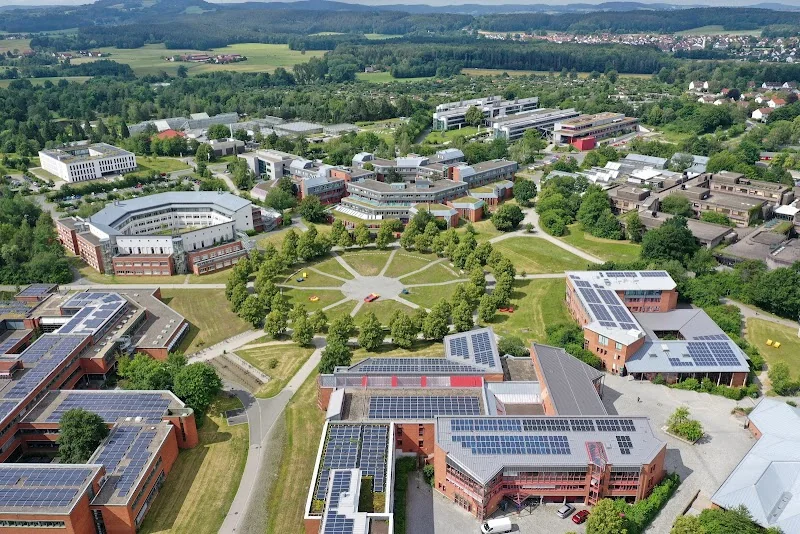
Universitätsstraße 30, Bayreuth
Universitätsstraße 30, 95447 Bayreuth, Germany
University of Bayreuth | QS Ranking & Master Programs
The University of Bayreuth is a campus university with a clear research orientation, a strong international profile, and a location that closely connects study and everyday life. Those looking for the University of Bayreuth usually want not just an address or a name, but primarily to know how the university ranks, which master's programs are offered in English, how the application process works, and what resources are available for international students. This is exactly what makes the university interesting: it is young compared to many traditional German universities, but it is very visible in research, interdisciplinarity, and student support. The development of the university began politically and structurally in the late 1960s, and teaching started in 1975. Today, the university represents a profile characterized by seven faculties, a strong campus structure, and many interfaces between disciplines. This is particularly evident in the areas of Food, Health, History, Computer Science, and Sustainability, where Bayreuth consciously works interdisciplinarily and specifically addresses international students. ([uni-bayreuth.de](https://www.uni-bayreuth.de/en/history-university))
Ranking and International Visibility
In terms of ranking, the University of Bayreuth shows a profile that goes beyond mere placement. In the QS World University Ranking 2026, it ranks 448th worldwide; in the European edition 2026, it stands at 187th out of 958 listed universities. The university itself emphasizes that it ranks in the top 20 percent in Europe. The international orientation is particularly striking: in the QS evaluation, not only research plays a role, but also internationalization, learning environment, sustainability, and academic reputation. This is important for Bayreuth because the university builds its profile not on size but on sharpness. It is a relatively compact university but works with clear focuses that become visible in rankings. These include high values in the student-to-faculty ratio, in the international research network, in sustainability, and in international diversity on campus. The university also reports 125 nationalities on campus for 2026. This shows that Bayreuth is not only regionally anchored but also very well connected internationally. ([uni-bayreuth.de](https://www.uni-bayreuth.de/en/press-release/qs-world-university-ranking-2026?utm_source=openai))
From a student perspective, the picture is also positive. In the official ranking overview of the university, it is listed as one of the most popular universities in Germany in the StudyCheck ranking 2026; the university points to a high recommendation rate from students. Such values are relevant for seekers because they often look for a reliable signal for study life, teaching quality, and organization. Bayreuth scores here mainly through short distances, good support, and a manageable but well-structured campus world. Additionally, there is the historically grown identity as a research-oriented university town. The university was founded in 1972 as the seventh Bavarian state university and began operations in 1975 with 632 students. From this development, an institution has emerged that today communicates its position in national and international comparisons offensively while also focusing on clear academic niches. Therefore, those interested in the University of Bayreuth find not only a number in the ranking but a consistent, research-oriented university profile with a strong future reference. ([uni-bayreuth.de](https://www.uni-bayreuth.de/en/rankings))
Application, Application Portal, and Admission
The application to the University of Bayreuth is not organized as a uniform process but depends on the degree program and the applicant group. This is important because the search terms around Application Portal, admission, and Acceptance Rate often suggest that there is only one way. In fact, the university describes on its official pages that one enters through the link for the respective applicant group and then receives the specific documents, language certificates, and deadlines depending on the degree program. For many master's programs, the question of whether a program is consecutive, i.e., builds on a specific bachelor's profile, also plays a role. The university itself emphasizes that most master's programs are consecutive and connect to specific subject-related prior knowledge. This is why the search for the right master's program in Bayreuth is always also a search for compatibility between prior studies and the chosen program. ([international-office.uni-bayreuth.de](https://www.international-office.uni-bayreuth.de/en/degree-programmes/4-periods-and-deadlines-for-masters/index.php))
For international applicants, the path is particularly clearly described. The International Office refers to the application process, enrollment, and Welcome Services. It is also pointed out that for a master's application, the responsible office depends on whether it concerns formal or subject-specific criteria. Those submitting documents such as university certificates, resumes, or proof of studies contact the Incoming Degree Team; those with questions about motivation letters, internship certificates, or subject-specific requirements usually contact the program coordination. For applicants from non-EU countries with foreign degrees, the uni-assist procedure with VPD is additionally relevant, which should be applied for early. The official page explicitly states that the VPD should be applied for in good time, preferably six to eight weeks before the deadline. For the Global Food, Nutrition and Health program, there is also an application deadline until June 15; in general, the university refers to program-specific deadlines and portal pathways for master's applications. This makes the application logic somewhat more differentiated but also more transparent. Those who plan carefully will find a very clear information structure on the official pages. ([international-office.uni-bayreuth.de](https://www.international-office.uni-bayreuth.de/en/come-to-bayreuth/degree-students/contact-us/index.html))
For search queries like University of Bayreuth application portal or university of bayreuth acceptance rate, the most precise answer is: There is not one global admission path, but program-specific procedures with clear steps. The university names standardized application windows for many programs that fit, for example, the winter semester or summer semester, and simultaneously refers to subject-specific selection criteria, language levels, and sometimes suitability assessments. This structure makes the university interesting for international students because it not only provides academic offerings but also makes the path to them comprehensible. Those who start the application process early, prepare the right documents, and pay attention to responsibilities usually reach their goal faster in Bayreuth. ([international-office.uni-bayreuth.de](https://www.international-office.uni-bayreuth.de/en/degree-programmes/4-periods-and-deadlines-for-masters/index.php))
English-Taught Master's Programs in Bayreuth and Kulmbach
A central reason why the University of Bayreuth is highly sought after online is its English-taught master's programs. The university not only offers individual courses here but also a consciously built portfolio for international students and for students with global interests. The official master's overview states that students at the University of Bayreuth can also utilize supplementary study offerings and can study and have individual modules examined. Additionally, the university refers to the Virtual University of Bavaria, which also offers English-taught online courses. This is important for many seekers because it shows: Bayreuth does not think of a master's program as a rigid path but as an academic system with options, supplements, and international interfaces. ([uni-bayreuth.de](https://www.uni-bayreuth.de/en/master))
Particularly strong is the area of Global Food, Nutrition and Health. This English-taught master's program is interdisciplinary and connects health sciences, nutritional sciences, and social science perspectives. The university emphasizes that the program is content-wise linked to the Excellence Cluster Africa Multiple and the research focus on Food and Health Sciences. Additionally, Kulmbach as a location is situated in an environment with companies in the food industry, the Max Rubner Institute, the Bavarian Food Safety and Veterinary Authority, the State Technical School for Food Technology, and the Kulmbach Clinic. This local anchoring makes the program so interesting: it is globally conceived but anchored in a real research and practice landscape. The faculty itself also describes the study as interdisciplinary and at the intersection of Food, Nutrition, and Health. This is a very good example of how Bayreuth creates a real, subject-specific offering from search terms like university of bayreuth global food nutrition and health. ([uni-bayreuth.de](https://www.uni-bayreuth.de/en/master/global-food-nutrition-and-health))
In addition, there are other English master's offerings that round out the university's profile. Global History is taught entirely in English and aims to historically contextualize complex social, political, cultural, and economic phenomena. Computer Science is also oriented towards English and focuses on international orientation as well as practical project work. Food System Sciences, which will be offered starting in the winter semester 2024/25, is four semesters long, taught in English, and combines Food Chemistry, Human Physiology, Food Law, and Bioeconomics. Together, these programs show how consistently Bayreuth relies on English teaching without diluting the subject profiles. For interested parties, this means: those searching for bayreuth university master's programs will find a mix of interdisciplinary, research-intensive, and internationally compatible degree programs at the university. And those wondering whether Bayreuth is just a classic German campus receive a clear answer: No, the university is consciously expanding its master's profile internationally and in English. ([uni-bayreuth.de](https://www.uni-bayreuth.de/en/master/global-history))
International Office, Email, and Support for Applicants
The International Office of the University of Bayreuth is the central point of contact for international networks, applications, study abroad stays, and Welcome Services. The official page explicitly describes it as the center of the university's international network. For prospective students, this is important because it consolidates the information that one would otherwise have to painstakingly gather from many individual faculty pages. Those planning a complete education in Bayreuth will be referred to the Incoming Degree Team. This team answers general questions about the application process, formal requirements, and the next steps. The office also clarifies that for master's applications, depending on the question, either the Incoming Degree Team or the respective program coordination is responsible. This means that support is not only available but also clearly separated between formal and subject-specific responsibilities. ([international-office.uni-bayreuth.de](https://www.international-office.uni-bayreuth.de/en/index.html))
The contact paths are also transparent. The university provides the email address poststelle@uni-bayreuth.de for general inquiries and additionally offers a telephone contact option for international applicants. For technical issues with moveON and CAMPUSonline, there are separate support instructions. This is particularly relevant for search terms like bayreuth university email or university of bayreuth international office because it provides not only a central address but an entire support structure. Those experiencing problems with missing documents, portal access, or language questions during the application process will find concrete contacts on the pages of the International Office. The university even points out that missing or incorrect documents can sometimes be corrected within the application deadline, but applications cannot be submitted after the deadline. This clarity is useful because it reduces uncertainty and makes the application process manageable. ([international-office.uni-bayreuth.de](https://www.uni-bayreuth.de/en/contact))
For international students after admission, the Welcome Service continues. There, questions about visas, health insurance, language, accommodation, and enrollment are bundled. The International Office also refers to student and administrative support for changes, exchange formats, and special concerns. When viewed from the perspective of an international applicant, the University of Bayreuth presents a very user-friendly picture: clear responsibilities, quick paths, visible contacts, and a service culture that not only accompanies the start of studies but also the time thereafter. Especially in conjunction with English master's programs and an internationally oriented campus structure, it becomes clear that Bayreuth not only offers research but also a functioning entry system for students from home and abroad. ([international-office.uni-bayreuth.de](https://www.international-office.uni-bayreuth.de/en/index.html))
Address, Campus, and Directions to the University of Bayreuth
Those looking for the University of Bayreuth address primarily need practical, reliable orientation. The official contact page states that for package deliveries, the address is Universitätsstraße 30, 95447 Bayreuth, Germany; the general mailing address is University of Bayreuth, 95440 Bayreuth, Germany. This is a clear, simple answer that helps immediately in practice. Additionally, the campus map shows that the university is located on the southern outskirts of Bayreuth, about 900 meters from the Bayreuth-Süd motorway exit of the A9. The signage indicating UNIVERSITÄT leads directly to the campus. This is an important point for all those arriving by car or planning visitor appointments. The campus map also points out special parking spaces, library markings, childcare, and other useful orientation points. ([uni-bayreuth.de](https://www.uni-bayreuth.de/en/contact))
The accessibility by public transport is also well described. On campus, there are the stops Mensa, Geosciences, and Uni Administration. Bus 316 connects the train station and campus, and from the central bus station ZOH, lines 304, 306, or 326 also run. For search queries like university of bayreuth germany or university of bayreuth address, this is particularly helpful because the university not only names a location but provides a complete travel framework. The campus map also refers to the room finder in CAMPUSonline and a multimedia database that contains information on equipment, lecture hall technology, and room size. This is a real advantage for students who need to switch quickly from one building to another in everyday life. The paths on campus are short, many things are only a few minutes apart, and the university explicitly describes its campus as the heart of university life. ([uni-bayreuth.de](https://www.uni-bayreuth.de/en/campus-map))
Another geographical advantage is the university's extension beyond Bayreuth to Kulmbach. The seventh faculty of the university is located there at Fritz-Hornschuch-Straße 13, right in the city center and only about 150 meters from the train station. Those considering the English master's program Global Food, Nutrition and Health or the new Food System Sciences quickly recognize that Kulmbach is not a peripheral detail but an important location of the university. Thus, Bayreuth combines classic campus study with a regionally expanded structure. At the same time, the orientation remains manageable: Bayreuth itself is compact, the campus is well signposted, and the paths between administration, faculties, canteens, cafeterias, and libraries are short. This mix of size, proximity, and transparency makes the university attractive to many students. ([uni-bayreuth.de](https://www.uni-bayreuth.de/en/campus-map))
The surrounding area also has its own value. The university refers to the Ecological-Botanical Garden, which was founded in 1978 and serves as a central scientific institution focused on ecology and the environment in research and teaching. According to the official description, it covers over 16 hectares, 6000 square meters of greenhouse space, and around 12,000 plant species. For many visitors, this is not only a beautiful place but also an example of how closely research, teaching, and quality of life come together in Bayreuth. This is a strong argument when one does not see the campus merely as an administrative place but as a living space. ([obg.uni-bayreuth.de](https://www.obg.uni-bayreuth.de/en/ueber_uns/index.html))
Jobs, Campus Life, and Sustainable Infrastructure
If someone is searching for university of bayreuth jobs, the official university is a good starting point. On the job page, Bayreuth refers to the job portal of the Career Service & Corporate Contacts. There, students, graduates, and alumni can find current job offers, internships, and part-time jobs from all fields. Additionally, job offers for the university context can also be published. This is practical because it connects the academic world with the entry into the profession. Especially for students who want to work during the semester or are looking for an entry after graduation, this infrastructure is a real added value. The university shows that its career orientation consists not only of advising but also of concrete job postings and clear contact paths. ([uni-bayreuth.de](https://www.uni-bayreuth.de/en/notices-and-contact-information-for-job-vacancies))
However, campus life in Bayreuth includes not only jobs but also good provision and a clear sustainability profile. The official cafeteria page describes the Coffee Bar as a meeting point for breakfast, snacks, quick warm bites, and coffee with homemade cake. Regional products, fair-trade coffee and cocoa, as well as the avoidance of disposable cups make the provision at the university a visible sustainability factor. Particularly charming is the greenhouse, which is operated voluntarily by students. This shows that Bayreuth creates a lively campus atmosphere not only academically but also socially and culturally. Those moving between lectures, studying, and meetings during the day do not find an anonymous mass university here but a university with its own meeting points and a noticeably active student life. ([uni-bayreuth.de](https://www.uni-bayreuth.de/en/cafeteria))
In addition, there is a focus on sustainability through GreenCampus. The university describes GreenCampus as an organizational unit for sustainability and as a hub for all sustainability-related activities. There, projects from research, teaching, campus management, and student engagement are brought together. This is also relevant for search queries related to University of Bayreuth Germany because it shows how strongly sustainability is institutionally anchored. The university has also received public recognition in this area and has been re-awarded as a Fairtrade University. In connection with the Green Campus, the Botanical Garden, and the sustainable offerings in the canteen and cafeterias, a coherent overall picture emerges. Bayreuth is therefore not only a university with good rankings but also a university that visibly shapes its everyday life responsibly. ([uni-bayreuth.de](https://www.uni-bayreuth.de/en/green-campus?utm_source=openai))
Historically, this also fits the picture. The university started in 1975 with 632 students and 24 professors and one professor; today it is significantly larger, more international, and strongly networked in several research fields. In official anniversary texts, the development is described as a path from a young, interdisciplinary foundation to a globally networked research university. At the same time, the founding motive remains visible: Bayreuth was once intended to set structural impulses for northeastern Bavaria. This mix of regional responsibility, scientific dynamism, and student proximity continues to characterize the university today. Therefore, those seeking not just a place of study but a functioning academic environment with research, sustainability, and career options will find a very balanced overall package at the University of Bayreuth. ([uni-bayreuth.de](https://www.uni-bayreuth.de/en/history-university))
Sources:
Show moreShow less
University of Bayreuth | QS Ranking & Master Programs
The University of Bayreuth is a campus university with a clear research orientation, a strong international profile, and a location that closely connects study and everyday life. Those looking for the University of Bayreuth usually want not just an address or a name, but primarily to know how the university ranks, which master's programs are offered in English, how the application process works, and what resources are available for international students. This is exactly what makes the university interesting: it is young compared to many traditional German universities, but it is very visible in research, interdisciplinarity, and student support. The development of the university began politically and structurally in the late 1960s, and teaching started in 1975. Today, the university represents a profile characterized by seven faculties, a strong campus structure, and many interfaces between disciplines. This is particularly evident in the areas of Food, Health, History, Computer Science, and Sustainability, where Bayreuth consciously works interdisciplinarily and specifically addresses international students. ([uni-bayreuth.de](https://www.uni-bayreuth.de/en/history-university))
Ranking and International Visibility
In terms of ranking, the University of Bayreuth shows a profile that goes beyond mere placement. In the QS World University Ranking 2026, it ranks 448th worldwide; in the European edition 2026, it stands at 187th out of 958 listed universities. The university itself emphasizes that it ranks in the top 20 percent in Europe. The international orientation is particularly striking: in the QS evaluation, not only research plays a role, but also internationalization, learning environment, sustainability, and academic reputation. This is important for Bayreuth because the university builds its profile not on size but on sharpness. It is a relatively compact university but works with clear focuses that become visible in rankings. These include high values in the student-to-faculty ratio, in the international research network, in sustainability, and in international diversity on campus. The university also reports 125 nationalities on campus for 2026. This shows that Bayreuth is not only regionally anchored but also very well connected internationally. ([uni-bayreuth.de](https://www.uni-bayreuth.de/en/press-release/qs-world-university-ranking-2026?utm_source=openai))
From a student perspective, the picture is also positive. In the official ranking overview of the university, it is listed as one of the most popular universities in Germany in the StudyCheck ranking 2026; the university points to a high recommendation rate from students. Such values are relevant for seekers because they often look for a reliable signal for study life, teaching quality, and organization. Bayreuth scores here mainly through short distances, good support, and a manageable but well-structured campus world. Additionally, there is the historically grown identity as a research-oriented university town. The university was founded in 1972 as the seventh Bavarian state university and began operations in 1975 with 632 students. From this development, an institution has emerged that today communicates its position in national and international comparisons offensively while also focusing on clear academic niches. Therefore, those interested in the University of Bayreuth find not only a number in the ranking but a consistent, research-oriented university profile with a strong future reference. ([uni-bayreuth.de](https://www.uni-bayreuth.de/en/rankings))
Application, Application Portal, and Admission
The application to the University of Bayreuth is not organized as a uniform process but depends on the degree program and the applicant group. This is important because the search terms around Application Portal, admission, and Acceptance Rate often suggest that there is only one way. In fact, the university describes on its official pages that one enters through the link for the respective applicant group and then receives the specific documents, language certificates, and deadlines depending on the degree program. For many master's programs, the question of whether a program is consecutive, i.e., builds on a specific bachelor's profile, also plays a role. The university itself emphasizes that most master's programs are consecutive and connect to specific subject-related prior knowledge. This is why the search for the right master's program in Bayreuth is always also a search for compatibility between prior studies and the chosen program. ([international-office.uni-bayreuth.de](https://www.international-office.uni-bayreuth.de/en/degree-programmes/4-periods-and-deadlines-for-masters/index.php))
For international applicants, the path is particularly clearly described. The International Office refers to the application process, enrollment, and Welcome Services. It is also pointed out that for a master's application, the responsible office depends on whether it concerns formal or subject-specific criteria. Those submitting documents such as university certificates, resumes, or proof of studies contact the Incoming Degree Team; those with questions about motivation letters, internship certificates, or subject-specific requirements usually contact the program coordination. For applicants from non-EU countries with foreign degrees, the uni-assist procedure with VPD is additionally relevant, which should be applied for early. The official page explicitly states that the VPD should be applied for in good time, preferably six to eight weeks before the deadline. For the Global Food, Nutrition and Health program, there is also an application deadline until June 15; in general, the university refers to program-specific deadlines and portal pathways for master's applications. This makes the application logic somewhat more differentiated but also more transparent. Those who plan carefully will find a very clear information structure on the official pages. ([international-office.uni-bayreuth.de](https://www.international-office.uni-bayreuth.de/en/come-to-bayreuth/degree-students/contact-us/index.html))
For search queries like University of Bayreuth application portal or university of bayreuth acceptance rate, the most precise answer is: There is not one global admission path, but program-specific procedures with clear steps. The university names standardized application windows for many programs that fit, for example, the winter semester or summer semester, and simultaneously refers to subject-specific selection criteria, language levels, and sometimes suitability assessments. This structure makes the university interesting for international students because it not only provides academic offerings but also makes the path to them comprehensible. Those who start the application process early, prepare the right documents, and pay attention to responsibilities usually reach their goal faster in Bayreuth. ([international-office.uni-bayreuth.de](https://www.international-office.uni-bayreuth.de/en/degree-programmes/4-periods-and-deadlines-for-masters/index.php))
English-Taught Master's Programs in Bayreuth and Kulmbach
A central reason why the University of Bayreuth is highly sought after online is its English-taught master's programs. The university not only offers individual courses here but also a consciously built portfolio for international students and for students with global interests. The official master's overview states that students at the University of Bayreuth can also utilize supplementary study offerings and can study and have individual modules examined. Additionally, the university refers to the Virtual University of Bavaria, which also offers English-taught online courses. This is important for many seekers because it shows: Bayreuth does not think of a master's program as a rigid path but as an academic system with options, supplements, and international interfaces. ([uni-bayreuth.de](https://www.uni-bayreuth.de/en/master))
Particularly strong is the area of Global Food, Nutrition and Health. This English-taught master's program is interdisciplinary and connects health sciences, nutritional sciences, and social science perspectives. The university emphasizes that the program is content-wise linked to the Excellence Cluster Africa Multiple and the research focus on Food and Health Sciences. Additionally, Kulmbach as a location is situated in an environment with companies in the food industry, the Max Rubner Institute, the Bavarian Food Safety and Veterinary Authority, the State Technical School for Food Technology, and the Kulmbach Clinic. This local anchoring makes the program so interesting: it is globally conceived but anchored in a real research and practice landscape. The faculty itself also describes the study as interdisciplinary and at the intersection of Food, Nutrition, and Health. This is a very good example of how Bayreuth creates a real, subject-specific offering from search terms like university of bayreuth global food nutrition and health. ([uni-bayreuth.de](https://www.uni-bayreuth.de/en/master/global-food-nutrition-and-health))
In addition, there are other English master's offerings that round out the university's profile. Global History is taught entirely in English and aims to historically contextualize complex social, political, cultural, and economic phenomena. Computer Science is also oriented towards English and focuses on international orientation as well as practical project work. Food System Sciences, which will be offered starting in the winter semester 2024/25, is four semesters long, taught in English, and combines Food Chemistry, Human Physiology, Food Law, and Bioeconomics. Together, these programs show how consistently Bayreuth relies on English teaching without diluting the subject profiles. For interested parties, this means: those searching for bayreuth university master's programs will find a mix of interdisciplinary, research-intensive, and internationally compatible degree programs at the university. And those wondering whether Bayreuth is just a classic German campus receive a clear answer: No, the university is consciously expanding its master's profile internationally and in English. ([uni-bayreuth.de](https://www.uni-bayreuth.de/en/master/global-history))
International Office, Email, and Support for Applicants
The International Office of the University of Bayreuth is the central point of contact for international networks, applications, study abroad stays, and Welcome Services. The official page explicitly describes it as the center of the university's international network. For prospective students, this is important because it consolidates the information that one would otherwise have to painstakingly gather from many individual faculty pages. Those planning a complete education in Bayreuth will be referred to the Incoming Degree Team. This team answers general questions about the application process, formal requirements, and the next steps. The office also clarifies that for master's applications, depending on the question, either the Incoming Degree Team or the respective program coordination is responsible. This means that support is not only available but also clearly separated between formal and subject-specific responsibilities. ([international-office.uni-bayreuth.de](https://www.international-office.uni-bayreuth.de/en/index.html))
The contact paths are also transparent. The university provides the email address poststelle@uni-bayreuth.de for general inquiries and additionally offers a telephone contact option for international applicants. For technical issues with moveON and CAMPUSonline, there are separate support instructions. This is particularly relevant for search terms like bayreuth university email or university of bayreuth international office because it provides not only a central address but an entire support structure. Those experiencing problems with missing documents, portal access, or language questions during the application process will find concrete contacts on the pages of the International Office. The university even points out that missing or incorrect documents can sometimes be corrected within the application deadline, but applications cannot be submitted after the deadline. This clarity is useful because it reduces uncertainty and makes the application process manageable. ([international-office.uni-bayreuth.de](https://www.uni-bayreuth.de/en/contact))
For international students after admission, the Welcome Service continues. There, questions about visas, health insurance, language, accommodation, and enrollment are bundled. The International Office also refers to student and administrative support for changes, exchange formats, and special concerns. When viewed from the perspective of an international applicant, the University of Bayreuth presents a very user-friendly picture: clear responsibilities, quick paths, visible contacts, and a service culture that not only accompanies the start of studies but also the time thereafter. Especially in conjunction with English master's programs and an internationally oriented campus structure, it becomes clear that Bayreuth not only offers research but also a functioning entry system for students from home and abroad. ([international-office.uni-bayreuth.de](https://www.international-office.uni-bayreuth.de/en/index.html))
Address, Campus, and Directions to the University of Bayreuth
Those looking for the University of Bayreuth address primarily need practical, reliable orientation. The official contact page states that for package deliveries, the address is Universitätsstraße 30, 95447 Bayreuth, Germany; the general mailing address is University of Bayreuth, 95440 Bayreuth, Germany. This is a clear, simple answer that helps immediately in practice. Additionally, the campus map shows that the university is located on the southern outskirts of Bayreuth, about 900 meters from the Bayreuth-Süd motorway exit of the A9. The signage indicating UNIVERSITÄT leads directly to the campus. This is an important point for all those arriving by car or planning visitor appointments. The campus map also points out special parking spaces, library markings, childcare, and other useful orientation points. ([uni-bayreuth.de](https://www.uni-bayreuth.de/en/contact))
The accessibility by public transport is also well described. On campus, there are the stops Mensa, Geosciences, and Uni Administration. Bus 316 connects the train station and campus, and from the central bus station ZOH, lines 304, 306, or 326 also run. For search queries like university of bayreuth germany or university of bayreuth address, this is particularly helpful because the university not only names a location but provides a complete travel framework. The campus map also refers to the room finder in CAMPUSonline and a multimedia database that contains information on equipment, lecture hall technology, and room size. This is a real advantage for students who need to switch quickly from one building to another in everyday life. The paths on campus are short, many things are only a few minutes apart, and the university explicitly describes its campus as the heart of university life. ([uni-bayreuth.de](https://www.uni-bayreuth.de/en/campus-map))
Another geographical advantage is the university's extension beyond Bayreuth to Kulmbach. The seventh faculty of the university is located there at Fritz-Hornschuch-Straße 13, right in the city center and only about 150 meters from the train station. Those considering the English master's program Global Food, Nutrition and Health or the new Food System Sciences quickly recognize that Kulmbach is not a peripheral detail but an important location of the university. Thus, Bayreuth combines classic campus study with a regionally expanded structure. At the same time, the orientation remains manageable: Bayreuth itself is compact, the campus is well signposted, and the paths between administration, faculties, canteens, cafeterias, and libraries are short. This mix of size, proximity, and transparency makes the university attractive to many students. ([uni-bayreuth.de](https://www.uni-bayreuth.de/en/campus-map))
The surrounding area also has its own value. The university refers to the Ecological-Botanical Garden, which was founded in 1978 and serves as a central scientific institution focused on ecology and the environment in research and teaching. According to the official description, it covers over 16 hectares, 6000 square meters of greenhouse space, and around 12,000 plant species. For many visitors, this is not only a beautiful place but also an example of how closely research, teaching, and quality of life come together in Bayreuth. This is a strong argument when one does not see the campus merely as an administrative place but as a living space. ([obg.uni-bayreuth.de](https://www.obg.uni-bayreuth.de/en/ueber_uns/index.html))
Jobs, Campus Life, and Sustainable Infrastructure
If someone is searching for university of bayreuth jobs, the official university is a good starting point. On the job page, Bayreuth refers to the job portal of the Career Service & Corporate Contacts. There, students, graduates, and alumni can find current job offers, internships, and part-time jobs from all fields. Additionally, job offers for the university context can also be published. This is practical because it connects the academic world with the entry into the profession. Especially for students who want to work during the semester or are looking for an entry after graduation, this infrastructure is a real added value. The university shows that its career orientation consists not only of advising but also of concrete job postings and clear contact paths. ([uni-bayreuth.de](https://www.uni-bayreuth.de/en/notices-and-contact-information-for-job-vacancies))
However, campus life in Bayreuth includes not only jobs but also good provision and a clear sustainability profile. The official cafeteria page describes the Coffee Bar as a meeting point for breakfast, snacks, quick warm bites, and coffee with homemade cake. Regional products, fair-trade coffee and cocoa, as well as the avoidance of disposable cups make the provision at the university a visible sustainability factor. Particularly charming is the greenhouse, which is operated voluntarily by students. This shows that Bayreuth creates a lively campus atmosphere not only academically but also socially and culturally. Those moving between lectures, studying, and meetings during the day do not find an anonymous mass university here but a university with its own meeting points and a noticeably active student life. ([uni-bayreuth.de](https://www.uni-bayreuth.de/en/cafeteria))
In addition, there is a focus on sustainability through GreenCampus. The university describes GreenCampus as an organizational unit for sustainability and as a hub for all sustainability-related activities. There, projects from research, teaching, campus management, and student engagement are brought together. This is also relevant for search queries related to University of Bayreuth Germany because it shows how strongly sustainability is institutionally anchored. The university has also received public recognition in this area and has been re-awarded as a Fairtrade University. In connection with the Green Campus, the Botanical Garden, and the sustainable offerings in the canteen and cafeterias, a coherent overall picture emerges. Bayreuth is therefore not only a university with good rankings but also a university that visibly shapes its everyday life responsibly. ([uni-bayreuth.de](https://www.uni-bayreuth.de/en/green-campus?utm_source=openai))
Historically, this also fits the picture. The university started in 1975 with 632 students and 24 professors and one professor; today it is significantly larger, more international, and strongly networked in several research fields. In official anniversary texts, the development is described as a path from a young, interdisciplinary foundation to a globally networked research university. At the same time, the founding motive remains visible: Bayreuth was once intended to set structural impulses for northeastern Bavaria. This mix of regional responsibility, scientific dynamism, and student proximity continues to characterize the university today. Therefore, those seeking not just a place of study but a functioning academic environment with research, sustainability, and career options will find a very balanced overall package at the University of Bayreuth. ([uni-bayreuth.de](https://www.uni-bayreuth.de/en/history-university))
Sources:
University of Bayreuth | QS Ranking & Master Programs
The University of Bayreuth is a campus university with a clear research orientation, a strong international profile, and a location that closely connects study and everyday life. Those looking for the University of Bayreuth usually want not just an address or a name, but primarily to know how the university ranks, which master's programs are offered in English, how the application process works, and what resources are available for international students. This is exactly what makes the university interesting: it is young compared to many traditional German universities, but it is very visible in research, interdisciplinarity, and student support. The development of the university began politically and structurally in the late 1960s, and teaching started in 1975. Today, the university represents a profile characterized by seven faculties, a strong campus structure, and many interfaces between disciplines. This is particularly evident in the areas of Food, Health, History, Computer Science, and Sustainability, where Bayreuth consciously works interdisciplinarily and specifically addresses international students. ([uni-bayreuth.de](https://www.uni-bayreuth.de/en/history-university))
Ranking and International Visibility
In terms of ranking, the University of Bayreuth shows a profile that goes beyond mere placement. In the QS World University Ranking 2026, it ranks 448th worldwide; in the European edition 2026, it stands at 187th out of 958 listed universities. The university itself emphasizes that it ranks in the top 20 percent in Europe. The international orientation is particularly striking: in the QS evaluation, not only research plays a role, but also internationalization, learning environment, sustainability, and academic reputation. This is important for Bayreuth because the university builds its profile not on size but on sharpness. It is a relatively compact university but works with clear focuses that become visible in rankings. These include high values in the student-to-faculty ratio, in the international research network, in sustainability, and in international diversity on campus. The university also reports 125 nationalities on campus for 2026. This shows that Bayreuth is not only regionally anchored but also very well connected internationally. ([uni-bayreuth.de](https://www.uni-bayreuth.de/en/press-release/qs-world-university-ranking-2026?utm_source=openai))
From a student perspective, the picture is also positive. In the official ranking overview of the university, it is listed as one of the most popular universities in Germany in the StudyCheck ranking 2026; the university points to a high recommendation rate from students. Such values are relevant for seekers because they often look for a reliable signal for study life, teaching quality, and organization. Bayreuth scores here mainly through short distances, good support, and a manageable but well-structured campus world. Additionally, there is the historically grown identity as a research-oriented university town. The university was founded in 1972 as the seventh Bavarian state university and began operations in 1975 with 632 students. From this development, an institution has emerged that today communicates its position in national and international comparisons offensively while also focusing on clear academic niches. Therefore, those interested in the University of Bayreuth find not only a number in the ranking but a consistent, research-oriented university profile with a strong future reference. ([uni-bayreuth.de](https://www.uni-bayreuth.de/en/rankings))
Application, Application Portal, and Admission
The application to the University of Bayreuth is not organized as a uniform process but depends on the degree program and the applicant group. This is important because the search terms around Application Portal, admission, and Acceptance Rate often suggest that there is only one way. In fact, the university describes on its official pages that one enters through the link for the respective applicant group and then receives the specific documents, language certificates, and deadlines depending on the degree program. For many master's programs, the question of whether a program is consecutive, i.e., builds on a specific bachelor's profile, also plays a role. The university itself emphasizes that most master's programs are consecutive and connect to specific subject-related prior knowledge. This is why the search for the right master's program in Bayreuth is always also a search for compatibility between prior studies and the chosen program. ([international-office.uni-bayreuth.de](https://www.international-office.uni-bayreuth.de/en/degree-programmes/4-periods-and-deadlines-for-masters/index.php))
For international applicants, the path is particularly clearly described. The International Office refers to the application process, enrollment, and Welcome Services. It is also pointed out that for a master's application, the responsible office depends on whether it concerns formal or subject-specific criteria. Those submitting documents such as university certificates, resumes, or proof of studies contact the Incoming Degree Team; those with questions about motivation letters, internship certificates, or subject-specific requirements usually contact the program coordination. For applicants from non-EU countries with foreign degrees, the uni-assist procedure with VPD is additionally relevant, which should be applied for early. The official page explicitly states that the VPD should be applied for in good time, preferably six to eight weeks before the deadline. For the Global Food, Nutrition and Health program, there is also an application deadline until June 15; in general, the university refers to program-specific deadlines and portal pathways for master's applications. This makes the application logic somewhat more differentiated but also more transparent. Those who plan carefully will find a very clear information structure on the official pages. ([international-office.uni-bayreuth.de](https://www.international-office.uni-bayreuth.de/en/come-to-bayreuth/degree-students/contact-us/index.html))
For search queries like University of Bayreuth application portal or university of bayreuth acceptance rate, the most precise answer is: There is not one global admission path, but program-specific procedures with clear steps. The university names standardized application windows for many programs that fit, for example, the winter semester or summer semester, and simultaneously refers to subject-specific selection criteria, language levels, and sometimes suitability assessments. This structure makes the university interesting for international students because it not only provides academic offerings but also makes the path to them comprehensible. Those who start the application process early, prepare the right documents, and pay attention to responsibilities usually reach their goal faster in Bayreuth. ([international-office.uni-bayreuth.de](https://www.international-office.uni-bayreuth.de/en/degree-programmes/4-periods-and-deadlines-for-masters/index.php))
English-Taught Master's Programs in Bayreuth and Kulmbach
A central reason why the University of Bayreuth is highly sought after online is its English-taught master's programs. The university not only offers individual courses here but also a consciously built portfolio for international students and for students with global interests. The official master's overview states that students at the University of Bayreuth can also utilize supplementary study offerings and can study and have individual modules examined. Additionally, the university refers to the Virtual University of Bavaria, which also offers English-taught online courses. This is important for many seekers because it shows: Bayreuth does not think of a master's program as a rigid path but as an academic system with options, supplements, and international interfaces. ([uni-bayreuth.de](https://www.uni-bayreuth.de/en/master))
Particularly strong is the area of Global Food, Nutrition and Health. This English-taught master's program is interdisciplinary and connects health sciences, nutritional sciences, and social science perspectives. The university emphasizes that the program is content-wise linked to the Excellence Cluster Africa Multiple and the research focus on Food and Health Sciences. Additionally, Kulmbach as a location is situated in an environment with companies in the food industry, the Max Rubner Institute, the Bavarian Food Safety and Veterinary Authority, the State Technical School for Food Technology, and the Kulmbach Clinic. This local anchoring makes the program so interesting: it is globally conceived but anchored in a real research and practice landscape. The faculty itself also describes the study as interdisciplinary and at the intersection of Food, Nutrition, and Health. This is a very good example of how Bayreuth creates a real, subject-specific offering from search terms like university of bayreuth global food nutrition and health. ([uni-bayreuth.de](https://www.uni-bayreuth.de/en/master/global-food-nutrition-and-health))
In addition, there are other English master's offerings that round out the university's profile. Global History is taught entirely in English and aims to historically contextualize complex social, political, cultural, and economic phenomena. Computer Science is also oriented towards English and focuses on international orientation as well as practical project work. Food System Sciences, which will be offered starting in the winter semester 2024/25, is four semesters long, taught in English, and combines Food Chemistry, Human Physiology, Food Law, and Bioeconomics. Together, these programs show how consistently Bayreuth relies on English teaching without diluting the subject profiles. For interested parties, this means: those searching for bayreuth university master's programs will find a mix of interdisciplinary, research-intensive, and internationally compatible degree programs at the university. And those wondering whether Bayreuth is just a classic German campus receive a clear answer: No, the university is consciously expanding its master's profile internationally and in English. ([uni-bayreuth.de](https://www.uni-bayreuth.de/en/master/global-history))
International Office, Email, and Support for Applicants
The International Office of the University of Bayreuth is the central point of contact for international networks, applications, study abroad stays, and Welcome Services. The official page explicitly describes it as the center of the university's international network. For prospective students, this is important because it consolidates the information that one would otherwise have to painstakingly gather from many individual faculty pages. Those planning a complete education in Bayreuth will be referred to the Incoming Degree Team. This team answers general questions about the application process, formal requirements, and the next steps. The office also clarifies that for master's applications, depending on the question, either the Incoming Degree Team or the respective program coordination is responsible. This means that support is not only available but also clearly separated between formal and subject-specific responsibilities. ([international-office.uni-bayreuth.de](https://www.international-office.uni-bayreuth.de/en/index.html))
The contact paths are also transparent. The university provides the email address poststelle@uni-bayreuth.de for general inquiries and additionally offers a telephone contact option for international applicants. For technical issues with moveON and CAMPUSonline, there are separate support instructions. This is particularly relevant for search terms like bayreuth university email or university of bayreuth international office because it provides not only a central address but an entire support structure. Those experiencing problems with missing documents, portal access, or language questions during the application process will find concrete contacts on the pages of the International Office. The university even points out that missing or incorrect documents can sometimes be corrected within the application deadline, but applications cannot be submitted after the deadline. This clarity is useful because it reduces uncertainty and makes the application process manageable. ([international-office.uni-bayreuth.de](https://www.uni-bayreuth.de/en/contact))
For international students after admission, the Welcome Service continues. There, questions about visas, health insurance, language, accommodation, and enrollment are bundled. The International Office also refers to student and administrative support for changes, exchange formats, and special concerns. When viewed from the perspective of an international applicant, the University of Bayreuth presents a very user-friendly picture: clear responsibilities, quick paths, visible contacts, and a service culture that not only accompanies the start of studies but also the time thereafter. Especially in conjunction with English master's programs and an internationally oriented campus structure, it becomes clear that Bayreuth not only offers research but also a functioning entry system for students from home and abroad. ([international-office.uni-bayreuth.de](https://www.international-office.uni-bayreuth.de/en/index.html))
Address, Campus, and Directions to the University of Bayreuth
Those looking for the University of Bayreuth address primarily need practical, reliable orientation. The official contact page states that for package deliveries, the address is Universitätsstraße 30, 95447 Bayreuth, Germany; the general mailing address is University of Bayreuth, 95440 Bayreuth, Germany. This is a clear, simple answer that helps immediately in practice. Additionally, the campus map shows that the university is located on the southern outskirts of Bayreuth, about 900 meters from the Bayreuth-Süd motorway exit of the A9. The signage indicating UNIVERSITÄT leads directly to the campus. This is an important point for all those arriving by car or planning visitor appointments. The campus map also points out special parking spaces, library markings, childcare, and other useful orientation points. ([uni-bayreuth.de](https://www.uni-bayreuth.de/en/contact))
The accessibility by public transport is also well described. On campus, there are the stops Mensa, Geosciences, and Uni Administration. Bus 316 connects the train station and campus, and from the central bus station ZOH, lines 304, 306, or 326 also run. For search queries like university of bayreuth germany or university of bayreuth address, this is particularly helpful because the university not only names a location but provides a complete travel framework. The campus map also refers to the room finder in CAMPUSonline and a multimedia database that contains information on equipment, lecture hall technology, and room size. This is a real advantage for students who need to switch quickly from one building to another in everyday life. The paths on campus are short, many things are only a few minutes apart, and the university explicitly describes its campus as the heart of university life. ([uni-bayreuth.de](https://www.uni-bayreuth.de/en/campus-map))
Another geographical advantage is the university's extension beyond Bayreuth to Kulmbach. The seventh faculty of the university is located there at Fritz-Hornschuch-Straße 13, right in the city center and only about 150 meters from the train station. Those considering the English master's program Global Food, Nutrition and Health or the new Food System Sciences quickly recognize that Kulmbach is not a peripheral detail but an important location of the university. Thus, Bayreuth combines classic campus study with a regionally expanded structure. At the same time, the orientation remains manageable: Bayreuth itself is compact, the campus is well signposted, and the paths between administration, faculties, canteens, cafeterias, and libraries are short. This mix of size, proximity, and transparency makes the university attractive to many students. ([uni-bayreuth.de](https://www.uni-bayreuth.de/en/campus-map))
The surrounding area also has its own value. The university refers to the Ecological-Botanical Garden, which was founded in 1978 and serves as a central scientific institution focused on ecology and the environment in research and teaching. According to the official description, it covers over 16 hectares, 6000 square meters of greenhouse space, and around 12,000 plant species. For many visitors, this is not only a beautiful place but also an example of how closely research, teaching, and quality of life come together in Bayreuth. This is a strong argument when one does not see the campus merely as an administrative place but as a living space. ([obg.uni-bayreuth.de](https://www.obg.uni-bayreuth.de/en/ueber_uns/index.html))
Jobs, Campus Life, and Sustainable Infrastructure
If someone is searching for university of bayreuth jobs, the official university is a good starting point. On the job page, Bayreuth refers to the job portal of the Career Service & Corporate Contacts. There, students, graduates, and alumni can find current job offers, internships, and part-time jobs from all fields. Additionally, job offers for the university context can also be published. This is practical because it connects the academic world with the entry into the profession. Especially for students who want to work during the semester or are looking for an entry after graduation, this infrastructure is a real added value. The university shows that its career orientation consists not only of advising but also of concrete job postings and clear contact paths. ([uni-bayreuth.de](https://www.uni-bayreuth.de/en/notices-and-contact-information-for-job-vacancies))
However, campus life in Bayreuth includes not only jobs but also good provision and a clear sustainability profile. The official cafeteria page describes the Coffee Bar as a meeting point for breakfast, snacks, quick warm bites, and coffee with homemade cake. Regional products, fair-trade coffee and cocoa, as well as the avoidance of disposable cups make the provision at the university a visible sustainability factor. Particularly charming is the greenhouse, which is operated voluntarily by students. This shows that Bayreuth creates a lively campus atmosphere not only academically but also socially and culturally. Those moving between lectures, studying, and meetings during the day do not find an anonymous mass university here but a university with its own meeting points and a noticeably active student life. ([uni-bayreuth.de](https://www.uni-bayreuth.de/en/cafeteria))
In addition, there is a focus on sustainability through GreenCampus. The university describes GreenCampus as an organizational unit for sustainability and as a hub for all sustainability-related activities. There, projects from research, teaching, campus management, and student engagement are brought together. This is also relevant for search queries related to University of Bayreuth Germany because it shows how strongly sustainability is institutionally anchored. The university has also received public recognition in this area and has been re-awarded as a Fairtrade University. In connection with the Green Campus, the Botanical Garden, and the sustainable offerings in the canteen and cafeterias, a coherent overall picture emerges. Bayreuth is therefore not only a university with good rankings but also a university that visibly shapes its everyday life responsibly. ([uni-bayreuth.de](https://www.uni-bayreuth.de/en/green-campus?utm_source=openai))
Historically, this also fits the picture. The university started in 1975 with 632 students and 24 professors and one professor; today it is significantly larger, more international, and strongly networked in several research fields. In official anniversary texts, the development is described as a path from a young, interdisciplinary foundation to a globally networked research university. At the same time, the founding motive remains visible: Bayreuth was once intended to set structural impulses for northeastern Bavaria. This mix of regional responsibility, scientific dynamism, and student proximity continues to characterize the university today. Therefore, those seeking not just a place of study but a functioning academic environment with research, sustainability, and career options will find a very balanced overall package at the University of Bayreuth. ([uni-bayreuth.de](https://www.uni-bayreuth.de/en/history-university))
Sources:

Frequently Asked Questions
Reviews
Adam Baluchh
30. April 2025
As a final-year student of BSc Microbiology, I am highly motivated to pursue my Master’s degree at the University of Bayreuth due to its interdisciplinary focus on food quality, safety, and microbiological research. The program’s emphasis on modern analytical techniques, food hygiene, and the microbial aspects of food systems aligns closely with both my academic background and long-term career goals. What particularly draws me to Bayreuth is its strong commitment to combining theoretical knowledge with practical applications in real-world food safety contexts. Additionally, the university’s beautiful, research-driven environment and international orientation make it an ideal place for both personal and academic growth. I am eager to contribute to and learn from the diverse scientific community at Bayreuth while deepening my expertise in microbiology’s role in food safety and public health.
Toprak Dikici
23. October 2024
So far the philosophy and computer science courses rock! Lecturers are extremely helpful, it's a great place to make brilliant friends. Campus is amazing, food is really good. City has great infrastructure compared to its size and population, you can enjoy the nature here. I feel very lucky to be here 🙌🏻. Only problem is accommodation.
Sadia Afrin
28. October 2024
One of my favorite universities. The environment of the university looks very beautiful😍. I want to do masters in this university of my choice in future. Currently I am doing graduation in Zoology from National University. Can I choose any science subject later for Masters?
Ahmet Atasoy
8. September 2025
I want to study in English and I've been to the Data, Science and AI department. Where can I find more information?
Alireza Abdi
5. October 2023
For Germans: This place is fine; it meets expectations in education and lifestyle. 🌐 For Exchange Students: It's manageable for a short-term stay; you're less likely to encounter major issues. 🌍 For Long-Term International Students: Be cautious. Expect poor quality of education, regulations, financial struggles, job market after graduation, especially in programs like Computer Science or Economics take 3-4 years. C1 level German is a must to lessen the difficulties. In general, the chance is "low". ⚠️ General Note: I'm personally unsatisfied with my experience here. Issues range from educational quality to language barriers, etc. Even those from wealthy backgrounds may face opportunity costs, except in niche fields like African Studies, culture... 🌳 Nature: The only bright spot in an otherwise challenging environment. 🔴 Overall: Mainly suitable for Germans; not recommended for long-term international students. Exercise caution, especially if self-funded. Good luck.