
Richard-Wagner-Straße 48, Bayreuth
Richard-Wagner-Straße 48, 95444 Bayreuth, Germany
Wahnfried | Bayreuth & Concerts 2026
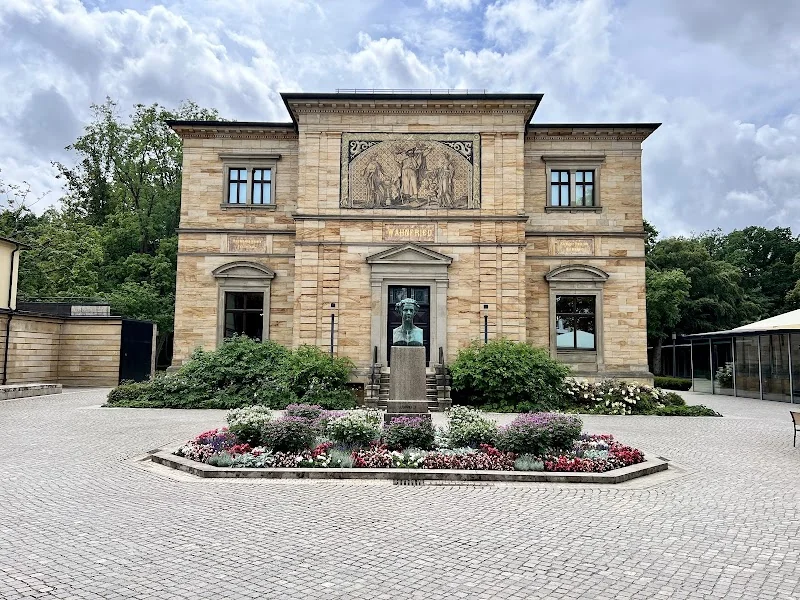
Wahnfried is in Bayreuth much more than a well-known address from Wagner's biography. The place stands for the Richard Wagner Museum, for Haus Wahnfried as a historic residence, for the new museum building with festival history, and for the Siegfried-Wagner-Haus as a third, thematically important exhibition element. Richard Wagner had his residence built between 1872 and 1874 at the Hofgarten; after his death in 1883, he was buried in the garden. Since 1976, Haus Wahnfried has been the seat of the Richard Wagner Museum, which was fundamentally renewed and expanded from 2010 to 2015. Thus, Wahnfried continues to connect an authentic place, museum communication, and scientific research in a way that is unique in Bayreuth. ([wagnermuseum.de](https://www.wagnermuseum.de/museum/))
For many search queries related to wahnfried bayreuth, wahnfried place, or wahnfried name, it is therefore important: It refers not to an abstract term, but to a concrete cultural site with a strong historical presence. The museum sees itself as a significant place in German cultural history, where the life, work, and influence of Richard Wagner are researched, narrated, and made tangible for visitors. At the same time, Wahnfried is embedded in the Bayreuth festival world, thus in the context of a place that is internationally associated with opera, music history, and cultural heritage. Those who visit Wahnfried experience not just an exhibition, but a genuine historical site with high symbolic density. ([wagnermuseum.de](https://www.wagnermuseum.de/museum/richard-wagner-museum/))
Wahnfried in Bayreuth: Place, Name, and Historical Significance
The significance of Wahnfried becomes best understood when one reads the place as part of Bayreuth's cultural history. The Richard Wagner Museum describes Bayreuth as the epicenter of global Wagner enthusiasm, and Haus Wahnfried as a special German cultural site with a significant and eventful history. This dual character makes the place so strong for SEO and for real visitor intentions: On one hand, people are practically searching for location, directions, opening hours, or tickets. On the other hand, it often concerns the cultural core of the place, namely Wagner, the festivals, the origin of the house, and the history of its influence. Therefore, Wahnfried is not just a museum, but also a space of remembrance, where music history, family history, and contemporary history overlap. ([wagnermuseum.de](https://www.wagnermuseum.de/))
For the search terms wahnfried bayreuth, wahnfried place, and wahnfried name, it is also important that the name is directly associated with the original residence in Bayreuth. The visitor address of the museum is Richard-Wagner-Str. 48, while the national archive and administration are located at Wahnfriedstraße 2. This shows how closely the name Wahnfried is linked to the entire museum ensemble. So, those who search for Wahnfried actually end up at a coherent cultural site consisting of house, new building, archive, and garden. This spatial and thematic unity makes the place particularly attractive for visitors who want to not just read about Wagner but experience it directly. ([wagnermuseum.de](https://www.wagnermuseum.de/museum/))
Additionally, there is the special aura of the authentic site. The museum itself emphasizes that the connection of public cultural interest and internationally networked scientific activity is brought together at this location. This mixture is rare: Wahnfried is not just a house with display cases, but a place where original rooms, documents, sound examples, and historical contexts are combined. This creates a visitor experience that works for both Wagner fans and culturally historically interested guests. Upon entering the place, one immediately understands that here, not just any abstract museum narrative is staged, but a historically charged original site with real biographical depth. ([wagnermuseum.de](https://www.wagnermuseum.de/museum/richard-wagner-museum/))
Haus Wahnfried, New Museum Building, and Siegfried-Wagner-Haus
The Richard Wagner Museum today presents itself with three permanent exhibitions that are clearly distinct in content and together provide a complete picture of the place. Haus Wahnfried stands for the life, work, and creation of Richard Wagner. The new museum building is dedicated to the performance history of the Bayreuth Festivals. The Siegfried-Wagner-Haus illuminates the ideological history of Wagner and the festivals as well as the history of the Wagner family in the first half of the 20th century. This tripartite division is particularly helpful for visitors because it does not mix the themes but structures them along clear spaces and epochs. Thus, personal biography, musical work, and political appropriation can be experienced sequentially and yet in context. ([wagnermuseum.de](https://www.wagnermuseum.de/museum/dauerausstellung/))
In Haus Wahnfried itself, visitors experience the living environment around 1880 and the daily life of the family on the ground floor. Friends and well-known personalities were guests there, making the house a social and cultural meeting point of its time. In the basement, one can trace Wagner's working methods, up to the finished score; an interactive score makes various aspects of the transformation from notation to sound tangible. The new building, designed by Berlin architect Volker Staab, features a spacious foyer, a special exhibition hall, and a basement with exhibits on stage design models, original costumes, and stage technical apparatus from the festival hall. The museum cinema complements the whole with a changing film program. ([wagnermuseum.de](https://www.wagnermuseum.de/museum/dauerausstellung/))
Also particularly impressive is the Siegfried-Wagner-Haus. It was built in 1894 by Wagner's son Siegfried and later inhabited by Winifred Wagner until 1980. The ground floor retains its original appearance from the 1930s and is fully accessible for the first time. Among other things, the living room, dining room, and garden room can be seen there, as well as the terrace with a water feature and tea pavilion. This part of the museum is thematically dedicated to ideological history, i.e., the relationship between Bayreuth, the Wagner family, and the Nazi dictatorship. This part makes it clear that Wahnfried is not only a beautiful cultural site but also a place of critical historical reflection. ([wagnermuseum.de](https://www.wagnermuseum.de/museum/dauerausstellung/))
Wahnfried Concerts 2026 and Events in the House
Those searching for wahnfried concerts 2026 will indeed find a lively event program at the Richard Wagner Museum. The museum states that it offers chamber concerts, lectures, and symposia, especially during the Bayreuth Festivals. Additionally, there are public tours and offerings for children and young people that explore the various areas of the museum. Wahnfried is thus not only a place for viewing but also for listening, learning, and discussing. For an SEO landing page, this is important because the place addresses both cultural audiences and event seekers. The hall of Haus Wahnfried plays a central role in this, as it is used as a historical and simultaneously vibrant event space. ([wagnermuseum.de](https://www.wagnermuseum.de/))
It becomes more specific with the current festival program 2026. On April 17, 2026, the opening concert of Zeit für Neue Musik Bayreuth is announced in Haus Wahnfried. The concert will take place at 7:30 PM in the hall of Haus Wahnfried and is conceived as a world premiere concert. Thus, the historical original site itself becomes a sound space for new music and new perspectives on the place. Such events show why the keyword wahnfried concerts 2026 is not just a search term but reflects genuine visitor interest. The place is not a static museum but a space that is further developed with contemporary art and translates its historical significance into current formats. ([wagnermuseum.de](https://www.wagnermuseum.de/events/ueberall-wahnfried-eroeffnungskonzert-des-festivals-zeit-fuer-neue-musik-bayreuth-am-17-april-2026-im-haus-wahnfried/))
The special exhibitions are also an important part of the program. In the graphic cabinet of the house, the cabinet exhibition Madame Butterfly in Walhall. Festival Games 1945-1950 runs from December 9, 2025, to May 31, 2026. According to the museum, it is included in the admission price. The exhibition sheds light on a short but historically charged period in which entirely different festival games took place in the festival hall while simultaneously grappling with the future of the Bayreuth Festivals. For visitors, this creates an exciting mix of music history, contemporary history, and precise source work. Thus, those visiting Wahnfried in spring 2026 will experience not only the permanent exhibition but also a current special format with clear historical relevance. ([wagnermuseum.de](https://www.wagnermuseum.de/events/sonderausstellung-madame-butterfly-in-walhall-fest-spiele-1945-1950-2026-03-15/))
Directions, Parking, and Accessibility
For practical planning, the directions to Wahnfried are very well described. By bus, the museum can be reached from Bayreuth main station with line 302 towards Sankt Johannis or from the ZOH with line 307 towards Aichig to the Wahnfried stop. Those arriving by car will find the nearest paid parking options in Wahnfriedstraße, Richard-Wagner-Straße, and the Badstraße P7 parking garage. Additional parking spaces include the Sternplatz P8 underground garage, the Münzgasse P13 parking lot, and the Oberfrankenhalle/Sportpark P1 parking garage. This information is particularly relevant because the museum ensemble is located in an urban environment with limited street space. ([wagnermuseum.de](https://www.wagnermuseum.de/kontakt/kontakt-und-anfahrt/))
For users of the search terms wahnfried directions and wahnfried parking, it is also worth taking a look at the details. Parking is possible at the roadside with a parking ticket and a maximum parking duration of 2 hours, for example, in Wahnfriedstraße, Richard-Wagner-Straße, Lisztstraße, and Rathstraße. For people with an official disability parking permit, the museum specifies separate regulations, including disabled parking spaces in Wahnfriedstraße and Rathstraße, as well as facilitated or free parking at designated locations. This is particularly valuable for a local search intention as it makes visit planning realistic and concrete. Those who know in advance where they can park will arrive more relaxed and can better coordinate their museum visit with tours, concerts, or café visits. ([wagnermuseum.de](https://www.wagnermuseum.de/kontakt/kontakt-und-anfahrt/))
Additionally, the entire museum is accessible. The Richard Wagner Museum is barrier-free; only the western intermediate floor in Haus Wahnfried is structurally accessible only via a spiral staircase. The barrier-free access to the new building, i.e., to the ticket office, shop, and special exhibition area, is located to the right of the main entrance. The permanent exhibition area, cinema, and a wheelchair-accessible toilet are located in the basement of the new building and are accessible by elevator. From the new building, one can reach the basement of Haus Wahnfried by elevator, and the Siegfried-Wagner-Haus also has barrier-free access. Thus, Wahnfried is remarkably comfortably accessible for a historic house. ([wagnermuseum.de](https://www.wagnermuseum.de/informationen/oeffnungszeiten-und-infos/))
Opening Hours, Tickets, and Café Wahnfried
Among the most important search queries related to Wahnfried are opening hours and tickets. The museum is open from September to June from Tuesday to Sunday from 10:00 AM to 5:00 PM. In July and August, longer summer hours apply from Monday to Sunday, each from 10:00 AM to 6:00 PM. The admission prices are clearly stated: Adults pay 10 euros, students 8 euros, groups of 10 or more pay 8 euros per person, and for the combo ticket with the Richard Wagner Museum, Franz Liszt Museum, and Jean Paul Museum, 11 euros are charged. Additionally, there is an annual pass for 40 euros and a so-called Blue Hour from 4 PM from September to June for 8 euros. This data is particularly useful because it makes the visit not only informative but also planable. ([wagnermuseum.de](https://www.wagnermuseum.de/informationen/oeffnungszeiten-und-infos/))
The practical visit process also includes the national archive, which can be used by appointment. It is open Monday to Friday from 8:30 AM to 12:30 PM and Monday to Thursday from 2:00 PM to 4:30 PM. This is a real added value for researchers, students, and Wagner enthusiasts, as the place is not only an exhibition space but also a workplace. Those who want to take a deeper look into sources, letters, manuscripts, or scores will find the scientific side of the house here. This connects the SEO focus on tickets and opening hours sensibly with the scientific profile of the museum. Visitors can thus choose between a classic museum visit, in-depth research, and event formats depending on their interests. ([wagnermuseum.de](https://www.wagnermuseum.de/))
The Café Wahnfried is also an important topic for visitors. It is located in the former gardener's house next to the new building of the Richard Wagner Museum and has been operating regularly since March 6, 2026. The opening hours are Tuesday to Sunday from 11 AM to 6 PM, and it is closed on Mondays. The café can also be used for events outside regular opening hours. For many guests, this is particularly attractive because it allows the museum visit to be combined with a break or a discussion format. Especially at a place like Wahnfried, where culture and atmosphere are closely intertwined, the café is more than just gastronomy: it extends the stay and rounds off the museum visit. ([wagnermuseum.de](https://www.wagnermuseum.de/informationen/aktuelles/oeffnungszeiten-cafe-wahnfried/))
Wahnfried as a Museum Location for Research, Film, and Wagner Reception
Those searching for the place under the keyword wahnfried film will encounter another important facet of the house. In the museum cinema, visitors experience a varied film program. This fits well with the overall profile of the house, which not only exhibits objects but also creates media access. The museum describes itself as a collection site, archive, research facility, and exhibition space. Additionally, it sees itself as an international knowledge site that develops educational offerings for school classes, students, and a broad audience. This combination of research and communication is a strength of the location. Wahnfried is thus not merely a place of remembrance but a place where Wagner is explained and critically reflected upon in historical and thematic contexts. ([wagnermuseum.de](https://www.wagnermuseum.de/museum/richard-wagner-museum/))
Particularly strong is the national archive of the Richard Wagner Foundation. The museum refers to it as the world's largest and most significant Wagner collection. This includes handwritten letters, manuscripts, and scores by Richard Wagner, numerous letters to Wagner and his family, as well as documents, archival materials, photographs, works of visual art, libraries, and other objects related to the history of the Bayreuth Festivals. This wealth of material explains why Wahnfried is relevant not only for tourists but also for science and cultural history. Those who want to understand the history of Richard Wagner, his reception, and the festivals will find one of the most important places here. From an SEO perspective, this means: Wahnfried is not just a regional destination but an internationally relevant cultural keyword. ([wagnermuseum.de](https://www.wagnermuseum.de/))
In the end, there is thus a very clear reason to visit. Wahnfried combines historical authenticity, museum pedagogical quality, research, concerts, special exhibitions, a café, and good practical accessibility. The place is interesting for both Wagner connoisseurs and first-time visitors because it not only explains who Wagner was but also shows how his legacy continues to resonate into the present. Bayreuth as a city particularly benefits from this interplay of festival history, museum architecture, and vibrant programming. Those planning a visit should therefore not only think of the pure tour but also of event dates, café visits, directions, and possible archive use. Thus, a simple location inquiry becomes a complete visitor experience in the historical center of Wagner reception. ([wagnermuseum.de](https://www.wagnermuseum.de/))
Sources:
- Richard Wagner Museum Bayreuth - Official Website
- Richard Wagner Museum Bayreuth - Museum
- Richard Wagner Museum Bayreuth - Permanent Exhibition
- Richard Wagner Museum Bayreuth - Contact and Directions
- Richard Wagner Museum Bayreuth - Opening Hours and Info
- Richard Wagner Museum Bayreuth - Café Wahnfried in Spring 2026
- Richard Wagner Museum Bayreuth - Everywhere Wahnfried, April 17, 2026
- Richard Wagner Museum Bayreuth - Special Exhibition Madame Butterfly in Walhall
Show moreShow less
Wahnfried | Bayreuth & Concerts 2026
Wahnfried is in Bayreuth much more than a well-known address from Wagner's biography. The place stands for the Richard Wagner Museum, for Haus Wahnfried as a historic residence, for the new museum building with festival history, and for the Siegfried-Wagner-Haus as a third, thematically important exhibition element. Richard Wagner had his residence built between 1872 and 1874 at the Hofgarten; after his death in 1883, he was buried in the garden. Since 1976, Haus Wahnfried has been the seat of the Richard Wagner Museum, which was fundamentally renewed and expanded from 2010 to 2015. Thus, Wahnfried continues to connect an authentic place, museum communication, and scientific research in a way that is unique in Bayreuth. ([wagnermuseum.de](https://www.wagnermuseum.de/museum/))
For many search queries related to wahnfried bayreuth, wahnfried place, or wahnfried name, it is therefore important: It refers not to an abstract term, but to a concrete cultural site with a strong historical presence. The museum sees itself as a significant place in German cultural history, where the life, work, and influence of Richard Wagner are researched, narrated, and made tangible for visitors. At the same time, Wahnfried is embedded in the Bayreuth festival world, thus in the context of a place that is internationally associated with opera, music history, and cultural heritage. Those who visit Wahnfried experience not just an exhibition, but a genuine historical site with high symbolic density. ([wagnermuseum.de](https://www.wagnermuseum.de/museum/richard-wagner-museum/))
Wahnfried in Bayreuth: Place, Name, and Historical Significance
The significance of Wahnfried becomes best understood when one reads the place as part of Bayreuth's cultural history. The Richard Wagner Museum describes Bayreuth as the epicenter of global Wagner enthusiasm, and Haus Wahnfried as a special German cultural site with a significant and eventful history. This dual character makes the place so strong for SEO and for real visitor intentions: On one hand, people are practically searching for location, directions, opening hours, or tickets. On the other hand, it often concerns the cultural core of the place, namely Wagner, the festivals, the origin of the house, and the history of its influence. Therefore, Wahnfried is not just a museum, but also a space of remembrance, where music history, family history, and contemporary history overlap. ([wagnermuseum.de](https://www.wagnermuseum.de/))
For the search terms wahnfried bayreuth, wahnfried place, and wahnfried name, it is also important that the name is directly associated with the original residence in Bayreuth. The visitor address of the museum is Richard-Wagner-Str. 48, while the national archive and administration are located at Wahnfriedstraße 2. This shows how closely the name Wahnfried is linked to the entire museum ensemble. So, those who search for Wahnfried actually end up at a coherent cultural site consisting of house, new building, archive, and garden. This spatial and thematic unity makes the place particularly attractive for visitors who want to not just read about Wagner but experience it directly. ([wagnermuseum.de](https://www.wagnermuseum.de/museum/))
Additionally, there is the special aura of the authentic site. The museum itself emphasizes that the connection of public cultural interest and internationally networked scientific activity is brought together at this location. This mixture is rare: Wahnfried is not just a house with display cases, but a place where original rooms, documents, sound examples, and historical contexts are combined. This creates a visitor experience that works for both Wagner fans and culturally historically interested guests. Upon entering the place, one immediately understands that here, not just any abstract museum narrative is staged, but a historically charged original site with real biographical depth. ([wagnermuseum.de](https://www.wagnermuseum.de/museum/richard-wagner-museum/))
Haus Wahnfried, New Museum Building, and Siegfried-Wagner-Haus
The Richard Wagner Museum today presents itself with three permanent exhibitions that are clearly distinct in content and together provide a complete picture of the place. Haus Wahnfried stands for the life, work, and creation of Richard Wagner. The new museum building is dedicated to the performance history of the Bayreuth Festivals. The Siegfried-Wagner-Haus illuminates the ideological history of Wagner and the festivals as well as the history of the Wagner family in the first half of the 20th century. This tripartite division is particularly helpful for visitors because it does not mix the themes but structures them along clear spaces and epochs. Thus, personal biography, musical work, and political appropriation can be experienced sequentially and yet in context. ([wagnermuseum.de](https://www.wagnermuseum.de/museum/dauerausstellung/))
In Haus Wahnfried itself, visitors experience the living environment around 1880 and the daily life of the family on the ground floor. Friends and well-known personalities were guests there, making the house a social and cultural meeting point of its time. In the basement, one can trace Wagner's working methods, up to the finished score; an interactive score makes various aspects of the transformation from notation to sound tangible. The new building, designed by Berlin architect Volker Staab, features a spacious foyer, a special exhibition hall, and a basement with exhibits on stage design models, original costumes, and stage technical apparatus from the festival hall. The museum cinema complements the whole with a changing film program. ([wagnermuseum.de](https://www.wagnermuseum.de/museum/dauerausstellung/))
Also particularly impressive is the Siegfried-Wagner-Haus. It was built in 1894 by Wagner's son Siegfried and later inhabited by Winifred Wagner until 1980. The ground floor retains its original appearance from the 1930s and is fully accessible for the first time. Among other things, the living room, dining room, and garden room can be seen there, as well as the terrace with a water feature and tea pavilion. This part of the museum is thematically dedicated to ideological history, i.e., the relationship between Bayreuth, the Wagner family, and the Nazi dictatorship. This part makes it clear that Wahnfried is not only a beautiful cultural site but also a place of critical historical reflection. ([wagnermuseum.de](https://www.wagnermuseum.de/museum/dauerausstellung/))
Wahnfried Concerts 2026 and Events in the House
Those searching for wahnfried concerts 2026 will indeed find a lively event program at the Richard Wagner Museum. The museum states that it offers chamber concerts, lectures, and symposia, especially during the Bayreuth Festivals. Additionally, there are public tours and offerings for children and young people that explore the various areas of the museum. Wahnfried is thus not only a place for viewing but also for listening, learning, and discussing. For an SEO landing page, this is important because the place addresses both cultural audiences and event seekers. The hall of Haus Wahnfried plays a central role in this, as it is used as a historical and simultaneously vibrant event space. ([wagnermuseum.de](https://www.wagnermuseum.de/))
It becomes more specific with the current festival program 2026. On April 17, 2026, the opening concert of Zeit für Neue Musik Bayreuth is announced in Haus Wahnfried. The concert will take place at 7:30 PM in the hall of Haus Wahnfried and is conceived as a world premiere concert. Thus, the historical original site itself becomes a sound space for new music and new perspectives on the place. Such events show why the keyword wahnfried concerts 2026 is not just a search term but reflects genuine visitor interest. The place is not a static museum but a space that is further developed with contemporary art and translates its historical significance into current formats. ([wagnermuseum.de](https://www.wagnermuseum.de/events/ueberall-wahnfried-eroeffnungskonzert-des-festivals-zeit-fuer-neue-musik-bayreuth-am-17-april-2026-im-haus-wahnfried/))
The special exhibitions are also an important part of the program. In the graphic cabinet of the house, the cabinet exhibition Madame Butterfly in Walhall. Festival Games 1945-1950 runs from December 9, 2025, to May 31, 2026. According to the museum, it is included in the admission price. The exhibition sheds light on a short but historically charged period in which entirely different festival games took place in the festival hall while simultaneously grappling with the future of the Bayreuth Festivals. For visitors, this creates an exciting mix of music history, contemporary history, and precise source work. Thus, those visiting Wahnfried in spring 2026 will experience not only the permanent exhibition but also a current special format with clear historical relevance. ([wagnermuseum.de](https://www.wagnermuseum.de/events/sonderausstellung-madame-butterfly-in-walhall-fest-spiele-1945-1950-2026-03-15/))
Directions, Parking, and Accessibility
For practical planning, the directions to Wahnfried are very well described. By bus, the museum can be reached from Bayreuth main station with line 302 towards Sankt Johannis or from the ZOH with line 307 towards Aichig to the Wahnfried stop. Those arriving by car will find the nearest paid parking options in Wahnfriedstraße, Richard-Wagner-Straße, and the Badstraße P7 parking garage. Additional parking spaces include the Sternplatz P8 underground garage, the Münzgasse P13 parking lot, and the Oberfrankenhalle/Sportpark P1 parking garage. This information is particularly relevant because the museum ensemble is located in an urban environment with limited street space. ([wagnermuseum.de](https://www.wagnermuseum.de/kontakt/kontakt-und-anfahrt/))
For users of the search terms wahnfried directions and wahnfried parking, it is also worth taking a look at the details. Parking is possible at the roadside with a parking ticket and a maximum parking duration of 2 hours, for example, in Wahnfriedstraße, Richard-Wagner-Straße, Lisztstraße, and Rathstraße. For people with an official disability parking permit, the museum specifies separate regulations, including disabled parking spaces in Wahnfriedstraße and Rathstraße, as well as facilitated or free parking at designated locations. This is particularly valuable for a local search intention as it makes visit planning realistic and concrete. Those who know in advance where they can park will arrive more relaxed and can better coordinate their museum visit with tours, concerts, or café visits. ([wagnermuseum.de](https://www.wagnermuseum.de/kontakt/kontakt-und-anfahrt/))
Additionally, the entire museum is accessible. The Richard Wagner Museum is barrier-free; only the western intermediate floor in Haus Wahnfried is structurally accessible only via a spiral staircase. The barrier-free access to the new building, i.e., to the ticket office, shop, and special exhibition area, is located to the right of the main entrance. The permanent exhibition area, cinema, and a wheelchair-accessible toilet are located in the basement of the new building and are accessible by elevator. From the new building, one can reach the basement of Haus Wahnfried by elevator, and the Siegfried-Wagner-Haus also has barrier-free access. Thus, Wahnfried is remarkably comfortably accessible for a historic house. ([wagnermuseum.de](https://www.wagnermuseum.de/informationen/oeffnungszeiten-und-infos/))
Opening Hours, Tickets, and Café Wahnfried
Among the most important search queries related to Wahnfried are opening hours and tickets. The museum is open from September to June from Tuesday to Sunday from 10:00 AM to 5:00 PM. In July and August, longer summer hours apply from Monday to Sunday, each from 10:00 AM to 6:00 PM. The admission prices are clearly stated: Adults pay 10 euros, students 8 euros, groups of 10 or more pay 8 euros per person, and for the combo ticket with the Richard Wagner Museum, Franz Liszt Museum, and Jean Paul Museum, 11 euros are charged. Additionally, there is an annual pass for 40 euros and a so-called Blue Hour from 4 PM from September to June for 8 euros. This data is particularly useful because it makes the visit not only informative but also planable. ([wagnermuseum.de](https://www.wagnermuseum.de/informationen/oeffnungszeiten-und-infos/))
The practical visit process also includes the national archive, which can be used by appointment. It is open Monday to Friday from 8:30 AM to 12:30 PM and Monday to Thursday from 2:00 PM to 4:30 PM. This is a real added value for researchers, students, and Wagner enthusiasts, as the place is not only an exhibition space but also a workplace. Those who want to take a deeper look into sources, letters, manuscripts, or scores will find the scientific side of the house here. This connects the SEO focus on tickets and opening hours sensibly with the scientific profile of the museum. Visitors can thus choose between a classic museum visit, in-depth research, and event formats depending on their interests. ([wagnermuseum.de](https://www.wagnermuseum.de/))
The Café Wahnfried is also an important topic for visitors. It is located in the former gardener's house next to the new building of the Richard Wagner Museum and has been operating regularly since March 6, 2026. The opening hours are Tuesday to Sunday from 11 AM to 6 PM, and it is closed on Mondays. The café can also be used for events outside regular opening hours. For many guests, this is particularly attractive because it allows the museum visit to be combined with a break or a discussion format. Especially at a place like Wahnfried, where culture and atmosphere are closely intertwined, the café is more than just gastronomy: it extends the stay and rounds off the museum visit. ([wagnermuseum.de](https://www.wagnermuseum.de/informationen/aktuelles/oeffnungszeiten-cafe-wahnfried/))
Wahnfried as a Museum Location for Research, Film, and Wagner Reception
Those searching for the place under the keyword wahnfried film will encounter another important facet of the house. In the museum cinema, visitors experience a varied film program. This fits well with the overall profile of the house, which not only exhibits objects but also creates media access. The museum describes itself as a collection site, archive, research facility, and exhibition space. Additionally, it sees itself as an international knowledge site that develops educational offerings for school classes, students, and a broad audience. This combination of research and communication is a strength of the location. Wahnfried is thus not merely a place of remembrance but a place where Wagner is explained and critically reflected upon in historical and thematic contexts. ([wagnermuseum.de](https://www.wagnermuseum.de/museum/richard-wagner-museum/))
Particularly strong is the national archive of the Richard Wagner Foundation. The museum refers to it as the world's largest and most significant Wagner collection. This includes handwritten letters, manuscripts, and scores by Richard Wagner, numerous letters to Wagner and his family, as well as documents, archival materials, photographs, works of visual art, libraries, and other objects related to the history of the Bayreuth Festivals. This wealth of material explains why Wahnfried is relevant not only for tourists but also for science and cultural history. Those who want to understand the history of Richard Wagner, his reception, and the festivals will find one of the most important places here. From an SEO perspective, this means: Wahnfried is not just a regional destination but an internationally relevant cultural keyword. ([wagnermuseum.de](https://www.wagnermuseum.de/))
In the end, there is thus a very clear reason to visit. Wahnfried combines historical authenticity, museum pedagogical quality, research, concerts, special exhibitions, a café, and good practical accessibility. The place is interesting for both Wagner connoisseurs and first-time visitors because it not only explains who Wagner was but also shows how his legacy continues to resonate into the present. Bayreuth as a city particularly benefits from this interplay of festival history, museum architecture, and vibrant programming. Those planning a visit should therefore not only think of the pure tour but also of event dates, café visits, directions, and possible archive use. Thus, a simple location inquiry becomes a complete visitor experience in the historical center of Wagner reception. ([wagnermuseum.de](https://www.wagnermuseum.de/))
Sources:
- Richard Wagner Museum Bayreuth - Official Website
- Richard Wagner Museum Bayreuth - Museum
- Richard Wagner Museum Bayreuth - Permanent Exhibition
- Richard Wagner Museum Bayreuth - Contact and Directions
- Richard Wagner Museum Bayreuth - Opening Hours and Info
- Richard Wagner Museum Bayreuth - Café Wahnfried in Spring 2026
- Richard Wagner Museum Bayreuth - Everywhere Wahnfried, April 17, 2026
- Richard Wagner Museum Bayreuth - Special Exhibition Madame Butterfly in Walhall
Wahnfried | Bayreuth & Concerts 2026
Wahnfried is in Bayreuth much more than a well-known address from Wagner's biography. The place stands for the Richard Wagner Museum, for Haus Wahnfried as a historic residence, for the new museum building with festival history, and for the Siegfried-Wagner-Haus as a third, thematically important exhibition element. Richard Wagner had his residence built between 1872 and 1874 at the Hofgarten; after his death in 1883, he was buried in the garden. Since 1976, Haus Wahnfried has been the seat of the Richard Wagner Museum, which was fundamentally renewed and expanded from 2010 to 2015. Thus, Wahnfried continues to connect an authentic place, museum communication, and scientific research in a way that is unique in Bayreuth. ([wagnermuseum.de](https://www.wagnermuseum.de/museum/))
For many search queries related to wahnfried bayreuth, wahnfried place, or wahnfried name, it is therefore important: It refers not to an abstract term, but to a concrete cultural site with a strong historical presence. The museum sees itself as a significant place in German cultural history, where the life, work, and influence of Richard Wagner are researched, narrated, and made tangible for visitors. At the same time, Wahnfried is embedded in the Bayreuth festival world, thus in the context of a place that is internationally associated with opera, music history, and cultural heritage. Those who visit Wahnfried experience not just an exhibition, but a genuine historical site with high symbolic density. ([wagnermuseum.de](https://www.wagnermuseum.de/museum/richard-wagner-museum/))
Wahnfried in Bayreuth: Place, Name, and Historical Significance
The significance of Wahnfried becomes best understood when one reads the place as part of Bayreuth's cultural history. The Richard Wagner Museum describes Bayreuth as the epicenter of global Wagner enthusiasm, and Haus Wahnfried as a special German cultural site with a significant and eventful history. This dual character makes the place so strong for SEO and for real visitor intentions: On one hand, people are practically searching for location, directions, opening hours, or tickets. On the other hand, it often concerns the cultural core of the place, namely Wagner, the festivals, the origin of the house, and the history of its influence. Therefore, Wahnfried is not just a museum, but also a space of remembrance, where music history, family history, and contemporary history overlap. ([wagnermuseum.de](https://www.wagnermuseum.de/))
For the search terms wahnfried bayreuth, wahnfried place, and wahnfried name, it is also important that the name is directly associated with the original residence in Bayreuth. The visitor address of the museum is Richard-Wagner-Str. 48, while the national archive and administration are located at Wahnfriedstraße 2. This shows how closely the name Wahnfried is linked to the entire museum ensemble. So, those who search for Wahnfried actually end up at a coherent cultural site consisting of house, new building, archive, and garden. This spatial and thematic unity makes the place particularly attractive for visitors who want to not just read about Wagner but experience it directly. ([wagnermuseum.de](https://www.wagnermuseum.de/museum/))
Additionally, there is the special aura of the authentic site. The museum itself emphasizes that the connection of public cultural interest and internationally networked scientific activity is brought together at this location. This mixture is rare: Wahnfried is not just a house with display cases, but a place where original rooms, documents, sound examples, and historical contexts are combined. This creates a visitor experience that works for both Wagner fans and culturally historically interested guests. Upon entering the place, one immediately understands that here, not just any abstract museum narrative is staged, but a historically charged original site with real biographical depth. ([wagnermuseum.de](https://www.wagnermuseum.de/museum/richard-wagner-museum/))
Haus Wahnfried, New Museum Building, and Siegfried-Wagner-Haus
The Richard Wagner Museum today presents itself with three permanent exhibitions that are clearly distinct in content and together provide a complete picture of the place. Haus Wahnfried stands for the life, work, and creation of Richard Wagner. The new museum building is dedicated to the performance history of the Bayreuth Festivals. The Siegfried-Wagner-Haus illuminates the ideological history of Wagner and the festivals as well as the history of the Wagner family in the first half of the 20th century. This tripartite division is particularly helpful for visitors because it does not mix the themes but structures them along clear spaces and epochs. Thus, personal biography, musical work, and political appropriation can be experienced sequentially and yet in context. ([wagnermuseum.de](https://www.wagnermuseum.de/museum/dauerausstellung/))
In Haus Wahnfried itself, visitors experience the living environment around 1880 and the daily life of the family on the ground floor. Friends and well-known personalities were guests there, making the house a social and cultural meeting point of its time. In the basement, one can trace Wagner's working methods, up to the finished score; an interactive score makes various aspects of the transformation from notation to sound tangible. The new building, designed by Berlin architect Volker Staab, features a spacious foyer, a special exhibition hall, and a basement with exhibits on stage design models, original costumes, and stage technical apparatus from the festival hall. The museum cinema complements the whole with a changing film program. ([wagnermuseum.de](https://www.wagnermuseum.de/museum/dauerausstellung/))
Also particularly impressive is the Siegfried-Wagner-Haus. It was built in 1894 by Wagner's son Siegfried and later inhabited by Winifred Wagner until 1980. The ground floor retains its original appearance from the 1930s and is fully accessible for the first time. Among other things, the living room, dining room, and garden room can be seen there, as well as the terrace with a water feature and tea pavilion. This part of the museum is thematically dedicated to ideological history, i.e., the relationship between Bayreuth, the Wagner family, and the Nazi dictatorship. This part makes it clear that Wahnfried is not only a beautiful cultural site but also a place of critical historical reflection. ([wagnermuseum.de](https://www.wagnermuseum.de/museum/dauerausstellung/))
Wahnfried Concerts 2026 and Events in the House
Those searching for wahnfried concerts 2026 will indeed find a lively event program at the Richard Wagner Museum. The museum states that it offers chamber concerts, lectures, and symposia, especially during the Bayreuth Festivals. Additionally, there are public tours and offerings for children and young people that explore the various areas of the museum. Wahnfried is thus not only a place for viewing but also for listening, learning, and discussing. For an SEO landing page, this is important because the place addresses both cultural audiences and event seekers. The hall of Haus Wahnfried plays a central role in this, as it is used as a historical and simultaneously vibrant event space. ([wagnermuseum.de](https://www.wagnermuseum.de/))
It becomes more specific with the current festival program 2026. On April 17, 2026, the opening concert of Zeit für Neue Musik Bayreuth is announced in Haus Wahnfried. The concert will take place at 7:30 PM in the hall of Haus Wahnfried and is conceived as a world premiere concert. Thus, the historical original site itself becomes a sound space for new music and new perspectives on the place. Such events show why the keyword wahnfried concerts 2026 is not just a search term but reflects genuine visitor interest. The place is not a static museum but a space that is further developed with contemporary art and translates its historical significance into current formats. ([wagnermuseum.de](https://www.wagnermuseum.de/events/ueberall-wahnfried-eroeffnungskonzert-des-festivals-zeit-fuer-neue-musik-bayreuth-am-17-april-2026-im-haus-wahnfried/))
The special exhibitions are also an important part of the program. In the graphic cabinet of the house, the cabinet exhibition Madame Butterfly in Walhall. Festival Games 1945-1950 runs from December 9, 2025, to May 31, 2026. According to the museum, it is included in the admission price. The exhibition sheds light on a short but historically charged period in which entirely different festival games took place in the festival hall while simultaneously grappling with the future of the Bayreuth Festivals. For visitors, this creates an exciting mix of music history, contemporary history, and precise source work. Thus, those visiting Wahnfried in spring 2026 will experience not only the permanent exhibition but also a current special format with clear historical relevance. ([wagnermuseum.de](https://www.wagnermuseum.de/events/sonderausstellung-madame-butterfly-in-walhall-fest-spiele-1945-1950-2026-03-15/))
Directions, Parking, and Accessibility
For practical planning, the directions to Wahnfried are very well described. By bus, the museum can be reached from Bayreuth main station with line 302 towards Sankt Johannis or from the ZOH with line 307 towards Aichig to the Wahnfried stop. Those arriving by car will find the nearest paid parking options in Wahnfriedstraße, Richard-Wagner-Straße, and the Badstraße P7 parking garage. Additional parking spaces include the Sternplatz P8 underground garage, the Münzgasse P13 parking lot, and the Oberfrankenhalle/Sportpark P1 parking garage. This information is particularly relevant because the museum ensemble is located in an urban environment with limited street space. ([wagnermuseum.de](https://www.wagnermuseum.de/kontakt/kontakt-und-anfahrt/))
For users of the search terms wahnfried directions and wahnfried parking, it is also worth taking a look at the details. Parking is possible at the roadside with a parking ticket and a maximum parking duration of 2 hours, for example, in Wahnfriedstraße, Richard-Wagner-Straße, Lisztstraße, and Rathstraße. For people with an official disability parking permit, the museum specifies separate regulations, including disabled parking spaces in Wahnfriedstraße and Rathstraße, as well as facilitated or free parking at designated locations. This is particularly valuable for a local search intention as it makes visit planning realistic and concrete. Those who know in advance where they can park will arrive more relaxed and can better coordinate their museum visit with tours, concerts, or café visits. ([wagnermuseum.de](https://www.wagnermuseum.de/kontakt/kontakt-und-anfahrt/))
Additionally, the entire museum is accessible. The Richard Wagner Museum is barrier-free; only the western intermediate floor in Haus Wahnfried is structurally accessible only via a spiral staircase. The barrier-free access to the new building, i.e., to the ticket office, shop, and special exhibition area, is located to the right of the main entrance. The permanent exhibition area, cinema, and a wheelchair-accessible toilet are located in the basement of the new building and are accessible by elevator. From the new building, one can reach the basement of Haus Wahnfried by elevator, and the Siegfried-Wagner-Haus also has barrier-free access. Thus, Wahnfried is remarkably comfortably accessible for a historic house. ([wagnermuseum.de](https://www.wagnermuseum.de/informationen/oeffnungszeiten-und-infos/))
Opening Hours, Tickets, and Café Wahnfried
Among the most important search queries related to Wahnfried are opening hours and tickets. The museum is open from September to June from Tuesday to Sunday from 10:00 AM to 5:00 PM. In July and August, longer summer hours apply from Monday to Sunday, each from 10:00 AM to 6:00 PM. The admission prices are clearly stated: Adults pay 10 euros, students 8 euros, groups of 10 or more pay 8 euros per person, and for the combo ticket with the Richard Wagner Museum, Franz Liszt Museum, and Jean Paul Museum, 11 euros are charged. Additionally, there is an annual pass for 40 euros and a so-called Blue Hour from 4 PM from September to June for 8 euros. This data is particularly useful because it makes the visit not only informative but also planable. ([wagnermuseum.de](https://www.wagnermuseum.de/informationen/oeffnungszeiten-und-infos/))
The practical visit process also includes the national archive, which can be used by appointment. It is open Monday to Friday from 8:30 AM to 12:30 PM and Monday to Thursday from 2:00 PM to 4:30 PM. This is a real added value for researchers, students, and Wagner enthusiasts, as the place is not only an exhibition space but also a workplace. Those who want to take a deeper look into sources, letters, manuscripts, or scores will find the scientific side of the house here. This connects the SEO focus on tickets and opening hours sensibly with the scientific profile of the museum. Visitors can thus choose between a classic museum visit, in-depth research, and event formats depending on their interests. ([wagnermuseum.de](https://www.wagnermuseum.de/))
The Café Wahnfried is also an important topic for visitors. It is located in the former gardener's house next to the new building of the Richard Wagner Museum and has been operating regularly since March 6, 2026. The opening hours are Tuesday to Sunday from 11 AM to 6 PM, and it is closed on Mondays. The café can also be used for events outside regular opening hours. For many guests, this is particularly attractive because it allows the museum visit to be combined with a break or a discussion format. Especially at a place like Wahnfried, where culture and atmosphere are closely intertwined, the café is more than just gastronomy: it extends the stay and rounds off the museum visit. ([wagnermuseum.de](https://www.wagnermuseum.de/informationen/aktuelles/oeffnungszeiten-cafe-wahnfried/))
Wahnfried as a Museum Location for Research, Film, and Wagner Reception
Those searching for the place under the keyword wahnfried film will encounter another important facet of the house. In the museum cinema, visitors experience a varied film program. This fits well with the overall profile of the house, which not only exhibits objects but also creates media access. The museum describes itself as a collection site, archive, research facility, and exhibition space. Additionally, it sees itself as an international knowledge site that develops educational offerings for school classes, students, and a broad audience. This combination of research and communication is a strength of the location. Wahnfried is thus not merely a place of remembrance but a place where Wagner is explained and critically reflected upon in historical and thematic contexts. ([wagnermuseum.de](https://www.wagnermuseum.de/museum/richard-wagner-museum/))
Particularly strong is the national archive of the Richard Wagner Foundation. The museum refers to it as the world's largest and most significant Wagner collection. This includes handwritten letters, manuscripts, and scores by Richard Wagner, numerous letters to Wagner and his family, as well as documents, archival materials, photographs, works of visual art, libraries, and other objects related to the history of the Bayreuth Festivals. This wealth of material explains why Wahnfried is relevant not only for tourists but also for science and cultural history. Those who want to understand the history of Richard Wagner, his reception, and the festivals will find one of the most important places here. From an SEO perspective, this means: Wahnfried is not just a regional destination but an internationally relevant cultural keyword. ([wagnermuseum.de](https://www.wagnermuseum.de/))
In the end, there is thus a very clear reason to visit. Wahnfried combines historical authenticity, museum pedagogical quality, research, concerts, special exhibitions, a café, and good practical accessibility. The place is interesting for both Wagner connoisseurs and first-time visitors because it not only explains who Wagner was but also shows how his legacy continues to resonate into the present. Bayreuth as a city particularly benefits from this interplay of festival history, museum architecture, and vibrant programming. Those planning a visit should therefore not only think of the pure tour but also of event dates, café visits, directions, and possible archive use. Thus, a simple location inquiry becomes a complete visitor experience in the historical center of Wagner reception. ([wagnermuseum.de](https://www.wagnermuseum.de/))
Sources:
- Richard Wagner Museum Bayreuth - Official Website
- Richard Wagner Museum Bayreuth - Museum
- Richard Wagner Museum Bayreuth - Permanent Exhibition
- Richard Wagner Museum Bayreuth - Contact and Directions
- Richard Wagner Museum Bayreuth - Opening Hours and Info
- Richard Wagner Museum Bayreuth - Café Wahnfried in Spring 2026
- Richard Wagner Museum Bayreuth - Everywhere Wahnfried, April 17, 2026
- Richard Wagner Museum Bayreuth - Special Exhibition Madame Butterfly in Walhall
Frequently Asked Questions
Reviews
david antoun
6. October 2024
Wagner's house. The underground floor is a collection of books and original opera scripts and his signature. The ground floor is the statues hall, the piano/library room, and the dining/painting room. Between floors, there's the costumes cabinet and the opera cabinet. The first floor showcases Wagner's life stages with collectibles and sculptures. The garden house is an extension of this house with a large dining room and library room where documentaries are played all the time.
Alice K
22. September 2025
A really in-depth museum that does great justice to Wagner! It did a good job of covering his life and gave lots of interesting insights into him and his family. Occasionally there was info only in German, and I wish there were English translations for all the info boards, but it’s still super enjoyable for a Wagner fan regardless of your language. I think the entry price is fair when compared to other museums I’ve visited around Europe so far. This was my favourite day of my Europe trip and I’m very glad I got to visit.
Michiel Fokkema
7. August 2024
Great place to visit and learn more about Wagner. But ONLY if you're interested in Wagner. Basically, it's 3 museums. Wahnfried, where he lived, is about his life and where he lived. Then there's the house next to it where his son Siegfried lived with his wife Winnifred, showing the darker side of the Wagner family history. Then there is the latest modern addition which houses an exhibition of costumes from the Wagner operas and temporary exhibitions. There is also a silent movie made for his 100th birthday. All in all, very interesting and informative.
T Z
28. December 2023
Way above my anticipation! I was gonna visit the Liszt museum but RWM was on the way, and in the end, this one trumped the Liszt museum from a non-German speaker, non-Wagner fan's viewpoint. To start with, impressive collections of costumes and opera set design down the -1 floor, with helpful staff who gave me an informative explanation when my tour guide stopped working. (sidenote: it's a bit sad to see the conductor wall swarming with nothing but white men) The museum buildings have been renovated in recent years in a fancy but not extravagant way. And they have the most comfortable sofa seat of all the museums that I've been. P4 is Wagner's study/workplace, what a view!
elad hadad
17. August 2018
There are 2 parts in this museum: 1. The museum itself, where you can see Wagner's arts: his scripts, the opera house that he built, and costumes from his works. 2. The place where Wagner lived part of his life. You can find information about his history here and see things related to him and his family. It was educational and interesting.