
Würzburg
97 Würzburg, Germany
Würzburg | Attractions & Events
Würzburg is a city where baroque architecture, viticulture, short distances, and a vibrant urban life are closely intertwined. Upon entering the old town, one quickly senses that culture here is not just confined to museums but functions as an everyday backdrop: the Residence, the Old Main Bridge, the Marienkapelle, the Cathedral, the Town Hall, and the Fortress Marienberg are all located within a surprisingly compact radius. This is precisely what makes the city so pleasant for day visitors, weekend trips, and longer stays. The Tourist Information officially refers to themes such as attractions, guided tours, wine enjoyment, leisure, and events, which have shaped Würzburg for years. Additionally, there is the sober strength of a well-documented city with current population data and clear visitor information that makes planning easy. At the end of 2025, around 132,700 people lived in Würzburg, and in 2025 the city surpassed the mark of 1.1 million overnight stays for the first time. This is not just a statistic but an indication that Würzburg as a travel destination is simultaneously urban, historical, and remarkably well-organized. ([wuerzburg.de](https://www.wuerzburg.de/tourismus))
Würzburg Attractions: Residence, Cathedral, and Old Main Bridge
The Würzburg Residence is the central anchor point of any description of the city. It was added to the UNESCO World Heritage List in 1981 as an extraordinary baroque total work of art and is considered one of the most significant palaces in Europe. Its designation as a World Heritage site is not merely a label but an expression of an exceptional urban unity comprising the Residence, Court Garden, and Residence Square. This is also palpable for visitors: the complex does not appear isolated but rather as a representative center that visually and historically organizes the city. The railway describes the Residence as completed in the 18th century; over forty rooms are accessible, along with the palace, court church, and court garden. It is precisely this mixture of monumentality and accessible interior that creates its charm. Those interested in architecture, art, or courtly culture will find here not just a single building but a complete historical ensemble with international appeal. ([unesco.de](https://www.unesco.de/staette/residenz-wuerzburg-mit-hofgarten-und-residenzplatz/))
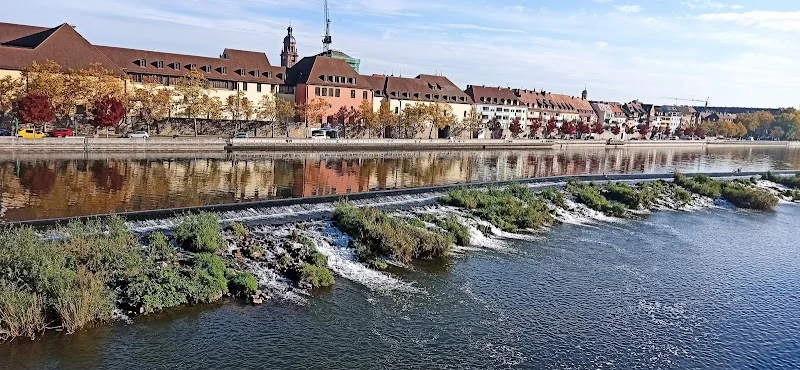
Surrounding the Residence, the Würzburg old town begins with a remarkably dense succession of attractions. City tours regularly showcase the Marienkapelle, the Falcon House with its rococo façade, the historic Town Hall, Neumünster, and Lusamgärtchen; the official tour often ends at the Old Main Bridge, which serves as both a viewpoint and a meeting point. From there, one can see the Fortress Marienberg, the Käppele, and the wine region Würzburger Stein. Therefore, those exploring Würzburg on foot do not experience isolated individual places but rather a coherent, very compact narrative of the city. This is where the special charm of the city lies: history, urban landscape, and everyday life intertwine. Even the famous Bridge Wine is more than a folkloric gesture; it shows how naturally architecture, river panorama, and wine culture blend in Würzburg. For orientation, this is an advantage, as many key locations are so close together that a complete city tour can be planned without haste and with many breaks. ([wuerzburg.de](https://www.wuerzburg.de/tourismus/service/tourist-information/content-elemente-ti/548731.FAQ-Touristische-Fragen.html))
Würzburg Christmas Market and Event Highlights
The Würzburg Christmas Market is one of the most important occasions around the city and delivers exactly the image that many visitors expect: a historical backdrop, lovingly decorated stalls, and an old town atmosphere that does not feel artificial. In the marketplace in front of the Falcon House and Marienkapelle, the stalls offer gift ideas, handicrafts, candles, nativity figures, pottery, textiles, and much more. Additionally, there are mulled wine, hot drinks, Feuerzangenbowle, and hearty specialties. Complementing this is the artist Christmas market in the Town Hall courtyard, which adds a quieter, craft-oriented note to the offerings. Especially during the Advent season, it becomes evident how strongly Würzburg utilizes its historical spaces for experiences without losing its everyday life. The atmosphere is not merely decorative but urbanistically credible. Therefore, those searching for the Würzburg Christmas Market are simultaneously looking for the typical Würzburg feeling of light, movement, conversations, and short distances between the market, Town Hall, and old town alleys. ([wuerzburg.de](https://www.wuerzburg.de/weihnachtsmarkt))
Throughout the year, Würzburg is also a very lively event city. The official event highlights for 2026 include the Mozart Festival, Africa Festival, Kiliani Folk Festival, Hafensommer, and the 104th German Catholic Day; additionally, wine festivals, city tours, and culinary offerings play an important role. This fits a city that does not understand culture as an exception but as an integral part of its public life. For visitors, this is particularly pleasant, as classic city sightseeing and event attendance can be easily combined. During the day, the Residence, Cathedral, and views of the Main Bridge, in the evening a concert, a festival, or a wine festival: this mixture shapes Würzburg's tourist identity. Therefore, those searching for Würzburg news or current programs will sensibly end up on the official pages of the city, where events, tours, and seasonal themes are bundled. This creates an image of Würzburg as a city that offers occasions throughout the year without committing to a single season or audience. This makes it attractive for cultural travelers as well as families, wine enthusiasts, or short vacationers. ([wuerzburg.de](https://www.wuerzburg.de/tourismus/service/presse-tourismus/aktuelle-meldungen/548341.Wuerzburger-Veranstaltungshighlights-2026.html))
Würzburg Main Station, Access, and Orientation
The Würzburg Main Station is a real advantage for visitors because it is located right at the edge of the old town. The railway describes the path to the Residence as a pleasant walk of about twenty minutes, leading through Theater and Kaiserstraße. This proximity explains why Würzburg works so well for train travelers: those arriving do not find themselves at a remote transport hub but almost at the threshold of the historic center. This saves time, reduces planning stress, and makes spontaneous city visits easier. This is also a plus for day visitors, as many destinations in the city center can be reached without complicated transfers. The official city information additionally provides details on barrier-free mobility and notes that the station forecourt is equipped with a tactile guidance system. Together with the short distances to the old town, this creates an orientation situation that is very pleasant for guests. Those planning their route with maps or city plans can therefore connect the most important points well in a compact loop. ([bahn.de](https://www.bahn.de/reisen/view/verbindung/wuerzburg.shtml))
Würzburg is also clearly geared towards visitors when it comes to parking. For tour buses, the city mentions the Friedensbrücke parking lot with 30 spaces, the bus parking lot at the Fortress Marienberg, and bus parking spaces in Husarenstraße at the Residence. Additionally, there are zones for tourist drop-offs at Residence Square and Balthasar-Neumann-Promenade. For those traveling by car, Würzburg also has several street sections with time-limited and partly free parking, such as at Friedrich-Ebert-Ring, Steinstraße, Beethovenstraße, or Theodor-Heuss-Damm. This is practical, as visitors can choose between central parking, short access, and parking for longer stays depending on their program. However, especially for old town tours or a visit to the Christmas market, it is worth checking the current occupancy and the official city notices. In this regard, Würzburg is not a car-friendly large area but a historically grown city center with good but clearly regulated access. This should be taken into account when planning. ([wuerzburg.de](https://www.wuerzburg.de/themen/verkehr--mobilitaet/parken-in-wuerzburg/400513.Busparkplaetze.html))
Fortress Marienberg, Käppele, and Main View
The Fortress Marienberg is one of the most impressive historical destinations in Würzburg and far more than just a viewpoint. The core of the complex consists of the Marienkirche, consecrated in 706, the earliest sacred building east of the Rhine; the castle was founded in 1201, and from 1253 to 1719 it served as the residence of the Würzburg prince-bishops. Around 1600, the main castle was converted into a Renaissance palace, later followed by the expansion into a baroque fortress. This layering of epochs makes the place so exciting: one does not see just a single monument but a centuries-long history of rule, defense, representation, and reconstruction. The baroque armory houses the Museum of Franconia, which, with its collections of Franconian art, the Riemenschneider sculptures, and the testimonies of Franconian folklore and wine culture, forms a strong complement to the city tour. Therefore, those who want to understand Würzburg should not only plan to visit the old town but also the view up to the fortress. ([wuerzburg.de](https://www.wuerzburg.de/tourismus/wuerzburg-entdecken/sehenswuerdigkeiten/festung-marienberg/index.html%3F_dc%3D64fd428ab2e8b))
For the visitor experience, the view is almost as important as the architectural history. From the Old Main Bridge, a classic Würzburg view opens up onto the Fortress Marienberg and Käppele, and the Würzburger Stein vineyard is also part of the cityscape experienced from there. The fortress can also be reached via charming paths from St. Burkard, over the Tellsteige, or through the grounds of the Landesgartenschau. This connection of walking, seeing, and lingering makes the place so attractive for visitors who want to experience a city landscape rather than just take a photo. In Würzburg, riverbanks, hillside locations, churches, and castle architecture converge in a single panorama. Those planning a half-day trip can therefore easily combine the fortress with the old town, the Old Main Bridge, or a walk along the Main. This creates a tour that is historically deep, landscape-rich, and surprisingly practical for everyday life. For many guests, it is precisely this mixture that explains why Würzburg remains memorable. ([wuerzburg.de](https://www.wuerzburg.de/tourismus/wuerzburg-entdecken/sehenswuerdigkeiten/festung-marienberg/index.html%3F_dc%3D64fd428ab2e8b))
Würzburg's Culinary Culture: Wine, Restaurants, and Riverbank
Würzburg is a city where enjoyment is understood not as an addition but as part of its identity. The official tourism communication deliberately speaks of wine enjoyment, guided tours, excursions, art, and culture, and this is precisely the city's strength. The Old Main Bridge is particularly prominent, where the Bridge Wine has long become a local tradition. Holding a glass of Franconian wine and letting one's gaze wander over the Main, vineyards, and old town is not a tourist excess in Würzburg but almost a social norm. Additionally, there are the wine festivals of the renowned Würzburg wineries and the combination of historic buildings, riverside promenade, and gastronomic addresses. The railway also points out that along the Main, restaurants and cafés focus on regional cuisine and wines. Therefore, those searching for Würzburg restaurant or Würzburg Hofbräu intuitively think in a direction that the city strongly caters to: Franconian, regional, sociable, and with short distances between culture and table. ([wuerzburg.de](https://www.wuerzburg.de/tourismus/service/tourist-information))
This culture of enjoyment is also a reason why Würzburg is gaining international attention. The city has been highlighted in the press as an international top travel destination, with the Residence, Cathedral, Neumünster, Town Hall, and Old Main Bridge mentioned as justifications. This is interesting because it shows how well the local self-image aligns with external perceptions: Würzburg is not seen as a single attraction but as a mixture of culture, backdrop, wine, and joie de vivre. This is precisely why the city works for very different target groups. Couples come for a weekend trip, families for sightseeing with breaks, groups for tours and wine moments, cultural travelers for festivals and architecture. For all, the short distances make the city easily accessible, and the culinary landscape ensures that breaks become part of the experience. Würzburg is thus not just a place to look at but to linger. This is an important distinction when taking the city seriously as a travel destination and not just ticking off a list of attractions. ([wuerzburg.de](https://www.wuerzburg.de/rathaus/presse/aktuelle-pressemitteilungen/548062.Wuerzburg-in-den-USA-als-internationales-Top-Reiseziel-ausgezeichnet-brFodors-Go-List-2026-veroeffentlicht.html?utm_source=openai))
Population, City Profile, and Why Würzburg Works So Well
The population figure is more than just a number for queries like Würzburg population, as it shows how large a city really is and what urbanity it brings. As of December 31, 2025, Würzburg had a total of 132,700 inhabitants and provides population data for 13 city districts. For visitors, this means: the city is large enough to support a diverse cultural and leisure offering but compact enough to experience it well in a weekend. This balance is one of the reasons why Würzburg appears on many lists as an pleasantly accessible city travel destination. The official pages of the city not only provide statistics but also information on tours, events, accessibility, and tourist brochures. Those who inform themselves in advance thus get a very clear picture of a travel destination that is organizationally stable and content-wise versatile. Especially in a city of this size, it is an advantage that the most important attractions are concentrated in the center and that the public space remains easily readable for visitors. ([wuerzburg.de](https://www.wuerzburg.de/wirtschaft/standortfaktoren/16847.Zahlenmaterial-und-statistische-Auswertungen-zu-den-Einwohnerzahlen.html))
That Würzburg is strong in tourism is also shown by the latest figures: in 2025, more than 1.1 million guests stayed in the city, which clearly underscores the importance of city tourism. For practical planning, this means that Würzburg is not just a beautiful motif for photos but a robustly organized travel destination with functioning pathways, clear information offerings, and a high density of experiences. Those traveling with maps, city plans, or a short list of the most important destinations can very well combine the Residence, Cathedral, Old Main Bridge, Fortress Marienberg, and marketplace in a single tour. This is a logical conclusion from the short distance indications and the official guided routes. The city thus suits people who enjoy being spontaneous but also those who prepare their route precisely. Würzburg is not loud, not confusing, and not arbitrary. It is a historical city with everyday quality, where old town, culture, wine, and mobility complement each other remarkably harmoniously. This mixture explains why Würzburg is consistently sought after in queries related to attractions, Christmas markets, main station, access, and restaurants. ([wuerzburg.de](https://www.wuerzburg.de/tourismus/service/presse-tourismus/aktuelle-meldungen/548645.Staedtetourismus-staerkt-in-2025-Wuerzburgs-Wirtschaft---Zuwaechse-bei-Gaestezahlen-in-herausfordernden-Zeiten.html?utm_source=openai))
Sources:
Show moreShow less
Würzburg | Attractions & Events
Würzburg is a city where baroque architecture, viticulture, short distances, and a vibrant urban life are closely intertwined. Upon entering the old town, one quickly senses that culture here is not just confined to museums but functions as an everyday backdrop: the Residence, the Old Main Bridge, the Marienkapelle, the Cathedral, the Town Hall, and the Fortress Marienberg are all located within a surprisingly compact radius. This is precisely what makes the city so pleasant for day visitors, weekend trips, and longer stays. The Tourist Information officially refers to themes such as attractions, guided tours, wine enjoyment, leisure, and events, which have shaped Würzburg for years. Additionally, there is the sober strength of a well-documented city with current population data and clear visitor information that makes planning easy. At the end of 2025, around 132,700 people lived in Würzburg, and in 2025 the city surpassed the mark of 1.1 million overnight stays for the first time. This is not just a statistic but an indication that Würzburg as a travel destination is simultaneously urban, historical, and remarkably well-organized. ([wuerzburg.de](https://www.wuerzburg.de/tourismus))
Würzburg Attractions: Residence, Cathedral, and Old Main Bridge
The Würzburg Residence is the central anchor point of any description of the city. It was added to the UNESCO World Heritage List in 1981 as an extraordinary baroque total work of art and is considered one of the most significant palaces in Europe. Its designation as a World Heritage site is not merely a label but an expression of an exceptional urban unity comprising the Residence, Court Garden, and Residence Square. This is also palpable for visitors: the complex does not appear isolated but rather as a representative center that visually and historically organizes the city. The railway describes the Residence as completed in the 18th century; over forty rooms are accessible, along with the palace, court church, and court garden. It is precisely this mixture of monumentality and accessible interior that creates its charm. Those interested in architecture, art, or courtly culture will find here not just a single building but a complete historical ensemble with international appeal. ([unesco.de](https://www.unesco.de/staette/residenz-wuerzburg-mit-hofgarten-und-residenzplatz/))
Surrounding the Residence, the Würzburg old town begins with a remarkably dense succession of attractions. City tours regularly showcase the Marienkapelle, the Falcon House with its rococo façade, the historic Town Hall, Neumünster, and Lusamgärtchen; the official tour often ends at the Old Main Bridge, which serves as both a viewpoint and a meeting point. From there, one can see the Fortress Marienberg, the Käppele, and the wine region Würzburger Stein. Therefore, those exploring Würzburg on foot do not experience isolated individual places but rather a coherent, very compact narrative of the city. This is where the special charm of the city lies: history, urban landscape, and everyday life intertwine. Even the famous Bridge Wine is more than a folkloric gesture; it shows how naturally architecture, river panorama, and wine culture blend in Würzburg. For orientation, this is an advantage, as many key locations are so close together that a complete city tour can be planned without haste and with many breaks. ([wuerzburg.de](https://www.wuerzburg.de/tourismus/service/tourist-information/content-elemente-ti/548731.FAQ-Touristische-Fragen.html))
Würzburg Christmas Market and Event Highlights
The Würzburg Christmas Market is one of the most important occasions around the city and delivers exactly the image that many visitors expect: a historical backdrop, lovingly decorated stalls, and an old town atmosphere that does not feel artificial. In the marketplace in front of the Falcon House and Marienkapelle, the stalls offer gift ideas, handicrafts, candles, nativity figures, pottery, textiles, and much more. Additionally, there are mulled wine, hot drinks, Feuerzangenbowle, and hearty specialties. Complementing this is the artist Christmas market in the Town Hall courtyard, which adds a quieter, craft-oriented note to the offerings. Especially during the Advent season, it becomes evident how strongly Würzburg utilizes its historical spaces for experiences without losing its everyday life. The atmosphere is not merely decorative but urbanistically credible. Therefore, those searching for the Würzburg Christmas Market are simultaneously looking for the typical Würzburg feeling of light, movement, conversations, and short distances between the market, Town Hall, and old town alleys. ([wuerzburg.de](https://www.wuerzburg.de/weihnachtsmarkt))
Throughout the year, Würzburg is also a very lively event city. The official event highlights for 2026 include the Mozart Festival, Africa Festival, Kiliani Folk Festival, Hafensommer, and the 104th German Catholic Day; additionally, wine festivals, city tours, and culinary offerings play an important role. This fits a city that does not understand culture as an exception but as an integral part of its public life. For visitors, this is particularly pleasant, as classic city sightseeing and event attendance can be easily combined. During the day, the Residence, Cathedral, and views of the Main Bridge, in the evening a concert, a festival, or a wine festival: this mixture shapes Würzburg's tourist identity. Therefore, those searching for Würzburg news or current programs will sensibly end up on the official pages of the city, where events, tours, and seasonal themes are bundled. This creates an image of Würzburg as a city that offers occasions throughout the year without committing to a single season or audience. This makes it attractive for cultural travelers as well as families, wine enthusiasts, or short vacationers. ([wuerzburg.de](https://www.wuerzburg.de/tourismus/service/presse-tourismus/aktuelle-meldungen/548341.Wuerzburger-Veranstaltungshighlights-2026.html))
Würzburg Main Station, Access, and Orientation
The Würzburg Main Station is a real advantage for visitors because it is located right at the edge of the old town. The railway describes the path to the Residence as a pleasant walk of about twenty minutes, leading through Theater and Kaiserstraße. This proximity explains why Würzburg works so well for train travelers: those arriving do not find themselves at a remote transport hub but almost at the threshold of the historic center. This saves time, reduces planning stress, and makes spontaneous city visits easier. This is also a plus for day visitors, as many destinations in the city center can be reached without complicated transfers. The official city information additionally provides details on barrier-free mobility and notes that the station forecourt is equipped with a tactile guidance system. Together with the short distances to the old town, this creates an orientation situation that is very pleasant for guests. Those planning their route with maps or city plans can therefore connect the most important points well in a compact loop. ([bahn.de](https://www.bahn.de/reisen/view/verbindung/wuerzburg.shtml))
Würzburg is also clearly geared towards visitors when it comes to parking. For tour buses, the city mentions the Friedensbrücke parking lot with 30 spaces, the bus parking lot at the Fortress Marienberg, and bus parking spaces in Husarenstraße at the Residence. Additionally, there are zones for tourist drop-offs at Residence Square and Balthasar-Neumann-Promenade. For those traveling by car, Würzburg also has several street sections with time-limited and partly free parking, such as at Friedrich-Ebert-Ring, Steinstraße, Beethovenstraße, or Theodor-Heuss-Damm. This is practical, as visitors can choose between central parking, short access, and parking for longer stays depending on their program. However, especially for old town tours or a visit to the Christmas market, it is worth checking the current occupancy and the official city notices. In this regard, Würzburg is not a car-friendly large area but a historically grown city center with good but clearly regulated access. This should be taken into account when planning. ([wuerzburg.de](https://www.wuerzburg.de/themen/verkehr--mobilitaet/parken-in-wuerzburg/400513.Busparkplaetze.html))
Fortress Marienberg, Käppele, and Main View
The Fortress Marienberg is one of the most impressive historical destinations in Würzburg and far more than just a viewpoint. The core of the complex consists of the Marienkirche, consecrated in 706, the earliest sacred building east of the Rhine; the castle was founded in 1201, and from 1253 to 1719 it served as the residence of the Würzburg prince-bishops. Around 1600, the main castle was converted into a Renaissance palace, later followed by the expansion into a baroque fortress. This layering of epochs makes the place so exciting: one does not see just a single monument but a centuries-long history of rule, defense, representation, and reconstruction. The baroque armory houses the Museum of Franconia, which, with its collections of Franconian art, the Riemenschneider sculptures, and the testimonies of Franconian folklore and wine culture, forms a strong complement to the city tour. Therefore, those who want to understand Würzburg should not only plan to visit the old town but also the view up to the fortress. ([wuerzburg.de](https://www.wuerzburg.de/tourismus/wuerzburg-entdecken/sehenswuerdigkeiten/festung-marienberg/index.html%3F_dc%3D64fd428ab2e8b))
For the visitor experience, the view is almost as important as the architectural history. From the Old Main Bridge, a classic Würzburg view opens up onto the Fortress Marienberg and Käppele, and the Würzburger Stein vineyard is also part of the cityscape experienced from there. The fortress can also be reached via charming paths from St. Burkard, over the Tellsteige, or through the grounds of the Landesgartenschau. This connection of walking, seeing, and lingering makes the place so attractive for visitors who want to experience a city landscape rather than just take a photo. In Würzburg, riverbanks, hillside locations, churches, and castle architecture converge in a single panorama. Those planning a half-day trip can therefore easily combine the fortress with the old town, the Old Main Bridge, or a walk along the Main. This creates a tour that is historically deep, landscape-rich, and surprisingly practical for everyday life. For many guests, it is precisely this mixture that explains why Würzburg remains memorable. ([wuerzburg.de](https://www.wuerzburg.de/tourismus/wuerzburg-entdecken/sehenswuerdigkeiten/festung-marienberg/index.html%3F_dc%3D64fd428ab2e8b))
Würzburg's Culinary Culture: Wine, Restaurants, and Riverbank
Würzburg is a city where enjoyment is understood not as an addition but as part of its identity. The official tourism communication deliberately speaks of wine enjoyment, guided tours, excursions, art, and culture, and this is precisely the city's strength. The Old Main Bridge is particularly prominent, where the Bridge Wine has long become a local tradition. Holding a glass of Franconian wine and letting one's gaze wander over the Main, vineyards, and old town is not a tourist excess in Würzburg but almost a social norm. Additionally, there are the wine festivals of the renowned Würzburg wineries and the combination of historic buildings, riverside promenade, and gastronomic addresses. The railway also points out that along the Main, restaurants and cafés focus on regional cuisine and wines. Therefore, those searching for Würzburg restaurant or Würzburg Hofbräu intuitively think in a direction that the city strongly caters to: Franconian, regional, sociable, and with short distances between culture and table. ([wuerzburg.de](https://www.wuerzburg.de/tourismus/service/tourist-information))
This culture of enjoyment is also a reason why Würzburg is gaining international attention. The city has been highlighted in the press as an international top travel destination, with the Residence, Cathedral, Neumünster, Town Hall, and Old Main Bridge mentioned as justifications. This is interesting because it shows how well the local self-image aligns with external perceptions: Würzburg is not seen as a single attraction but as a mixture of culture, backdrop, wine, and joie de vivre. This is precisely why the city works for very different target groups. Couples come for a weekend trip, families for sightseeing with breaks, groups for tours and wine moments, cultural travelers for festivals and architecture. For all, the short distances make the city easily accessible, and the culinary landscape ensures that breaks become part of the experience. Würzburg is thus not just a place to look at but to linger. This is an important distinction when taking the city seriously as a travel destination and not just ticking off a list of attractions. ([wuerzburg.de](https://www.wuerzburg.de/rathaus/presse/aktuelle-pressemitteilungen/548062.Wuerzburg-in-den-USA-als-internationales-Top-Reiseziel-ausgezeichnet-brFodors-Go-List-2026-veroeffentlicht.html?utm_source=openai))
Population, City Profile, and Why Würzburg Works So Well
The population figure is more than just a number for queries like Würzburg population, as it shows how large a city really is and what urbanity it brings. As of December 31, 2025, Würzburg had a total of 132,700 inhabitants and provides population data for 13 city districts. For visitors, this means: the city is large enough to support a diverse cultural and leisure offering but compact enough to experience it well in a weekend. This balance is one of the reasons why Würzburg appears on many lists as an pleasantly accessible city travel destination. The official pages of the city not only provide statistics but also information on tours, events, accessibility, and tourist brochures. Those who inform themselves in advance thus get a very clear picture of a travel destination that is organizationally stable and content-wise versatile. Especially in a city of this size, it is an advantage that the most important attractions are concentrated in the center and that the public space remains easily readable for visitors. ([wuerzburg.de](https://www.wuerzburg.de/wirtschaft/standortfaktoren/16847.Zahlenmaterial-und-statistische-Auswertungen-zu-den-Einwohnerzahlen.html))
That Würzburg is strong in tourism is also shown by the latest figures: in 2025, more than 1.1 million guests stayed in the city, which clearly underscores the importance of city tourism. For practical planning, this means that Würzburg is not just a beautiful motif for photos but a robustly organized travel destination with functioning pathways, clear information offerings, and a high density of experiences. Those traveling with maps, city plans, or a short list of the most important destinations can very well combine the Residence, Cathedral, Old Main Bridge, Fortress Marienberg, and marketplace in a single tour. This is a logical conclusion from the short distance indications and the official guided routes. The city thus suits people who enjoy being spontaneous but also those who prepare their route precisely. Würzburg is not loud, not confusing, and not arbitrary. It is a historical city with everyday quality, where old town, culture, wine, and mobility complement each other remarkably harmoniously. This mixture explains why Würzburg is consistently sought after in queries related to attractions, Christmas markets, main station, access, and restaurants. ([wuerzburg.de](https://www.wuerzburg.de/tourismus/service/presse-tourismus/aktuelle-meldungen/548645.Staedtetourismus-staerkt-in-2025-Wuerzburgs-Wirtschaft---Zuwaechse-bei-Gaestezahlen-in-herausfordernden-Zeiten.html?utm_source=openai))
Sources:
Würzburg | Attractions & Events
Würzburg is a city where baroque architecture, viticulture, short distances, and a vibrant urban life are closely intertwined. Upon entering the old town, one quickly senses that culture here is not just confined to museums but functions as an everyday backdrop: the Residence, the Old Main Bridge, the Marienkapelle, the Cathedral, the Town Hall, and the Fortress Marienberg are all located within a surprisingly compact radius. This is precisely what makes the city so pleasant for day visitors, weekend trips, and longer stays. The Tourist Information officially refers to themes such as attractions, guided tours, wine enjoyment, leisure, and events, which have shaped Würzburg for years. Additionally, there is the sober strength of a well-documented city with current population data and clear visitor information that makes planning easy. At the end of 2025, around 132,700 people lived in Würzburg, and in 2025 the city surpassed the mark of 1.1 million overnight stays for the first time. This is not just a statistic but an indication that Würzburg as a travel destination is simultaneously urban, historical, and remarkably well-organized. ([wuerzburg.de](https://www.wuerzburg.de/tourismus))
Würzburg Attractions: Residence, Cathedral, and Old Main Bridge
The Würzburg Residence is the central anchor point of any description of the city. It was added to the UNESCO World Heritage List in 1981 as an extraordinary baroque total work of art and is considered one of the most significant palaces in Europe. Its designation as a World Heritage site is not merely a label but an expression of an exceptional urban unity comprising the Residence, Court Garden, and Residence Square. This is also palpable for visitors: the complex does not appear isolated but rather as a representative center that visually and historically organizes the city. The railway describes the Residence as completed in the 18th century; over forty rooms are accessible, along with the palace, court church, and court garden. It is precisely this mixture of monumentality and accessible interior that creates its charm. Those interested in architecture, art, or courtly culture will find here not just a single building but a complete historical ensemble with international appeal. ([unesco.de](https://www.unesco.de/staette/residenz-wuerzburg-mit-hofgarten-und-residenzplatz/))
Surrounding the Residence, the Würzburg old town begins with a remarkably dense succession of attractions. City tours regularly showcase the Marienkapelle, the Falcon House with its rococo façade, the historic Town Hall, Neumünster, and Lusamgärtchen; the official tour often ends at the Old Main Bridge, which serves as both a viewpoint and a meeting point. From there, one can see the Fortress Marienberg, the Käppele, and the wine region Würzburger Stein. Therefore, those exploring Würzburg on foot do not experience isolated individual places but rather a coherent, very compact narrative of the city. This is where the special charm of the city lies: history, urban landscape, and everyday life intertwine. Even the famous Bridge Wine is more than a folkloric gesture; it shows how naturally architecture, river panorama, and wine culture blend in Würzburg. For orientation, this is an advantage, as many key locations are so close together that a complete city tour can be planned without haste and with many breaks. ([wuerzburg.de](https://www.wuerzburg.de/tourismus/service/tourist-information/content-elemente-ti/548731.FAQ-Touristische-Fragen.html))
Würzburg Christmas Market and Event Highlights
The Würzburg Christmas Market is one of the most important occasions around the city and delivers exactly the image that many visitors expect: a historical backdrop, lovingly decorated stalls, and an old town atmosphere that does not feel artificial. In the marketplace in front of the Falcon House and Marienkapelle, the stalls offer gift ideas, handicrafts, candles, nativity figures, pottery, textiles, and much more. Additionally, there are mulled wine, hot drinks, Feuerzangenbowle, and hearty specialties. Complementing this is the artist Christmas market in the Town Hall courtyard, which adds a quieter, craft-oriented note to the offerings. Especially during the Advent season, it becomes evident how strongly Würzburg utilizes its historical spaces for experiences without losing its everyday life. The atmosphere is not merely decorative but urbanistically credible. Therefore, those searching for the Würzburg Christmas Market are simultaneously looking for the typical Würzburg feeling of light, movement, conversations, and short distances between the market, Town Hall, and old town alleys. ([wuerzburg.de](https://www.wuerzburg.de/weihnachtsmarkt))
Throughout the year, Würzburg is also a very lively event city. The official event highlights for 2026 include the Mozart Festival, Africa Festival, Kiliani Folk Festival, Hafensommer, and the 104th German Catholic Day; additionally, wine festivals, city tours, and culinary offerings play an important role. This fits a city that does not understand culture as an exception but as an integral part of its public life. For visitors, this is particularly pleasant, as classic city sightseeing and event attendance can be easily combined. During the day, the Residence, Cathedral, and views of the Main Bridge, in the evening a concert, a festival, or a wine festival: this mixture shapes Würzburg's tourist identity. Therefore, those searching for Würzburg news or current programs will sensibly end up on the official pages of the city, where events, tours, and seasonal themes are bundled. This creates an image of Würzburg as a city that offers occasions throughout the year without committing to a single season or audience. This makes it attractive for cultural travelers as well as families, wine enthusiasts, or short vacationers. ([wuerzburg.de](https://www.wuerzburg.de/tourismus/service/presse-tourismus/aktuelle-meldungen/548341.Wuerzburger-Veranstaltungshighlights-2026.html))
Würzburg Main Station, Access, and Orientation
The Würzburg Main Station is a real advantage for visitors because it is located right at the edge of the old town. The railway describes the path to the Residence as a pleasant walk of about twenty minutes, leading through Theater and Kaiserstraße. This proximity explains why Würzburg works so well for train travelers: those arriving do not find themselves at a remote transport hub but almost at the threshold of the historic center. This saves time, reduces planning stress, and makes spontaneous city visits easier. This is also a plus for day visitors, as many destinations in the city center can be reached without complicated transfers. The official city information additionally provides details on barrier-free mobility and notes that the station forecourt is equipped with a tactile guidance system. Together with the short distances to the old town, this creates an orientation situation that is very pleasant for guests. Those planning their route with maps or city plans can therefore connect the most important points well in a compact loop. ([bahn.de](https://www.bahn.de/reisen/view/verbindung/wuerzburg.shtml))
Würzburg is also clearly geared towards visitors when it comes to parking. For tour buses, the city mentions the Friedensbrücke parking lot with 30 spaces, the bus parking lot at the Fortress Marienberg, and bus parking spaces in Husarenstraße at the Residence. Additionally, there are zones for tourist drop-offs at Residence Square and Balthasar-Neumann-Promenade. For those traveling by car, Würzburg also has several street sections with time-limited and partly free parking, such as at Friedrich-Ebert-Ring, Steinstraße, Beethovenstraße, or Theodor-Heuss-Damm. This is practical, as visitors can choose between central parking, short access, and parking for longer stays depending on their program. However, especially for old town tours or a visit to the Christmas market, it is worth checking the current occupancy and the official city notices. In this regard, Würzburg is not a car-friendly large area but a historically grown city center with good but clearly regulated access. This should be taken into account when planning. ([wuerzburg.de](https://www.wuerzburg.de/themen/verkehr--mobilitaet/parken-in-wuerzburg/400513.Busparkplaetze.html))
Fortress Marienberg, Käppele, and Main View
The Fortress Marienberg is one of the most impressive historical destinations in Würzburg and far more than just a viewpoint. The core of the complex consists of the Marienkirche, consecrated in 706, the earliest sacred building east of the Rhine; the castle was founded in 1201, and from 1253 to 1719 it served as the residence of the Würzburg prince-bishops. Around 1600, the main castle was converted into a Renaissance palace, later followed by the expansion into a baroque fortress. This layering of epochs makes the place so exciting: one does not see just a single monument but a centuries-long history of rule, defense, representation, and reconstruction. The baroque armory houses the Museum of Franconia, which, with its collections of Franconian art, the Riemenschneider sculptures, and the testimonies of Franconian folklore and wine culture, forms a strong complement to the city tour. Therefore, those who want to understand Würzburg should not only plan to visit the old town but also the view up to the fortress. ([wuerzburg.de](https://www.wuerzburg.de/tourismus/wuerzburg-entdecken/sehenswuerdigkeiten/festung-marienberg/index.html%3F_dc%3D64fd428ab2e8b))
For the visitor experience, the view is almost as important as the architectural history. From the Old Main Bridge, a classic Würzburg view opens up onto the Fortress Marienberg and Käppele, and the Würzburger Stein vineyard is also part of the cityscape experienced from there. The fortress can also be reached via charming paths from St. Burkard, over the Tellsteige, or through the grounds of the Landesgartenschau. This connection of walking, seeing, and lingering makes the place so attractive for visitors who want to experience a city landscape rather than just take a photo. In Würzburg, riverbanks, hillside locations, churches, and castle architecture converge in a single panorama. Those planning a half-day trip can therefore easily combine the fortress with the old town, the Old Main Bridge, or a walk along the Main. This creates a tour that is historically deep, landscape-rich, and surprisingly practical for everyday life. For many guests, it is precisely this mixture that explains why Würzburg remains memorable. ([wuerzburg.de](https://www.wuerzburg.de/tourismus/wuerzburg-entdecken/sehenswuerdigkeiten/festung-marienberg/index.html%3F_dc%3D64fd428ab2e8b))
Würzburg's Culinary Culture: Wine, Restaurants, and Riverbank
Würzburg is a city where enjoyment is understood not as an addition but as part of its identity. The official tourism communication deliberately speaks of wine enjoyment, guided tours, excursions, art, and culture, and this is precisely the city's strength. The Old Main Bridge is particularly prominent, where the Bridge Wine has long become a local tradition. Holding a glass of Franconian wine and letting one's gaze wander over the Main, vineyards, and old town is not a tourist excess in Würzburg but almost a social norm. Additionally, there are the wine festivals of the renowned Würzburg wineries and the combination of historic buildings, riverside promenade, and gastronomic addresses. The railway also points out that along the Main, restaurants and cafés focus on regional cuisine and wines. Therefore, those searching for Würzburg restaurant or Würzburg Hofbräu intuitively think in a direction that the city strongly caters to: Franconian, regional, sociable, and with short distances between culture and table. ([wuerzburg.de](https://www.wuerzburg.de/tourismus/service/tourist-information))
This culture of enjoyment is also a reason why Würzburg is gaining international attention. The city has been highlighted in the press as an international top travel destination, with the Residence, Cathedral, Neumünster, Town Hall, and Old Main Bridge mentioned as justifications. This is interesting because it shows how well the local self-image aligns with external perceptions: Würzburg is not seen as a single attraction but as a mixture of culture, backdrop, wine, and joie de vivre. This is precisely why the city works for very different target groups. Couples come for a weekend trip, families for sightseeing with breaks, groups for tours and wine moments, cultural travelers for festivals and architecture. For all, the short distances make the city easily accessible, and the culinary landscape ensures that breaks become part of the experience. Würzburg is thus not just a place to look at but to linger. This is an important distinction when taking the city seriously as a travel destination and not just ticking off a list of attractions. ([wuerzburg.de](https://www.wuerzburg.de/rathaus/presse/aktuelle-pressemitteilungen/548062.Wuerzburg-in-den-USA-als-internationales-Top-Reiseziel-ausgezeichnet-brFodors-Go-List-2026-veroeffentlicht.html?utm_source=openai))
Population, City Profile, and Why Würzburg Works So Well
The population figure is more than just a number for queries like Würzburg population, as it shows how large a city really is and what urbanity it brings. As of December 31, 2025, Würzburg had a total of 132,700 inhabitants and provides population data for 13 city districts. For visitors, this means: the city is large enough to support a diverse cultural and leisure offering but compact enough to experience it well in a weekend. This balance is one of the reasons why Würzburg appears on many lists as an pleasantly accessible city travel destination. The official pages of the city not only provide statistics but also information on tours, events, accessibility, and tourist brochures. Those who inform themselves in advance thus get a very clear picture of a travel destination that is organizationally stable and content-wise versatile. Especially in a city of this size, it is an advantage that the most important attractions are concentrated in the center and that the public space remains easily readable for visitors. ([wuerzburg.de](https://www.wuerzburg.de/wirtschaft/standortfaktoren/16847.Zahlenmaterial-und-statistische-Auswertungen-zu-den-Einwohnerzahlen.html))
That Würzburg is strong in tourism is also shown by the latest figures: in 2025, more than 1.1 million guests stayed in the city, which clearly underscores the importance of city tourism. For practical planning, this means that Würzburg is not just a beautiful motif for photos but a robustly organized travel destination with functioning pathways, clear information offerings, and a high density of experiences. Those traveling with maps, city plans, or a short list of the most important destinations can very well combine the Residence, Cathedral, Old Main Bridge, Fortress Marienberg, and marketplace in a single tour. This is a logical conclusion from the short distance indications and the official guided routes. The city thus suits people who enjoy being spontaneous but also those who prepare their route precisely. Würzburg is not loud, not confusing, and not arbitrary. It is a historical city with everyday quality, where old town, culture, wine, and mobility complement each other remarkably harmoniously. This mixture explains why Würzburg is consistently sought after in queries related to attractions, Christmas markets, main station, access, and restaurants. ([wuerzburg.de](https://www.wuerzburg.de/tourismus/service/presse-tourismus/aktuelle-meldungen/548645.Staedtetourismus-staerkt-in-2025-Wuerzburgs-Wirtschaft---Zuwaechse-bei-Gaestezahlen-in-herausfordernden-Zeiten.html?utm_source=openai))
Sources:
Frequently Asked Questions
Reviews
No reviews found