
Würzburg
Domstraße 40, 97070 Würzburg, Deutschland
Würzburg Cathedral | Services & Opening Hours
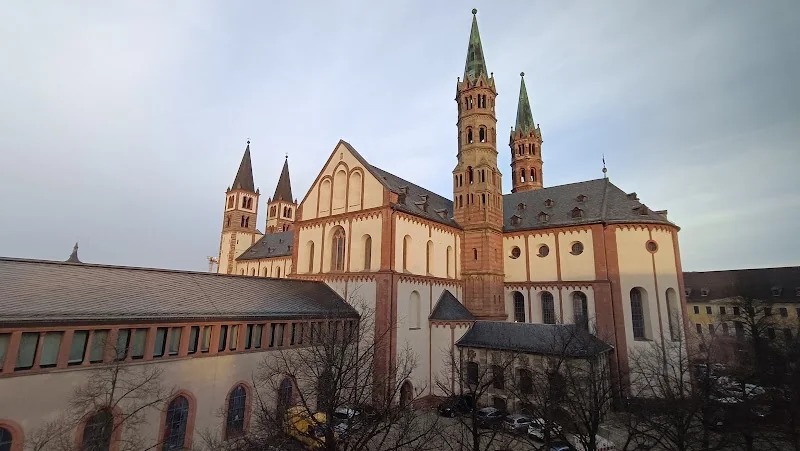
The Würzburg Cathedral of St. Kilian is one of the most impressive sacred buildings in Franconia and shapes the cityscape in the center of Würzburg. At Domstraße 40, a cathedral rises where nearly a thousand years of construction, art, and faith history meet. The mighty Romanesque structure, the Baroque Schönborn Chapel, the historical bishop's tombs, the crypt, the cathedral treasure, and the diverse cathedral music make the visit an experience that goes far beyond an ordinary sight. The cathedral is at the same time a bishop's church, parish church, concert venue, prayer space, and destination for visitor groups from Würzburg, Franconia, and all over the world.
Many people search for the architectural style, history, opening hours, today's service, the cathedral organ, or information about the cathedral treasure before a visit. Others want to know if there is an entrance fee for the Würzburg Cathedral, where they can park, or when a guided tour is possible. This information is particularly important because the cathedral is not a museum with a consistently uniform schedule. Services, weddings, funerals, church holidays, concerts, and special events shape the daily rhythm. Therefore, those who visit the Cathedral of St. Kilian attentively experience not only stones and artworks but a lively place with its own liturgical and musical atmosphere.
Würzburg Cathedral Services, Today's Service, and Liturgical Life
The most important purpose of the Würzburg Cathedral remains the service. As the cathedral of the Diocese of Würzburg, it is the seat of the bishop and a central place for the celebration of the Catholic faith. Throughout the church year, regular Mass celebrations, pontifical services, vespers, confession opportunities, prayer times, and special services take place here. The service schedule provides information about which celebration is planned for each day in the cathedral. Especially on Sundays and holidays, during major feasts, Holy Week, Easter, Christmas, and around the Kiliani Day, the program can be significantly more extensive than on ordinary weekdays.
Those looking for Würzburg Cathedral service today or Würzburg Cathedral services should check the current service schedule before heading to Domstraße. There, the time, location, musical arrangement, and information about broadcasts can be viewed. Large pontifical services are expected to attract many visitors. Some celebrations are musically accompanied by the cathedral choir, the cathedral choirboys, the girls' choir, a choral schola, soloists, or an orchestra. This connects the liturgy with a demanding church music program.
The cathedral is not a regular visiting area during a service. Visitors are asked to be considerate of those praying and the celebration, to enter quietly, not to engage in conversations in the nave, and to take photos or videos only to the extent that is compatible with the dignity of the place. Before and after services, there may be restrictions for groups. Seating, side chapels, the area in front of the altar, and individual artworks may also be temporarily inaccessible.
The liturgical life also includes the opportunity to light a candle in the cathedral, pray quietly, or take a moment to rest. The cathedral pastoral explicitly understands the cathedral as a place for believers, seekers, tourists, and groups. Tours should therefore not only convey years and artworks but also explain the spiritual significance of the church space. Those who want to understand the cathedral's function rather than just photograph it will find a special access in the connection of architecture, prayer, music, and history.
Würzburg Cathedral Architectural Style and History: Romanesque, Baroque, and Reconstruction
The Würzburg Cathedral is considered the fourth largest Romanesque church in Germany and a masterpiece of German architecture from the time of the Salian emperors. The current building was constructed over a long period. The construction began in the first half of the 11th century, while the completion and consecration of the Romanesque cathedral fall into the 12th century. The cruciform basilica with a nave, transept, choir, and towers still conveys the clear, monumental effect of Romanesque architecture today. Thick walls, large wall surfaces, the rhythmic division of the bays, and the towering spires determine the external impression.
However, the architectural style of the Würzburg Cathedral cannot be reduced to a single era. Over the centuries, the cathedral has been expanded, redesigned, and equipped with new artworks. A particularly significant change occurred at the beginning of the 18th century when the interior was richly stuccoed and Baroque in character by Pietro Magno. The Baroque design gave the previously strictly Romanesque space a festive, dynamic, and brighter effect. In the vicinity of the transept, the Schönborn Chapel was also created, which is associated with Balthasar Neumann and is considered a significant Baroque creation.
The history of the cathedral is also marked by destruction and reconstruction. During the air raid on Würzburg on March 16, 1945, the cathedral was completely destroyed by fire. The outer walls remained largely intact, but the interior was severely damaged. The reconstruction posed a difficult question for those responsible: how much historical furnishings should be reconstructed, how much modern design should be allowed, and how should the cathedral be further developed as a living church space? The re-consecration after the reconstruction took place in 1967.
Today's appearance is therefore a interplay of different historical layers. The exterior has been largely restored in historical form. Inside, preserved or restored Baroque elements, modern furnishings from the reconstruction period, tombs from different centuries, and works of contemporary church art meet. This mixture makes the cathedral historically particularly interesting. Those interested in the architectural style of the Würzburg Cathedral should therefore not only consider the Romanesque basic form but also perceive the traces of Baroque, war, reconstruction, and modern liturgy.
Among the most significant artworks are the bishop's tombs of Rudolf von Scherenberg and Lorenz von Bibra, attributed to Tilman Riemenschneider. The tombs exemplify the high significance of Würzburg as a spiritual, political, and artistic center. Together with the Schönborn Chapel, the organ, the side altars, and the decorative details, they tell the history of the diocese not in a single style but in a sequence of visible changes.
Würzburg Cathedral Music, Organ, and Cathedral Choirboys
The Würzburg Cathedral music is one of the defining features of the Cathedral of St. Kilian. Its task is not only to offer concerts but primarily to musically shape the services. Various choirs and ensembles participate in the cathedral, including the Würzburg Cathedral Choirboys, the girls' choir at the Würzburg Cathedral, the young cathedral choir, the Würzburg cathedral choir, and the chamber choir at the Würzburg Cathedral. Together, they form a diverse musical landscape in which children, teenagers, and adults sing at different levels.
The Würzburg Cathedral Choirboys are among the most well-known musical institutions of the cathedral. Their work combines intensive vocal training, regular rehearsals, liturgical tasks, and concert activities. In services, Gregorian chant, motets, classical mass settings, and modern sacred choral music resonate. Depending on the occasion, works by composers such as Mozart, Bruckner, Schubert, Mendelssohn, Handel, Schütz, or contemporary church musicians may be on the program. The music deepens the liturgy and makes the large Romanesque space acoustically tangible.
Another attraction is the organ of the Würzburg Cathedral. The Klais organ was built in 1968 and has, according to the Würzburg tourism information, 20 registers. It is played by cathedral organist Stefan Schmidt in services, during organ impulses, and concerts. The instrument can fill the space with delicate registrations as well as with a powerful plenum. Especially in a large church space, the organ is not only an accompanying instrument but an architectural sound body, whose effect is strongly influenced by the room height, the vaults, and the stone surfaces.
The cathedral music regularly hosts concerts and special musical formats. These include organ concerts, choral concerts, large sacred works, musical services, and unusual events such as silent film screenings with live organ improvisation. Tickets are required for individual concerts. These are available depending on the event at the cathedral information, in advance, online, or at the concert box office. Attending a musically designed mass, on the other hand, is fundamentally part of the service and cannot be equated with attending a secular concert.
Those looking for Würzburg Cathedral music or Würzburg Cathedral organ will therefore find more than just individual concert dates. The music is a permanent part of life in the cathedral. It connects the training of young singers with professional church music, strengthens the liturgical tradition, and opens the cathedral to people seeking access to history, spirituality, and architecture through music.
Würzburg Cathedral Treasure, Crypt, and Significant Rooms
The term Würzburg Cathedral treasure refers to liturgical, art-historical, and religious testimonies associated with the cathedral and the diocese. These include, among other things, chalices, reliquaries, liturgical devices, vestments, sculptures, and other artworks. The presentation of such objects may change over time. Parts of the cathedral treasure are shown in exhibitions, conservationally processed, or integrated into new exhibition concepts. The Museum at the Cathedral is dedicated to the art and faith history of the diocese and also presents selected pieces from the cathedral treasure.
Visitors should note that the cathedral treasure is not necessarily fully exhibited in the church space. The cathedral itself is not a freely accessible treasure museum. Those who want to see specific objects should inquire in advance at the cathedral information or the responsible museum about the current exhibition situation. This way, expectations regarding opening hours, entrance fees, and accessibility can be better planned. For church visits, entry to the cathedral is generally free, while museum visits, special exhibitions, and guided tours may have their own regulations.
The crypt is one of the rooms that possesses a special atmosphere. It is located under or in the area of the choir and is closely connected to the history of the cathedral. Crypts are traditionally places of prayer, remembrance, and closeness to the spiritual roots of a cathedral. In the context of Würzburg, a distinction must also be made between areas of the cathedral and the Kilian crypt in the neighboring Neumünster. The Neumünster was built over the burial site of Saint Kilian and his companions Kolonat and Totnan. The name Kilian Cathedral refers to the veneration of Saint Kilian, but the cathedral and Neumünster are different churches.
Guided tours in side rooms such as the crypt or sepulcher are reserved for special cathedral tours. External guides must coordinate with the responsible authority. This serves not only the organization but also the protection of the quiet and spatially sensitive areas. The crypt is not a passage room for large groups. Its significance is rather revealed in a calm, focused visit. The sepulcher with its cloister area and modern stained glass windows is also among the rooms that can be included in a tour depending on the program and permission.
Those interested in Würzburg Cathedral images will find numerous views of the facade, towers, interior, tombs, Schönborn Chapel, and organ online. However, images can only convey part of the impression. The dimensions of the nave, the relationship between Romanesque architecture and Baroque furnishings, and the effect of light and sound can only be fully grasped on-site.
Würzburg Cathedral Opening Hours, Admission, and Tours
The published visitor information usually states opening hours for the Würzburg Cathedral from Monday to Saturday between 10:00 AM and 5:00 PM and on Sundays and public holidays between 1:00 PM and 6:00 PM. These times serve as a guideline for visits. They are not to be equated with the times of services and may change due to church celebrations, concerts, funerals, weddings, renovation work, or other events. Therefore, it is advisable to check the official website or inquire at the cathedral information before a longer journey.
The church space can generally be visited without regular admission. This makes the Würzburg Cathedral a low-threshold destination for individual travelers, families, school classes, pilgrims, and culture-interested guests. However, a free visit does not mean that all areas are freely accessible at all times. The chapels, crypt, sepulcher, choir area, and individual artworks may be restricted during services or for organizational reasons.
Guided tours of the cathedral are offered for groups, coordinated through the cathedral information. A classic tour lasts about an hour; combined tours through the cathedral and Neumünster may take longer. The published information states group sizes of a maximum of 25 people per guide. For school classes, communion groups, confirmands, and other educational institutions, a tour can be particularly valuable as it connects architectural history, art, liturgy, and the spiritual dimension of the place.
The cathedral information is located directly at the cathedral square at Domstraße 40. It is the central point of contact for organizational questions, tours, and information regarding the visit. According to the published service schedule, the cathedral information is available Monday to Friday from 9:30 AM to 5:30 PM and Saturday from 9:30 AM to 5:00 PM. Groups should register in advance for tours. External city guides also need coordination or permission for tours in the cathedral.
During a visit, the usual rules for an active church space apply. Appropriate clothing, quiet behavior, and consideration for those praying are a matter of course. Groups should not block the entrances and should follow the instructions of the supervision service. Photography may be allowed depending on the situation but should not disturb services or silent prayers. Especially in front of the baptismal font, at the tomb of Bishop Scherenberg, and in the area of the Madonna, visitor groups should not remain standing for long periods.
Directions and Parking at Würzburg Cathedral
The Würzburg Cathedral is located in the central old town at Domstraße 40, directly at the cathedral square. The location is particularly convenient for pedestrians, as numerous sights are within a short distance. After visiting the cathedral, one can connect to Neumünster, Marienkapelle, Marktplatz, Alte Mainbrücke, Würzburg Residence, and various museums for a tour of the old town. Those arriving by tram can use the Dom stop. This makes the Cathedral of St. Kilian easily accessible even without a car.
For those traveling by car, visitors should not expect a large parking lot directly in front of the cathedral. Domstraße is located in the inner-city area, where pedestrians, delivery traffic, tram lines, and historical buildings limit the available street space. Practical parking options include the Marktgarage and the area at Residenzplatz. From both options, the cathedral is about a ten-minute walk away. Depending on the event, time of day, and city center traffic, the actual walking time may vary.
The city of Würzburg has a parking guidance system that provides information about the current occupancy of central parking garages and spaces. The official information states several thousand parking spaces in central locations. Those arriving for a heavily attended service, concert, or holiday should plan some time for parking search. Especially during events in the old town, parking garages can fill up quickly. Arriving early reduces stress and allows time for the walk to the cathedral.
Another option is the combination of parking garage and public transport. According to the Würzburg transport company, a parking ticket in certain WVV parking garages can also serve as a ticket for the tram within the large area. The specific conditions should be checked on-site or on the operator's website. For travel groups and school classes, special rules may apply for bus arrivals. Bus parking spaces are not located directly at the cathedral, so the exact route and drop-off point should be organized in advance.
The central location also means that the cathedral can be well connected with a walk through the city center. Those coming from the main train station can reach the cathedral on foot through the city center in about 15 to 20 minutes, depending on the starting point and chosen route. The paths lead through busy shopping streets and historical areas. For people with limited mobility, the specific accessibility of the entrances and possible events should be inquired about at the cathedral information before the visit.
Würzburg Cathedral Chapter, Cathedral Pastoral, and Special Highlights
The Würzburg Cathedral Chapter is closely linked to the history and administration of the cathedral. In the past, cathedral canons, bishops, and spiritual institutions shaped the religious, political, and cultural life of Würzburg. The numerous canon courts in the vicinity remind us that the area around the cathedral has been a spiritual quarter with great social significance for centuries. Today, the context of the cathedral chapter is primarily visible in connection with the cathedral, the liturgy, the bishop's tombs, the cathedral pastoral, and the preservation of the historical heritage.
The cathedral pastoral is aimed at people with very different approaches. Some come as regular service attendees, others are interested in art and architecture, while others seek a quiet place or want to learn about the history of Christianity in Würzburg. Volunteer staff at the visitor information are available for questions. This way, the cathedral is conveyed not only through its walls but also through personal encounters.
Among the special highlights is the combination of Romanesque architecture and Baroque furnishings. The exterior view appears clear, strict, and monumental; inside, individual areas surprise with stucco, tombs, colors, and artistic details. The Schönborn Chapel forms an independent highlight. It was built as the burial place of the prince-bishops from the Schönborn family and is associated with the work of Balthasar Neumann. Its Baroque design stands in a tension-filled relationship with the Romanesque cathedral.
The history of the reconstruction after 1945 is also an essential part of today's cathedral. The building shows that monument preservation does not always mean fully regaining a previous state. The cathedral was rebuilt after its destruction, with historical forms, preserved artworks, restored parts, and contemporary furnishings. The result is a church space that does not completely hide its wounds but visibly connects different generations.
Those visiting the Würzburg Cathedral should take their time for a leisurely tour. The view from the main portal into the nave conveys the size of the building. A second tour along the side aisles reveals tombs, chapels, and artworks. Afterwards, a look at the organ and the spatial effect of the transept is worthwhile. When the doors are open, the connection to Domstraße and the cathedral square as an urban outdoor space can also be consciously perceived. In the immediate vicinity, Neumünster, Lusamgärtlein, Marienkapelle, and the Residence complement the historical experience.
The Würzburg Cathedral is thus a sight, a house of worship, a concert venue, and a space of remembrance. Its significance arises from the interplay of history, architecture, music, and lived faith. Whether at today's service, on a cathedral tour, in the sound of the organ, in silent prayer, or on an art-historical tour: the Cathedral of St. Kilian offers many different accesses. Those who inform themselves about opening hours, service schedule, admission, tours, and directions before the visit can experience the cathedral in a particularly focused and respectful manner.
Sources:
- Würzburg Cathedral - Official Website
- Cathedral St. Kilian and Schönborn Chapel - Würzburg Tourism
- Cathedral Pastoral and Visitor Information - Diocese of Würzburg
- Service Schedule of the Würzburg Cathedral
- Würzburg Cathedral Music - Organ, Choirs, and Concerts
- Cathedral Music Würzburg - Klais Organ and Musical Ensembles
- Parking in Würzburg - Parking Guidance System and Parking Availability
- Museum at the Cathedral - Art, Diocese History, and Cathedral Treasure
- Regulations for Tours in the Cathedral and Neumünster
Mehr anzeigenWeniger anzeigen
Würzburg Cathedral | Services & Opening Hours
The Würzburg Cathedral of St. Kilian is one of the most impressive sacred buildings in Franconia and shapes the cityscape in the center of Würzburg. At Domstraße 40, a cathedral rises where nearly a thousand years of construction, art, and faith history meet. The mighty Romanesque structure, the Baroque Schönborn Chapel, the historical bishop's tombs, the crypt, the cathedral treasure, and the diverse cathedral music make the visit an experience that goes far beyond an ordinary sight. The cathedral is at the same time a bishop's church, parish church, concert venue, prayer space, and destination for visitor groups from Würzburg, Franconia, and all over the world.
Many people search for the architectural style, history, opening hours, today's service, the cathedral organ, or information about the cathedral treasure before a visit. Others want to know if there is an entrance fee for the Würzburg Cathedral, where they can park, or when a guided tour is possible. This information is particularly important because the cathedral is not a museum with a consistently uniform schedule. Services, weddings, funerals, church holidays, concerts, and special events shape the daily rhythm. Therefore, those who visit the Cathedral of St. Kilian attentively experience not only stones and artworks but a lively place with its own liturgical and musical atmosphere.
Würzburg Cathedral Services, Today's Service, and Liturgical Life
The most important purpose of the Würzburg Cathedral remains the service. As the cathedral of the Diocese of Würzburg, it is the seat of the bishop and a central place for the celebration of the Catholic faith. Throughout the church year, regular Mass celebrations, pontifical services, vespers, confession opportunities, prayer times, and special services take place here. The service schedule provides information about which celebration is planned for each day in the cathedral. Especially on Sundays and holidays, during major feasts, Holy Week, Easter, Christmas, and around the Kiliani Day, the program can be significantly more extensive than on ordinary weekdays.
Those looking for Würzburg Cathedral service today or Würzburg Cathedral services should check the current service schedule before heading to Domstraße. There, the time, location, musical arrangement, and information about broadcasts can be viewed. Large pontifical services are expected to attract many visitors. Some celebrations are musically accompanied by the cathedral choir, the cathedral choirboys, the girls' choir, a choral schola, soloists, or an orchestra. This connects the liturgy with a demanding church music program.
The cathedral is not a regular visiting area during a service. Visitors are asked to be considerate of those praying and the celebration, to enter quietly, not to engage in conversations in the nave, and to take photos or videos only to the extent that is compatible with the dignity of the place. Before and after services, there may be restrictions for groups. Seating, side chapels, the area in front of the altar, and individual artworks may also be temporarily inaccessible.
The liturgical life also includes the opportunity to light a candle in the cathedral, pray quietly, or take a moment to rest. The cathedral pastoral explicitly understands the cathedral as a place for believers, seekers, tourists, and groups. Tours should therefore not only convey years and artworks but also explain the spiritual significance of the church space. Those who want to understand the cathedral's function rather than just photograph it will find a special access in the connection of architecture, prayer, music, and history.
Würzburg Cathedral Architectural Style and History: Romanesque, Baroque, and Reconstruction
The Würzburg Cathedral is considered the fourth largest Romanesque church in Germany and a masterpiece of German architecture from the time of the Salian emperors. The current building was constructed over a long period. The construction began in the first half of the 11th century, while the completion and consecration of the Romanesque cathedral fall into the 12th century. The cruciform basilica with a nave, transept, choir, and towers still conveys the clear, monumental effect of Romanesque architecture today. Thick walls, large wall surfaces, the rhythmic division of the bays, and the towering spires determine the external impression.
However, the architectural style of the Würzburg Cathedral cannot be reduced to a single era. Over the centuries, the cathedral has been expanded, redesigned, and equipped with new artworks. A particularly significant change occurred at the beginning of the 18th century when the interior was richly stuccoed and Baroque in character by Pietro Magno. The Baroque design gave the previously strictly Romanesque space a festive, dynamic, and brighter effect. In the vicinity of the transept, the Schönborn Chapel was also created, which is associated with Balthasar Neumann and is considered a significant Baroque creation.
The history of the cathedral is also marked by destruction and reconstruction. During the air raid on Würzburg on March 16, 1945, the cathedral was completely destroyed by fire. The outer walls remained largely intact, but the interior was severely damaged. The reconstruction posed a difficult question for those responsible: how much historical furnishings should be reconstructed, how much modern design should be allowed, and how should the cathedral be further developed as a living church space? The re-consecration after the reconstruction took place in 1967.
Today's appearance is therefore a interplay of different historical layers. The exterior has been largely restored in historical form. Inside, preserved or restored Baroque elements, modern furnishings from the reconstruction period, tombs from different centuries, and works of contemporary church art meet. This mixture makes the cathedral historically particularly interesting. Those interested in the architectural style of the Würzburg Cathedral should therefore not only consider the Romanesque basic form but also perceive the traces of Baroque, war, reconstruction, and modern liturgy.
Among the most significant artworks are the bishop's tombs of Rudolf von Scherenberg and Lorenz von Bibra, attributed to Tilman Riemenschneider. The tombs exemplify the high significance of Würzburg as a spiritual, political, and artistic center. Together with the Schönborn Chapel, the organ, the side altars, and the decorative details, they tell the history of the diocese not in a single style but in a sequence of visible changes.
Würzburg Cathedral Music, Organ, and Cathedral Choirboys
The Würzburg Cathedral music is one of the defining features of the Cathedral of St. Kilian. Its task is not only to offer concerts but primarily to musically shape the services. Various choirs and ensembles participate in the cathedral, including the Würzburg Cathedral Choirboys, the girls' choir at the Würzburg Cathedral, the young cathedral choir, the Würzburg cathedral choir, and the chamber choir at the Würzburg Cathedral. Together, they form a diverse musical landscape in which children, teenagers, and adults sing at different levels.
The Würzburg Cathedral Choirboys are among the most well-known musical institutions of the cathedral. Their work combines intensive vocal training, regular rehearsals, liturgical tasks, and concert activities. In services, Gregorian chant, motets, classical mass settings, and modern sacred choral music resonate. Depending on the occasion, works by composers such as Mozart, Bruckner, Schubert, Mendelssohn, Handel, Schütz, or contemporary church musicians may be on the program. The music deepens the liturgy and makes the large Romanesque space acoustically tangible.
Another attraction is the organ of the Würzburg Cathedral. The Klais organ was built in 1968 and has, according to the Würzburg tourism information, 20 registers. It is played by cathedral organist Stefan Schmidt in services, during organ impulses, and concerts. The instrument can fill the space with delicate registrations as well as with a powerful plenum. Especially in a large church space, the organ is not only an accompanying instrument but an architectural sound body, whose effect is strongly influenced by the room height, the vaults, and the stone surfaces.
The cathedral music regularly hosts concerts and special musical formats. These include organ concerts, choral concerts, large sacred works, musical services, and unusual events such as silent film screenings with live organ improvisation. Tickets are required for individual concerts. These are available depending on the event at the cathedral information, in advance, online, or at the concert box office. Attending a musically designed mass, on the other hand, is fundamentally part of the service and cannot be equated with attending a secular concert.
Those looking for Würzburg Cathedral music or Würzburg Cathedral organ will therefore find more than just individual concert dates. The music is a permanent part of life in the cathedral. It connects the training of young singers with professional church music, strengthens the liturgical tradition, and opens the cathedral to people seeking access to history, spirituality, and architecture through music.
Würzburg Cathedral Treasure, Crypt, and Significant Rooms
The term Würzburg Cathedral treasure refers to liturgical, art-historical, and religious testimonies associated with the cathedral and the diocese. These include, among other things, chalices, reliquaries, liturgical devices, vestments, sculptures, and other artworks. The presentation of such objects may change over time. Parts of the cathedral treasure are shown in exhibitions, conservationally processed, or integrated into new exhibition concepts. The Museum at the Cathedral is dedicated to the art and faith history of the diocese and also presents selected pieces from the cathedral treasure.
Visitors should note that the cathedral treasure is not necessarily fully exhibited in the church space. The cathedral itself is not a freely accessible treasure museum. Those who want to see specific objects should inquire in advance at the cathedral information or the responsible museum about the current exhibition situation. This way, expectations regarding opening hours, entrance fees, and accessibility can be better planned. For church visits, entry to the cathedral is generally free, while museum visits, special exhibitions, and guided tours may have their own regulations.
The crypt is one of the rooms that possesses a special atmosphere. It is located under or in the area of the choir and is closely connected to the history of the cathedral. Crypts are traditionally places of prayer, remembrance, and closeness to the spiritual roots of a cathedral. In the context of Würzburg, a distinction must also be made between areas of the cathedral and the Kilian crypt in the neighboring Neumünster. The Neumünster was built over the burial site of Saint Kilian and his companions Kolonat and Totnan. The name Kilian Cathedral refers to the veneration of Saint Kilian, but the cathedral and Neumünster are different churches.
Guided tours in side rooms such as the crypt or sepulcher are reserved for special cathedral tours. External guides must coordinate with the responsible authority. This serves not only the organization but also the protection of the quiet and spatially sensitive areas. The crypt is not a passage room for large groups. Its significance is rather revealed in a calm, focused visit. The sepulcher with its cloister area and modern stained glass windows is also among the rooms that can be included in a tour depending on the program and permission.
Those interested in Würzburg Cathedral images will find numerous views of the facade, towers, interior, tombs, Schönborn Chapel, and organ online. However, images can only convey part of the impression. The dimensions of the nave, the relationship between Romanesque architecture and Baroque furnishings, and the effect of light and sound can only be fully grasped on-site.
Würzburg Cathedral Opening Hours, Admission, and Tours
The published visitor information usually states opening hours for the Würzburg Cathedral from Monday to Saturday between 10:00 AM and 5:00 PM and on Sundays and public holidays between 1:00 PM and 6:00 PM. These times serve as a guideline for visits. They are not to be equated with the times of services and may change due to church celebrations, concerts, funerals, weddings, renovation work, or other events. Therefore, it is advisable to check the official website or inquire at the cathedral information before a longer journey.
The church space can generally be visited without regular admission. This makes the Würzburg Cathedral a low-threshold destination for individual travelers, families, school classes, pilgrims, and culture-interested guests. However, a free visit does not mean that all areas are freely accessible at all times. The chapels, crypt, sepulcher, choir area, and individual artworks may be restricted during services or for organizational reasons.
Guided tours of the cathedral are offered for groups, coordinated through the cathedral information. A classic tour lasts about an hour; combined tours through the cathedral and Neumünster may take longer. The published information states group sizes of a maximum of 25 people per guide. For school classes, communion groups, confirmands, and other educational institutions, a tour can be particularly valuable as it connects architectural history, art, liturgy, and the spiritual dimension of the place.
The cathedral information is located directly at the cathedral square at Domstraße 40. It is the central point of contact for organizational questions, tours, and information regarding the visit. According to the published service schedule, the cathedral information is available Monday to Friday from 9:30 AM to 5:30 PM and Saturday from 9:30 AM to 5:00 PM. Groups should register in advance for tours. External city guides also need coordination or permission for tours in the cathedral.
During a visit, the usual rules for an active church space apply. Appropriate clothing, quiet behavior, and consideration for those praying are a matter of course. Groups should not block the entrances and should follow the instructions of the supervision service. Photography may be allowed depending on the situation but should not disturb services or silent prayers. Especially in front of the baptismal font, at the tomb of Bishop Scherenberg, and in the area of the Madonna, visitor groups should not remain standing for long periods.
Directions and Parking at Würzburg Cathedral
The Würzburg Cathedral is located in the central old town at Domstraße 40, directly at the cathedral square. The location is particularly convenient for pedestrians, as numerous sights are within a short distance. After visiting the cathedral, one can connect to Neumünster, Marienkapelle, Marktplatz, Alte Mainbrücke, Würzburg Residence, and various museums for a tour of the old town. Those arriving by tram can use the Dom stop. This makes the Cathedral of St. Kilian easily accessible even without a car.
For those traveling by car, visitors should not expect a large parking lot directly in front of the cathedral. Domstraße is located in the inner-city area, where pedestrians, delivery traffic, tram lines, and historical buildings limit the available street space. Practical parking options include the Marktgarage and the area at Residenzplatz. From both options, the cathedral is about a ten-minute walk away. Depending on the event, time of day, and city center traffic, the actual walking time may vary.
The city of Würzburg has a parking guidance system that provides information about the current occupancy of central parking garages and spaces. The official information states several thousand parking spaces in central locations. Those arriving for a heavily attended service, concert, or holiday should plan some time for parking search. Especially during events in the old town, parking garages can fill up quickly. Arriving early reduces stress and allows time for the walk to the cathedral.
Another option is the combination of parking garage and public transport. According to the Würzburg transport company, a parking ticket in certain WVV parking garages can also serve as a ticket for the tram within the large area. The specific conditions should be checked on-site or on the operator's website. For travel groups and school classes, special rules may apply for bus arrivals. Bus parking spaces are not located directly at the cathedral, so the exact route and drop-off point should be organized in advance.
The central location also means that the cathedral can be well connected with a walk through the city center. Those coming from the main train station can reach the cathedral on foot through the city center in about 15 to 20 minutes, depending on the starting point and chosen route. The paths lead through busy shopping streets and historical areas. For people with limited mobility, the specific accessibility of the entrances and possible events should be inquired about at the cathedral information before the visit.
Würzburg Cathedral Chapter, Cathedral Pastoral, and Special Highlights
The Würzburg Cathedral Chapter is closely linked to the history and administration of the cathedral. In the past, cathedral canons, bishops, and spiritual institutions shaped the religious, political, and cultural life of Würzburg. The numerous canon courts in the vicinity remind us that the area around the cathedral has been a spiritual quarter with great social significance for centuries. Today, the context of the cathedral chapter is primarily visible in connection with the cathedral, the liturgy, the bishop's tombs, the cathedral pastoral, and the preservation of the historical heritage.
The cathedral pastoral is aimed at people with very different approaches. Some come as regular service attendees, others are interested in art and architecture, while others seek a quiet place or want to learn about the history of Christianity in Würzburg. Volunteer staff at the visitor information are available for questions. This way, the cathedral is conveyed not only through its walls but also through personal encounters.
Among the special highlights is the combination of Romanesque architecture and Baroque furnishings. The exterior view appears clear, strict, and monumental; inside, individual areas surprise with stucco, tombs, colors, and artistic details. The Schönborn Chapel forms an independent highlight. It was built as the burial place of the prince-bishops from the Schönborn family and is associated with the work of Balthasar Neumann. Its Baroque design stands in a tension-filled relationship with the Romanesque cathedral.
The history of the reconstruction after 1945 is also an essential part of today's cathedral. The building shows that monument preservation does not always mean fully regaining a previous state. The cathedral was rebuilt after its destruction, with historical forms, preserved artworks, restored parts, and contemporary furnishings. The result is a church space that does not completely hide its wounds but visibly connects different generations.
Those visiting the Würzburg Cathedral should take their time for a leisurely tour. The view from the main portal into the nave conveys the size of the building. A second tour along the side aisles reveals tombs, chapels, and artworks. Afterwards, a look at the organ and the spatial effect of the transept is worthwhile. When the doors are open, the connection to Domstraße and the cathedral square as an urban outdoor space can also be consciously perceived. In the immediate vicinity, Neumünster, Lusamgärtlein, Marienkapelle, and the Residence complement the historical experience.
The Würzburg Cathedral is thus a sight, a house of worship, a concert venue, and a space of remembrance. Its significance arises from the interplay of history, architecture, music, and lived faith. Whether at today's service, on a cathedral tour, in the sound of the organ, in silent prayer, or on an art-historical tour: the Cathedral of St. Kilian offers many different accesses. Those who inform themselves about opening hours, service schedule, admission, tours, and directions before the visit can experience the cathedral in a particularly focused and respectful manner.
Sources:
- Würzburg Cathedral - Official Website
- Cathedral St. Kilian and Schönborn Chapel - Würzburg Tourism
- Cathedral Pastoral and Visitor Information - Diocese of Würzburg
- Service Schedule of the Würzburg Cathedral
- Würzburg Cathedral Music - Organ, Choirs, and Concerts
- Cathedral Music Würzburg - Klais Organ and Musical Ensembles
- Parking in Würzburg - Parking Guidance System and Parking Availability
- Museum at the Cathedral - Art, Diocese History, and Cathedral Treasure
- Regulations for Tours in the Cathedral and Neumünster
Upcoming Events
No events found
Frequently Asked Questions
Reviews
david antoun
12. July 2026
Medieval romanesque church with gothic and baroque changes. It holds over 1000 years of history.
Kaushik Dhaduk
9. June 2026
It’s amazing Peace, calm and cleanliness Sometimes it’s free, no tickets mostly on weekends Explore the entire cathedral and take a look
Johannes Krause
12. April 2026
Würzburg is truly rich in beautiful churches. One of these churches is St. Killian's Cathedral.
kevin mills
31. May 2025
Some beautiful architecture at this free to enter cathedral. After the over-the-top decor of the residence, this was almost cathartic in its difference. The building was heavily damaged in the war but rebuilt superbly afterwards. Definitely worth a look.
William Lindsey
14. June 2025
St. Kilian's cathedral is a must-see site to visit if you're touring the beautiful Bavarian city of Würzburg. The Romanesque architecture is magnificent, and the Baroque decoration of the ceiling of the nave is breathtaking.