
Würzburg
Theaterstraße 6, 97070 Würzburg, Deutschland
YETENBI | Ethiopian Restaurant & Menu
YETENBI brings Ethiopian cuisine to the city center of Würzburg. The restaurant is located at Theaterstraße 6, 97070 Würzburg, and is dedicated to traditional dishes from Ethiopia as well as the food culture associated with them. The menu features spicy Wot stews, fried Tibs, Kitfo, Sambusa, Injera, and colorful vegetable and legume dishes. Thus, YETENBI caters to both guests who are already familiar with Ethiopian specialties and those who want to discover this cuisine for the first time.
The offerings are particularly versatile for different dietary preferences. In addition to meat dishes, there are several vegetarian and vegan options. Some offerings are also labeled as gluten-free or adjustable accordingly. The dishes are often served in the Ethiopian tradition on a platter with Injera. The flatbread serves not only as a side but also as a practical way to scoop up the various sauces, lentils, vegetable dishes, and meat specialties.
The name YETENBI is associated with the language of the Gurage region and is roughly translated as welcome or hospitality. This feeling shapes the public appearance of the restaurant: guests are not just meant to eat but to experience a culinary tradition. Those searching for YETENBI Würzburg, the YETENBI menu, or an Ethiopian restaurant in Würzburg will find here an address for aromatic dishes, shared tasting, and a conscious insight into East African cuisine.
YETENBI Würzburg: Ethiopian Restaurant on Theaterstraße
YETENBI is located at Theaterstraße 6 in the postal code area 97070, thus in a central location in Würzburg. Theaterstraße connects the area around Barbarossaplatz with the Würzburg Residence and is one of the well-known inner-city streets of the city. In the immediate vicinity, there are shops, dining options, cultural destinations, and pathways through the city center. A visit to YETENBI can therefore be easily combined with a city stroll, shopping, or a cultural appointment.
The restaurant opened in spring 2026. Media reports described YETENBI as Würzburg's first restaurant fully dedicated to Ethiopian cuisine. Behind the establishment are Sosina Kebede and Benyam Meheret. Both associate the restaurant with the desire to offer traditional dishes while also providing insight into Ethiopian food culture. The opening took place after a comparatively short preparation time, following the opportunity to take over the premises on Theaterstraße.
The concept is not reduced to a single dish or a simplified selection. It includes spicy meat dishes, plant-based foods, typical side dishes, and drinks or preparation methods that belong to Ethiopian culture. The kitchen works with ingredients and spice combinations that may be unfamiliar to many guests, but are interesting for that very reason. Berbere, Kibe, lentils, peas, cabbage, carrots, and various herbs play an important role on the menu. Depending on the dish, the flavor spectrum ranges from mild and aromatic to distinctly spicy.
The central location is also practical for guests who want to visit YETENBI spontaneously. Those searching for an Ethiopian restaurant in Würzburg can easily find the address via Theaterstraße. For those arriving by car, the current parking regulations and parking options in the Würzburg city center should be considered. The available restaurant information does not indicate any private guest parking. Since traffic situations, fees, and availability can change, it is advisable to check current conditions before driving.
YETENBI Menu: Wot, Tibs, Kitfo, and Sambusa
The YETENBI menu showcases the wide range of Ethiopian cuisine. Among the standout main dishes is Yetenbi Kitfo in Gurage style. This consists of minced beef prepared with spiced butter, Kibe, and special spices. The Gurage cuisine is an important reference point for the restaurant's name and culinary identity. Those wanting to try a hearty meat dish with a special seasoning will find Kitfo a characteristic option.
Shekila Tibis consists of dry-fried lamb cubes with Ethiopian spices and onions. The dish is served in a special clay pot along with Awaze and mustard. The preparation differs from braised dishes and brings out the fried flavors of the meat more strongly. For guests who prefer lamb and enjoy a spicy accompaniment, Shekila Tibis is one of the standout dishes on the menu.
Key Wot is an Ethiopian beef stew with onions, Berbere, and Kibe. Berbere is a flavorful spice blend that can develop a significant spiciness depending on its composition and dosage. The dish also includes Ayib, a homemade Ethiopian cottage cheese, Shiro, Gomen, as well as beets and potatoes. This creates a combination of spicy sauce, creamy and mild side dishes, and vegetable components.
A milder variant is Alicha Wot. This beef goulash is prepared without Berbere or the characteristic chili heat. It is accompanied by Ayib, white cabbage, carrots, and brown lentils. Alicha Wot can therefore be interesting for guests who want to get to know Ethiopian spices but prefer a less spicy dish. Nevertheless, the dish remains aromatic because onions, Kibe, and other spices define the flavor.
Tibis Firfi combines small pieces of Injera with a spicy beef sauce and boiled eggs. The dish clearly demonstrates how versatile Injera can be used. It is not only a base for Wot and vegetables but can also be part of a warm dish. As an appetizer, YETENBI offers Sambusa. The crispy pastries are available with minced meat or with brown lentils, herbs, and onions. This makes Sambusa suitable for both meat lovers and guests looking for a plant-based appetizer.
YETENBI Injera and Ethiopian Food Culture
Injera is one of the most important elements of a visit to YETENBI. The thin, fermented flatbread forms the basis for many meals in Ethiopian cuisine. It is served on a platter and topped or surrounded by various sauces, vegetable, and meat dishes. Guests tear off a piece of Injera and use it to scoop up the food. In this way, the flatbread often replaces plates and cutlery at the same time.
This form of eating makes a restaurant visit particularly communal. Several dishes can come together on a shared platter, allowing different flavors to be tasted at the table. A spicy Wot sauce can be combined with a mild vegetable side. Lentils, cabbage, carrots, or Ayib provide variety and help balance the spiciness of individual dishes. Those eating Ethiopian for the first time can ask the service staff for explanations on how to best combine Injera and the various dishes.
Injera is not comparable in taste to a neutral flatbread. Due to fermentation, it has a slightly sour note and a soft, sponge-like texture. These properties make it particularly suitable for absorbing sauces. At the same time, the acidity contrasts with spicy, hearty, and sometimes hot dishes. For many guests, this combination is the first impression that distinguishes Ethiopian cuisine from other international cuisines.
The YETENBI menu also includes dishes where Injera is already integrated into the preparation. Tibis Firfi is an example of this. When ordering, guests should pay attention to notes on spiciness, ingredients, and possible adjustments. The available restaurant and delivery information indicates various dishes as vegetarian, vegan, or gluten-free or adjustable. However, for allergies and intolerances, a direct inquiry is still advisable, as preparation methods and used products can be crucial in individual cases.
The communal character of the dishes fits the name of the restaurant. YETENBI aims to convey hospitality not only through the decor or service but also through a way of eating where sharing and discovering together play an important role. For groups, a mixed selection can be particularly appealing. Those coming alone or in pairs can choose individual dishes and gradually explore spices, Injera, and different textures.
YETENBI Vegan and Vegetarian: Vegetables, Lentils, and Shiro Wat
YETENBI is not just an address for Ethiopian meat dishes. The menu includes several vegetarian and vegan options that form an independent part of the offerings. This includes Yetenbi Yetsom Beyaynetu, a mixed platter with various vegetable and legume dishes. Among others, Atkilt Wot, Misir Wot, and Kik are mentioned as components. Such a platter offers a broad overview of the plant-based side of Ethiopian cuisine.
Atkilt Wot consists of mild white cabbage with carrots and long beans, herbs, and spices. The vegetables are braised in their own juice. This results in a soft, aromatic dish that does not rely on a dominant meat component. Misir Wot is made from peeled brown lentils in a spicy sauce with herbs and spices. A mixed salad is served alongside. Lentils are important ingredients in Ethiopian cuisine and can provide a pleasantly filling base for a vegan meal.
Shiro Wat, or Schirowat, is made from ground peas in a spicy sauce and served with tomato and cucumber salad. The creamy texture of the sauce pairs well with Injera. Depending on the variant, the dish is offered as vegan or vegetarian. For guests with no experience in Ethiopian cuisine, Shiro Wat can be a good entry point, as the dish combines intense seasoning with a soft consistency.
The plant-based dishes are not merely side dishes to the meat dishes. They are offered as complete dishes and as components of mixed platters. This allows vegan guests to assemble a varied meal. It is also practical for mixed groups, as several people can combine meat dishes and vegan foods. The different components are traditionally served on Injera and can be taken and mixed according to personal taste.
Those wanting to eat vegan, vegetarian, or gluten-free should still check the current menu and specific preparation when ordering. Delivery platforms and restaurant menus may differ, and individual designations may vary depending on the daily offerings. The restaurant is described in current menu information as having vegetarian, vegan, and gluten-free options. A direct inquiry about ingredients, Kibe, spice blends, and side dishes provides clarity, especially for medically relevant allergies.
YETENBI Photos, Atmosphere, and Ethiopian Coffee Ceremony
The search query YETENBI Photos shows that many guests want to get an impression of the restaurant, the dishes, and the atmosphere before visiting. In a young restaurant, the interior, decoration, and presentation change over time. Therefore, current pictures should ideally be viewed through the official restaurant channels or the respective linked platforms. Particularly informative are photos of the arranged platters, Injera, Sambusa, and the colorful vegetable dishes.
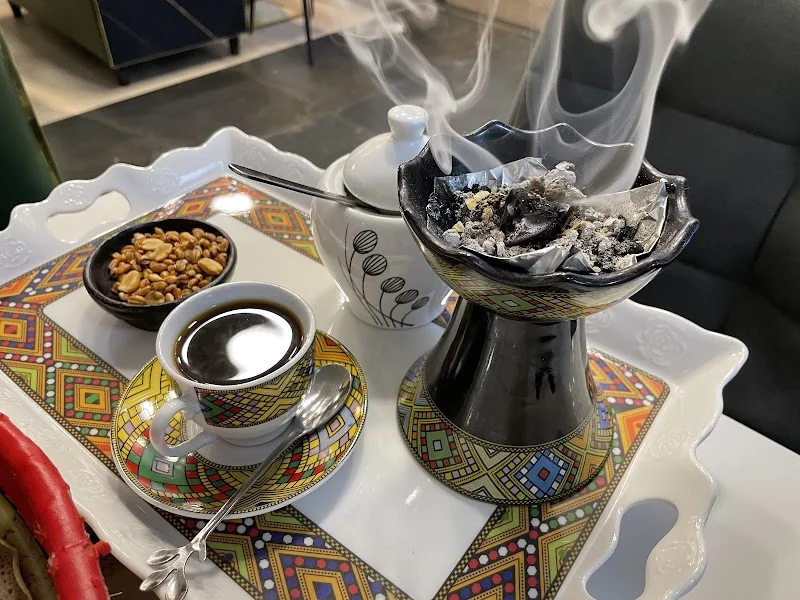
The concept of YETENBI goes beyond an ordinary meal. The operators want to convey cultural backgrounds to guests as well. This includes the traditional Ethiopian coffee preparation. Reports about the restaurant mention a coffee ceremony as part of the concept. Typical for this ceremony are freshly roasted and ground coffee beans brewed in a gebena, a traditional clay pot. The scent of incense and the communal atmosphere can also be components of the ritual.
A coffee ceremony is typically not a hasty conclusion to a meal but a conscious social moment. The preparation takes time and invites guests to stay at the table, converse, and attentively perceive the aromas of the coffee. For guests wanting to learn about Ethiopian culture, this element can make the restaurant visit special. Since the execution of daily offerings, staff, and demand can vary, the current availability should be directly inquired at YETENBI.
The option to eat with hands is also part of the culinary experience. In Ethiopia, Injera is traditionally used to scoop up food. Before eating, hands are washed; then a piece of Injera is torn off and carefully placed around a portion of the desired dish. For guests who are not accustomed to this way of eating, it is entirely appropriate to ask for a brief explanation. The shared meal should evoke curiosity and not become a test.
The atmosphere of YETENBI can therefore best be described as culinary and culturally oriented. The focus is on the dishes, shared eating, and the opportunity to discover new flavors. Those searching for YETENBI photos should not only look for interior shots but also for images of the menu, Injera platters, and the vegetarian selection. They convey most quickly how diverse and colorful Ethiopian cuisine can be.
YETENBI Ordering, Opening Hours, and Practical Information
YETENBI offers guests several options to receive food. Online ordering is possible through the restaurant website. Additionally, the restaurant is listed on Wolt. There, Key Wot, Alicha Wot, Shekila Tibis, Yetenbi Kitfo, Tibis Firfi, Shiro Wat, and various vegetarian dishes are offered. Sambusa with meat or lentils is also part of the delivery offer. Prices and availability may differ between the restaurant menu and the delivery platform.
The delivery times indicated on the delivery platform state a start from 11 AM on Mondays, Tuesdays, Thursdays, Fridays, and Saturdays, while Wednesdays and Sundays have a later start from 4 PM. The official ordering page of the restaurant lists partially different times. This shows that opening, pick-up, and delivery times are not necessarily identical. Therefore, those wanting to order at a specific time or eat on-site should check the current information on the respective platform.
The address is Theaterstraße 6, 97070 Würzburg. For contact, the phone number +49 176 21438960 is provided. The restaurant is located in the city center, making it easily integrated into the visit for pedestrians and guests using public transport. For drivers, the available restaurant information does not indicate any private parking. The specific parking situation should therefore be planned depending on the time of day, day of the week, and current regulations of the city of Würzburg.
When selecting dishes, guests should pay attention to the desired spiciness. Key Wot, Misir Wot, and Tibis Firfi are described with spicy or hot components. Alicha Wot, on the other hand, is indicated as a milder variant without Berbere or without chili. Those sensitive to spiciness can seek advice before ordering. Mild vegetable dishes, Sambusa with lentils, or a combination of various sides are also suitable for children or guests who want to try cautiously.
YETENBI is particularly suitable for groups due to the possibility of trying several dishes together. A mixed platter or several dishes in the center of the table clearly highlights the differences between Wot, lentils, vegetables, meat, and Injera. For larger groups or special occasions, prior contact is advisable. This allows for coordination of availability, seating, dietary wishes, and possibly a coffee ceremony.
Those visiting YETENBI for the first time can start with Sambusa and then share a combination of a meat dish and a plant-based dish. A mild option like Alicha Wot can be combined with spicier dishes. Vegetarian and vegan guests will find several independent options with Shiro Wat, Misir Wot, Atkilt Wot, or Yetsom Beyaynetu. This makes the restaurant an interesting address for curious gourmets, international cuisine, and shared culinary discoveries in Würzburg.
Why a Visit to YETENBI Würzburg is Worth It
YETENBI is a special addition to the Würzburg gastronomy because the restaurant presents a cuisine that has been rarely represented in the city so far. The dishes combine strong spices, slowly braised sauces, legumes, vegetables, meat dishes, and the characteristic Injera. This creates an offering that cannot be reduced to a single flavor profile. Depending on the selection, the experience ranges from mild and earthy to spicy, smoky, and intensely aromatic.
Another reason to visit is the accessibility of the concept. Guests do not need prior knowledge. The menu explains the main dishes, and questions about preparation, spiciness, and eating style can be clarified. Especially for those who have not yet visited an Ethiopian restaurant, starting with a small appetizer or a mixed platter can be a gradual approach. The shared presentation on Injera also makes the meal a social experience.
The variety for different dietary preferences also speaks for YETENBI. In addition to beef and lamb, several plant-based dishes are available. Lentils, ground peas, cabbage, carrots, beans, and various spices are used in such a way that vegan and vegetarian guests are not reliant on a single standard option. Notes on gluten-free options expand the selection, while individual intolerances should always be clarified directly.
The location on Theaterstraße connects the restaurant with the cultural and urban life of Würzburg. Before or after a walk through the city center, a visit to the Residence, or an evening program, YETENBI can be a suitable culinary stop. The address is easily found by searching for YETENBI Würzburg, YETENBI Ethiopian Restaurant, or Ethiopian Food Würzburg.
Finally, YETENBI stands for hospitality as part of the cuisine. The name, the communal way of eating, Injera, and the planned or conceptually integrated coffee ceremony convey more than just a menu. They open access to a food culture where sharing, time, and shared experiences play an important role. Those seeking authentic flavors, new spices, and a personal gastronomic experience will find an exciting address in the heart of Würzburg at YETENBI.
Sources:
- YETENBI Restaurant Würzburg – Official Ordering Page and Menu
- YETENBI Restaurant Würzburg – Contact and Delivery Times
- YETENBI Ethiopian Restaurant – Wolt Menu and Delivery Information
- Main-Post – First Ethiopian Restaurant Opens in Würzburg
- FRIZZ Würzburg – New in WÜ: Yetenbi
- City of Würzburg – Information on Theaterstraße
Mehr anzeigenWeniger anzeigen
YETENBI | Ethiopian Restaurant & Menu
YETENBI brings Ethiopian cuisine to the city center of Würzburg. The restaurant is located at Theaterstraße 6, 97070 Würzburg, and is dedicated to traditional dishes from Ethiopia as well as the food culture associated with them. The menu features spicy Wot stews, fried Tibs, Kitfo, Sambusa, Injera, and colorful vegetable and legume dishes. Thus, YETENBI caters to both guests who are already familiar with Ethiopian specialties and those who want to discover this cuisine for the first time.
The offerings are particularly versatile for different dietary preferences. In addition to meat dishes, there are several vegetarian and vegan options. Some offerings are also labeled as gluten-free or adjustable accordingly. The dishes are often served in the Ethiopian tradition on a platter with Injera. The flatbread serves not only as a side but also as a practical way to scoop up the various sauces, lentils, vegetable dishes, and meat specialties.
The name YETENBI is associated with the language of the Gurage region and is roughly translated as welcome or hospitality. This feeling shapes the public appearance of the restaurant: guests are not just meant to eat but to experience a culinary tradition. Those searching for YETENBI Würzburg, the YETENBI menu, or an Ethiopian restaurant in Würzburg will find here an address for aromatic dishes, shared tasting, and a conscious insight into East African cuisine.
YETENBI Würzburg: Ethiopian Restaurant on Theaterstraße
YETENBI is located at Theaterstraße 6 in the postal code area 97070, thus in a central location in Würzburg. Theaterstraße connects the area around Barbarossaplatz with the Würzburg Residence and is one of the well-known inner-city streets of the city. In the immediate vicinity, there are shops, dining options, cultural destinations, and pathways through the city center. A visit to YETENBI can therefore be easily combined with a city stroll, shopping, or a cultural appointment.
The restaurant opened in spring 2026. Media reports described YETENBI as Würzburg's first restaurant fully dedicated to Ethiopian cuisine. Behind the establishment are Sosina Kebede and Benyam Meheret. Both associate the restaurant with the desire to offer traditional dishes while also providing insight into Ethiopian food culture. The opening took place after a comparatively short preparation time, following the opportunity to take over the premises on Theaterstraße.
The concept is not reduced to a single dish or a simplified selection. It includes spicy meat dishes, plant-based foods, typical side dishes, and drinks or preparation methods that belong to Ethiopian culture. The kitchen works with ingredients and spice combinations that may be unfamiliar to many guests, but are interesting for that very reason. Berbere, Kibe, lentils, peas, cabbage, carrots, and various herbs play an important role on the menu. Depending on the dish, the flavor spectrum ranges from mild and aromatic to distinctly spicy.
The central location is also practical for guests who want to visit YETENBI spontaneously. Those searching for an Ethiopian restaurant in Würzburg can easily find the address via Theaterstraße. For those arriving by car, the current parking regulations and parking options in the Würzburg city center should be considered. The available restaurant information does not indicate any private guest parking. Since traffic situations, fees, and availability can change, it is advisable to check current conditions before driving.
YETENBI Menu: Wot, Tibs, Kitfo, and Sambusa
The YETENBI menu showcases the wide range of Ethiopian cuisine. Among the standout main dishes is Yetenbi Kitfo in Gurage style. This consists of minced beef prepared with spiced butter, Kibe, and special spices. The Gurage cuisine is an important reference point for the restaurant's name and culinary identity. Those wanting to try a hearty meat dish with a special seasoning will find Kitfo a characteristic option.
Shekila Tibis consists of dry-fried lamb cubes with Ethiopian spices and onions. The dish is served in a special clay pot along with Awaze and mustard. The preparation differs from braised dishes and brings out the fried flavors of the meat more strongly. For guests who prefer lamb and enjoy a spicy accompaniment, Shekila Tibis is one of the standout dishes on the menu.
Key Wot is an Ethiopian beef stew with onions, Berbere, and Kibe. Berbere is a flavorful spice blend that can develop a significant spiciness depending on its composition and dosage. The dish also includes Ayib, a homemade Ethiopian cottage cheese, Shiro, Gomen, as well as beets and potatoes. This creates a combination of spicy sauce, creamy and mild side dishes, and vegetable components.
A milder variant is Alicha Wot. This beef goulash is prepared without Berbere or the characteristic chili heat. It is accompanied by Ayib, white cabbage, carrots, and brown lentils. Alicha Wot can therefore be interesting for guests who want to get to know Ethiopian spices but prefer a less spicy dish. Nevertheless, the dish remains aromatic because onions, Kibe, and other spices define the flavor.
Tibis Firfi combines small pieces of Injera with a spicy beef sauce and boiled eggs. The dish clearly demonstrates how versatile Injera can be used. It is not only a base for Wot and vegetables but can also be part of a warm dish. As an appetizer, YETENBI offers Sambusa. The crispy pastries are available with minced meat or with brown lentils, herbs, and onions. This makes Sambusa suitable for both meat lovers and guests looking for a plant-based appetizer.
YETENBI Injera and Ethiopian Food Culture
Injera is one of the most important elements of a visit to YETENBI. The thin, fermented flatbread forms the basis for many meals in Ethiopian cuisine. It is served on a platter and topped or surrounded by various sauces, vegetable, and meat dishes. Guests tear off a piece of Injera and use it to scoop up the food. In this way, the flatbread often replaces plates and cutlery at the same time.
This form of eating makes a restaurant visit particularly communal. Several dishes can come together on a shared platter, allowing different flavors to be tasted at the table. A spicy Wot sauce can be combined with a mild vegetable side. Lentils, cabbage, carrots, or Ayib provide variety and help balance the spiciness of individual dishes. Those eating Ethiopian for the first time can ask the service staff for explanations on how to best combine Injera and the various dishes.
Injera is not comparable in taste to a neutral flatbread. Due to fermentation, it has a slightly sour note and a soft, sponge-like texture. These properties make it particularly suitable for absorbing sauces. At the same time, the acidity contrasts with spicy, hearty, and sometimes hot dishes. For many guests, this combination is the first impression that distinguishes Ethiopian cuisine from other international cuisines.
The YETENBI menu also includes dishes where Injera is already integrated into the preparation. Tibis Firfi is an example of this. When ordering, guests should pay attention to notes on spiciness, ingredients, and possible adjustments. The available restaurant and delivery information indicates various dishes as vegetarian, vegan, or gluten-free or adjustable. However, for allergies and intolerances, a direct inquiry is still advisable, as preparation methods and used products can be crucial in individual cases.
The communal character of the dishes fits the name of the restaurant. YETENBI aims to convey hospitality not only through the decor or service but also through a way of eating where sharing and discovering together play an important role. For groups, a mixed selection can be particularly appealing. Those coming alone or in pairs can choose individual dishes and gradually explore spices, Injera, and different textures.
YETENBI Vegan and Vegetarian: Vegetables, Lentils, and Shiro Wat
YETENBI is not just an address for Ethiopian meat dishes. The menu includes several vegetarian and vegan options that form an independent part of the offerings. This includes Yetenbi Yetsom Beyaynetu, a mixed platter with various vegetable and legume dishes. Among others, Atkilt Wot, Misir Wot, and Kik are mentioned as components. Such a platter offers a broad overview of the plant-based side of Ethiopian cuisine.
Atkilt Wot consists of mild white cabbage with carrots and long beans, herbs, and spices. The vegetables are braised in their own juice. This results in a soft, aromatic dish that does not rely on a dominant meat component. Misir Wot is made from peeled brown lentils in a spicy sauce with herbs and spices. A mixed salad is served alongside. Lentils are important ingredients in Ethiopian cuisine and can provide a pleasantly filling base for a vegan meal.
Shiro Wat, or Schirowat, is made from ground peas in a spicy sauce and served with tomato and cucumber salad. The creamy texture of the sauce pairs well with Injera. Depending on the variant, the dish is offered as vegan or vegetarian. For guests with no experience in Ethiopian cuisine, Shiro Wat can be a good entry point, as the dish combines intense seasoning with a soft consistency.
The plant-based dishes are not merely side dishes to the meat dishes. They are offered as complete dishes and as components of mixed platters. This allows vegan guests to assemble a varied meal. It is also practical for mixed groups, as several people can combine meat dishes and vegan foods. The different components are traditionally served on Injera and can be taken and mixed according to personal taste.
Those wanting to eat vegan, vegetarian, or gluten-free should still check the current menu and specific preparation when ordering. Delivery platforms and restaurant menus may differ, and individual designations may vary depending on the daily offerings. The restaurant is described in current menu information as having vegetarian, vegan, and gluten-free options. A direct inquiry about ingredients, Kibe, spice blends, and side dishes provides clarity, especially for medically relevant allergies.
YETENBI Photos, Atmosphere, and Ethiopian Coffee Ceremony
The search query YETENBI Photos shows that many guests want to get an impression of the restaurant, the dishes, and the atmosphere before visiting. In a young restaurant, the interior, decoration, and presentation change over time. Therefore, current pictures should ideally be viewed through the official restaurant channels or the respective linked platforms. Particularly informative are photos of the arranged platters, Injera, Sambusa, and the colorful vegetable dishes.
The concept of YETENBI goes beyond an ordinary meal. The operators want to convey cultural backgrounds to guests as well. This includes the traditional Ethiopian coffee preparation. Reports about the restaurant mention a coffee ceremony as part of the concept. Typical for this ceremony are freshly roasted and ground coffee beans brewed in a gebena, a traditional clay pot. The scent of incense and the communal atmosphere can also be components of the ritual.
A coffee ceremony is typically not a hasty conclusion to a meal but a conscious social moment. The preparation takes time and invites guests to stay at the table, converse, and attentively perceive the aromas of the coffee. For guests wanting to learn about Ethiopian culture, this element can make the restaurant visit special. Since the execution of daily offerings, staff, and demand can vary, the current availability should be directly inquired at YETENBI.
The option to eat with hands is also part of the culinary experience. In Ethiopia, Injera is traditionally used to scoop up food. Before eating, hands are washed; then a piece of Injera is torn off and carefully placed around a portion of the desired dish. For guests who are not accustomed to this way of eating, it is entirely appropriate to ask for a brief explanation. The shared meal should evoke curiosity and not become a test.
The atmosphere of YETENBI can therefore best be described as culinary and culturally oriented. The focus is on the dishes, shared eating, and the opportunity to discover new flavors. Those searching for YETENBI photos should not only look for interior shots but also for images of the menu, Injera platters, and the vegetarian selection. They convey most quickly how diverse and colorful Ethiopian cuisine can be.
YETENBI Ordering, Opening Hours, and Practical Information
YETENBI offers guests several options to receive food. Online ordering is possible through the restaurant website. Additionally, the restaurant is listed on Wolt. There, Key Wot, Alicha Wot, Shekila Tibis, Yetenbi Kitfo, Tibis Firfi, Shiro Wat, and various vegetarian dishes are offered. Sambusa with meat or lentils is also part of the delivery offer. Prices and availability may differ between the restaurant menu and the delivery platform.
The delivery times indicated on the delivery platform state a start from 11 AM on Mondays, Tuesdays, Thursdays, Fridays, and Saturdays, while Wednesdays and Sundays have a later start from 4 PM. The official ordering page of the restaurant lists partially different times. This shows that opening, pick-up, and delivery times are not necessarily identical. Therefore, those wanting to order at a specific time or eat on-site should check the current information on the respective platform.
The address is Theaterstraße 6, 97070 Würzburg. For contact, the phone number +49 176 21438960 is provided. The restaurant is located in the city center, making it easily integrated into the visit for pedestrians and guests using public transport. For drivers, the available restaurant information does not indicate any private parking. The specific parking situation should therefore be planned depending on the time of day, day of the week, and current regulations of the city of Würzburg.
When selecting dishes, guests should pay attention to the desired spiciness. Key Wot, Misir Wot, and Tibis Firfi are described with spicy or hot components. Alicha Wot, on the other hand, is indicated as a milder variant without Berbere or without chili. Those sensitive to spiciness can seek advice before ordering. Mild vegetable dishes, Sambusa with lentils, or a combination of various sides are also suitable for children or guests who want to try cautiously.
YETENBI is particularly suitable for groups due to the possibility of trying several dishes together. A mixed platter or several dishes in the center of the table clearly highlights the differences between Wot, lentils, vegetables, meat, and Injera. For larger groups or special occasions, prior contact is advisable. This allows for coordination of availability, seating, dietary wishes, and possibly a coffee ceremony.
Those visiting YETENBI for the first time can start with Sambusa and then share a combination of a meat dish and a plant-based dish. A mild option like Alicha Wot can be combined with spicier dishes. Vegetarian and vegan guests will find several independent options with Shiro Wat, Misir Wot, Atkilt Wot, or Yetsom Beyaynetu. This makes the restaurant an interesting address for curious gourmets, international cuisine, and shared culinary discoveries in Würzburg.
Why a Visit to YETENBI Würzburg is Worth It
YETENBI is a special addition to the Würzburg gastronomy because the restaurant presents a cuisine that has been rarely represented in the city so far. The dishes combine strong spices, slowly braised sauces, legumes, vegetables, meat dishes, and the characteristic Injera. This creates an offering that cannot be reduced to a single flavor profile. Depending on the selection, the experience ranges from mild and earthy to spicy, smoky, and intensely aromatic.
Another reason to visit is the accessibility of the concept. Guests do not need prior knowledge. The menu explains the main dishes, and questions about preparation, spiciness, and eating style can be clarified. Especially for those who have not yet visited an Ethiopian restaurant, starting with a small appetizer or a mixed platter can be a gradual approach. The shared presentation on Injera also makes the meal a social experience.
The variety for different dietary preferences also speaks for YETENBI. In addition to beef and lamb, several plant-based dishes are available. Lentils, ground peas, cabbage, carrots, beans, and various spices are used in such a way that vegan and vegetarian guests are not reliant on a single standard option. Notes on gluten-free options expand the selection, while individual intolerances should always be clarified directly.
The location on Theaterstraße connects the restaurant with the cultural and urban life of Würzburg. Before or after a walk through the city center, a visit to the Residence, or an evening program, YETENBI can be a suitable culinary stop. The address is easily found by searching for YETENBI Würzburg, YETENBI Ethiopian Restaurant, or Ethiopian Food Würzburg.
Finally, YETENBI stands for hospitality as part of the cuisine. The name, the communal way of eating, Injera, and the planned or conceptually integrated coffee ceremony convey more than just a menu. They open access to a food culture where sharing, time, and shared experiences play an important role. Those seeking authentic flavors, new spices, and a personal gastronomic experience will find an exciting address in the heart of Würzburg at YETENBI.
Sources:
- YETENBI Restaurant Würzburg – Official Ordering Page and Menu
- YETENBI Restaurant Würzburg – Contact and Delivery Times
- YETENBI Ethiopian Restaurant – Wolt Menu and Delivery Information
- Main-Post – First Ethiopian Restaurant Opens in Würzburg
- FRIZZ Würzburg – New in WÜ: Yetenbi
- City of Würzburg – Information on Theaterstraße

Frequently Asked Questions
Reviews
Victoria V
24. May 2026
We were there for the first time for lunch, finally enjoying amazing Ethiopian food and just for a last kick we also got the coffee and it was delicious too. We will definitely come back.
Enrique
21. August 2026
Very fair price for a large amount of perfectly seasoned authentic Ethiopian food. Will be sure to stop by again when we are in Würzburg.
Matisse Maitland
16. July 2026
Delicious, authentic food. Finger food of course, wash your hands before as there is no bathroom. Could be nice to have a wet cloth provided.
Joyleen Maryann Fernandes
6. July 2026
We just had dinner here today and tried out the Shekila Tibis and Key Wot. The food here is incredibly tasty and the people are super kind and welcoming. It was our first time trying Ethiopian cuisine and we loved it! 🥰 If you are in Würzburg, head on over to this lovely authentic restaurant and shower them with love. ❤️
Manasa Narayan
29. May 2026
Delicious food! Totally recommend the injera and the lentil-filled samosas.