
Würzburg
Haus A3/A4, Oberdürrbacher Str. 6, 97080 Würzburg, Deutschland
Center for Internal Medicine (ZIM) | Photos & Reviews
The Center for Internal Medicine, abbreviated as ZIM, is a central building complex of the University Hospital Würzburg. It is located on the main premises of the hospital in area A at Oberdürrbacher Straße 6 and includes buildings A3 and A4. Those looking for photos of the Center for Internal Medicine, reviews, the correct address, or information about individual medical specialties will find a structured overview of the location here. The ZIM is not a classic event venue but a highly specialized center for patient care, research, and teaching.
Various internal medicine clinics, institutes, and diagnostic facilities work closely together in the building. These include the Medical Clinic and Polyclinic I, the Medical Clinic and Polyclinic II, the Clinic and Polyclinic for Nuclear Medicine, the Institute for Clinical Transfusion Medicine and Hemotherapy, the Central Laboratory, and the Coagulation Outpatient Clinic. The special feature of the ZIM is therefore the consolidation of various medical competencies under one roof. This allows for short distances between examination, diagnostics, outpatient treatment, and inpatient care for patients.
The online search uses different spellings such as Center for Internal Medicine ZIM Würzburg, ZIM9, ZIM Oberdürrbacher Straße Würzburg, or Center for Internal Medicine and Infectiology. In many cases, it refers to the location of the University Hospital Würzburg in area A. For accurate orientation, it is important to pay attention to house number, building, level, corridor, and clinic area. Individual outpatient clinics are not all located at the same point in the building.
Center for Internal Medicine ZIM Würzburg: Specialties and Medical Focuses
The ZIM in Würzburg combines several important facilities of internal medicine and related diagnostic specialties. The Medical Clinic and Polyclinic I works, among other things, in the areas of cardiology, endocrinology, nephrology, pulmonology, as well as intensive and emergency medicine. This covers diseases of the cardiovascular system, hormonal and metabolic disorders, kidney diseases, and diseases of the respiratory system and lungs. The connection to intensive and emergency medicine complements this spectrum with the care of particularly urgent and severe disease courses.
The Medical Clinic and Polyclinic II is also located in the ZIM. Its mentioned focuses include hematology and oncology, gastroenterology, infectiology, psychosomatic medicine, as well as rheumatology and immunology. This means that the medical offerings range from the treatment of blood and blood-forming organ diseases to cancer and digestive tract disorders, as well as infections, immunological diseases, and psychosomatic issues.
Additionally, the Center includes the Clinic and Polyclinic for Nuclear Medicine, the Institute for Clinical Transfusion Medicine and Hemotherapy, the Central Laboratory, and the Coagulation Outpatient Clinic. These facilities are important for examinations, laboratory analyses, blood products, coagulation diagnostics, and imaging procedures. The spatial proximity is intended to support interdisciplinary collaboration, especially when multiple specialties need to work together for a diagnosis or therapy.
Another focus of the ZIM is the connection of patient care, research, and teaching. The university structure of the location allows for the integration of medical findings into clinical processes and the transfer of expertise to students and medical personnel. The official description of the University Hospital also highlights the close proximity to the Center for Operative Medicine. This spatial closeness facilitates collaboration between surgical and non-surgical specialties.
For visitors, the multitude of specialties means that the designation ZIM alone is not always sufficient to find the correct destination. Before an appointment, it should be checked whether the respective clinic refers to House A3 or A4, a specific level, or a particular corridor. The details on the invitation, referral, or appointment confirmation should therefore be cross-checked with the current information from the University Hospital.
Center for Internal Medicine ZIM Photos and Images: Building, Orientation, and Impression
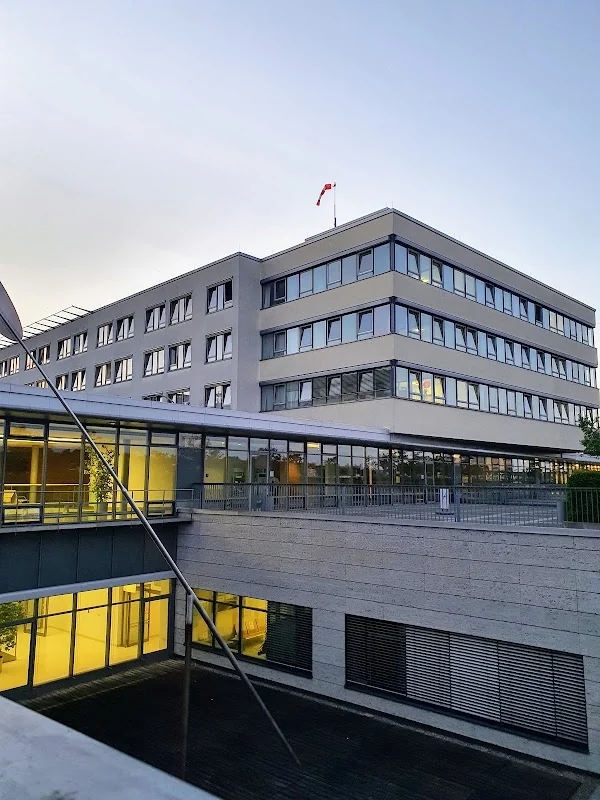
The search queries for photos of the Center for Internal Medicine and images of the ZIM show that many people want to gain a visual impression of the building before a visit. Official images from the University Hospital depict the building complex of the ZIM as part of the medical campus in Würzburg. In a publication marking the tenth anniversary of the ZIM, exterior views, aerial shots, and impressions from inside the building are documented. These images convey the character of a modern hospital location and show its integration into the campus of the University Hospital.
When orienting on-site, not only exterior photos but especially site plans are helpful. The ZIM is located in area A of the hospital and is signposted together with the Center for Operative Medicine as ZOM/ZIM. The buildings A3 and A4 are located on Oberdürrbacher Straße. Depending on the appointment, access may lead through a specific part of the building, a gate, or a level. Therefore, visitors should not only search for a photo of the facade but also pay attention to the site plan and the specific destination information of the respective clinic.
Inside the ZIM, there are various levels, registration points, waiting areas, stations, and outpatient clinics. A specific medical facility may, for example, be located in the second basement of House A3. The endocrinological-diabetological outpatient clinics are described by the University Hospital on level -2 in House A3; there is also a registration counter with the number 28 and a waiting area. The infectious outpatient clinic, on the other hand, is indicated in House A3 on level -1, corridor 17. These examples show why a precise appointment indication is more important than a general view of the building.
Photos can help with initial orientation but do not replace a current route description. Clinic areas can be organizationally changed, and signage is based on the requirements of ongoing operations. Therefore, anyone planning an outpatient treatment, examination, or visit should check the current website of the responsible clinic. In case of uncertainty, the gate can provide assistance. The official information lists the phone numbers for the ZIM gate as +49 931 201-57057 and +49 931 201-57056.
For people with limited mobility, it is particularly advisable to clarify the route in advance. The hospital grounds have several building areas and different access points. Elevators and signposted paths support orientation within the building. The exact access may depend on whether a station, outpatient clinic, examination area, or administration is being visited.
Center for Internal Medicine ZIM Reviews: Classification of Ratings
Those searching for reviews of the Center for Internal Medicine will find different experiences from patients, relatives, and visitors. The overall rating given is 3.6 out of 5 points based on 88 reviews. Such a number can provide an initial impression but does not automatically explain which specific clinic, station, or treatment is meant. The ZIM consists of several medical facilities and functional areas. Experiences can therefore vary significantly.
Reviews often refer to various aspects. These include the friendliness and accessibility of the staff, waiting times, the clarity of medical explanations, the process during admission, orientation within the building, the equipment of waiting areas, or the organization of appointments. At a large university hospital, there are also differences between outpatient clinics, stations, and individual specialties. A review about an internal medicine station cannot easily be transferred to nuclear medicine, the infectious outpatient clinic, or another facility.
When evaluating reviews, the timing should also be considered. Opening hours, responsibilities, and organizational processes can change. An older experience may therefore no longer be fully applicable to the current visit. Similarly, a single positive or negative review does not provide a complete representation of medical quality. For medical decisions, the information from the treating physicians and the official statements of the University Hospital are decisive.
Reviews are particularly helpful when they contain concrete and understandable hints. These include information about the target area, registration, or route guidance. General comments without reference to a specific specialty are more difficult to classify. Patients should also be careful not to share sensitive personal health data publicly. Medical concerns belong in the confidential conversation with the responsible clinic.
The ZIM is a university maximum care area with complex processes. This means that both planned outpatient appointments and inpatient treatments and urgent medical situations can occur there. Waiting times and the process of a visit can therefore depend on the individual appointment, urgency, necessary diagnostics, and workload. For realistic planning, it is advisable to allow sufficient time and bring the appointment documents.
ZIM Oberdürrbacher Straße Würzburg: Address, Site Plan, and Access
The official address of the Center for Internal Medicine is House A3/A4, Oberdürrbacher Straße 6, 97080 Würzburg, Germany. The location is on the main premises of the University Hospital in area A. The tram stop Pestalozzistraße, which refers to the University Hospital area A, serves as orientation. In the travel information of the University Hospital, the location is described together with the campus and the areas ZOM/ZIM.
When arriving by public transport, it is important to check the current connection. The University Hospital lists various stops and means of transport for the campus. For area A, the stop Pestalozzistraße or Uniklinikum area A is particularly relevant. From there, signposted paths lead to the building complexes. Since timetables and routes can change, visitors should check the current information from the transport association and the University Hospital for their specific appointment.
A free shuttle service is available on the hospital grounds. The shuttle buses connect, among other things, parking lot A/B with the areas ZOM/ZIM, neuroradiology, and other clinics on the campus. According to the published information, the buses run Monday to Friday, except on holidays, between 5:45 AM and 10:30 PM. Depending on the time of day, the interval is ten or fifteen minutes. For the evening, the hospital refers to the gates. This information is useful for patients who want to get from the parking lot to House A3 or A4.
For arriving by car, the official site plan of the University Hospital should be used. The parking situation on a large hospital campus can vary depending on the time of day and occupancy. For this reason, it is not sensible to promise a specific free parking situation. Anyone with an important appointment should allow time for parking, the route from the parking lot to the building, and orientation in the house. People with special support needs should inquire in advance about suitable access points and exit options.
Oberdürrbacher Straße 6 leads to an extensive medical campus. The house designations A3 and A4 are therefore crucial. Additionally, appointment documents may include details such as level, corridor, station name, or registration counter. These details should not be omitted. Although the ZIM is known as a shared building complex, the individual specialties are located in different places.
Infectiology and Special Outpatient Clinics in the ZIM
The search combination Center for Internal Medicine and Infectiology refers to the infectious and tropical medicine outpatient clinic of the Medical Clinic and Polyclinic II. This outpatient clinic is located in the Center for Internal Medicine in House A3, level -1, corridor 17. The service is aimed at people with infectious questions and those who need travel medical advice. The official information distinguishes between the general infectious outpatient clinic and the travel medical consultation.
The infectious outpatient clinic has consultation hours from Monday to Friday between 8:00 AM and 1:00 PM. The travel medical consultation takes place from Monday to Thursday from 1:30 PM to 3:45 PM. For scheduling an appointment for travel medical advice, the clinic specifies a time window from Monday to Thursday between 8:00 AM and 12:00 PM. Since medical consultation hours can change, appointments should always be coordinated directly with the responsible outpatient clinic.
Infectiology is integrated into the larger service spectrum of the Medical Clinic and Polyclinic II. This also includes hematology and oncology, gastroenterology, psychosomatic medicine, as well as rheumatology and immunology. The connection of various specialties can be important in complex disease patterns. Especially in cases of long-standing, unclear, or multi-organ system-related complaints, coordinated diagnostics may be required.
For contacting the infectious outpatient clinic, a phone number and an emergency number are published on the official clinic page. These contact details should not be taken from outdated third-party sites but checked directly on the clinic's page. For access, the indication House A3, level -1, corridor 17 is particularly helpful. Those visiting the ZIM for the first time should also pay attention to the signs and information at the gate.
The term ZIMI may appear in search queries as a shortened or alternative designation for an area of internal medicine and infectiology. For a clear assignment, the official designation of the University Hospital is decisive. The ZIM in Würzburg should not be equated with similarly named facilities in other cities such as Jülich or Kempten. Address additions, city names, and University Hospital Würzburg should therefore be included in every search.
Equipment, Diagnostics, and Collaboration at the University Hospital Würzburg
The Center for Internal Medicine was designed as an integrative medical location. Various clinics and institutes are closely connected spatially within the buildings. The University Hospital describes the proximity between the internal medicine areas, nuclear medicine, radiology, the central laboratory, and transfusion medicine as an important advantage for patient care, research, and teaching. Such a structure can facilitate collaboration between different disciplines.
Among the diagnostic options mentioned in connection with the ZIM are modern imaging procedures such as SPECT/CT and PET/CT. These procedures are used in cooperation with the Clinic and Polyclinic for Nuclear Medicine and the Institute for Radiological Diagnostics. Which examination is conducted in each case is decided by the responsible medical department based on the respective question. General information about the equipment should therefore not be understood as an individual treatment recommendation.
The Central Laboratory and the Institute for Clinical Transfusion Medicine and Hemotherapy are also important components of the location. Laboratory tests, blood analyses, transfusion medical services, and coagulation diagnostics support the work of the clinics. The immediate proximity can contribute to the efficient processing of samples and findings within the hospital. For patients, the respective treating clinic remains the central point of contact for findings and specific examination processes.
The collaboration with the Center for Operative Medicine is another feature of the campus. An example is the cooperation between cardiology and cardiac surgery. Even in emergency patients, different internal medicine specialties work closely together. The spatial proximity of the centers is intended to ensure that medical teams can come together more quickly in complex situations.
The history of the ZIM is closely linked to this integrative idea. The center was opened in 2009. In retrospect, the tenth anniversary highlighted that modern research, teaching, and patient care are combined in a shared building complex. From this collaboration, research and treatment structures such as the Comprehensive Cancer Center and the German Center for Heart Failure have developed at the location. These facilities are not identical to the ZIM but are part of the scientific and medical environment of the University Hospital.
For visitors, the modern technical equipment is primarily perceivable indirectly. Clear paths, accessible registration points, understandable appointment details, and reliable communication are crucial. The building structure supports these processes but does not replace individual coordination with the respective clinic. Anyone expecting a specific examination or treatment should read the invitation documents carefully and use the provided contact point for any open questions.
Practical Tips for Patients and Visitors
Before visiting the ZIM, the most important documents should be assembled. These may include the electronic health card, referrals, findings, medication lists, medical letters, and the appointment confirmation. Which documents are actually required depends on the specialty and the reason for the visit. The responsible outpatient clinic can inform in advance whether additional documents are needed.
Since the ZIM includes several buildings and levels, the destination should be noted as precisely as possible. House A3 or A4, level, corridor, station designation, and registration counter can be crucial for orientation. The endocrinological-diabetological outpatient clinics, for example, are described on level -2 in House A3 with a specific registration counter. The infectious outpatient clinic is located on level -1, corridor 17. Such details should not be confused with general information about the building complex.
The ZIM gate is open daily from 5:30 AM to 10:00 PM according to the published information. Visitors can receive support with orientation questions there. For individual clinics, additional phone hours and consultation times apply. Outside of these times, not every outpatient clinic is automatically reachable. Therefore, for planned appointments, it is advisable to call during the specified consultation hours.
For relatives, the visiting regulations of the University Hospital and the respective station apply. These regulations may vary depending on the station, infection situation, and organizational circumstances. Binding information should be requested directly from the responsible station secretariat or clinic. Public reviews and general search results do not replace current visiting regulations.
Also, when arriving, a time buffer should be planned. The campus is large, and there may be routes between the parking lot, shuttle stop, gate, and target area. The free shuttle service can facilitate orientation but operates according to a fixed schedule. For early, late, or particularly urgent appointments, it is advisable to check accessibility in advance.
People with physical limitations, visual impairments, or support needs should indicate their situation when scheduling an appointment. The staff can then better explain which access is suitable and where companions can wait. The specific accessibility of individual routes may depend on the construction phase, entrance, and target area.
The ZIM is a place of medical care. Photographing in sensitive interior areas, waiting zones, or on stations should only be allowed and done with respect for privacy. Other patients should not be photographed without consent. Even when publishing reviews, personal health information and identifiable details should be avoided.
Center for Internal Medicine ZIM: Orientation Between Address, Photos, and Reviews
The most common search interests for the ZIM can be divided into three groups. First, people want to see images or photos to better place the building and campus. Second, they search for reviews to compare the experiences of other visitors. Third, they need practical information about address, access, specialty, and registration. Good preparation connects all three perspectives, as neither a photo nor a review replaces the specific route description for one's appointment.
The address House A3/A4, Oberdürrbacher Straße 6, 97080 Würzburg leads to the Center for Internal Medicine on the premises of the University Hospital. The specialties are organized within the building complex and in adjacent facilities. For outpatient appointments, the exact target area is crucial. Those who simply enter Center for Internal Medicine into a navigation system should also check whether the displayed access actually leads to the agreed house.
The medical focuses range from cardiovascular diseases and metabolic medicine to kidney diseases, lung diseases, blood and cancer diseases, digestive system diseases, infectiology, rheumatology, immunology, and psychosomatic issues. This spectrum is complemented by nuclear medicine, radiology, transfusion medicine, central laboratory, and coagulation outpatient clinic. This diversity explains why the ZIM appears for many different search queries.
The history since its opening in 2009 makes it clear that the center was planned as a networked location. The goal is to connect care, research, and teaching. The close spatial proximity to surgical specialties and diagnostic facilities supports interdisciplinary processes. Nevertheless, for each patient, the specific medical appointment remains the focus.
When using online information, timeliness is particularly important. Opening hours, phone numbers, access points, shuttle times, and visiting regulations can change. The most reliable information comes from the official pages of the University Hospital Würzburg and the respective clinic areas. Reviews and photos are supplementary orientation aids but do not provide binding information about medical treatment, waiting time, or access.
Therefore, those visiting the Center for Internal Medicine in Würzburg for the first time should have the appointment confirmation, site plan, and contact details of the responsible clinic ready. With the correct house number, level, and corridor indication, the way becomes significantly easier. In case of uncertainty, the gate and the respective outpatient clinic can provide further assistance. This way, the visit to the ZIM can be better planned without deriving false expectations from general search terms.
Sources:
- University Hospital Würzburg – Center for Internal Medicine
- University Hospital Würzburg – ZIM Access
- University Hospital Würzburg – Arrival by Public Transport
- University Hospital Würzburg – Endocrinology: Outpatient Treatment
- University Hospital Würzburg – Infectiology and Tropical Medicine
- University Hospital Würzburg – UNI.KLINIK, 10 Years ZIM
- University Hospital Würzburg – Site Plan of the Hospital
Mehr anzeigenWeniger anzeigen
Center for Internal Medicine (ZIM) | Photos & Reviews
The Center for Internal Medicine, abbreviated as ZIM, is a central building complex of the University Hospital Würzburg. It is located on the main premises of the hospital in area A at Oberdürrbacher Straße 6 and includes buildings A3 and A4. Those looking for photos of the Center for Internal Medicine, reviews, the correct address, or information about individual medical specialties will find a structured overview of the location here. The ZIM is not a classic event venue but a highly specialized center for patient care, research, and teaching.
Various internal medicine clinics, institutes, and diagnostic facilities work closely together in the building. These include the Medical Clinic and Polyclinic I, the Medical Clinic and Polyclinic II, the Clinic and Polyclinic for Nuclear Medicine, the Institute for Clinical Transfusion Medicine and Hemotherapy, the Central Laboratory, and the Coagulation Outpatient Clinic. The special feature of the ZIM is therefore the consolidation of various medical competencies under one roof. This allows for short distances between examination, diagnostics, outpatient treatment, and inpatient care for patients.
The online search uses different spellings such as Center for Internal Medicine ZIM Würzburg, ZIM9, ZIM Oberdürrbacher Straße Würzburg, or Center for Internal Medicine and Infectiology. In many cases, it refers to the location of the University Hospital Würzburg in area A. For accurate orientation, it is important to pay attention to house number, building, level, corridor, and clinic area. Individual outpatient clinics are not all located at the same point in the building.
Center for Internal Medicine ZIM Würzburg: Specialties and Medical Focuses
The ZIM in Würzburg combines several important facilities of internal medicine and related diagnostic specialties. The Medical Clinic and Polyclinic I works, among other things, in the areas of cardiology, endocrinology, nephrology, pulmonology, as well as intensive and emergency medicine. This covers diseases of the cardiovascular system, hormonal and metabolic disorders, kidney diseases, and diseases of the respiratory system and lungs. The connection to intensive and emergency medicine complements this spectrum with the care of particularly urgent and severe disease courses.
The Medical Clinic and Polyclinic II is also located in the ZIM. Its mentioned focuses include hematology and oncology, gastroenterology, infectiology, psychosomatic medicine, as well as rheumatology and immunology. This means that the medical offerings range from the treatment of blood and blood-forming organ diseases to cancer and digestive tract disorders, as well as infections, immunological diseases, and psychosomatic issues.
Additionally, the Center includes the Clinic and Polyclinic for Nuclear Medicine, the Institute for Clinical Transfusion Medicine and Hemotherapy, the Central Laboratory, and the Coagulation Outpatient Clinic. These facilities are important for examinations, laboratory analyses, blood products, coagulation diagnostics, and imaging procedures. The spatial proximity is intended to support interdisciplinary collaboration, especially when multiple specialties need to work together for a diagnosis or therapy.
Another focus of the ZIM is the connection of patient care, research, and teaching. The university structure of the location allows for the integration of medical findings into clinical processes and the transfer of expertise to students and medical personnel. The official description of the University Hospital also highlights the close proximity to the Center for Operative Medicine. This spatial closeness facilitates collaboration between surgical and non-surgical specialties.
For visitors, the multitude of specialties means that the designation ZIM alone is not always sufficient to find the correct destination. Before an appointment, it should be checked whether the respective clinic refers to House A3 or A4, a specific level, or a particular corridor. The details on the invitation, referral, or appointment confirmation should therefore be cross-checked with the current information from the University Hospital.
Center for Internal Medicine ZIM Photos and Images: Building, Orientation, and Impression
The search queries for photos of the Center for Internal Medicine and images of the ZIM show that many people want to gain a visual impression of the building before a visit. Official images from the University Hospital depict the building complex of the ZIM as part of the medical campus in Würzburg. In a publication marking the tenth anniversary of the ZIM, exterior views, aerial shots, and impressions from inside the building are documented. These images convey the character of a modern hospital location and show its integration into the campus of the University Hospital.
When orienting on-site, not only exterior photos but especially site plans are helpful. The ZIM is located in area A of the hospital and is signposted together with the Center for Operative Medicine as ZOM/ZIM. The buildings A3 and A4 are located on Oberdürrbacher Straße. Depending on the appointment, access may lead through a specific part of the building, a gate, or a level. Therefore, visitors should not only search for a photo of the facade but also pay attention to the site plan and the specific destination information of the respective clinic.
Inside the ZIM, there are various levels, registration points, waiting areas, stations, and outpatient clinics. A specific medical facility may, for example, be located in the second basement of House A3. The endocrinological-diabetological outpatient clinics are described by the University Hospital on level -2 in House A3; there is also a registration counter with the number 28 and a waiting area. The infectious outpatient clinic, on the other hand, is indicated in House A3 on level -1, corridor 17. These examples show why a precise appointment indication is more important than a general view of the building.
Photos can help with initial orientation but do not replace a current route description. Clinic areas can be organizationally changed, and signage is based on the requirements of ongoing operations. Therefore, anyone planning an outpatient treatment, examination, or visit should check the current website of the responsible clinic. In case of uncertainty, the gate can provide assistance. The official information lists the phone numbers for the ZIM gate as +49 931 201-57057 and +49 931 201-57056.
For people with limited mobility, it is particularly advisable to clarify the route in advance. The hospital grounds have several building areas and different access points. Elevators and signposted paths support orientation within the building. The exact access may depend on whether a station, outpatient clinic, examination area, or administration is being visited.
Center for Internal Medicine ZIM Reviews: Classification of Ratings
Those searching for reviews of the Center for Internal Medicine will find different experiences from patients, relatives, and visitors. The overall rating given is 3.6 out of 5 points based on 88 reviews. Such a number can provide an initial impression but does not automatically explain which specific clinic, station, or treatment is meant. The ZIM consists of several medical facilities and functional areas. Experiences can therefore vary significantly.
Reviews often refer to various aspects. These include the friendliness and accessibility of the staff, waiting times, the clarity of medical explanations, the process during admission, orientation within the building, the equipment of waiting areas, or the organization of appointments. At a large university hospital, there are also differences between outpatient clinics, stations, and individual specialties. A review about an internal medicine station cannot easily be transferred to nuclear medicine, the infectious outpatient clinic, or another facility.
When evaluating reviews, the timing should also be considered. Opening hours, responsibilities, and organizational processes can change. An older experience may therefore no longer be fully applicable to the current visit. Similarly, a single positive or negative review does not provide a complete representation of medical quality. For medical decisions, the information from the treating physicians and the official statements of the University Hospital are decisive.
Reviews are particularly helpful when they contain concrete and understandable hints. These include information about the target area, registration, or route guidance. General comments without reference to a specific specialty are more difficult to classify. Patients should also be careful not to share sensitive personal health data publicly. Medical concerns belong in the confidential conversation with the responsible clinic.
The ZIM is a university maximum care area with complex processes. This means that both planned outpatient appointments and inpatient treatments and urgent medical situations can occur there. Waiting times and the process of a visit can therefore depend on the individual appointment, urgency, necessary diagnostics, and workload. For realistic planning, it is advisable to allow sufficient time and bring the appointment documents.
ZIM Oberdürrbacher Straße Würzburg: Address, Site Plan, and Access
The official address of the Center for Internal Medicine is House A3/A4, Oberdürrbacher Straße 6, 97080 Würzburg, Germany. The location is on the main premises of the University Hospital in area A. The tram stop Pestalozzistraße, which refers to the University Hospital area A, serves as orientation. In the travel information of the University Hospital, the location is described together with the campus and the areas ZOM/ZIM.
When arriving by public transport, it is important to check the current connection. The University Hospital lists various stops and means of transport for the campus. For area A, the stop Pestalozzistraße or Uniklinikum area A is particularly relevant. From there, signposted paths lead to the building complexes. Since timetables and routes can change, visitors should check the current information from the transport association and the University Hospital for their specific appointment.
A free shuttle service is available on the hospital grounds. The shuttle buses connect, among other things, parking lot A/B with the areas ZOM/ZIM, neuroradiology, and other clinics on the campus. According to the published information, the buses run Monday to Friday, except on holidays, between 5:45 AM and 10:30 PM. Depending on the time of day, the interval is ten or fifteen minutes. For the evening, the hospital refers to the gates. This information is useful for patients who want to get from the parking lot to House A3 or A4.
For arriving by car, the official site plan of the University Hospital should be used. The parking situation on a large hospital campus can vary depending on the time of day and occupancy. For this reason, it is not sensible to promise a specific free parking situation. Anyone with an important appointment should allow time for parking, the route from the parking lot to the building, and orientation in the house. People with special support needs should inquire in advance about suitable access points and exit options.
Oberdürrbacher Straße 6 leads to an extensive medical campus. The house designations A3 and A4 are therefore crucial. Additionally, appointment documents may include details such as level, corridor, station name, or registration counter. These details should not be omitted. Although the ZIM is known as a shared building complex, the individual specialties are located in different places.
Infectiology and Special Outpatient Clinics in the ZIM
The search combination Center for Internal Medicine and Infectiology refers to the infectious and tropical medicine outpatient clinic of the Medical Clinic and Polyclinic II. This outpatient clinic is located in the Center for Internal Medicine in House A3, level -1, corridor 17. The service is aimed at people with infectious questions and those who need travel medical advice. The official information distinguishes between the general infectious outpatient clinic and the travel medical consultation.
The infectious outpatient clinic has consultation hours from Monday to Friday between 8:00 AM and 1:00 PM. The travel medical consultation takes place from Monday to Thursday from 1:30 PM to 3:45 PM. For scheduling an appointment for travel medical advice, the clinic specifies a time window from Monday to Thursday between 8:00 AM and 12:00 PM. Since medical consultation hours can change, appointments should always be coordinated directly with the responsible outpatient clinic.
Infectiology is integrated into the larger service spectrum of the Medical Clinic and Polyclinic II. This also includes hematology and oncology, gastroenterology, psychosomatic medicine, as well as rheumatology and immunology. The connection of various specialties can be important in complex disease patterns. Especially in cases of long-standing, unclear, or multi-organ system-related complaints, coordinated diagnostics may be required.
For contacting the infectious outpatient clinic, a phone number and an emergency number are published on the official clinic page. These contact details should not be taken from outdated third-party sites but checked directly on the clinic's page. For access, the indication House A3, level -1, corridor 17 is particularly helpful. Those visiting the ZIM for the first time should also pay attention to the signs and information at the gate.
The term ZIMI may appear in search queries as a shortened or alternative designation for an area of internal medicine and infectiology. For a clear assignment, the official designation of the University Hospital is decisive. The ZIM in Würzburg should not be equated with similarly named facilities in other cities such as Jülich or Kempten. Address additions, city names, and University Hospital Würzburg should therefore be included in every search.
Equipment, Diagnostics, and Collaboration at the University Hospital Würzburg
The Center for Internal Medicine was designed as an integrative medical location. Various clinics and institutes are closely connected spatially within the buildings. The University Hospital describes the proximity between the internal medicine areas, nuclear medicine, radiology, the central laboratory, and transfusion medicine as an important advantage for patient care, research, and teaching. Such a structure can facilitate collaboration between different disciplines.
Among the diagnostic options mentioned in connection with the ZIM are modern imaging procedures such as SPECT/CT and PET/CT. These procedures are used in cooperation with the Clinic and Polyclinic for Nuclear Medicine and the Institute for Radiological Diagnostics. Which examination is conducted in each case is decided by the responsible medical department based on the respective question. General information about the equipment should therefore not be understood as an individual treatment recommendation.
The Central Laboratory and the Institute for Clinical Transfusion Medicine and Hemotherapy are also important components of the location. Laboratory tests, blood analyses, transfusion medical services, and coagulation diagnostics support the work of the clinics. The immediate proximity can contribute to the efficient processing of samples and findings within the hospital. For patients, the respective treating clinic remains the central point of contact for findings and specific examination processes.
The collaboration with the Center for Operative Medicine is another feature of the campus. An example is the cooperation between cardiology and cardiac surgery. Even in emergency patients, different internal medicine specialties work closely together. The spatial proximity of the centers is intended to ensure that medical teams can come together more quickly in complex situations.
The history of the ZIM is closely linked to this integrative idea. The center was opened in 2009. In retrospect, the tenth anniversary highlighted that modern research, teaching, and patient care are combined in a shared building complex. From this collaboration, research and treatment structures such as the Comprehensive Cancer Center and the German Center for Heart Failure have developed at the location. These facilities are not identical to the ZIM but are part of the scientific and medical environment of the University Hospital.
For visitors, the modern technical equipment is primarily perceivable indirectly. Clear paths, accessible registration points, understandable appointment details, and reliable communication are crucial. The building structure supports these processes but does not replace individual coordination with the respective clinic. Anyone expecting a specific examination or treatment should read the invitation documents carefully and use the provided contact point for any open questions.
Practical Tips for Patients and Visitors
Before visiting the ZIM, the most important documents should be assembled. These may include the electronic health card, referrals, findings, medication lists, medical letters, and the appointment confirmation. Which documents are actually required depends on the specialty and the reason for the visit. The responsible outpatient clinic can inform in advance whether additional documents are needed.
Since the ZIM includes several buildings and levels, the destination should be noted as precisely as possible. House A3 or A4, level, corridor, station designation, and registration counter can be crucial for orientation. The endocrinological-diabetological outpatient clinics, for example, are described on level -2 in House A3 with a specific registration counter. The infectious outpatient clinic is located on level -1, corridor 17. Such details should not be confused with general information about the building complex.
The ZIM gate is open daily from 5:30 AM to 10:00 PM according to the published information. Visitors can receive support with orientation questions there. For individual clinics, additional phone hours and consultation times apply. Outside of these times, not every outpatient clinic is automatically reachable. Therefore, for planned appointments, it is advisable to call during the specified consultation hours.
For relatives, the visiting regulations of the University Hospital and the respective station apply. These regulations may vary depending on the station, infection situation, and organizational circumstances. Binding information should be requested directly from the responsible station secretariat or clinic. Public reviews and general search results do not replace current visiting regulations.
Also, when arriving, a time buffer should be planned. The campus is large, and there may be routes between the parking lot, shuttle stop, gate, and target area. The free shuttle service can facilitate orientation but operates according to a fixed schedule. For early, late, or particularly urgent appointments, it is advisable to check accessibility in advance.
People with physical limitations, visual impairments, or support needs should indicate their situation when scheduling an appointment. The staff can then better explain which access is suitable and where companions can wait. The specific accessibility of individual routes may depend on the construction phase, entrance, and target area.
The ZIM is a place of medical care. Photographing in sensitive interior areas, waiting zones, or on stations should only be allowed and done with respect for privacy. Other patients should not be photographed without consent. Even when publishing reviews, personal health information and identifiable details should be avoided.
Center for Internal Medicine ZIM: Orientation Between Address, Photos, and Reviews
The most common search interests for the ZIM can be divided into three groups. First, people want to see images or photos to better place the building and campus. Second, they search for reviews to compare the experiences of other visitors. Third, they need practical information about address, access, specialty, and registration. Good preparation connects all three perspectives, as neither a photo nor a review replaces the specific route description for one's appointment.
The address House A3/A4, Oberdürrbacher Straße 6, 97080 Würzburg leads to the Center for Internal Medicine on the premises of the University Hospital. The specialties are organized within the building complex and in adjacent facilities. For outpatient appointments, the exact target area is crucial. Those who simply enter Center for Internal Medicine into a navigation system should also check whether the displayed access actually leads to the agreed house.
The medical focuses range from cardiovascular diseases and metabolic medicine to kidney diseases, lung diseases, blood and cancer diseases, digestive system diseases, infectiology, rheumatology, immunology, and psychosomatic issues. This spectrum is complemented by nuclear medicine, radiology, transfusion medicine, central laboratory, and coagulation outpatient clinic. This diversity explains why the ZIM appears for many different search queries.
The history since its opening in 2009 makes it clear that the center was planned as a networked location. The goal is to connect care, research, and teaching. The close spatial proximity to surgical specialties and diagnostic facilities supports interdisciplinary processes. Nevertheless, for each patient, the specific medical appointment remains the focus.
When using online information, timeliness is particularly important. Opening hours, phone numbers, access points, shuttle times, and visiting regulations can change. The most reliable information comes from the official pages of the University Hospital Würzburg and the respective clinic areas. Reviews and photos are supplementary orientation aids but do not provide binding information about medical treatment, waiting time, or access.
Therefore, those visiting the Center for Internal Medicine in Würzburg for the first time should have the appointment confirmation, site plan, and contact details of the responsible clinic ready. With the correct house number, level, and corridor indication, the way becomes significantly easier. In case of uncertainty, the gate and the respective outpatient clinic can provide further assistance. This way, the visit to the ZIM can be better planned without deriving false expectations from general search terms.
Sources:
- University Hospital Würzburg – Center for Internal Medicine
- University Hospital Würzburg – ZIM Access
- University Hospital Würzburg – Arrival by Public Transport
- University Hospital Würzburg – Endocrinology: Outpatient Treatment
- University Hospital Würzburg – Infectiology and Tropical Medicine
- University Hospital Würzburg – UNI.KLINIK, 10 Years ZIM
- University Hospital Würzburg – Site Plan of the Hospital
Upcoming Events
No events found
Frequently Asked Questions
Reviews
No reviews found