
Akademie für Alte Musik Berlin
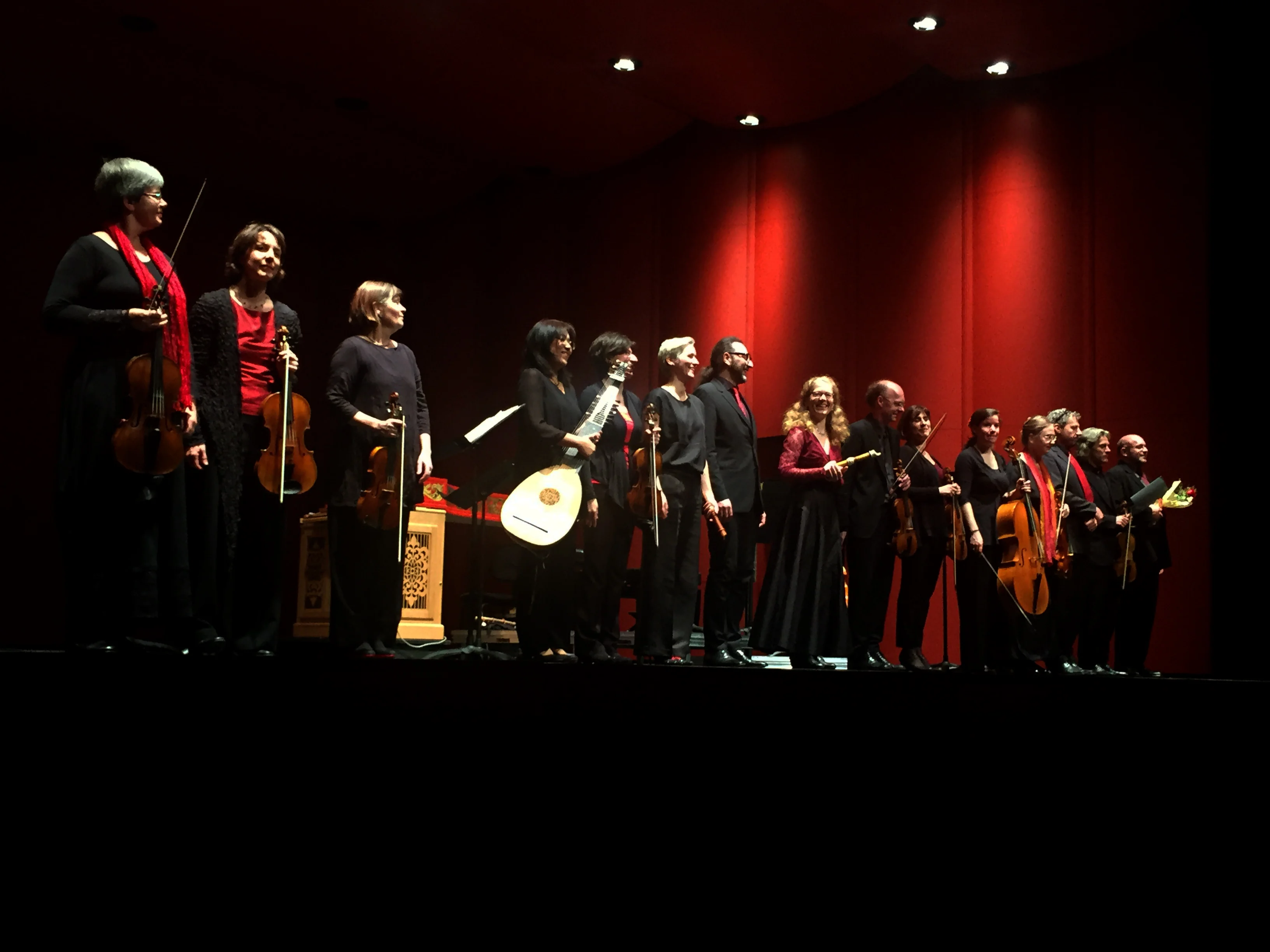
Image from Wikipedia
Image from Wikipedia
Academy for Ancient Music Berlin (Akamus)
Energy in Original Sound: How Akamus Reinterprets Baroque, Classical, and Early Romantic Music Today
Since 1982, the Academy for Ancient Music Berlin, or Akamus for short, has been demonstrating how lively music from the Baroque to early Romantic era can sound in the 21st century. The Berlin ensemble is one of the most renowned original sound orchestras worldwide and shapes the international early music scene with a distinctive blend of historical awareness, chamber music clarity, and captivating stage presence. With around a hundred concerts a year, tours across Europe, North and South America, and Asia, along with an extensively recognized discography, Akamus embodies excellence in research, performance practice, and production—while enchanting a wide audience that seeks sustainability in sound and authenticity in expression.
Biography: Founding Idea, Home, and Music Career
The founding in East Berlin in 1982 occurred during a time when the desire for historically informed performance practice gained new momentum. Musicians from Berlin orchestras came together to form an ensemble dedicated to authentic interpretation—using historical instruments or their replicas, in ensembles fitting the repertoire, and with particular care for articulation, phrasing, dynamics, tempo, and agogic in the spirit of the time of composition. As early as 1984, Akamus established its own subscription series at the Schauspielhaus am Gendarmenmarkt, the current Konzerthaus Berlin—a tradition that still shapes the artistic DNA of the ensemble today.
Characteristic is the performing without a conductor: Akamus predominantly works under the leadership of the concertmaster. This chamber music interaction sharpens collective listening and directly places responsibility for expression, sound balance, and timing within the voice groups. For larger projects—such as classical and romantic repertoire—the ensemble invites selected guest conductors, consciously expanding its interpretative spectrum.
Artistic Development and Stylistic Signature
From an early focus on German Baroque music, a repertoire has grown that today naturally includes the French and Italian traditions. Akamus connects musicological context with sound curiosity: French dance suites receive defined rhythms and elegant embellishments; Italian concertos exhibit fiery affections and expressive articulation; the Viennese classical music benefits from buoyant tempos, light bowing, and careful tempo relations between movements. This artistic development strengthens stylistic breadth—from the doctrine of affections of the 17th century to classical-symphonic dramaturgy around 1800.
The acoustic aesthetic is transparent, rich in color, and rhetorically sharpened. Short, articulately clear strokes, differentiated continuo work, and a culturally informed practice of ornamentation allow structures and musical syntax to emerge distinctly. Altogether, a lively original sound arises that does not feel museum-like but tells the present.
Playing Style, Instrumentation, and Production
Historical bows, gut strings, and period-appropriate wind instruments define the ensemble's sound. The production of new programs follows a clear dramatic line: source research, critical editions, voice group rehearsals, and sound aesthetic fine-tuning interlink seamlessly. In recording production, Akamus aims for a balance between studio precision and live energy. This approach—the connection of composition, arrangement details, and interpretative accuracy—greatly contributes to the international reputation of its discography.
The artistic leadership is distributed among several concertmaster personalities, enabling interpretatively diverse perspectives. Here, structurally conscious shaping meets spontaneous agogic; chamber music precision meets orchestral brilliance. This multi-voiced leadership culture is part of the ensemble's unmistakable identity.
Career Highlights, Collaborations, and Stage Presence
Milestones in the music career include the long-standing subscription series at the Konzerthaus Berlin, as well as invitations to leading festivals and halls in Europe, America, and Asia. Regular collaborations with vocal ensembles—such as with the RIAS Kammerchor—and renowned soloists mark its profile. Partnerships with prominent conductors in the extensive repertoire expand the orchestral palette without diluting the directness characteristic of Akamus. On tour, the stage unfolds as a resonance space for historical interpretation, continuously highlighted by both audiences and critics.
The recent seasons showcase this range: from Bach cantata projects to Italian Baroque programs, to Mozart symphonies, concertos, and large-scale passions. The Berlin-based subscription series acts as a creative laboratory, with programs later carried internationally.
Discography: Labels, Reference Recordings, and Awards
The discography documents artistic development and production excellence. Since 1994, numerous recordings have been released on harmonia mundi, along with publications on Pentatone, Accentus Music, and other labels. The discographic scope ranges from Bach—motets, orchestral suites, concertos, violin and harpsichord concertos—to Handel's odes, anthems, and opera excerpts, up to Mozart's symphonies, concertos, and masses. Recent standout albums encompass both baroque and classical core works as well as thematic projects that chart the musical topography between Northern and Southern Europe.
The recognition by the international music press is extensive: productions have received awards including the Grammy Award, as well as Diapason d’Or, Gramophone Award, Edison Award, MIDEM Classical Award, Choc de l’Année, the annual award from the German Record Critics' Award, and ECHO Klassik. The Grammy in 2002 for the collaboration with Cecilia Bartoli (Gluck arias) underscores the authority of the ensemble in vocal-symphonic literature. Even in recent times, critical attention continues—evident in nominations and top-of-the-list placements for current projects in orchestral music.
Current Projects 2024/2025: New Albums, Programs, and Seasonal Highlights
The latest releases outline an ambitious production profile: in 2024, among others, Vivaldi programs featuring sacred works and concertos, a Mozart publication with symphonies and clarinet concertos, “Bach’s Roots”—a contrasting mirror reflecting influences and models—as well as a new recording of the St. John Passion (1724 version). In 2025, a significant focus on Corelli (Concerti grossi op. 6) and Johann Adolf Hasse's “Piramo e Tisbe”—a project that reaffirms the ensemble’s operatic competence. Additionally, in collaboration with Isabelle Faust, Telemann violin concertos were emphasized.
On stage, Akamus continued its Berlin subscription series at the Konzerthaus in 2024/25—with programs from Mozart through the Bach family to Italian chamber music. Furthermore, the ensemble showcased programmatic diversity in Northern Germany and internationally, from sonorous vocal projects with partner choirs to concentrated trio sonata formats. The seasonal communication illustrates continuity: a clearly curated arc from symphonic classical programs, baroque vocal works, to instrumental rarities.
2025/2026 in Berlin: Subscription Tradition and Repertoire Depth
As the year turns to 2025/2026, Akamus continues the Berlin concert series with characteristic focal points: Italian trio sonatas “all’italiana,” Bach's St. John Passion with a large choir partner, and an orchestral evening featuring the four orchestral suites. In parallel, the ensemble maintains collaboration with renowned soloists, concertmasters, and choirs—a hallmark of the program architecture that bridges intimate chamber music and large-format sacred music.
Moreover, the ensemble is culturally and scenically engaged: initiatives that strengthen the Berlin cultural landscape and project-based support for new recordings—such as rare baroque operas—demonstrate the commitment to connect repertoire maintenance with future security.
Critical Reception and Press Opinions
For decades, the music press has emphasized the combination of historical accuracy and narrative energy. Reviews commend the “expressive” articulation, the dramaturgically coherent tempos, and the collective breathing of the phrases. Program advertisements and festival features repeatedly refer to the characteristic Akamus “original sound,” which combines tonal transparency with symphonic power. The role as “Orchestra in Residence” in various contexts and curatorial performances in the German-speaking region further demonstrate its artistic authority.
Another cornerstone of reception is curated playlists and editorial features on leading streaming platforms that portray the ensemble's signature—from Bach to Beethoven, from Vivaldi to Mozart—as style-defining and contextualize the discography.
Cultural Influence: Education, Repertoire Maintenance, and Audience
Akamus has significantly influenced the early music movement in Germany and beyond. The ensemble shows how historical performance practice and contemporary listening habits can productively interact: analytical score knowledge aligns with rhetorical declamation, sonic austerity with affective warmth. In workshops, moderated formats, and CD booklets, Akamus conveys music historical backgrounds and compositional architecture—a contribution to musical education that also sustainably strengthens repertoire maintenance.
In the concert hall, the ensemble builds bridges between connoisseurs and curious newcomers. The cultivated but never academic tone of the interpretations appeals to listeners who appreciate subtlety while expecting an immediate, emotionally coherent narrative. Thus, a fine balance emerges between research and experience, between expertise and intuition.
Fan Voices
The reactions of fans clearly demonstrate: Akamus inspires people worldwide. On Instagram, one fan raves: “This energy in original sound—pure goosebumps!” A listener writes on Facebook: “So clear, so vibrant—I’ve never heard the orchestral suites breathe like this.” The resonance reflects what distinguishes the concert evenings and new releases: precision, colors, and narrative tension from the first to the last note.
Conclusion
Akamus remains exciting because the ensemble translates historical knowledge into today’s sound language. The artistic development shows courage for emphasis and love for detail; the discography combines production culture with a curious repertoire choice; the stage presence sets standards for conductor-less music-making at the highest level. Anyone wanting to experience how Baroque and Classical music can sound today—vividly, nuanced, electrifying—should hear Akamus live. The sound of this music career is a promise: early music tells the present.
Official Channels of Academy for Ancient Music Berlin:
- Instagram: https://instagram.com/akamus_berlin
- Facebook: https://www.facebook.com/AkamusBerlin
- YouTube: No official profile found
- Spotify: https://open.spotify.com/artist/1R1hwKrqqLqYiD53NtXEBJ
- TikTok: No official profile found
Sources:
- AKAMUS – Official Website (News, Dates, Season 2025/26)
- AKAMUS – Discography (Awards, Releases)
- Wikipedia (DE) – Academy for Ancient Music Berlin
- Wikipedia (EN) – Academy for Ancient Music Berlin
- Konzerthaus Berlin – Program and Subscription Series
- Berlin.de – Concert Dates 2025/26
- Akamus – Linktree (verified social media profiles)
- Apple Music – Artist Profile & Releases
- Amazon Music – Releases 2024/2025
- Prize of the German Record Critics – Longlist 3/2024 (Akamus C. P. E. Bach)
- Grammy Awards 2002 – Classical (Cecilia Bartoli & Akamus)
- Wikipedia: Image and Text Source
Upcoming Events
Academy for Ancient Music Berlin – Bach's Orchestral Suites
Academy of Ancient Music Berlin at the City Theatre
Academy for Ancient Music Berlin – Bach: The Four Orchestral Suites
Academy for Ancient Music Berlin