
Antonín Dvořák
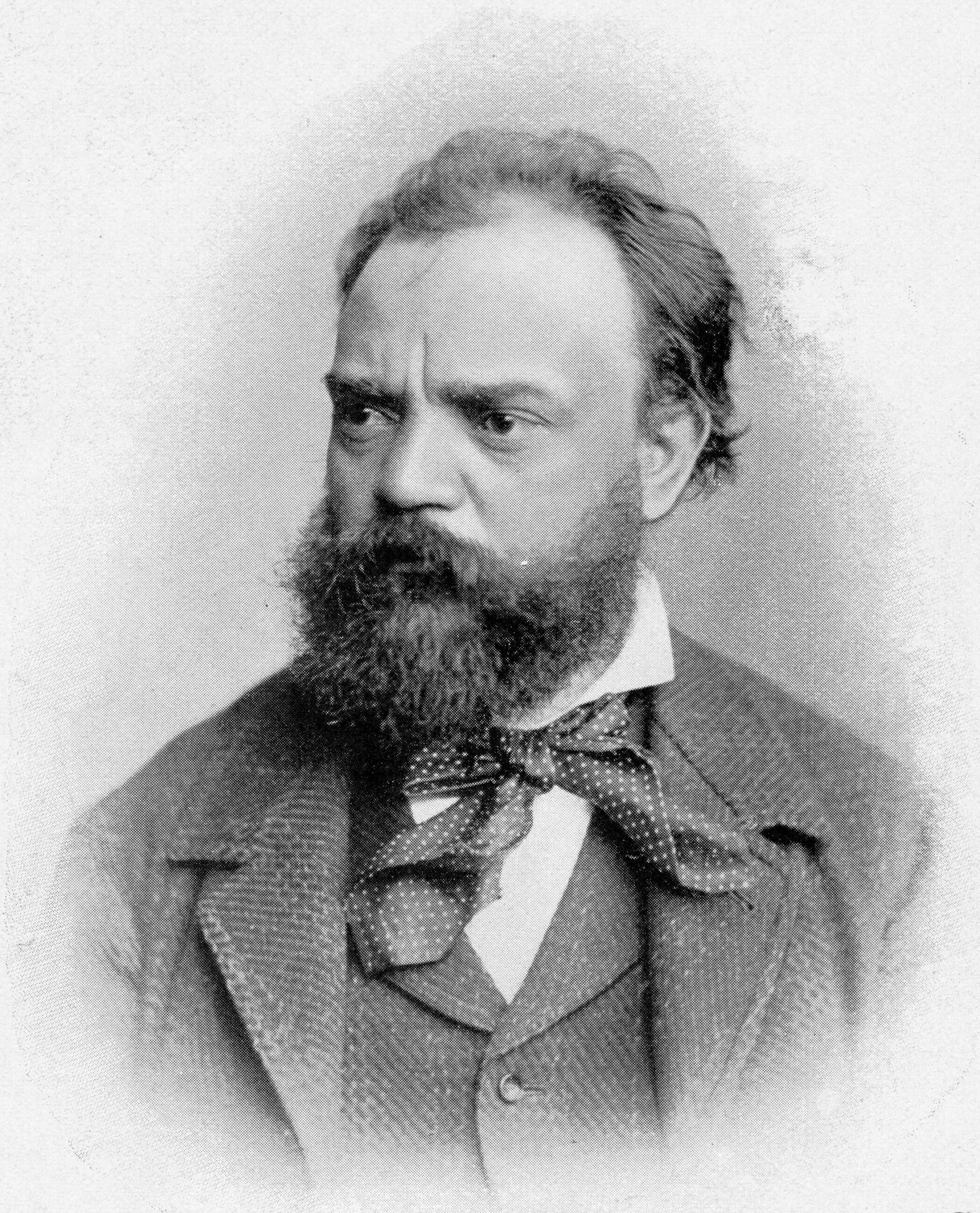
Image from Wikipedia
Image from Wikipedia
Antonín Dvořák – Composer of the Romantic Era, Sound Poet of Bohemia, and Bridge Builder between the Old and New Worlds
A Life for Music: From Nelahozeves to the Concert Halls of the World
Antonín Leopold Dvořák grew up in the Bohemian village of Nelahozeves near the Vltava River and developed a deep musicality early on, which led him from village musical life through the Prague Organists' Institute to the great stages. As a violinist, organist, and later a teacher, he shaped his music career with persistent work and an infallible sense for melody, rhythm, and timbre. His output – nine symphonies, concertos, chamber music, operas, choral works, and piano pieces – is today part of the canon of classical music, combining Bohemian folk idioms with romantic formal artistry. He gained international recognition particularly with the Slavic Dances, Symphony No. 9 "From the New World," and the Cello Concerto in B minor – milestones of his artistic development.
Early Years: Craftsmanship, Dedication, and the School of Theater
Dvořák's early biography tells of a talented boy whose environment naturally connected music with everyday culture. At the Prague Organists' Institute, he acquired solid technique in harmony, counterpoint, and organ playing; simultaneously, his experience as a violist in the orchestra of the Prague Provisional Theater shaped him. This stage provided practice in the operatic and orchestral repertoire and sharpened his ear for dramatic arcs, orchestral balance, and vocal line. As early as the 1860s, he composed symphonies, chamber music, and songs – a maturation process in which Wagnerian color, Lisztian programmatic writing, and the Schubert-Beethoven tradition are discernible, yet never appear epigonal.
Breakthrough in Prague: "The Heirs of the White Mountain" and the Encounter with Brahms
His national breakthrough came in 1873 with the hymn "The Heirs of the White Mountain," which established Dvořák as a distinct voice in Prague. Soon thereafter, the Moravian Duets and the Slavic Dances followed, which – with brilliant composition and sensitive arrangement – ignited the international spark. Dvořák received significant support from Johannes Brahms, who recommended him to a leading publisher and simultaneously served as a critical mentor. This constellation enhanced his authority in the music press and solidified his position in European musical life.
International Success: Slavic Dances, Symphonic Works, and Noteworthy Chamber Music
Between 1878 and the late 1880s, Dvořák exhibited enormous compositional productivity. Symphonies such as No. 6 in D major and No. 8 in G major, the Piano Trio No. 3, the "Dumky" Trio, and the Serenade for Strings cemented his reputation as a master of melodic invention and rhythmic vitality. The publication policies of his works – sometimes marked by tensions with publishers, and sometimes clever networking in England – intensified the international reception. Even then, he was considered one of the first Czech composers to achieve worldwide renown; his stage presence as a conductor of his own works and his educational work completed the picture of an artist of eminent brilliance.
Years in America (1892–1895): National Style Meets the "New World"
As the director of the National Conservatory of Music in New York, Dvořák combined his compositional experience with the idea of an independent American art music. He studied spirituals, indigenous melodies, folk songs, and urban soundscapes – not as folklore quotes, but as an impetus for new compositional solutions in form, harmony, and orchestration. Symphony No. 9 in E minor "From the New World" encompasses these impressions in a work whose Largo theme gained worldwide fame and is still regarded as an icon of transatlantic musical culture. In parallel, he produced the String Quartet in F major op. 96 ("American Quartet"), the String Quintet in E flat major op. 97, the Biblical Songs op. 99, and the seed for the Cello Concerto – exemplary testimonies of an artistic evolution that merges local colors with universal formal artistry.
Return Home and Late Works: Symphonic Poems and Opera
After returning to Prague (1895), Dvořák led the conservatory and focused with particular intensity on the symphonic poems after Karel Jaromír Erben: "The Water Goblin," "The Noon Witch," "The Golden Spinning Wheel," and "The Wood Dove" showcase refined sound direction, rhetorical precision, and a narrative dramaturgy that uses the orchestra as a voice between song, scene, and legend. With "Rusalka" (1901), he achieved an opera success of lasting impact: color-saturated orchestration, Bohemian idioms, and lyrical drama form a closed, poetic music theater – a synthesis that crowns his late work.
Discography, Repertoire Impact, and Critical Reception
Dvořák's works have shaped international performance practices over generations: the "New World" Symphony is among the most performed symphonies of the 19th century; the Cello Concerto in B minor forms the backbone of the cello repertoire and is considered a benchmark for tone production, phrasing, and dramatic architecture. The "American Quartet" op. 96 and the "Dumky" Trio op. 90 are among the most beloved chamber music works of the Romantic era. Choral works such as "Stabat Mater" and "Te Deum" demonstrate contrapuntal mastery while also addressing the audience directly and soulfully. Music critics commend Dvořák's ability to integrate national idioms into classical forms without resorting to folkloric embellishment – an authority affirmed by encyclopedias, labels, festival dramaturgies, and musicology.
Compositional Style: Melody, Rhythm, and Orchestral Brilliance
Dvořák's handwriting combines cantabile themes, modal hues, and pentatonic turns with clearly structured forms and artful transitions. His rhythm – from dance meters to syncopated accents – creates inner movement without destabilizing the architecture. In orchestration, he favors bright mixed colors, characteristic woodwind solos, substantial middle voice leading, and radiant brass climaxes, always balanced by strings as the sound foundation. In chamber music, his sense for instrumental dialogues and textural transparency shines through, while in opera, his instinct for scene, voice, and musical character portrayal is evident.
Historical Context and Cultural Influence
Historically, Dvořák stands at the intersection of German formal tradition and Slavic idiom. His musical language legitimized national styles within the Romantic era without confining them to programmatic or folkloric constraints. The American years served as a laboratory for cultural permeability: he argued that future American art music could draw from spirituals and indigenous musical cultures – an idea that continues to inspire discussions about canon, origin, and musical identity to this day. His teaching work, including at American and Bohemian institutions, created a lineage that influenced composers, conductors, and performers across generations.
Overview of Works: Symphonic, Concert, Chamber Music, Vocal, and Stage
Symphonies: Nine contributions that mirror the spectrum from classical clarity (No. 6) through Bohemian color (No. 8) to the transatlantic vision (No. 9). Concertos: The Violin Concerto in A minor, the Piano Concerto in G minor, and especially the Cello Concerto in B minor set interpretative benchmarks between virtuosity and symphonic dialogue. Chamber Music: Quartets, quintets, and trios – genuine repertoire anchors that challenge performance culture, sound balance, and ensemble breathing. Vocal/Choral: "Stabat Mater," "Requiem," "Biblical Songs" combine spiritual depth with compositional economy. Opera: From early attempts to poetic maturity in "Rusalka" – a body of work that unites dramatic authenticity with melodic enchantment.
Current Presence: Festivals, New Editions, and Recordings
Even though Dvořák passed away in 1904, his works remain contemporary art: international festivals, orchestras, and chamber ensembles present cycles and thematic series annually, often focusing on Symphony No. 9, the "American Quartet," cello music, and the symphonic poems. In the 2024/2025 seasons, festivals and venues will honor Dvořák's oeuvre with special programs; new recordings, new editions, and curated listening guides continue to emerge, opening up his music for new generations. These activities document the ongoing relevance of his compositions, their cultural value, and their established place in educational programs and curated concert series.
Interpretative Practice and Production: Sound Image between Tradition and Modernity
In performance practice, traditional "Central European" sound ideals meet historically informed articulation and modern recording aesthetics. Producers and sound engineers apply spatial depth layering, detailed woodwind representation, and transparent middle voices in Dvořák's symphonic works – prerequisites for making his polyphonic texture audible. In chamber recordings, the balance of voices and agogic is central; in opera, the relationship between the orchestra pit and stage is the focus, allowing Dvořák's melodic lines and harmonic color shifts to unleash their narrative potential.
Conclusion: Why Dvořák Resonates Today
Dvořák fascinates because he unites heart and hand: immediate melody, rhythmic pulse, and masterful composition. His music sounds familiar yet new at the same time – rooted in home sounds, open to the world. Those seeking symphonic narrative density, chamber music in expressive texture, and opera in poetic color will find in Dvořák a fresh voice of the Romantic era. His work invites rediscovery in the concert hall: live, close-up, with the energy of a sound that transcends boundaries.
Official Channels of Antonín Dvořák:
- Instagram: No official profile found
- Facebook: No official profile found
- YouTube: No official profile found
- Spotify: No official profile found
- TikTok: No official profile found
Sources:
- Encyclopaedia Britannica – Antonín Dvořák (Biography, updated March 18, 2026)
- Encyclopaedia Britannica – Works of Antonín Dvořák
- Deutsche Grammophon – Antonín Dvořák: Biography
- National Museum Prague – Antonín Dvořák Museum: Biography
- Antonín Dvořák – Official Site: Biography
- Dvořák Prague Festival 2025 – A tribute to the songs of Antonín Dvořák
- Albert Konzerte – Münsterplatz-Konzerte 2025: Dvořák 9 "Aus der Neuen Welt"
- North Carolina Symphony – Program Notes: New World Symphony (2025/26)
- Classical Music Magazine – Best of Dvořák: seven essential works
- Wikipedia: Image and text source
Upcoming Events
Passion Concert: Antonín Dvořák Stabat Mater
Palm Sunday in Cottbus: Dvořák's Stabat Mater fills the Upper Church with choir, soloists, and orchestra. 29.03.2026, 17:00. Deeply touching concert experience – secure your seats now. #StabatMater
Dvořák: The Bride of the Spirits – Dramatic Cantata
Discover Dvořák's dramatic cantata 'The Bride of the Spirits' at the Theater Hof on April 4, 2026. An evening full of musical and dramatic highlights.
CZECH REPUBLIC. Visions from Prague: Second Concert of the Europe Series
An evening full of Czech sound colors at the Seidlvilla: Janáček, Smetana, and Dvořák live in Munich. On 04.18.2026, 7 PM. #Classical #Munich
7th Symphony Concert – "Dvořák 68: A Bohemian Rhapsody"
Enjoy an evening of classical music with the Freiburg Philharmonic Orchestra. Experience Dvořák's unique compositions live.
Children's Concert Dvorak “New World”
Dvořák's “New World” up close: The Children's Concert at Audimax Regensburg combines sound, excitement, and wonder. 05.07.2026, 5 Euro. #Regensburg #Classical
Antonín Dvořák – Mass in D Major for Solo, Choir, and Organ
An evening for choir lovers and church music fans: Dvořák's Mass in D Major sounds on July 5, 2026, in St. Johannis Ansbach. Free admission. #Ansbach #Concert
Dvorak and Korngold New World(s)
An evening full of romance and expansiveness in Audimax Regensburg: Dvořák meets Korngold, along with brilliant solo violin and great orchestral sound. 07.05.2026, tickets from 14 Euro. #Regensburg #Concert
2nd Chamber Concert
Chamber music with soul in Schwerin: Experience Dvořák and Thieriot at the State Museum. Romantic sound colors, historical backdrop, and real concert magic. #Schwerin #ChamberConcert